Search the whole station Crushing Equipment
The ball mill end cover serves as the primary structural support for the entire grinding drum. This component must withstand the massive weight of grinding balls and ore. High rotational stress makes the end cover a frequent point of mechanical failure. Modern mining operations prioritize integrally cast steel designs for maximum durability. Selecting a high-quality mill head replacement prevents long-term production halts. Reliable casting techniques ensure the safety of the entire mineral processing line. This part connects the rotating shell to the stationary bearings. It must handle both weight and torque simultaneously. Proper engineering of this part is the foundation of a reliable system.
Last Updated: June 2026 | Estimated Reading Time: 16 Minutes
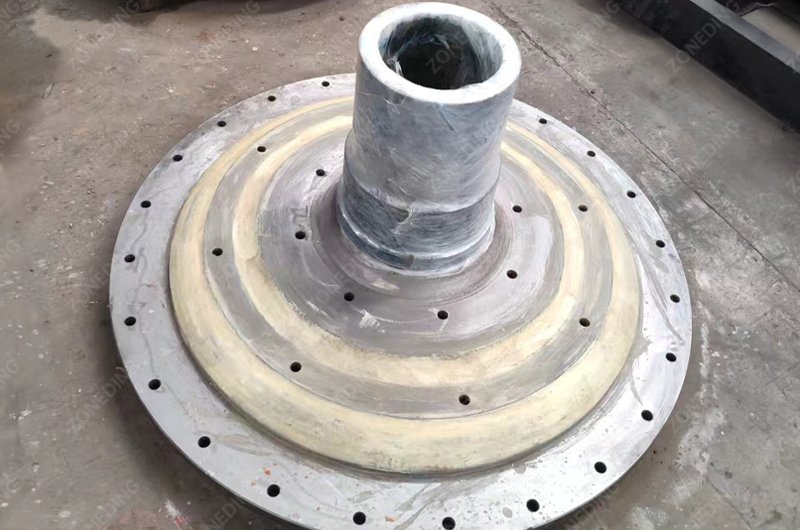
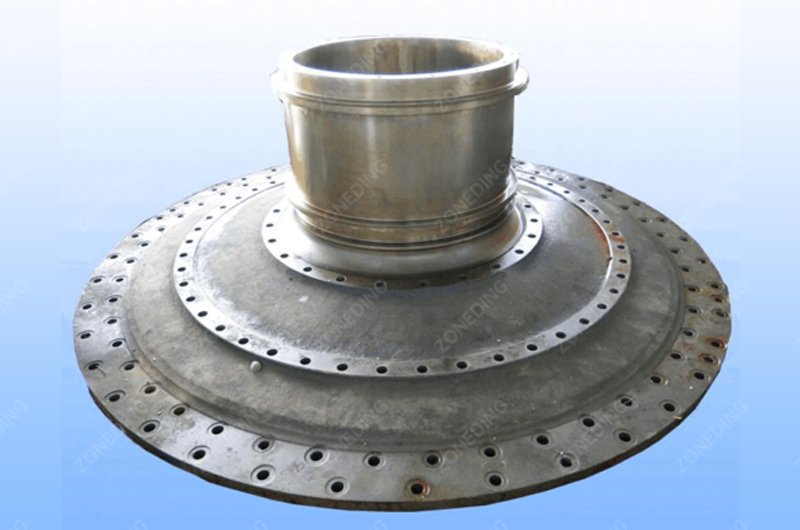
The integrally cast ball mill end cover offers the highest level of structural integrity and fatigue resistance. This design uses a single, continuous piece of cast steel to form the trunnion and the flange disk. No joints or welds exist to create weak points in the metal. Large-scale mining projects require this solid construction to handle the constant bending forces of rotation. A single-piece casting distributes stress evenly across the entire surface. This balance is vital for heavy-duty mills processing hard metal ores. It eliminates the risk of joint separation under vibration.
Integrally cast covers eliminate the risks associated with bolted or welded joints found in older designs. Bolts can loosen over time due to high-frequency vibration during the grinding process. Welds often contain hidden micro-cracks that expand under heavy loads. A solid cast steel cover maintains its shape even under the weight of hundreds of tons of media. This structural stability protects the alignment of the trunnion. It also reduces the wear on gear systems by keeping the mill centered. Most global mining standards specify integrally cast designs for mills exceeding three meters in diameter. This monolithic structure acts as a single rigid body. It resists the “prying” effect caused by the heavy grinding balls. Long-term testing shows that single-piece castings survive 40% more rotation cycles than multi-piece alternatives. This reliability is essential for 24-hour Beneficiation Equipment operations.
| Feature | Integrally Cast Steel | Operational Impact |
|---|---|---|
| Joint Construction | Zero Welds or Bolts | No risk of joint failure |
| Stress Distribution | Uniform across the disk | Higher fatigue life |
| Material Grade | ZG230-450 Standard | Excellent impact toughness |
| Longevity | 15+ Year Service Life | Lower total cost of ownership |
Cracks often develop at the fillet radius because this area experiences the most intense bending stress. The fillet radius is the curved section where the narrow trunnion shaft meets the wide flange disk. Every time the mill rotates, the weight of the ore pushes down on this transition point. This movement creates a “prying” effect on the metal. Over millions of cycles, this repetitive force causes metal fatigue. If the casting contains tiny internal bubbles, a crack will eventually start at those weak spots. The curve must be smooth to distribute these forces correctly.
Internal casting defects are the primary “silent” cause of ball mill end cover failure. Pores and sand inclusions act as stress concentrators. Even a tiny hole the size of a pin can lead to a massive fracture over five years of operation. Poor mechanical alignment also speeds up this process. If the mill shell is not perfectly centered with the end cover, an uneven twisting force occurs. This force pulls on the fillet radius in a way the metal cannot handle. Once a crack starts, the abrasive slurry enters the gap. This accelerates the damage through erosion. Maintenance teams must inspect this area during every liner change. Detecting a crack early allows for a planned mill head replacement. If the crack goes through the entire wall, the mill must stop immediately. This leads to massive losses in production time.
Slurry leakage usually occurs due to a loose spigot fit or uneven bolt tensioning at the flange. The spigot is the machined “step” that aligns the end cover with the mill shell. This interface must be a precision fit with zero gaps. If the fit is loose, the internal pressure of the mill pushes liquid through the crack. Slurry contains abrasive sand and chemicals that quickly grind away the steel surfaces. What starts as a small drip can turn into a high-pressure jet in a few weeks. The seal depends on metal-to-metal contact and a high-quality gasket.
Incorrect bolt tightening sequences also lead to sealing failures. If maintenance crews tighten bolts in a circle rather than a star pattern, the flange can warp. A warped flange does not apply even pressure to the gasket. Once a small path for the slurry opens, the erosion process begins. This leakage is dangerous because it often reaches the main trunnion bearings. Slurry acts like liquid sandpaper and will destroy the bearing surface within hours of contamination. Fine particles in the slurry are especially harmful to white metal bearings. Constant leakage also corrodes the flange bolts. This makes them brittle and prone to snapping under load. Keeping the flange dry is critical for the long-term health of any Iron Ore Processing Plant. A clean installation is the best defense against leakage.
| Potential Issue | Diagnostic Action | Required Fix |
|---|---|---|
| Loose Bolts | Check torque with hydraulic tools | Re-tighten to spec in star pattern |
| Damaged Gasket | Inspect for tears or compression set | Replace with high-density rubber |
| Spigot Wear | Measure gap with feeler gauges | Metal spray or shim the joint |
| Shell Deformation | Check for “out-of-round” shell | Professional mechanical realignment |
ZONEDING improves the chemical makeup of ZG230-450 steel to ensure the end cover does not shatter. Standard cast steel often contains high levels of phosphorus and sulfur. These elements make the metal brittle like glass at low temperatures. A brittle end cover cannot absorb the shock of a 100mm steel ball hitting the liner. ZONEDING limits these impurities to less than 0.025%. This purity keeps the steel ductile. Ductile metal can bend slightly without breaking into pieces. This safety margin is vital for high-impact grinding environments.
Adding Manganese and Chromium further enhances the performance of mill parts. Manganese increases the depth of hardness in the steel. Chromium provides resistance to the corrosive chemicals often found in gold or copper ore processing. During the melting stage, vacuum degassing removes hydrogen and nitrogen. This step prevents the formation of micro-pores that cause sudden metal failure. This high-purity approach is essential for any Gold Processing Plant operating in harsh climates. The steel must maintain its strength in both summer heat and winter cold. Precise control of carbon content ensures the metal is hard but not brittle. Every batch undergoes a spectral analysis to verify the elements. This data ensures that every casting meets the global standards for mining machinery. Reliable chemistry prevents the “crack-and-shatter” failures seen in lower-quality parts.
The ZONEDING casting process utilizes computer simulation and high-pressure risers to ensure a solid part. Large castings like a ball mill end cover shrink as they cool down. If the center of the part cools slower than the surface, a shrinkage hole forms. ZONEDING uses advanced software to model the cooling process in 3D. This data tells the engineers where to place risers. Risers are extra chimneys of hot metal that feed the part as it shrinks. They ensure the main body of the cover is completely full of solid steel.
Using ceramic foam filters is another critical step in the process. These filters catch slag and sand particles before they enter the mold. Slag is a common cause of weak spots in grinding mill head casting products. ZONEDING also uses high-strength resin sand for the molds. This sand does not break off under the heat of the molten steel. Once the part is cast, it stays in the mold for five to seven days. This slow cooling prevents the buildup of internal tension. Fast cooling makes the steel brittle and uneven. By managing the temperature curve, the factory produces a uniform metal structure. This uniformity makes the part much stronger under high rotational loads. Every casting is then checked with X-rays to confirm it is solid. This zero-defect policy protects the customer from hidden failures.
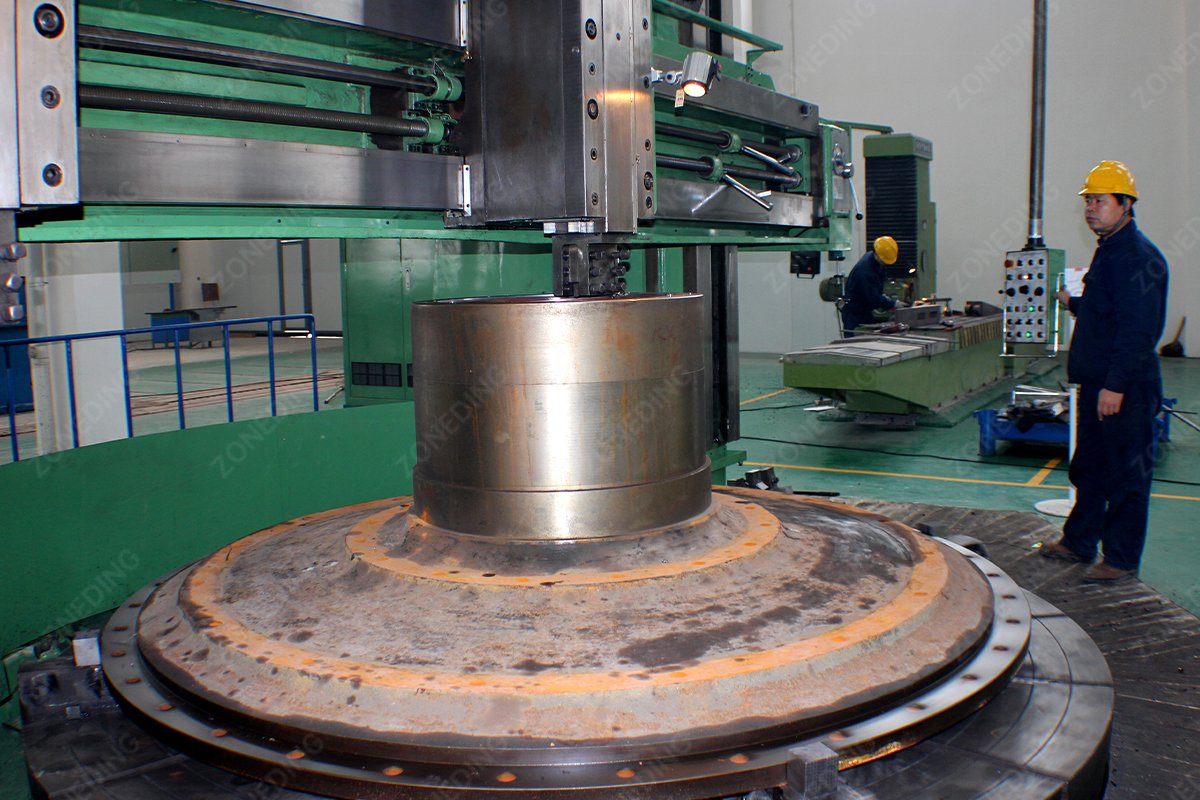
ZONEDING uses large CNC vertical lathes to ensure the trunnion and flange are perfectly coaxial. Coaxiality refers to the alignment of the central axis of the shaft and the disk. If the trunnion is slightly tilted, the mill will wobble as it turns. This wobble creates a heavy load on the main bearings and gear teeth. ZONEDING machines all critical surfaces of the custom cast steel end cover in a single setup. This ensures that the center of the trunnion matches the center of the spigot perfectly.
Machining in one setup prevents cumulative error. If a part is moved from one machine to another, small alignment errors add up. ZONEDING’s 8-meter vertical lathes are powerful enough to finish the entire part at once. The resulting surface is as smooth as a mirror. This smoothness is vital for the oil seals. A rough surface will shred the rubber seals and lead to oil leaks. High-precision machining is a core requirement for a stable Stone Crusher or grinding mill installation. When the trunnion is perfectly round, the bearing oil film stays consistent. This prevents metal-to-metal contact inside the bearing. Cool running bearings last five times longer than those under uneven loads. Precision at the factory saves thousands of dollars in maintenance costs later.
The ZONEDING heat treatment cycle removes internal stress memory to prevent future warping. Casting steel at 1,500 degrees Celsius creates intense internal tension. Without treatment, the metal will slowly change shape over time. This warping can cause the end cover to pull away from the shell, creating leaks. ZONEDING uses a rigorous normalizing and tempering process. This involves heating the metal in a large furnace to nearly 900 degrees Celsius for many hours.
Holding the part at high temperature for over 20 hours allows the atoms in the steel to rearrange. This process creates a uniform grain structure throughout the casting. After heating, the part is cooled slowly inside the furnace. Rapid cooling with water is never used because it can create new surface cracks. This stress relief ensures that the end cover remains stable for its entire 20-year lifespan. Proper heat treatment is the secret to a high-performance Iron Ore Processing Plant. It makes the steel tough enough to handle the constant vibration of the grinding balls. A stable part keeps the bolts tight and the seals closed. This process is the final step in creating a reliable mill head. Without it, the precision machining would be wasted as the part shifts its shape.
ZONEDING designs custom end cover features based on ore hardness and chemical environment. Not every mill runs in the same conditions. A ball mill processing hard quartz needs a thicker end cover than one processing soft limestone. ZONEDING engineers can add extra thickness to the wear zones of the custom cast steel end cover. This customization can extend the life of the mill head by several years. It targets the areas most likely to fail based on field data.
Design changes also include modified internal ribs. These ribs are designed to prevent slurry backflow. Backflow occurs when ore particles get trapped behind the liners and grind against the steel cover. By changing the rib angle, ZONEDING helps move the slurry toward the discharge opening faster. For mines with acidic water, ZONEDING offers special alloy steel grades. These alloys contain more Nickel and Chromium to stop rust and corrosion. Every design starts with a detailed study of the customer’s specific material. This ensures the equipment matches the task. Customization also includes adding ports for modern sensors. These ports allow the mine to monitor temperature and vibration automatically. A custom part fits better and works harder than a standard one.
Question 1: Can a cracked integrally cast cover be welded?
Minor surface cracks can often be welded as an emergency fix. However, welding a structural crack is only a temporary solution. The heat from welding creates new stress points. A permanent mill head replacement should be ordered immediately to avoid a catastrophic break.
Question 2: Why is the spigot fit so important?
The spigot is the only part that ensures the mill shell and end cover are centered. If the spigot is loose, the weight of the mill will rest on the bolts. This causes the bolts to snap and leads to massive slurry leaks.
Question 3: How long does it take to manufacture a new end cover?
Casting, heat treatment, and machining a large integrally cast cover typically takes 45 to 60 days. Because of this long lead time, mines should keep a spare cover or monitor their current ones very closely during shutdowns.
Question 4: What is the benefit of ZG230-450 steel?
This specific grade offers the best balance between strength and impact toughness. It is strong enough to hold the weight of the mill but flexible enough to absorb the shock of grinding balls. It is the global standard for heavy mill parts.
Question 5: How often should the end cover be inspected?
Visual inspections should happen daily for leaks. Detailed non-destructive testing, like Ultrasonic Testing, should be done every 12 to 24 months. This is especially important for mills older than 10 years.
ZONEDING is a professional Chinese manufacturer of mineral processing equipment founded in 2004. The company provides a full range of products, from Ball Mill units to complete Iron Ore Processing Plant solutions. With a 8,000 square meter factory and 15 senior engineers, ZONEDING ensures every part meets international standards. The company focuses on factory-direct sales to offer competitive prices and full-service support. Thousands of mines in over 120 countries rely on ZONEDING for their heavy-duty equipment needs.
Contact the engineering team for a detailed quote on your next custom end cover replacement.
loading…
已经是到最后一篇内容了!
 Zoneding Machine