Search the whole station Crushing Equipment
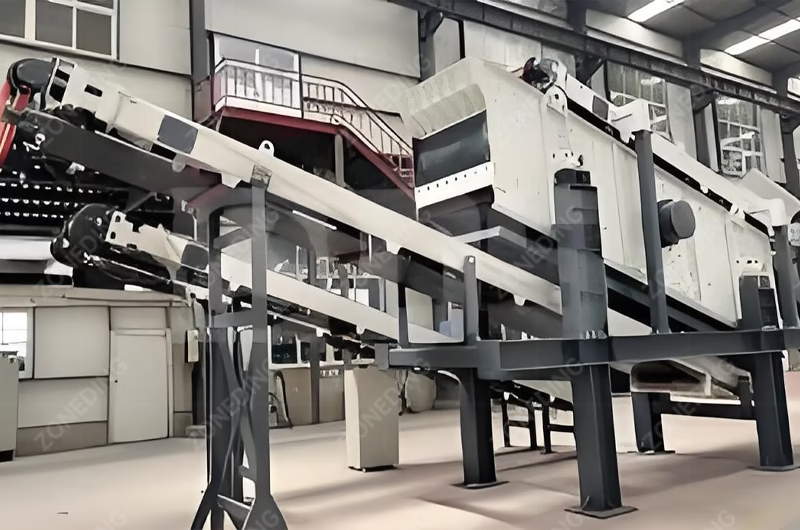
Applicable Materials:All types of crushed aggregates, sand, gravel, and recycled materials.
Modularized screening plants represent a significant advancement in material processing. They offer a powerful blend of precise grading, high screening efficiency, and remarkable flexibility. These systems are designed for rapid deployment. They help reduce civil engineering costs. They provide an adaptable solution for aggregate screening and ore screening needs. They excel in turning diverse materials, including construction waste screening, into valuable products. This is achieved through their robust design and integrated technologies.
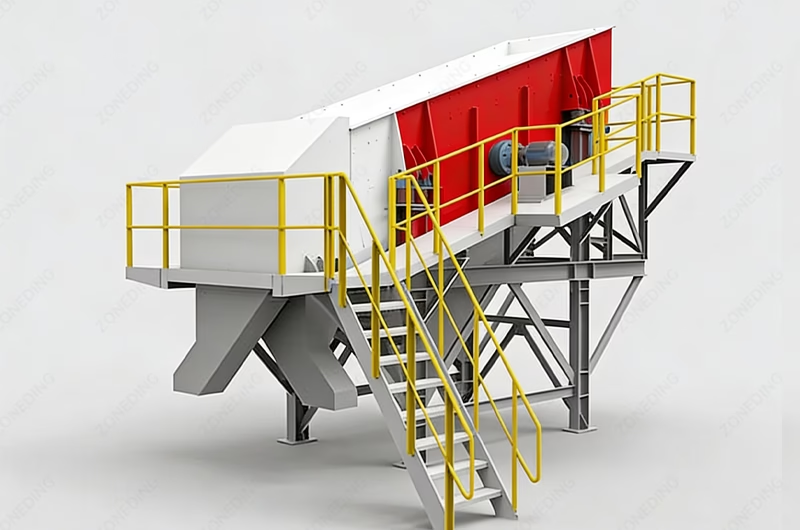
A modularized screening plant is an integrated system designed for efficient material separation. It separates materials by size. This plant combines various screening components into pre-engineered, self-contained modules. These modules are built in a factory. This design moves the complex assembly and testing work from the job site to a controlled factory environment. This approach makes setup on site much faster. It ensures consistent quality. It also reduces overall project risks. This system contrasts with traditional fixed plants. Those plants need extensive on-site construction and installation.
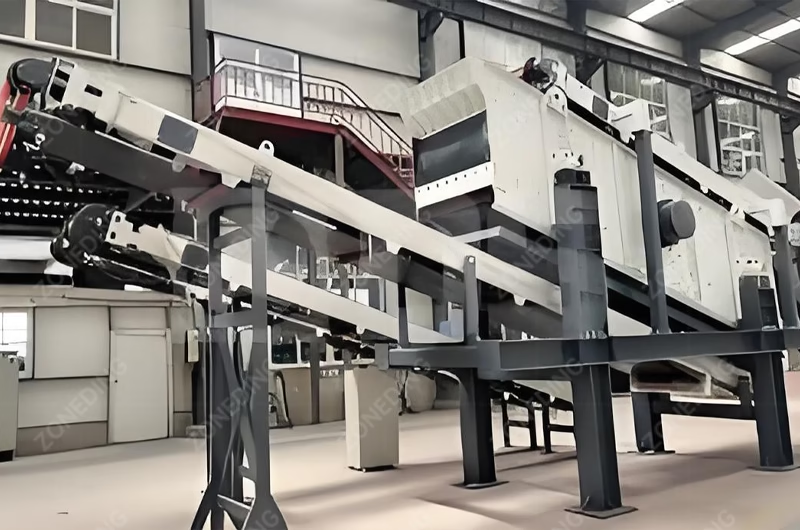
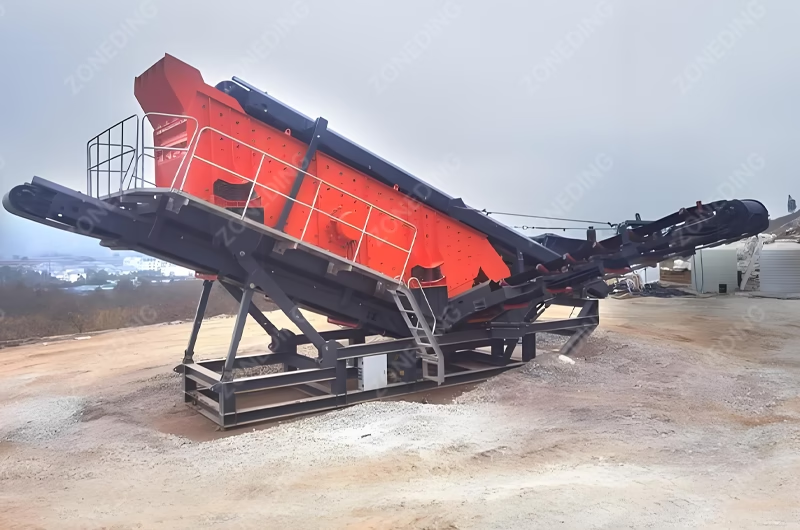
The core of a modularized screening plant is its ability to perform precise grading. It handles many materials. These include different types of ore and construction aggregates. Each module typically includes a . It also has a feed system, discharge conveyors, and a support structure. These components are engineered to work together seamlessly. This optimizes material flow and separation efficiency. The modular concept means units can be combined. They can be customized for specific processing needs. This allows for great flexibility. It also makes future expansion easy. More modules can be added. Existing ones can be changed. This adaptability helps businesses meet changing market demands.
In essence, a modularized screening plant provides a streamlined solution. It delivers reliable performance for all screening needs. ZONEDING designs these plants for rapid deployment. They also aim to reduce civil engineering costs. They focus on delivering a high-quality product. This is critical for aggregates and mining operations. This system offers a smarter way to manage material sizing. It ensures the right product for specific needs.
A modularized screening plant offers distinct features. These features set it apart from traditional screening setups. Decades in the industry show these characteristics are vital. They help solve common operational challenges. They deliver significant value to clients. These features aim to enhance productivity. They also target reducing costs and improving product quality.
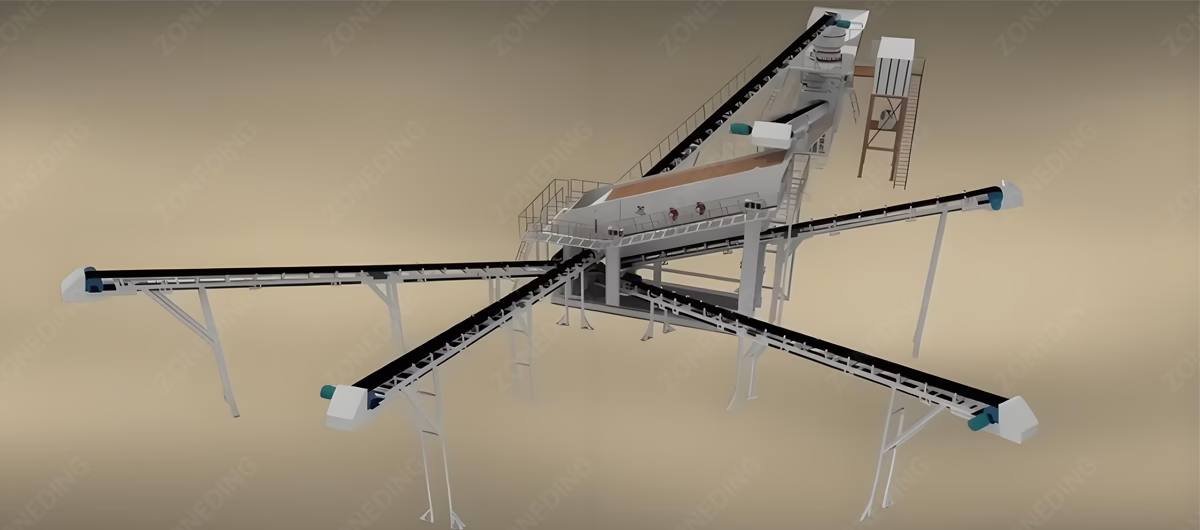
One key feature is rapid deployment. Most parts of the plant are manufactured and pre-assembled at the factory. This dramatically reduces on-site installation time. It means production can start much faster. This rapid setup minimizes project delays. It accelerates return on investment. Lengthy construction periods are avoided. This is a big advantage for projects with tight deadlines.
Another important feature is the modular design itself. This design allows for flexibility. The plant can easily be scaled up or down. Modules can be added or removed as needs change. This adaptability is perfect for varying market demands. It suits different material types and production volumes. It also makes relocation simple. The entire plant can be moved to a new site quickly. This ensures assets stay productive for many different projects.
Furthermore, these plants often integrate advanced screening technologies. This includes multi-deck screening capabilities. These features ensure precise grading of materials. They allow for the production of various aggregate sizes simultaneously. This means cleaner, more consistent products. The modular units are also designed for reducing civil engineering costs. They need minimal foundations. This lowers initial investment. It simplifies site preparation. ZONEDING focuses on designing plants that bring these benefits together. This delivers robust, flexible, and cost-effective solutions for its customers.
Ensuring strict particle size requirements for various materials is a core strength of a modularized screening plant. Long experience in the industry shows that precise material classification is not just a goal. It is a critical factor for downstream processes and product value. This applies whether handling aggregate screening or ore screening.
The secret lies in the plant’s sophisticated design. It uses multi-deck screening technology. A typical Vibrating Screen module might have two, three, or even four decks. Each deck has a different size screen mesh. This setup allows for the simultaneous separation of materials into multiple desired fractions. Material fed onto the top deck passes through progressively finer screens. This ensures precise sizing. Any material not meeting the size criteria for a specific deck is either retained or passed to the next finer screen.
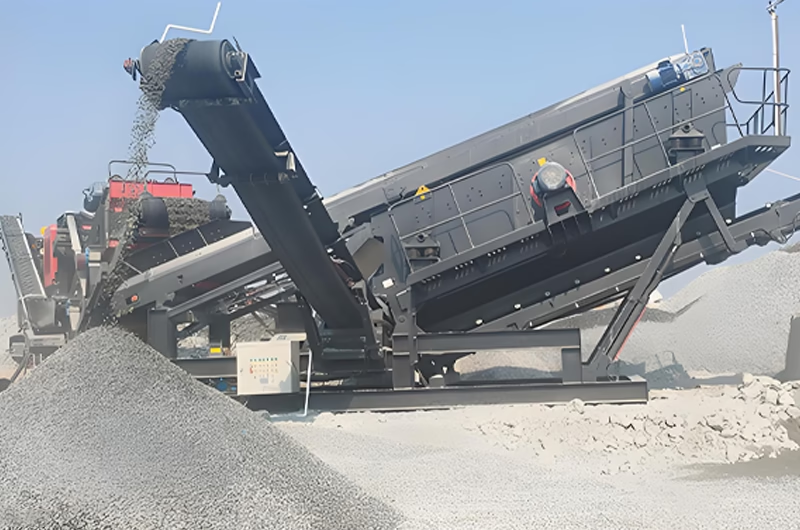
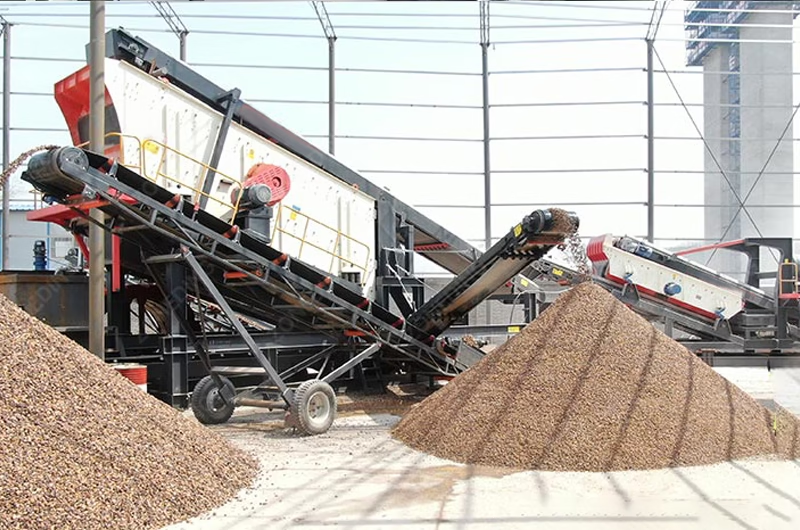
Critical to this precise grading is the careful selection of screen mesh selection. Material properties are analyzed. This includes hardness, abrasiveness, moisture content, and desired output sizes. Then, the right screen media is chosen. Options include woven wire, polyurethane, or rubber screens. Each type offers specific advantages in wear resistance, open area, and anti-blinding properties. This customization ensures optimal screening efficiency and product quality. For example, sticky materials might benefit from anti-clogging screen designs.
Furthermore, a modularized screening plant can integrate various screening technologies. This ensures high precision. For instance, for very fine particles or wet, sticky materials, units like Fine Sand Recovery Machines or specialized wet screens might be included. The modular nature allows for these specialized components to be part of the overall flow. This addresses challenging material characteristics. The goal is to produce specific fractions. These fractions meet the exacting standards of the end application. This ensures the final product is always precisely graded. It meets the specific demands of the market.
Modularized screening plants offer high-efficiency solutions. They bring significant technical advantages. These advantages stem from their integrated design and advanced features. Industry experience shows these plants are more than just assemblies of equipment. They are finely tuned systems. They aim for peak performance and operational simplicity.
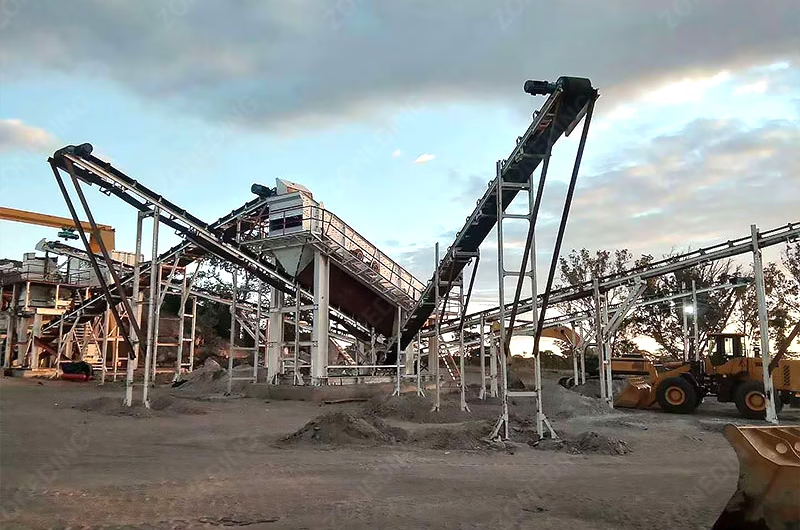
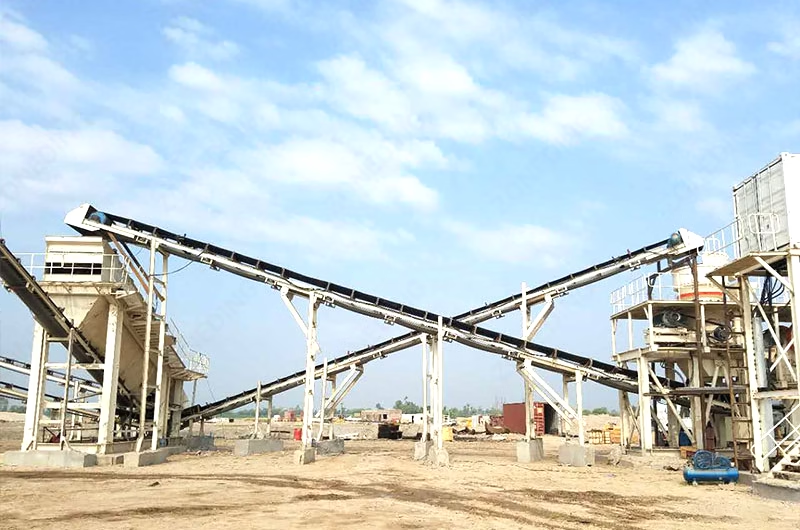
One key advantage is their ability to handle challenging materials. This includes sticky, wet, or fine-grained feeds. These plants often integrate wet screening solutions. This uses high-pressure water sprays on the screen decks. This washes away clay and silt. It prevents blinding. This ensures continuous, efficient separation. For materials requiring thorough cleaning and dewatering, these modular units can combine a Vibrating Screen with a Sand Washing Machine or Fine Sand Recovery Machine. This integrated approach prevents downtime. It produces clean, high-quality material.
Another technical advantage is the protection of downstream equipment. Accurate screening protects other machines. For instance, correctly sized material entering a cone crusher prevents overload. It reduces wear and tear. This prolongs the life of a Cone Crusher or Impact Crusher. It also means these crushers operate more efficiently. They use less power. The precise removal of fines before crushing also increases crushing efficiency. It reduces undesirable fine material generation. This is a hidden cost saving for the entire sand and aggregate production.
Furthermore, the compact nature of modularized screening plants means less material handling. It also means fewer transfer points. Each transfer point causes material degradation and dust generation. By reducing these, the system maintains material quality. It also improves overall screening efficiency. This compact design allows for a smaller footprint. This is crucial for sites with limited space. ZONEDING designs these plants for maximum efficiency. They minimize waste and optimize the entire process.
Modern modularized screening plants prioritize dust and noise control, alongside intelligent operation, crucial for environmental compliance and efficiency. ZONEDING integrates advanced features.
For dust control, plants incorporate enclosed screen boxes and transfer points, specialized dust covers with extraction (for collection or fogging), and water spray bars. This ensures a clean working environment and compliance, vital for applications like construction waste screening.
Noise reduction is achieved through heavy-duty frames with vibration isolation mounts that specifically dampen the Vibrating Screen. High-quality screen media (polyurethane/rubber) absorbs impact, and enclosed modules further contain sound, creating a quieter workplace for operators and communities.
For intelligent operation, sophisticated control systems monitor performance (feed rates, screen load, motor parameters) in real-time, automatically adjusting settings for optimal screening efficiency. Operators manage the plant centrally or remotely, enabling quick adjustments, fault diagnosis, and data-driven optimization. This automation reduces manual oversight, improves consistency, and minimizes human error. ZONEDING’s commitment makes its modular plants both high-performing and environmentally responsible.
Ensuring long-term stable operation and reduced operating costs are critical for any modularized screening plant. ZONEDING’s experience shows this requires strategic planning and disciplined maintenance, not just good equipment.
First, flexible configuration is key. Modular plants can quickly adapt to changing market demands for aggregate screening by easily modifying screen media or decks. This adaptability avoids costly overhauls, protects investment, and ensures continuous profitability.
Second, consider environmental adaptability. Robust design, including reinforced structures and weather-resistant components, allows modular plants to handle diverse geological conditions, climates, and site limitations. This minimizes breakdowns, reduces repair costs, and ensures consistent screening efficiency.
Third, implement a proactive maintenance program. This prevents breakdowns through regular inspections and timely replacement of wear parts. Modular design simplifies maintenance with easy access and standardized components, reducing labor and time. Intelligent control systems further aid predictive maintenance, avoiding costly unplanned downtime.
Finally, prioritize energy-saving solutions. High-efficiency motors, optimized drive systems, and efficient vibrating screen designs significantly reduce power consumption. ZONEDING focuses on these elements to lower electricity bills, decrease operating costs, and enhance overall profitability.
Choosing the right modularized screening plant is critical for project success and profitability. ZONEDING helps evaluate key factors to ensure optimal selection.
First, consider material characteristics: abrasiveness, moisture, and particle shape. Different materials (e.g., hard rock, sticky clay) necessitate specific screen types, feeding systems, and features like wet screening or dust suppression.
Second, define output requirements and product specifications: desired capacity (tph), number of product sizes, and size tolerances. This dictates screen deck count, vibrating screen size, and media, ensuring flexibility for varying demands.
Third, evaluate site conditions and project duration: remote location, limited space, challenging terrain, or temporary/permanent operation. Modular plants offer rapid deployment and compact footprints, ideal for constrained sites or frequent relocation.
Fourth, assess the total cost of ownership (TCO). Beyond initial investment, consider operating costs like energy, wear part lifespan, and maintenance. A higher upfront cost might lead to lower long-term TCO due to better efficiency and reduced downtime.
Finally, consider rental potential and environmental compliance. Ease of transport/setup is crucial for rental or multi-project use. Ensure the plant meets local regulations for dust, noise, and water management to avoid fines and delays.
ZONEDING predicts that by 2026, modularized screening plants will significantly evolve, driven by demands for higher quality, efficiency, and environmental control. Key trends include advanced automation and AI integration for real-time monitoring and automatic parameter adjustment, optimizing efficiency and precision. Advanced sensor technology and IoT connectivity will enable remote monitoring and predictive maintenance for maximum uptime. Enhanced energy efficiency will be achieved through optimized designs and integrated water recycling systems, complemented by hybrid power solutions offering operational flexibility and reduced emissions. Furthermore, modules will become more customizable and multi-functional, integrating screening with processes like washing or crushing into versatile, compact setups. This evolution is propelled by the growing global demand for aggregates and recycled materials, particularly in urban development, positioning modular plants as ideal solutions for resource recovery and sustainable infrastructure projects.
Q1: What is the main advantage of a modularized screening plant over a traditional fixed plant?
The main advantage is rapid deployment and reduced civil engineering costs. A modularized screening plant comes pre-assembled from the factory. This means much faster setup on site. It requires minimal groundwork. This speeds up project timelines. It saves significant money on construction.
Q2: Can a modularized screening plant handle sticky materials effectively?
Yes, modularized screening plants are designed to handle sticky materials effectively. They often integrate wet screening solutions. These use high-pressure water sprays. They also use specialized screen media. This prevents blinding. It ensures continuous screening efficiency.
Q3: How does a modularized screening plant contribute to environmental protection?
A modularized screening plant helps protect the environment in several ways. It uses enclosed designs and dust suppression systems to reduce dust. It incorporates vibration isolation and sound dampening materials to lower noise. For wet screening, it can integrate water recycling systems. These features lead to energy-saving and eco-friendly sand making.
Q4: Is it possible to change the product size produced by a modularized screening plant?
Yes, flexibility is a core feature. Modularized screening plants allow for easy changes to product size. Screen meshes can be quickly replaced. Screen angles can be adjusted. Many units also support multi-deck screening. This lets various sizes be produced simultaneously.
Q5: What kind of maintenance is required for a modularized screening plant?
Maintenance involves regular inspections, lubrication, and timely replacement of wear parts. The modular design typically provides easy access to components. This simplifies maintenance tasks. Intelligent control systems often offer predictive maintenance alerts. These help schedule maintenance proactively.
 Zoneding Machine