Search the whole station Crushing Equipment
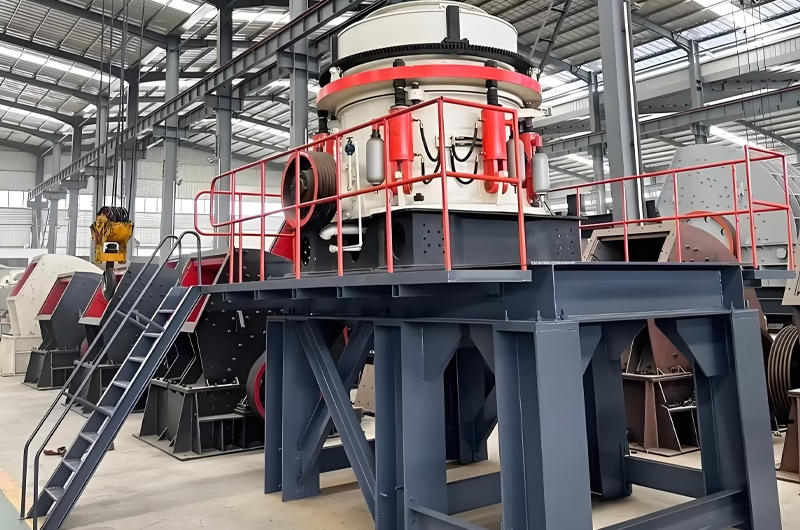
Applicable Materials:Hard to medium-hard abrasive materials such as granite, basalt, river gravel, and various metallic ores etc.
A modularized cone crushing plant is not just a piece of equipment; it is a complete, pre-engineered system. It combines the advanced capabilities of a cone crusher with a flexible, modular design. This setup offers you a faster path to high-quality aggregate production. These plants are engineered to handle secondary and tertiary crushing, transforming raw materials into precise, valuable products. Exceptional efficiency and flexibility are provided for your operations. Designed to solve common site challenges, consistent output and superior particle shape are achieved.
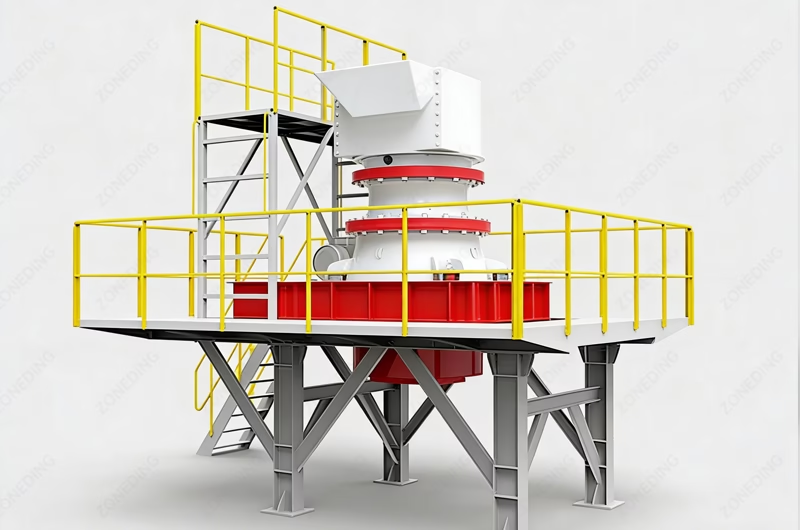
A modularized cone crushing plant is an integrated system, combining a high-performance cone crusher with all supporting components: feeders, conveyors, screens, and control systems. All parts are built onto a robust, pre-fabricated frame. The entire system is designed in modular sections, manufactured and often pre-assembled at the factory. This results in a complete, ready-to-deploy, fully functional modular crushing plant, not merely a single crusher. This setup reduces extensive on-site construction, simplifying installation and commissioning. This approach transforms mining secondary crushing and aggregate production line needs, providing a predictable, high-quality solution from the start.
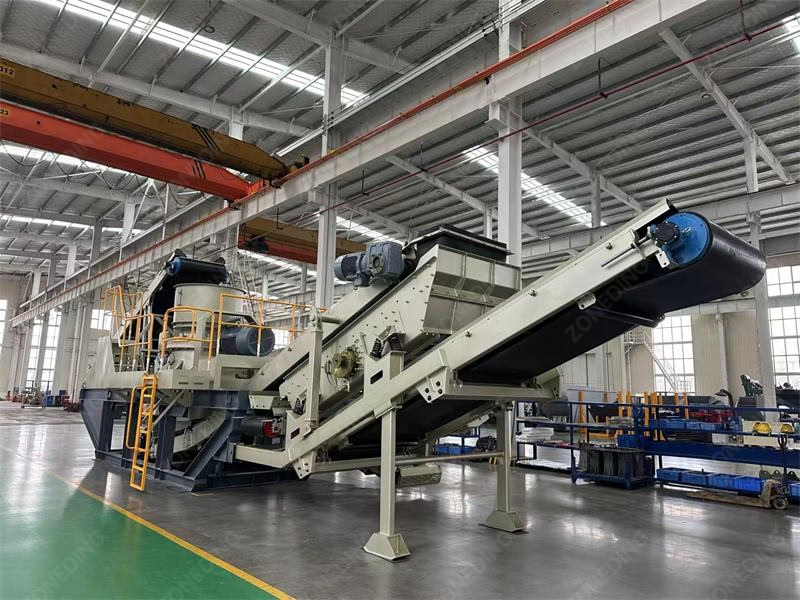
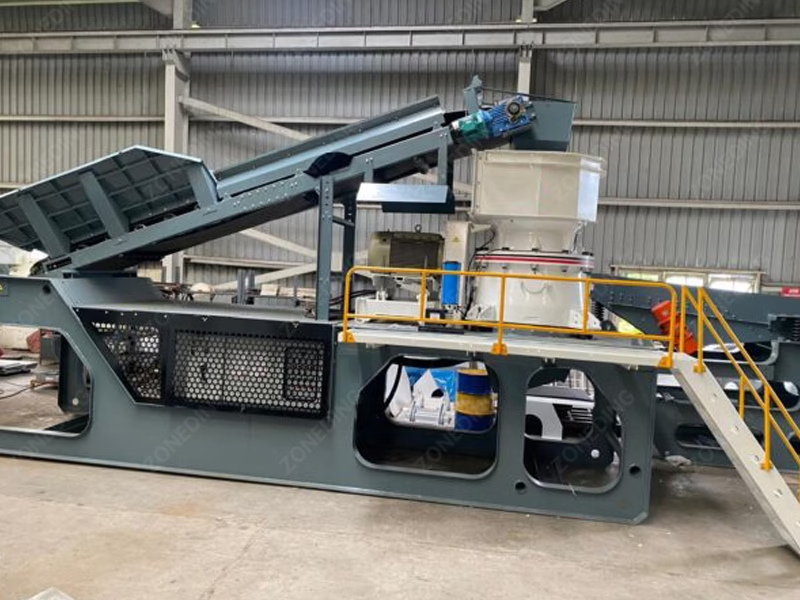
Traditional setups involve separately sourced components and on-site assembly, often leading to delays and cost overruns. ZONEDING’s modular plants avoid these issues, built for quick assembly and fast operation. This enables faster plant deployment and earlier production of valuable materials, meeting project deadlines and budget goals. This system significantly leaps in efficiency and improves reliability in mineral processing, designed for businesses needing both speed and precision.
At its core, the cone crusher is crucial for secondary and tertiary crushing. It breaks down primary-crushed materials, achieving finer particle sizes and improving aggregate shape – essential for modern construction. Integrating this powerful crusher into a modular frame offers a solution that is easy to transport, simple to install, and highly effective in producing desired end products. This makes a modularized cone crushing plant a game-changer, ensuring consistent quality and high output with less hassle.
We have seen the mineral processing industry change over decades. From huge custom-built plants to today’s agile solutions, the shift is clear. The modularized cone crushing plant is a big step forward. It is especially important for secondary and tertiary crushing. Here, precision, efficiency, and product quality are most vital. This is more than just a packaged cone crusher. It is an optimized system. It redefines project timelines and operational costs. It even improves how fast you can respond to the market. Its true value lies in the careful interplay of design, engineering, and manufacturing discipline. It delivers predictable results in an often unpredictable environment.
Here are seven important advantages of using our modularized cone crushing plants:
A standalone cone crusher performs well only if its entire circuit is good. The main benefit of a modularized cone crushing plant is this: the whole secondary or tertiary circuit is designed, built, and tested as one integrated unit. This circuit includes the cone crusher itself. It also has its feeder, surge bin, vibrating screen, and conveyors. Even the control system is part of it. This design removes all guesswork. It prevents costly trial-and-error often seen with putting separate parts together on site. You are not just buying a cone crusher. You are buying a proven, balanced circuit. This means optimized feed. It reduces issues with tramp iron. It offers effective closed-circuit screening for exact product sizing. It also gives you consistent recirculation rates. These features maximize efficiency and the reduction ratio. It greatly shortens the time to get the plant running. It makes sure the plant delivers its promised capacity and product quality from day one. It does not take months. This directly helps with your aggregate production line.
For high-value aggregates, especially in concrete and asphalt, superior cubicity is key. Cubicity means a more cubic shape. It means fewer flaky or long particles. This shape is critical for structural strength and how well the material handles. Cone crushers are excellent at producing this. But consistent cubicity needs stable, optimized feeding and exact circuit control. Our modular plants are engineered with specific material flow paths. They have integrated vibrating screens. These are often multi-deck screens. They also have return conveyors. These parts ensure continuous, choke-fed crushing. They quickly remove finished product. This setup minimizes wear on already sized material. It maximizes the “rock-on-rock” crushing action inside the cone. This action is vital for highly cubical products. The pre-engineered design guarantees this optimal flow. This is something very hard and expensive to get consistently with makeshift, field-assembled systems. This directly supports your goal of efficient fine crushing and achieving superior particle shape.
Market demands for aggregates or processed minerals can change quickly. For example, you might need to switch from road base to concrete aggregate. Or you might need different size fractions. Also, the material coming from the primary crusher can vary. It might be coarser blasts or softer zones. A fixed, rigid plant struggles to adapt quickly. It needs much downtime and re-engineering. Our modular cone plants have features that allow for quick adjustments. For example, screens can be easily changed for different mesh sizes. The cone’s CSS can be quickly adjusted using hydraulic controls. All this is built into the control system. The modular design means entire screening modules can be integrated. Even alternative cone crushers can be swapped. For example, a short head for finer product, or a standard for higher capacity. This makes the whole plant a “chameleon.” It can adapt to changing material or market conditions. It causes minimal disruption. It maximizes how much you use your assets. This capability is part of flexible deployment. It allows for a truly semi-stationary crushing plant operation.
Setting up a complex secondary or tertiary crushing operation can be very challenging. Especially in remote or difficult locations. You face huge problems with logistics and skilled workers. Finding skilled welders, electricians, and mechanics for complex on-site work is costly. It takes a long time. It often results in lower quality. A modularized cone crushing plant arrives on-site as pre-assembled, tested modules. This greatly reduces the need for highly specialized on-site labor. It also reduces the need for complex heavy lifts. It basically brings factory quality and engineering precision directly to your remote quarry. This speeds up the time to start production. It lowers labor costs. It minimizes quality problems that can come from harsh conditions or lack of skills at the site. This directly helps you reduce civil engineering costs. It also ensures quick installation.
Cone crushers need regular maintenance. Liner changes are a good example. If access is poor in a field-built plant, it leads to longer downtime. It increases safety risks. It causes higher labor costs. Modern modular cone plants include maintenance access platforms, walkways, guardrails, and lifting points in their design. This is not an afterthought. This means technicians have safe, efficient access to important parts. These include the bowl liner, mantle, and hydraulic systems. Also, electrical panels, lubrication systems, and automation parts are often in one central, protected place. This simplifies troubleshooting and routine checks. This design greatly reduces the Mean Time To Repair (MTTR). It improves overall plant availability and safety. This contributes to a stable operating crushing plant with a longer wear part lifespan. It also ensures a low operating cost crushing.
Cone crushers create significant dynamic forces. In a field-assembled plant, bad foundation design or poor structural integration can cause too much vibration. This leads to early fatigue of structural parts. It can even damage nearby structures. This is a subtle but very important failure point. Our modular plants are engineered as one cohesive structural unit. The crusher, motor, and vibrating screen are on a strong, factory-built skid or frame. We design this frame specifically to absorb and spread these dynamic loads. This careful engineering often uses Finite Element Analysis (FEA) during design. It ensures optimal vibration control, structural stability, and long life. It reduces the need for huge concrete foundations. Often, it only needs simple footings. It makes sure the whole system works within safe vibration limits. This protects the crusher. It protects the whole plant’s structure over its long operational life. This helps maintain a stable operating crushing plant.
Fitting advanced automation and data systems into older or custom-built plants is often costly. It is complex. Sometimes, it does not work well. Our modular cone plants are designed to be “automation-ready.” Or they often come with integrated control systems. These systems include sensors for feed level, crusher power draw, and discharge level. They also have predictive maintenance diagnostics. Because the whole circuit is pre-engineered, data points are placed in smart locations. The control logic is optimized. This allows for smooth integration into larger plant SCADA systems. It enables precise control over CSS, tramp release, and overload protection. This leads to consistent production. It optimizes energy use. It allows you to use data for predictive maintenance. This reduces unexpected breakdowns. It extends the life of wear parts. It is a key step towards a truly intelligent crushing control operation.
The demands on mining secondary crushing and aggregate production lines are never static. Deposits change. Market needs shift. Traditional, fixed plant setups struggle to cope with these variations. Our modularized cone crushing plant is built with this dynamic environment in mind. Its design prioritizes flexible deployment and rapid re-configuration. This means your operations can quickly adapt. You can adjust to different material types. You can handle varying feed sizes. You can also respond to changes in desired product specifications. This adaptability is key for maintaining efficiency and profitability.
We achieve this flexibility through several design choices. First, each module is a self-contained unit. This allows for easy transport and rapid re-assembly. If your quarry moves to a new section, you can relocate the plant efficiently. This capability defines a semi-stationary crushing plant. It offers the stability of a fixed plant with the mobility of a mobile unit. Second, the interfaces between modules are standardized. This means adding or removing sections is straightforward. You can expand your capacity during peak demand. You can also reconfigure the plant to produce different aggregate sizes. This makes the plant truly versatile.
Moreover, our modular cone crushing plants integrate advanced control systems. These systems allow for swift adjustments to crusher settings. For example, you can change the Closed Side Setting (CSS) quickly. This helps you fine-tune the output particle size and shape. Such precise control is vital when processing diverse materials. It is also important when meeting strict product quality requirements. This level of responsiveness is difficult to achieve with less integrated systems. This system gives you an intelligent crushing control over your process. It helps you manage challenges from varying material hardness. It also helps with changing moisture content. You maintain a consistent, high-quality output no matter the conditions.
The primary goal of secondary and tertiary crushing is often to achieve efficient fine crushing and produce superior particle shape. This is where our modularized cone crushing plant truly shines. The cone crusher itself is designed for these specific tasks. It uses a crushing action that involves both compression and inter-particle attrition. This combination is ideal for creating cubical products. Unlike impact crushers, which can produce more flaky particles, cone crushers round off aggregate edges. This improves the aggregate’s structural integrity. It also enhances its performance in concrete and asphalt mixtures.
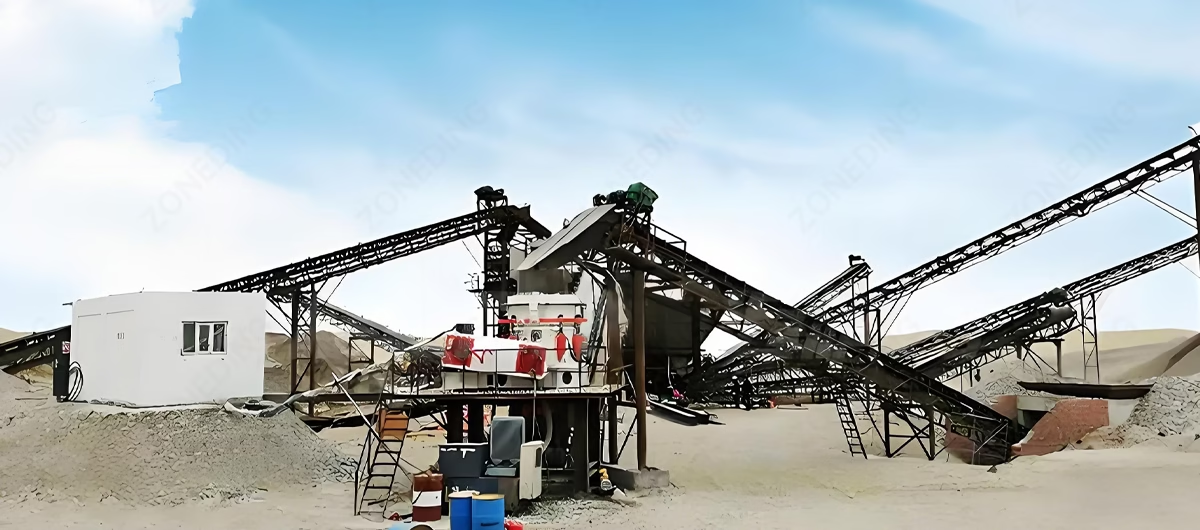
Our cone crushers feature high crushing ratios. This means they can reduce material size significantly in one pass. This high reduction capability is crucial for high capacity cone crushers. It translates to higher throughput and efficient processing. The crushing chamber design, often a deep cavity, plays a vital role. It ensures optimal material flow and constant choke feeding. Choke feeding is when the crushing chamber is kept full of material. This maximizes the rock-on-rock crushing action. This action is what creates the excellent cubical shape and reduces wear on crusher components. The result is consistently shaped aggregate. This aggregate meets the most stringent construction standards.
Furthermore, our modularized cone crushing plants integrate precise control mechanisms. These allow for exact control over the output particle size. You can adjust the Closed Side Setting (CSS) of the cone crusher with ease. This enables precise particle size control. Whether you need fine sand or specific aggregate sizes for road base, our system can deliver. The integrated vibrating screens work in tandem with the cone crusher. They remove finished products efficiently. This prevents over-crushing and optimizes energy usage. This combined approach makes sure that every piece of stone crushing equipment within the modular plant works towards the highest efficiency and product quality. This system gives you the advantage of both high output and a premium final product.
| Feature | Benefit for Aggregate Quality | Your Actual Gain |
|---|---|---|
| Deep Crushing Chamber | Maximizes inter-particle crushing | More cubical product, higher value aggregate |
| High Crushing Ratio | Significant size reduction in one pass | Fewer crushing stages, higher throughput |
| Precise CSS Adjustment | Exact control over output size | Meet diverse market demands, less material waste |
| Integrated Vibrating Screens | Removes finished product efficiently | Prevents over-crushing, maintains cubicity, low operating cost crushing |
Maintaining your modularized cone crushing plant properly is essential for its long life and consistent performance. We design these plants with convenient maintenance in mind. This helps ensure maximum uptime and low operating cost crushing. Regular, simple checks can prevent major problems. Here are key daily maintenance steps you should follow:
Choosing the right modularized cone crushing plant is a crucial decision for your project’s success. It affects your profitability and operational efficiency. Many factors influence this choice. I can guide you through the crushing equipment selection process. This will help you find the most efficient and cost-effective solution for your specific needs.
The mineral processing sector continually evolves, with modular crushing plants driving greater efficiency, smarter operations, and improved sustainability. Key advancements include enhanced automation for real-time monitoring and optimized throughput, alongside advanced telematics and IoT integration for remote monitoring, predictive maintenance, and increased uptime. Improved energy efficiency stems from new designs and optimized drive systems, while sustainability efforts involve recyclable materials and reduced noise/dust. Greater customization through pre-engineering allows for precise tailoring. The global market for these flexible, cost-effective plants is expanding rapidly, particularly in emerging economies needing fast deployment and asset relocation. This trend is set to continue, fostering further innovation.
Question 1: How long does it typically take to install a modularized cone crushing plant?
Installation times vary depending on the plant size and site conditions. However, our modular plants are designed for quick installation. They can be fully assembled and commissioned much faster than traditional fixed plants. On average, you can expect the plant to be operational within 4-8 weeks after arriving on site.
Question 2: Are modular cone crushing plants suitable for very hard and abrasive rocks?
Yes, absolutely. Our modularized cone crushing plants are equipped with high-performance cone crushers. These are specifically designed for hard rock crushing in secondary and tertiary applications. We use premium wear-resistant components to ensure durability and extend wear part lifespan even with the toughest materials.
Question 3: Can ZONEDING provide a complete aggregate production line using modular units?
Yes, we specialize in providing complete aggregate production line solutions. Our modular approach allows us to integrate various crushing, screening, and conveying modules. This creates a full processing plant tailored to your specific output and product requirements.
Question 4: What kind of control system is included with a modular cone crushing plant?
Our modular cone crushing plants typically come with integrated electrical and control systems. These often include advanced PLCs and HMI interfaces. They offer features like remote monitoring, real-time data analysis, and precise control over crusher settings. This enables intelligent crushing control for optimized operation.
Question 5: What is the main benefit of “superior particle shape” for my business?
Superior particle shape (cubicity) means your aggregate is stronger and performs better in construction applications. It leads to higher quality concrete and asphalt. This can command a premium price for your products. It also reduces the amount of binder needed in asphalt mixes, saving you money and contributing to a low operating cost crushing.
 Zoneding Machine