Search the whole station Crushing Equipment
The ball mill trunnion acts as the throat and the primary lifeline of a grinding machine. This component carries the massive weight of the drum, liners, and grinding balls. It serves as the only path for ore to enter and exit the mill. Many mines face disaster because operators ignore tiny signs of trunnion wear. A broken trunnion can destroy an entire mill. This failure stops production for months. ZONEDING custom trunnions use high-strength cast steel to prevent these failures. Precision engineering ensures the mill rotates smoothly and safely. Selecting the right spare part remains the best way to protect a mining investment.
Last Updated: June 2026 | Estimated Reading Time: 16 Minutes
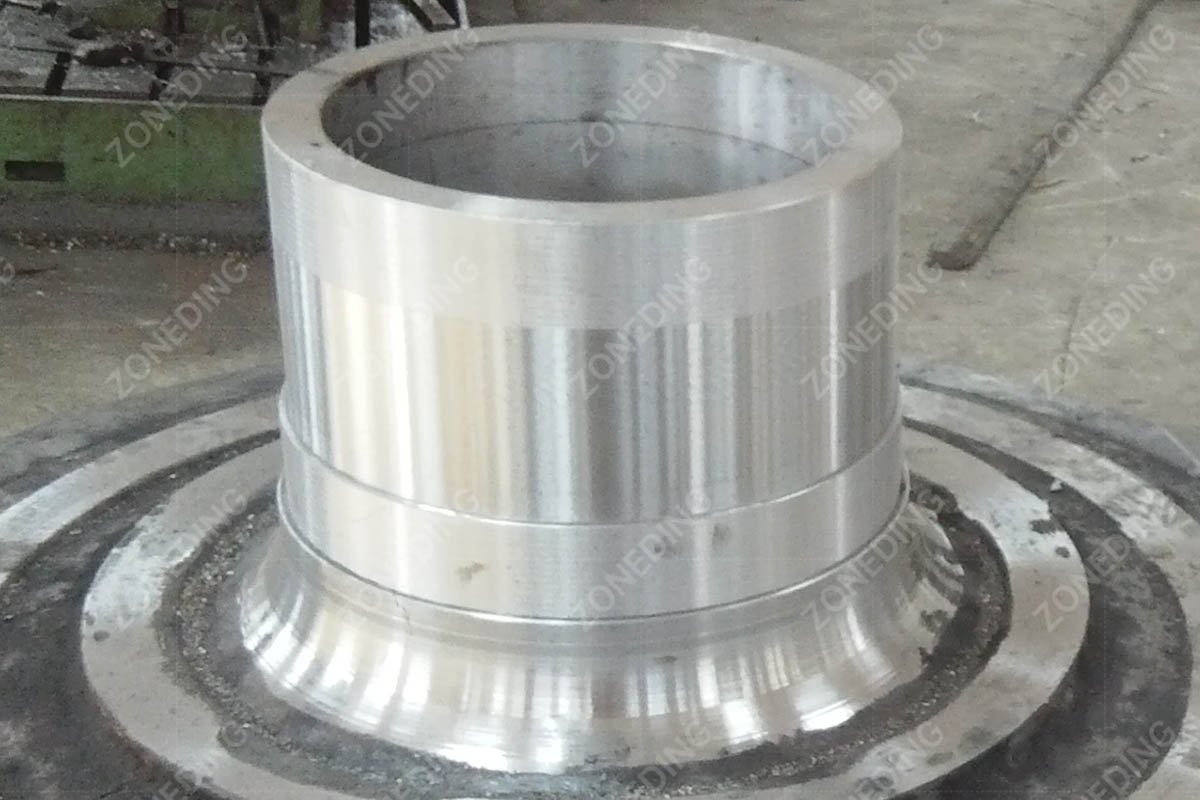
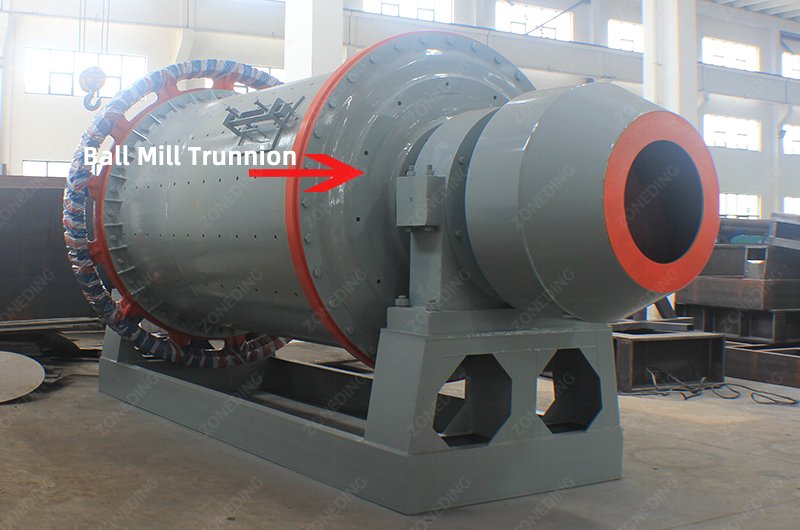
The ball mill trunnion is the primary structural hub that supports the rotating shell and allows material flow. This part handles hundreds of tons of weight while turning at high speeds. It must manage the heavy downward force of the ore. It also handles the twisting force from the motor. Some engineers call it the ankle of the mill because it carries every load. If the trunnion fails, the whole drum can drop. This event causes a catastrophic accident in a mineral processing plant. Design standards focus on making the trunnion the strongest part of the machine.
Thermal expansion significantly affects this component during operation. A mill with a length of 10 meters can grow by 5mm when it gets hot. Pressure leads to overheating if the trunnion bearing lacks enough space. This heat can melt the bearing metal. The floating end must have enough room to move. This simple detail prevents the trunnion from acting like a jack and breaking the machine frame. Proper support at this pivot point keeps the gear drive in perfect alignment. It serves as the foundation for any successful operation.
| Feature | Technical Benefit | Impact on the Mine |
|---|---|---|
| Large Hollow Bore | High feed rate capacity | Increases daily ore throughput |
| Rigid Flange Design | Secure shell connection | Prevents slurry leakage at joints |
| Precision Bearing Seat | Lower friction levels | Reduces monthly electricity bills |
| Stress-Relieved Steel | No sudden fractures | Prevents 3-month long shutdowns |
High-grade ZG230-450 cast steel serves as the base material for maximum toughness. Standard steel is often too brittle for the heavy shocks in a mining environment. Manganese additions help the metal absorb impact without cracking. Chromium additions fight the acid found in many types of mine slurry. This special mix ensures the trunnion does not shatter if a large grinding ball hits the liner near the end. The steel stays strong even in very cold winter mining conditions.
Chemical purity remains the secret to a long-lasting part. Some factories allow too much Phosphorus and Sulfur in the steel. These elements make the metal act like glass. Purity standards keep these impurities below 0.025% in every batch. This makes the steel ductile. Ductile metal bends slightly instead of breaking. Every melt undergoes testing with a spectral analyzer before pouring the mold. This data gives confidence that the part will last for 20 years. High-purity steel is the only way to handle the constant stress of 24-hour Crushing and grinding cycles.
Advanced casting simulations and long-cycle heat treatment solve the problem of root cracking. The root of the trunnion is the spot where the shaft meets the flat flange. This area has the most stress in the whole mill. Internal tension stays trapped if the casting cools too fast. This tension acts as a slow killer. Cracks appear after two years of use. 3D software maps the heat as the metal cools. This helps place risers that feed hot metal into gaps as the part shrinks.
The annealing process is the most important step for stress relief. The finished casting goes into a giant furnace for over 20 hours. It heats to 900 degrees Celsius. Then it cools very slowly. This process removes the memory of the casting stress. If a factory skips this step, the trunnion might turn into an oval shape later. A trunnion that is not perfectly round will heat up the bearings every time it turns. Metal structures become uniform and stable through this method. This prevents the crack and shatter accidents that plague cheap Ball Mill spare parts.
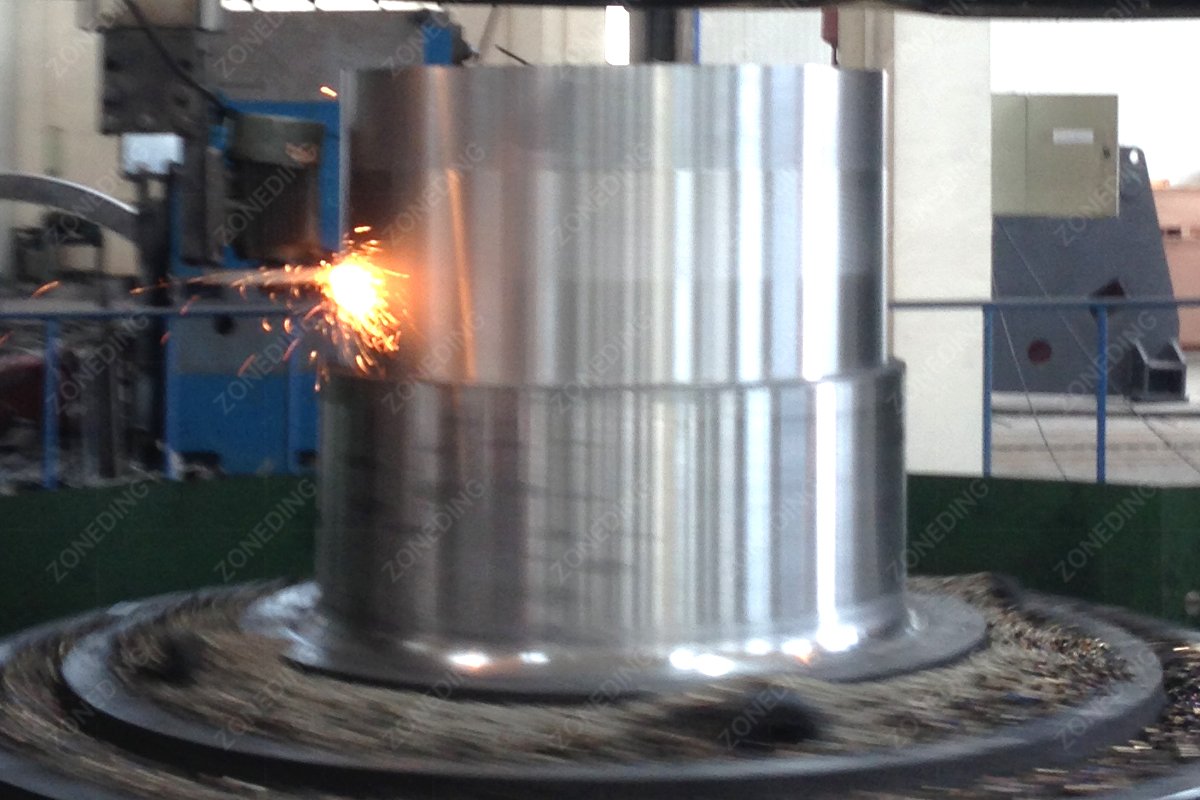
8-meter CNC vertical lathes machine the trunnion and flange in one single setup. Precision is the difference between a mill that runs for years and one that fails in weeks. The mill will wobble if the trunnion shaft is even 0.1mm off-center from the flange. This wobble destroys gears. It also makes the bearings run hot. Machining everything at once ensures perfect coaxiality. This means the center of the shaft and the center of the mill stay on the same line.
Surface roughness on the bearing seat requires specific focus. A mirror finish is not always the best choice. A very specific roughness (Ra 1.6 to 0.8) is necessary. This tiny texture helps the lubrication oil climb onto the trunnion during startup. Oil can slide off if the surface is too smooth. Rough surfaces will cut the bearing metal like sandpaper. Precision grinding achieves this perfect balance. This creates a stable oil film that carries the mill weight. The mill floats on a thin layer of oil. This prevents metal-to-metal contact. It saves an Iron Ore Processing Plant from costly bearing damage.
| Measurement | Precision Tolerance | Why it Matters |
|---|---|---|
| Roundness | < 0.05 mm | Prevents bearing vibration and heat |
| Flange Flatness | < 0.10 mm | Ensures a perfect slurry-tight seal |
| Surface Finish | Ra 1.6 microns | Holds the oil film for longer life |
| Bolt Hole Pitch | +/- 0.20 mm | Makes installation fast and easy |
Every trunnion must pass Ultrasonic, Magnetic Particle, and Dimensional inspections. Testing eliminates guessing about the quality of the metal inside. Ultrasonic testing (UT) uses sound waves to look deep into the steel. It finds tiny air holes or sand inclusions that the eye cannot see. Flaws in critical areas lead to the rejection of the part. Magnetic Particle testing (MT) finds surface cracks. These are the tiny lines that grow into big breaks under heavy loads.
A roundness test using high-precision gauges is also mandatory. A trunnion with an oval shape is rejected immediately. Best practices suggest that every mine should perform a UT test on their trunnions every two years. This helps find problems before they become disasters. A full quality report comes with every delivery from the Trunnion manufacturer. This includes the chemical report and the heat treatment chart. Knowing the history of a part gives peace of mind. It ensures a Copper Processing Plant stays running without surprises.
Question 1: Can a trunnion that is out of round be repaired?
If the trunnion becomes an oval, in-situ grinding can often make it round again. However, this reduces the diameter. The remaining metal must be thick enough to carry the load. A replacement is necessary if the metal is too thin.
Question 2: Why do trunnion bolts keep breaking?
This usually happens because the flange surfaces are not flat. It also happens if the bolts were not tightened evenly. A tiny gap causes the mill to flex every time it turns. This flexing snaps the bolts. Perfectly flat flanges stop this.
Question 3: How long does a ZONEDING trunnion last?
With proper lubrication and alignment, these trunnions are designed to last over 20 years. The key is keeping the oil clean. Slurry leaks must not reach the bearing.
Question 4: What is the most common cause of sudden failure?
The most common cause is jacking oil failure. The metal grinds against the bearing if the high-pressure pump does not lift the trunnion before it starts spinning. This causes deep scratches in seconds.
Question 5: How are internal cracks detected?
Internal cracks are invisible to the eye. Ultrasonic Testing (UT) is the only way to find them. Experts recommend this test during every major liner replacement. It is a small cost to prevent a huge disaster.
ZONEDING is a professional manufacturer of Ball Mill Machines and high-quality Ball mill spare parts. Since 2004, factory-direct solutions have been provided to global mining companies. A team of 15 engineers ensures every casting meets international safety standards. Equipment has been exported to over 120 countries. One-stop service covers everything from design to installation. The goal is to provide the most durable parts at the most competitive prices.
Contact ZONEDING today to get a quote on a custom trunnion for a ball mill.
loading…
已经是到最后一篇内容了!
 Zoneding Machine