Search the whole station Crushing Equipment
Effective mineral processing depends on the correct choice of grinding media. These media act as the primary force for particle size reduction. Incorrect media selection leads to high energy waste and increased metal wear. This guide explains the technical logic behind media management. It covers material types, loading ratios, and wear prediction. Proper management can improve mill efficiency by a significant margin. This text provides practical data for mine operators and engineers. The focus remains on reducing the cost per ton of processed ore.
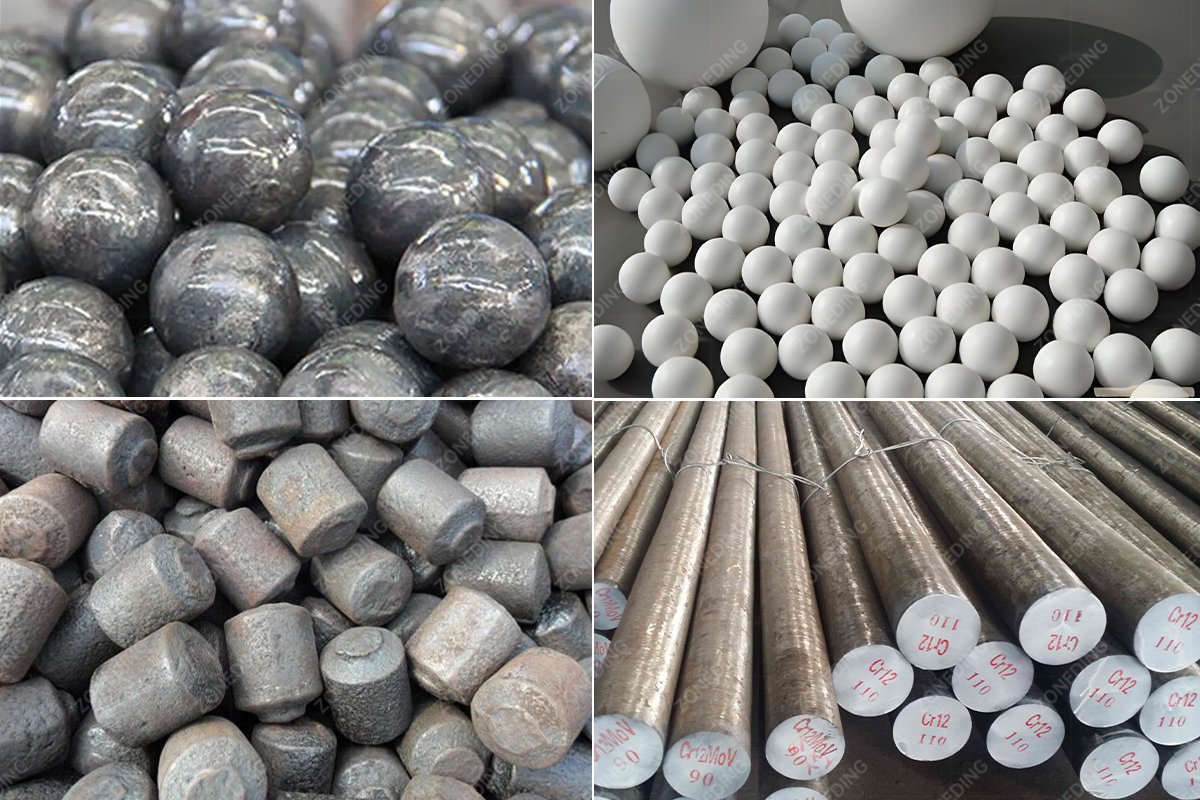
Grinding media break down ore through impact (crushing large rocks) and attrition (grinding into fine powder). A precise balance is critical: excessive impact damages liners, while over-grinding via attrition hinders flotation recovery. Media efficiency—driven by weight, hardness, and shape—directly dictates energy consumption and cost-per-ton.
Proper media selection ensures mineral liberation, allowing chemicals to access target minerals downstream. While smaller balls provide more surface area for contact, larger ones offer the mass needed to break coarse feed. Beyond grinding, media also assists in slurry mixing and suspension. While steel balls are the industry standard, specialized shapes like cylpebs are used for fine grinding. Regular output monitoring ensures the media load remains optimized for peak performance.
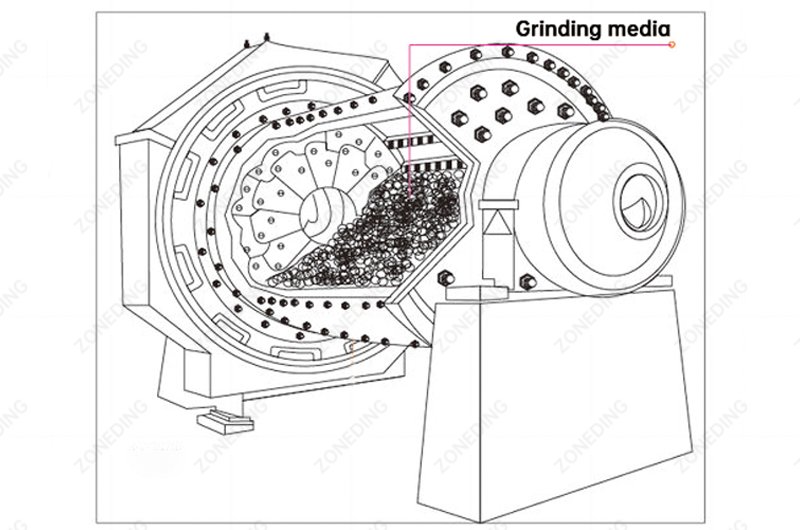
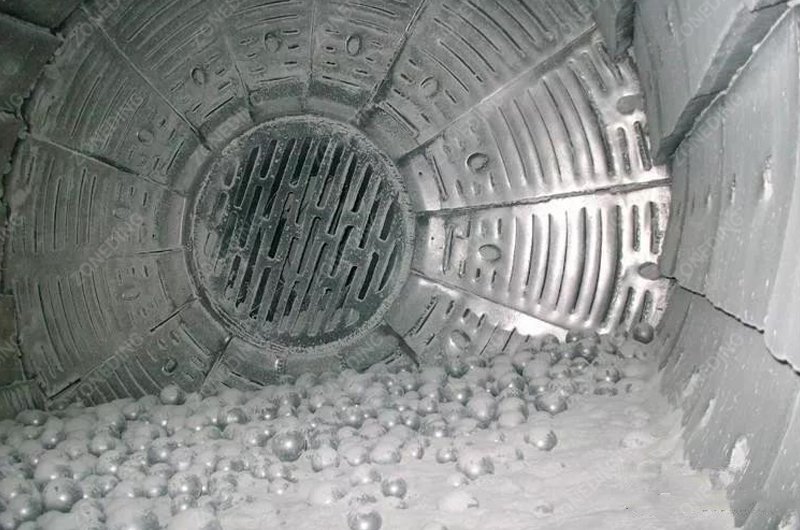
The primary goal of the grinding stage is to create a specific particle size distribution. This distribution allows for optimal recovery in the next stage. Media that are too large will waste energy and wear out the Ball Mill liners quickly. Media that are too small will fail to break the largest rocks in the feed. This results in a “coarse” discharge that reduces recovery rates. Monitoring the power draw of the motor provides a clue to the media level. A sudden drop in power often indicates that the media has worn down below the effective limit. High-quality media maintain their shape during the wear process. This ensures that the grinding logic remains consistent over many months of operation.
| Media Action | Primary Result | Key Factor | Practical Benefit |
|---|---|---|---|
| High Impact | Coarse Crushing | Ball Mass | Handles large feed |
| Surface Rubbing | Fine Grinding | Surface Area | Better liberation |
| Slurry Mixing | Uniformity | Rotation Speed | Steady production |
Forged steel balls offer superior toughness and do not shatter under high impact. These media are the standard choice for mills with diameters exceeding 5 meters. The manufacturing process involves heating steel billets and hammering them into spheres. This mechanical work creates a very dense internal structure. It removes air bubbles and internal defects that cause breakage. Consequently, forged balls can survive the massive falls found in SAG mills. High impact resistance prevents the balls from chipping or splitting. Broken media are useless for grinding and can damage the discharge grates. Forged balls typically feature a hardness range between 58 and 62 HRC. This hardness is uniform from the surface to the core. Uniform hardness ensures the ball stays round as it wears. A round ball provides more efficient grinding than an oval or flat piece of metal.
Using high-quality forged balls protects the internal components of the Ball Mill. Low-quality media often develop flat spots or peel like an onion. These defects increase the friction on the liners without improving the grinding rate. Forged balls are easier to produce in very large sizes. Sizes like 120mm or 150mm are common in primary grinding. These large balls are necessary to break hard rocks coming directly from the Jaw Crusher. The chemistry of forged balls often includes high carbon and manganese. These elements provide the necessary hardness and work-hardening properties. Proper heat treatment during forging creates a fine-grained structure. This structure is the key to long wear life in aggressive mining environments.
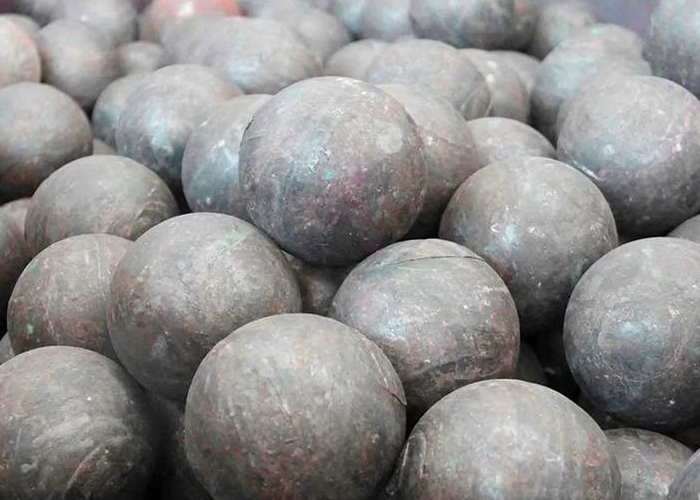
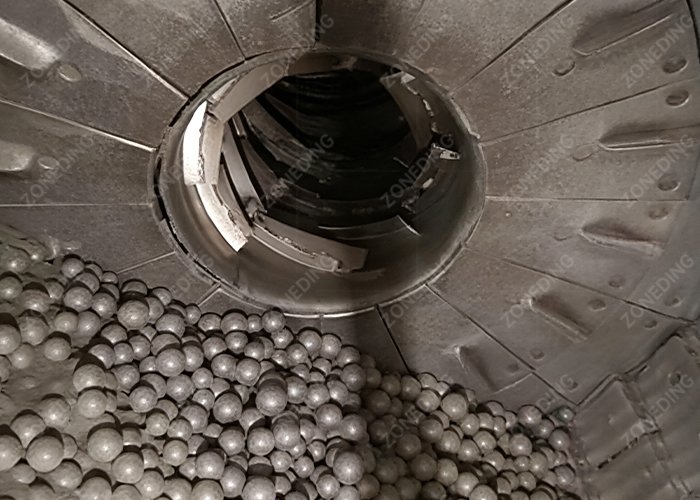
Forged balls are generally more expensive per ton than low-grade cast balls. However, the total cost of ownership is often lower. This is because they have a lower breakage rate. In large-scale operations, a 1 percent breakage rate can cause significant downtime. Forged balls usually have a breakage rate below 0.5 percent. They also provide better energy transfer because they maintain a higher density. Higher density means more weight in a smaller volume. This allows the balls to fall faster and hit harder.
Cast steel balls use chromium to resist chemical corrosion and abrasive wear. These media are produced by pouring molten alloy into molds. This process allows for precise control over the chemical composition. High chrome grinding balls are a popular choice for many mining sites. They contain between 10 percent and 20 percent chromium. Chromium creates a protective oxide layer on the metal surface. This layer prevents the acidic slurry from corroding the steel. Corrosion is a major source of metal loss in wet grinding environments. If the water in the mill is acidic, standard steel balls will dissolve rapidly. High chrome balls resist this chemical attack. This makes them ideal for processing sulfide ores or working in environments with poor water quality.
Cast balls are also available in low chrome and medium chrome versions. These are more cost-effective for processing soft materials like limestone or cement. Casting allows for the mass production of very small balls. These small sizes provide the massive surface area needed for fine grinding. Small forged balls are harder to make and more expensive. Therefore, cast media are the standard for the secondary and tertiary stages of grinding. However, cast balls are more brittle than forged balls. They are not recommended for large-diameter mills with high drops. If a cast ball hits the liner too hard, it can snap in half. The selection of the chrome level depends on the pH of the slurry and the hardness of the ore.
The chromium content must match the specific needs of the mine. High chrome is best for high-acid environments. Medium chrome works well for dry grinding in the cement industry. Low chrome is a budget-friendly option for soft rock. Using the wrong alloy can lead to excessive metal consumption. It can also interfere with the chemistry of the Flotation Machine. High iron levels in the slurry can coat the minerals and reduce recovery rates.
| Ball Type | Chromium % | Hardness (HRC) | Best Environment |
|---|---|---|---|
| Low Chrome | 1% – 3% | 45 – 50 | Soft dry grinding |
| Mid Chrome | 4% – 8% | 50 – 55 | Cement and limestone |
| High Chrome | 10% – 22% | 58 – 65 | Acidic metallic ores |
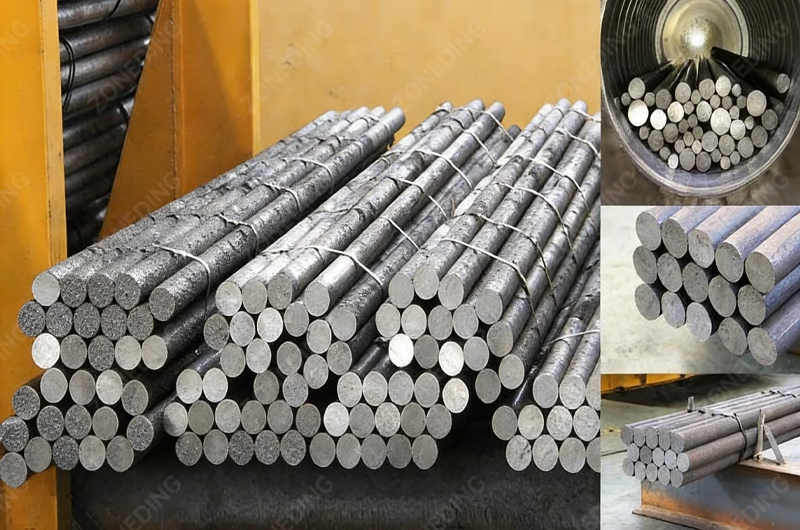
Cylpebs and rods provide more surface contact than balls for specific grinding targets. Rod Mills use long steel bars as the grinding media. These rods provide line contact instead of point contact. This allows the mill to crush the largest particles first while sparing the fines. Rod mills produce a very uniform product with a narrow size range. They are commonly used to make sand or to prepare feed for a ball mill. The rods roll over the material in a steady motion. This prevents the over-grinding that often happens with balls. Over-grinding is a waste of energy and can harm the recovery of gold or copper.
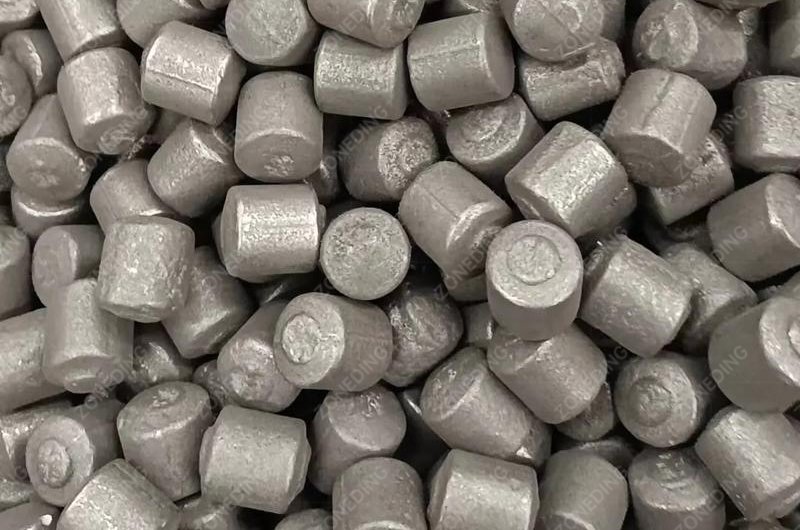
Cylpebs are short, cylindrical media with slightly rounded ends. They offer approximately 20 percent more surface area than balls of the same weight. This makes them highly effective for the fine grinding of soft materials. They pack more tightly in the mill than spheres. This increased packing density creates more friction zones. The cement industry uses cylpebs in the second chamber of large mills. This ensures the cement powder is extremely fine and smooth. However, cylpebs are not effective for breaking large rocks. They lack the impact energy of large balls. They are also prone to clogging discharge grates if the slots are too narrow.
Selecting the shape of the media depends on the desired final product. Balls are the most versatile and handle the widest range of feed sizes. Cylpebs are a specialized tool for fine polishing. Rods are a specialized tool for coarse, uniform crushing. A plant may use a rod mill for the first stage and a ball mill for the second. This combination optimizes the energy use of each machine.
Ceramic media prevents metallic contamination in high-purity mineral processing. This is essential for the production of glass, white ceramics, and high-purity quartz. Steel media leave iron particles in the product. These particles turn the powder gray or brown. Iron contamination ruins the value of high-quality minerals. Ceramic Ball Mills use alumina or zirconia balls to solve this problem. These materials are extremely hard and do not wear down into metallic dust. They are also chemically inert. They do not react with acids or alkalis in the slurry.
Alumina balls are the most common ceramic choice. They are cost-effective and have a hardness exceeding most minerals. However, alumina has a lower density than steel. Steel has a density of about 7.8 g/cm3. Alumina has a density of about 3.6 g/cm3. This means ceramic media provide less impact force. Operators must run the mill for a longer time or use a higher filling rate. Zirconia balls have a higher density of about 6.0 g/cm3. They grind faster than alumina but are much more expensive. Ceramic media must be paired with rubber or ceramic liners. Steel liners will destroy ceramic balls in a short time.
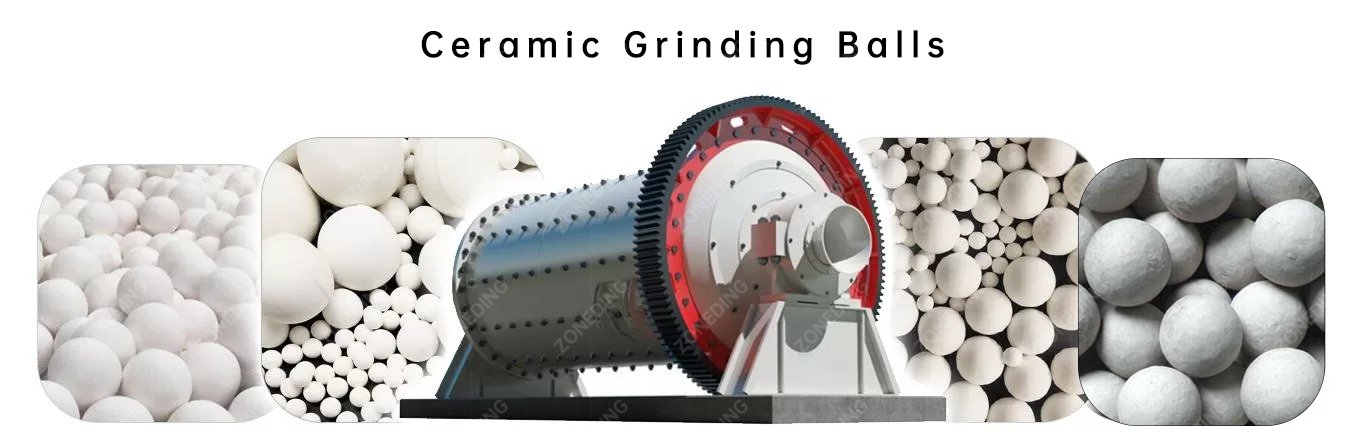
The choice between alumina and zirconia depends on the value of the final product. For most industrial minerals, alumina is the best balance of cost and performance. For high-tech electronics or pharmaceuticals, zirconia is preferred. Zirconia is also tougher and resists chipping better than alumina. Both types require careful handling. They can shatter if dropped on a hard concrete floor.
| Feature | Alumina Media | Zirconia Media | Practical Impact |
|---|---|---|---|
| Density | 3.6 g/cm3 | 6.0 g/cm3 | Zirconia grinds faster |
| Cost | Moderate | High | Alumina is better for budget |
| Hardness | Very High | Extremely High | Both resist wear well |
A common mistake in media selection is focusing only on hardness. High hardness helps a ball resist abrasion. However, very hard metal is often brittle. This leads to cracking and breakage under impact. This is the balance between hardness and toughness. Toughness is the ability of the ball to absorb energy without breaking. In a large mill, toughness is more important than extreme hardness. Forged balls provide this balance through heat treatment. Cast balls provide it through chromium and other alloys.
If a ball is too soft, it will wear out quickly. This increases the cost of media per ton. If a ball is too hard and brittle, it will shatter. Shattered balls are dangerous for the pumps and downstream equipment. They also block the discharge grates. The ideal ball has a hard outer shell and a tough core. This allows it to grind the ore while resisting the shocks of the fall. Engineers measure this using HRC for hardness and AK for impact toughness.
The initial load of a mill should contain a mix of ball sizes. This is called the grading ratio. A common ratio might be 30 percent large balls, 40 percent medium balls, and 30 percent small balls. The large balls break the incoming feed. The medium and small balls provide the surface area for fine grinding. Loading only large balls will result in a coarse discharge. Loading only small balls will cause the mill to “choke” on large rocks.
As the mill operates, the balls wear down. Big balls naturally become medium and small balls. Therefore, the daily recharge should usually consist only of the largest ball size. This maintains the “equilibrium charge” inside the mill. The mill will always contain a range of sizes. Regular screening of the charge is necessary. Small, misshapen balls should be removed every few months. These “scraps” take up space but do not help with the grinding.
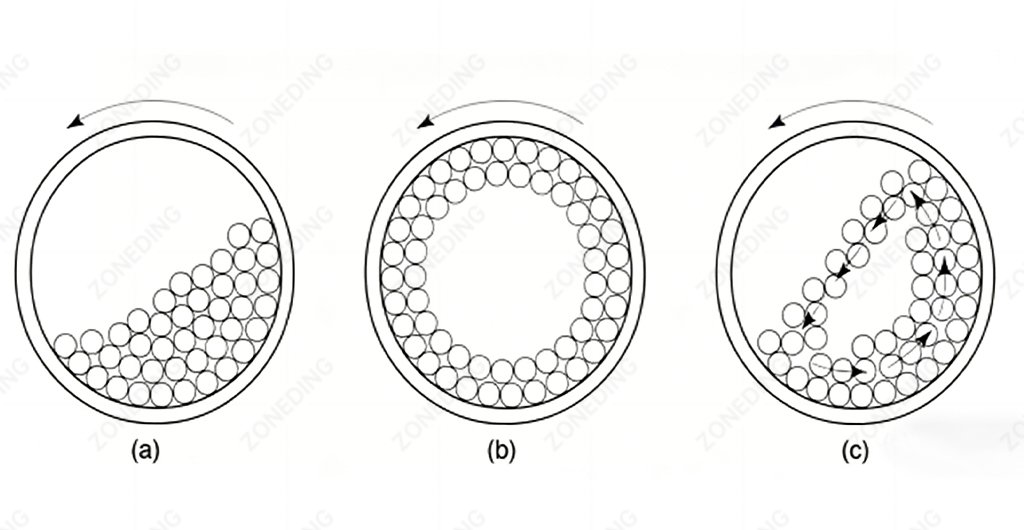
The filling rate is the volume of the mill occupied by the media. Most ball mills operate best at a filling rate between 35 percent and 45 percent. If the filling rate is too low, the production rate drops. If it is too high, the motor uses too much power without increasing the output. This is the peak energy efficiency point. The media should reach just below the center line of the mill.
A high filling rate also increases the wear on the liners. This is because the balls are packed too tightly and rub against the shell more often. A low filling rate can cause the balls to hit the liners directly. This leads to liner breakage. Measuring the filling rate is a simple task. An operator can measure the distance from the top of the mill to the top of the ball charge. This distance allows for the calculation of the percentage volume.
Mines must calculate how much metal they lose per ton of ore processed. This is the consumption rate. A typical rate might be 0.5 kg to 1.0 kg of steel per ton. Harder ores cause higher consumption. Wet grinding also increases consumption due to corrosion. Keeping a daily log of ball additions is vital. This allows the manager to predict when the next shipment of media is needed.
If the consumption rate suddenly increases, it may indicate a change in ore hardness. It could also mean the quality of the balls has dropped. Consistent recharge keeps the mill performance steady. If an operator skips the daily recharge, the production will drop slowly. Eventually, the mill will need a massive addition of balls. This causes a sudden shock to the system and can damage the liners.
Question 1: Can cast balls be used in a SAG mill?
Generally, no. The high impact in a SAG mill will cause cast balls to shatter. Forged steel balls are the only safe choice for high-impact environments. Using cast balls in a SAG mill leads to rapid failure and discharge grate blockage.
Question 2: What happens if the mill is overfilled with media?
Overfilling wastes electricity. The motor must lift more weight than necessary. It also reduces the “drop” height of the balls. This means they hit the ore with less force. The production rate actually decreases if the mill is too full.
Question 3: How does moisture affect steel ball wear?
Moisture increases wear by creating a corrosive environment. In a Wet Pan Mill or ball mill, water reacts with the steel. This causes rust, which is easily rubbed off by the ore. This “corrosive wear” can double the total metal loss compared to dry grinding.
Question 4: Should I use different sizes for the daily recharge?
No. It is best to only add the largest ball size required by the feed. The largest balls will wear down and fill the medium and small size slots naturally. Adding small balls manually often leads to an excess of small media.
Question 5: Why do balls lose their round shape?
This happens when the balls slide instead of tumbling. It is often caused by a mill speed that is too slow. It can also happen if the ore is too soft and does not provide enough friction. Misshapen balls grind very poorly.
ZONEDING is a professional manufacturer of mining and mineral processing machinery. Since 2004, the company has provided high-performance solutions to the global market. The product range includes Ball Mills, Magnetic Separators, and various crushing equipment. ZONEDING focuses on factory-direct sales to provide the best value. The team of engineers offers expert advice on media selection and production line design. The company has successfully exported equipment to over 120 countries.
Contact ZONEDING for professional advice on ball mill media and equipment optimization.
loading…
已经是到最后一篇内容了!
 Zoneding Machine