Your tailings pond is a costly liability. It takes up land, wastes water, and poses an environmental risk. You are paying to manage waste when you could be selling recovered products.
The solution is a modern dewatering system. By choosing the right equipment, such as a thickener, dewatering screen, or filter press based on your specific material, you can turn wet waste into dry, manageable solids and recycle over 90% of your water.
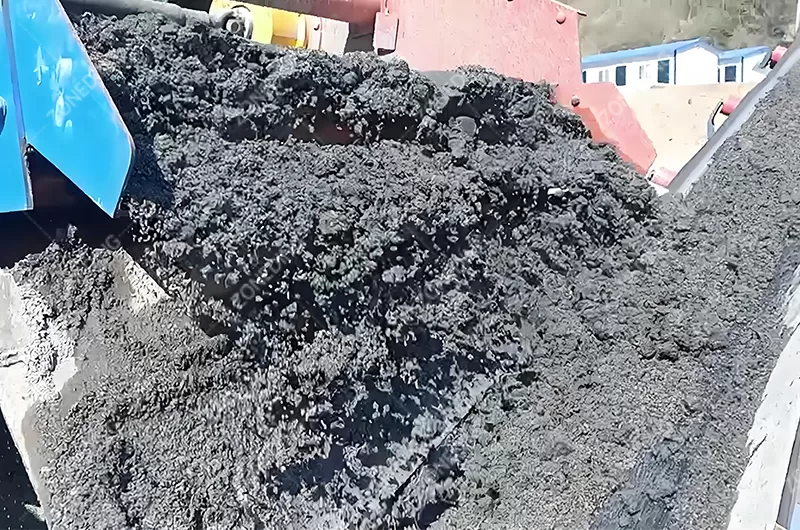
A dewatering screen discharging nearly dry sand onto a stockpile, with clear water being collected below
Dewatering is the process of removing water from a slurry of solids. For any mining or sand washing operation, it is a critical step. It ensures site stability, improves safety, and allows your operation to continue. But more importantly, it is your path to lower costs and higher profits. Let’s explore how to choose the right tools for this job.
Why Are Traditional Settling Ponds No Longer the Best Choice?
Settling ponds seem simple and cheap. Just dig a hole and pump the slurry in. But this outdated method is one of the most expensive mistakes a modern operation can make.
Settling ponds are inefficient, unsafe, and occupy vast amounts of valuable land. They lose huge amounts of water to evaporation and pose a constant risk of dam failure, while trapping valuable fine sand as unrecoverable waste.
I have walked the perimeter of countless tailings ponds. They are liabilities waiting to happen. First, they require an enormous footprint. That is land you could be using for expansion or other productive means. Second, you lose a massive amount of water to evaporation, which means you have to constantly source and pay for fresh water. Third, and most critically, they are a safety and environmental risk. A dam breach can be catastrophic. Finally, all the valuable fine material that gets washed away settles at the bottom of that pond forever. You are literally burying profit. Modern Dewatering Equipment solves all of these problems on a fraction of the land.
Ponds vs. Mechanical Dewatering
Feature
Settling Pond
Mechanical Dewatering System
Land Use
Extremely High
Very Low
Water Recovery
Low (High Evaporation)
High (>90%)
Safety
High Risk (Dam Failure)
Low Risk
Fine Sand Recovery
Almost None
High (Can recover valuable fines)
Operational Control
Poor
Precise and Immediate
What Is My Material? Tailings, Sand Sludge, or Silt?
Your slurry looks like mud. But the size and nature of the solid particles within that mud determine everything. Choosing the wrong machine for your specific slurry is like using a fishing net to catch dust.
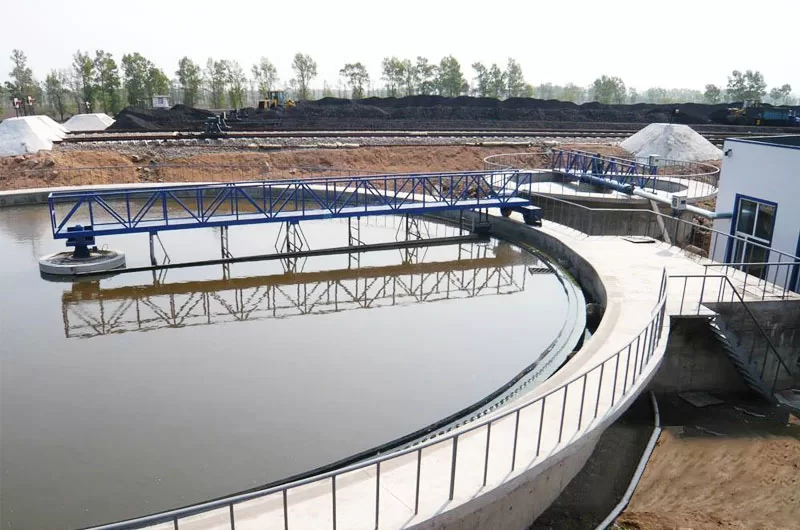
First, use a High Efficiency Concentrator (thickener) for all types. Then, for coarse sand or tailings, use a Dewatering Screen. For very fine clay or silt that is hard to dewater, you need a Filter Press for the final stage.
Thickener
Sandy Tailings
Every material requires a specialist. A sand and gravel operation’s primary goal is to dewater the finished sand product and recover any lost fines. A hard rock mine needs to handle massive volumes of fine-grained tailings safely. A construction site needs to deal with sticky clay-based slurry.
For a Sand Washing Plant, the main challenge is losing valuable fine sand into the wastewater. A Fine Sand Recovery Machine is the perfect solution. It is specifically designed to capture and dewater these fines, increasing your product yield. For Mine Tailings, the goal is usually a combination of water recovery and creating a stackable, dry solid for backfill or safe storage. A system using a High Efficiency Concentrator followed by a Dewatering Screen is often the most cost-effective for high volumes. For Construction Silt or Clay, the particles are extremely fine and hold water tightly. After initial thickening, a Filter Press is often required to squeeze out the remaining water and produce a very dry, solid cake.
Dewatering Screen vs. Filter Press: Which Is Drier and Cheaper?
You need dry material. But how dry? And at what cost? This is the core trade-off between the two main types of final dewatering equipment. One is fast and continuous; the other is slow and powerful.
A Dewatering Screen is a high-capacity, low-cost machine that produces a stackable, drip-free product. A Filter Press achieves the driest possible cake but has a higher capital and operational cost and works in batches.
A Dewatering Screen is a workhorse. It uses high-frequency vibration to force water through a polyurethane screen panel. The final product is typically around 15-20% moisture content. It is not bone-dry, but it is stackable, conveyable, and will not drip water. This is perfect for most aggregate and coarse tailings applications. Its key advantages are high throughput, continuous operation, and low operating costs. A Filter Press, on the other hand, is a specialist for difficult jobs. It pumps slurry into a series of chambers lined with filter cloths and uses high pressure to squeeze the water out. The result is a solid “cake” with moisture content as low as 10-15%. This is the best choice when you need the driest possible solid, or when dealing with very fine particles that a screen cannot handle. However, it is a batch process, which means it has lower continuous throughput and higher maintenance costs.
How Do I Recover Valuable Fine Sand from My Sludge?
That cloudy water flowing out of your sand washer is not just wastewater. It is full of money. Every fine particle of sand that washes away is a saleable product you are losing.
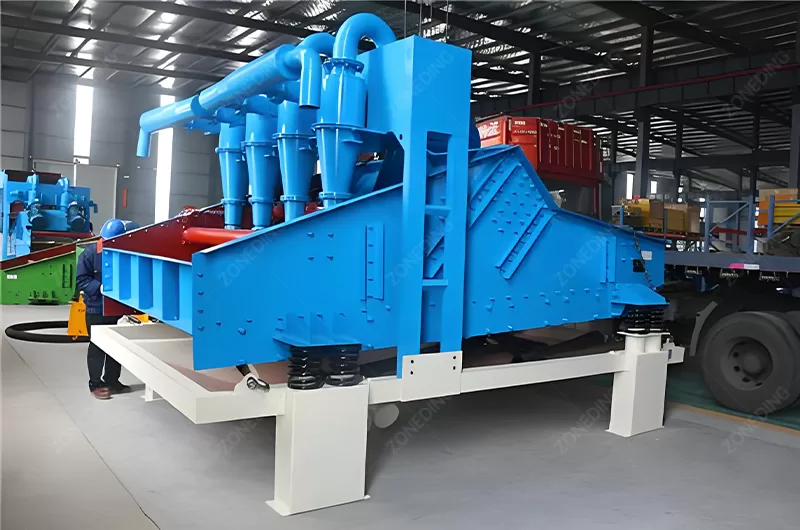
Fine sand recovery machine
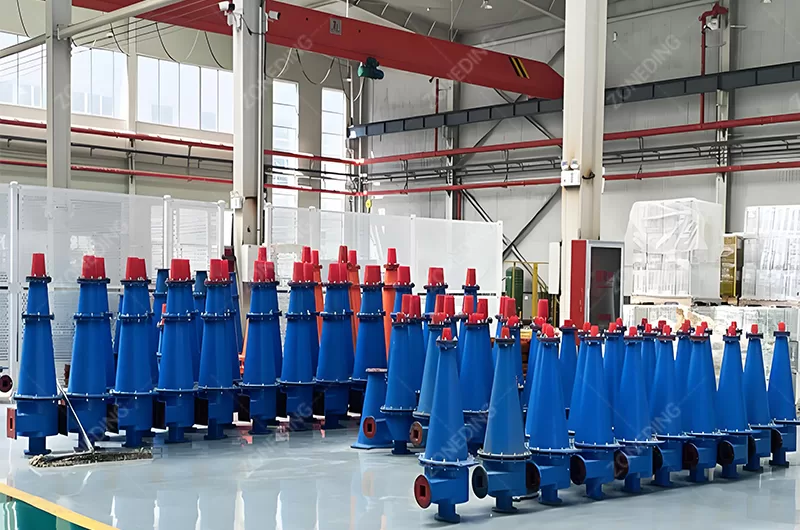
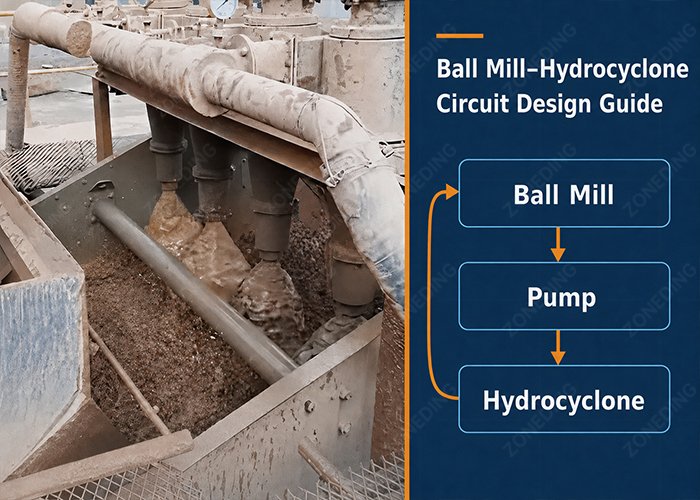
Hydrocyclone
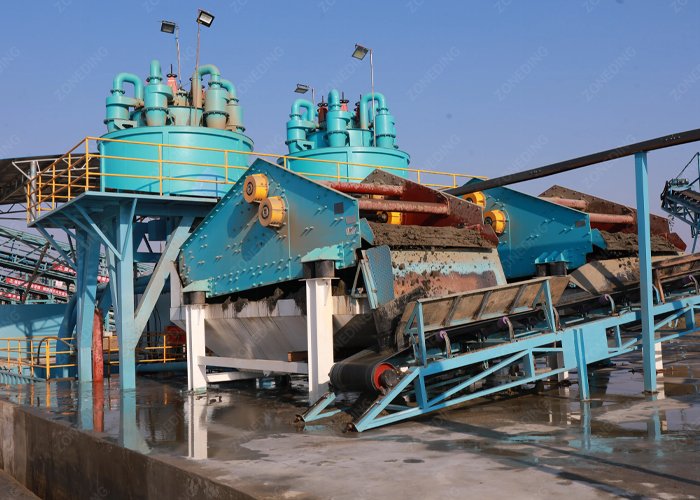
You recover valuable fines using a Fine Sand Recovery Machine. This single unit combines a hydrocyclone with a dewatering screen. It can recover over 90% of the lost fines, increasing your total sand output by 10-15%.
This is the definition of turning waste into treasure. The process is simple and brilliant. Your slurry (water mixed with fine sand) is pumped into a Hydrocyclone. The centrifugal force inside the cyclone separates the heavier sand particles from the water. The sand exits the bottom of the cyclone (the underflow) as a thick slurry and drops directly onto a dewatering screen. The screen vibrates the water out, producing a dry, saleable fine sand product. The wastewater exits the top of the cyclone (the overflow) and can be recycled back to your wash plant. A Fine Sand Recovery Machine is one of the best investments a sand producer can make. It often pays for itself in just a few months by increasing your product yield and reducing the amount of sludge you need to manage.
What Is in a Complete Dewatering System? What Is the Budget?
You understand the components. But how do they fit together? A proper solution is a complete, integrated system, not just one machine.
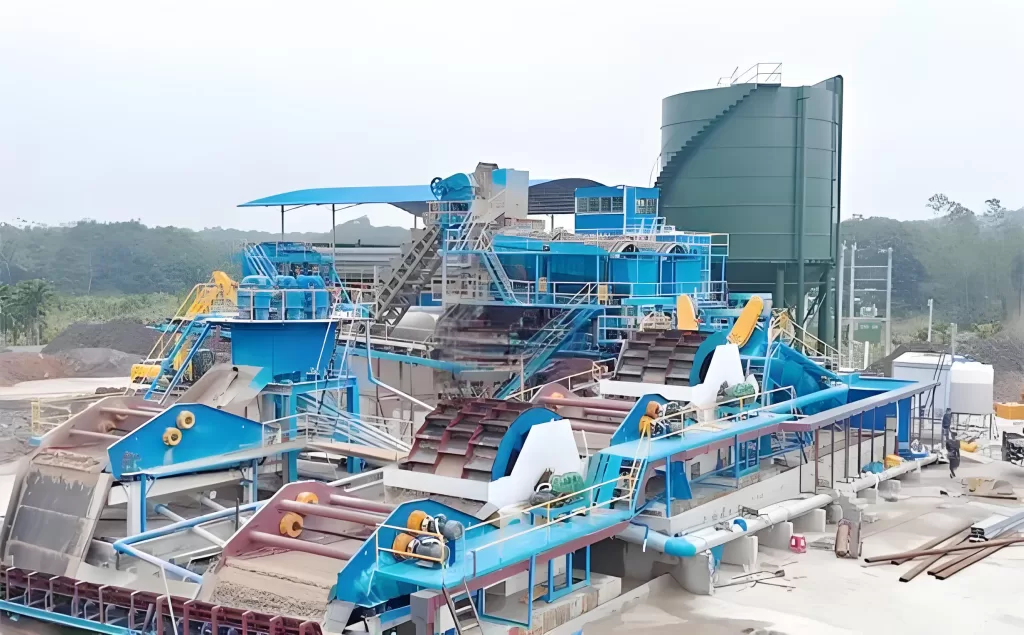
A complete system typically includes a slurry pump, a High Efficiency Concentrator (thickener) for initial water removal, and a final dewatering unit (screen or filter press). The investment depends on capacity and final dryness requirements.
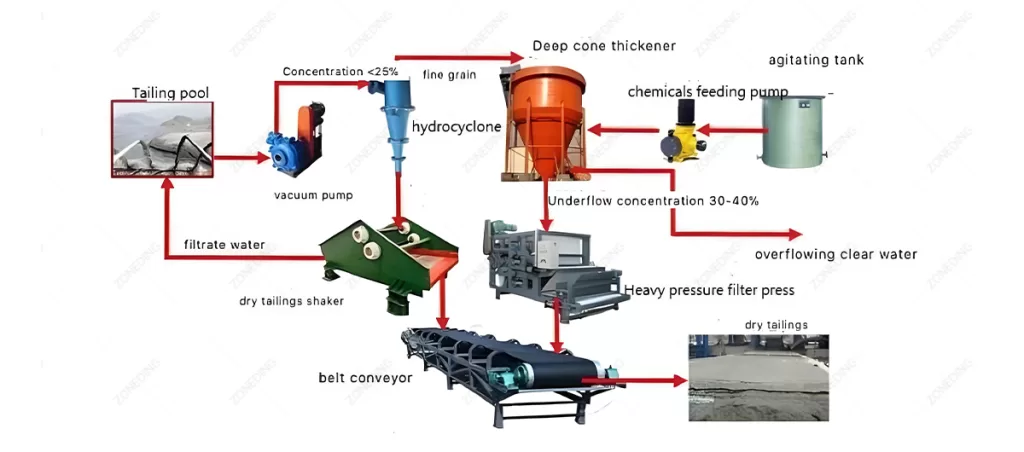
Typical system for Tailings Dewatering works
Here is how a typical system for Tailings Dewatering works:
Collection & Pumping: The slurry from your plant is collected in a sump and pumped to the thickener.
Thickening: The slurry enters a large tank called a High Efficiency Concentrator. A small amount of flocculant is added, which makes the solid particles clump together and settle much faster. Clear water overflows from the top of the thickener and is recycled immediately. The thickened sludge (now with much less water) is pumped from the bottom.
Final Dewatering: This thickened sludge is then sent to the final dewatering stage. This could be a Dewatering Screen for a stackable product or a filter press for a dry cake. The budget can range widely. A small, simple Fine Sand Recovery Machine might be a relatively low investment. A large-scale system for a major mine, including a massive thickener and multiple filter presses, can be a significant capital project. The key is that the return on investment, from water savings and recovered product, is often very fast.
What Happens to the Dry Solids and Recovered Water?
You have successfully separated your slurry. You have a pile of dry material and a tank of water. What can you do with them? This is where the real value is realized.
The dewatered solids can be sold, used as mine backfill, or for making bricks. The recovered water is typically over 90% clean and can be immediately reused in your plant, creating a closed-loop system that saves money and meets environmental regulations.
The goal of Tailings Dry Stacking is to create value from both outputs.
The Solids:
Mine Backfill: Dewatered tailings can be mixed with cement and used to fill underground voids, improving mine stability.
Construction Materials: The dry cake can be used as a base for roads or processed into bricks and blocks.
Safe Disposal: At a minimum, a dry, stackable solid is far cheaper and safer to transport and store than wet slurry. The Water: Recycling the process water is a huge benefit. You drastically reduce the need to purchase fresh water, which is a major operational cost. You also eliminate the discharge of dirty water into the environment, ensuring you meet or exceed all local regulations. A closed-loop water circuit is the hallmark of a modern, efficient, and responsible operation.
How Do I Get a Free Dewatering Test and Custom Solution?
You have seen the options, but every slurry is unique. Its particle size, mineralogy, and clay content are different. A standard solution is a guess. You need a guaranteed outcome.
The only way to be certain is with a professional lab test. We analyze a sample of your slurry to determine its exact properties. Based on this data, we design a custom-fit solution with a performance guarantee, so you can invest with confidence.
This is how you move from a problem to a solution without risk. Here is our process:
You Send Us a Sample: You provide us with a representative sample of your slurry.
We Conduct a Free Analysis: Our engineers and lab technicians perform a series of tests. We determine the particle size distribution, settling rate, and the optimal type and dosage of flocculant.
We Provide a Custom Proposal: Based on the test results and your capacity requirements, we design a complete Sludge Treatment Equipment system. The proposal includes a detailed flowsheet, equipment specifications, and a clear statement of the expected performance (e.g., final cake moisture, water clarity). This data-driven approach removes all guesswork. You will know exactly how the system will perform before you spend a single dollar.
Conclusion
Stop thinking of tailings and sludge as waste. With the right dewatering equipment, they are sources of profit and recycled water. It is time to drain your costly ponds and invest in a modern, efficient solution.
Understanding the main components of flotation machine is mandatory for maximizing profits in mineral processing plants. A flotation cell acts as a highly precise separation instrument. The internal mechanical structure dictates the exact slurry s...
Concrete recycling is a fast-growing industry. It turns old building waste into high-value products. Choosing the right machine is the most important part of the business. Different machines handle different materials and budgets. This guide compa...
Designing a profitable high-purity quartz sand production line requires strict adherence to physical and chemical principles. Quartz ore processing follows a strict sequence. Operators must crush, grind, classify, and purify the raw rock in order....
We use cookies to ensure that we give you the best experience on our website. If you continue to use this site we will assume that you are happy with it.
Privacy Policy
Send us a message
We would love to hear from you
Submit your question and our team will respond to the email provided as soon as possible.
 Zoneding Machine