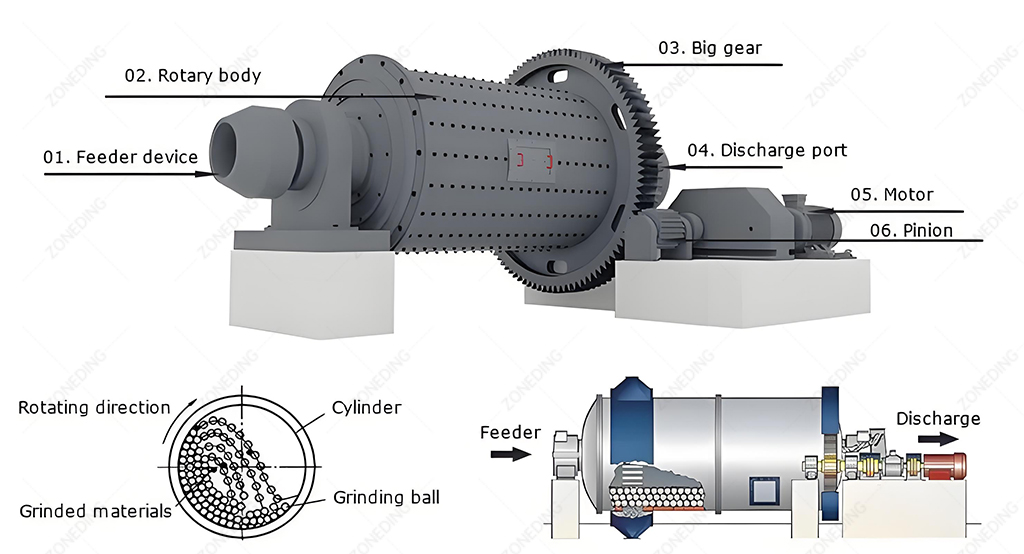
The Ball Mill is the heart of mineral processing. Its continuous, stable operation is crucial for the entire production line’s efficiency. Even with modern design and manufacturing, wear and unexpected damage to key components are unavoidable. Properly addressing these failures involves more than just replacing parts. It requires understanding their root causes. It also demands prediction, prevention, and optimization. This maximizes equipment uptime and minimizes production costs.
This guide offers practical strategies for four common Ball Mill Part Breakage scenarios. These insights will help you solve real-world production challenges.
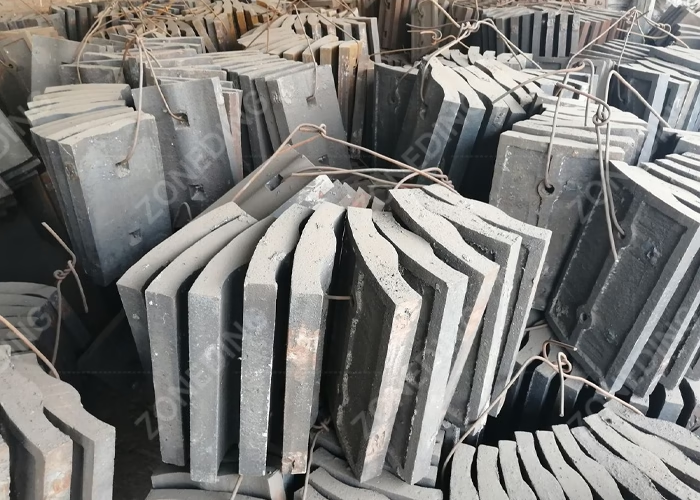
Liner plates directly contact ore and grinding media in the Ball Mill. Wear is inevitable. However, abnormal wear or Ball Mill Liner Breakage signals deeper issues. Handling these incidents properly is essential. It prevents further damage and maintains Crushing Efficiency.
The condition of the liners reveals much about the mill’s operation. Ignoring these signs can lead to costly repairs. It also causes significant downtime. Proper diagnosis and preventive action are key for Ball Mill Maintenance.
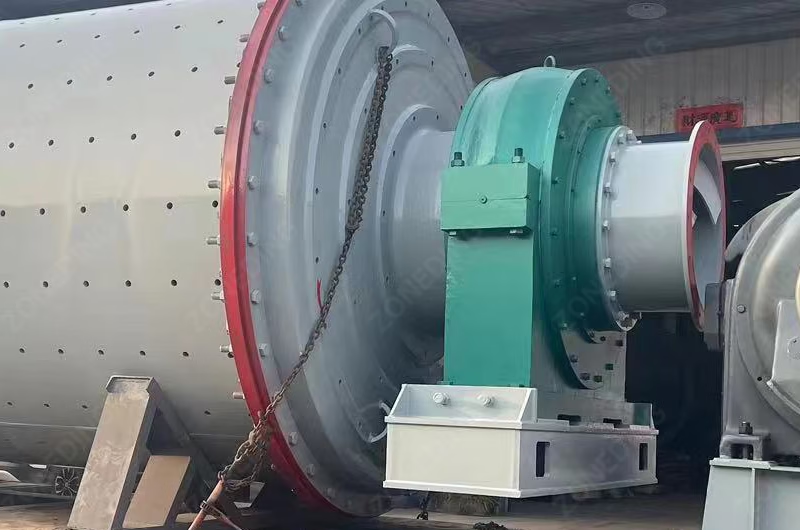
Ball Mill Liners
Ball Mill Liners
Expert Insights on Liner Wear
Liner wear patterns offer clues to mill operation. Localized pitting or grooving, instead of uniform wear, suggests an imbalanced ball charge. The mill load might be too low. This leads to direct ball impact instead of proper layered grinding. Ball Mill Liner Breakage near bolt holes often indicates insufficient bolt preload or uneven installation. Many facilities focus only on when to replace liners. Purchasing decisions frequently overlook wear cause analysis, focusing solely on hardness rather than toughness. The outcome is brittle liners highly susceptible to impact breakage.
Liners do more than protect the shell. They regulate grinding efficiency. Their material and shape (lifting bars, corrugated, smooth) directly influence ball trajectories. They also affect impact and grinding actions. Abnormal wear silently points to an unsuitable grinding environment.
Strategies for Liner Breakage
Immediate Action: If you find loose or large-scale liner detachment, stop the mill immediately. Inspect and replace damaged liners. This prevents secondary damage to the mill shell. It also avoids abnormal impacts on the grinding balls.
In-depth Diagnosis: Document and analyze the wear patterns and breakage locations.
Rapid uniform wear: Check ore abrasiveness. Verify ball hardness and material. Assess if mill speed is too high.
Severe localized wear: Review ball charge composition. Look for “big ball, small job” scenarios. This means too many large balls, too few small ones. This causes large balls to directly impact the liners.
Breakage: Check liner material for brittleness. Ensure bolts are tightened and evenly stressed. Confirm proper contact between the liner back and the shell, without gaps.
System Optimization and Long-term Performance:
Optimize ball charge: Adjust ball size distribution based on liner wear patterns. Increase layered crushing effects.
Select suitable liner material and shape: Choose materials balancing abrasion and impact resistance. Base this on ore properties and grinding objectives (coarse/fine grinding). High-manganese steel suits high-impact coarse grinding. Chrome-moly alloy steel suits high-wear fine grinding.
Strict installation standards: Ensure no gaps between liners and shell. All bolts must be torqued as specified. Regularly check tightness. The flatness of rubber backing pads, if used, is also critical.
Preventive maintenance, like regular inspection and optimizing ball charge, costs less. It is cheaper than emergency replacement and shell repair. Selecting liners with a long life and uniform wear significantly lowers the grinding cost per ton of ore. This is a key aspect of improving Mill Liner Life.
How to Handle Abnormal Wear or Breakage of Ball Mill Grinding Media (Steel Balls)?
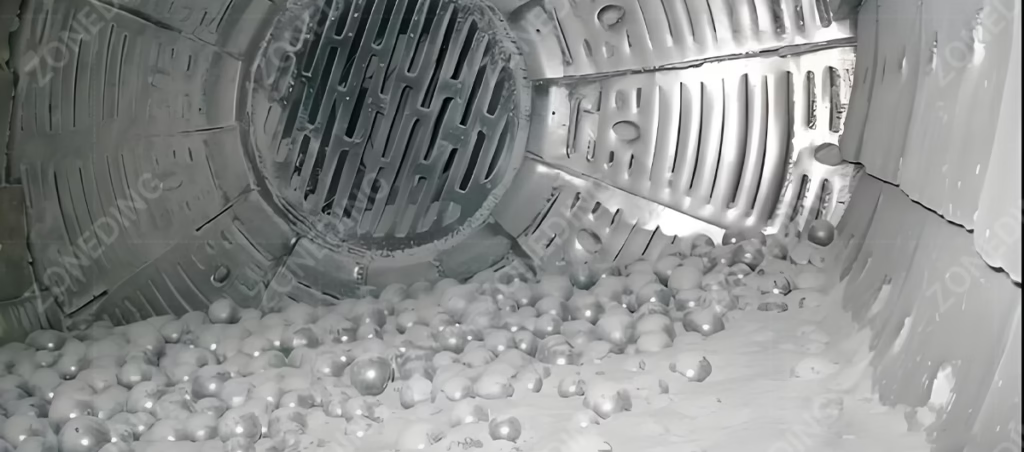
Grinding media, primarily steel balls, are crucial for effective grinding in the Ball Mill. Abnormal wear or Ball Mill Steel Ball Breakage significantly impacts grinding efficiency. It increases operating costs. Addressing these issues correctly is vital for maintaining consistent production. It also ensures the overall Equipment Reliability.
It is not enough to just add more steel balls. Understanding the underlying causes of their degradation is key. This knowledge allows for proactive measures. It optimizes the Grinding Media Consumption and performance.
Ball mill steel ball configuration
Expert Insights on Grinding Media Degradation
Over 90% of severe grinding media issues stem not from the balls’ inherent quality, but from operational factors. Abnormal wear, like flattening or spalling, often suggests incorrect ball size, unsuitable material for the ore, or improper pulp conditions. Breakage points to poor quality balls (with internal defects) or severe impact conditions. These severe impact conditions could be caused by tramp material or very low pulp levels.
Many operations simply add new balls without analyzing wear patterns. They might use cheap, low-quality media. This seems cost-effective upfront. But it leads to higher overall Grinding Media Consumption. It also causes inefficient grinding and potential mill damage. Grinding media acts as the “cutting tool” of the mill. Its condition directly reflects the effectiveness of the grinding process.
Strategies for Grinding Media Issues
Immediate Action: Address any sudden increase in media consumption. Investigate abnormal sounds coming from the mill. These sounds might indicate broken balls or improper grinding action.
In-depth Diagnosis:
Excessive wear: Check the hardness of the balls against the hardness of the ore. Verify the pulp density and mill speed. These factors heavily influence wear rates.
Deformation (flattening/oval shape): This indicates insufficient ball hardness or an incorrect ball size distribution. Balls might be too soft to withstand the impact.
Breakage: Inspect the quality of the balls for internal defects. Check for severe impact conditions, such as tramp materials entering the mill or operating with very low pulp levels.
System Optimization and Long-term Performance:
Optimize Grinding Media Charge: Adjust the ball size distribution based on the feed size, desired product fineness, and even liner wear patterns. Use smaller balls for finer grinding and larger balls for coarser feed.
Select Appropriate Media Material: Choose balls with optimal hardness, toughness, and wear resistance for your specific ore. Options include high-chromium cast iron or forged steel, each suitable for different applications.
Maintain Optimal Pulp Density: Too low a pulp density can increase damaging metal-on-metal impact wear. Too high a density can reduce effective grinding action.
Regular Ball Addition Strategy: Implement a scientific ball addition schedule. Base this on measured consumption rates and desired charge fill levels. This prevents both under-filling and over-filling.
High-quality grinding media, though initially more expensive, often results in lower per-ton grinding costs. This is due to longer lifespan and better efficiency. Poor quality media leads to higher consumption, frequent additions, and potential damage to liners. These strategies are essential for effective Ball Mill Maintenance and reducing Downtime Reduction.
How to Troubleshoot and Repair Ball Mill Main Bearing (Bushing) Failure?
Bearings support the rotation of the Ball Mill. They are critical components. Their failure can lead to severe operational issues, including prolonged shutdowns or even main shaft damage. Addressing Ball Mill Main Bearing Failure swiftly and effectively is paramount. It ensures the longevity and Equipment Reliability of the mill.
A bearing failure is rarely an isolated event. It often points to systemic issues. These issues can be lubrication problems, improper installation, or shaft misalignment. Proactive monitoring and precise maintenance are crucial.
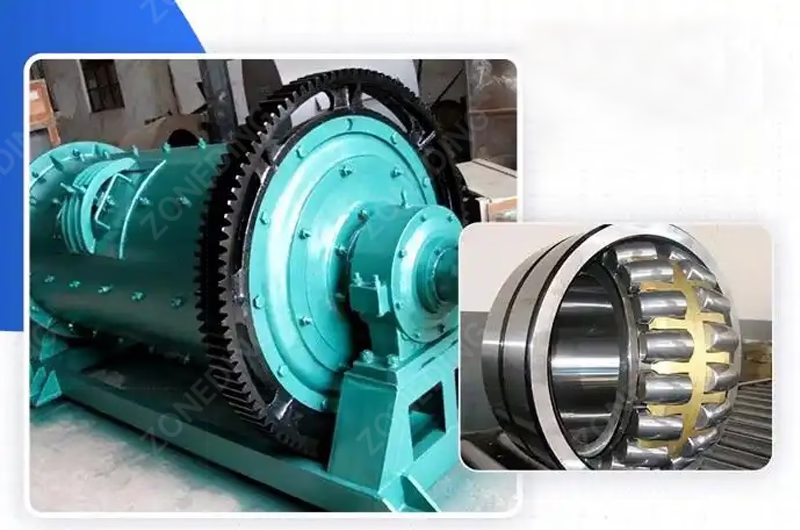
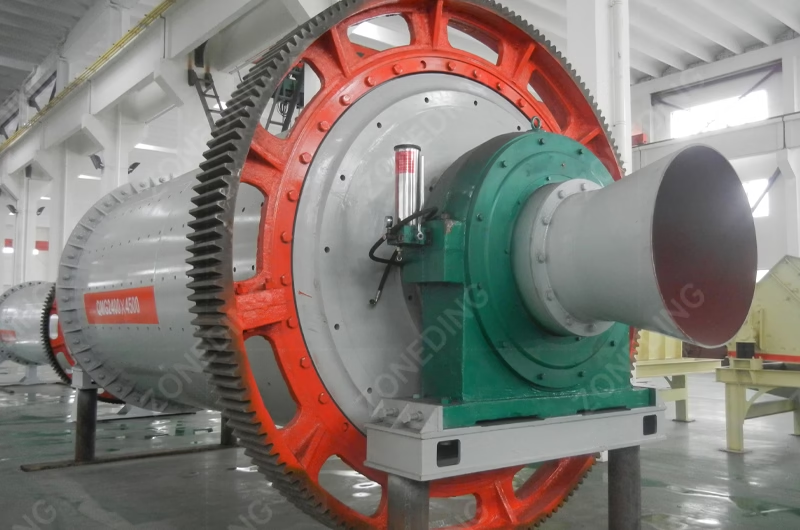
Ball mill bearing
Ball mill bearing systems
Expert Insights on Bearing Failures
Ball Mill Main Bearing Failure or damage is often preventable. Lubrication issues are common. But over 80% of failures relate to overload, improper installation (especially of taper sleeves), shaft misalignment, or oil seal failure allowing contaminants. An abnormal rise in bearing temperature is the clearest early warning sign of impending failure. Many operators overlook daily monitoring of bearing temperature, vibration, and noise. Incorrect installation during bearing replacement is a frequent cause of new bearing failures. For example, using force instead of proper tools.
Bearings are like the “joints” of the ball mill. Their health directly reflects the machine’s “blood circulation” (lubrication) and “skeletal structure” (alignment). Any “joint dislocation” or “blood shortage” leads to severe consequences.
Strategies for Bearing Failure
Immediate Action: If bearing temperature rises abnormally (exceeding alarm limits), stop the mill immediately. Inspect the bearing. If it is burned out, replace it.
In-depth Diagnosis:
Burnout: Check the lubrication system. Look for lubrication interruption, poor oil quality, or inadequate cooling.
Abnormal wear (pitting, spalling, discoloration): Check if the bearing type matches the load. Verify proper installation (e.g., correct preload). Check for failed oil seals, which allow moisture or dust ingress. For slide bearings, inspect babbitt wear and oil film formation. For rolling bearings, analyze vibration data to pinpoint internal/external race, rolling element, or cage damage.
Misalignment: Conduct laser alignment checks on the entire shaft system.
System Optimization and Long-term Performance:
Optimize lubrication and cooling: Ensure the correct lubricant grade, cleanliness, supply pressure, and flow. Confirm cooler functionality. Maintain main bearing oil film pressure within specified ranges.
Professional installation: Bearing installation must be done by experienced technicians using specialized tools. These include induction heaters or hydraulic tools. This ensures correct seating and no internal stress.
Strict oil management: Conduct regular oil sample analysis. This detects wear particles and contaminants. It helps identify potential issues early.
Vibration and temperature monitoring: Install online monitoring systems. These provide real-time data on bearing temperature and vibration. They help establish historical trends. This predicts future failures.
Bearings are precision components and expensive. More importantly, bearing failure can damage shaft journals or bearing housings. This multiplies repair costs. Investing in predictive maintenance, like oil analysis, monitoring equipment, and professional training, is highly cost-effective. These are essential parts of Preventive Maintenance and minimizing Downtime Reduction.
How to Handle Emergency Situations and Prevent Breakage of Ball Mill Girth Gear and Pinion?
The large girth gear and small pinion are critical to the Ball Mill‘s drive system. Their failure is often catastrophic. It can lead to complete operational halts. Addressing Ball Mill Gear Breakage requires quick action and thorough investigation. This is crucial for maintaining Equipment Reliability.
Such failures are seldom sudden. They usually result from accumulated issues. These issues include poor installation, lubrication problems, or foundation instability. Understanding these root causes is vital for effective Ball Mill Troubleshooting.
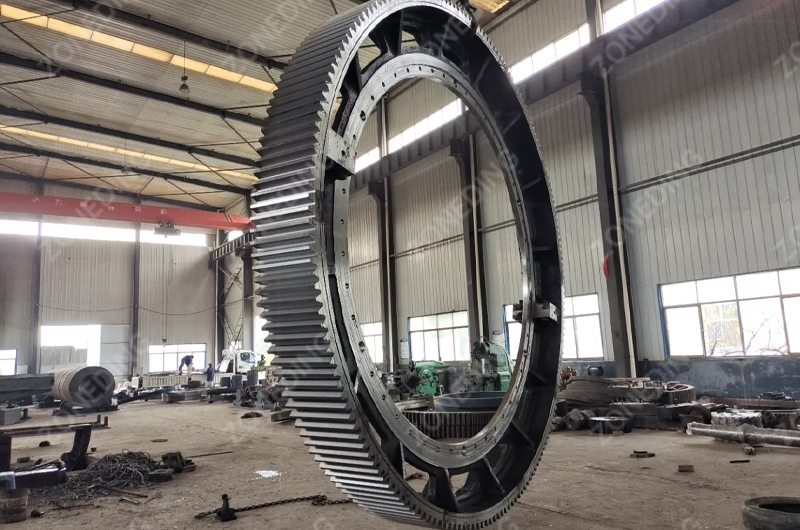
Ball Mill Gear
Ball mill gear
Expert Insights on Gear Failures
Over 90% of gear breakages or abnormal wear are not due to inherent gear quality. They are caused by installation accuracy, poor lubrication, foundation settlement, or prolonged overload. Early wear signs, such as pitting, spalling, or scuffing on gear surfaces, are clear indicators. These occur long before actual tooth breakage. Many facilities neglect daily lubrication, foundation settlement monitoring, and regular checks of gear mesh conditions.
Gears are like human “joints.” They need precise alignment and continuous lubrication for smooth operation. Any “joint dislocation” or “lack of blood” leads to severe consequences.
Strategies for Gear Breakage
Immediate Action: If you detect tooth breakage, abnormal noise, or severe vibration, immediately stop the mill. This prevents further damage to the entire drive train.
In-depth Diagnosis:
Breakage: Check for impact overload. This could be a sudden mill blockage. Assess the gear mesh. Look for excessive or insufficient backlash. Check for foundation settlement. This can cause shaft misalignment, leading to uneven load distribution.
Abnormal wear (pitting, spalling, scuffing): First, check the lubrication system. This includes oil cleanliness, viscosity, supply volume, and spray points. Next, check gear mesh accuracy. Pitting often relates to contaminated oil or pressure issues. Spalling indicates fatigue wear. Scuffing suggests high temperatures due to insufficient lubrication.
System Optimization and Long-term Performance:
Strict installation and alignment: After installation or major overhauls, professional personnel must perform precise alignment using laser alignment tools. Ensure radial runout and axial float of both the girth gear and pinion are within permissible limits.
Optimize lubrication system: Use industrial gear oil that meets specifications. Regularly test oil quality for contamination or degradation. Ensure spray nozzles are correctly positioned. Confirm stable oil supply pressure and flow. Regularly clean the oil tank and replace filters.
Foundation settlement monitoring: Periodically monitor the mill’s foundation for settlement. If any abnormalities are detected, promptly reinforce or level the foundation.
Load control: Avoid prolonged overloading of the Ball Mill. This prevents excessive stress on the gears.
Replacing a set of girth gears and pinions is extremely costly. It often involves weeks of downtime. The investment in regular lubrication and alignment checks is minimal compared to avoiding catastrophic failure. These are crucial steps for Preventive Maintenance and ensuring high Equipment Reliability.
Summary and Recommendations
My 50 years of experience tell me Ball Mill Troubleshooting is not just reactive “firefighting.” It is a comprehensive management art. It involves equipment knowledge, mineralogy, operational procedures, maintenance management, and data analysis. Treat each part failure as an opportunity to learn and optimize. Dig deep into the root causes. Adopt systemic preventive measures. This will truly enhance the Ball Mill‘s operating efficiency and lifespan. It will bring sustained value to your mining operation.
To maximize your investment, prioritize dynamic assessment of liner wear. Ensure optimal grinding media composition. Implement robust bearing lubrication and monitoring. Conduct precise gear alignment and regular foundation checks. Embrace data-driven monitoring for continuous optimization. These steps ensure peak performance and profitability for your Mining Equipment.
About ZONEDING
ZONEDING has been a leader in mineral processing since 2004. We provide a full range of Crushing Equipment and Beneficiation Equipment and solutions. We serve clients worldwide. ZONEDING specializes in customized crushing solutions. Our machines are recognized for reliability, efficiency, and top performance. We offer full-process support. This covers design, manufacturing, installation, and after-sales service. ZONEDING assists in achieving superior production value. This ensures a successful investment.
Contact us today. Our experts can assist in designing or optimizing any Crushing Production Line. Maximize your mineral value with ZONEDING’s proven technology and experience.
Understanding the main components of flotation machine is mandatory for maximizing profits in mineral processing plants. A flotation cell acts as a highly precise separation instrument. The internal mechanical structure dictates the exact slurry s...
Choosing the right gravity separation method is the most important step for a profitable mine. Both the shaking table and the jigging machine use the weight of minerals to separate them from waste rock. But choosing the wrong one leads to massive ...
Many investors consider gold cyanidation extraction a simple chemical reaction. Commercial-grade operations face severe mechanical and metallurgical challenges daily. A successful plant demands precise engineering to match the specific ore chemist...
We use cookies to ensure that we give you the best experience on our website. If you continue to use this site we will assume that you are happy with it.
Privacy Policy
Send us a message
We would love to hear from you
Submit your question and our team will respond to the email provided as soon as possible.
 Zoneding Machine