 Zoneding Machine












How to Select Ball Mill Liners by Ore Hardness
540Learn how ore hardness, abrasiveness, feed size, impact, and mill conditions affect ball mill liner selection and service life.
View detailsSearch the whole station Crushing Equipment
Building a modern gold cyanidation plant is a complex undertaking that transforms raw ore into pure gold. This journey requires more than just equipment; it demands a deep understanding of chemistry, engineering, and environmental stewardship. The choice of cyanidation process, from Heap Leaching to the CIL process, is a critical decision that shapes the entire project. This blueprint provides a complete guide for investors and operators on the essential steps for successful gold plant construction, from initial ore testing to final gold bar.
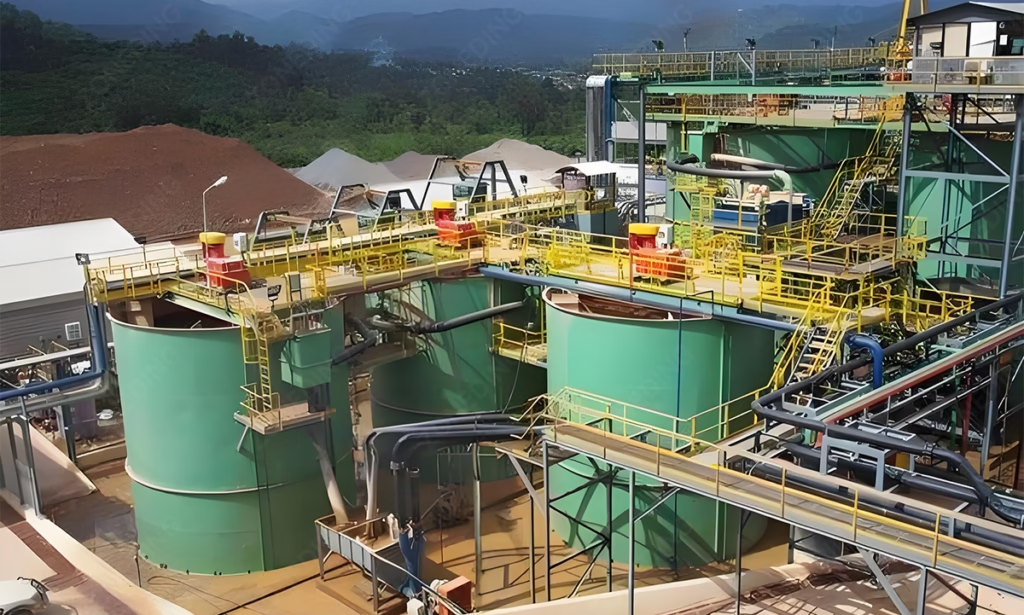
The choice of cyanidation process is the single most important decision that determines a project’s profitability. It is not a one-size-fits-all solution. A process that is highly profitable for one type of ore will lead to financial disaster with another. The selection of the gold ore beneficiation process directly impacts capital expenditure (CAPEX), operational expenditure (OPEX), and the ultimate gold recovery rate. For example, choosing a high-cost CIL plant for an ore that could be profitably heap-leached would destroy the project’s economics. Conversely, trying to heap leach an ore that requires fine grinding will result in catastrophic recovery losses. Getting this first step right is the foundation of a successful investment.
Before any concrete is poured, you must understand your ore’s personality. Ore amenability testing is a non-negotiable part of any gold project feasibility study. These metallurgical tests provide the critical data needed for plant design.
Key tests include:
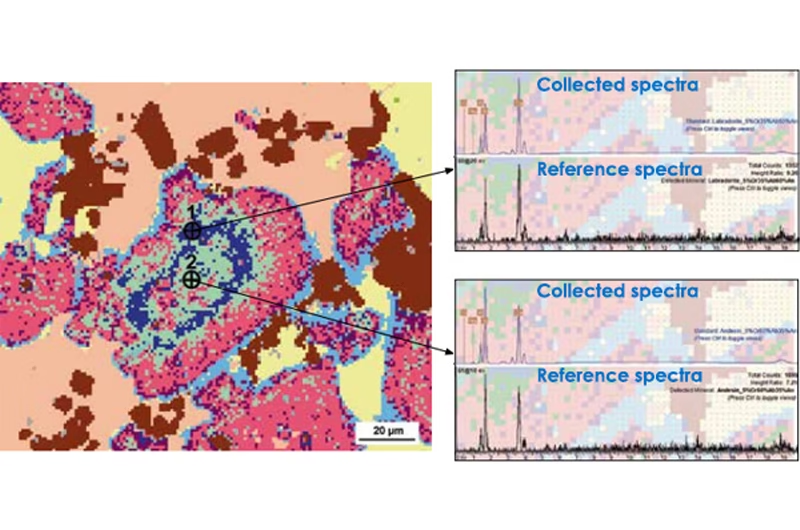
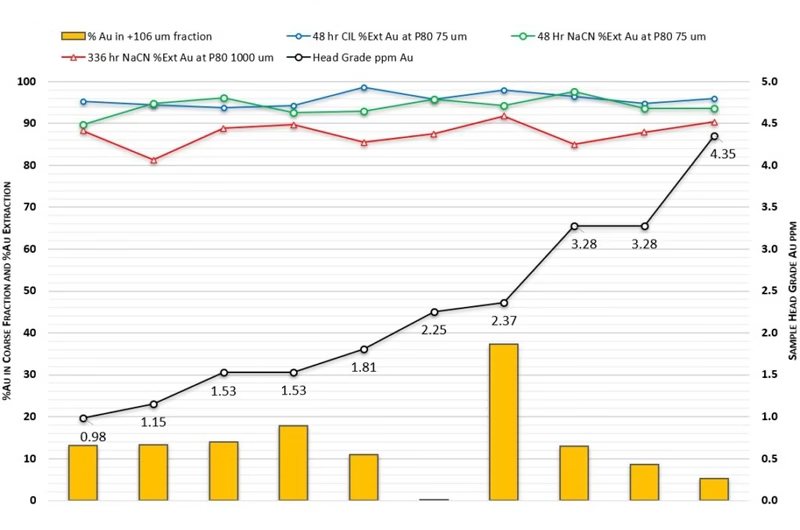
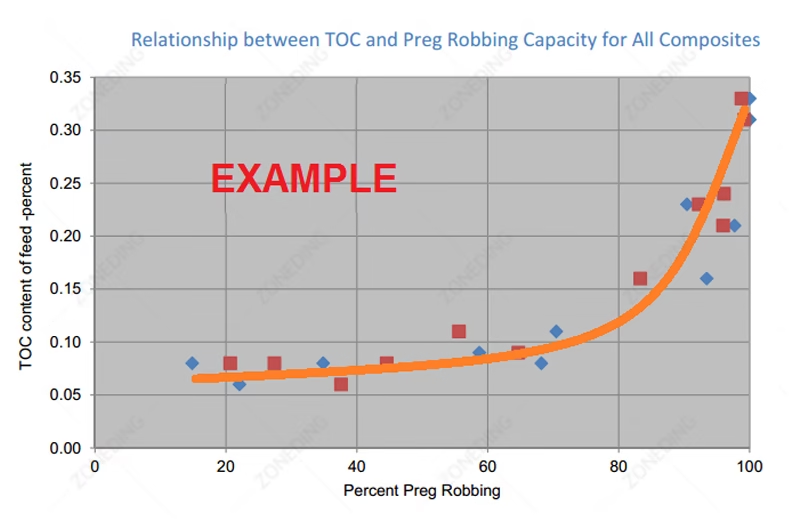
These tests provide the hard data needed to select the correct process and design an efficient plant. Skipping this step is the fastest way to project failure.
Heap Leaching is a powerful and cost-effective cyanidation process designed specifically for large, low-grade oxide gold deposits. The process avoids the high costs of grinding and agitation.
The steps are:
While recovery rates are lower than a CIL plant, the drastically lower capital and operating costs make Heap Leaching the most profitable method for the right type of ore.
The Carbon-in-Leach (CIL process) and Carbon-in-Pulp (CIP process) are two highly efficient agitated tank leaching methods designed for high gold recovery from finely ground ore. They are the standard for most hard-rock gold mines.
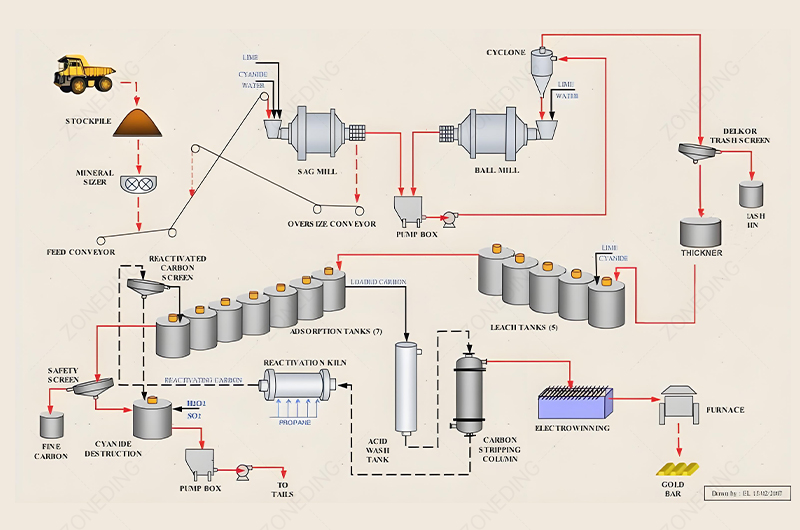
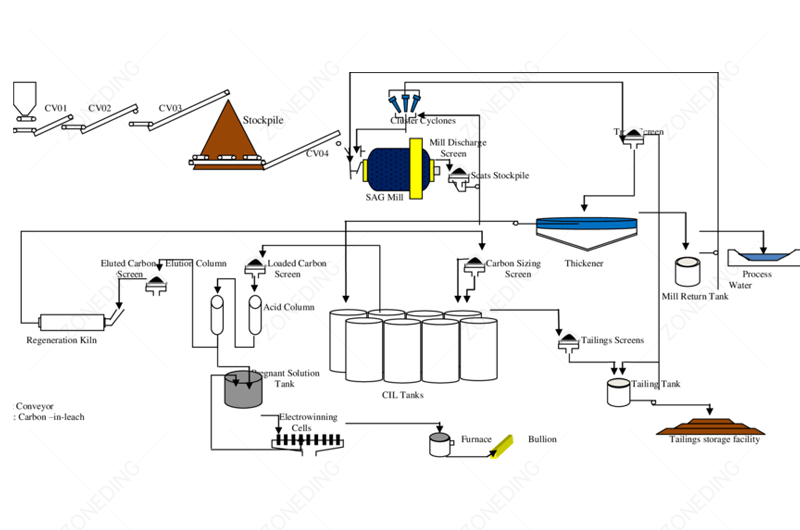
The choice depends on the ore. CIP is simpler and often preferred for non-problematic ores. CIL is essential for “preg-robbing” ores. In these ores, natural carbon competes with the activated carbon. The CIL process gives the activated carbon a chance to capture the gold as soon as it dissolves, preventing it from being lost to the tailings.
A typical gold processing plant using the CIL/CIP method is a complex facility with several interconnected core units. Each unit must function perfectly for the whole plant to succeed.

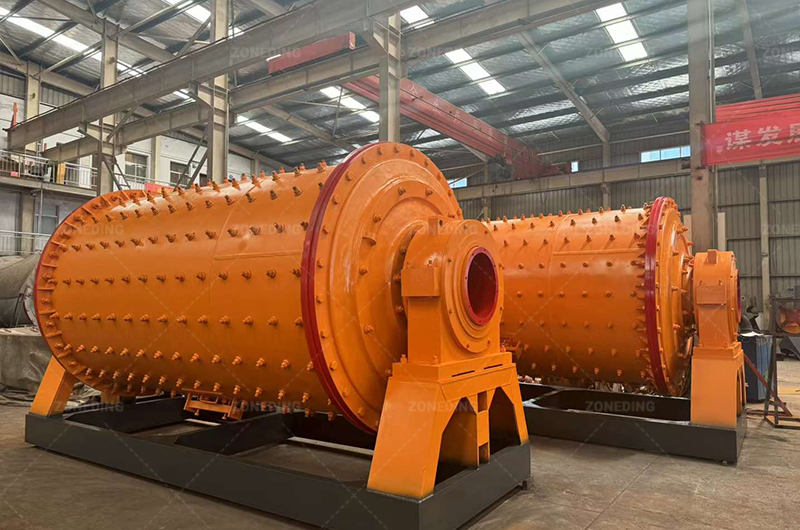
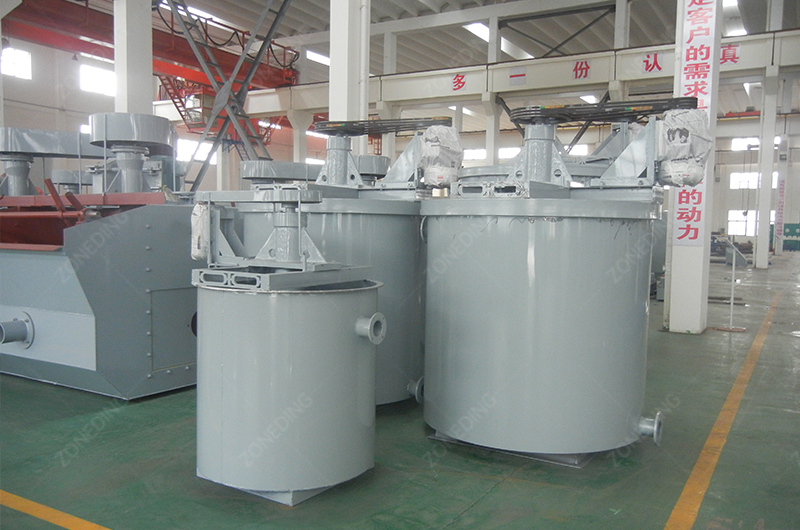
| Process Unit | Key Equipment | Primary Function | Your Operational Goal |
|---|---|---|---|
| Comminution (Crushing & Grinding) | Jaw Crusher, Ball Mill | Liberate gold particles from the waste rock by reducing ore to a fine powder. | Achieve target grind size with minimal energy. |
| Leaching & Adsorption | Leaching Tanks, Agitators, Carbon Screens | Dissolve gold using cyanide and capture it onto activated carbon (CIL/CIP). | Maximize gold dissolution and loading onto carbon. |
| Desorption & Electrowinning | Elution and Electrowinning System, Acid Wash Column | Strip the gold from the loaded carbon and plate it onto steel wool cathodes as a sludge. | Efficiently recover gold from carbon into a solid. |
| Gold Smelting | Induction Furnace, Gold Pouring Molds | Melt the gold sludge with fluxes to remove impurities and produce pure gold bars (Golden). | Produce high-purity, saleable gold bars. |
| Reagents & Utilities | Cyanide Mixing, Lime Silo, Air Compressors, Water Systems | Prepare and distribute all necessary chemicals, air, and water for the process. | Ensure a consistent and reliable supply. |
Modern gold plant construction must prioritize safety and environmental protection. A robust cyanide management and cyanide tailing treatment system is not an optional extra; it is a core design requirement.
Key design elements include:
A proactive approach to environmental design ensures regulatory compliance and protects the company’s social license to operate.
Navigating the complexities of gold plant construction, from initial testing to commissioning, requires specialized expertise. An Engineering, Procurement, and Construction Management (EPCM) service provides a comprehensive, turnkey solution.
As a provider of gold plant EPCM services, we at ZONEDING offer a single point of contact for your entire project. Our process includes:
This integrated approach streamlines the project, reduces risk, and ensures your plant is built on a solid foundation of expert metallurgical and engineering design.
Question 1: What is the difference between the CIL and CIP process?
In CIP, leaching is completed first, then adsorption. In CIL, leaching and adsorption happen simultaneously in the same tanks. CIL is specifically chosen for ‘preg-robbing’ ores to prevent natural carbon from capturing the dissolved gold.
Question 2: When is Heap Leaching the best cyanidation process?
Heap Leaching is best for large, low-grade oxide gold deposits. Its low capital cost makes it highly profitable for these specific ore types, despite having a lower recovery rate than CIL/CIP.
Question 3: What is ‘preg-robbing’ ore and why is it a problem?
‘Preg-robbing’ ore contains natural carbon that adsorbs dissolved gold, competing with the activated carbon in the circuit. This can lead to catastrophic gold losses to the tailings if not managed with a CIL process.
Question 4: What is the most critical safety aspect of a gold plant construction?
The most critical safety aspect is containment. All cyanide-handling areas must be within a fully bunded, impermeable area to prevent spills from reaching the environment. This is a non-negotiable part of modern gold plant design.
Building a successful gold cyanidation plant is a journey from detailed science to robust engineering. Success is not accidental; it is designed.
Since 2004, ZONEDING has been a leader in designing, manufacturing, and constructing mineral processing plants worldwide. We specialize in providing complete, customized gold plant construction solutions based on the unique characteristics of your ore deposit. Our integrated EPCM services cover everything from initial ore amenability testing to the final pouring of a gold bar. We build plants that are not only efficient and profitable but also safe, compliant, and built to last.
Contact us to discuss your gold project. We have the expertise and the technology to turn your resource into a successful reality.
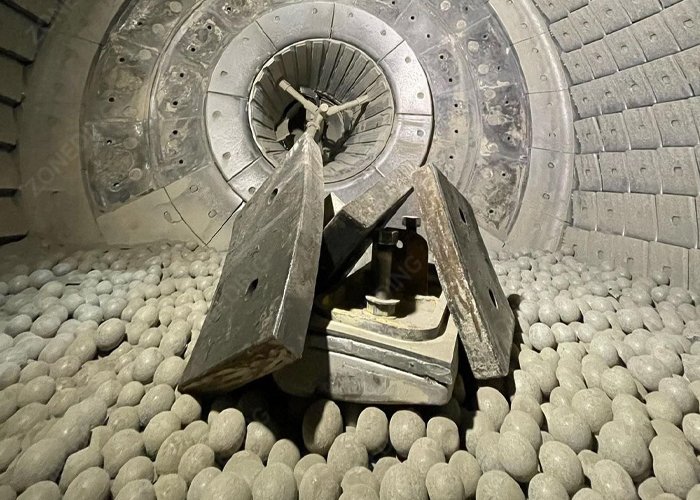
Learn how ore hardness, abrasiveness, feed size, impact, and mill conditions affect ball mill liner selection and service life.
View details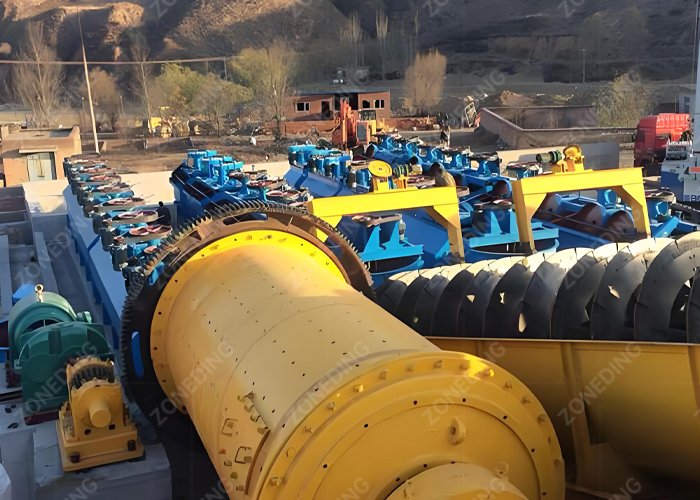
Building a highly profitable mineral processing facility requires a strictly logical equipment sequence. A complete copper-gold ore processing line must follow a precise physical and chemical path. The rock must be crushed, ground, classified, and...
View details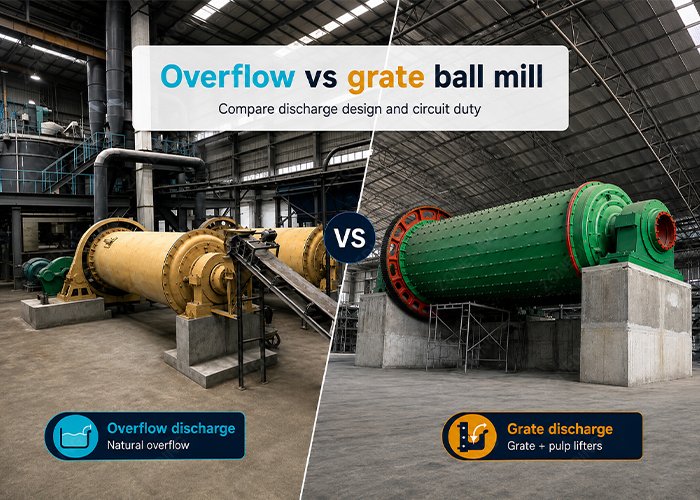
Compare overflow and grate ball mills by discharge design, throughput, product size, energy use, maintenance, and grinding applications.
View details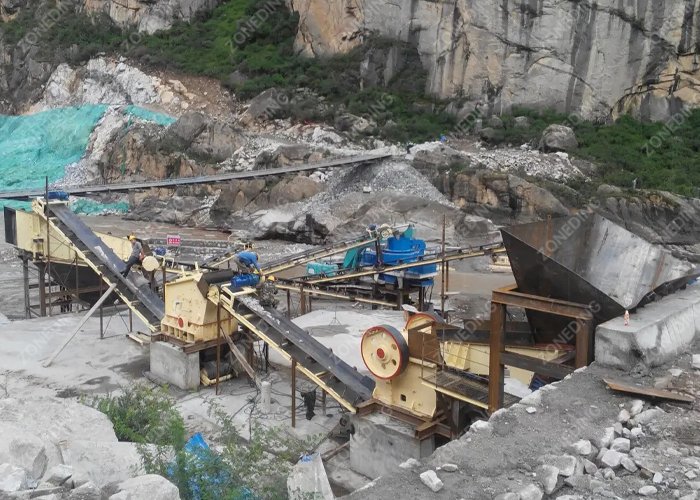
The performance of a crusher plant acts as the heart of every modern infrastructure project. High-quality aggregate production for construction determines if a bridge stands for a century or fails in a decade. Choosing the right machinery helps co...
View details