Choosing between a rod mill and a ball mill is the most vital step in any mineral processing journey. This decision affects the recovery rate and the monthly electricity bill of a mining project. A uses long steel bars to crush material. A Ball Mill uses steel spheres. Each machine has a specific purpose and mechanical advantage. This guide looks at key areas to help find the right grinding equipment selection for a 2026 mining operation. Efficiency starts with understanding how these machines interact with specific ore types and target sizes.
What Are the Key Differences in Point and Line Contact Grinding?
The physical way the media hits the ore defines the final product quality. A Ball Mill creates “point contact” during operation. Thousands of small steel hammers hit the rocks at random angles. This mechanism creates a very fine powder which is ideal for deep chemical processing or flotation. However, this method lacks precision in grain size control. A Rod Mill creates “line contact” instead. The long steel rods stay parallel inside the drum. They act like a series of heavy rollers. This creates a very narrow particle size distribution. Large rocks stay trapped between the rods until they break. Fine particles simply fall through the gaps without being crushed again. This “screening” effect is the biggest difference between rod mill and ball mill operations. In a rod mill, the heavy rods stay on top of the largest rocks. They do not waste energy hitting small grains that are already finished. This makes the rod mill very efficient for coarse grinding applications. A ball mill is different because the spheres hit everything inside the shell. They crush big rocks and small grains at the same time. This is why ball mills produce more “dust” or fines. If the next step in the plant is gravity separation, the uniform size from a rod mill is required. If the process needs a fine slurry for leaching, the point contact of a ball mill is better. Choosing the wrong contact method leads to massive losses in the downstream recovery stage.
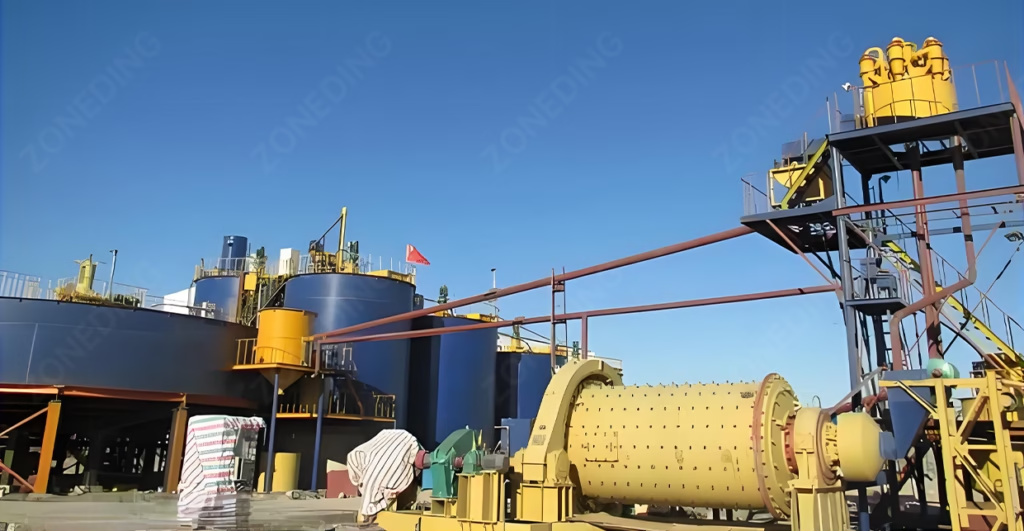
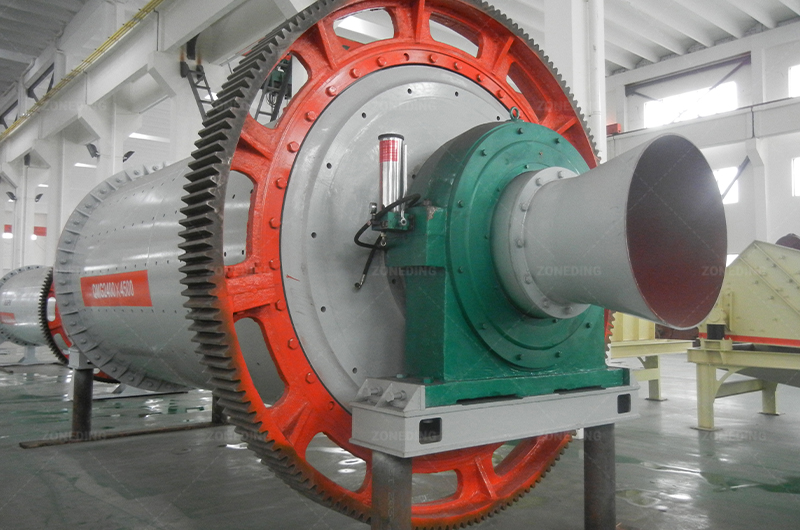
Ball Mill
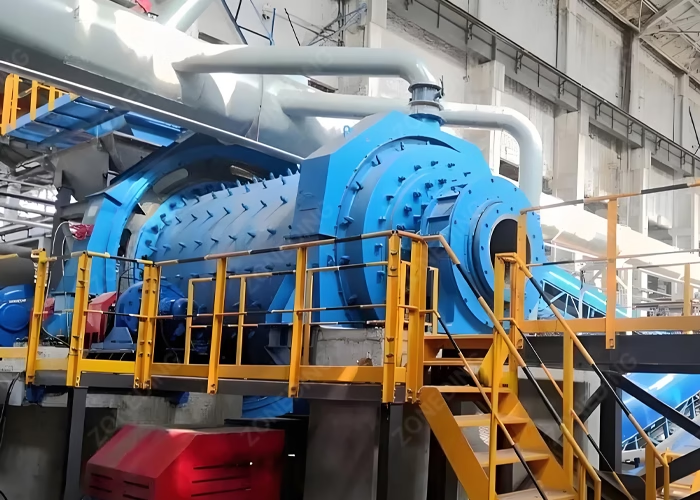
Rod mill
Grinding Mechanism Comparison
Feature
Rod Mill (Line Contact)
Ball Mill (Point Contact)
Impact on Your Plant
Media Shape
Steel Rods
Steel Balls
Rods are more selective
Precision
High Uniformity
High Fineness
Rods prevent over-crushing
Material Flow
Through Rod Gaps
Random Impact
Rods act as a coarse filter
Tips for Media Selection
Check Media Grade: Use high-carbon steel for rods to prevent bending during high-load periods.
Mix Ball Sizes: Use different ball diameters to fill the gaps and increase the total grinding surface.
Maintain Parallelism: Avoid running a rod mill too fast or the rods will tangle and cause a shutdown.
How Do Feed Size Limits Impact Grinding Efficiency?
The size of the rock coming from the crusher decides which mill can handle the load effectively. A Rod Mill is a heavy-duty machine built for coarse work. It can take feed sizes up to 30mm. In some specific cases, it handles 50mm soft ore without issues. This is a huge advantage for the initial capital investment. It means a simpler crushing stage is possible. A project might not need a tertiary crusher at all. The rod mill acts like a “third-stage crusher” and a grinder at the same time. This is a common mineral processing mill layout for large-scale mines globally. A Ball Mill is much more sensitive to the size of the input material. It usually needs feed smaller than 10mm to operate correctly. If the rocks are too big, the balls just bounce off the surface. This bounces waste energy and creates heat instead of breakage. It also causes severe damage to the internal liners over time. More money must be spent on fine crushing before the material reaches the ball mill. However, the ball mill is the king of the “finish line.” It can take 2mm particles and turn them into a fine 0.074mm powder. This is why engineers look at the “Reduction Ratio.” The rod mill has a lower ratio of about 15:1. The ball mill has a much higher ratio often exceeding 100:1. The grinding efficiency comparison must always include the cost of the crushing stage before the mill.
Feed Size Strategy
Scalp the Fines: Always remove fine dust before the rod mill to save space and energy.
Control Moisture: Dry feed works best for ball mills to prevent the material from “coating” the balls.
Steady Feed Rate: Use a Vibrating Feeder to keep the mill volume at a steady 80% for peak performance.
Why Is Rod Mill Technology Superior for Over-Grinding Control?
Preventing “over-grinding” is the secret to high mineral recovery rates in modern mining. Over-grinding is a disaster for many types of ores. A Tungsten Ore Processing Plant is a perfect example of this risk. Tungsten is very heavy but extremely brittle. If the machine grinds it too much, it turns into “slime.” This slime floats away in the waste water during separation. The profit literally washes away. A rod mill is designed to stop this from happening. Because the rods are held apart by the largest rocks, they do not crush the fine minerals at the bottom of the drum. The valuable tungsten grains stay at the right size for the next recovery step. In a ball mill, there is very little over-grinding control. The balls crush everything equally regardless of size or value. If a piece of gold is already small, the ball mill will still hit it repeatedly. This makes the gold too fine for gravity tables to catch. The industry calls this “slime loss.” If a mine processes tin, tungsten, or rare earth metals, the rod mill is the best insurance policy. It ensures the maximum amount of metal is recovered. This is the main reason why Shaking Table operations always start with a rod mill. It protects the grain size for better gravity performance.
Rod mill Customer Site
Risks of Excessive Fines
Low Recovery: Small grains do not settle correctly on gravity tables or in jigs.
High Chemical Cost: Fine particles absorb too much reagent during the flotation process.
Wasted Power: Paying for electricity to crush rocks that are already at the finished size.
Optimization Steps
Short Mills: Use a shorter rod mill to move the material out of the drum faster.
High Water Flow: Use more water to wash out finished grains as soon as they reach size.
Peripheral Discharge: Use a mill that exits from the side for the fastest possible flow rate.
How Does Ore Hardness Affect the 2026 Energy Bill?
Hard rocks require different impact forces to break efficiently without wasting power. For very hard rocks like quartz or magnetite, a Ball Mill is often the better choice for the fine grinding stage. The steel balls fall from a high point in the drum. They strike the ore with massive force. This “impact” breaks the hard bonds of the rock quickly. A rod mill relies more on “grinding” or attrition force. It is great for medium-hard ores. But if the rock is too hard, the rods might bend. They also wear down too fast in these conditions. This increases the steel rods vs balls consumption cost significantly. However, for softer ores like limestone or weathered gold ore, a Rod Mill is much more energy efficient in the first stage. It handles the volume with less power per ton of material. Engineers use the “Bond Work Index” to measure this hardness. If the ore has a high index above 16, it is considered hard. A ball mill is needed here. If the index is below 12, the ore is soft. A rod mill will be cheaper to run in this scenario. In a modern Mineral processing mill layout, we often put a rod mill first to break the bulk and a ball mill second to finish the hard bits.
Ore Type
Best Machine
Energy Usage
Maintenance Note
Hard Quartz
Ball Mill
High
High ball wear
Soft Limestone
Rod Mill
Medium
Low rod wear
Hard Magnetite
Mixed Circuit
Balanced
Best ROI for 2026
Energy Efficiency Advice
Variable Speed: Use a drive to slow down the mill when processing softer ore layers.
Check Liners: Worn liners reduce the lifting force of the media. Change them before they fail.
Media Level: Keep the mill 40% full to maintain the best energy-to-crush ratio.
What Are the Design Logics for Discharge Styles?
The way ore leaves the mill determines the production speed and the size of the product. There are three main styles used in the industry: Overflow, Grate, and Peripheral. An Overflow rod mill is the most simple design. Material goes in one end and flows out the other when the drum gets full. It is very reliable for standard mining. A Grate discharge ball mill is different. It has a heavy screen at the end of the drum. This forces the slurry out much faster. It keeps the internal pulp level low. This means the balls hit the ore with more force because there is no water to cushion them. It is the best for high-capacity fine grinding. The Rod Mill also has a unique style called “Peripheral Discharge.” This is where the ore exits through holes in the middle or at the end of the shell. The flow is very fast. This is perfect for dry grinding or making construction sand. It prevents the rods from being “cushioned” by too much water or fine dust. When choosing a grinding equipment selection, look at the material moisture first. If the ore is sticky, overflow is best to prevent clogging. If the project needs high volume and a dry product, peripheral discharge is the correct way to go.
Discharge Performance
Overflow: Best for sticky ore. Low maintenance because there are no grates to clean.
Grate: Best for high fineness. High speed output but needs frequent cleaning.
Peripheral: Best for sand making. Produces very coarse output with a fast flow.
Maintenance Tips for Discharge
Clear the Grates: High-pressure water should be used to clean grate holes daily.
Monitor Seals: Check the discharge end for leaks during every work shift.
Adjust Slope: A small tilt in the mill foundation can help material flow faster.
How Do Rod Tangling and Ball Loss Affect Maintenance?
Media failure is the most common reason for emergency shutdowns in 2026. In a Rod Mill, the biggest risk is “rod tangling.” This happens if the rods bend or if the mill runs at too high a speed. Once the rods tangle, the mill stops completely. Workers must spend days cutting the rods out with a torch. This is a very expensive process. To prevent this, spent or thin rods must be removed every week. Rods thinner than 30mm are dangerous. They lack the structural strength to stay straight under the weight of the load. In a Ball Mill, the problem is “lost shape” or “loss of sphericity.” Over time, the balls become like cubes or flat disks. These shapes do not grind well at all. They also cause heavy damage to the Ball Mill Liners. The operator must “sort” the balls periodically to remove bad shapes. However, ball mills are generally easier to maintain. New Ball Mill Grinding Media can be added through a pipe while the machine is running. A rod mill must be stopped completely to add new rods. This means the rod mill has a lower “availability” rating than the ball mill.
Media Maintenance Advice
Check Speed: Never exceed 70% of the critical speed for a rod mill.
Sample the Media: Pick out 10 balls every month to check for flat spots or cracks.
Liner Bolts: Tighten all bolts every 100 hours to prevent the media from slipping.
How to Allocate Machines in Multi-Stage Circuits for 2026?
Combining different mills creates the most efficient grinding plant for large operations. Most large mines use a two-stage grinding circuit. The first stage is the “primary” grind. The second is the “secondary” fine grind. A Rod Mill is the perfect machine for the first stage. It takes the rough crusher product and makes it uniform for the next machine. It handles the “shocks” of large rocks without breaking. This protects the second stage from wear. The second stage is usually a Ball Mill. It takes the uniform 1mm feed and turns it into the fine dust needed for the chemicals. In this one-stage vs two-stage debate, the two-stage setup wins for almost all big projects. It saves energy because each machine does what it is best at. A ball mill is 30% more efficient if the feed is already pre-ground by a rod mill. This setup also allows for “inter-stage classification.” A Spiral Classifier or Hydrocyclone can be placed between the mills. This removes the minerals that are already small enough. It prevents over-grinding and saves even more power. This is the “Gold Standard” for any modern Gold Processing Plant.
Circuit Arrangement Tips
Balance the Load: The rod mill should do about 35% of the total grinding work.
Recycle Coarse: Use a Spiral Classifier to return big bits to the mill for another round.
Watch the Pulp: Keep the slurry thick at about 65% solids for the best grinding results.
Why Is the Rod Mill the First Choice for Building Sand?
The construction industry needs a specific grain shape that only rods can provide in 2026. When making “artificial sand,” the shape of each grain is very important. Concrete needs “cubical” grains to be strong and workable. Most crushers or Sand Making Machine units make sand that is flaky or too sharp. This creates weak concrete that cracks easily. A Rod Mill is different. The line contact grinds off the sharp corners through friction. It produces “rounded-cubical” sand. This is the premium sand used for bridges and dams. Another reason for choosing a rod mill for manufactured sand is the “Fineness Modulus” (FM). The FM is a measure of how coarse or fine the sand is. Engineers can control the FM easily by changing the water flow in a rod mill. A ball mill cannot do this effectively. It makes the sand too fine and turns it into “filler dust.” This dust has very little market value. For any high-standard building project, the rod mill is the standard choice. It provides the best quality and the most consistent results for the buyer.
Sand Quality
Rod Mill Sand
Ball Mill Sand
VSI Crusher Sand
Grain Shape
Cubical/Rounded
Too Fine/Dusty
Flaky/Sharp
FM Control
Excellent
Poor
Fair
Best Use
High-grade Concrete
Filler
Road Base
Sand Making Advice
Use Wet Grinding: Water helps remove the dust and improves the final FM.
Check the Rods: Worn rods make the sand inconsistent. Change them on a schedule.
Screening: Use a Vibrating Screen after the mill to remove any oversized bits.
How to Calculate the ROI Based on Costs and Wear?
The total cost of ownership includes energy, media, and downtime across the machine life. A Ball Mill usually has a lower initial purchase price. It is a simpler machine to build. The Ball Mill Grinding Media is also cheaper to buy in bulk. But the operating expense can be higher. It uses more energy because of the random grinding nature. Balls also have to be replaced more often than rods. However, the ball mill runs almost 24/7 without stopping. This high uptime is a big plus for the investment return on mills. A Rod Mill costs more to buy upfront. The rods are specialized and expensive. The downtime for adding new rods is also higher. But the value added to the product is much higher. A project gets a better product that sells for more. The plant recovers more gold or tungsten. Better sand is produced. If a product is worth $1000 per ton, a 5% increase in recovery pays for the entire mill in one month. When calculating the ROI, do not just look at the price of the machine. Look at the value of the mineral being kept out of the waste pile.
Gold Processing Line
ROI Calculation Factors
Initial Price: Ball mills are generally 15% cheaper to purchase.
Media Cost: Rods cost more but last longer than an equivalent weight of balls.
Recovery Rate: Rod mills increase recovery for fragile minerals significantly.
Electricity: Rod mills are more efficient for the initial coarse grinding stage.
2026 Latest Grinding Technology and Trends
In 2026, the industry is moving toward “Smart Grinding” solutions. New mills now come with Acoustic Sensors installed on the shell. These sensors listen to the sound inside the drum. They can tell if the rods are starting to tangle or if the balls are too small. This prevents major accidents before they happen. Another trend is the use of Magnetic Liners. These use powerful magnets to hold a layer of ore against the mill wall. This layer acts as a “natural liner.” It reduces wear on the steel and can last for 5 years without any replacement. Automation is also changing mineral processing mill layouts. Computers now control the water and feed flow in real-time. If the ore gets harder, the computer automatically slows the feed down. This keeps the output size perfectly consistent. This is especially useful for Gold Processing Plant operations that need exact mesh sizes for the chemical leaching stage. These technologies are making both rod and ball mills much cheaper to run and much easier to manage for the crew.
2026 Tech Highlights
Digital Twins: Simulations that predict exactly when to change the rods.
Energy Recovery: Using the heat from the mill friction to dry the ore.
Wireless Sensors: Monitoring the temperature of the mill bearings from a mobile phone.
Frequently Asked Questions
Question 1: Can steel balls be used in a rod mill? No. The liner design and the speed of a rod mill are very different. If balls are put in a rod mill, they will damage the shell and the motor. Always use the media the machine was designed for. Question 2: How often should rods be added to the mill? Usually, new rods are added every 2 to 4 weeks. The mill must be stopped, small worn-out rods removed, and new ones put in. This keeps the grinding force high. Question 3: Which mill is quieter during operation? Ball mills with rubber liners are much quieter. Rod mills are always loud because the steel bars hitting the shell create a heavy clanging sound that is hard to muffle. Question 4: Is dry grinding possible with a rod mill? Yes. Peripheral discharge rod mills are excellent for dry grinding. They are often used to grind coal or dry limestone for industrial use.
About ZONEDING
ZONEDING is a professional manufacturer of Beneficiation Equipment. Since 2004, the company has provided high-quality Ball Mill and Rod Mill solutions to over 120 countries. A team of 15 expert engineers can design an entire Gold Processing Plant from scratch. ZONEDING offers factory-direct prices and full life-cycle support. We are here to help maximize mineral recovery and minimize costs for every client. Contact us today for a free technical consultation and equipment quote.
Buying a stone crusher is a major investment for any quarry, mining, or aggregate production business. The wrong equipment can increase downtime, wear cost, and energy consumption for years. Meanwhile, the right crushing system can improve product...
Understanding the mechanical logic of crushing equipment is vital for project profitability. Selecting a machine based solely on capacity ignores the reality of wear and energy costs. Different stones require different mechanical principles—either...
A 100–200 TPH aggregate crushing plant cost can range from approximately USD 120,000 to USD 350,000 for a standard stationary line. However, a 200 TPH plant that includes tertiary crushing, manufactured sand production, washing, or sever...
Anti-clogging screening equipment provides the most reliable way to handle sticky materials in 2026. Traditional vibrating screens often fail when clay moisture exceeds 10%. This leads to frequent downtime and high cleaning costs. Our technic...
We use cookies to ensure that we give you the best experience on our website. If you continue to use this site we will assume that you are happy with it.
Privacy Policy
Send us a message
We would love to hear from you
Submit your question and our team will respond to the email provided as soon as possible.
 Zoneding Machine













.jpg3_-1024x699.webp)