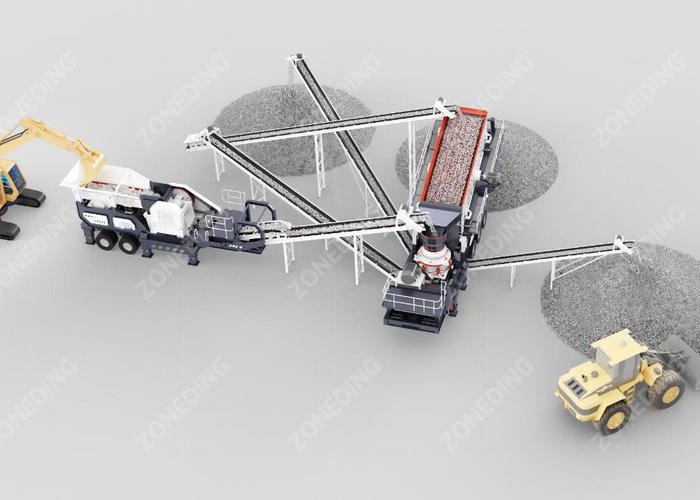
Building a high-recovery gold ore processing plant development project requires a very clear plan. The process starts with the rock and ends with pure gold. Most projects fail because the machinery does not match the mineral type. High recovery rates depend on correct design and durable machines. The goal is to catch every gram of gold while keeping costs very low. This guide explains how to select the best technology and build a stable production line. Correct planning prevents gold loss in waste piles and ensures long-term profit.
How to determine the process route based on ore properties?
The first task in gold ore processing plant development is identifying the ore type. Most gold is found in either oxidized rock or sulfide rock. Oxidized ore is generally soft and allows chemicals to reach the gold easily. This type of ore is often called free-milling. A direct leaching process works best here. It is cheap to build and offers fast results. In contrast, sulfide ore is very hard. The gold stays trapped inside minerals like pyrite. Adding chemicals directly to sulfide ore often leads to very low recovery. Extra steps must be added to break the mineral structures first. Mineral testing provides the data needed for a correct decision. Laboratory tests show the exact mineral content and any harmful elements. Some rocks contain copper or antimony. These elements eat up expensive chemicals and reduce profit. A professional test prevents these surprises. Choosing the wrong route can lead to a 50% loss in gold recovery. A successful must fit the specific rock properties. This ensures the highest possible yield from the very first day of operation.
Conduct GRG Tests: Always check for Gravity Recoverable Gold to catch big flakes early.
Analyze Carbon: High natural carbon in the rock requires the CIL process to stop gold theft.
Check Water Quality: High salt or mineral levels in the local water can change chemical reactions.
How to optimize crushing and grinding to reduce power costs?
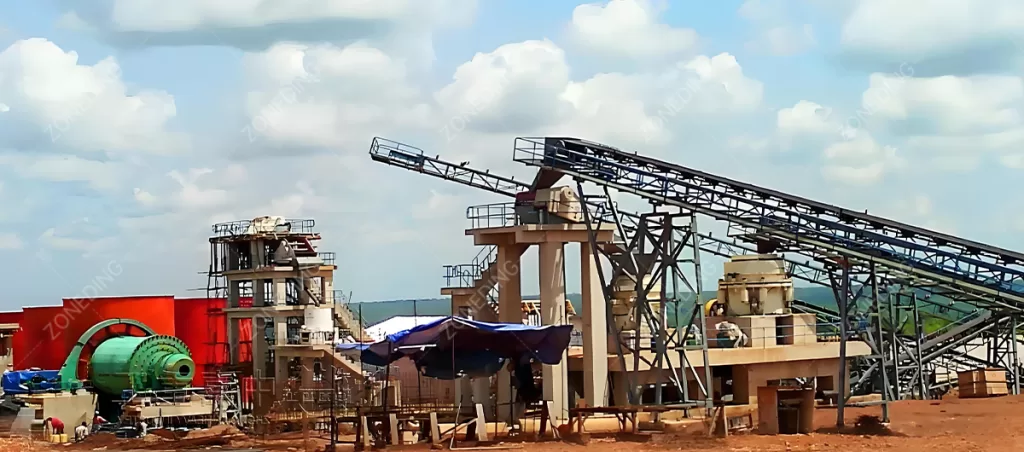
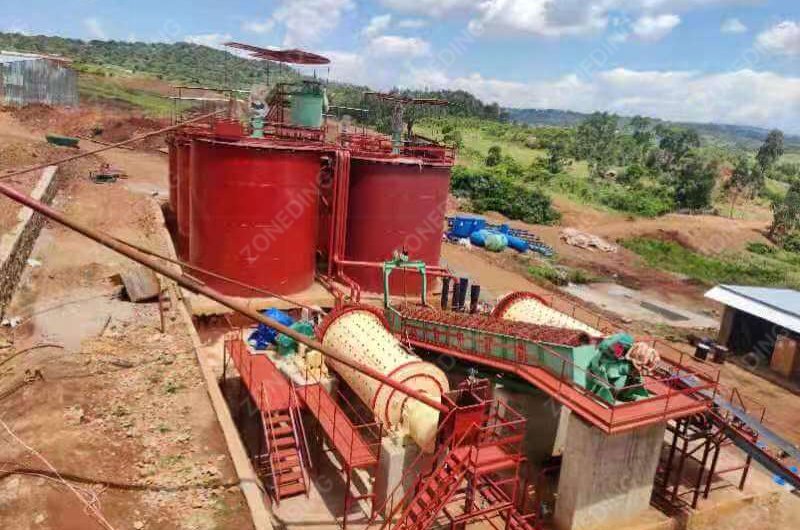
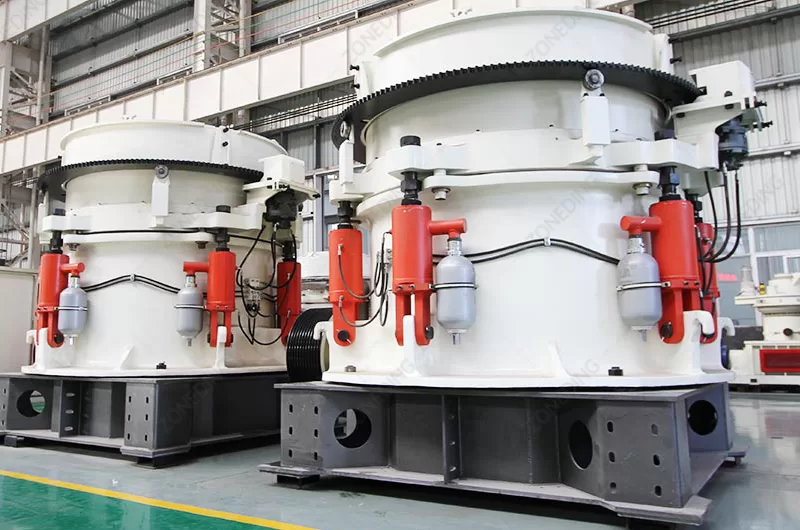
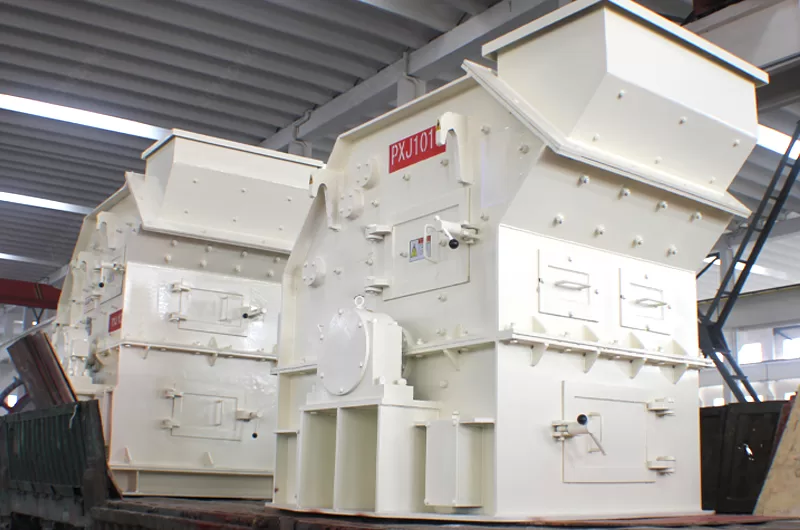
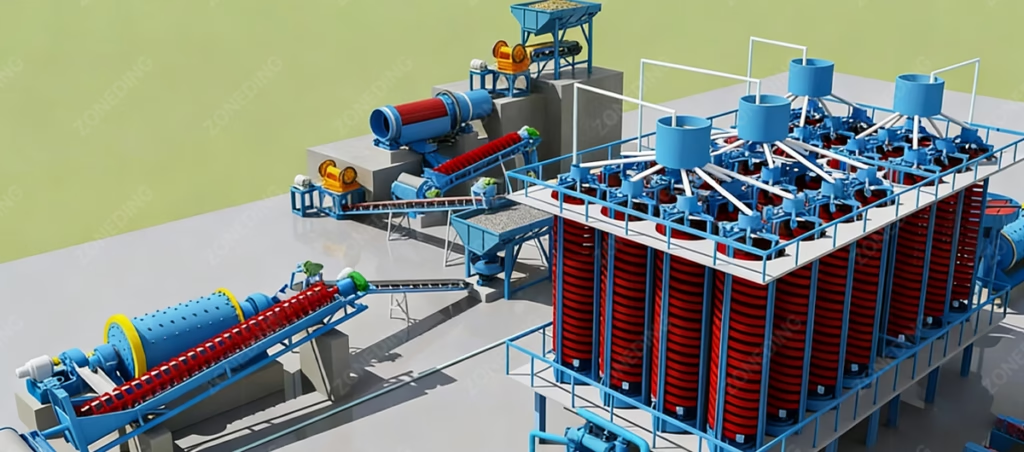
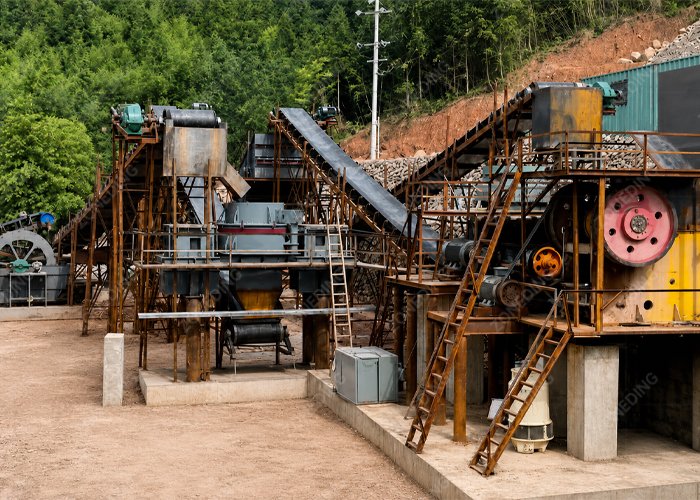
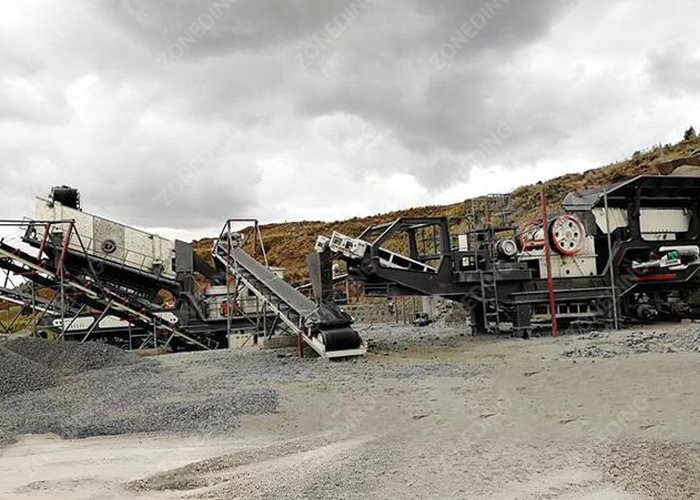
Grinding is the most expensive operation in gold ore processing plant development. A Ball Mill consumes massive amounts of electricity. Feeding large rocks into a mill wastes time and power. The best strategy is to crush the rock into the smallest possible size before it enters the mill. This is known as the “More Crushing, Less Grinding” rule. A three-stage crushing system is very efficient. It uses a Jaw Crusher for the first break. A cone crusher then finishes the work. This reduces the workload on the expensive grinding circuit. Efficiency also depends on the feed rate. A mill should always be full but not overloaded. Automated feeders keep the rock flow steady. If a mill runs half-empty, the steel balls hit the liners and cause damage. This wastes energy and breaks the machinery. Using modern liners can also help. High-manganese steel protects the mill and improves the grinding action. Proper balance between the crushers and the mills can lower the total power bill by 20%. This makes the entire operation more profitable over time.
Monitor Steel Balls: Check the size of the balls in the mill every week for better grinding.
Install Belt Scales: Know exactly how many tons per hour move through the system.
Regular Lubrication: Keep all bearings greased to stop heat and friction from wasting power.
Why is gravity separation the best way to boost early recovery?
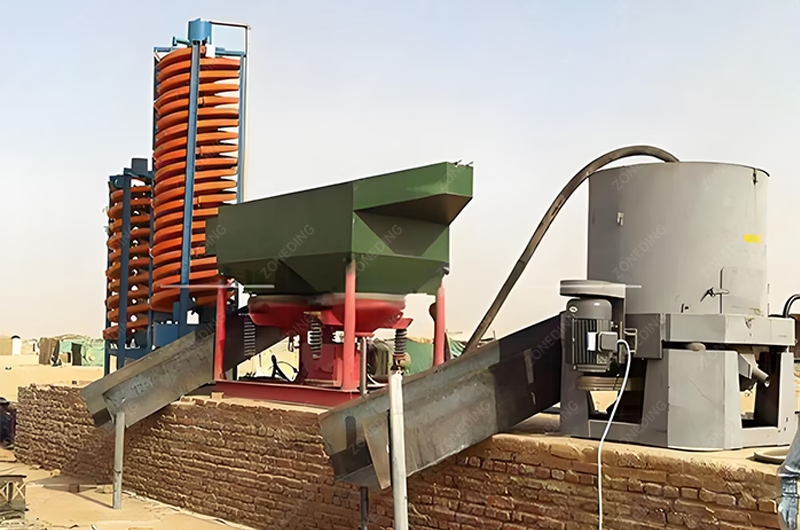
Gravity separation is a highly effective way to recover gold without chemicals. Gold is much heavier than the waste rock around it. Machines use this weight difference to trap the gold. This is often the cheapest part of gold ore processing plant development. Catching gold early reduces the pressure on the chemical tanks. It also provides high-purity gold that is ready for smelting almost immediately. This speeds up the cash flow for the mine. It is a simple and reliable technology that works for most gold deposits. The Centrifugal Concentrator is a leading choice for modern mines. It spins the slurry at high speeds to trap even tiny gold particles. For smaller projects, a shaking table is a very good tool. It is easy to use and needs almost no power. Many operations recover 40% of their gold through gravity alone. This allows for a smaller and cheaper chemical plant later in the line. Gravity separation for gold is a smart investment for any mining project that wants to maximize profit.
Shaking Table: Best for cleaning concentrates into a very pure product.
Jigging Machine: Best for large rocks or alluvial mining sites.
Flotation vs. direct leaching: which factors determine the concentrate grade?
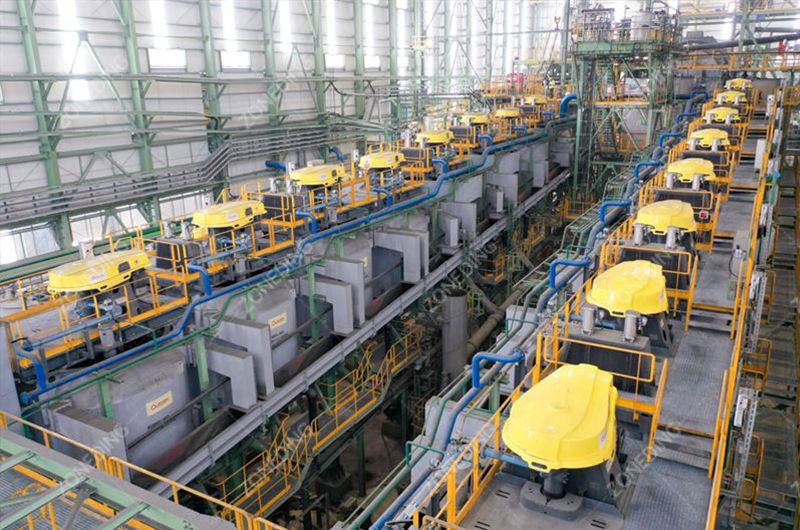
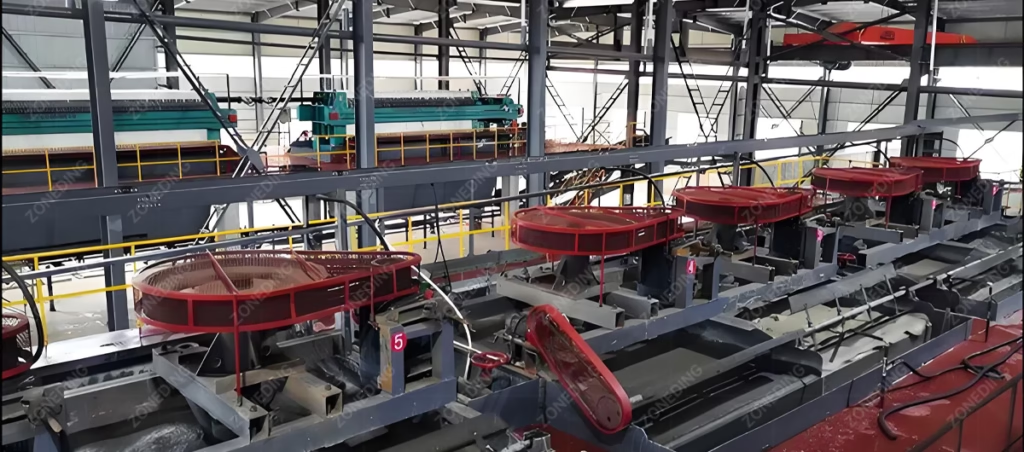
Choosing between flotation and leaching depends on the final goal. Gold Flotation is best for sulfide minerals. The process creates a rich concentrate foam. This foam is easy to dry and ship to a smelter. It is a fast process and does not need large tank areas. Flotation is great for mines in cold areas or places with limited space. It focuses on gathering the gold-bearing minerals into a small volume. This reduces the cost of shipping waste rock across long distances. Direct leaching turns the gold into a liquid. This liquid is then turned back into solid gold on-site. This is a very common part of gold ore processing plant development. It usually gives a higher total recovery than flotation for simple ores. However, the plant is more expensive to build. It requires large tanks and careful chemical management. Most mines prefer leaching if they want to sell gold bars directly. The decision depends on the rock type and the distance to the nearest smelter.
Gold Ore Processing Plant
Selection Criteria
Factor
Gold Flotation
Gold Leaching
Target Product
Rich Concentrate
Pure Gold Bars
Space Needed
Smaller
Much Larger
Chemicals
Reagents/Foamers
Cyanide/Carbon
Best Ore Type
High Sulfide
Oxidized/Clean
Operational Guidance
Control Air Flow: In flotation, the size of the bubbles changes the quality of the concentrate.
Check pH Levels: Chemical leaching requires a steady pH to stop toxic gas and keep gold in the liquid.
Filter the Tailings: Always dry the waste to recover any remaining chemicals or water.
CIL vs. CIP: which process suits your production volume?
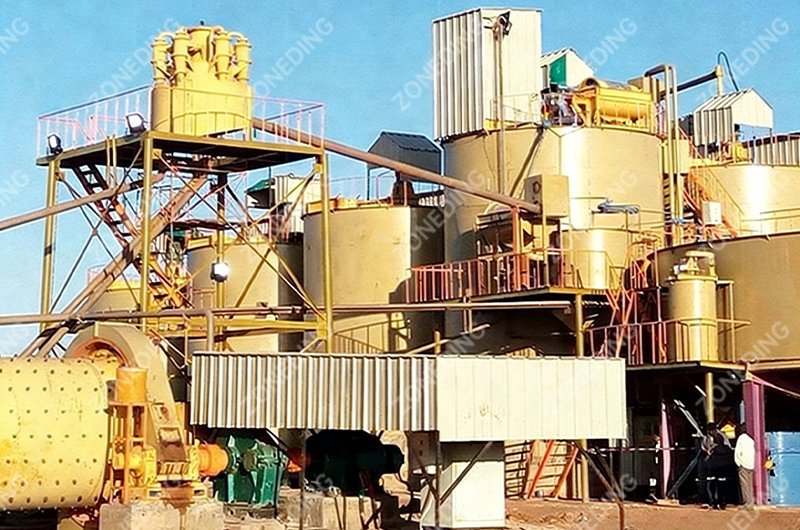
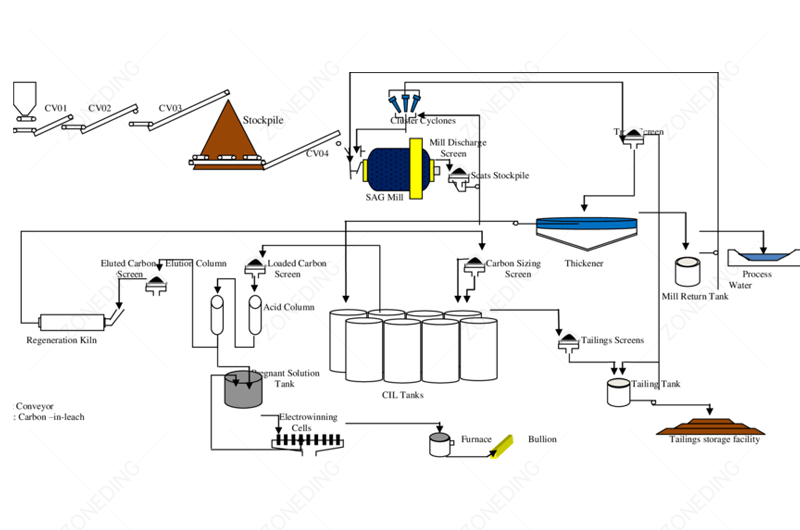
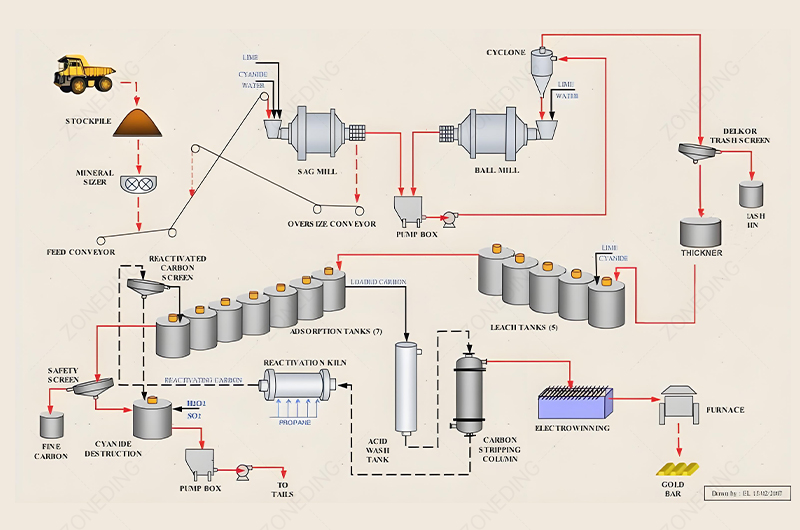
The Gold CIL Plant and CIP plant are two ways to catch gold using carbon. In the CIL process, the gold dissolves and sticks to the carbon in the same tank. This saves space and money. It is very good for rocks that contain natural organic matter. This organic matter often “steals” gold before the carbon can catch it. In a CIL tank, the added carbon is more aggressive and catches the gold first. This prevents gold loss and keeps the recovery rate high. The CIP process dissolves the gold in one tank and adds carbon in the next. This is useful for very clean ores. It can sometimes result in slightly cleaner gold. However, it requires more tanks and more pumps. Most modern gold ore processing plant development projects choose CIL. It is simpler to operate and handles different ore types better. CIL is the preferred choice for 90% of new mines. It offers the best balance of cost and performance for most operators.
CIP: More tanks, slightly higher recovery for very clean ore.
How to handle refractory gold with biological or pressure oxidation?
Refractory gold is gold that is locked inside other minerals. Simple leaching cannot reach it. In these cases, Refractory gold ore treatment is required. One method is biological oxidation. This uses bacteria to “eat” the minerals and expose the gold. It is a slow process but very cheap to operate. It is perfect for mines with a lower budget. The bacteria do the hard work for almost no cost. It is also very safe for the environment. Another method is Pressure Oxidation. This uses a giant machine to cook the ore with heat and pressure. It is very fast and has a very high recovery rate. However, it is very expensive to build. Only very large mines can afford this technology. A third option is ultra-fine grinding. If the rock is ground into a very fine powder, the chemicals can finally reach the gold. This is often the best choice for medium-sized mines. It avoids the use of complex bacteria or high-pressure machines.
Refractory Treatment Steps
Intense Grinding: Break the rock to under 20 microns.
Oxidation: Use air, bacteria, or heat to break the sulfide bonds.
Standard Leaching: Once the gold is “free,” use normal chemicals to catch it.
How can automation and digital systems stabilize your tailings grade?
Automation is a major part of gold ore processing plant development in 2025. Digital sensors can watch the gold levels in real-time. In older plants, workers had to wait for lab results. Now, a computer can see if gold is being lost immediately. The system then changes the chemical dose or the machine speed to fix the problem. This keeps the tailings grade very low. It stops gold from going to the waste pile by accident. Automation also saves money on chemicals. A computer adds only what is needed based on the rock type. This reduces the waste of expensive reagents. It also makes the plant much safer. Machines can handle the dangerous tasks while people watch from a control room. Modern plants use PLC systems to manage every motor and pump. This leads to a much more stable operation and higher profits every month.
Automation Advantages
Real-Time Data: Stop gold loss the moment it starts.
Lower Costs: Use 10% fewer chemicals through precise dosing.
Safety: Remote monitoring keeps workers away from moving parts and chemicals.
Is cyanide-free leaching ready for the modern gold industry?
Many people look for Environmental friendly gold leaching options today. Cyanide works well but is hard to get permits for. New “green” chemicals like Glycine and Thiosulfate are now available. These are non-toxic and much safer for the ground. In 2026, these technologies are finally ready for large mines. They work very well on many types of ore. Using these chemicals can help a mine get government approval much faster. Green chemicals can sometimes cost more than cyanide. However, they save money on water treatment and insurance. They also improve the public image of the mine. This is very important for getting a “social license” to operate. A modern gold ore processing plant development should always consider these new options. They represent the future of the industry. They combine high recovery with a clean environment.
How can tailing dry stacking and water recycling save money?
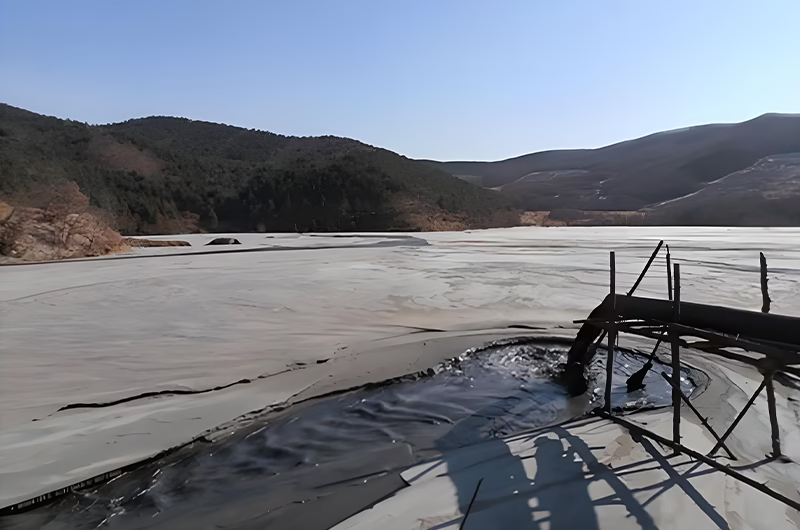
Water is a major cost in gold ore processing plant development. Modern mines try to recycle 90% of their water. A High Efficiency Concentrator pulls the water out of the waste slurry. This clean water goes back to the beginning of the plant. This saves a lot of money, especially in dry areas. It also keeps the chemicals inside the plant instead of letting them leak out. Dry stacking is the best way to manage waste. Instead of a wet pond, the waste is turned into a dry cake. This cake is stacked on the ground. It is much safer because there is no dam that can burst. It also takes up much less space. Most new mines now use dry stacking to meet environmental laws. It is a smart way to protect the land and save water at the same time.
Tailing Dry Stacking
Tailings Wet Dam
Tailing Management Benefits
Feature
Wet Ponds
Dry Stacking
Water Recovery
Low
Very High
Risk of Failure
High
Almost Zero
Land Use
Massive
Compact
Environmental Permit
Hard
Easier
Why is the modular development model perfect for small mines?
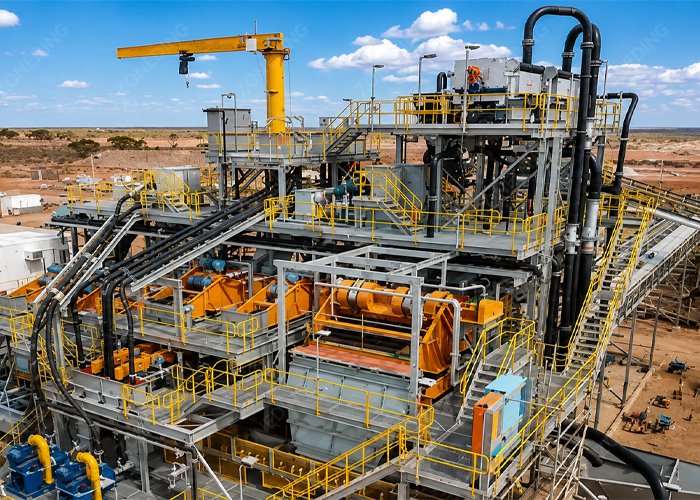
Modular plants are built in sections at a factory and then shipped to the mine. This is a very popular way to start gold ore processing plant development. It avoids the high cost of building with concrete in remote areas. The sections are like big boxes that bolt together. This saves months of time. A mine can start producing gold much faster with this method. It is the best choice for small or medium operations. Modular plants are also very easy to move. If the gold runs out, the plant can be taken apart and moved to a new site. This protects the value of the machinery. It also allows a mine to grow slowly. An operator can start with one module and add more as they find more gold. This “pay as you grow” model is very safe for investors. Modular technology is a key trend for the gold industry in 2026.
2026 Latest Gold Processing Development and Trends
In 2026, the industry is focused on efficiency and green energy. AI sorting is a major trend. It uses X-rays to find gold in rocks on a conveyor belt. The machine then throws away the waste rock before it gets to the mill. This saves a huge amount of power. Many mines are also installing solar power to run their machines. This reduces the cost of diesel and helps the environment.
2026 Industry Highlights
AI Sorting: Reduces grinding costs by 30% by removing waste early.
Solar Power: Provides cheap energy for remote mining sites.
Remote Support: Engineers can fix machine problems using the internet from thousands of miles away.
Frequently Asked Questions
Question 1: How much does a gold processing plant cost? The cost depends on the size and the rock type. A small modular plant might cost $500,000. A large plant for hard rock can cost many millions. The best way to know is to get a custom quote based on a mineral test. Question 2: What is the most important machine in a gold plant? The Ball Mill is usually the most important. It does the hard work of grinding. If the mill is the wrong size, the whole plant will fail to meet its goals. Question 3: Can old tailings be re-processed? Yes. Modern technology is much better than old methods. Many mines are now re-processing their old waste piles to catch the gold that was missed 20 years ago. Question 4: How many workers are needed for a gold plant? With modern automation, a small plant can be run by only 3 or 4 people per shift. Larger plants need more staff for maintenance and laboratory work. Question 5: Does ZONEDING provide installation services? Yes. Full-service support is part of the package. This includes design, building the machines, and sending engineers to the site to help with the start-up.
About ZONEDING
ZONEDING is a professional manufacturer of mining equipment based in China. The company has focused on B2B solutions since 2004. ZONEDING provides everything from Jaw Crusher units to complete Gold Ore Processing Plant designs. With a factory of 8,000 square meters and 15 expert engineers, the company ships over 500 machines every year. ZONEDING has successfully exported products to more than 120 countries, offering factory-direct prices and full lifecycle support.
For decades, natural river sand was considered the standard material for concrete, mortar, and infrastructure projects. Today, that situation is changing rapidly. Many contractors, concrete producers, and aggregate companies are asking: Is machine...
Mobile crushing technology offers the most direct path to reducing operational costs and increasing profit margins in the mining industry. This article explains how a mobile unit eliminates the need for expensive civil works and reduces truck haul...
In a large-scale mining project, selecting a is not just about comparing tonnage. While mobility reduces material handling costs, the compact nature of these machines introduces risks in stability, maintenance, and product quality. Success require...
We use cookies to ensure that we give you the best experience on our website. If you continue to use this site we will assume that you are happy with it.
Privacy Policy
Send us a message
We would love to hear from you
Submit your question and our team will respond to the email provided as soon as possible.
 Zoneding Machine