 Zoneding Machine












Mobile Crusher Plant Price in South America
587Compare mobile crusher plant prices, supply scope, capacity, shipping and installed costs for mining, quarry and road projects in South America.
View detailsSearch the whole station Crushing Equipment
A mobile jaw crusher for sale in South America should be selected as a primary crushing unit, not as a complete answer to every finished-product requirement. Its main job is to accept large rock, reduce it to a manageable size, and move with the quarry face, mine plan, or construction project.
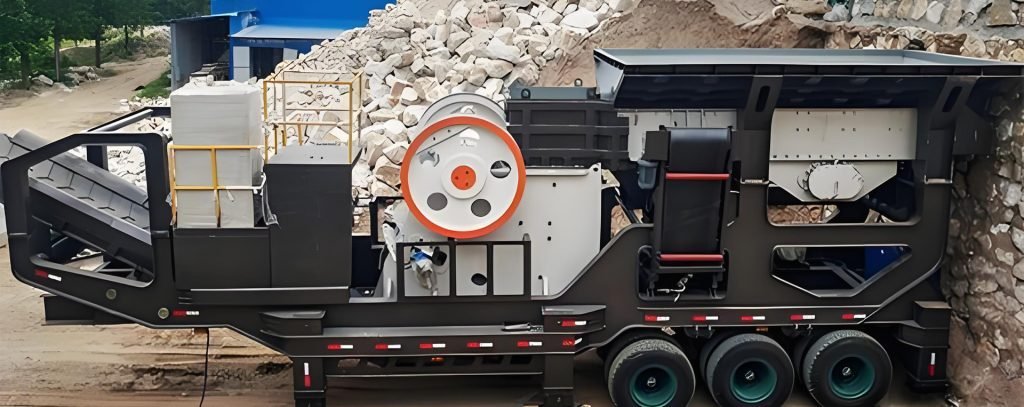
The right machine depends on more than advertised tons per hour. Feed size distribution, rock abrasiveness, clay content, required discharge, altitude, power supply, and the next crushing stage all affect real performance.
This guide explains how to size a mobile jaw crusher, when it can work alone, when it needs secondary crushing and screening, and what buyers should provide before requesting a quotation.
For preliminary planning, a mobile jaw crusher unit may cost approximately USD 70,000–400,000 or more. The wide range reflects major differences in crusher size, chassis, power system, pre-screening, automation, and included conveyors.
| Reference Configuration | Typical Duty | Preliminary Equipment Budget |
|---|---|---|
| Compact wheeled mobile jaw | 50–80 TPH primary crushing | USD 70,000–130,000 |
| Medium wheeled or tracked jaw | 80–150 TPH quarry or contractor work | USD 120,000–250,000 |
| Heavy-duty tracked jaw with pre-screen | 150–250 TPH mine or large quarry feed | USD 220,000–400,000+ |
These figures are early equipment references rather than fixed quotations. They do not automatically include a secondary crusher, separate screening plant, ocean freight, import duties, local transport, commissioning, or a long-term spare-parts package.
Price comparisons are only useful when the supply boundary is the same. One proposal may include the feeder, jaw crusher, discharge conveyor, magnet, remote control, generator, and initial wear parts. Another may cover only the basic crusher unit.
The mobile crusher plant price guide explains complete-plant budgets and installed project costs in more detail. This article focuses on whether the primary mobile jaw unit is technically suitable.
A mobile jaw crusher can reduce granite, basalt, river stone, limestone, iron ore, copper ore, gold-bearing rock, and clean demolition concrete. It is especially useful when large feed must be reduced close to the working face.
However, jaw crushing does not automatically create saleable aggregate. The product leaving the crusher is normally a mixed primary-crushed material. Its top size depends on the closed-side setting, jaw profile, feed grading, and rock shape.
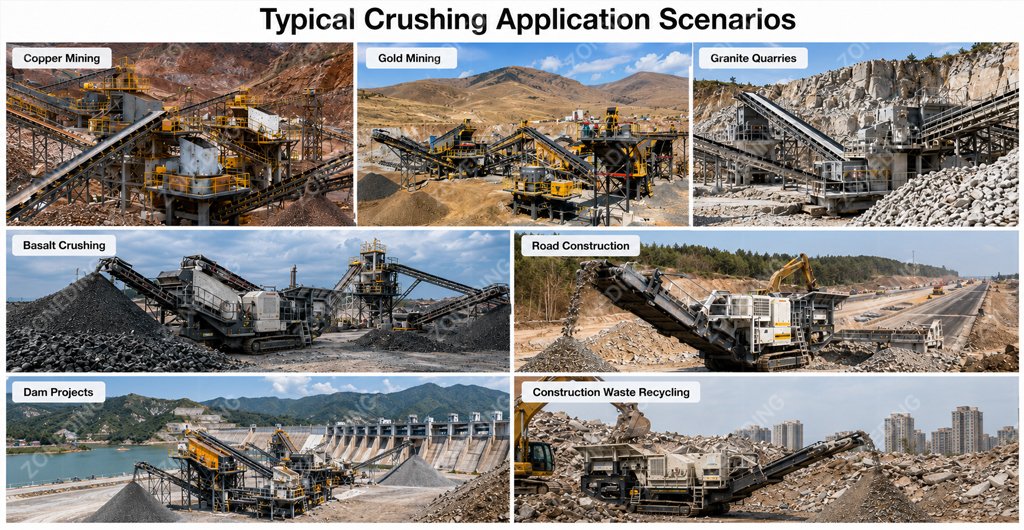
The machine can often work alone when the project needs:
Additional equipment is usually required when buyers need:
Hard and abrasive rock normally continues to a cone crusher. Softer limestone and clean concrete may use impact crushing for better shape, while a vibrating screen separates the final fractions.
Crusher selection should begin with the largest rock that regularly reaches the feeder. A single oversized boulder can bridge above the jaw opening even when the average feed is much smaller.
As an early rule, the maximum rock dimension should remain safely below the crusher inlet width. The exact limit depends on rock shape and orientation, so elongated slab-like pieces require more allowance than rounded stone. A grizzly feeder, hydraulic rock breaker, or excavator sorting may be necessary where blasted rock is inconsistent.
Capacity must also be defined correctly. Catalog capacity usually describes material passing through the crusher under favorable conditions. It is not the same as continuous saleable output from a complete plant.
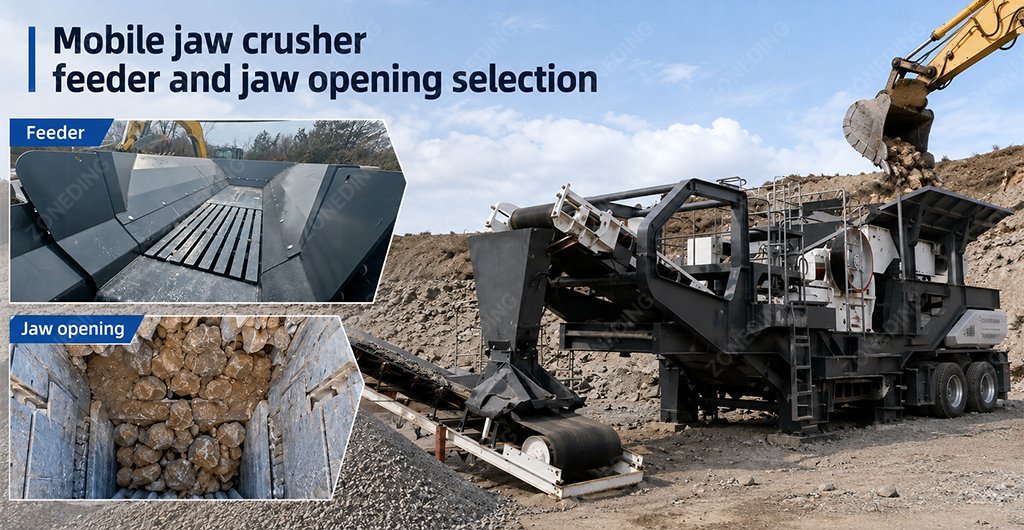
Actual production changes with:
For example, a project requiring 100 TPH of four finished products may need a higher primary feed rate because some material circulates through the secondary stage. By contrast, a mine that only needs primary reduction may achieve a figure closer to the jaw crusher’s direct discharge rate.
Buyers comparing 50–100 TPH duties can use the small quarry crusher plant guide. For medium projects, the 100–200 TPH aggregate plant guide shows how secondary crushing, screening, and sand production change the circuit.
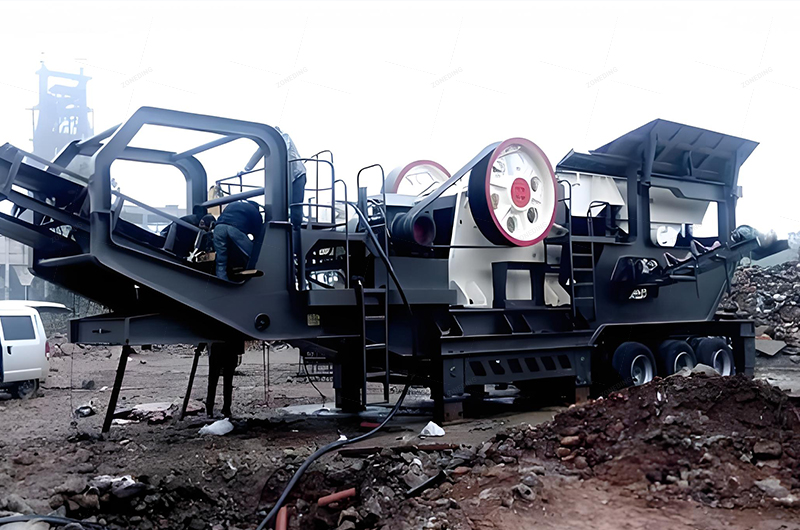
A standalone mobile jaw crusher is the practical choice when primary reduction is the only required duty or when suitable downstream equipment already exists. It has fewer machines to transport, lower initial investment, and a simpler startup.
A complete mobile line is needed when the site must turn raw rock directly into controlled commercial products. The primary jaw then becomes the first unit in a balanced system rather than the entire plant.
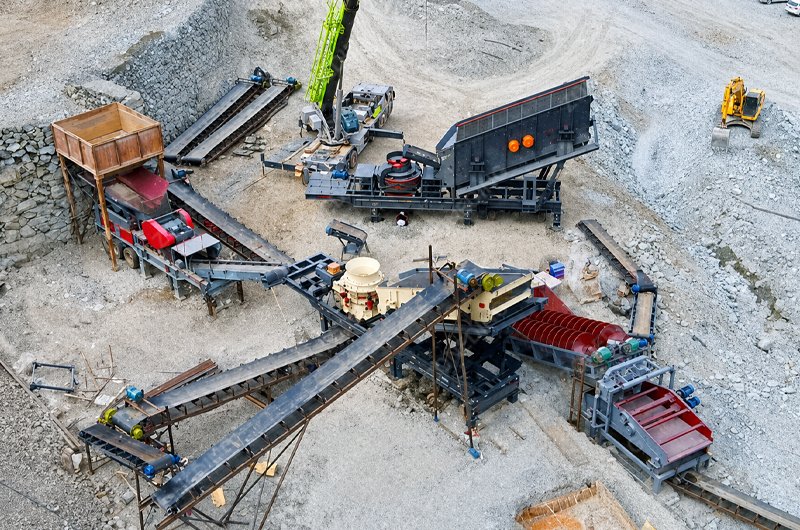
| Project Requirement | Mobile Jaw Only | Complete Mobile Line |
|---|---|---|
| Primary size reduction | Suitable | Suitable |
| Multiple finished sizes | Not by itself | Suitable with screening |
| Cubical aggregate | Limited | Suitable with secondary crushing |
| Lowest initial investment | Better | Higher |
| Fast single-unit relocation | Easier | More transport planning |
| Future expansion | Possible if interfaces are reserved | Already integrated |
Expansion is easier when planned before purchase. The primary unit should have enough discharge height, conveyor capacity, electrical connection points, and control compatibility to feed a future mobile cone, impact crusher, or screening station.
Avoid sizing the jaw far above the downstream equipment. A 200 TPH primary crusher feeding a screen or secondary crusher that can continuously handle only 130 TPH creates stockpile congestion rather than a 200 TPH production line.
Three configurations cover many South American mining, quarry, and infrastructure applications.
1. Mobile jaw crusher for mine pre-crushing
Flow: ROM ore → grizzly feeder → mobile jaw crusher → transfer stockpile
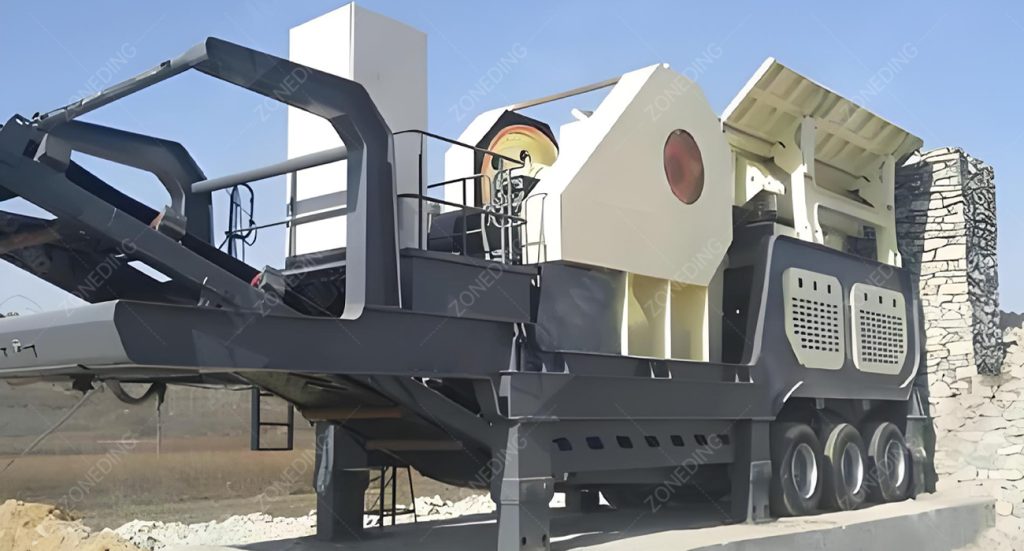
This arrangement reduces large copper, gold, iron, or polymetallic ore before truck transport or further processing. A heavy-duty feeder is important because mine feed may contain large boulders, fines, and uneven blasting fragments. For remote Andean projects, altitude, cold starts, fuel quality, and service access must be checked early. The Peru crusher plant guide explains additional conditions for mine and hard-rock projects.
2. Mobile jaw, impact crusher, and screen for limestone
Flow: Mobile jaw → mobile impact crusher → mobile screen → product stockpiles
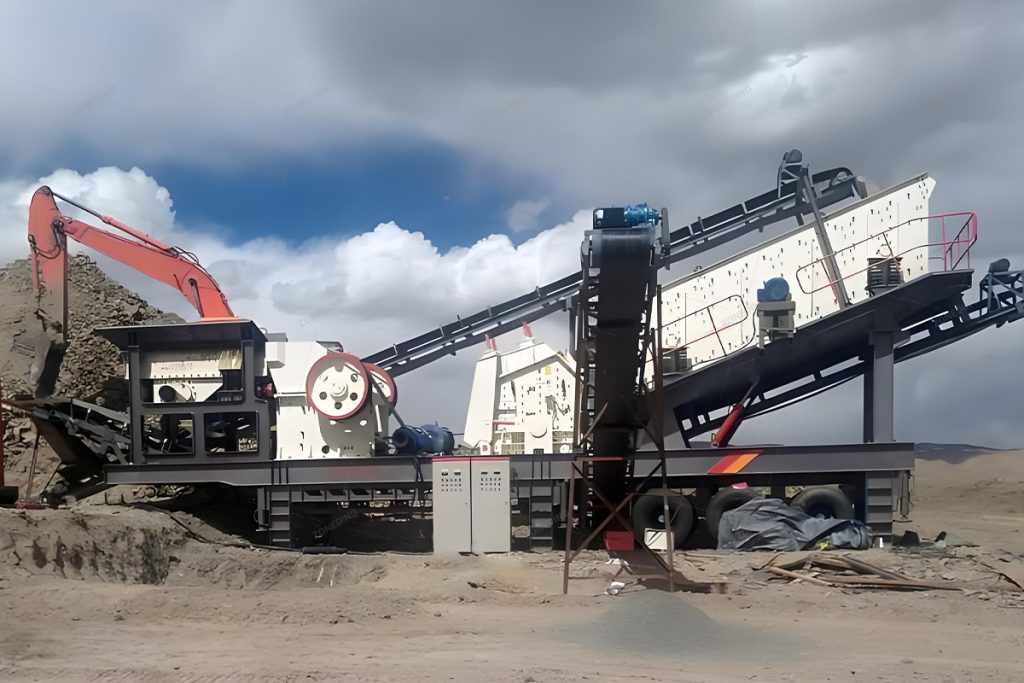
This two-stage process fits limestone, clean recycled concrete, and other low- to medium-abrasive materials. The jaw accepts large feed, while impact crushing improves shape and reduces the material to road-base or aggregate sizes. The separate mobile impact crusher guide covers contaminant removal, blow-bar wear, and recycled aggregate quality.
3. Mobile jaw, cone crusher, and screen for hard aggregate
Flow: Mobile jaw → buffer or controlled transfer → mobile cone → screen → return circuit
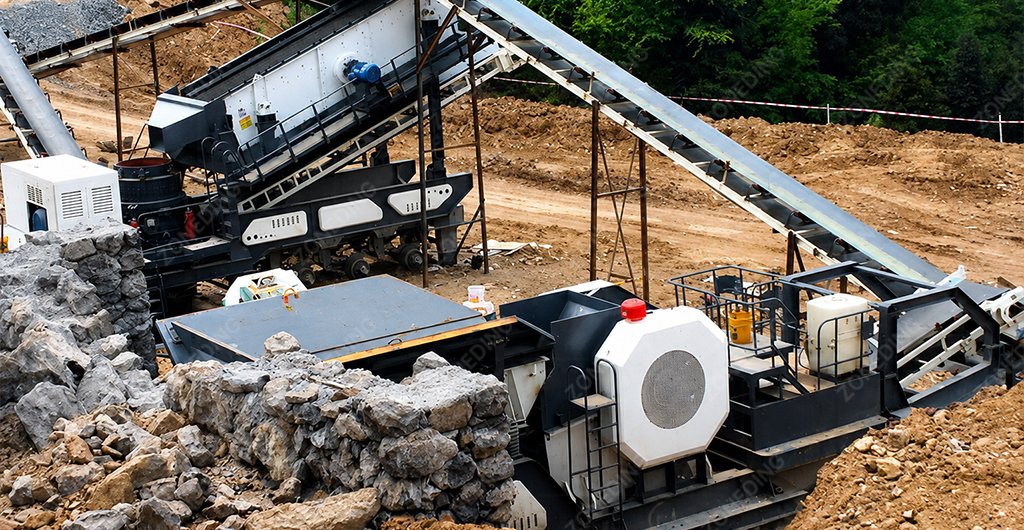
Granite, basalt, river stone, and hard copper-bearing rock usually favor compression crushing. Stable feed to the cone is essential; surging material directly from the jaw can cause poor chamber utilization and uneven liner wear. A buffer bin or controlled conveyor helps maintain a balanced secondary stage. Buyers planning Chilean hard-rock projects can compare secondary options in the mobile cone crusher guide for Chile.
Mobility must be evaluated as a site operation, not only as a chassis label. Tracked units reposition themselves inside a mine or quarry, but they normally require a low-bed trailer for long-distance public-road transport. Wheeled units are easier to tow between prepared sites but need firm access, leveling space, and support-leg setup.
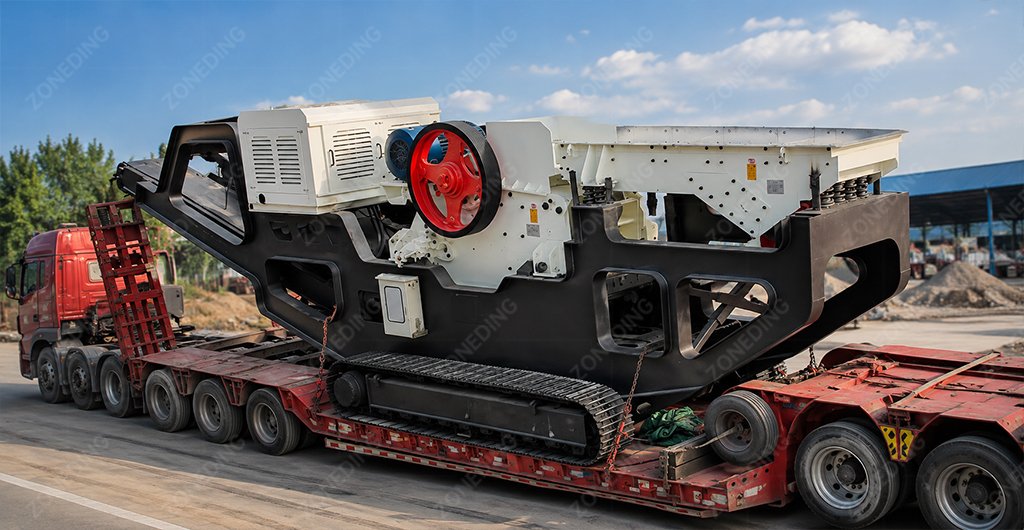
The full tracked vs wheeled mobile crusher comparison covers relocation frequency and lifetime cost. For the jaw crusher itself, confirm these conditions:
Construction-waste projects also require a magnet and a controlled inspection process. Reinforcing steel, timber, plastic, and uncrushable objects can stop production or damage the discharge system.
An accurate quotation begins with the job the crusher must perform. Sending only “I need 150 TPH” leaves too many technical questions unanswered.
| Required Information | Why It Matters |
|---|---|
| Material name, photos, and test data | Indicates hardness, abrasiveness, and crusher duty |
| Maximum and normal feed size | Defines inlet opening and feeder design |
| Required feed or saleable capacity | Prevents capacity misunderstanding |
| Jaw discharge target | Sets the crusher chamber and closed-side setting |
| Final products and percentage split | Determines secondary crushing and screen area |
| Soil, clay, moisture, and fines | Shows whether pre-screening is required |
| Daily operating hours | Supports power, wear, and maintenance planning |
| Terrain, slope, and relocation frequency | Guides chassis and transport selection |
| Site altitude | Affects diesel engine and generator rating |
| Available voltage and frequency | Defines electric motors and controls |
| Destination, nearest port, and access limits | Supports packing and delivery planning |
| Existing or future equipment | Ensures interface compatibility |
Clarify whether the quotation should cover one mobile jaw crusher or a complete line. The proposal should then identify the supply boundary, installed power, equipment weights, recommended wear parts, delivery scope, and responsibilities for commissioning.
After receiving this information, ZONEDING can prepare a preliminary process flow, equipment list, power estimate, layout direction, transport plan, and itemized quotation.
Can a mobile jaw crusher produce finished aggregate by itself?
It can produce coarse material where a broad grading is acceptable. Commercial concrete or asphalt aggregate normally needs secondary crushing and screening to control shape and separate product sizes.
Should hard rock use a jaw-and-cone or jaw-and-impact circuit?
Granite, basalt, river stone, and abrasive ore usually favor jaw-and-cone crushing. Limestone and clean concrete often suit jaw-and-impact crushing. Abrasion tests and final shape requirements should confirm the choice.
Is a tracked mobile jaw crusher always better for mining?
No. Tracked equipment is valuable when the crusher frequently moves inside rough sites. A wheeled plant may be more economical when it remains in one prepared location or travels mainly between projects.
Why is actual capacity lower than the catalog figure?
Moisture, clay, oversized feed, inconsistent loading, tight crusher settings, worn jaw plates, altitude-related power loss, and downstream bottlenecks can all reduce continuous output.
Can the plant be expanded later?
Yes. A mobile jaw unit can later feed a cone crusher, impact crusher, or screening plant. Expansion works best when conveyor height, capacity, controls, power supply, and site space are reserved in the initial design.
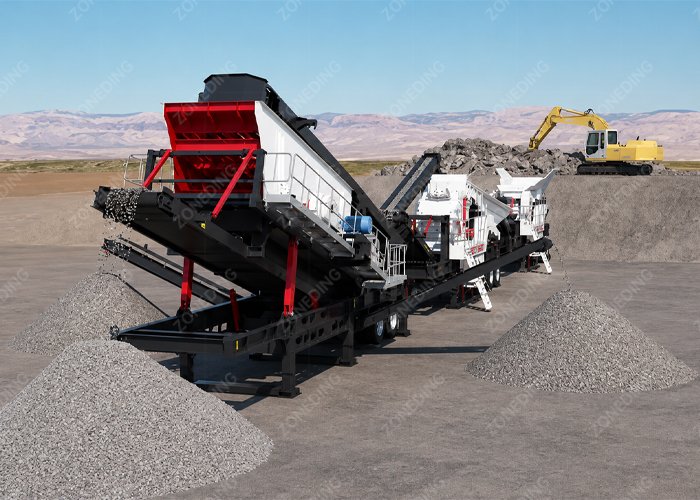
Compare mobile crusher plant prices, supply scope, capacity, shipping and installed costs for mining, quarry and road projects in South America.
View details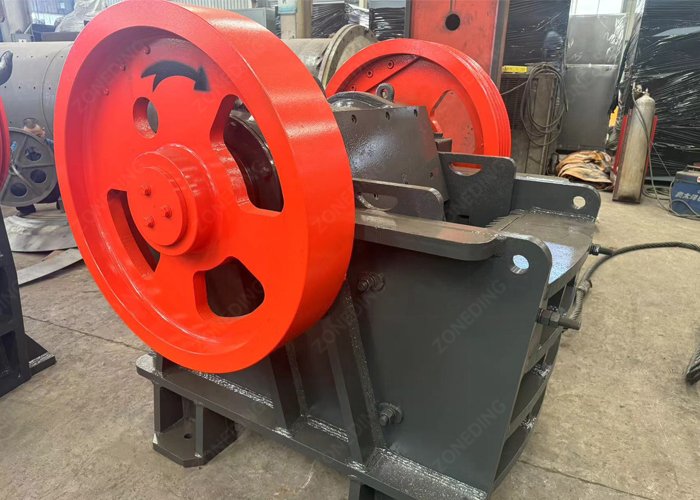
Jaw crusher prices can vary from a few thousand dollars to more than one million dollars depending on capacity, feed size, mobility, automation, and material hardness. In real quarry and mining projects, the cheapest machine is often not the most ...
View details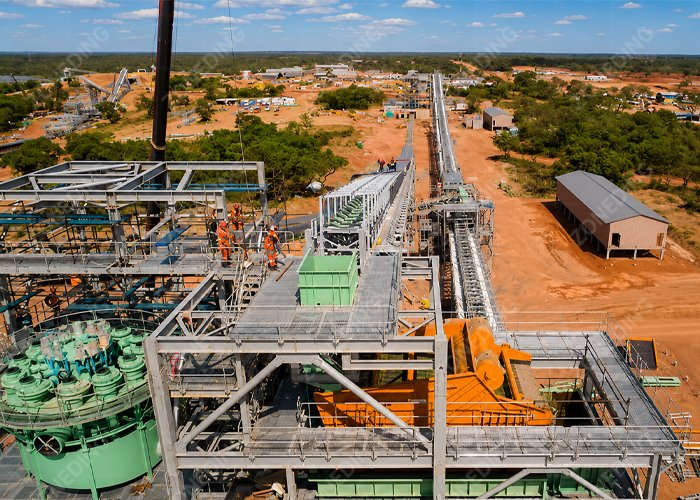
Learn how to reprocess gold tailings profitably with testing, gravity separation, flotation, cyanidation, and equipment selection.
View details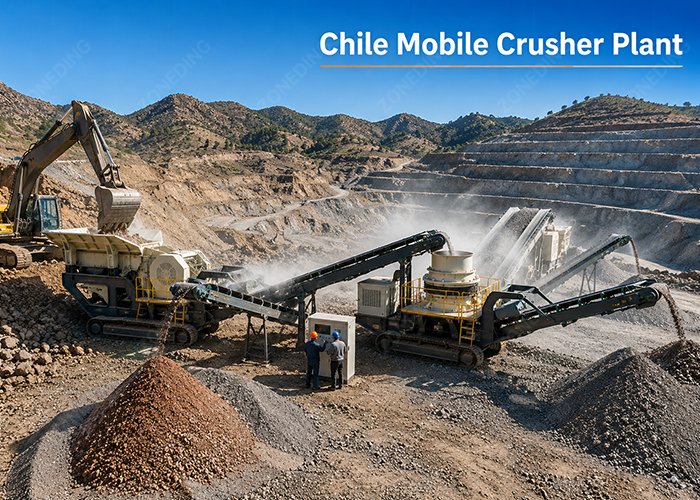
Compare mobile crusher circuits, capacity, altitude setup, logistics and wear planning for Chile copper and hard-rock projects.
View details