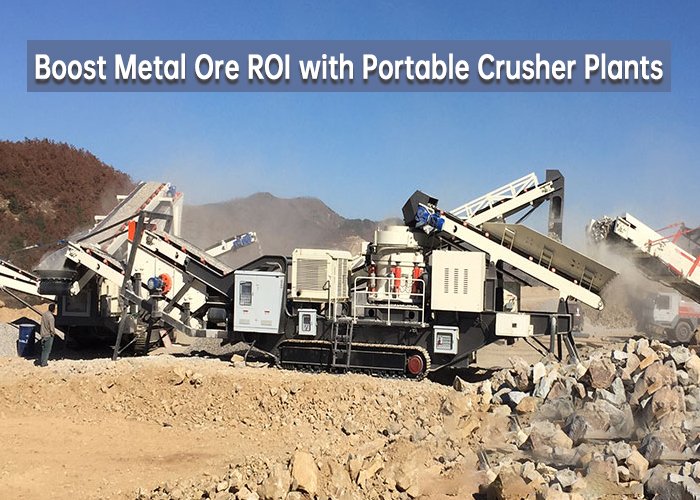
A mobile cone crusher price for Chile varies widely because the machine is only one part of a balanced secondary stage. Feed must first be reduced by a jaw crusher and matched to the correct chamber and closed-side setting.
For Chilean copper ore, granite, basalt, and andesite projects, these conditions influence real capacity and liner cost. Altitude, mountain transport, working space, and required final size also change the configuration.
This guide provides preliminary price ranges and explains how to select a mobile cone crusher for 100, 150, and 200 TPH hard-rock duties.
How Much Does a Mobile Cone Crusher Cost in Chile?
For preliminary planning, a mobile cone crusher unit may cost approximately USD 100,000–450,000 or more. Crusher size, chassis, power system, integrated screening, return conveyors, automation, and spare parts explain most of the difference.
Reference Configuration
Typical Secondary Duty
Preliminary Equipment Budget
Compact wheeled mobile cone
80–120 TPH hard-rock crushing
USD 100,000–180,000
Medium wheeled or tracked cone
100–180 TPH quarry or mine duty
USD 150,000–280,000
Heavy tracked closed-circuit cone
150–250 TPH with screen and return conveyor
USD 250,000–450,000+
These are equipment-only references, not fixed delivered prices. They do not automatically include the primary mobile jaw crusher, a separate screening plant, ocean freight, Chilean import costs, inland haulage, commissioning, or a long-term liner package.
A basic quotation may cover only the cone unit and discharge conveyor. A complete offer can add feeding, screening, recirculation, power, controls, dust suppression, and initial wear parts.
The broader mobile crusher plant price guide explains complete-line and installed-project costs. This page focuses on the technical decisions that determine whether the mobile cone stage can achieve the required output.
Where Does a Mobile Cone Crusher Fit in Hard-Rock Crushing?
A cone crusher normally performs secondary or tertiary crushing. It is not designed to receive uncontrolled run-of-mine rock directly from blasting.
For large copper ore or quarry feed, the basic process is:
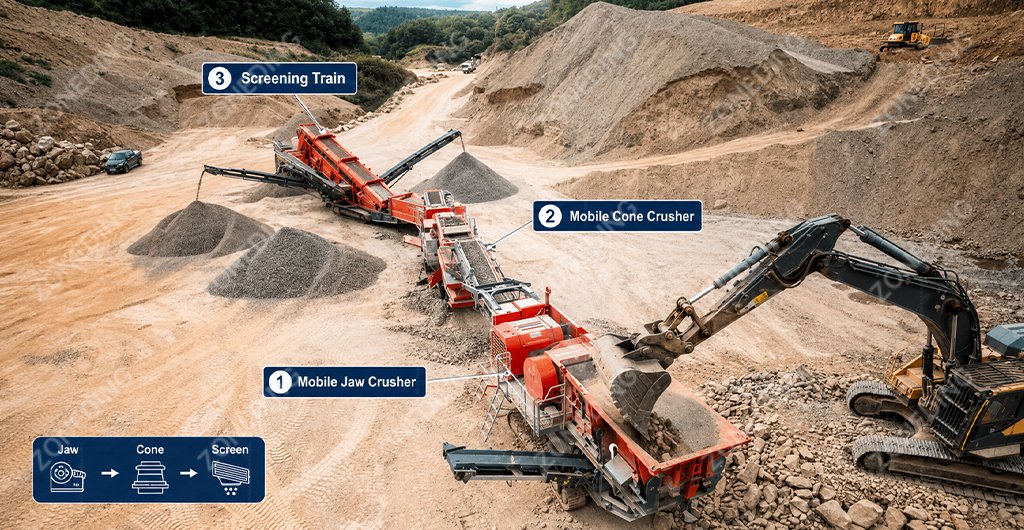
ROM rock → grizzly feeder → mobile jaw crusher → buffer or controlled transfer → mobile cone crusher → screen
Mobile jaw crusher feeding a mobile cone crusher through controlled transfer
The primary jaw reduces the largest rock and creates feed that can safely enter the cone chamber. Buyers still selecting the first stage can review the mobile jaw crusher guide.
Compression crushing makes the cone suitable for hard and abrasive materials:
Material
Mobile Cone Suitability
Main Design Concern
Copper ore
High
Ore variability, quartz content, downstream size
Granite
High
Abrasiveness and cubical aggregate demand
Basalt
High
High strength and liner wear
Andesite
High
Feed grading and product specification
River stone
High
Abrasiveness and rounded primary feed
Limestone
Technically suitable
Impact crushing may be more economical when abrasion is low
In copper projects, crushing prepares ore for stockpiling, conveying, or grinding. Its discharge target may differ from a quarry producing several calibrated aggregate sizes.
Chile-specific project conditions, including copper mining, mountain access, power supply, and mobile line selection, are covered in the Chile mobile crusher plant guide.
How Should Feed Size, Chamber Type and CSS Be Selected?
Three values must be considered together: the largest feed particle, the normal feed grading, and the required discharge. Selecting the crusher only by motor power or advertised capacity can leave the chamber underfilled or expose the liners to oversize rock.
The maximum feed must remain below the opening allowed by the selected liner profile. It is not enough for most of the feed to fit. A small percentage of slab-like oversize can bridge the inlet, cause repeated stops, or damage the chamber.
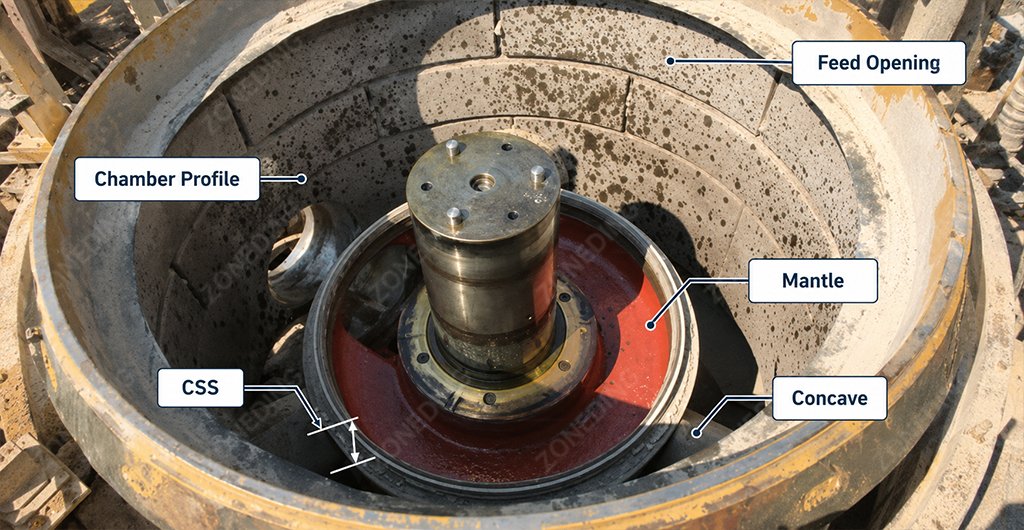
Mobile cone crusher chamber profile feed opening and closed-side setting selection
The chamber profile determines how the material is reduced:
Coarse or extra-coarse chambers accept larger secondary feed and normally use a wider discharge setting.
Medium chambers balance feed opening, reduction, and aggregate production.
Fine chambers suit smaller, controlled feed in tertiary duties.
The closed-side setting, or CSS, is the narrowest discharge gap during the crushing cycle. A smaller CSS can create a finer product, but it also changes capacity, power draw, circulating load, and liner wear. It cannot compensate for the wrong chamber.
The selected cone crusher should operate inside a stable range where feed opening, chamber volume, stroke, CSS, and motor power work together. If the project needs a large reduction in one pass, a second crushing stage may be more reliable than forcing one cone to do both secondary and fine crushing.
For copper ore, feed samples and sieve analysis help identify density, quartz content, strength, moisture, and size distribution before selecting the chamber and liners.
Why Do Stable Feeding and Closed-Circuit Screening Matter?
A cone crusher performs best with continuous, evenly distributed feed. Intermittent surges from the jaw crusher leave the chamber partly empty and then suddenly overloaded. This reduces effective output and can create uneven mantle and concave wear.
A buffer bin, surge hopper, or controlled transfer conveyor separates the two crushing stages. Level sensors and variable-speed feeding help keep the cone near a stable operating condition.
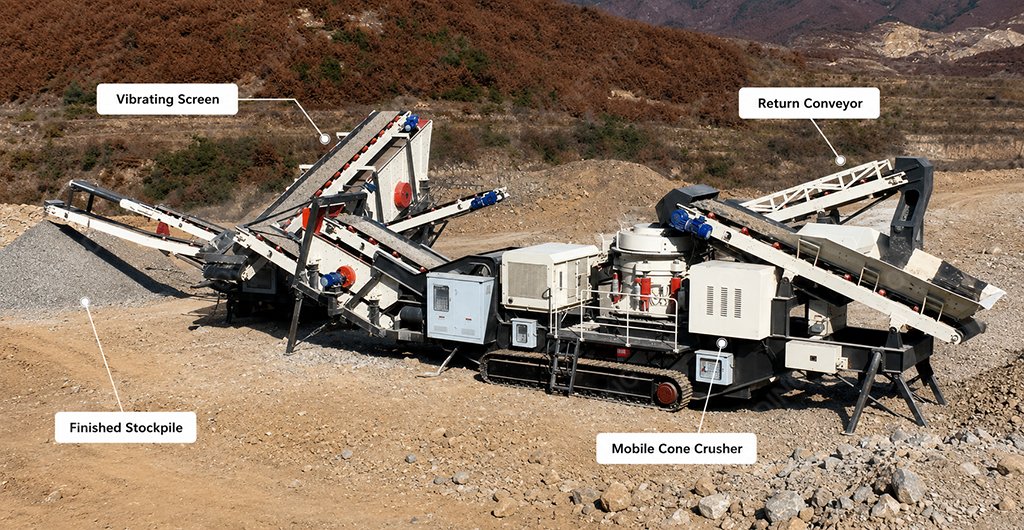
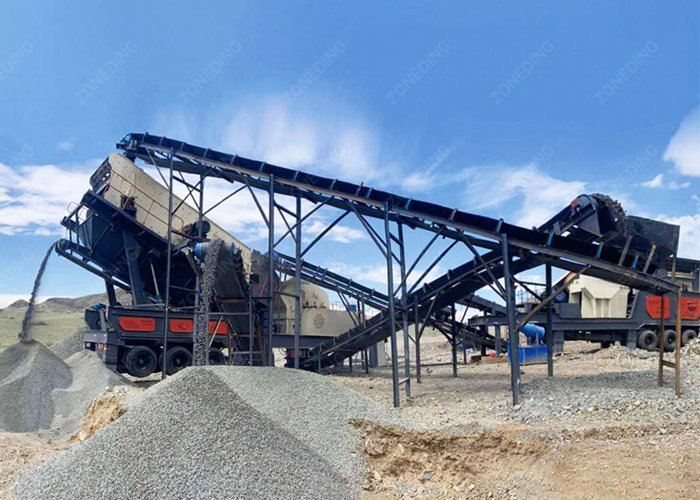
Closed-circuit mobile cone crusher and screening plant
The screen removes material that already meets specification. Oversize returns to the cone for another pass. This improves size control, but the returning material becomes part of the crusher load.
A 150 TPH line may circulate additional material internally. The cone, screen, and conveyors must handle this combined load. A small screen can return excessive near-size material and reduce saleable output.
The vibrating screen must therefore be selected by feed grading, moisture, required separations, deck area, and recirculating load. Tight aggregate specifications usually require more effective screening area than mine pre-crushing.
Feed level, power draw, CSS, product grading, and return-belt tonnage show whether the circuit is balanced. Adjusting only the cone may simply move the bottleneck.
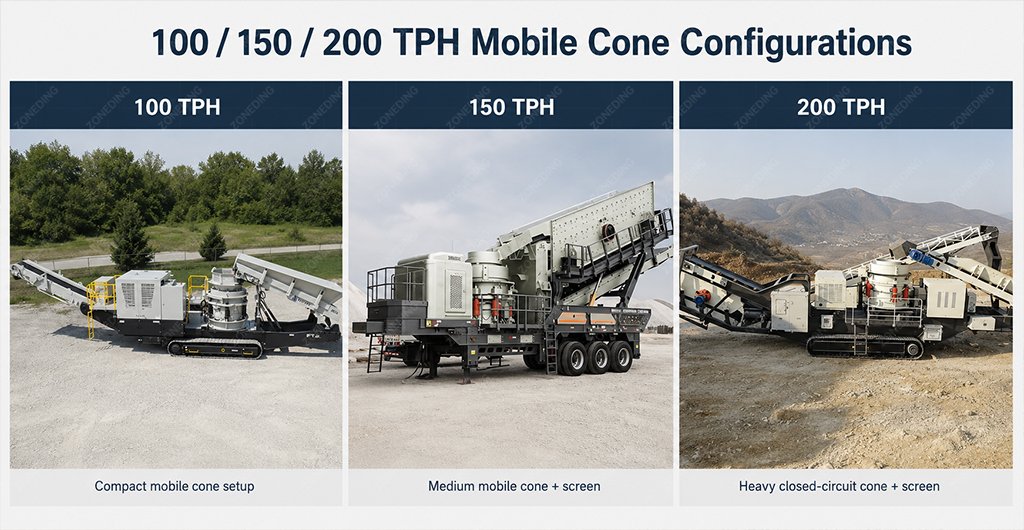
Which 100, 150 or 200 TPH Configuration Fits the Project?
Capacity should mean continuous saleable output or required new feed under stated conditions. It should not be copied from the maximum rating of one machine.
100 150 and 200 TPH mobile cone crusher configurations
Required Duty
Preliminary Process
Typical Application
Main Design Check
100 TPH
Mobile jaw → controlled feed → mobile cone
Small copper project or hard-rock quarry
Feed opening and basic product target
150 TPH
Mobile jaw → buffer → mobile cone → multi-deck screen
Granite, basalt, road and concrete aggregate
Screen area and recirculating load
200 TPH
Heavy mobile jaw → surge control → hydraulic cone → mobile screen → return conveyor
Larger mine, quarry or infrastructure supply
Balanced power, conveyors, liners and transport
100 TPH Copper-Ore Pre-Crushing
The cone reduces primary-crushed ore before stockpiling or grinding. A single top-size target permits a simpler circuit, but the model must still handle hard or quartz-rich sections.
150 TPH Hard-Rock Aggregate
This duty usually requires closed-circuit screening because the producer must separate several saleable sizes. The liner profile and CSS should be chosen around the required product mix, not one target size alone.
200 TPH Commercial or Mine Duty
At 200 TPH, a larger cone cannot solve an undersized jaw, conveyor, screen, or return circuit. The plant also needs allowance for liner changes and maintenance.
How Do Liners, Power and Chilean Site Conditions Affect Cost?
Mantle and concave cost per ton depends on rock abrasiveness, chamber profile, feed grading, CSS, feeding stability, and usable liner life.
Uneven feed can wear one side faster. Excess fines reduce chamber performance, while oversize concentrates force near the top. An unnecessarily tight CSS can raise power and return load without increasing saleable output.
A quotation should state:
Recommended mantle and concave profile
Wear-part material and unit weight
Initial liner sets included
Backing material and replacement tools
Critical hydraulic, lubrication, filter, and sensor spares
Expected inspection and replacement procedure
Site conditions also affect the package. At high elevation, diesel engines and generator sets may require derating or a larger rating to deliver the necessary power. Electric drives require confirmation of voltage, frequency, transformer capacity, starting method, and cable distance.
For mountain transport, check complete shipping weight and dimensions. Low-bed availability, axle limits, bridges, curves, gradients, tunnels, and mine-road width may require modular shipment.
Tracked units are useful for regular movement inside a mine or quarry, but long-distance relocation still needs transport equipment. Wheeled units can offer lower investment on prepared sites. The detailed tracked vs wheeled mobile crusher comparison should guide the chassis decision.
Similar altitude and mine-access issues occur in neighboring markets. The Peru crusher plant guide provides another regional reference for mining and hard-rock projects.
What Information Is Needed for an Accurate Quotation?
An accurate proposal requires complete feed and product data. “Copper ore, 200 TPH” does not define the chamber, screen, or power package.
Required Information
Why It Matters
Material name, photos, and test data
Indicates strength, density, abrasiveness, and variability
Maximum and normal cone feed size
Defines feed opening and chamber profile
Feed-size distribution
Supports capacity and liner selection
Required new feed or saleable output
Prevents TPH misunderstanding
Final size or grinding-feed target
Defines CSS and screening duty
Product percentage split
Estimates screen and recirculating load
Moisture, clay, and natural fines
Affects feeding and screening
Daily operating hours
Supports wear, power, and maintenance planning
Altitude and temperature
Affects engines, generators, cooling, and lubrication
Available voltage and frequency
Defines motors and electrical controls
Site layout and relocation frequency
Guides chassis and transfer design
Destination port and mine access limits
Supports packing and inland transport
Clarify whether the request covers one mobile cone crusher, a jaw-and-cone pair, or a complete closed circuit. The quotation should define supply boundaries, power, weights, screen capacity, return conveyors, liners, shipping, and commissioning.
With complete project data, ZONEDING can prepare a preliminary process flow, equipment list, power estimate, layout direction, transport plan, wear-parts recommendation, and itemized quotation.
Mobile Cone Crusher FAQ
Can a mobile cone crusher receive run-of-mine copper ore directly?
Normally no. Large and variable mine feed should first pass through a jaw crusher. The cone needs controlled feed that fits the selected chamber opening.
Is a smaller CSS always better?
No. A tighter CSS may create a finer product, but it can also reduce capacity, increase power demand, raise circulating load, and accelerate wear. The setting must match the chamber and product target.
Why may a 150 TPH line need a cone rated above 150 TPH?
In a closed circuit, the cone handles new feed plus returned oversize, so its internal duty can exceed saleable output.
How can liner cost per ton be reduced?
Use the correct chamber, remove oversize and excessive fines, maintain stable full-chamber feeding, avoid unnecessarily tight settings, monitor wear, and replace mantle and concave as a matched set when required.
Is a tracked cone crusher always best for Chilean mines?
No. Tracked equipment is useful when the plant frequently moves inside difficult sites. A wheeled plant may be more economical when it works on a prepared pad and relocation is planned rather than continuous.
The best mobile cone crusher receives controlled feed, operates in the correct chamber range, and delivers the required product at a predictable liner and energy cost.
For Chilean copper and hard-rock projects, matching the jaw, buffer system, cone, screen, return circuit, power source, and transport plan is the basis of reliable production.
A represents the peak of integrated mineral processing technology. This machine functions as a complete factory on wheels or tracks. It performs feeding, crushing, and screening in one continuous flow. This setup eliminates the need for expensive ...
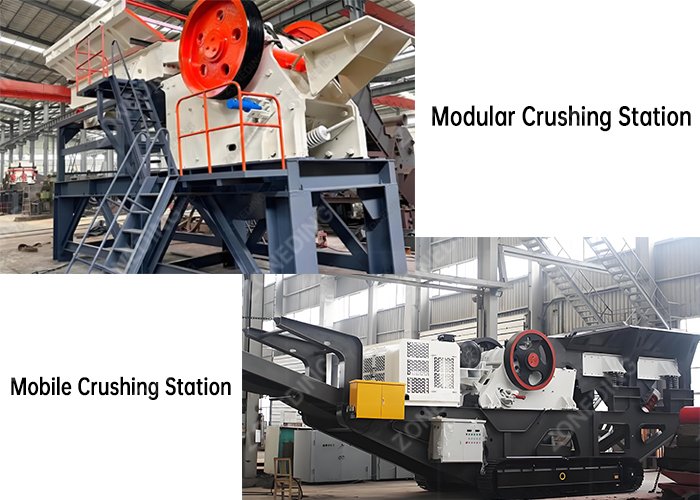
Choosing between a modular crushing station and a mobile crushing plant depends on project duration and move frequency. A mobile plant offers speed for short projects. A modular plant provides stability for long-term production. I have seen many o...
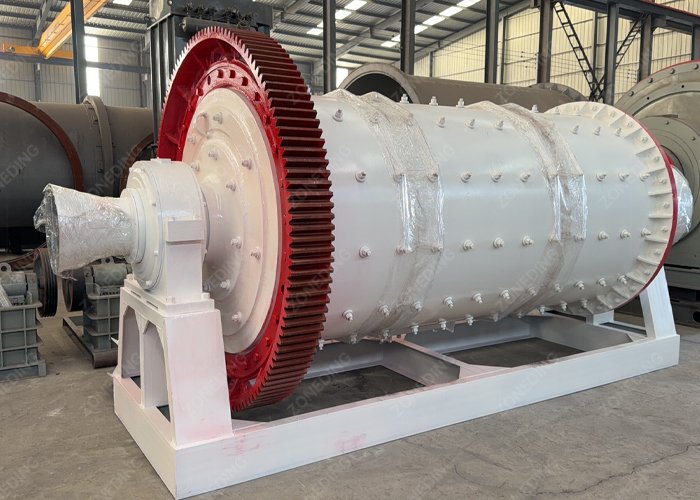
The stands as the most important machine in a modern gold mine. This heavy equipment grinds raw ore into fine particles to release precious metals. Achieving a high recovery rate depends on the efficiency of this grinding process. If the machine f...
Choosing a high-performance portable crusher plant for metal ore is the fastest way to increase your mining profits in 2026. Many mine owners waste 30% of their budget on truck fuel and road construction. I believe a mobile station solves this by ...
We use cookies to ensure that we give you the best experience on our website. If you continue to use this site we will assume that you are happy with it.
Privacy Policy
Send us a message
We would love to hear from you
Submit your question and our team will respond to the email provided as soon as possible.
 Zoneding Machine