The stands as the most important machine in a modern gold mine. This heavy equipment grinds raw ore into fine particles to release precious metals. Achieving a high recovery rate depends on the efficiency of this grinding process. If the machine fails to reach the target size, the gold remains trapped inside the rock. This guide explains how to select the right equipment for a mining project. Proper maintenance and operation ensure the plant stays profitable in the long term.
What is a gold ball mill and why is it essential for liberation?
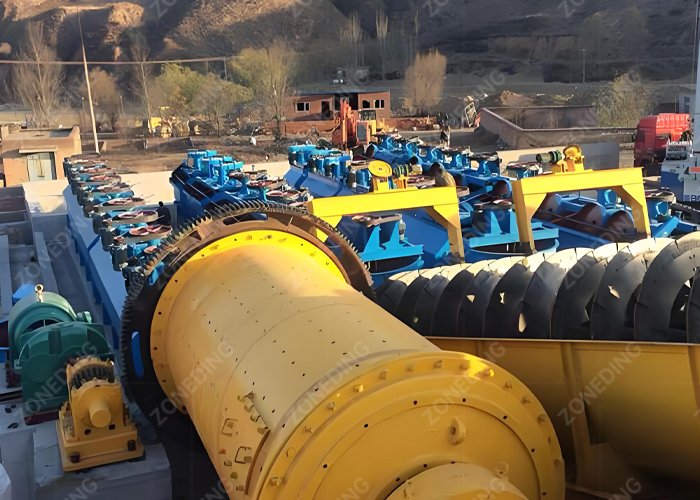
A gold ball mill is a large cylinder that rotates to grind crushed ore into a fine slurry. This machine uses steel balls to smash the rocks. The goal is to reach a state called liberation. Liberation means the gold particles are fully separated from the waste rock. If the liberation is poor, the downstream chemicals cannot reach the gold. This results in huge financial losses for the mining company. Most gold mines require a grind size between 75 and 45 microns. The mineral processing equipment must be robust enough to run 24 hours a day without stopping. The process of liberation is the bridge between mining and chemical extraction. Raw ore enters the plant as hard chunks. These chunks contain tiny grains of gold. The ball mill uses mechanical energy to break these grains free. In 2026, the cost of energy is a major concern for mine owners. A high-efficiency mill reduces the power needed to reach the target fineness. ZONEDING designs these mills to provide the maximum surface area for the grinding media. This ensures that every revolution of the drum contributes to the liberation of the gold. Without this machine, the gold remains hidden in the rock and the project fails to produce revenue.
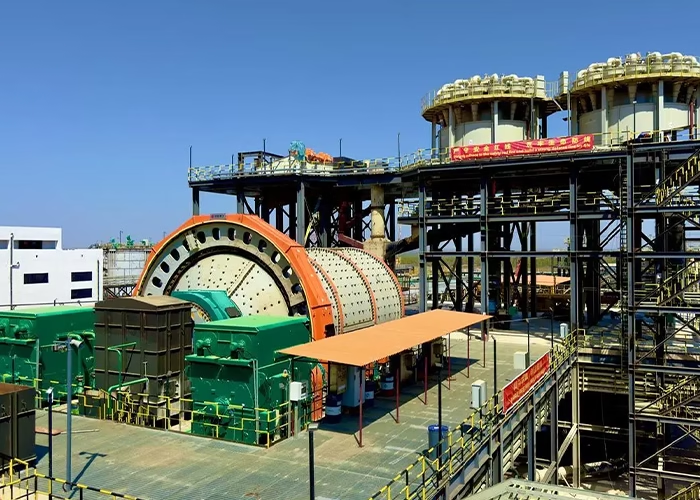
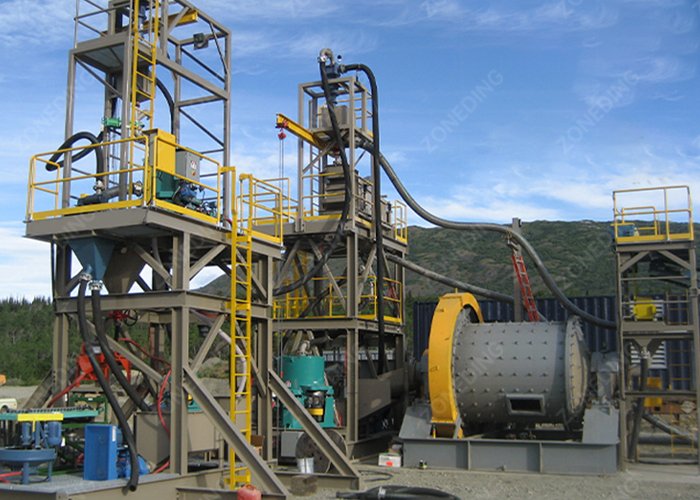
Gold Extraction Site: Ball Mill Operation
Gold ball mill
The Importance of Liberation Size
The target size for grinding is determined by the mineralogy of the ore. Some gold is “coarse” and releases easily. Other gold is “refractory” and needs an extremely fine grind.
Requires multiple stages of grinding and classification.
Technical Tips for Liberation
Run Lab Tests: Always test the ore hardness before buying a mill.
Check Feed Size: The crushing equipment must provide a feed smaller than 20mm.
Monitor Density: The ratio of water to ore inside the mill must be steady.
How does the principle of impact and attrition release gold?
The gold ball mill works through two main forces: impact and attrition. Impact happens when the steel balls fall from the top of the mill and smash the large rocks. This action breaks the heavy bonds of the quartz or sulfide. Attrition happens when the balls roll against each other at the bottom of the mill. This action polishes the particles and grinds them into a fine powder. A balanced mill uses both forces to ensure the gold is released without being damaged. If the mill spins too fast, the balls hit the shell and waste energy. If it spins too slow, the rocks do not break.
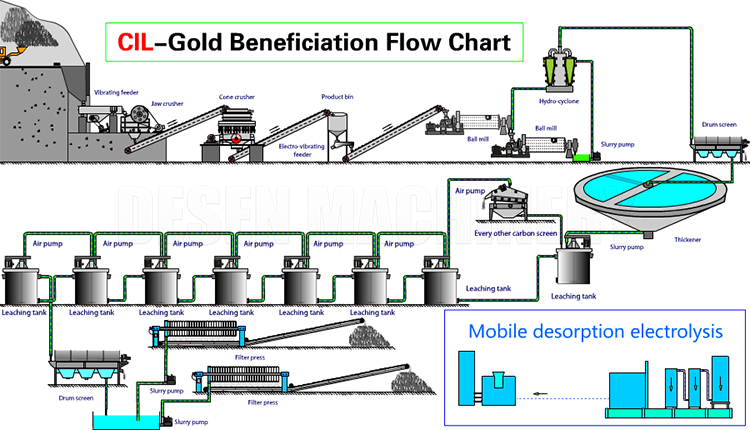
Gold Extraction Methods – CIL
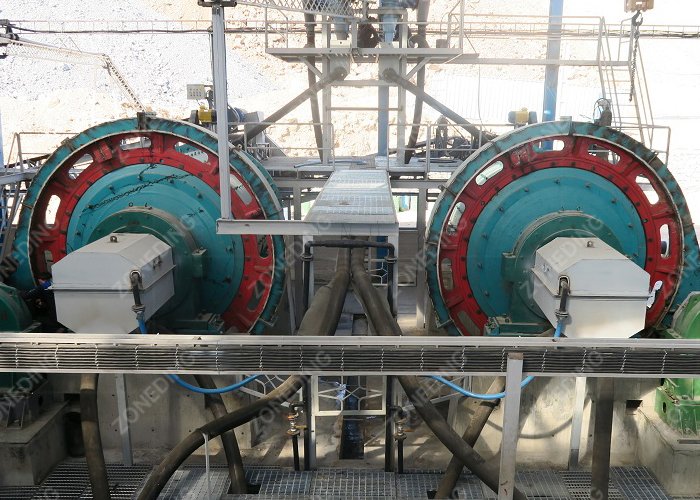
The movement of the grinding media inside the drum is a science. The liners on the inside of the shell lift the balls to a specific height. Then, gravity takes over and the balls crash down. This is the “cataracting” motion. It provides the impact force. The “cascading” motion occurs when the balls slide down the surface of the pile. This provides the attrition force. In a gold CIL plant, the attrition force is very important. It creates the smooth, fine slurry needed for cyanide to dissolve the gold. ZONEDING engineers the internal liners to control these motions precisely. This control helps the mine save money on electricity and steel wear.
Forces Inside the Mill
Impact Action: This shatters the hard rock into smaller pieces.
Attrition Action: This grinds the small pieces into the final fine powder.
Centrifugal Force: This keeps the balls against the wall until they reach the top.
Overflow vs. Grid type: Which matches the gold process?
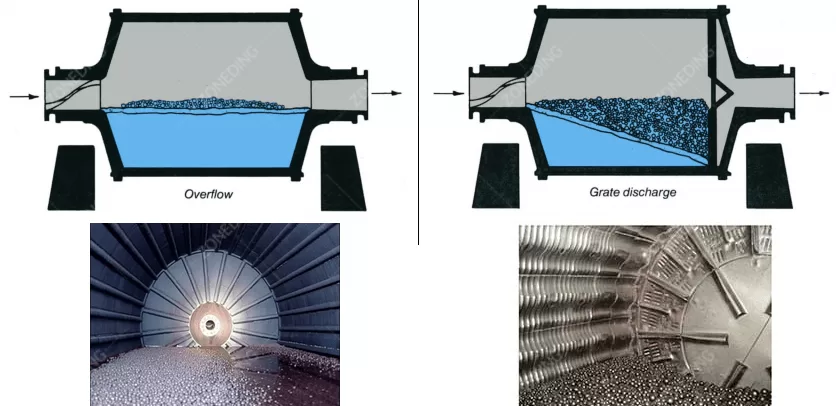
Choosing between an overflow type and a grid type mill depends on the final goal. An overflow ball mill lets the slurry flow out naturally when it reaches the discharge end. This design is simple and very reliable. It is the best choice for fine grinding in a leaching circuit. A grid type mill uses a discharge grate to force the material out faster. This prevents over-grinding and allows for higher throughput. Grid mills are typically used for primary grinding. Selecting the wrong type can lead to higher energy costs or lost gold in the tailings. The overflow mill is the “workhorse” of the gold industry. It has fewer moving parts and is easier to fix. For a gold CIL plant, the overflow type is almost always the standard. It produces a very consistent product that is easy to treat with chemicals. The grid type mill is better for mines that have a gravity circuit. In a gravity circuit, the gold is caught by weight. If the gold is ground too fine, it becomes like dust and floats away. The grid mill keeps the particles a bit larger and more uniform. ZONEDING offers both designs to suit the specific needs of the ore body.
Ball mill-the overflow or of the grate discharge type
Comparison Table for Selection
Feature
Overflow Type
Grid Type
Benefit for the Operation
Discharge Style
Simple overflow
Forced grate discharge
Overflow is better for fine chemical leaching.
Maintenance
Very low
Moderate
Grid types need the grates cleaned regularly.
Product Size
Very fine
Uniform coarse to fine
Grid types prevent “slimming” of the gold.
Tips for Process Matching
For Fine Leaching: Use the overflow design for the best results.
For High Tonnage: Use the grid type to move material faster.
For Abrasive Ore: Use heavy-duty ball mill liners in either type.
Why use a professional gold ball mill instead of other machines?
A professional gold ball mill is built for continuous, 24-hour operation in harsh conditions. Other machines like hammer mills or vertical rollers wear out too quickly when processing hard gold ore. Gold ore often contains quartz, which is extremely abrasive. A ball mill uses replaceable liners to protect the main shell. This design allows the machine to last for 20 or 30 years. Additionally, the ball mill can handle wet grinding. Wet grinding is essential for gold because it creates a slurry that is easy to pump to the next stage of the plant. The reliability of a ball mill is its greatest advantage. A mine cannot afford to stop the plant every week for repairs. Professional manufacturers like ZONEDING use high-quality steel and precise welding. This ensures the drum stays balanced and the gears do not fail. The ball mill also allows for easy adjustment. If the ore gets harder, the operator adds more steel balls. If the ore gets softer, the feed rate is increased. This flexibility is not found in other grinding machines. Furthermore, the ball mill is the only machine that provides the exact particle size distribution needed for high-recovery flotation or leaching.
Advantage Checklist
Long Life: The machine lasts decades with basic liner changes.
Scalability: Available in small sizes for startups and huge sizes for large groups.
Low Cost: The cost per ton of ground ore is lower than other methods.
Simplicity: Any trained mechanic can perform the basic maintenance.
Capacity, hardness, and feed size: Critical investment factors?
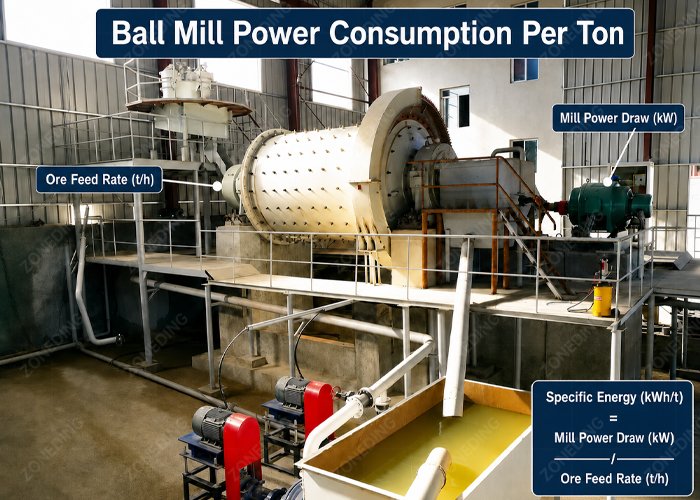
The capacity, ore hardness, and feed size determine the size of the motor and the drum. Capacity is measured in tons per hour (TPH). A mill that is too small will become a bottleneck for the entire mine. Ore hardness is measured by the Bond Work Index. This number tells the engineers how much energy is needed to break the rock. The feed size is the size of the rock coming from the crushing equipment. If the feed is too large, the mill works too hard and the balls break. Proper planning of these factors ensures the investment is successful. In 2026, ZONEDING helps buyers calculate these factors using advanced software. This prevents the mistake of buying an oversized mill that wastes electricity. It also prevents buying an undersized mill that cannot meet production targets. The feed size should ideally be under 15mm. This allows the mill to focus on fine grinding rather than primary crushing. If the ore is very hard, the mill needs a higher “ball charge.” This means more steel balls are inside the drum. All these technical details must be decided before the machine is manufactured. A well-matched mill runs smoothly and consumes less power.
Key Factors Table
Factor
Technical Detail
Effect on the Mine
Capacity (TPH)
Daily production goal
Determines the revenue potential of the plant.
Hardness (BWi)
Energy per ton
Determines the monthly electricity bill.
Feed Size
Crushing efficiency
Determines the wear rate of the ball mill liners.
Investment Tips
Future Growth: Buy a slightly larger motor to allow for future capacity increases.
Test Samples: Send ore samples to ZONEDING for accurate hardness testing.
Crush First: Invest in good crushing equipment to save the ball mill from damage.
Ball grading and liners: How to avoid unplanned downtime?
Avoiding unplanned downtime requires a strict schedule for checking liners and adding balls. The steel balls wear down every day. If the balls become too small, the grinding efficiency drops. The operator must add new ball mill grinding media every shift to keep the level constant. The internal liners also wear out. These liners are made of manganese steel or rubber. They protect the shell from the impact of the balls. If a liner falls off, the balls will destroy the shell in a matter of hours. This results in a very expensive and long shutdown. Monitoring the mill is a daily task. The sound of the mill tells the operator if it is working correctly. A loud, metallic ringing sound means there is not enough ore inside. A dull thud means the mill is too full. In 2026, many mines use digital sensors to track these sounds. ZONEDING provides these smart monitoring systems as an option. Regular inspections of the bolts and gears are also necessary. If a bolt is loose, it must be tightened immediately. Keeping a stock of spare liners and balls at the mine site is a smart strategy. This allows the team to fix the machine quickly without waiting for a shipment from the factory.
Maintenance Tips for 2026
Weekly Inspections: Check for loose bolts and leaks in the discharge end.
Monthly Measurements: Measure the thickness of the liners to predict replacement dates.
Daily Ball Addition: Add a specific weight of steel balls for every ton of ore processed.
2026 Gold Mining Technology and Trends
The biggest trend in 2026 is the use of automated grinding control systems. These systems use sensors to measure the noise, power, and slurry density. The software then adjusts the feed rate and water flow in real-time. This keeps the mill at peak efficiency without human intervention. Another trend is the shift toward rubber liners for fine grinding stages. Rubber liners last longer and are much quieter than steel. This improves the working environment for the staff.
Latest Progress at a Glance
VFD Motors: Variable Frequency Drives allow the mill to change speed based on ore hardness.
High-Chrome Media: New types of ball mill grinding media last 30% longer than traditional steel.
Modular Design: Small mines can now buy “containerized” ball mills that are easy to move.
FAQs
Question: What is the lifespan of a gold ball mill shell? The main steel shell can last 30 years or more if the liners are replaced on time. The liners protect the shell from all the wear and tear. Question: Can one mill handle different types of ore? Yes. By changing the speed and the size of the steel balls, the machine can adapt to different rocks. However, the capacity might change depending on the hardness. Question: Is wet grinding better than dry grinding for gold? Wet grinding is usually better. It is more energy-efficient and creates the slurry needed for the next steps in a gold CIL plant. Question: How often should the girth gear be lubricated? The girth gear needs constant lubrication. Most modern mills use an automatic spray system that applies grease every few minutes.
Summary and Recommendations
Selecting a gold ball mill is the most critical decision for a mining company. The machine must reach the target liberation size to ensure the gold is recovered. An overflow mill is the standard for leaching, while a grid mill is better for primary grinding. Buyers must consider the capacity, ore hardness, and feed size before making a purchase. Proper maintenance of the ball mill liners and grinding media prevents expensive downtime. In 2026, automation is making these machines more efficient than ever. Working with a professional manufacturer ensures the plant remains profitable for many years.
About ZONEDING
ZONEDING MACHINE is a leading Chinese manufacturer of mineral processing equipment. Since 2004, we have provided high-quality ball mill solutions to global mining companies. Our factory uses advanced CNC machines and professional engineers to build durable equipment. We offer full-service support including design, installation, and spare parts. Our goal is to help our partners maximize their gold recovery and minimize their costs. With products in over 120 countries, ZONEDING is a trusted name in the mining industry. For a free technical consultation or a quote on a gold ball mill, contact our engineering team today.
Building a highly profitable mineral processing facility requires a strictly logical equipment sequence. A complete copper-gold ore processing line must follow a precise physical and chemical path. The rock must be crushed, ground, classified, and...
The real ball mill cost is not the machine quote alone. In most plants, the 5-year total is around 2.5x to 4x of the purchase value after wear, power, downtime, and recovery impact are included. This guide shows how to calculate bal...
Field experience in extreme environments reveals the truth about aggregate production in remote areas. Showroom data fails when the site sits 500 kilometers from civilization. Extreme locations lack power grids, clean fuel, and heavy cranes. ...
We use cookies to ensure that we give you the best experience on our website. If you continue to use this site we will assume that you are happy with it.
Privacy Policy
Send us a message
We would love to hear from you
Submit your question and our team will respond to the email provided as soon as possible.
 Zoneding Machine