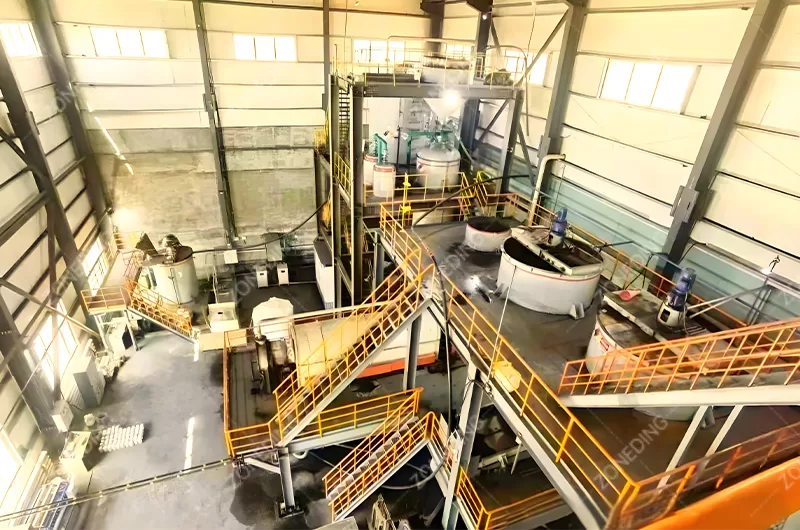
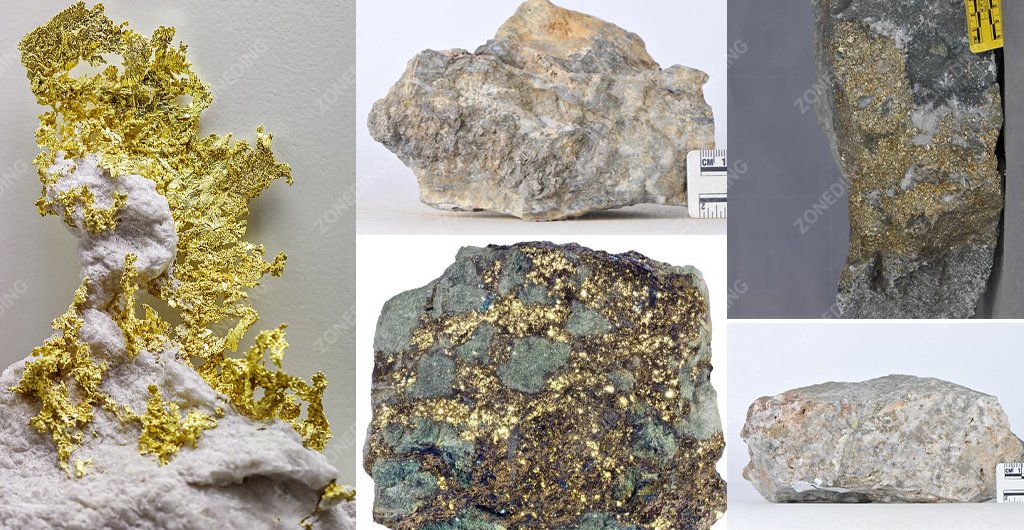
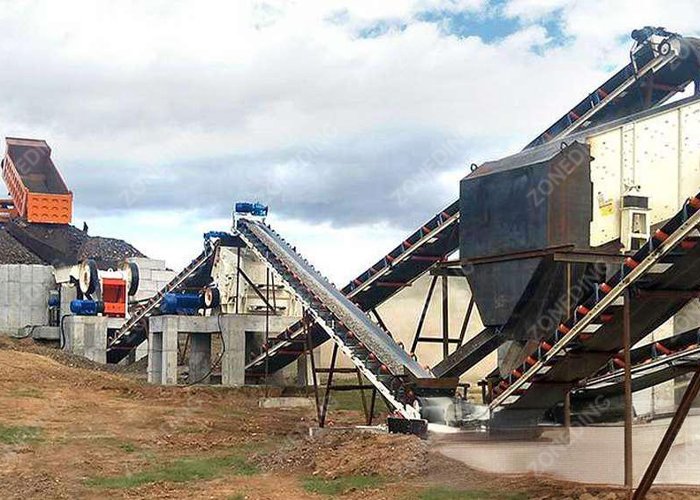
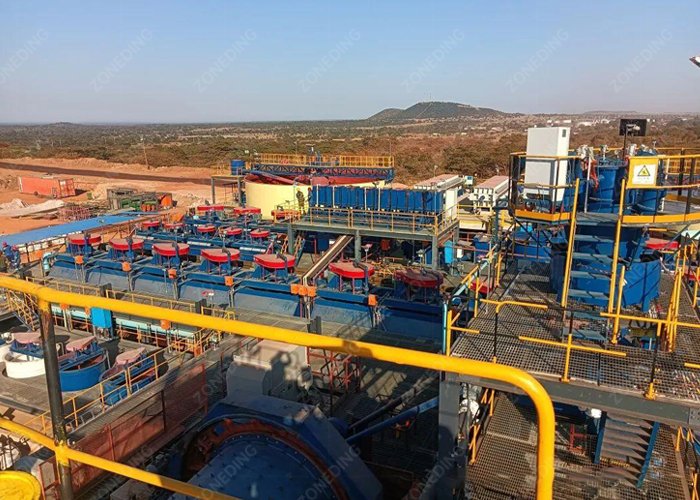
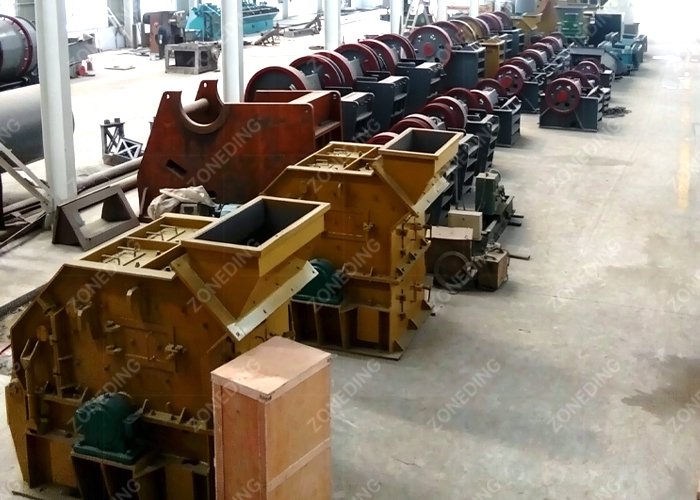
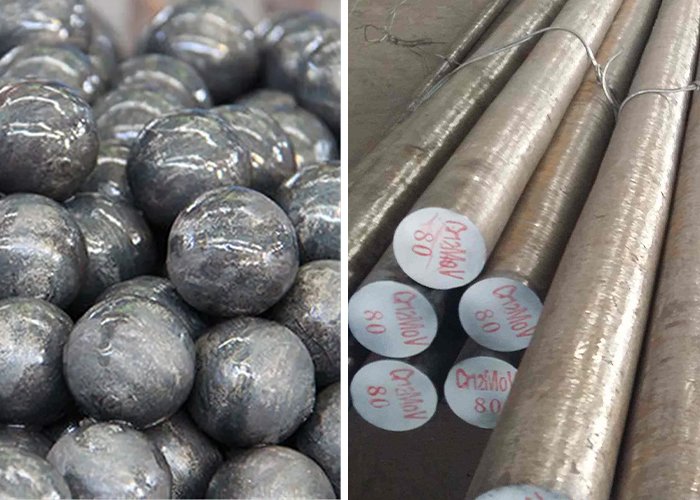
When a client asks about the , they usually expect a simple price for tanks, pumps, and conveyors. However, the equipment quote is only the tip of the iceberg. In my experience, the equipment represents only 30% to 40% of the total investment. The remaining 60% lies in installation, infrastructure, environmental compliance, and operational expenses. Planning without these “hidden” costs is the fastest way to fail in gold mining.
1. Total Investment: The “Iceberg Effect” in Budgeting
The total gold plant investment budget is much larger than the equipment list. You must account for the “Total Installed Cost” (TIC). This includes everything from the moment the machines arrive at the site until the first ounce of gold is produced. Most new investors make the mistake of only budgeting for the machines. You must also prepare funds for heavy-duty structural steel, specialized cyanide-resistant piping, electrical automation, and large-scale civil works. A common rule of thumb in the industry is to multiply your equipment quote by 2.5 or 3 to find a realistic construction budget.
Breaking down the budget layers
Budget Category
Typical % of Total
Includes
Equipment
30-40%
Tanks, Mills, Pumps, Screens
Installation
20-25%
Labor, Piping, Electrical, Steel
Infrastructure
15-20%
Roads, Power, Water, Housing
Environmental
10-15%
Detoxification, Tailings Dam
Contingency
10%
Unexpected delays or price hikes
Professional Budgeting Tips
Factor in Logistics: Moving heavy ball mills to remote mine sites can cost tens of thousands of dollars in freight and cranes.
Prepare for Civil Works: A gold plant requires massive concrete foundations to handle the weight and vibration of grinding circuits.
Include a Buffer: Always keep a 10% contingency fund for unexpected soil conditions or equipment delays.
2. Process Selection: CIP vs CIL Cost Comparison
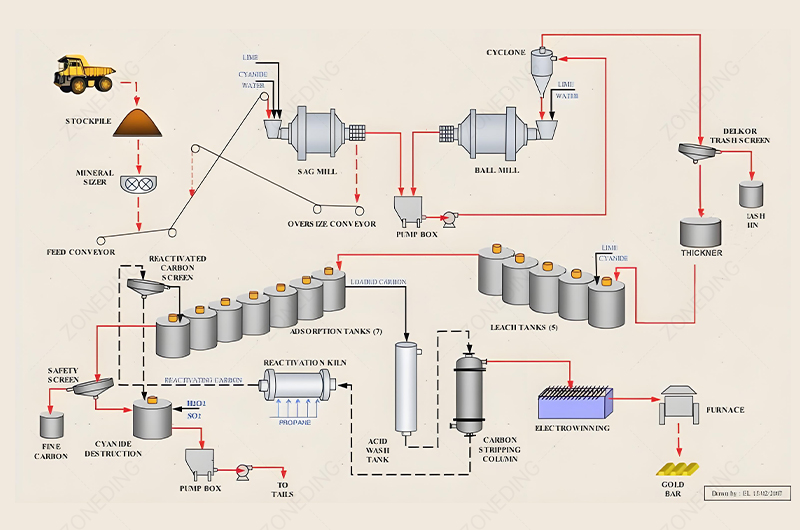
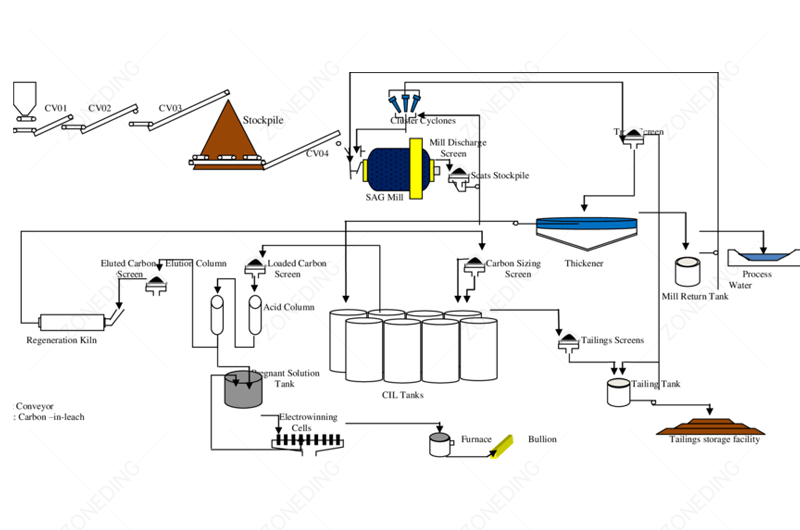
Choosing between Carbon-in-Pulp (CIP) and Carbon-in-Leach (CIL) affects both CAPEX and OPEX. While both use activated carbon to recover gold, the way they handle the ore is different. This difference changes your equipment needs and your gold recovery efficiency. In a CIP plant, the ore is leached in one set of tanks and then moved to another set of tanks for carbon adsorption. In a CIL plant, leaching and adsorption happen in the same tanks. CIL is generally more expensive to build because it requires more complex agitation and better carbon management, but it is much better at handling “preg-robbing” ores.
CIP
CIL
Understanding the cost trade-offs
If your ore has organic carbon that steals gold (preg-robbing), a cheaper CIP plant will lose massive amounts of gold. This makes the “cheap” plant extremely expensive in the long run. A CIL plant reduces this risk by having the carbon present during the entire leaching process.
Decision Matrix
For Simple Ores: Use CIP to save on initial tank and agitation costs.
For Complex/Organic Ores: Use CIL to ensure high gold recovery and better ROI.
For Fine Grinding Needs: Ensure your ball mills are sized for the specific particle size required by your chosen process.
3. Capacity and Scale: The Unit Cost Advantage
A larger gold processing plant price is not simply double a smaller one. There is a massive economy of scale in mineral processing. As you increase the tons per day (TPD), the cost per ounce of gold produced tends to drop significantly. A small 50 TPD plant has high “fixed costs.” You still need a lab, a manager, security, and a detoxification system. These costs are almost the same as a 500 TPD plant. Therefore, a small plant has a very high operating cost per ton. If your ore deposit is large enough, it is almost always better to build a larger plant from the start.
Capacity and Economies of Scale in Gold Refineries of Varying Sizes
The Grinding Energy Trap
Grinding is the most expensive part of the gold mining OPEX. Whether you use a rod mill or a ball mill, the electricity required to reach the necessary fineness is huge. Before deciding on capacity, you must calculate the energy requirement for your specific ore hardness.
Scaling Advice
Avoid “Middle-Ground” Mistakes: Don’t build a plant that is too big for your ore but too small to be efficient.
Analyze Ore Hardness: Use the Bond Work Index to predict how much electricity your grinding circuit will consume.
Modular Growth: If you are unsure, consider a modular design that allows for future expansion.
4. Environmental and Safety Costs
Modern gold mining requires a significant budget for cyanide detoxification and tailings management. You cannot simply dump waste into the environment. Regulators and international standards require you to neutralize cyanide before it leaves the plant. This “Environmental Tax” includes the cost of chemical reagents (like SO2 or hydrogen peroxide), additional detoxification tanks, and the construction of a highly secure Tailings Storage Facility (TSF). The TSF is often the most expensive non-equipment item because it requires high-quality liners to prevent groundwater contamination.
Gold Tailings
Tailings treatment
Managing the Tailings Risk
A poorly designed tailings dam is a massive financial risk. If a dam leaks or fails, the legal fines and cleanup costs can exceed the total value of the gold mine. You must budget for HDPE liners, monitoring wells, and regular structural inspections.
Environmental Checklist
Detoxification: Include SO2/Air or similar systems in your initial CAPEX.
Water Recycling: Use a high efficiency concentrator or thickener to recycle process water and save money on water procurement.
Lining: Never skip high-quality liners for your tailings ponds.
5. Calculating Your Real ROI
To find your true Return on Investment (ROI), you must look at the “All-In Sustaining Cost” (AISC). Do not just look at the price of gold minus the price of equipment. You must subtract all operational costs, including reagents, power, labor, and the replacement of wear parts. The gold grade (grams per ton) is your most important variable. A high-grade mine can recover its investment very quickly even with high CAPEX. A low-grade mine requires massive scale and extremely low OPEX to be profitable.
Total Cost: (Equipment + Construction) + (Total Operating Costs over life of mine).
Payback Period: (Total Investment) / (Annual Net Profit).
2026 Trends in Gold Processing Efficiency
In 2026, the industry is focusing on Automation and Real-Time Reagent Control. Smart sensors can now measure cyanide concentration in real-time, allowing plants to use the exact amount of chemical needed. This reduces waste and lowers the gold mining OPEX. We are also seeing a move toward “Dry Stack Tailings” to reduce water usage and environmental risks.
Latest Advancements
Smart Dosing: Automated systems that prevent reagent over-consumption.
Energy Recovery: Systems that capture heat or kinetic energy from grinding circuits.
Digital Twins: Using software to simulate the plant before a single brick is laid.
Frequently Asked Questions
Question 1: Why is the equipment quote so much lower than the total project cost? The equipment is only one part of the project. You must also pay for installation, power, water, roads, buildings, and environmental protection systems. Question 2: Is CIL always better than CIP? Not always. If your ore is simple and has no organic carbon, CIP is a cheaper and effective solution. CIL is better for complex, “preg-robbing” ores. Question 3: How can I reduce my electricity costs in a gold plant? Focus on efficient grinding. Ensure your ball mills are properly sized and use high-quality grinding media to maintain efficiency. Question 4: How much does cyanide detoxification cost? It typically adds 10-15% to your initial capital expenditure and increases your ongoing chemical costs. It is a mandatory expense for modern, legal mining. Question 5: What is the biggest risk to my gold plant’s ROI? Unplanned downtime and poor gold recovery. If your machines break often or your process loses gold to the tailings, your ROI will vanish.
Summary and Recommendations
Designing a gold cyanidation plant requires a balance between initial investment (CAPEX) and long-term running costs (OPEX). You must look past the equipment price and budget for installation, environmental compliance, and high energy consumption. A well-planned plant focuses on high gold recovery and efficient water and chemical recycling. Recommended Actions:
Perform a detailed metallurgical test on your ore before buying equipment.
Always budget 2.5x to 3x the equipment quote for total project costs.
Priorize CIL if your ore is complex to ensure maximum gold recovery.
Invest in water recycling technology to lower your long-term costs.
About ZONEDING
ZONEDING is a leading manufacturer of professional Beneficiation Equipment and Gold Processing Plant solutions. With decades of experience, we provide high-quality ball mills, flotation machines, and complete circuit designs. Our goal is to help you maximize your gold recovery while minimizing your total cost of ownership. Contact ZONEDING today for a professional technical consultation and a custom gold processing solution designed for your specific mineral deposit.
Buying a stone crusher is a major investment for any quarry, mining, or aggregate production business. The wrong equipment can increase downtime, wear cost, and energy consumption for years. Meanwhile, the right crushing system can improve product...
High-yield tin ore recovery depends on a design that respects the brittle nature of cassiterite. Traditional plants often lose over 40% of metal because they grind the ore into useless dust. A scientific tin processing flow design i...
Buying mining machinery is the start of a long-term investment. Many buyers focus only on the lowest initial price. However, an unreliable supplier can cause massive losses through downtime and high maintenance costs. A professional procurement st...
Selecting between a and a Rod Mill is a critical decision in mineral processing. This choice impacts recovery rates, power use, and overall plant profit. A ball mill uses steel balls to grind ore into fine powder. A rod mill uses long st...
We use cookies to ensure that we give you the best experience on our website. If you continue to use this site we will assume that you are happy with it.
Privacy Policy
Send us a message
We would love to hear from you
Submit your question and our team will respond to the email provided as soon as possible.
 Zoneding Machine