Efficient washing of chrome ore stands as the most vital step to increase mineral grade and market value. Many mining projects fail because sticky clay stays on the ore during the initial stages. This comprehensive guide explains how the right chrome ore washing equipment turns low-grade waste into a high-value profit center. Industry data confirms that professional cleaning can boost final concentrate prices by 30% or more.
Why is efficient washing the first step for project success?
Efficient washing removes waste clay and opens the mineral surface for better recovery. Chrome ore often exists in sticky soil or late-rite deposits. If clay stays on the ore, it coats the surface and hides the valuable chrome. This clay coating prevents gravity machines from identifying the heavy chrome. Proper washing ensures the chrome ore processing technology works at maximum efficiency. A clean feed allows the final grade to reach high levels without extra chemical costs. Many mining operations attempt to save money by using simple static screens. This approach is a common mistake. Sticky clay clogs the mesh and slows down the entire line. It also ruins the performance of the later in the process. Investing in proper washing at the start reduces repair costs on downstream machines. Clean rocks also reduce the consumption of water and power. High-quality washing leads to more tons of saleable concentrate per hour.
How washing affects the bottom line
Mining Stage
With Poor Washing
With Professional Washing
Practical Impact
Crushing
Frequent clogs and stops
Continuous high-speed operation
Lower labor and repair costs
Separation
Low recovery and high waste
95% recovery of clean minerals
More product to sell
Equipment Life
High wear from abrasive mud
Normal wear on clean surfaces
Fewer spare parts needed
Practical tips for profit improvement
Test clay stickiness: Perform a jar test to see how fast clay dissolves in water.
Maintain water pressure: Use high-pressure nozzles for the final rinse stage.
How does a Trommel Scrubber handle high-clay chrome ore?
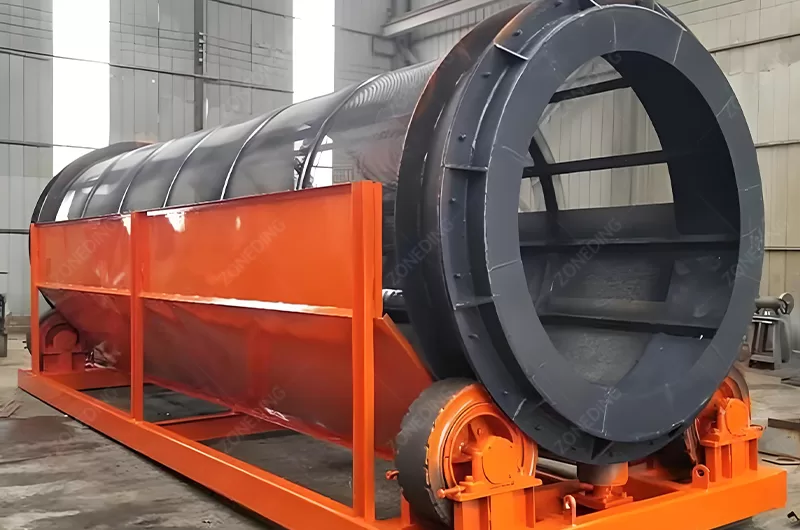
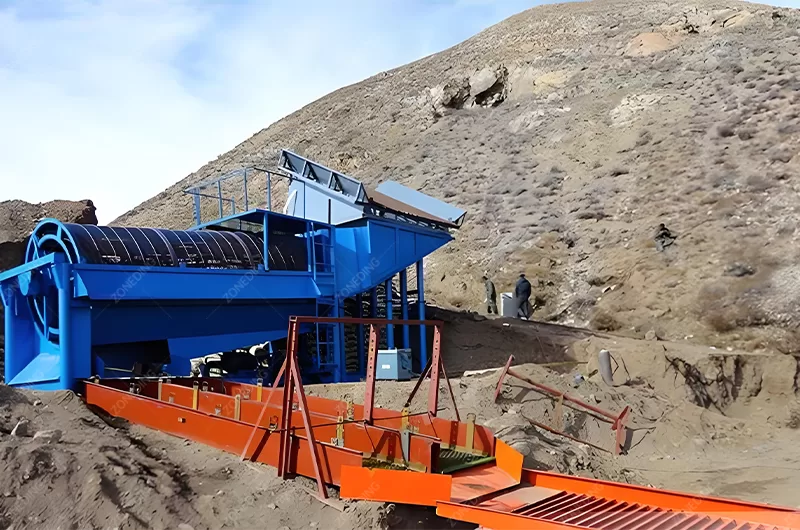
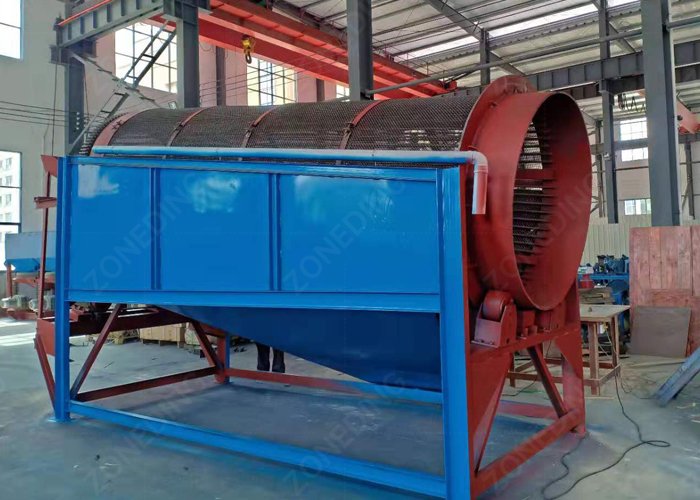
A Trommel scrubber for chrome uses high-energy tumbling to break down the toughest clay balls. This machine functions like a giant industrial washing machine for heavy rocks. It features a long steel cylinder that rotates at a specific speed. Internal lifters pick up the ore and drop it back into the slurry pool. This action creates a powerful rock-on-rock impact. Such impact peels sticky clay away from the hard chrome crystals. It works best for high clay chrome ore washing in tropical regions.
Trommel Screen
Trommel Screen Site
The key to success is the scrubbing time inside the drum. Operators can adjust the angle of the machine to keep the ore inside longer. For very dirty ore, the material should stay inside for three to five minutes. High-quality rubber liners with thick lifter bars are essential. Rubber is better than steel because clay does not stick to it as easily. It also lowers the noise levels at the Chrome ore beneficiation plant.
Technical details of the scrubbing process
The water inside the drum must form a thick slurry at first. This thick liquid helps the rocks rub against each other more effectively. Adding too much water at the start makes the rocks slide instead of tumble. After the rubbing zone, the drum has a screen section at the discharge end. This screen washes away the mud and keeps the clean rocks for the next stage. A double-layer screen can separate medium rocks from fine sand in one step.
Feature
Specification
Practical Benefit
Drum Speed
70% of critical speed
Maximum impact for clay removal
Water Ratio
2:1 (Water:Ore)
Best slurry density for scrubbing
Feed Size
Up to 300mm
Handles large boulders easily
Practical tips for scrubber setup
Internal Chains: Install internal chains to break plastic clay balls in the drum.
Variable Speed: Use a variable frequency drive to adjust for different ore types.
Liner Inspection: Check lifter bars every month for signs of excessive wear.
Why is the Log Washer the “killer” for large chrome lumps?
A Log washer for mining uses heavy-duty paddles to scrub hard rocks and remove tough waste. While the trommel uses tumbling, the log washer uses mechanical force. It has two long shafts with dozens of steel paddles. These shafts rotate toward each other at high speed. The paddles push the ore up a slope while water flows down in the opposite direction. This counter-current action is very aggressive. It is the perfect choice for chrome ore with cemented mud. Lumpy ore often requires this type of mechanical scraping. The paddles act like thousands of small hammers hitting the rock surfaces. They scrape off the waste and break down mud aggregates. The open-top design makes it easy for operators to see the washing action. Adjustments to water flow can happen instantly based on the mud levels. It is a robust piece of chrome ore washing equipment that lasts many years.
Comparison with Trommel Scrubber
The log washer provides more direct friction than a trommel. This friction is necessary when the clay is hard and does not dissolve in water easily. The machine works best for feed sizes between 10mm and 100mm. It creates a very clean surface on the ore. This clean surface is required for the Magnetic Separator to work correctly. Without this step, magnetic particles stay trapped in the mud.
Feature
Trommel Scrubber
Log Washer
Recommended Use
Mechanism
Gravity Tumbling
Mechanical Scraping
Log washer for hard mud
Feed Size
Up to 300mm
Up to 100mm
Trommel for large rocks
Water Use
High
Medium
Log washer is more efficient
Practical tips for log washer use
Paddle Alignment: Ensure paddles are staggered to prevent vibration.
Bottom Bearings: Use high-pressure seals to keep muddy water out of bearings.
Overflow Control: Adjust the back-gate height to control the waste removal rate.
How does a Spiral Washer protect fine chrome grains?
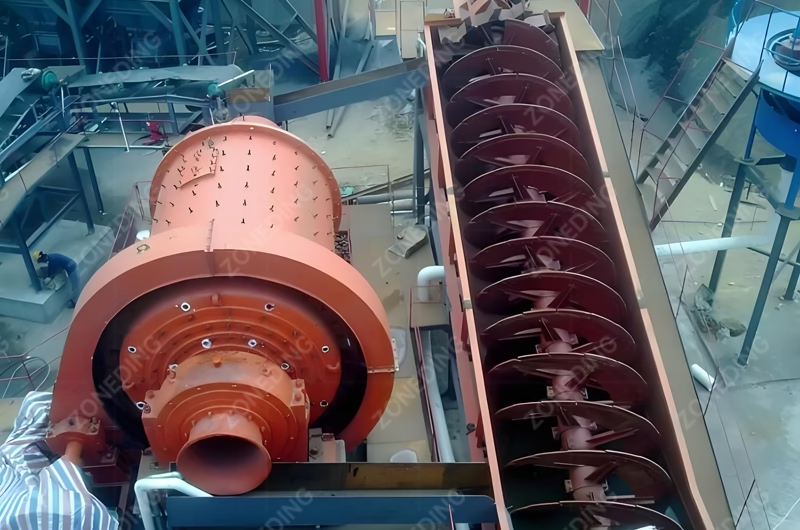
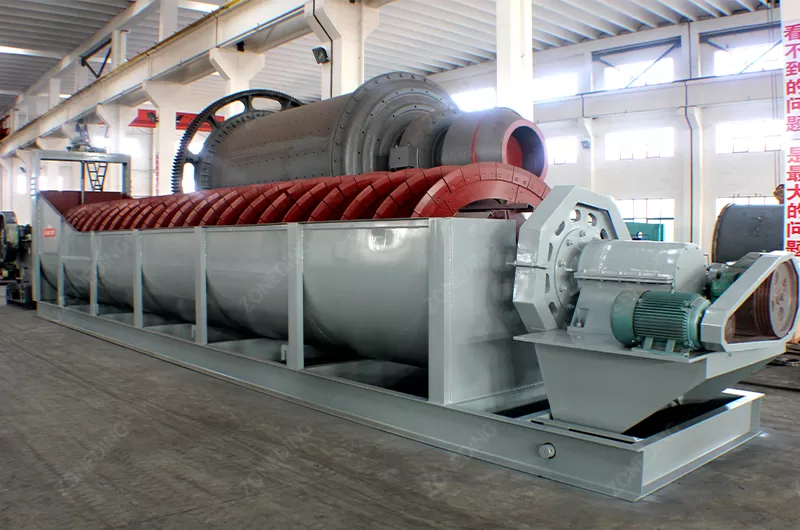
A Spiral Classifier cleans the ore while preventing valuable fine minerals from washing away. In many chrome mines, the high-grade material exists as fine sand. Washing too hard might wash these fines into the waste pond. The spiral washer uses a long screw to lift the ore out of a water pool. Heavy chrome stays at the bottom and travels up the screw. Light mud and silt stay in the water and flow out the back. This machine is excellent for desliming chrome ore. Desliming means removing the very fine silt that ruins the efficiency of other machines. The spiral action is very gentle on the mineral crystals. It also serves as a dewatering tool. By the time the ore reaches the top of the screw, most water has drained away. This makes it easier to feed the ore into a Ball Mill or a conveyor belt.
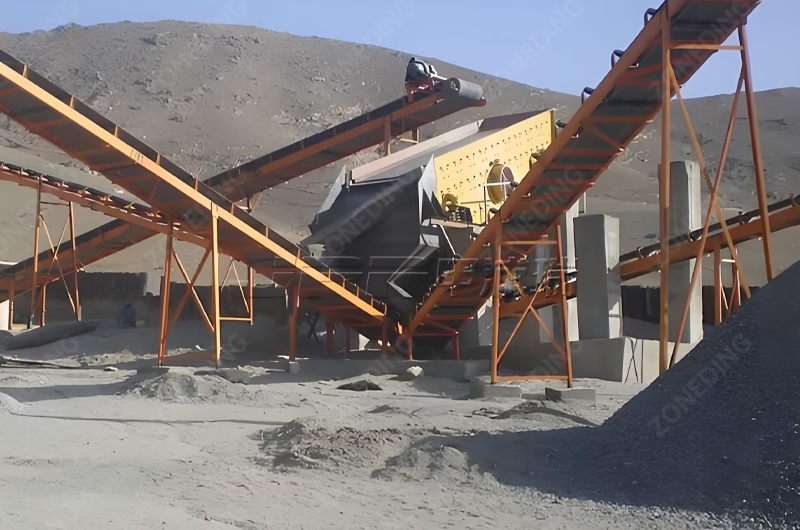
Spiral classifier customer site
Spiral classifier
Key benefits of spiral washing
The slow rotation of the screw ensures that gravity can work. Because chrome is much heavier than sand, it settles quickly. The mud stays in suspension and leaves via the overflow weir. This machine is very reliable and has low operating costs. It is a standard part of any chrome ore processing technology for fine materials. Dual-screw designs are available for sites with very high production needs.
High Recovery: Slow movement ensures fine chrome does not escape with water.
Low Energy: The motor uses very little power compared to large scrubbers.
Easy Maintenance: Only the outer edge of the screw needs regular replacement.
Practical tips for spiral washers
Weir Height: Raise the overflow weir to increase the retention time for fines.
Rising Water: Add fresh water at the bottom of the tank for cleaner results.
Screw Protection: Use polyurethane wear blocks to extend the life of the screw.
What is the role of the Vibrating Screen in washing lines?
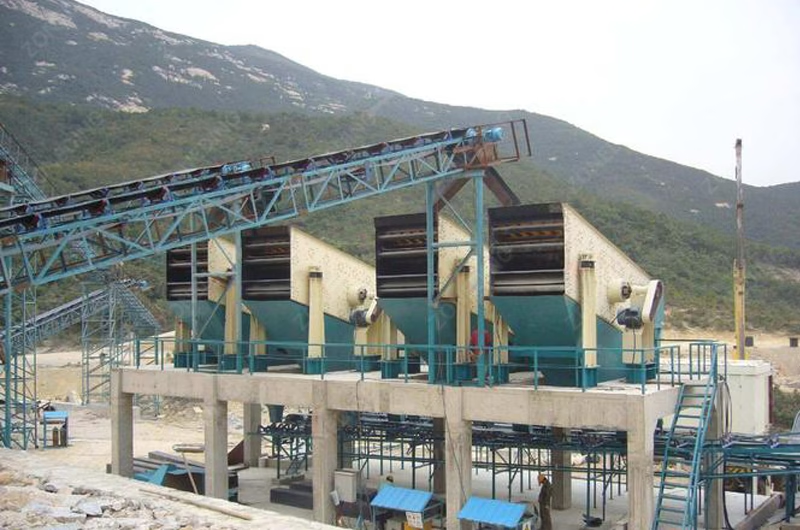
The Vibrating Screen acts as a separator that directs ore to the correct washing machine. Large rocks and fine sand cannot be washed together effectively. The vibrating screen separates the feed into different sizes. It also provides the first rinse. Installing high-pressure spray bars on the top deck is a standard practice. This step removes loose dirt before the ore enters the main scrubber. In a professional Chrome ore beneficiation plant, the screen sits at the center of the flow. It takes the discharge from a trommel and separates clean rocks from muddy water. It can also work as a dewatering tool. Using a specialized screen at the end of the line ensures the final product is dry. Without a good screen, the washing process becomes messy and inefficient.
Vibrating screen
Vibrating screen for chrome
Detailed screen setup for chrome
Screen Deck
Purpose
Action
Top Deck
Oversize removal
Directs large rocks to crushers
Middle Deck
Sizing
Separates medium lumps for washing
Bottom Deck
Desliming
Removes fine mud and silt
Practical tips for screen maintenance
Nozzle Check: Inspect spray nozzles daily to prevent clogging.
Panel Material: Use polyurethane panels for longer life against abrasive chrome.
Vibration Balance: Ensure the motor weights are balanced to prevent frame cracks.
How to match the right equipment for different clay contents?
Selecting the best washing system depends entirely on the type and amount of clay in the ore. Low clay levels usually only require a Vibrating Screen with spray bars. Medium clay levels need a Spiral Classifier to help deslime the material. High clay or sticky red soil requires the heavy power of a Trommel scrubber for chrome.
Clay Content
Recommended Machine
Core Reason
0% – 5%
Vibrating Screen
Simple surface rinsing is enough
5% – 15%
Spiral Washer
Needs desliming and dewatering
15% – 30%
Trommel Scrubber
High energy is needed to break clay
30% +
Log Washer
Aggressive scraping for cemented mud
A common setup for difficult ore starts with a trommel scrubber. The scrubber breaks the clay balls. Next, the material goes to a screen. The clean rocks go to a crusher. The fine sand goes to a spiral washer. This multi-stage approach ensures every grain of chrome is clean and ready for the Shaking Table. Precision matching prevents the over-processing of easy ore.
How to reduce water and energy use in washing?
Reducing water use requires a closed-loop recycling system with a high-efficiency thickener. Chrome washing uses a large volume of water. But this water does not need to be fresh from a river. A High Efficiency Concentrator can recover 90% of the water from the mud. This water then flows back to the scrubbers. This system saves money and protects the local environment. Energy use is also a concern for modern mines. Variable Frequency Drives (VFDs) allow motors to run at the exact speed needed. If the ore is cleaner than usual, the operator can slow down the trommel. This reduces power consumption and wear on the machine. Proper pipe sizing also reduces the energy needed for pumping. A smart layout uses gravity to move water and slurry between machines.
High Efficiency Concentrator
Hydrocyclones
Water saving checklist
Cyclones: Use a Hydrocyclone to remove sand from water before the thickener.
Pumps: Use variable speed pumps to match the exact flow of the plant.
Automatic Valves: Install sensors to shut off water when the feed conveyor stops.
Maintenance tips for abrasive chrome ore equipment
Chrome ore is extremely hard and wears down metal surfaces ten times faster than coal. Maintenance must be proactive to avoid expensive downtime. All contact surfaces in the chrome ore washing equipment need protection. This includes chute liners, pipe elbows, and pump impellers. High-chromium alloys or thick rubber provide the best resistance. Standard carbon steel is not suitable for chrome mining. It will wear through in just a few weeks. The company uses specialized heat-treated steel for paddles and lifter bars. Regular inspections can identify thin spots before they become holes. Replacing a small wear plate is much cheaper than repairing a large machine frame. Lubrication is also vital in wet environments. Bearings must be greased daily to push out moisture and grit.
Weekly Inspection: Check the thickness of the rubber liners in the trommel.
Paddle Rotation: Rotate the paddles on the log washer to ensure even wear.
Seal Pressure: Maintain high grease pressure in all underwater bearings.
2026 Trends in chrome ore washing technology
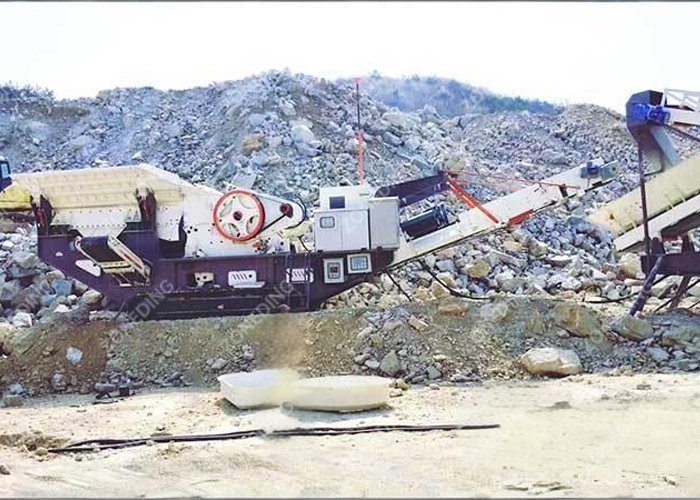
Modern washing technology is moving toward mobile and automated systems. In 2025, mining companies want equipment that can move with the mine. Mobile washing plants on tracks or wheels are becoming very popular. These units include a feeder, a scrubber, and a screen on a single chassis. This reduces the need for expensive concrete foundations and long conveyor belts.
Latest developments at a glance
Mobile Units: Move the plant to the ore to save on trucking costs.
Smart Sensors: Use AI cameras to monitor the cleanliness of the discharge rocks.
Solar Power: Remote mines are now using solar arrays to power washing pumps. Market data shows a shift toward environmental compliance. New laws require mines to treat all waste water before it leaves the site. This makes the water recycling system a mandatory part of any new Chrome ore beneficiation plant. Technology is making these systems more compact and easier to manage for small operators.
Chrome Ore Washing FAQ
Question 1: Why is washing more important for chrome than for other minerals? Chrome has a high specific gravity but is often found in sticky clay. The clay acts as a glue that prevents separation. Washing is the only way to release the chrome crystals from the waste. Question 2: Can a simple sand washer clean raw chrome ore? No. A sand washer is designed for loose sand. Raw chrome ore usually has large rocks and hard clay chunks that will damage a sand washer. Use a Trommel Scrubber instead. Question 3: How long does a rubber liner last in a chrome scrubber? Depending on the ore hardness, a good rubber liner lasts between 12 and 24 months. Regular inspection of the lifter bars is required to reach this lifespan. Question 4: What is the best way to handle the waste mud? Use a Hydrocyclone to separate fine sand. Then use a thickener to recover the water. The dry mud can be stored in a safe tailing pond.
About ZONEDING
ZONEDING is a leading Chinese manufacturer of high-performance mining equipment. The company specializes in B2B solutions for Chrome ore beneficiation plant projects. The factory produces over 500 machines every year, including scrubbers, washers, and screens. ZONEDING provides full-service support from initial design to installation and training. The products are currently helping miners in more than 120 countries increase their mineral recovery and total profit. Contact ZONEDING today to get a customized washing solution for any chrome mine.
Many gold miners focus on recovery equipment such as concentrators, sluices, jigs, and shaking tables. However, experienced operators know that recovery begins long before gold reaches those machines. It starts with proper washing, screening, and ...
Field experience in extreme environments reveals the truth about aggregate production in remote areas. Showroom data fails when the site sits 500 kilometers from civilization. Extreme locations lack power grids, clean fuel, and heavy cranes. ...
Choosing between a rod mill and a ball mill is the most vital step in any mineral processing journey. This decision affects the recovery rate and the monthly electricity bill of a mining project. A uses long steel bars to crush material. A Ba...
Launching a small quarry is one of the most cost-effective ways to enter the aggregate business in South America. However, selecting the wrong crusher plant can quickly increase investment costs and reduce profitability. For most projects across&n...
We use cookies to ensure that we give you the best experience on our website. If you continue to use this site we will assume that you are happy with it.
Privacy Policy
Send us a message
We would love to hear from you
Submit your question and our team will respond to the email provided as soon as possible.
 Zoneding Machine