Understanding the mechanical logic of crushing equipment is vital for project profitability. Selecting a machine based solely on capacity ignores the reality of wear and energy costs. Different stones require different mechanical principles—either compression or impact—to ensure efficient production and low maintenance.
Compression vs Impact Crushing: What is the Difference?
The two core principles of rock crushing are compression and impact. Compression-style machines, such as jaw and cone crushers, use squeezing force to break stone. Impact-style machines, like impact crushers and VSI, use high-speed collision to shatter material. The choice depends entirely on the abrasiveness and hardness of the rock. Using the wrong principle leads to high operational costs. For example, using an impact machine on highly abrasive quartz will destroy blow bars in hours. Conversely, using a compression machine for very soft, sticky clay might lead to plugging. Understanding helps in selecting the most stable production line.
Understanding mechanical energy transfer
In compression crushing, energy is transferred through direct pressure. This is efficient for large, hard boulders. In impact crushing, kinetic energy from a moving rotor is transferred to the rock. This is better for controlling the shape of the final product, such as manufactured sand.
Feature
Compression Crushing
Impact Crushing
Primary Force
Squeezing/Pressure
High-speed Collision
Best Material
Hard, Abrasive Rock
Soft to Medium Rock
Product Shape
Irregular
Cubical/Fine
Wear Rate
Low (on hard rock)
High (on abrasive rock)
Selecting the right principle
Hard/Abrasive rocks: Use compression (Jaw/Cone).
Soft/Non-abrasive rocks: Use impact (Impact/VSI).
Sand production: Use impact (VSI/Sand Maker).
Jaw Crusher Principle: Why Use Compression for Hard Rock?
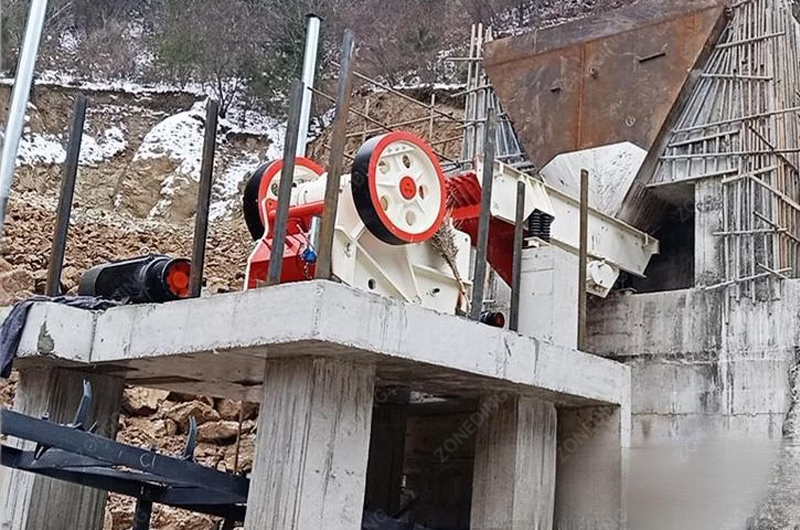
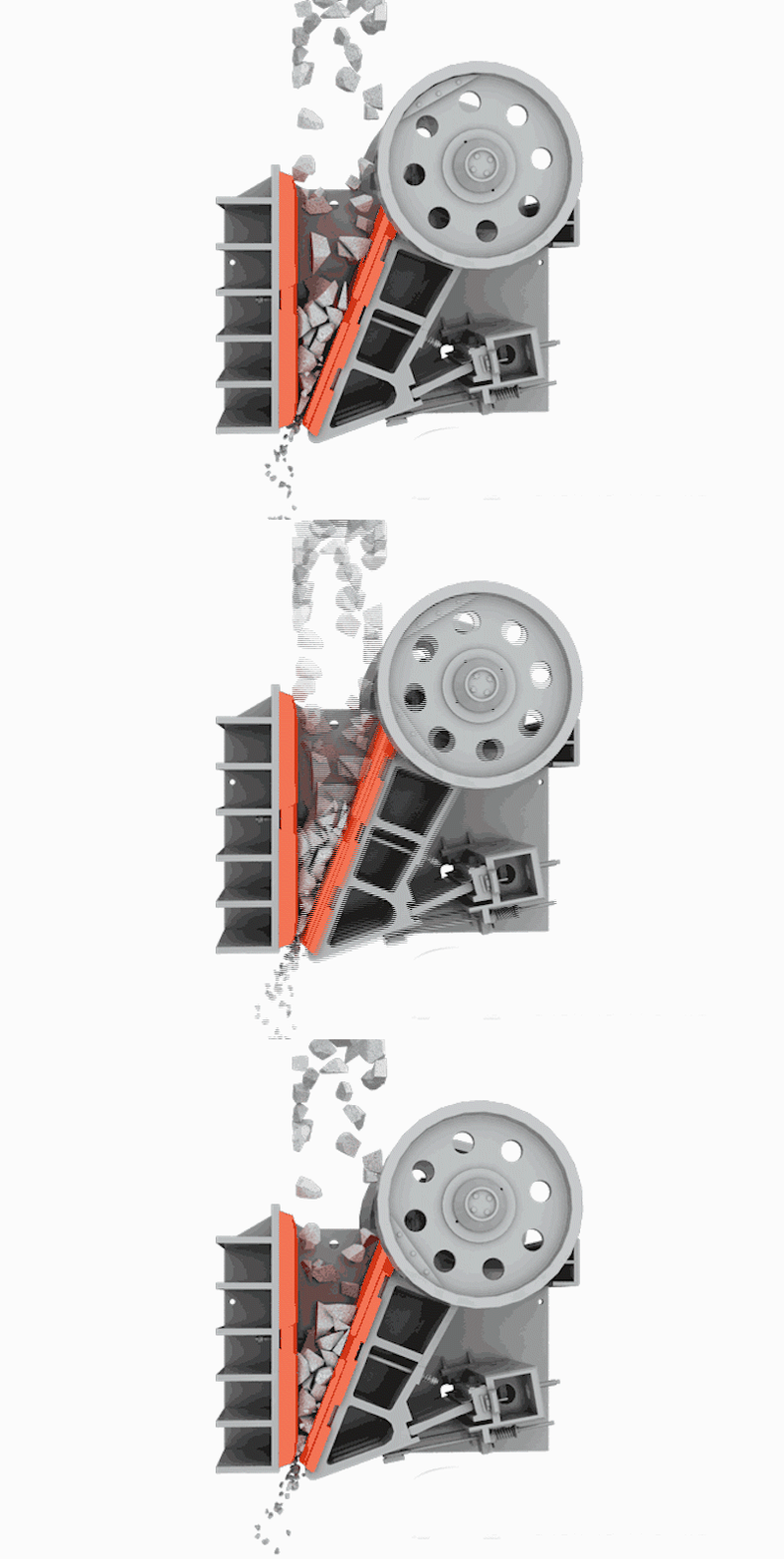
A jaw crusher works through a squeezing action between a fixed and a moving plate. Large rocks enter the chamber and are crushed as the moving jaw moves toward the fixed one. This makes it the standard choice for primary crushing of extremely hard and large-sized rocks. The efficiency of a jaw crusher depends on the “Angle of Nip.” This is the angle at which the jaws grab the stone. If the angle is too large, the stone will simply bounce out of the mouth instead of being crushed. This is a common issue when trying to achieve too fine an output in a single stage.
A jaw crusher is used for primary crushing
Jaw crusher working principle
Managing the Angle of Nip
When the discharge opening (CSS) is set too small, the angle of nip increases. This can cause “material spitting,” where stones are ejected from the machine. To prevent this, it is better to use a two-stage crushing process rather than forcing a single jaw crusher to do all the work.
Handling large feed sizes
Jaw crushers are designed to handle massive boulders. They act as the “gatekeeper” of the crushing plant. They reduce large primary rocks to a size manageable for secondary crushers like cone crushers.
Cone Crusher Principle: Reducing Wear via Interparticle Crushing
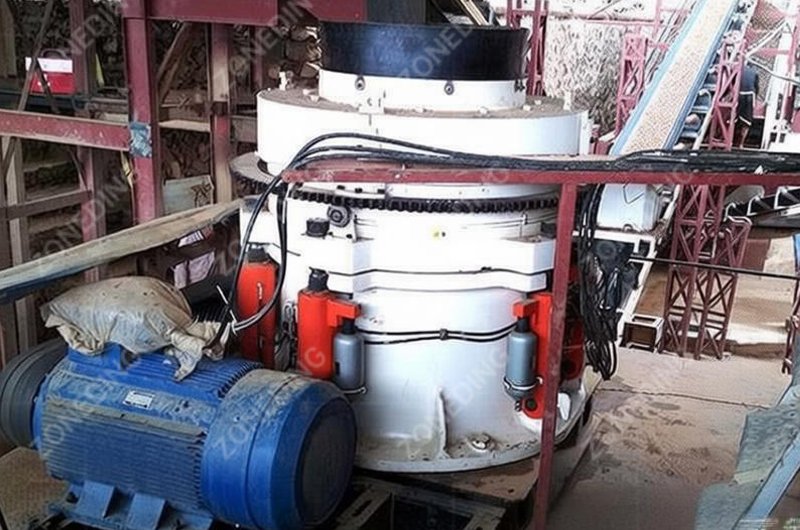
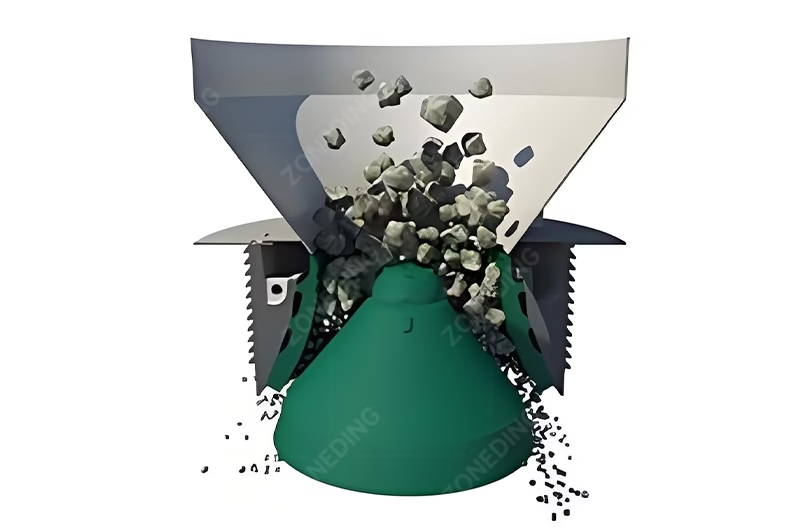
The cone crusher working principle relies on “interparticle comminution” or “stone-on-stone” crushing. In a modern cone crusher, the chamber is kept full of material. Instead of the rock hitting the steel liners directly, the rocks hit each other. This significantly reduces the wear on the manganese steel liners. To achieve this, operators must practice “Choke Feeding.” This means keeping the crushing chamber full at all times. If the machine runs half-empty, the stones will hit the liners directly, causing rapid wear and producing irregular shapes. Proper cone crusher secondary crushing ensures both high efficiency and long component life.
Cone Crusher Operation Site
Cone crusher working principle
The importance of Choke Feeding
A full chamber ensures the material is squeezed together. This creates a “crushing bed” that protects the machine. It also results in a much better, more cubical particle shape for construction aggregates.
Dealing with tramp iron
One risk in cone crushing is “tramp iron” (unbreakable metal like drill bits). Modern machines use a hydraulic tramp release system. If metal enters, the machine automatically adjusts to prevent the main shaft from breaking.
Impact Crusher Working Mechanism: Controlling Aggregate Shape
An impact crusher working mechanism uses high-speed rotors to strike the material. The rock is thrown against impact plates or a stone wall. This is excellent for producing high-quality, cubical aggregates used in concrete and road construction. Because the breaking force comes from impact, these machines are very sensitive to rock hardness. If the rock is too hard or too abrasive (like quartz), the blow bars will wear out extremely quickly. This makes impact crushers ideal for limestone or soft minerals, but expensive for hard granite or basalt.
Impact vs. Compression for shape
If the project requires perfect “cubical” shape for high-strength concrete, an impact machine is often used. However, the cost of replacing wear parts must be weighed against the quality of the stone produced.
Application in recycling
Impact crushers are widely used in construction waste recycling. They can efficiently break down concrete and bricks, though they require careful screening to remove metal contaminants.
VSI Working Principle: How to Produce Standard Manufactured Sand?
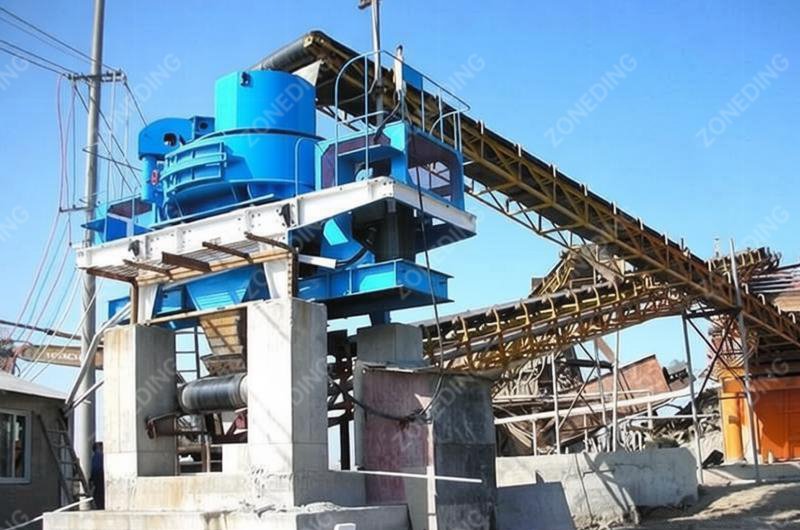
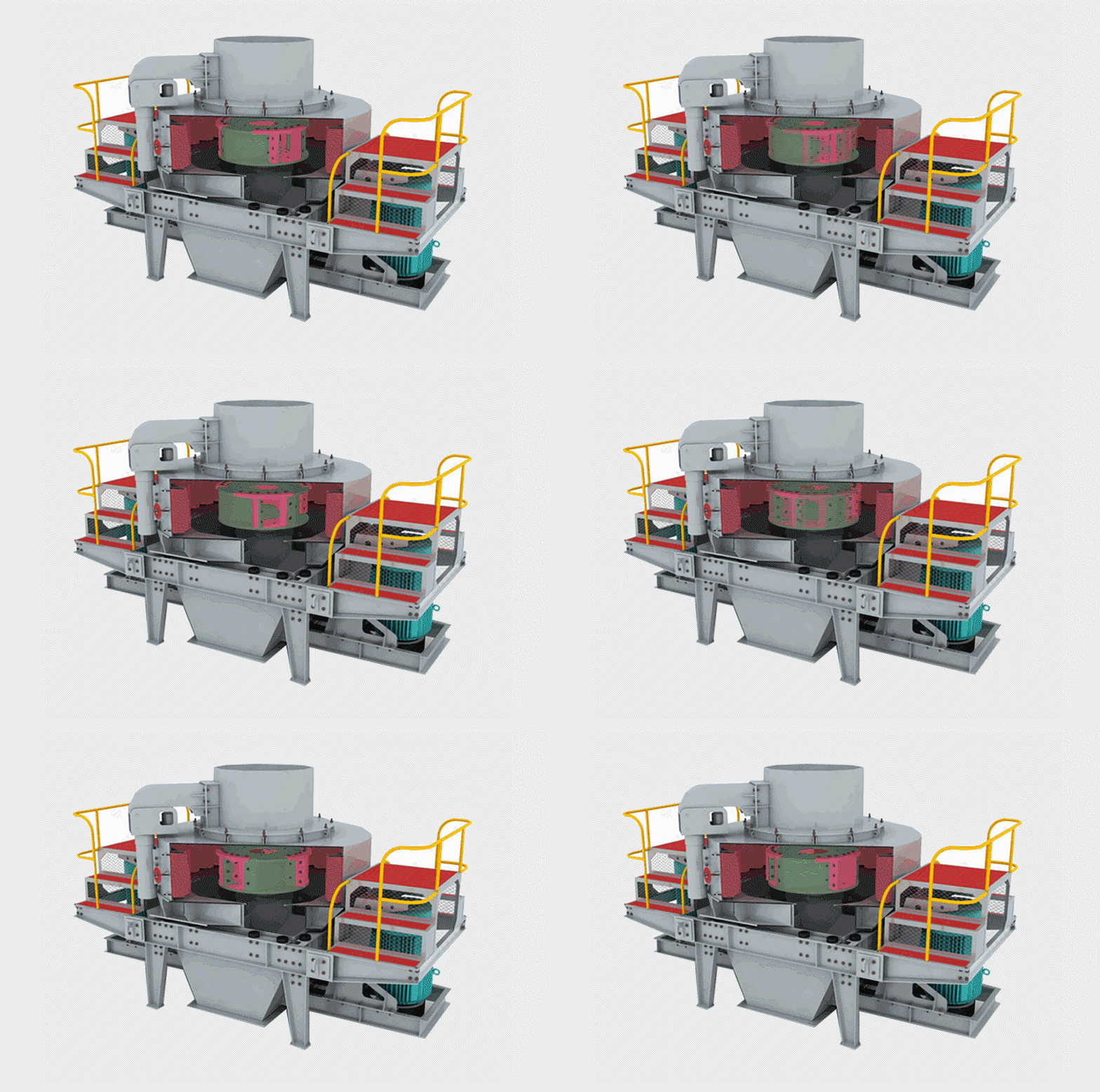
A Vertical Shaft Impactor (VSI) works by accelerating material to very high speeds using a rotor. The material is then thrown against a liner or against other particles (the “stone-on-stone” mode). This is the primary method used in a sand making machine to produce high-quality manufactured sand. The “stone-on-stone” mode is particularly effective. By allowing the particles to collide with each other, the VSI produces sand with a very consistent grain size and excellent shape. This is essential for meeting strict construction standards for fine aggregates.
VSI Crusher Operation Site
VSI Crusher Working Principle
Maintaining rotor balance
Because the rotor spins at extremely high speeds, balance is critical. Even a small amount of uneven wear on the wear tips can cause heavy vibration. Regular maintenance to ensure rotor balance is necessary to prevent bearing failure.
Optimizing sand quality
To get the best sand, a “cascade feeding” method is recommended. This allows some material to bypass the high-speed impact zone, which helps control the fine particle percentage and reduces energy consumption.
Rock Crusher Selection: Matching Machines to Your Material
Effective rock crusher selection depends on three factors: hardness, abrasiveness, and desired output size. One should never select a machine based only on the “nameplate capacity.” Actual capacity is often lower depending on the material’s density and moisture. For hard, abrasive rocks (Granite, Basalt, Quartz), a combination of a jaw crusher and a cone crusher is the most cost-effective solution. For soft rocks or sand production, an impact-based system is more appropriate.
Material Type
Hardness
Abrasiveness
Recommended Setup
Granite
High
High
Jaw + Cone
Limestone
Medium
Low
Impact or Cone
Sand/River Gravel
Low
Low
VSI / Sand Maker
Construction Waste
Medium
Medium
Impact or Jaw
Key selection steps
Test the rock: Determine the Uniaxial Compressive Strength (UCS) and Abrasion Index.
Check moisture: High moisture/clay requires a vibrating feeder and scrubbing.
Plan the circuit: Ensure your vibrating screen can handle more than the crusher’s output to avoid bottlenecks.
Frequently Asked Questions
Question 1: Can I use an impact crusher for granite? It is possible, but not recommended for long-term use. Granite is highly abrasive, which will cause extremely high wear costs on the impact plates and blow bars. Question 2: What is the difference between “stone-on-stone” and “stone-on-steel”? “Stone-on-steel” means the rock hits the metal liner, causing high wear. “Stone-on-stone” means rocks hit each other in a full chamber, which protects the machine and improves particle shape. Question 3: Why is my crusher output smaller than the manual says? This often happens due to “inefficient recirculating loads.” If your vibrating screen is too small or clogged, crushed material returns to the crusher instead of moving to the next stage. Question 4: How does clay affect crushing? Clay makes material sticky. It can clog the jaw crusher or the cone crusher, causing “plugging” and motor overloads. Pre-screening or washing is often required. Question 5: What is the best machine for making manufactured sand? A sand making machine, specifically a VSI (Vertical Shaft Impactor) using the stone-on-stone principle, is the industry standard for high-quality sand.
Summary and Recommendations
Selecting the right mining crusher requires understanding whether your rock needs compression or impact. For hard, abrasive stones, stick to jaw and cone crushers to keep maintenance costs low. For sand and soft aggregates, use impact-based machines like the VSI. Always ensure your screening capacity is higher than your crushing capacity to prevent production bottlenecks. Next Steps:
Analyze your raw material’s hardness and silica content.
Determine your target particle size and shape.
Design a complete crushing plant with adequate screening and feeding.
About ZONEDING
ZONEDING is a leading manufacturer of professional Crushing Equipment and Beneficiation Equipment. We provide customized solutions for mining, aggregate, and recycling industries worldwide. Our expertise covers everything from Jaw Crushers to Mobile Crushers. Contact ZONEDING today for professional technical support and plant design services.
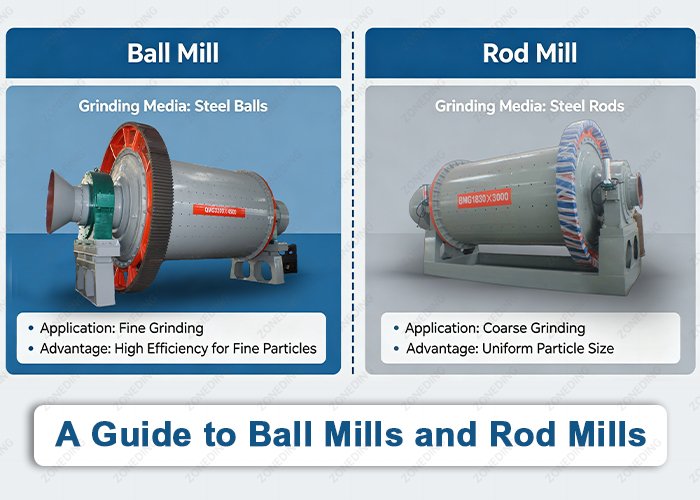
Choosing the right grinding equipment is the most critical decision for any mineral processing plant. Ball mills and rod mills serve different roles in size reduction. This guide provides a deep comparison of their advantages and applications. In ...
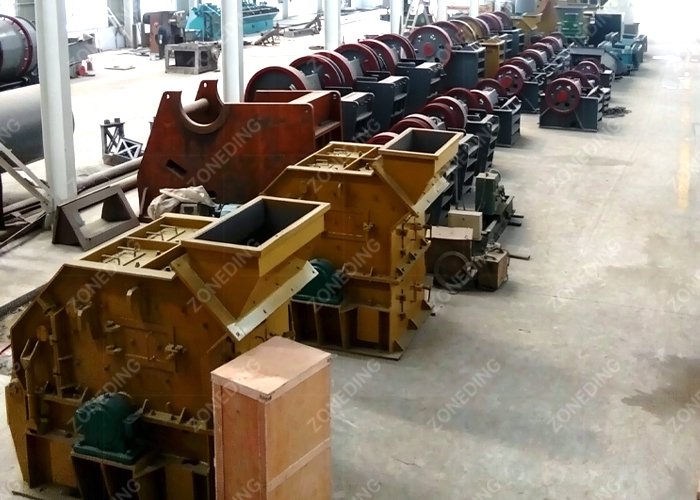
Buying mining machinery is the start of a long-term investment. Many buyers focus only on the lowest initial price. However, an unreliable supplier can cause massive losses through downtime and high maintenance costs. A professional procurement st...
Mineral screening equipment performs the vital task of size separation in mining. This process occurs after crushing to ensure only the correct stones proceed. Efficient screening prevents the recirculating load from overwhelming the system. In 20...
We use cookies to ensure that we give you the best experience on our website. If you continue to use this site we will assume that you are happy with it.
Privacy Policy
Send us a message
We would love to hear from you
Submit your question and our team will respond to the email provided as soon as possible.
 Zoneding Machine