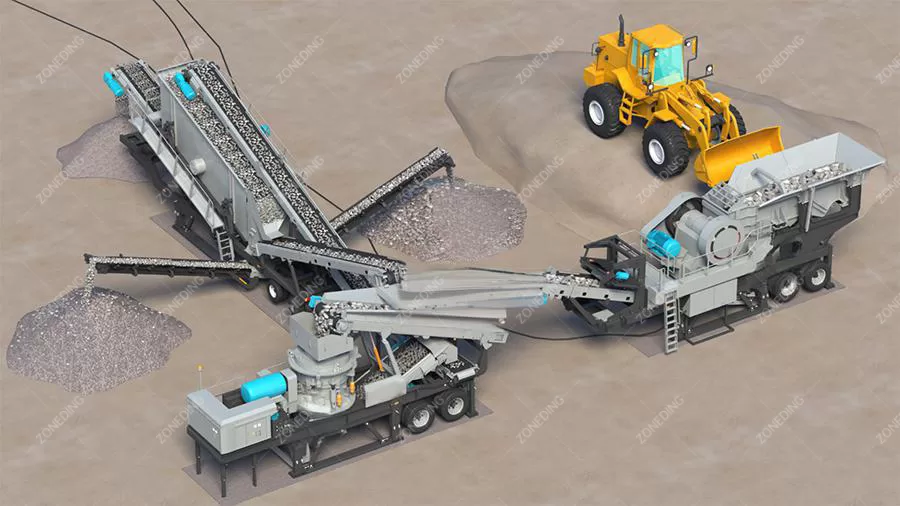
Managing scattered construction sites requires highly adaptable equipment. The mobile crushing plant solves the massive challenge of tight schedules and frequent project relocations. Multi-project contractors deploy these machines to eliminate concrete foundations and start processing stone immediately. Understanding core equipment mechanics prevents expensive operational failures. This guide reveals critical machine selection strategies. Contractors use these exact methods to avoid common mechanical traps and maximize profit margins across different job sites.
How Do Mobile Crushers Achieve Foundation-Free Installation and Fast Relocation?
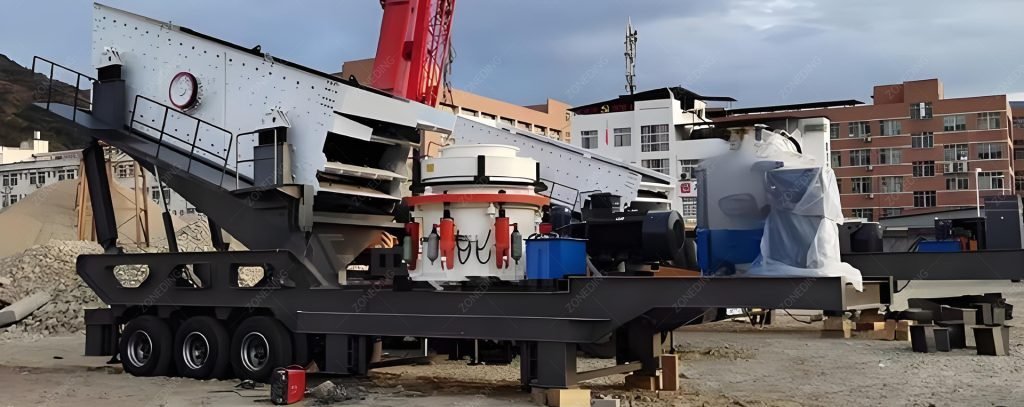
A mobile crushing plant requires zero concrete foundations, allowing immediate aggregate production upon arrival. Heavy steel chassis frames distribute the massive machine weight evenly across the ground. Operators simply unfold the hydraulic conveyors and start feeding raw material. Stationary crushing lines demand weeks of extensive civil engineering work. Teams must excavate land, tie steel rebar, pour thick concrete bases, and wait for the curing process. This preparation costs thousands of dollars and delays project start dates significantly. The eliminates this entire preparation phase entirely. Contractors simply drive the machine off a low-bed transport trailer directly into the active working zone. When the specific project finishes, the machine folds up its conveyors hydraulically in under one hour. This rapid relocation capability allows companies to complete multiple small quarry jobs or road projects in a single month. Avoiding permanent foundation construction saves massive upfront capital and accelerates cash flow.
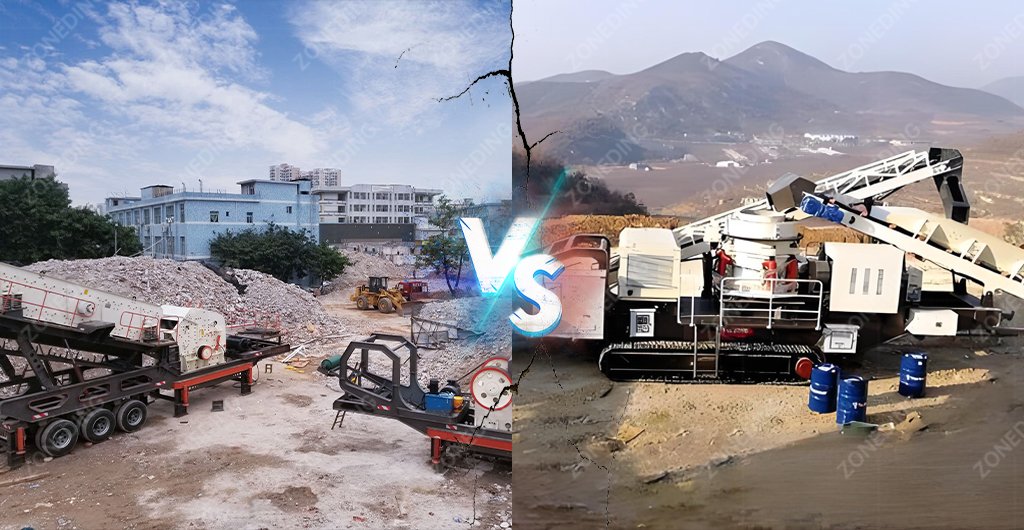
How Do Tracked and Wheeled Chassis Adapt to Narrow Sites?
Tracked mobile crushers use heavy-duty steel belts to navigate rough terrain, while wheeled plants attach to standard trucks for rapid highway transport. Both designs eliminate the need to transport raw stones across large distances.
Wheeled vs tracked crusher
Urban demolition sites lack the open space required for traditional stationary equipment setups. A Tracked Mobile Screening Plant crawls directly next to the rubble pile. Excavators feed the machine immediately without needing dump trucks to move the material first. This reduces site traffic and slashes diesel fuel consumption significantly. However, a common operational mistake destroys tracked machines quickly. Operators often park tracked machines on uneven, rocky ground. Operating on tilted surfaces shifts the internal lubrication oil away from critical bronze bearings. The heavy steel chassis also twists under extreme crushing forces. Leveling the ground with an excavator before starting production remains strictly necessary. Placing thick steel plates under the tracks ensures long-term bearing protection.
How Does Dual Power Secure Production in Remote Areas?
A dual power mobile crusher utilizes both onboard diesel generators and direct electrical grid connections to maximize operational efficiency. Plugging into city power slashes energy costs entirely, while the diesel engine provides reliable backup in wilderness areas. Equipment salesmen often push pure hydraulic drive models to contractors. They claim hydraulic systems handle rough conditions better. This advice creates massive financial losses over time. Pure hydraulic systems achieve only seventy percent energy efficiency. The complex proportional hydraulic valves fail frequently in dusty environments. Standard mechanics cannot repair these sensitive fluid components on site. Dual power systems solve this problem permanently. Connecting the machine to a local electrical grid cuts energy costs by nearly half. When working on a remote highway project without electricity, the onboard diesel generator powers the electrical motors directly. This hybrid approach guarantees high equipment uptime and lowers the cost per ton produced.
Can One Machine Handle Both Hard Rock and Construction Waste?
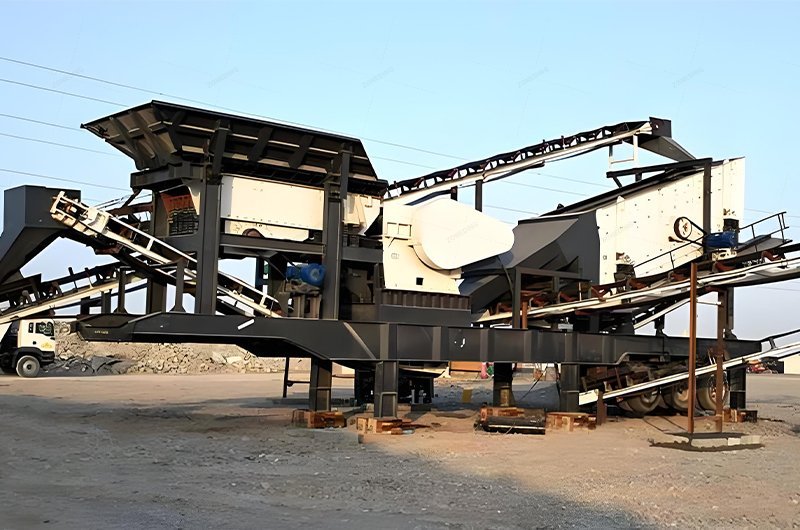
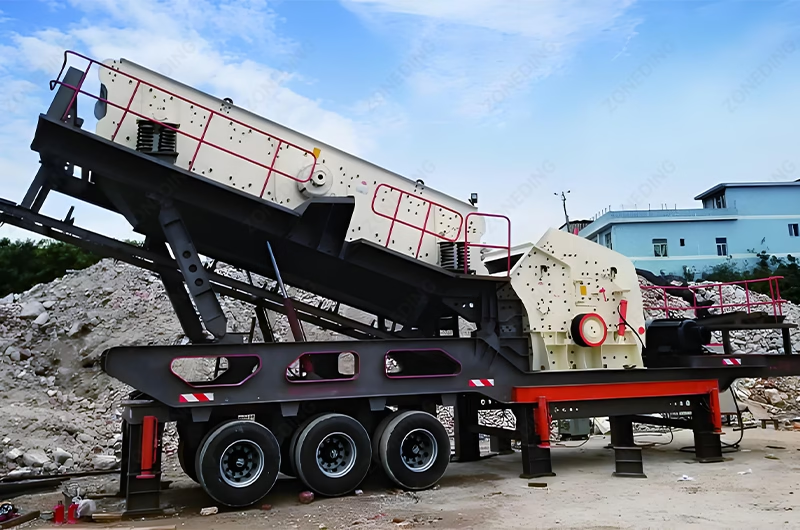
Handling both natural stone and demolition waste requires specific machine configurations to prevent catastrophic conveyor belt tearing. Standard jaw crushers choke on long steel rebar found hidden inside concrete blocks. Contractors often purchase a standard Mobile Jaw Crusher for urban demolition projects. This decision causes continuous daily shutdowns. Thick steel rebar tangles in the jaw cavity and pierces the main discharge rubber belt instantly. Mobile crushing for construction waste demands a high-capacity Mobile Impact Crusher. The spinning steel rotor strips concrete away from the steel cleanly. The system must include a heavy-duty cross-belt magnet above the belt to pull the separated iron away automatically. Furthermore, installing a solid steel slider bed under the discharge belt prevents falling rebar from slicing the rubber. Proper configuration makes mixed material processing highly profitable and safe.
Mobile Jaw Crusher
Mobile Impact Crusher
Essential Upgrades for Demolition Processing
Processing city waste requires heavy modifications to standard rock crushers. Natural stone behaves very differently than man-made concrete. Concrete contains wire mesh, wood blocks, and plastic pipes. Standard rock equipment jams when facing these flexible materials. Air blowers must be installed over the screening belts to blow light plastics away from the final aggregate pile.
Material Type
Crusher Type Needed
Required Accessory
Practical Benefit
Granite Rock
Jaw Crusher
Standard Belt
High capacity hard rock reduction
Concrete Rubble
Impact Crusher
Cross-belt Magnet
Prevents steel from tearing belts
Mixed City Waste
Impact Crusher
Air Blower
Removes plastic and light wood
How to Combine Crushing and Screening Modules Flexibly?
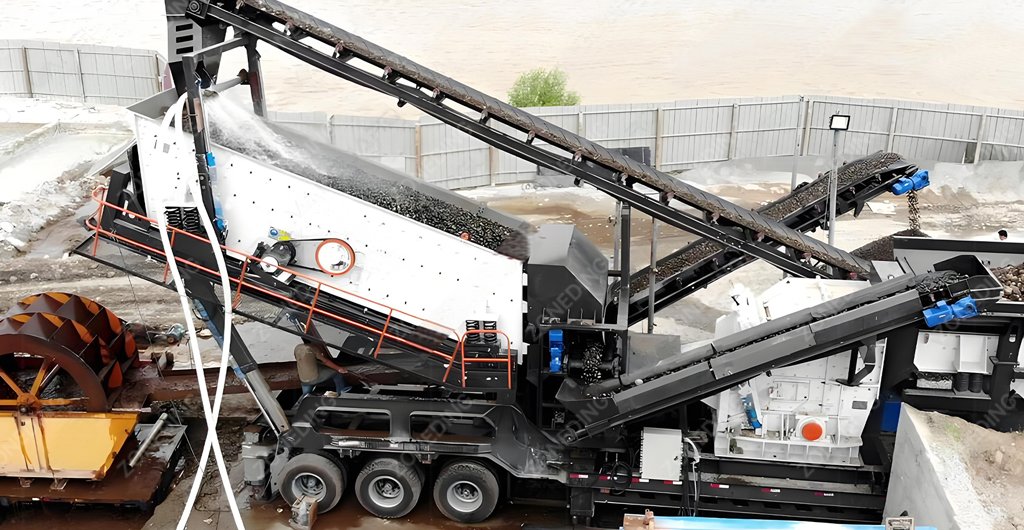
Contractors link multiple mobile units together to form a complete production train that produces various aggregate sizes. Matching the capacity of each module correctly prevents severe material bottlenecks and overflows.
Mobile Cone Crushing + Screening
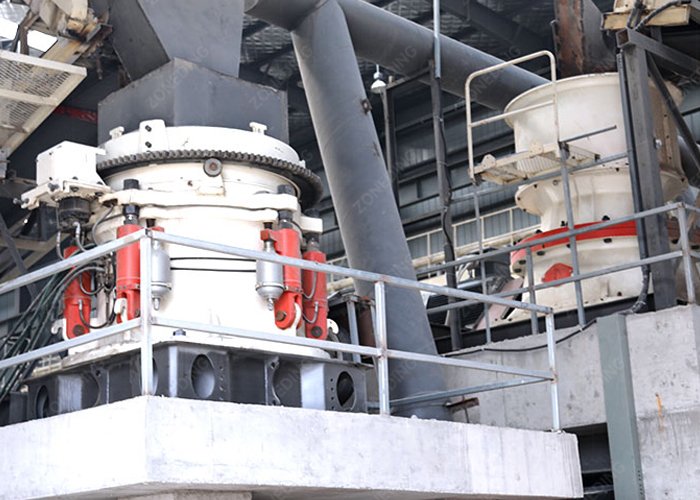
Purchasing separate units with identical nominal capacities causes constant production delays. Stationary plants use large surge bins to balance the material flow perfectly. Mobile trains lack these massive buffer bins. If a Mobile Cone Crusher pushes out a sudden surge of fine material, an equally sized screening plant will overflow instantly. The screen becomes the limiting bottleneck of the entire operation. The screening plant’s actual processing capacity must exceed the upstream crusher by at least thirty percent. Buying a larger screen prevents material from backing up into the crusher. This specific sizing strategy maintains continuous, high-speed production across all linked machines.
How to Control Dust and Noise in Urban Construction?
Modern mobile plants utilize high-pressure water misting systems and thick acoustic enclosures to meet strict city environmental regulations. These features suppress flying dust at every single material transfer point.
Mobile Impact Crusher with Dust Control Device
City demolition projects face severe financial penalties for dust pollution. Operators install water spray nozzles above the vibrating feeder, the crusher inlet, and all conveyor discharge points. The fine water mist binds to airborne dust particles, dragging them to the ground quickly. Engine compartments feature thick sound-absorbing foam to lower decibel levels significantly. Some contractors even deploy standalone dust suppression water cannons nearby. These environmental controls allow heavy machines to operate directly near residential areas without receiving noise complaints. Keeping the site clean ensures continuous operation without government interruptions.
How to Reduce Maintenance Costs Across Multiple Regions?
Evaluating maintenance ergonomics before purchase determines the actual uptime of the machine in remote locations. Accessible designs prevent workers from ignoring vital daily maintenance tasks entirely. Repairing heavy equipment in remote areas without overhead cranes presents huge physical challenges. High-quality machines feature excellent maintenance space built into the frame. Built-in hydraulic jib cranes lift heavy internal steel parts effortlessly. Engine compartments slide out sideways for easy oil and filter changes. If contractors buy a cheap, tightly packed machine, mechanics cannot reach the grease points. Workers will indefinitely postpone daily maintenance because it is too difficult. This neglect leads to sudden, catastrophic bearing failures. Easy access guarantees that operators perform preventative checks daily.
Practical Tips for Field Maintenance
Daily Greasing: Use centralized automatic lubrication systems to ensure all bearings receive grease constantly.
Visual Checks: Inspect the main conveyor belt daily for small tears and patch them immediately.
Filter Changes: Replace engine air filters twice as often in extremely dry, dusty quarry environments.
Why is the ROI Higher Than Stationary Plants?
The ROI of mobile crushing plant operations climbs rapidly due to zero foundation costs, eliminated transport fees, and high resale value. Standardized machines retain massive cash value in the secondary market. Stationary lines operate for decades in one single location. Multi-project contractors face completely different economic realities. A road project might last only six months. Paying haul trucks to move raw material to a distant stationary plant destroys profit margins. Driving the crusher directly to the rock pile eliminates hauling costs completely. Furthermore, contractors must avoid heavy factory customizations. A highly customized machine loses significant resale value. Standardized Stone Crushing Plants sell quickly in the used equipment market. They ensure quick access to common spare parts globally from any local dealer.
Frequently Asked Questions
Question 1: Why do tracked mobile crushers require perfectly flat ground? Operating on an incline starves internal bronze bearings of necessary lubrication oil. The heavy steel chassis also twists under pressure, causing permanent mechanical misalignment. Leveling the ground protects the machine. Question 2: What is the best crusher type for steel-reinforced concrete? An impact crusher works best for concrete. The fast rotor separates concrete from rebar cleanly. A cross-belt magnet removes the loose steel safely before it damages the belts. Question 3: Why should contractors buy dual power instead of pure hydraulic? Dual power models connect to the electrical grid directly. This reduces energy costs massively. It avoids complex hydraulic valve failures caused by extreme dust and heat. Question 4: Why does a mobile screen need higher capacity than the crusher? Mobile systems lack surge bins to hold extra material. If the crusher produces a sudden surge of rock, the screen must process it instantly to prevent material overflow. Question 5: Does a highly customized mobile plant save money? No. Custom machines have extremely low resale values. Future buyers want standard configurations. Standard machines also ensure you can find spare parts quickly anywhere.
About ZONEDING
ZONEDING manufactures robust mineral processing equipment for global industrial B2B contractors. The factory produces highly efficient mobile and stationary crushing systems using advanced CNC machinery. Engineering teams prioritize machine durability and excellent maintenance ergonomics. Direct factory sales guarantee competitive pricing and comprehensive global technical support. Contact ZONEDING today to configure the perfect mobile crushing train for your upcoming project. Professional capacity matching prevents bottlenecks and maximizes daily aggregate output immediately.
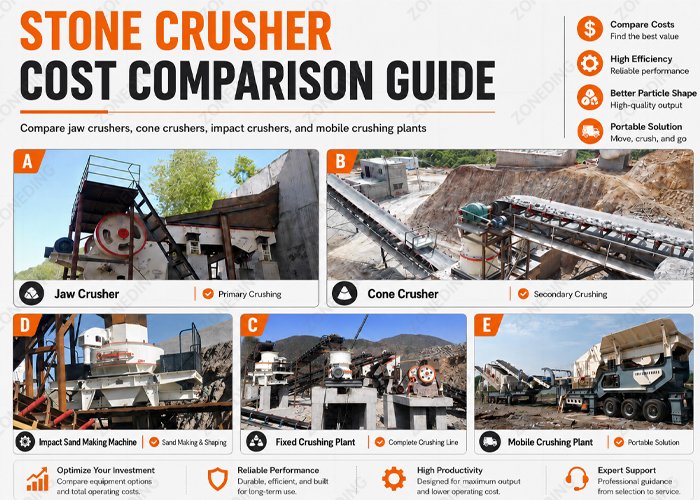
Stone crusher costs can vary dramatically even when two plants have the same production capacity. In real quarry operations, the final investment depends on rock hardness, equipment quality, automation level, mobility, and long-term operating cost...
Buying mining machinery is the start of a long-term investment. Many buyers focus only on the lowest initial price. However, an unreliable supplier can cause massive losses through downtime and high maintenance costs. A professional procurement st...
We use cookies to ensure that we give you the best experience on our website. If you continue to use this site we will assume that you are happy with it.
Privacy Policy
Send us a message
We would love to hear from you
Submit your question and our team will respond to the email provided as soon as possible.
 Zoneding Machine