Operating heavy mining equipment requires a deep understanding of internal mechanics. Many expensive machine failures happen because operators misunderstand basic operational rules. Good equipment can break quickly when handled poorly. This comprehensive guide explains the cone crusher working principle clearly. It details proven cone crusher maintenance methods to protect expensive internal parts and keep production running smoothly every single day.
What Are the Eccentric Rotation and Interparticle Comminution Principles?
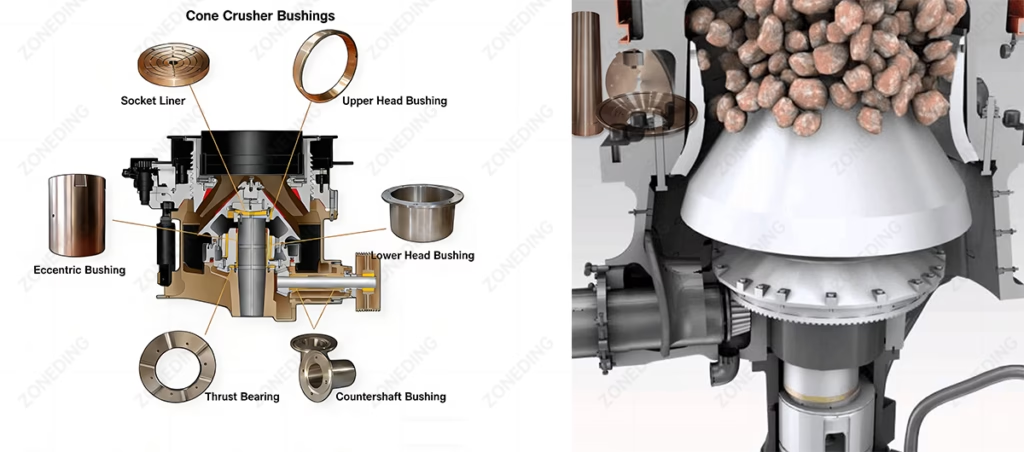
The cone crusher working principle relies on an eccentric rotating sleeve that swings the main shaft constantly. This movement creates a wide opening on one side and a narrow opening on the opposite side. Rocks fall into the wide side and get crushed violently as the gap closes. Many operators misunderstand this process completely. They tighten the discharge gap excessively to produce fine sand. This action violates the mechanical limits of the machine. The crushing chamber has a specific volume limit. Tightening the gap too much traps the rocks at the bottom. The immense pressure has nowhere to go. This forces the heavy adjustment ring to bounce violently. Older machines use heavy springs that compress and jump. Modern machines trigger the hydraulic overload valves constantly. This bouncing effect destroys the internal bronze bearings in just a few days. The discharge setting must balance production volume and rock size perfectly. Proper operation utilizes cone crusher interparticle comminution perfectly. This scientific term simply means that stones crush other stones. When the crushing cavity stays full, the eccentric movement forces layers of rocks against each other. The machine does not just crush stones against the steel plates. The extreme pressure causes the rocks to break each other into smaller, cubic pieces. This interparticle action produces a much better final product shape for concrete production. It also reduces the direct friction on the expensive manganese steel liners. Operators must select the correct cavity profile to match the raw feed size. Putting large rocks into a fine cavity causes the rocks to bridge at the top. The motor runs at full power, but no rocks pass through. Matching the cavity profile to the rock size ensures even wear and low operating costs.
Working Principle of the Cone Crusher
Selecting the Right Cavity Profile
Choosing the correct cavity shape is mandatory for efficient operation. Manufacturers offer coarse, medium, and fine liner combinations for the exact same machine. Plant managers must analyze the size of the incoming rocks carefully. If the rocks are large, a coarse cavity must be used. Using a fine cavity for large rocks blocks the feed opening completely. The lower part of the crushing chamber remains empty. This wastes massive amounts of electrical power and produces zero output.
Operational Action
Chamber Result
Practical Meaning
Setting gap too tight
Ring bouncing
Destroys internal bronze bearings
Matching cavity to feed
Even material flow
Maximizes daily production volume
Using fine cavity for big rocks
Top bridging
Stops production completely
Why Must Cone Crushers Maintain Choke Feeding During Operation?
Cone crusher choke feeding means keeping the crushing chamber entirely buried under a thick layer of rocks. Many inexperienced operators intentionally reduce the feed speed. They let rocks drop slowly into the machine to prevent jamming. This habit destroys the machine quickly. Dropping single rocks into an empty chamber causes direct impacts against the steel liners. The manganese steel wears out twice as fast. A full chamber creates a dense, protective rock bed. The rocks absorb the massive crushing forces. The steel liners simply push the rock bed together. This method lowers the power consumption per ton significantly. The electric motor runs much smoother when the resistance remains constant. Maintaining a full chamber requires proper feeding equipment above the machine. A buffer bin stores a small amount of material right above the feed opening. A high-quality Vibrating Feeder pulls the material from the bin steadily. The feeder speed adjusts to keep the crushing cavity perfectly full at all times. If the chamber level drops, the feeder speeds up. If the material piles too high, the feeder slows down. This steady operation prevents sudden power spikes and protects the electrical system. The final rock product also contains fewer flat and elongated pieces. Construction companies pay higher prices for cubic rocks. Choke feeding is the only way to produce cubic rocks efficiently while protecting the equipment.
Practical Tips for Feed Control
Install a level sensor: Use an ultrasonic sensor above the chamber to monitor the rock height constantly.
Distribute feed evenly: Ensure the rocks drop into the exact center of the machine, not to one side.
Remove dirt early: Screen out mud and fine sand before the material enters the crushing chamber.
How to Troubleshoot Abnormal Lubrication System Oil Temperature and Pressure?
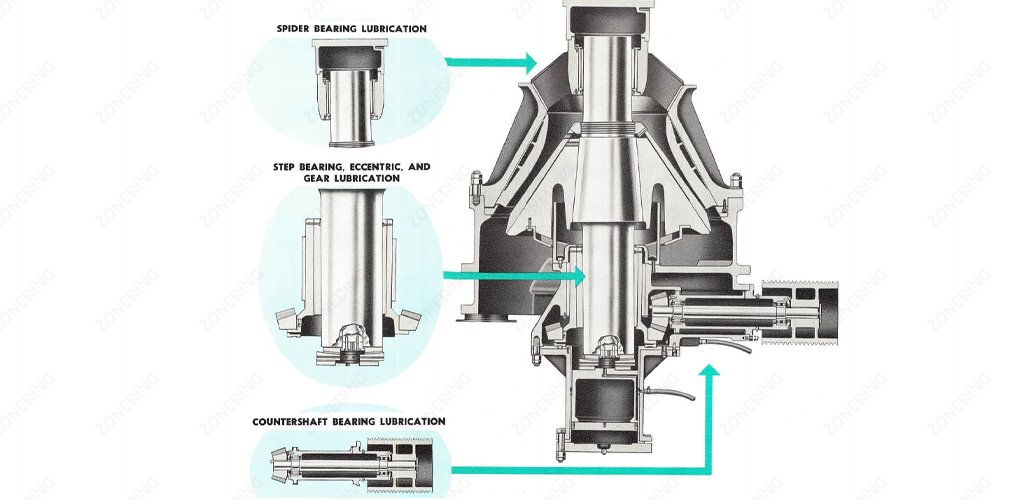
Lubrication system troubleshooting always begins with a careful inspection of the oil return screen. The lubrication oil cools and protects the fast-moving internal gears and bearings. When oil temperature rises above normal limits, serious internal friction is occurring. Mechanics must never throw away the debris found on the return oil filter. This filter acts as a detailed health report for the machine. Mechanics must spread the trapped debris on a white paper and shine a bright light on it. Finding yellow brass shavings means the main eccentric bushing or thrust bearing is wearing down rapidly. Finding silver, magnetic steel shavings indicates that the heavy gears are grinding against each other. Finding fine silica sand means the dust seal has failed entirely.
Step Bearing, Eccentric, Gear Lubrication
Dust is the biggest enemy of internal bronze components. Modern equipment uses a positive pressure blower system to keep dust away. A small fan pumps clean air into the dust seal area constantly. This air pressure pushes outward, preventing any rock dust from entering the oil tank. Mechanics often ignore this small blower fan completely. If the fan filter clogs with dirt, the air pressure stops. Silica dust enters the gear oil quietly. The oil turns into a highly abrasive grinding paste. This paste destroys a thirty-thousand-dollar gear set in just a few days. Checking the blower fan and the oil cooler radiator are mandatory cone crusher maintenance steps.
How to Perform Hydraulic Clearing of Cone Crusher When Jammed by Iron?
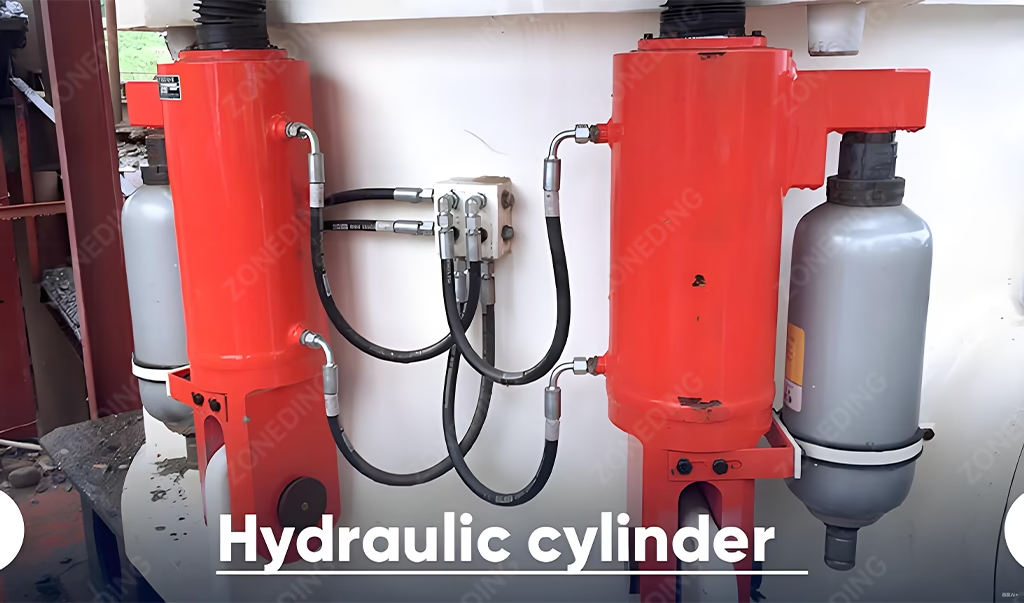
Hydraulic clearing of cone crusher safely drops the main shaft to release uncrushable objects instantly. Excavator teeth, loader bucket bolts, or drill bits occasionally enter the rock feed by accident. These solid steel objects cannot be crushed. When the steel enters the chamber, the internal pressure skyrockets instantly. Modern hydraulic machines detect this extreme pressure spike immediately. The control system opens the relief valves and lowers the main shaft rapidly. The crushing gap opens wide, and the steel object falls out the bottom safely. The system then pumps oil back in to raise the shaft to the original working position. This entire process happens without manual labor.
Cone Crusher Hydraulic System
Plant managers often misunderstand this safety feature completely. Because the machine clears iron automatically, some plants remove their feed belt magnets to save money. This is a very expensive operational error. The tramp iron relief system is an emergency parachute, not a normal braking system. Every time a solid steel block passes through the machine, the internal thrust bearings suffer a massive shockwave. Frequent iron passing ruins the hydraulic cylinder seals and causes gear fatigue. Plants must install a heavy Magnetic Separator over the main conveyor belt. Stopping the metal before it reaches the crusher protects the equipment permanently.
What Are the Standard Daily and Weekly Inspection Checklist Items?
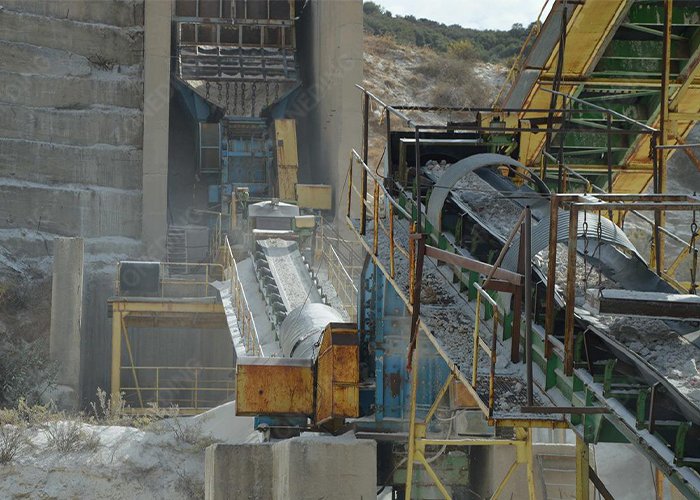
A strict cone crusher daily inspection checklist finds small problems before they cause catastrophic plant shutdowns. Daily maintenance checks require only a few minutes but save thousands of dollars. Mechanics must check the oil tank temperature before starting the motor. Cold oil is too thick to lubricate the tight bronze bearings properly. The oil must be heated to the correct starting temperature first. Operators must listen to the machine carefully when it runs empty. Unusual knocking sounds indicate loose internal parts. Operators must also record the coast-down time when shutting the power off. A healthy machine spins freely for several minutes before stopping completely. If the machine stops spinning abruptly, the internal bearings are dragging and require immediate inspection. Weekly inspections require deeper mechanical checks. Mechanics must inspect the epoxy backing compound behind the steel liners. This plastic resin fills the empty space between the manganese liner and the steel frame. It provides solid support against crushing forces. If the epoxy cracks or falls out, the manganese liner will bend and break under pressure. Checking the drive belt tension is also a weekly requirement. Loose belts slip and burn, reducing the power sent to the crushing shaft. Implementing strict cone crusher maintenance methods keeps the entire Stone Crushing Plant highly profitable and safe.
Frequently Asked Questions
Question 1: What causes the adjustment ring to bounce violently? A discharge gap set too tight causes ring bouncing. The crushed rock cannot exit the bottom fast enough. The hydraulic system or springs trigger to release the massive built-up pressure safely. Question 2: Why must the crushing chamber stay completely full? A full chamber ensures rocks crush against other rocks. This reduces direct wear on the steel plates. It creates a better cubic rock shape and lowers electrical power consumption steadily. Question 3: What does brass dust in the oil filter mean? Brass dust indicates severe wear on the internal eccentric bushing or the bottom thrust bearing. High oil temperature or dirty oil usually causes this specific type of bearing damage. Question 4: Why is epoxy backing compound used behind the liners? Epoxy backing compound fills all empty gaps between the heavy steel liner and the machine frame. It prevents the brittle manganese steel from cracking under extreme crushing pressure. Question 5: Can the machine run safely without a magnetic separator? No. The hydraulic relief system only protects against rare emergency metal jams. Frequent metal passing damages the internal gears and hydraulic seals permanently. Magnets are strictly required.
About ZONEDING
ZONEDING manufactures highly durable mineral processing equipment for B2B industrial clients. The factory utilizes advanced CNC machinery to produce robust crushers and grinding mills. The engineering team provides complete plant design and installation services globally. Direct factory manufacturing ensures high-quality equipment at highly competitive prices. A dedicated team of mechanical engineers supports every client with professional installation and long-term maintenance guidance. Contact ZONEDING today to receive expert advice on crushing plant optimization. Professional engineering support improves equipment lifespan immediately.
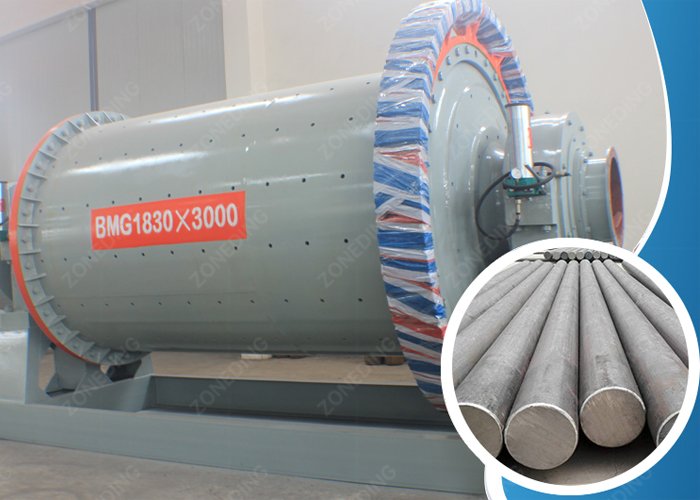
A rod mill working principle differs from other grinding tools because it uses long steel rods instead of balls. This machine is the best choice for preventing "over-grinding," which ruins fragile minerals. Many plants lose profit becaus...
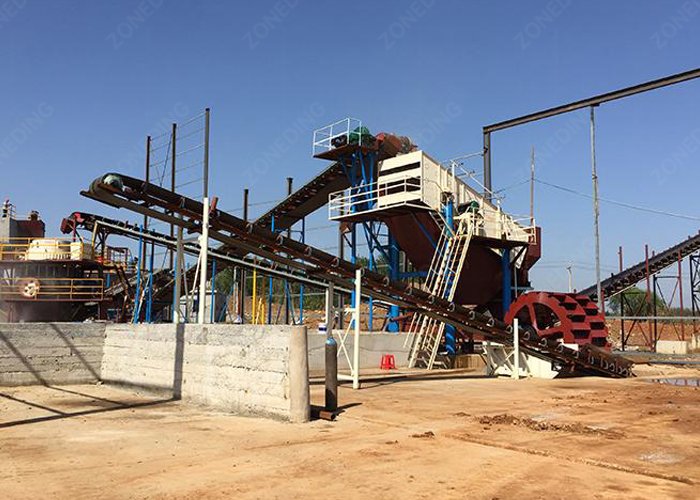
Proper crushing production line equipment configuration determines the final aggregate quality and daily operational cost. Correct aggregate equipment selection prevents material blockages and reduces wear part consumption. A scientific crushing s...
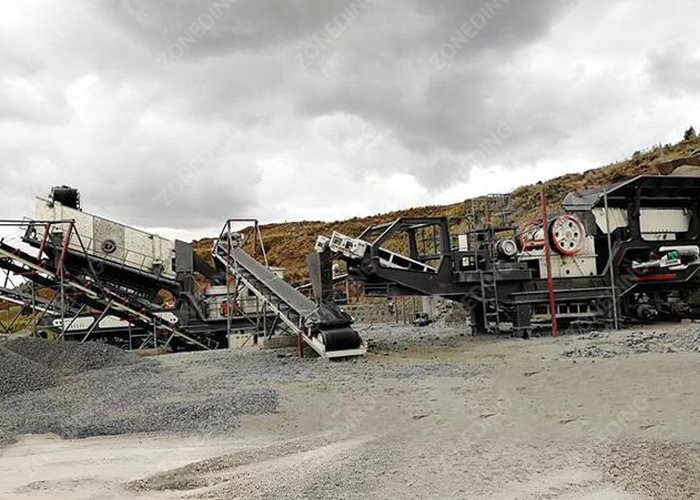
Mobile crushing technology offers the most direct path to reducing operational costs and increasing profit margins in the mining industry. This article explains how a mobile unit eliminates the need for expensive civil works and reduces truck haul...
Potassium feldspar is an important industrial mineral widely used in ceramics, glass manufacturing, construction materials, and chemical industries. Before potassium feldspar can be used in these applications, it must first be crushed into suitabl...
We use cookies to ensure that we give you the best experience on our website. If you continue to use this site we will assume that you are happy with it.
Privacy Policy
Send us a message
We would love to hear from you
Submit your question and our team will respond to the email provided as soon as possible.
 Zoneding Machine