In a large-scale mining project, selecting a is not just about comparing tonnage. While mobility reduces material handling costs, the compact nature of these machines introduces risks in stability, maintenance, and product quality. Success requires looking beyond the catalog to understand the technical realities of field operations.
1. Material Properties: Choosing the Right Crusher Type
The first step in mobile crusher selection is analyzing ore hardness and abrasiveness. Different rocks require different crushing mechanisms to ensure efficiency and prevent excessive wear. Using the wrong machine leads to high energy consumption and frequent downtime. For hard and abrasive rocks like granite, a jaw crusher is the standard choice for primary crushing. For softer or less abrasive materials, an impact crusher can provide higher throughput and better shape. Understanding the “Jaw vs Cone crusher” debate is essential for secondary stages, where cone crushers excel in producing consistent particle sizes for hard ores.
Matching hardness to mechanism
Hardness must be measured using the Mohs scale or Bond Work Index. A machine designed for limestone will fail quickly if used on basalt. The selection must match the material’s resistance to compression and impact.
Test the ore first: Always perform a hardness test before finalizing the machine order.
Check abrasiveness: High silica content requires heavy-duty liners to manage wear.
Verify feed size: Ensure the crushing equipment opening can handle the largest expected rocks.
2. Mobility Modes: Tracked vs Wheeled Systems
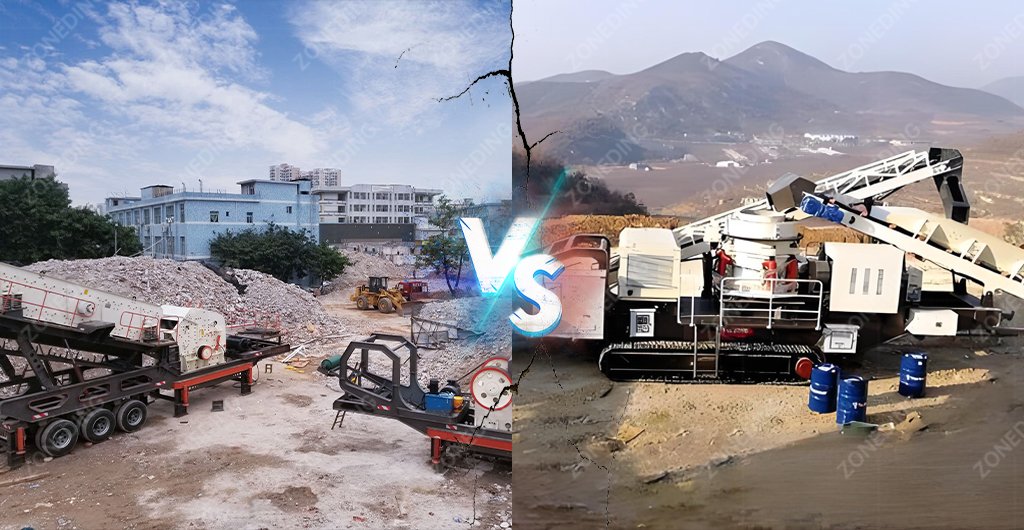
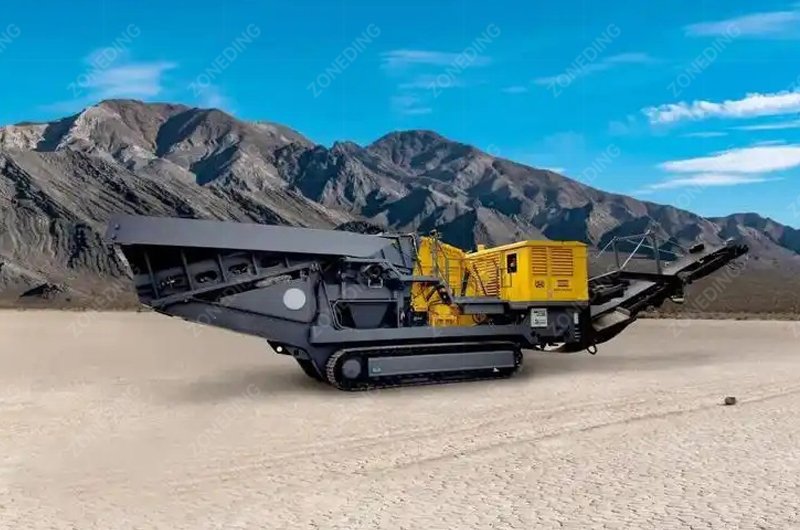
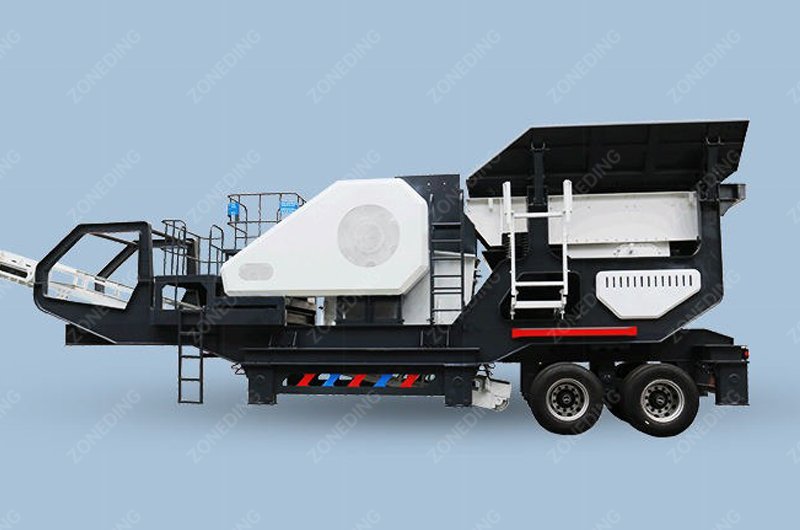
The choice between a tracked or wheeled chassis depends entirely on the site environment. This decision affects how easily the machine moves and how much damage it does to the ground. Tracked mobile crushers offer superior stability and traction on uneven, soft, or steep terrain. They are the standard for heavy mining and quarrying. However, they are slow to move and can damage paved roads. On the other hand, wheeled units like a mobile jaw crusher are much faster for road construction or projects requiring frequent movement between different locations.
Tracked vs wheeled crusher mobility
Ground pressure and terrain
On soft soil, a tracked machine spreads its weight, preventing the unit from sinking. On hard, stable ground, wheeled machines save time. If the site is a permanent quarry, tracks are better. If the site is a highway project, wheels are the winner.
Choosing the right chassis
For remote mines: Use tracked mobile crushers for maximum stability.
For road projects: Use wheeled units to reduce transport time.
For heavy rock: Always choose reinforced steel tracks to prevent damage.
3. Capacity Matching: Determining Machine Scale
Real capacity is often lower than the theoretical maximum listed in catalogs. To avoid bottlenecks, the mining equipment capacity must be calculated based on continuous flow, not just peak speed. One major issue is the “Angle of Repose.” If the feeder hopper is too shallow, material will “bridge” or get stuck. This prevents the material from flowing into the crushing chamber. When this happens, the crusher runs “hungry,” and the actual output might drop to only 60% of the rated capacity.
Crusher capacity and feed efficiency
Calculating real-world throughput
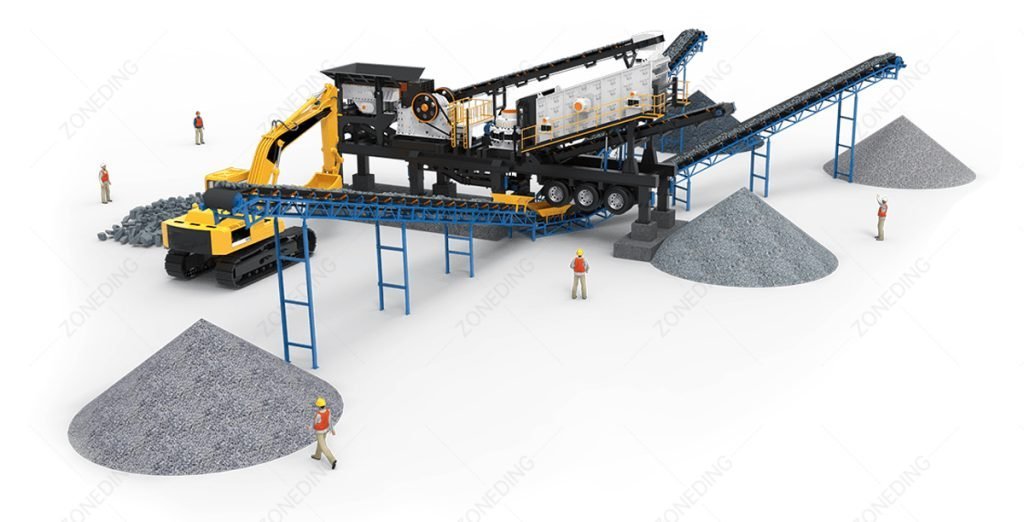
A complete system must account for the feeder, the crusher, and the vibrating screen. If the screen is too small, the entire mobile crushing plant slows down to match the screen’s speed.
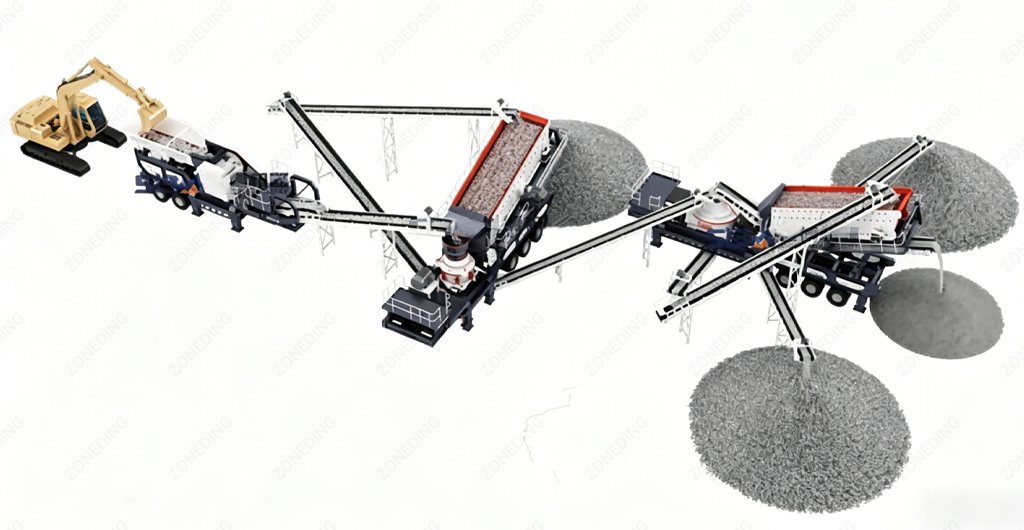
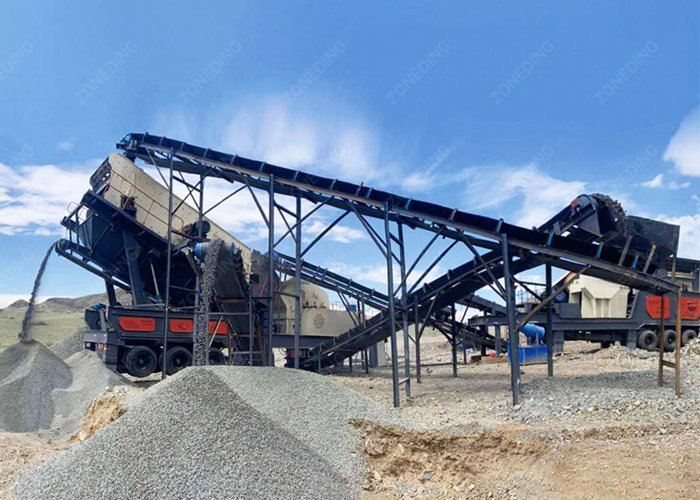
A single machine is rarely enough to produce high-quality, cubical aggregate. Most mobile setups require a coordinated sequence to achieve the desired particle size distribution.
Mobile Crushing and Sand-Making Production Line
Using a single machine for everything often leads to a high percentage of “flaky” or “elongated” stones. For professional results, a multi-stage approach is better. This usually follows a pattern: Mobile Jaw Crusher (Primary) → Mobile Cone/Impact Crusher (Secondary) → Mobile Screening Plant (Final Grading). This ensures the final product meets strict construction standards.
For coarse aggregate: A two-stage setup is usually sufficient.
For fine sand production: A three-stage setup including a sand making machine is required.
For high quality: Always use a dedicated screening stage at the end.
5. Power Selection: Diesel vs Electric Efficiency
The choice between diesel and electric drive significantly affects the long-term operating cost. While diesel offers the most flexibility, electric power is much more efficient for long-term projects. Diesel-driven machines are great for sites without power infrastructure. However, in high-altitude mines, diesel engines suffer from “derating,” where power drops as the air gets thinner. This reduces actual production. Electric-driven machines are more stable and have much lower maintenance costs. For projects lasting more than one year, electric drive can reduce annual operating costs by 30% to 50%.
Mobile Diesel Crusher
Mobile Motor-Driven Crusher
Energy cost analysis
Electric power is cheaper per unit of energy and produces less vibration. Less vibration means the mechanical parts of the stone crusher last longer. Diesel is better for rapid mobilization, but electric is the winner for profitability.
Power decision matrix
Temporary/Short-term sites: Use diesel-driven units for easy setup.
Long-term/Large-scale mines: Use electric-driven units to save on fuel.
High-altitude sites: Prefer electric to avoid engine power loss.
6. Maintenance: Evaluating Wear Parts and Accessibility
In remote mining locations, downtime is the biggest enemy of profit. If a machine is difficult to maintain, every hour spent fixing it costs thousands of dollars. When selecting equipment, the “Accessibility” of wear parts is critical. Some manufacturers design compact machines that hide the liners deep inside the frame. Replacing these liners might require heavy cranes and hours of disassembly. Prioritize machines with a “modular quick-change” design. This allows for faster replacement of jaw plates or cone liners without needing massive external equipment.
Evaluating maintenance needs
Check tool requirements: Can the liners be changed with standard tools?
Monitor hydraulic health: Ensure the system has high-quality off-line filtration to prevent dust from damaging valves.
Verify part availability: Ensure spare parts like ball mill liners or crusher plates are easy to source.
7. ROI: Calculating Total Operating Cost
The cheapest machine to buy is often the most expensive machine to run. To find the true Return on Investment (ROI), the calculation must include the Total Cost of Ownership (TCO). TCO includes the purchase price, fuel consumption, electricity, wear parts, labor, and downtime. A machine with a low purchase price but high fuel consumption or frequent liner changes will quickly become a financial burden. A well-chosen mobile stone crusher might cost more upfront but pays for itself through lower daily operating costs.
ROI calculation factors
Fuel/Power: Calculate the cost per ton of processed material.
Wear Parts: Include the cost and frequency of replacing liners and belts.
Downtime cost: Factor in the lost revenue when the machine is not running.Cost CategoryHigh-Quality MachineBudget MachineInitial PriceHigherLowerFuel EfficiencyHigh (Low cost/ton)Low (High cost/ton)MaintenancePlanned/LowUnplanned/HighTotal ROIBetter (Faster Payback)Worse (Slow Payback)
2026 Industry Trends in Mobile Crushing
The industry is moving toward Smart and Autonomous Crushing. In 2026, new mobile crushers are being equipped with remote monitoring sensors. These sensors track vibration, temperature, and liner thickness in real-time. This allows for “predictive maintenance,” where parts are replaced just before they fail, preventing unexpected stops.
Latest Advancements
Remote Automation: Controlling the crusher via a smartphone or tablet from a safe distance.
Hybrid Power: Combining diesel engines with battery storage to reduce fuel consumption.
AI Optimization: Software that automatically adjusts the CSS (Closed Side Setting) based on the ore hardness being fed.
Frequently Asked Questions
Question 1: Why is my mobile crusher producing too much dust? This is often caused by insufficient water spraying or an improper vibrating screen setup. Ensure the moisture content in the feed is managed correctly. Question 2: How do I prevent hydraulic failure in a dusty mine? Use a high-quality hydraulic system with large-capacity off-line filtration. Dust is the primary cause of valve wear in mining environments. Question 3: Can a mobile crusher replace a fixed plant? Yes, for projects where the ore body moves or for short-term contracts. However, for massive, permanent mines, a fixed stone crushing plant is usually more economical. Question 4: How often should I check the track tension? On tracked mobile crushers, tension should be checked weekly, especially after working in wet or muddy conditions.
Summary and Recommendations
Successful mobile crusher selection requires a technical approach. Do not focus solely on the price tag. Instead, evaluate the material hardness, the site terrain, the power source, and the ease of maintenance. A machine that matches your specific ore and site conditions will provide the lowest cost per ton and the fastest return on investment. Recommended Actions:
Perform a hardness and abrasiveness test on your ore.
Map out your site terrain to choose between tracked and wheeled models.
Compare the 3-year Total Cost of Ownership (TCO) for diesel vs electric options.
Request a detailed maintenance schedule and wear-part replacement plan from the supplier.
About ZONEDING
ZONEDING is a leading manufacturer of professional Crushing Equipment and Beneficiation Equipment. With decades of engineering experience, we provide customized solutions for mining, aggregate, and recycling industries. Our machines are built to withstand the toughest environments in the world. Contact ZONEDING today for a professional technical consultation and a custom crushing solution designed for your specific project.
When a client asks about the , they usually expect a simple price for tanks, pumps, and conveyors. However, the equipment quote is only the tip of the iceberg. In my experience, the equipment represents only 30% to 40% of the total investment. The...
One of the first questions investors ask before starting a mining project is: How much does a gold processing plant cost? Unfortunately, there is no single answer. A small gravity gold plant may cost less than a luxury house in some countries, whi...
A represents the peak of integrated mineral processing technology. This machine functions as a complete factory on wheels or tracks. It performs feeding, crushing, and screening in one continuous flow. This setup eliminates the need for expensive ...
We use cookies to ensure that we give you the best experience on our website. If you continue to use this site we will assume that you are happy with it.
Privacy Policy
Send us a message
We would love to hear from you
Submit your question and our team will respond to the email provided as soon as possible.
 Zoneding Machine