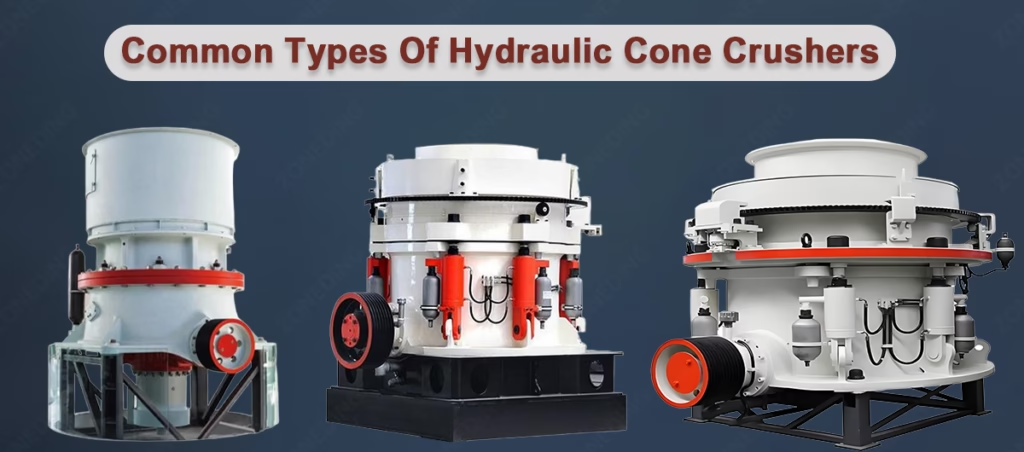
In a professional mineral processing plant, meeting catalog specifications does not always guarantee on-site success. Many buyers focus only on motor power or feed size, but these are surface numbers. Real profitability depends on how equipment handles the dynamic stress of crushing. Understanding the 7 critical hidden parameters is the difference between a profitable quarry and a constant repair nightmare.
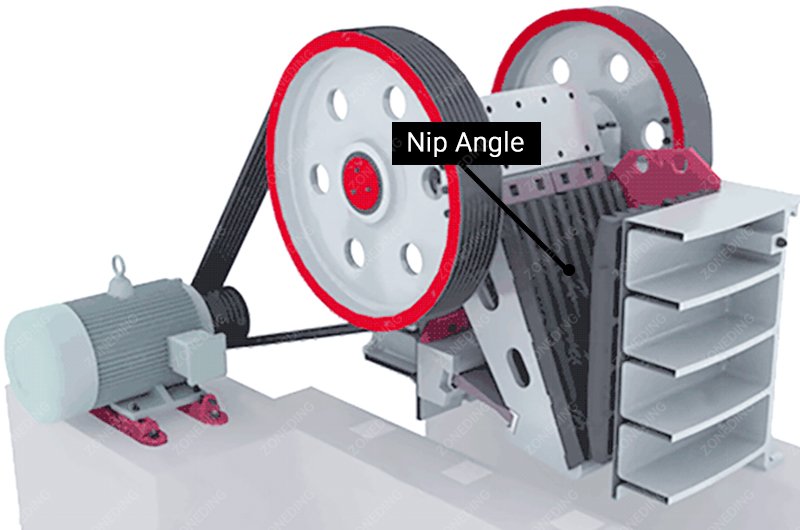
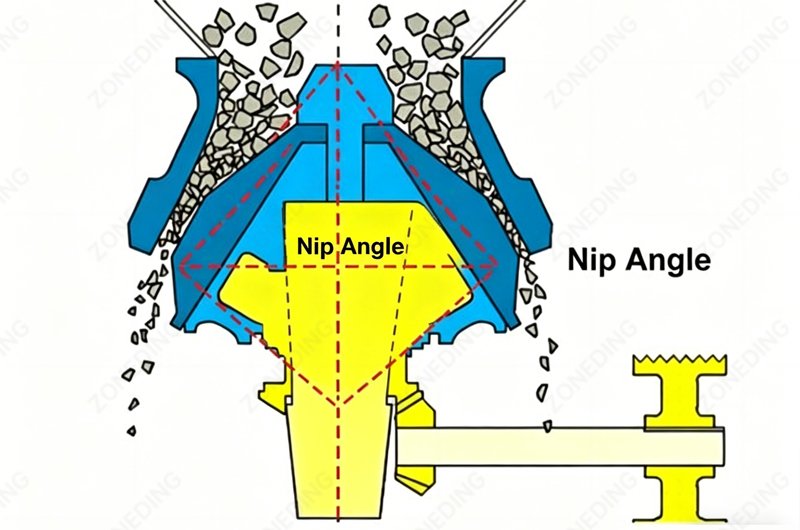
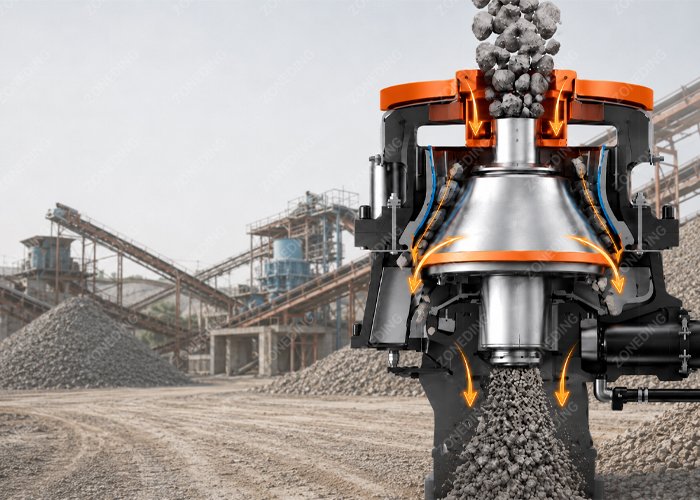
The nip angle is the most critical hidden parameter in and cone crushers. This angle is formed between the moving part and the fixed wall. If this angle is too wide, the machine cannot grip the rock. Instead of crushing, the material slides upward and jumps out of the chamber. This “jumping” effect stops production and causes extreme wear on the upper liners. It also creates significant safety risks in the plant. For smooth materials like river gravel, a small nip angle is vital. Technical documentation should always include a cross-section drawing of the crushing chamber to verify this angle before any purchase.
Jaw crusher nip angle physics details
Cone crusher nip angle physics details
Managing smooth and hard materials
Hard, slippery stones require specific chamber designs. A standard machine often fails when processing smooth river stones. A deep-chamber design with a tighter nip angle ensures the machine holds the material until the crushing force is sufficient. This prevents the material from “spitting” out of the feed opening.
Material Type
Nip Angle Requirement
Risk if Angle is Too Large
Hard Granite
Small (18-20°)
High vibration and jumping
Soft Limestone
Medium (20-22°)
Moderate liner wear
River Gravel
Very Small (<18°)
Material ejection
Professional Selection Tips
Verify chamber geometry: Request detailed drawings of the internal crushing profile.
Consider material friction: Harder, smoother rocks require tighter nip angles.
Monitor feed size: Ensure the feed size matches the nip capability of the machine.
2. Circuit Capacity: Open vs. Closed Truth
Equipment catalogs often list “Open Circuit” capacity, which can be misleading for real production goals. Open circuit means the material passes through the machine only once. However, crushing is rarely perfect. Even if a cone crusher is set to 20mm, a large percentage of the output will still be larger than 20mm. To achieve a consistent product, a Closed Circuit is necessary. This system uses a vibrating screen to catch oversized rocks and send them back to the crusher. Because of this recirculating load, the crusher needs much higher capacity than the final target output. A plant requiring 200 tons of finished product actually needs a machine capable of handling nearly 280 tons of total material flow.
Calculating the mass balance
Planning a stone crushing plant based on a single machine’s maximum throughput leads to bottlenecks. A complete mass balance calculation is required. This calculation must include the feeder, the crusher, the screen, and all conveyors to ensure the entire system handles the recirculating load.
Avoiding the capacity trap
Analyze the flowsheet: Ensure the supplier accounts for recirculating loads in the design.
Incorporate screening: Always include a screen for fine product requirements.
Size the screens correctly: A small screen creates a bottleneck that forces the crusher to run inefficiently.
3. CSS Variance: Settings Under Heavy Load
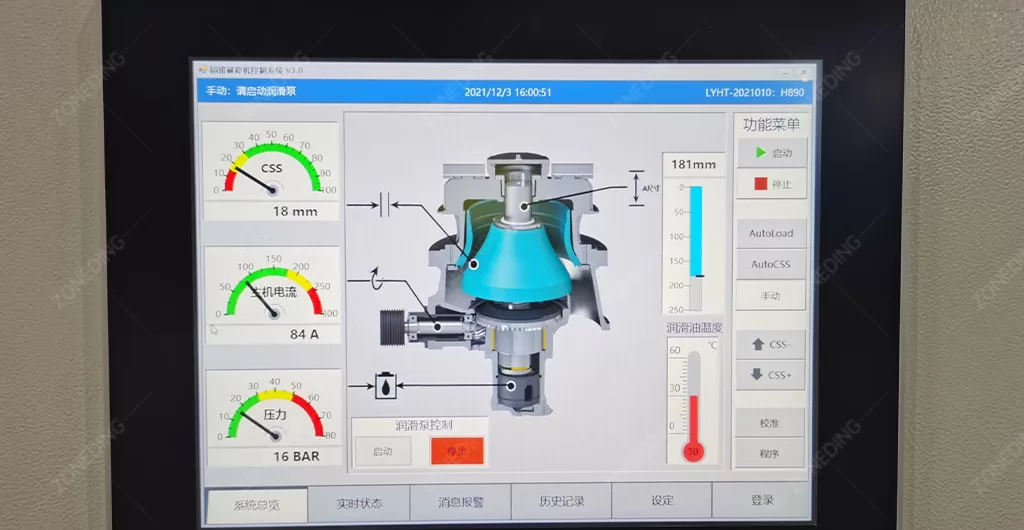
The Closed Side Setting (CSS) measured during startup is not the same as the setting during heavy operation. When a crusher is fully loaded, the machine experiences massive hydraulic and mechanical pressure. This pressure causes the frame to flex slightly and the internal components to compress. A 15mm setting on a no-load machine might expand to 18mm or 20mm once heavy ore enters the chamber. If a project requires very strict particle size, such as for high-end asphalt, manual settings are insufficient. Machines with automatic adjustment systems are better because they compensate for this under-load expansion.
Cone Crusher CSS Settings
Understanding mechanical deformation
Large-scale crushing equipment is built for strength, but no metal is perfectly rigid. Under the weight of hundreds of tons of rock, internal clearances change. This is a standard part of mining mechanics that must be considered during the design phase.
Professional monitoring tips
Utilize automated systems: Look for machines with hydraulic compensation.
Verify particle size distribution (PSD): Regularly test the output to ensure it matches the required specifications.
Watch for vibration: High vibration levels can indicate that the CSS has shifted significantly.
4. Bearing Clearance: Preventing Shaft Failure
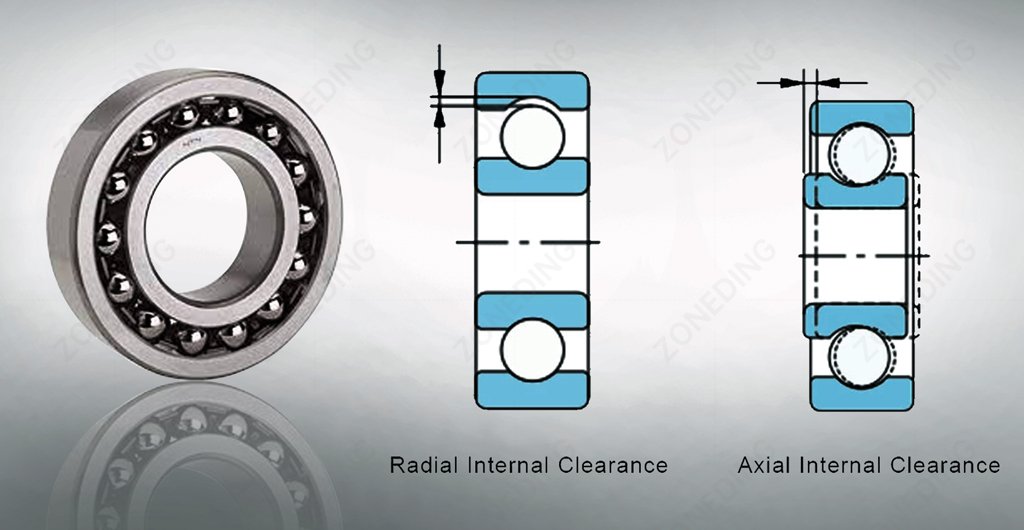
Standard industrial bearings are often unsuitable for heavy-duty crushers due to thermal expansion. Mining machines operate at extreme temperatures. The temperature difference between the inner and outer bearing rings is substantial. Using a standard bearing with low clearance causes the parts to expand and seize, which destroys the main shaft. Reliable crushers must use bearings with C3, C4, or C5 clearance levels. These are designed to allow for thermal expansion. Without this extra space, the mechanical stress of 24/7 operation will lead to premature shaft failure and extremely high repair costs.
Crusher Bearing Internal Clearance
Ensuring long-term reliability
Confirm bearing suffixes: Ensure bearings are C3 or higher for heavy-duty mining.
Monitor internal temperatures: Use thermal sensors to catch issues before a bearing seizes.
Verify manufacturer specs: Do not accept “standard industrial” bearings for heavy rock applications.FeatureStandard IndustrialMining Grade (ZONEDING)Bearing ClearanceLow (Standard)High (C3/C4/C5)Thermal ToleranceLowVery HighFailure RiskHigh (Seizure)Low (Controlled Expansion)
5. Lubrication Flow: Cooling vs. Pressure
In heavy mining, the lubrication system’s primary job is cooling, not just reducing friction. Many buyers only look at the oil pressure gauge. However, in a large ball mill or cone crusher, 70% of the oil’s purpose is to carry heat away from the friction points. The most important parameter is the pump’s rated flow rate (L/min) and the heat exchanger’s capacity (kW). If the oil pump is too small, the oil will stay in the machine too long and get too hot. Even if the pressure looks normal, the lack of sufficient flow will lead to overheating and catastrophic component failure during summer months.
Crusher’s lubrication system
Professional maintenance advice
Focus on flow, not just pressure: A high-pressure, low-flow system is a danger sign.
Check heat exchanger capacity: Ensure the cooling unit can handle the heat generated at full load.
Monitor oil temperature: Keep a close eye on the temperature trend during peak production.
6. Drive Systems: The Mechanical Fuse
The choice between direct drive and V-belt drive determines the level of motor protection. Some suppliers promote direct drive systems because they are compact and energy-efficient. However, in a real mine, unexpected objects like broken excavator teeth or tramp iron can enter the crushing chamber. A V-belt drive system acts as a “mechanical fuse.” When the machine jams, the belt slips or breaks. This protects the expensive motor and main shaft from catastrophic torque. While direct drives work well in controlled environments, belt drives offer superior protection in a high-risk crushing plant.
Choosing the right drive for the site
For controlled environments: Direct drive may offer better energy efficiency.
For remote or high-risk mines: V-belt drives provide necessary mechanical protection.
For high-duty cycles: Automatic belt tensioners make maintenance much easier.
7. Cavity Profile: Optimizing Operational Cost
The cavity profile, or the shape of the crushing chamber, dictates the total operating cost. Not every crusher is a universal tool. Liners are designed with specific curves, such as Extra Coarse, Coarse, Medium, or Fine, to control how the material moves inside the machine. Using a “Medium” cavity profile for a “Coarse” feed causes problems. Rocks fall straight to the bottom of the chamber without being crushed properly. This reduces production capacity and causes uneven wear on the liners. This leads to the premature replacement of expensive crushing parts.
Different types of chambers in cone crushers
Matching profile to material
Analyze PSD: The Particle Size Distribution must match the chosen liner profile.
Plan for wear: A matched profile ensures even wear across the entire liner surface.
Optimize throughput: The correct profile ensures the rock follows the intended crushing path.
2026 Industry Trends in Crushing Technology
The industry is moving toward smart, automated crushing systems. In 2025, we see more equipment integrating real-time sensors that monitor nip angle, CSS, and bearing temperature. This allows for predictive maintenance rather than reactive repairs.
Latest Advancements
Automated CSS Adjustment: Real-time compensation for load-induced deformation.
Smart Lubrication: Sensors that adjust oil flow based on heat, not just time.
Integrated Digital Twins: Software that simulates the crushing process before a machine is even built.
Frequently Asked Questions
Question 1: Why does the crusher produce more fines than expected? This is often caused by an incorrect cavity profile or a setting that is too fine for the rock hardness. If material is crushed too many times in a closed circuit, the fine content increases. Question 2: How often should bearing temperature be monitored? In continuous 24-hour operations, temperature sensors should be monitored constantly. A sudden rise in temperature indicates lubrication failure or clearance issues. Question 3: Are mobile crushers suitable for small projects? Yes, mobile units are excellent for projects with limited space or for sites that require frequent movement between different material sources. Question 4: Is standard industrial grease sufficient for mining equipment? No. Mining machines require high-temperature, high-pressure extreme service grease to prevent rapid oxidation and bearing failure. Question 5: How to prevent damage from tramp iron? Installing a magnetic separator on the feed conveyor removes metal pieces before they enter the crushing chamber.
Summary and Recommendations
Maximizing project profit requires looking beyond basic machine specifications. Focus on the physical reality of the operation. To ensure a successful project, verify the nip angle for the specific rock type, account for the recirculating load in capacity calculations, and ensure bearings and lubrication systems are designed for high-heat environments. A technically optimized machine will always have a lower Total Cost of Ownership (TCO) than a low-priced machine that lacks these seven critical details. Recommended Actions:
Document all material properties (Hardness, Abrasion, Moisture).
Request a complete Mass Balance Flowsheet from the supplier.
Audit the technical details of the bearings and lubrication systems before purchase.
About ZONEDING
ZONEDING is a professional manufacturer of Crushing Equipment and Beneficiation Equipment. The company provides engineered solutions rather than just machines. All equipment is designed to handle extreme mining conditions through precise mechanical engineering and high-quality material selection. Contact ZONEDING for a technical consultation and a professional plant design tailored to specific ore requirements.
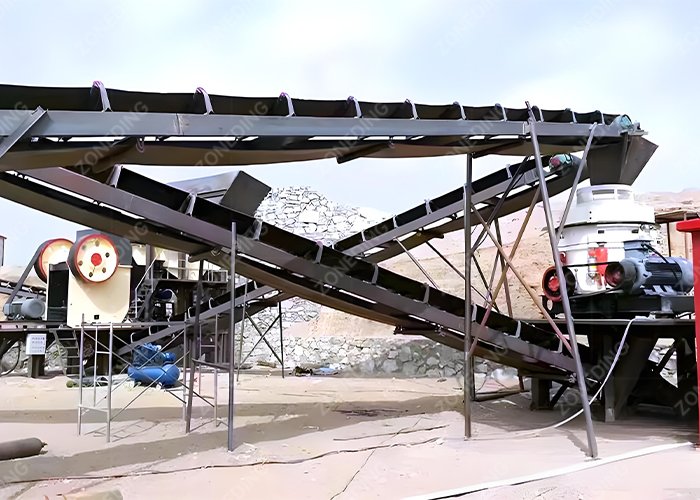
Cone crushers are among the most widely used machines in the aggregate, mining, and quarry industries. They are especially popular for processing hard and abrasive materials such as granite, basalt, river stone, and iron ore. However, many buyers ...
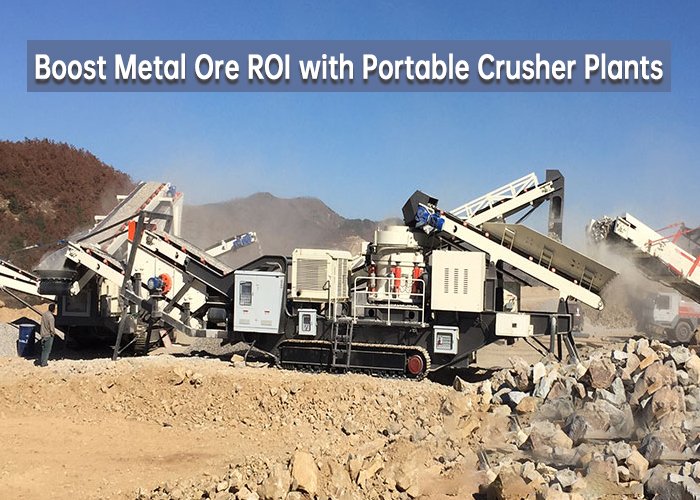
Choosing a high-performance portable crusher plant for metal ore is the fastest way to increase your mining profits in 2026. Many mine owners waste 30% of their budget on truck fuel and road construction. I believe a mobile station solves this by ...
I have worked in the mining and recycling industry for over 50 years. Choosing the best concrete crushing setups is the most important step for your profit. Many owners lose money because they pick the wrong bones for their machine. I will show yo...
A represents the peak of integrated mineral processing technology. This machine functions as a complete factory on wheels or tracks. It performs feeding, crushing, and screening in one continuous flow. This setup eliminates the need for expensive ...
We use cookies to ensure that we give you the best experience on our website. If you continue to use this site we will assume that you are happy with it.
Privacy Policy
Send us a message
We would love to hear from you
Submit your question and our team will respond to the email provided as soon as possible.
 Zoneding Machine