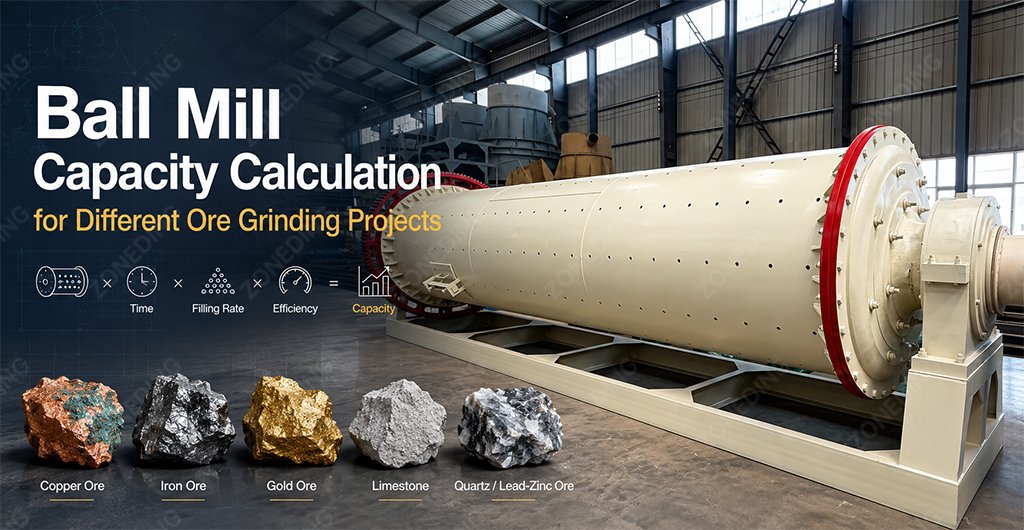
Ball mill capacity cannot be calculated from drum size or motor power alone.
The same mill may process soft limestone at a high rate but produce much less output when grinding hard quartz-rich ore. In addition, a product size of 0.074 mm requires much more energy than a coarser 0.4 mm product.
Therefore, a reliable capacity estimate should begin with your ore, feed size, target fineness, grinding method, and circuit design.
This guide explains the key variables, the Bond Work Index method, model selection logic, and common mistakes that lead to wrong ball mill sizing.
Ball mill capacity is the amount of ore a mill can grind within a defined period. It is usually expressed in tons per hour or tons per day.
However, capacity has little meaning without a feed size and final product size.
For example, these two requirements are not the same:
20 TPH with a product size of 0.4 mm
20 TPH with 80% passing 0.074 mm
The second duty needs more grinding energy. As a result, it may require a larger mill, higher installed power, or a closed grinding circuit.
A complete capacity requirement should include:
Required throughput + ore type + F80 feed size + P80 product size + wet or dry grinding
For example:
Grind 15 TPH of barite from an F80 of 10 mm to a P80 of 74 μm using a dry grinding circuit.
This description gives engineers enough information to begin preliminary sizing.
ZONEDING provides wet and dry ball mill configurations for different ores, discharge methods, and grinding duties. The final model should still be selected according to complete project data.
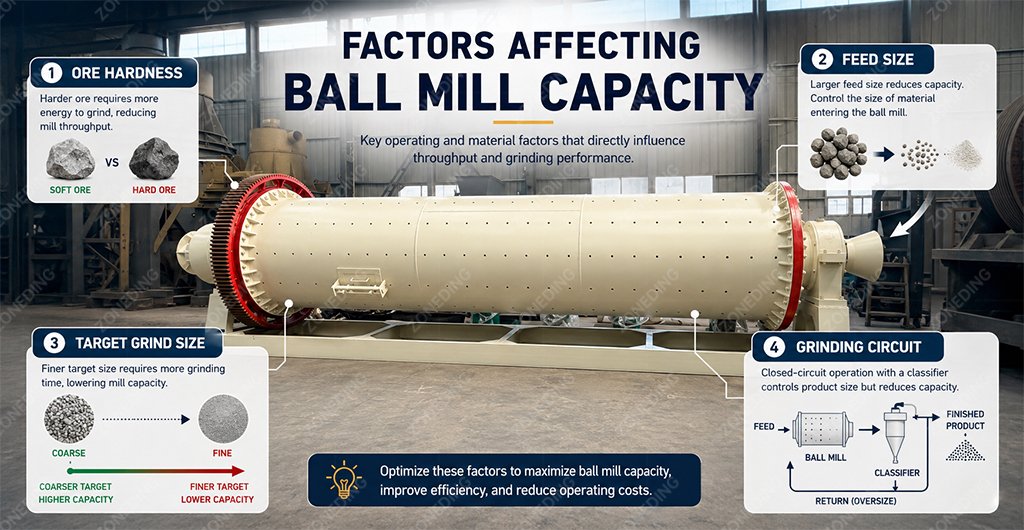
Which Factors Affect Ball Mill Capacity?
Ore hardness and target product size usually have the strongest influence on throughput.
However, several variables must be checked together before selecting a model.
Main factors affecting ball mill capacity and grinding efficiency
Factor
Effect on Capacity
Ore hardness
Harder ore reduces throughput
F80 feed size
Coarser feed requires more energy
P80 product size
Finer product lowers capacity
Ore density
Changes material loading
Moisture
Can restrict dry grinding flow
Mill diameter
Affects power and impact force
Mill length
Influences volume and retention time
Ball charge
Controls impact and abrasion
Mill speed
Affects media movement
Liner condition
Changes lifting efficiency
Classifier efficiency
Controls finished material removal
Circulating load
Changes internal grinding duty
Ore Hardness
Soft ores usually require less energy per ton.
In contrast, quartz-rich, siliceous, or highly competent ores can significantly reduce the output of the same mill.
The ore name alone is not enough. Two copper ores from different deposits may behave very differently in grinding.
Feed Size
Smaller feed normally improves ball mill capacity because the crushing circuit has already completed part of the size reduction.
Still, excessive fines do not always help. Very fine or wet material may create handling problems, especially in dry grinding systems.
Target Grind Size
Grinding to 150 μm usually requires less energy than grinding to 74 μm.
When the product becomes finer, the ore must stay inside the mill longer. Therefore, throughput falls unless mill size, installed power, or circuit efficiency improves.
Grinding Circuit
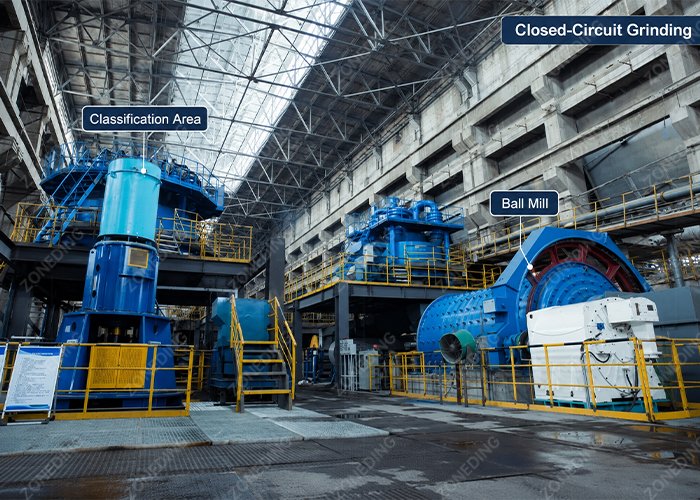
An efficient classifier removes finished particles before they are over-ground.
Meanwhile, coarse particles return to the mill for further reduction. This closed-circuit arrangement often provides better size control than a simple open circuit.
What Data Do You Need Before Calculation?
A dependable ball mill capacity calculation requires accurate feed and product data.
Prepare the following information before requesting a model recommendation:
Required Information
Why It Matters
Ore type
Provides the initial process direction
Bulk density
Helps estimate material loading
Bond Work Index
Indicates grinding energy demand
Maximum feed size
Checks whether pre-crushing is adequate
F80 feed size
Used in grinding energy calculations
Target P80
Defines required fineness
Required throughput
Establishes the capacity target
Moisture content
Important for dry grinding
Wet or dry process
Changes material transport
Open or closed circuit
Affects product control
Available power
May limit motor selection
Downstream process
Determines liberation size
What Are F80 and P80?
F80 is the screen size through which 80% of the ball mill feed passes.
P80 is the screen size through which 80% of the final product passes.
For example:
F80: 10,000 μm, or 10 mm
P80: 150 μm, or 0.15 mm
These values are more useful than maximum particle size because they describe the overall particle-size distribution.
What Is the Bond Work Index?
The Bond Work Index, often written as Wi, represents the energy needed to grind a specific ore under standardized test conditions.
A higher Wi usually means the ore is more difficult to grind. Therefore, the same installed power produces less throughput.
For larger plants, representative samples from different ore zones are important. A single easy-to-grind sample may cause the final mill to be undersized.
How Do You Calculate Ball Mill Capacity?
A preliminary calculation can be completed in five steps.
Step 1: Define the Grinding Duty
Confirm the required throughput, F80 feed size, P80 product size, ore type, wet or dry grinding method, and circuit arrangement.
Do not begin by selecting a mill model. First, define what the grinding system must achieve.
Step 2: Obtain the Bond Work Index
Laboratory testing provides the most reliable Wi value.
Published values for similar ores may support an early estimate, but they should not replace actual testing for a major project.
Step 3: Calculate Specific Grinding Energy
A simplified Bond equation is:
W = 10Wi × (1/√P80 − 1/√F80)
Where:
W = specific grinding energy, kWh/t
Wi = Bond Work Index, kWh/t
F80 = feed size at 80% passing, μm
P80 = product size at 80% passing, μm
F80 and P80 must use the same unit.
Step 4: Estimate Theoretical Throughput
After calculating energy per ton, estimate capacity with:
Q = Pe / W
Where:
Q = theoretical throughput, t/h
Pe = effective grinding power, kW
W = specific energy, kWh/t
Effective power is not always the same as motor nameplate power. Drive losses and operating conditions reduce the energy available for actual grinding.
Step 5: Apply Correction Factors
Theoretical capacity must be adjusted for real plant conditions.
Typical adjustments include:
Mill efficiency
Dry or wet grinding
Feed size distribution
Ore variability
Liner design
Ball filling level
Classifier efficiency
Circulating load
Operating availability
The corrected result should then be checked against the selected mill’s power, volume, speed, and mechanical design.
Ball Mill Capacity Calculator Worksheet
The following worksheet can be used for preliminary screening.
Calculator Input
Symbol
Example
Bond Work Index
Wi
14 kWh/t
Feed size at 80% passing
F80
10,000 μm
Product size at 80% passing
P80
150 μm
Effective grinding power
Pe
300 kW
Calculated specific energy
W
9.7 kWh/t
Theoretical capacity
Q
30.9 TPH
Operating factor
—
0.85
Preliminary design capacity
—
26.3 TPH
This result is only a preliminary estimate.
Final sizing should also check mill volume, media loading, slurry density, classifier performance, liner condition, and operating availability.
Worked Example: 15 TPH Barite Grinding
Assume the project has these requirements:
15 tph barite ball mill grinding line customer site
Project Item
Requirement
Material
Barite
Required capacity
15 TPH
Maximum feed size
Below 25 mm
F80
10 mm
Target P80
74 μm
Grinding method
Dry
Estimated Wi
13 kWh/t
Motor power under review
220 kW
A simple power-to-energy comparison gives:
Q = 220 / 13 = 16.9 TPH
However, 16.9 TPH is an idealized value.
After allowing for drive losses, dry material transport, ore variation, liner condition, and classifier efficiency, the practical output may be closer to the target range.
Therefore, a mill should not be approved only because its theoretical output slightly exceeds the target. A reasonable design margin is needed to maintain stable production as conditions change.
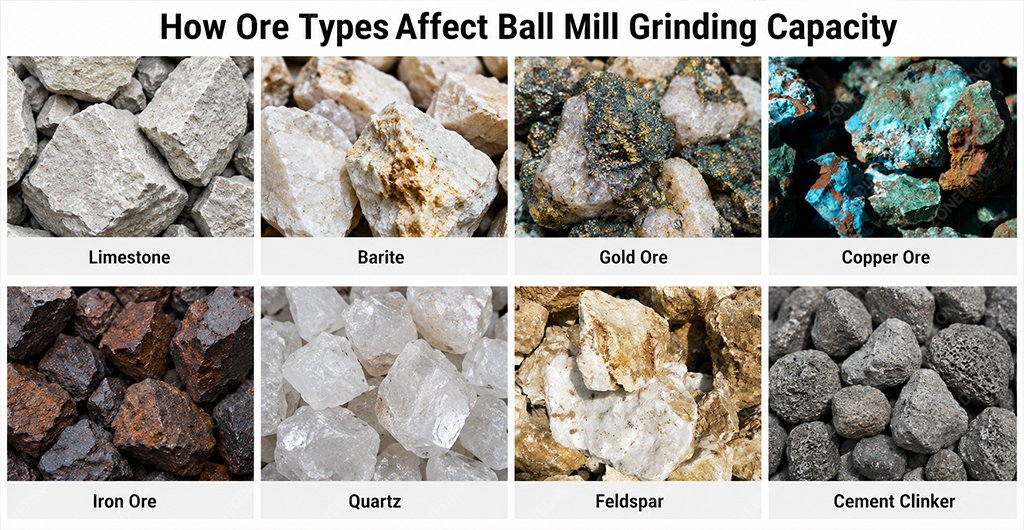
How Does Ore Type Change Grinding Capacity?
Different ores respond differently to impact and abrasion.
Mineral composition, fracture pattern, moisture, and internal structure all influence grindability.
Ore Type and Ball Mill Grinding Capacity
Ore or Material
Grinding Difficulty
Capacity Effect
Key Consideration
Limestone
Low to medium
Higher throughput
Moisture may affect dry grinding
Barite
Medium
Moderate throughput
Final powder size is important
Gold ore
Medium to high
Variable
Liberation size should guide P80
Copper ore
Medium to high
Variable
Hardness may change by ore zone
Iron ore
High in many deposits
Lower throughput
May require staged grinding
Quartz
High
Lower throughput
Wear and power demand increase
Feldspar
Medium
Moderate throughput
Product purity may affect liners
Cement clinker
Medium to high
Variable
Requires fine product control
For gold and copper ores, the required grind is usually connected to mineral liberation. Grinding finer than necessary wastes energy and may create downstream separation problems.
Hard quartz-rich feeds often need more energy. In some plants, improving upstream crushing may increase throughput more economically than installing a larger mill.
For barite and other industrial minerals, dry grinding is often selected when the final powder must remain dry. In that case, feeding, ventilation, collection, and classification also affect capacity.
How Do You Choose the Right Ball Mill Model?
The capacity result narrows the model range, but it does not automatically determine the final machine.
Engineers must also verify:
Mill diameter and length
Effective internal volume
Installed motor power
Discharge type
Ball charge
Liner design
Wet or dry configuration
Shipping limitations
Foundation requirements
Future expansion plans
Preliminary Capacity-to-Model Direction
This table is for early screening only. It is not a guaranteed selection chart.
Required Capacity
Preliminary Model Direction
Typical Application
Below 5 TPH
Small mill or batch mill
Lab, pilot, small industrial projects
5–10 TPH
Around Φ1500-class mill
Small mines and industrial minerals
10–20 TPH
Around Φ1800–Φ2100 class
Medium grinding duties
20–40 TPH
Around Φ2400 class
Medium concentrators
40–80 TPH
Around Φ2700–Φ3200 class
Larger continuous plants
Above 80 TPH
Large mill or parallel lines
High-capacity concentrators
A specific model may fall into different capacity ranges depending on ore hardness, feed size, and target P80.
For example, Φ2400×4500 may suit one 20 TPH application but fail to reach the same output on harder ore with finer grinding requirements.
One Large Mill or Two Smaller Mills?
Two smaller mills may provide more operating flexibility, easier maintenance scheduling, and partial production during downtime.
On the other hand, one larger mill can reduce equipment quantity and simplify plant layout.
The better choice depends on production risk, available space, capital budget, and future expansion.
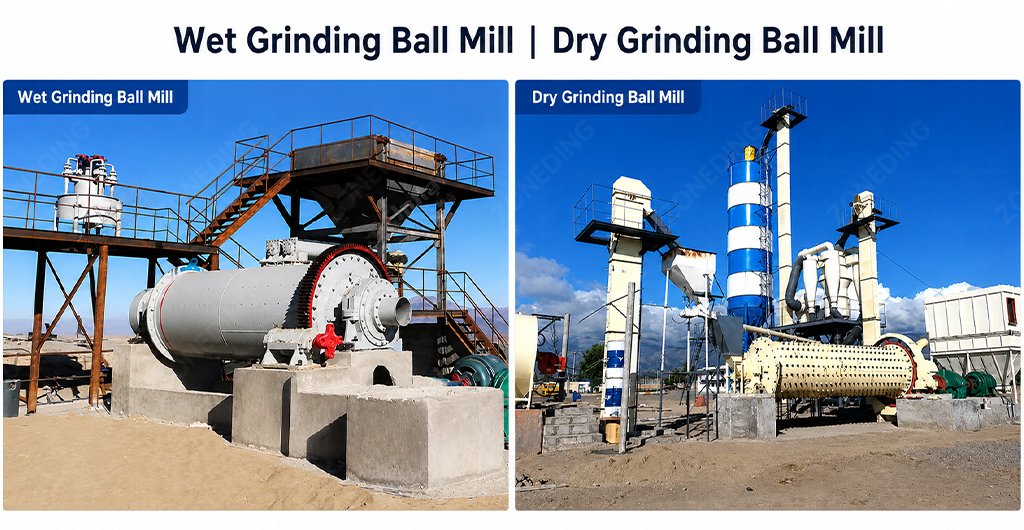
How Do Wet Grinding and Circuit Design Affect Capacity?
The same mill can perform differently in wet and dry operation.
Wet Grinding vs Dry Grinding in Ball Mill Operation
Item
Wet Grinding
Dry Grinding
Material transport
Usually easier
More dependent on airflow
Dust
Lower
Requires dust collection
Typical throughput
Often higher
Often lower for the same duty
Product handling
Produces slurry
Produces dry powder
Common applications
Metal ore concentrators
Barite, feldspar, cement, industrial minerals
Classification
Hydrocyclone or classifier
Air or mechanical classification
Wet grinding often supports better material movement through the mill. However, slurry density must be controlled because it affects media action and classification.
Dry grinding avoids dewatering, but it requires effective feeding, ventilation, sealing, and dust collection.
In an open circuit, material passes through the mill without being separated and returned. This setup is simpler, but product size distribution may be wider.
A closed circuit separates finished material from coarse particles. Fine product leaves the system, while coarse particles return to the mill.
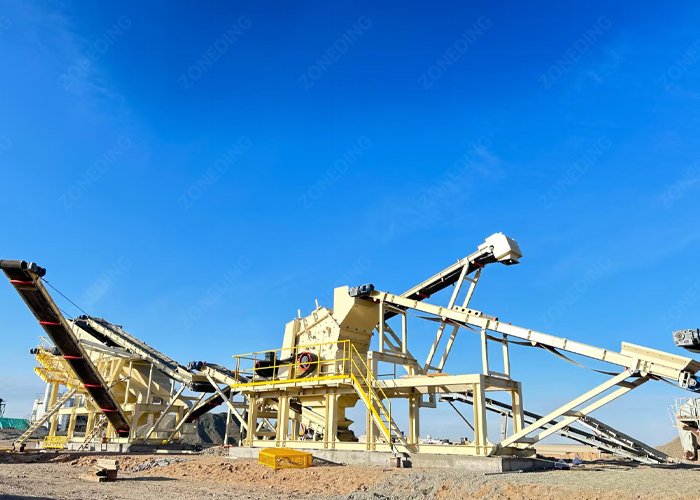
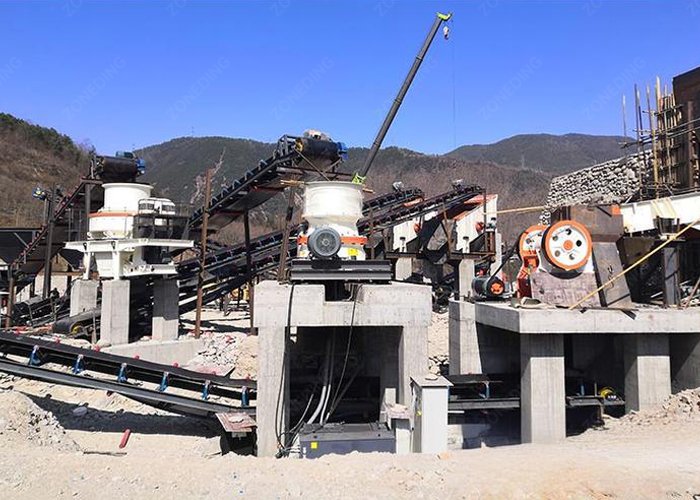
For complete plant planning, grinding should be evaluated with upstream crushing and downstream separation stages rather than as an isolated machine. ZONEDING’s mineral processing solutions show how grinding fits into a full process flow.
What Mistakes Cause Incorrect Capacity Estimates?
Even a correct formula can produce a poor result when the input data is weak.
Using Maximum Feed Size Instead of F80
Maximum size describes only the largest particles.
F80 better represents the complete feed distribution entering the mill.
Ignoring Ore Variability
A mill selected for the softest sample may become the plant bottleneck when harder ore enters the process.
Representative testing reduces this risk.
Treating Motor Power as Grinding Power
Not all motor power reaches the ore.
Drive losses, mechanical condition, and operating load must be considered before estimating effective grinding power.
Assuming Catalogue Capacity Is Guaranteed
Catalogue ranges are useful for preliminary screening.
However, they cannot replace project-specific sizing based on ore data, grinding duty, and circuit design.
Ignoring the Classifier
Poor classification can return too much fine material to the mill.
This increases circulating load without creating useful new production. Therefore, the mill and classifier must be sized as one circuit.
Grinding Finer Than Necessary
Finer grinding is not automatically better.
Excessive grinding increases energy consumption and may create slimes that reduce flotation, gravity separation, or filtration performance.
Ball Mill Capacity FAQ
How accurate is the Bond method for ball mill sizing?
It provides a strong basis for preliminary power and capacity calculations. However, correction factors, equipment geometry, circuit design, and representative ore testing are still needed before final selection.
Why does one ball mill have a wide capacity range?
The rated output changes with ore hardness, feed size, product fineness, grinding method, and classifier efficiency. Therefore, one model may produce very different capacities in different projects.
Does a larger motor always increase ball mill capacity?
Not automatically. The shell, drive, liner, media load, and circuit must be designed to use the added power effectively.
Should I use wet or dry grinding for my ore?
Wet grinding is common in mineral concentrators because it supports slurry transport and classification. Dry grinding is more suitable when the final product must remain dry or water use is unsuitable.
What information is needed for a ball mill quotation?
Provide ore type, required capacity, F80, maximum feed size, target P80, Bond Work Index, moisture, grinding method, project location, and laboratory reports if available.
Project Consultation
To calculate your ball mill capacity, send ZONEDING:
Ore type and mineral composition
Required capacity in TPH or TPD
Maximum feed size and F80
Required P80 or final mesh size
Bond Work Index, if available
Wet or dry grinding requirement
Existing crushing equipment
Downstream separation process
Project location
Planned operating hours per day
You will receive a preliminary capacity calculation, recommended ball mill model, motor power direction, grinding circuit proposal, equipment configuration, and quotation plan.
Final Thoughts
Ball mill capacity calculation is not a simple comparison between motor power and tons per hour.
A dependable result combines ore hardness, F80, P80, grinding energy, mill dimensions, operating efficiency, and circuit design. Each factor influences the amount of material the mill can process.
The calculation should first estimate the required energy. After that, engineers must verify whether the selected mill can provide the necessary power, volume, retention time, and classification performance.
Most importantly, do not select a model from catalogue capacity alone. A mill sized around representative ore data is more likely to maintain stable production and avoid expensive future modifications.
About ZONEDING
ZONEDING manufactures grinding, crushing, and mineral processing equipment for projects worldwide.
Our engineering team supports ore testing review, process design, equipment selection, manufacturing, installation, commissioning, training, and after-sales service.
A 100–200 TPH aggregate crushing plant cost can range from approximately USD 120,000 to USD 350,000 for a standard stationary line. However, a 200 TPH plant that includes tertiary crushing, manufactured sand production, washing, or sever...
Decades of experience in the mining sector reveal a common financial drain. Many crushing facilities struggle with high electricity bills and frequent machine failures. Facility owners often attempt to save money by purchasing cheap replacement pa...
Learn how grinding size affects lead and zinc recovery, mineral liberation, flotation performance, and operating costs. Discover practical methods to optimize your grinding circuit and maximize flotation efficiency.
ZONEDING helps gold plants improve output by controlling the full process, not just one reagent or one machine. A stable gold recovery rate comes from liberation control, classification stability, efficient separation, and strict loss ac...
We use cookies to ensure that we give you the best experience on our website. If you continue to use this site we will assume that you are happy with it.
Privacy Policy
Send us a message
We would love to hear from you
Submit your question and our team will respond to the email provided as soon as possible.
 Zoneding Machine