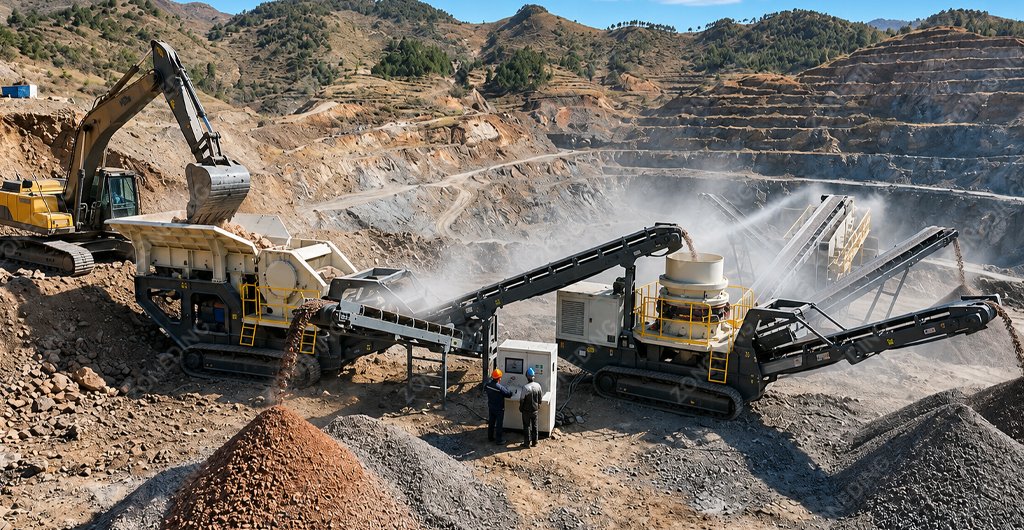
Chile’s copper mines, hard-rock quarries, and remote infrastructure projects do not all need the same mobile crusher plant. A circuit that prepares copper ore for a ball mill is different from one that produces several calibrated aggregate sizes. Altitude, desert dust, power supply, site access, and relocation frequency can also change the equipment package.
Therefore, selection should begin with the material, feed size, required product, and operating conditions—not only the advertised tons per hour. A reliable solution balances the primary crusher, secondary stage, screen, return circuit, power system, transport dimensions, and wear-parts plan.
What Makes Chile Copper and Hard-Rock Sites Different?
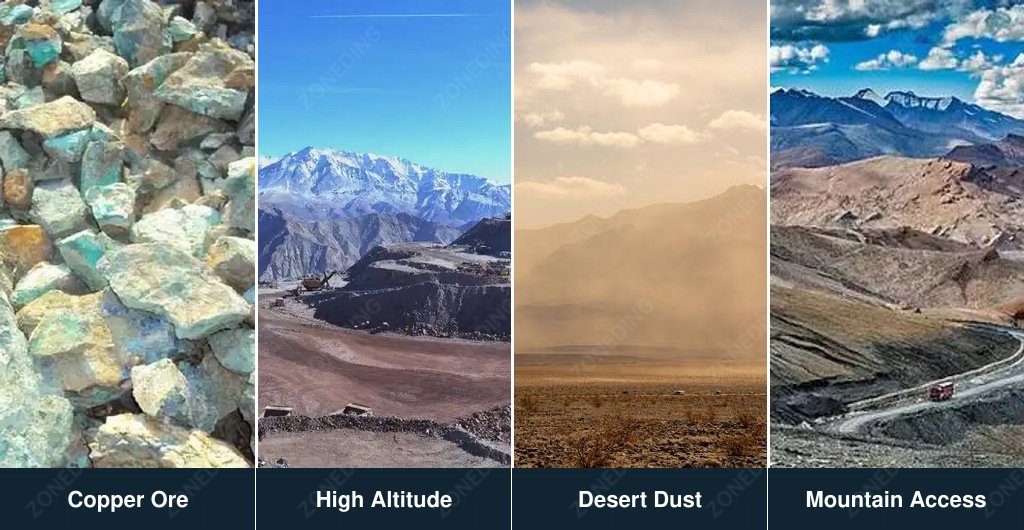
Chile combines several conditions that must be considered together. Copper projects may be located at high elevation, far from service centers, or in dry areas where dust reaches radiators, filters, sensors, bearings, and electrical cabinets. Mountain access can also limit transport width, turning radius, crane size, and road load.
Copper ore is not one uniform material. Its crushing behavior depends on strength, density, fracture pattern, moisture, clay, and the amount of quartz or other abrasive gangue. Granite, basalt, and andesite are generally suitable for compression crushing, while clean limestone may permit a different process.
Before selecting equipment, confirm:
Maximum feed size and normal feed distribution
Ore hardness, abrasiveness, moisture, clay, and natural fines
Required new-feed rate and daily operating hours
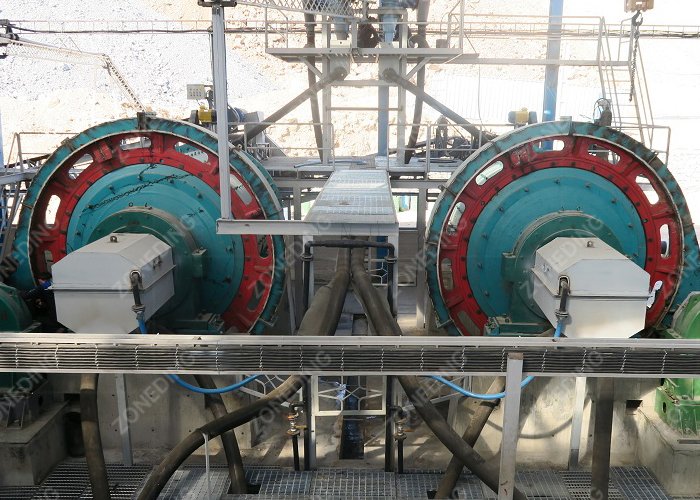
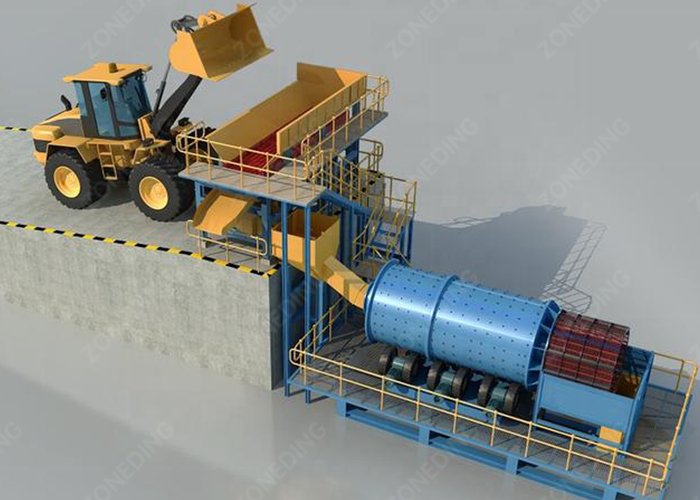
Whether the discharge feeds a ball mill or becomes saleable aggregate
Site altitude, temperature range, and dust exposure
Available voltage, transformer capacity, or diesel power
Which Mobile Crushing Circuit Fits the Feed and Final Product?
The correct circuit depends on what must leave the plant. Mine pre-crushing may need one controlled top size for stockpiling, conveying, or grinding. A commercial quarry may need four calibrated products. These duties require different screens, conveyors, and recirculating loads.
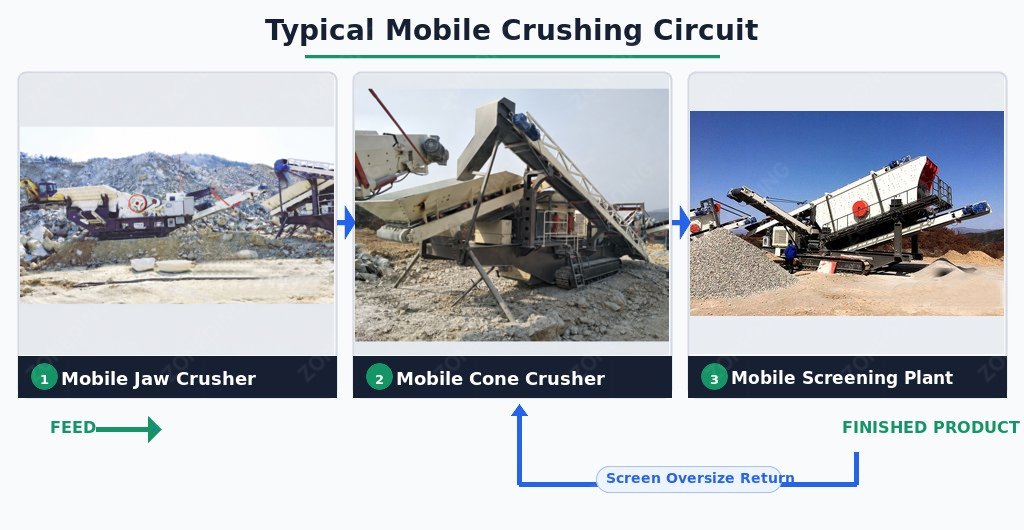
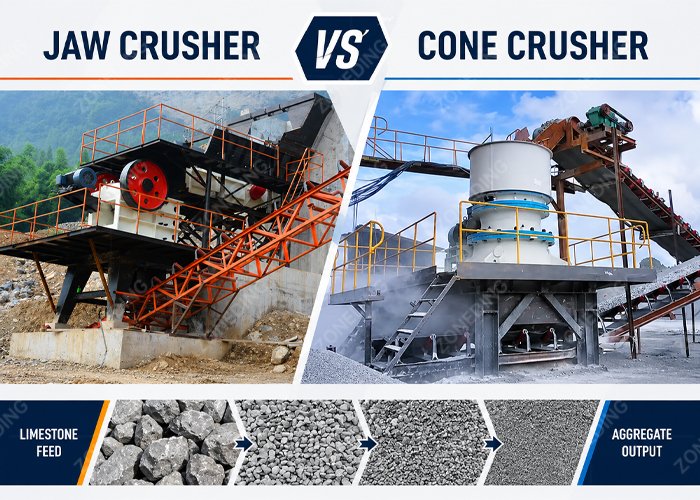
Mobile jaw crusher, cone crusher and closed-circuit screen for Chile hard rock
Large blasted rock normally enters a mobile jaw crusher. If its discharge already meets the ball mill’s permitted feed size, the jaw may be sufficient for coarse mine pre-crushing. However, it should not be presented as a complete fine-product solution.
Hard, abrasive, or quartz-rich feed usually needs a mobile cone crusher for secondary reduction. A buffer bin, surge hopper, or controlled transfer conveyor helps prevent sudden jaw-crusher surges from overloading the cone.
The basic hard-rock circuit is:
Run-of-mine rock → grizzly feeder → mobile jaw crusher → controlled transfer → mobile cone crusher → screen → finished product + oversize return
The screen removes material that meets specification. Oversize returns to the cone. This return load must be included when sizing the cone, screen, and conveyors because a line delivering 150 TPH may handle more than 150 TPH internally.
An impact crusher may be economical for clean, lower-abrasion limestone. It is usually not the first choice for quartz-rich copper ore, granite, or basalt because blow-bar and impact-plate consumption can raise the cost per ton.
What 100–300 TPH Configurations Are Practical?
Capacity should mean continuous new feed or saleable output under stated conditions. Feed grading, moisture, crusher setting, liner condition, screen efficiency, return load, and operating utilization all change actual production.
Required duty
Preliminary process
Typical output
Main design checks
100–150 TPH coarse mine feed
Mobile jaw, optional pre-screen
Ball-mill feed or stockpile material
Jaw opening, discharge top size, fines removal
100–150 TPH hard-rock aggregate
Mobile jaw → cone → screen
One or more aggregate sizes
Cone feed, CSS, screen area, return load
150–200 TPH copper pre-crushing
Heavy mobile jaw → buffer → cone
Controlled mill feed
Quartz content, power, liners, surge capacity
150–200 TPH commercial aggregate
Mobile jaw → cone → multi-deck screen → return
Several saleable products
Product split, screen efficiency, conveyors
200–300 TPH mine or quarry
Heavy jaw → surge control → hydraulic cone → screen → return
High-volume mill feed or aggregate
Balanced equipment, power, transport, access
Above 300 TPH or long-life project
Multiple mobile units, semi-mobile primary, or mobile–stationary combination
Project-specific
Mine life, civil cost, redundancy, expansion
Buyers selecting the secondary stage can use the mobile cone crusher price guide for Chile. It covers chambers, closed-side settings, liners, and closed-circuit capacity without duplicating this country-level guide.
The 100–200 TPH aggregate crushing plant cost guide compares representative limestone, granite, and aggregate-and-sand lines. Its stationary examples are not direct mobile quotations, but they show how process complexity changes cost.
How Do Altitude, Dust and Temperature Affect the Plant?
High-altitude and desert operation should be addressed before shipment. At elevation, lower air density can reduce diesel-engine and generator output. The required derating must follow the equipment manufacturer’s altitude curve; one fixed percentage should not be applied to every project. Electric motors, variable-frequency drives, transformers, and cabinets also need suitable cooling.
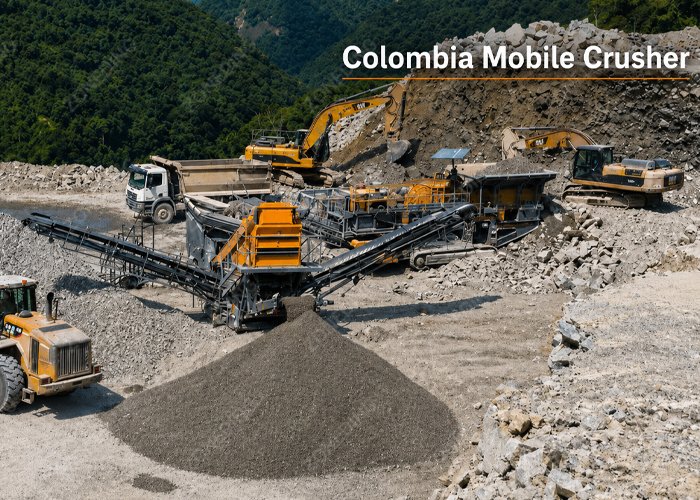
Copper ore, altitude, dust and access factors for mobile crusher selection in Chile
Dry, dusty conditions increase the need for:
High-capacity air filtration and service indicators
Easy radiator cleaning and adequate ventilation
Sealed or filtered electrical cabinets
Dust covers and suppression at transfer points
Accessible grease points and disciplined lubrication
Frequent inspection of filters, sensors, bearings, and coolers
Temperature range also affects hydraulic oil, lubrication, hoses, batteries, and starting procedures. Send the supplier the expected minimum and maximum temperatures, not only the country name.
Engineer Tip: A larger generator does not solve a blocked radiator, undersized cable, unstable voltage, or poorly ventilated cabinet. Power, cooling, filtration, and maintenance access must work as one system.
Tracked, Wheeled or Semi-Mobile: Which Fits the Project?
The chassis determines how the plant is positioned and moved; it does not determine which rock the crusher can process. Separate movement inside the site from transport between distant sites.
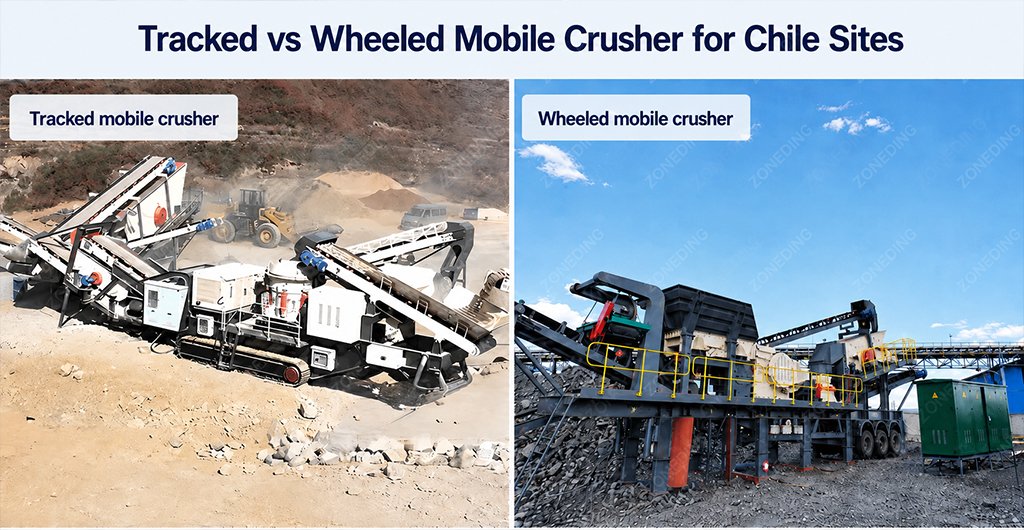
Tracked vs Wheeled Mobile Crusher for Chile Sites
Selection factor
Tracked mobile
Wheeled mobile
Semi-mobile or combined
Movement inside the mine
Best for regular short moves
Requires towing
Limited after installation
Uneven ground
Better adaptability
Firm pad preferred
Prepared pad required
Long-distance transport
Low-bed normally required
Easier when road rules permit
Transported in modules
Setup
Fast positioning
Leveling and support legs
More installation work
Investment
Usually higher
Usually lower
Depends on civil and modular scope
Best fit
Changing benches or mining face
Planned moves between prepared sites
Long-life, high-output projects
A tracked crusher can reposition itself around a working area, but it should not travel long distances on public roads under its own power. A low-bed trailer, permits, and a loading plan are still required.
A wheeled plant can be more economical when it stays on a prepared pad. Meanwhile, a permanent project above 300 TPH may obtain better availability from a semi-mobile primary stage or mobile primary crushing followed by stationary downstream equipment.
How Should Power, Logistics and Site Setup Be Planned?
Power selection must include feeders, conveyors, screens, hydraulics, dust suppression, controls, and starting loads. A grid-electric proposal should confirm voltage, frequency, transformer capacity, cable distance, starting method, and protection. Diesel-electric equipment offers more independence, but fuel, altitude derating, filtration, service access, and generator capacity become critical.
Logistics should be checked before the design is frozen. A Chile project may use Antofagasta, Mejillones, or another port according to the mine location, shipping route, cargo dimensions, and handling capability. No single port or shipping method fits every plant.
Confirm for each module:
Shipping dimensions, weight, lifting points, and removable parts
Container, flat-rack, breakbulk, or roll-on/roll-off suitability
Port crane, low-bed, axle-load, bridge, curve, and gradient limits
Turning, assembly, foundation, drainage, and maintenance space
Commissioning sequence and local lifting equipment
If frequent relocation is not required, compare the mobile package with a stone crushing plant. Mobile equipment can reduce foundation work and setup time, while a stationary or semi-mobile circuit may offer better long-term value at a permanent site.
What Data Is Needed for Wear Planning and an Accurate Quote?
Hard-rock plant cost is controlled by cost per ton, not only purchase price. Uneven cone feeding can wear one side of the liner faster. Oversize concentrates force near the chamber top, while an unnecessarily tight closed-side setting may increase power, return load, and wear without increasing saleable output.
A project-specific initial package may include jaw and cheek plates, matched mantle and concave sets, screen meshes, conveyor rollers, filters, hoses, seals, sensors, and replacement tools. Quantities should reflect operating hours, material abrasiveness, delivery time, and maintenance strategy.
Information to send
Why it matters
Material, photographs, and test data
Indicates strength, abrasiveness, and variability
Maximum feed and size distribution
Defines feeder, jaw, cone, and screen duty
Required new feed or saleable output
Prevents TPH misunderstanding
Final size or ball-mill feed target
Defines stages, CSS, and screening
Product sizes and percentage split
Determines screen decks and conveyors
Moisture, clay, and natural fines
Affects feeding and screen efficiency
Operating hours
Supports wear, power, and maintenance planning
Altitude, temperature, and power
Defines engines, generators, cooling, and controls
Layout and relocation frequency
Guides chassis and transfer design
Port and inland access limits
Supports packing and transport planning
Required commissioning date
Supports production, shipping, and installation scheduling
Project Consultation: Send ZONEDING the material data, feed grading, output, final product, altitude, power, layout, and logistics limits. The engineering team can then prepare a preliminary process flow, equipment list, power estimate, layout direction, transport plan, spares recommendation, and itemized quotation.
Chile Mobile Crusher Plant FAQ
Which mobile crusher is best for copper ore in Chile?
Large run-of-mine copper ore normally needs a mobile jaw crusher. Add a mobile cone crusher when the ore is hard, abrasive, or quartz-rich and a smaller controlled product is required. Final selection depends on feed size, hardness, capacity, and whether the discharge goes to a ball mill or an aggregate screen.
Can one mobile jaw crusher feed a ball mill directly?
Yes, but only when the jaw discharge meets the ball mill’s permitted feed size. If too much oversize remains, add a cone crusher and control screen. Use the mill-feed requirement, not only the jaw’s nominal discharge setting.
Is a tracked mobile crusher always better for a Chile mine?
No. A tracked plant is useful for frequent movement inside a mine or across uneven ground. A wheeled plant may cost less on a prepared pad. For long-distance transport, a tracked unit still normally needs a low-bed trailer.
How does high altitude change the plant design?
Altitude can reduce engine and generator output and affect cooling. Check the manufacturer’s derating curve, expected temperature, electrical load, radiator capacity, filtration, cabinet cooling, and lubrication conditions. Do not apply one correction to every machine.
What is needed for an accurate Chile mobile crusher quotation?
Provide material data, maximum feed, size distribution, continuous output, final sizes, moisture, clay, operating hours, altitude, temperature, power, relocation frequency, port, inland limits, and commissioning date. Also state whether the request covers one crusher or a complete closed circuit.
Key Takeaways
Ball-mill feed and commercial aggregate require different circuits.
Use jaw crushing for primary reduction and cone crushing for hard secondary duty.
Size the screen and conveyors for circulating load, not only final output.
Treat altitude, dust, power, transport, and maintenance as design inputs.
Use tracked equipment for movement inside the site, not long road travel.
Compare mobile, semi-mobile, and stationary options for permanent or large projects.
About ZONEDING
ZONEDING designs and manufactures crushing, screening, and mineral-processing equipment for mining, quarry, and aggregate projects. Support covers process design, equipment selection, manufacturing, shipping guidance, commissioning support, training, and spare-parts planning. Each Chile project should be configured from actual material, product, site, power, and logistics data rather than a standard country package.
Limestone is one of the easiest and most profitable materials to crush. It is widely used for road construction, concrete production, asphalt plants, cement manufacturing, and infrastructure projects. However, many buyers ask the same question bef...
The real ball mill cost is not the machine quote alone. In most plants, the 5-year total is around 2.5x to 4x of the purchase value after wear, power, downtime, and recovery impact are included. This guide shows how to calculate bal...
Anti-clogging screening equipment provides the most reliable way to handle sticky materials in 2026. Traditional vibrating screens often fail when clay moisture exceeds 10%. This leads to frequent downtime and high cleaning costs. Our technic...
We use cookies to ensure that we give you the best experience on our website. If you continue to use this site we will assume that you are happy with it.
Privacy Policy
Send us a message
We would love to hear from you
Submit your question and our team will respond to the email provided as soon as possible.
 Zoneding Machine