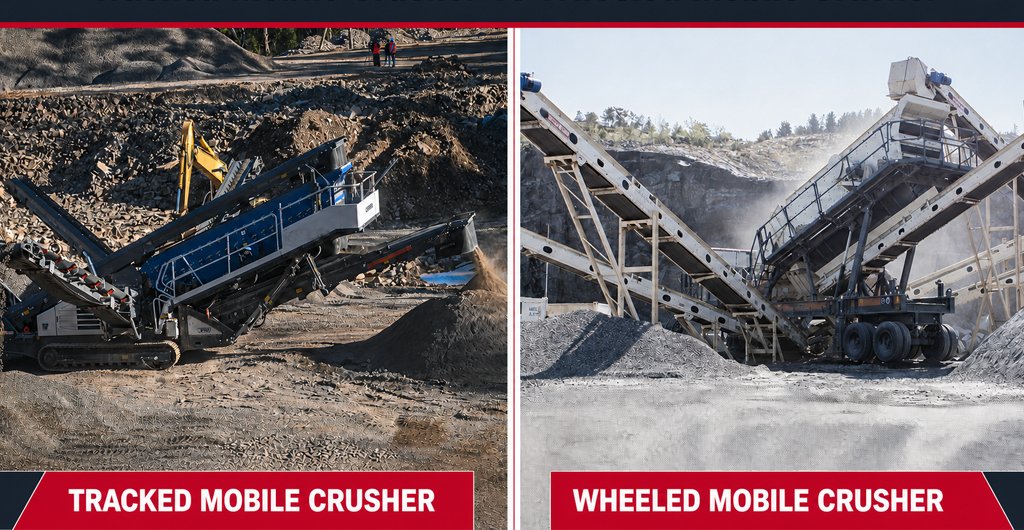
Choosing between a tracked and wheeled mobile crusher is not mainly about crushing capacity. The real difference is how the plant moves, how often it relocates, what transport equipment it requires, and how much site preparation it needs.
A tracked crusher usually performs better when it must move regularly inside a quarry, mine, or construction site. In contrast, a wheeled crusher is often more practical when a contractor transports the plant between separate projects using public roads.
Neither design is automatically better. The right choice depends on terrain, relocation distance, operating hours, transport limits, maintenance resources, and total cost per ton.
What Are the Key Differences Between Tracked and Wheeled Mobile Crushers?
Both machines can carry a jaw crusher, cone crusher, impact crusher, screen, feeder, and conveyor system. Therefore, the chassis does not determine which rock the plant can crush.
The main difference is the mobility system.
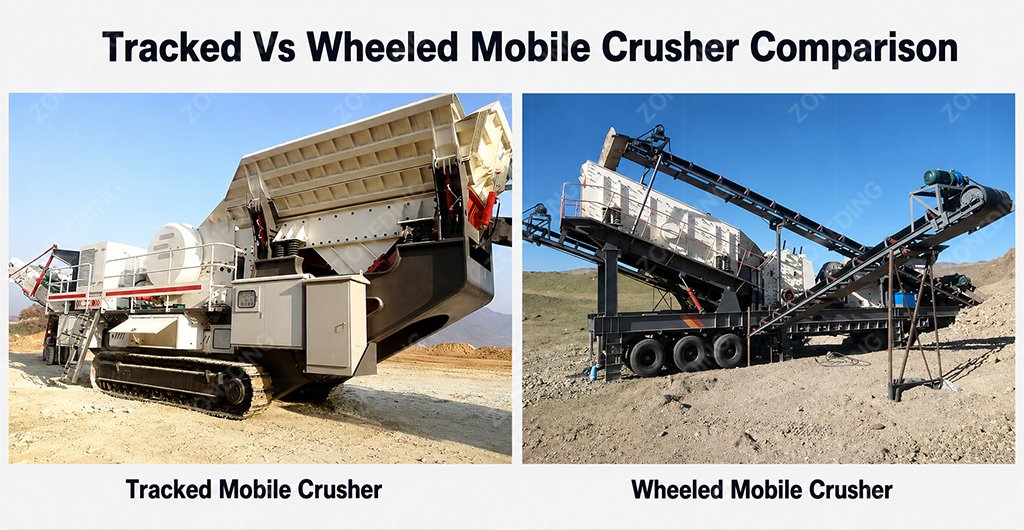
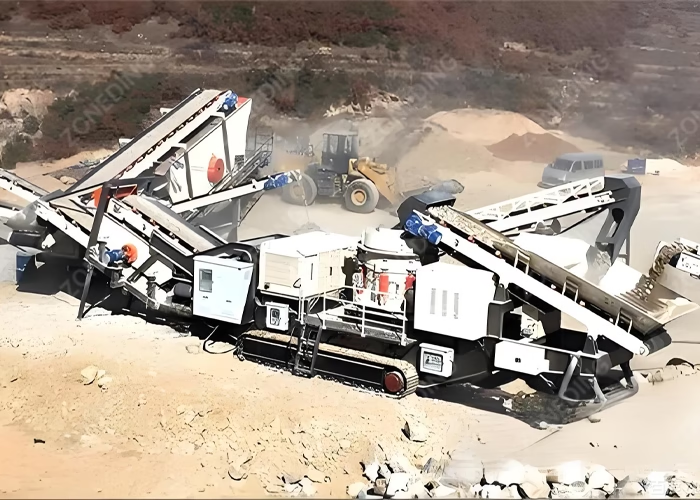
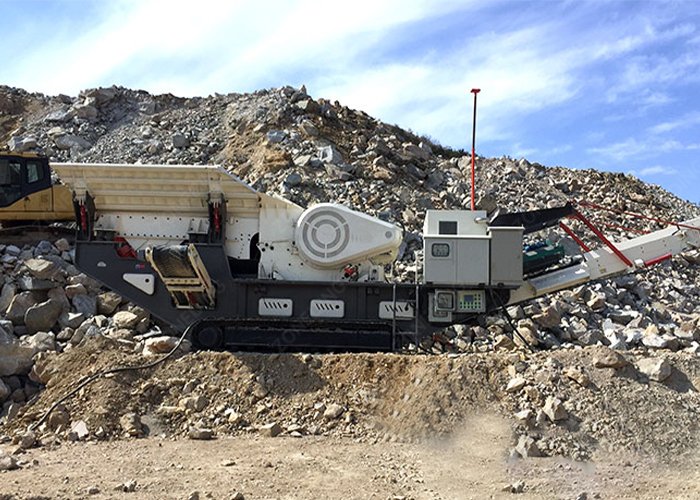
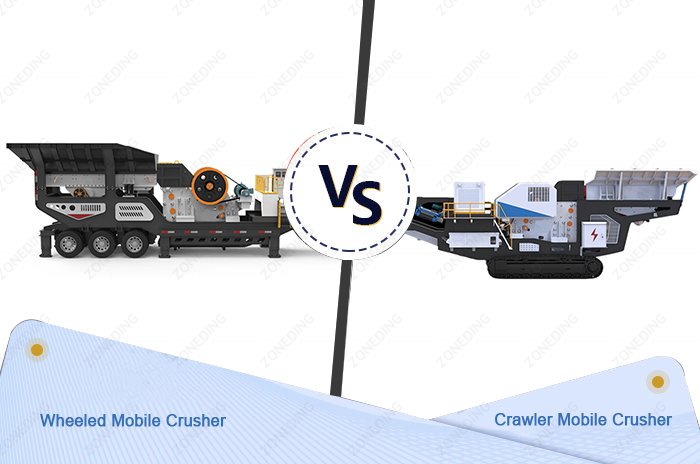
A tracked mobile crusher uses a self-propelled crawler undercarriage. Hydraulic drives allow the machine to reposition itself around the working area without being pulled by a tractor.
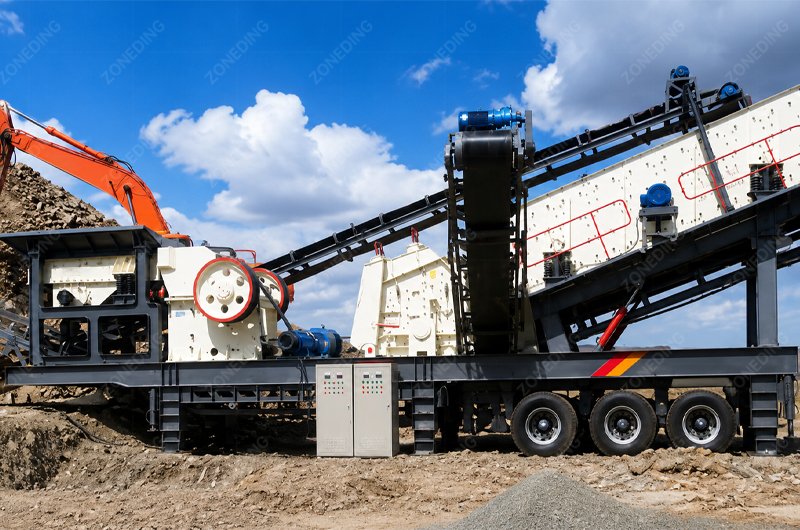
A wheeled mobile crusher is mounted on a tire-equipped trailer chassis. It normally uses support legs during operation and requires a tractor or truck for relocation.
Tracked mobile crusher compared with wheeled mobile crusher
Selection factor
Tracked mobile crusher
Wheeled mobile crusher
Movement inside the site
Self-propelled
Requires towing
Difficult ground
Better adaptability
Requires firmer ground
Long-distance transport
Usually needs a low-bed trailer
Generally easier to tow
Setup at a new site
Fast positioning
Requires leveling and support legs
Purchase cost
Usually higher
Usually lower
Chassis maintenance
More complex
Simpler
Best application
Moving quarry or mining face
Multiple projects with road access
Site preparation
Limited preparation
Prepared operating surface preferred
A tracked machine should not be selected only because it looks more advanced. Its crawler system adds hydraulic components, rollers, tracks, and other maintenance points.
Likewise, a wheeled crusher is not always the cheaper solution. Poor access roads, soft ground, steep slopes, or frequent movement inside the site can increase towing and preparation costs.
The best choice is the one that matches the plant’s real movement pattern.
Which Chassis Fits Your Terrain and Relocation Pattern?
Before comparing prices, divide relocation into two categories:
Movement inside the project site
Transport between separate project locations
These two types of movement require different solutions.
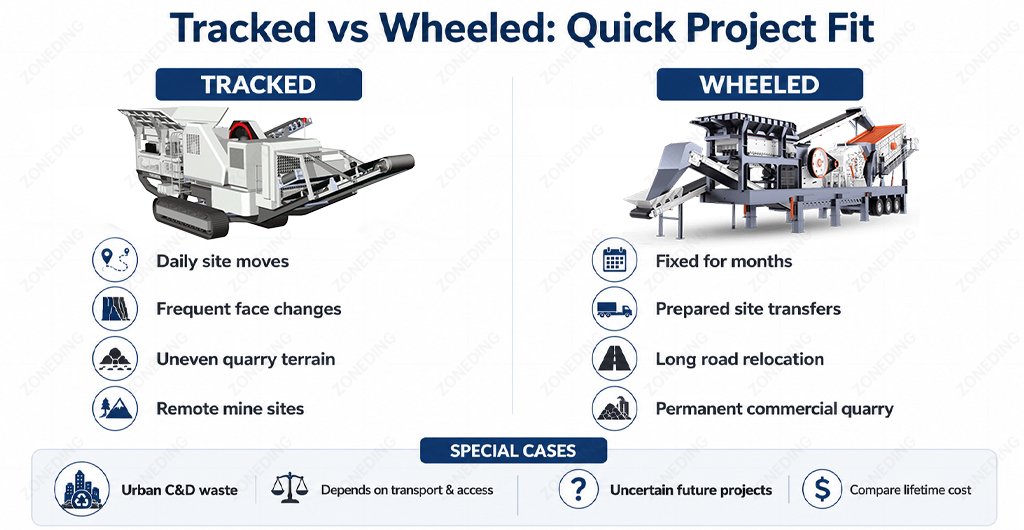
Choose a tracked mobile crusher when:
Tracked Mobile Crusher
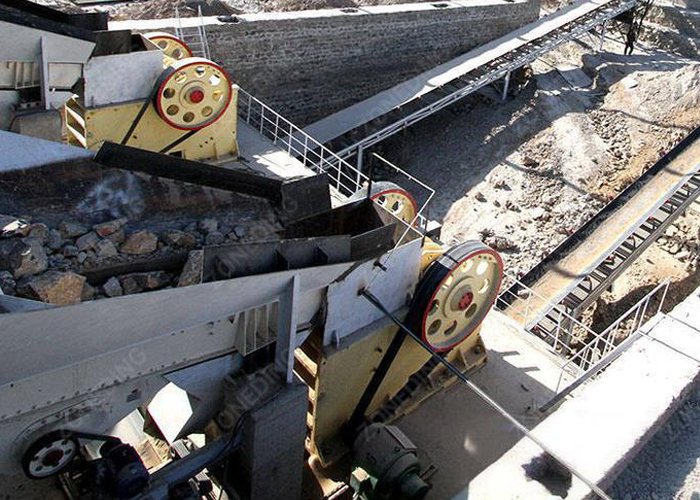
Crawler-mounted jaw crusher
The working face changes frequently.
The machine must move between quarry benches.
Ground conditions are uneven or unprepared.
The project is located in mountainous terrain.
Internal haulage distance changes as excavation progresses.
A towing vehicle is not always available.
Fast repositioning is more important than highway transport.
Tracked crushers are especially useful in open-pit mining and progressive quarry operations. Moving the crusher closer to the material can reduce the distance traveled by dump trucks.
However, the crawler system is designed mainly for movement inside the working area. It is not intended for long-distance travel on public roads. A low-bed trailer is normally required when moving the machine between distant locations.
The crusher remains in one position for weeks or months.
Projects are connected by usable roads.
A tractor is available for relocation.
Long-distance transport occurs more often than daily site movement.
Lower chassis cost and simpler maintenance are priorities.
The project is a commercial quarry or road aggregate operation.
A wheeled plant can be a practical choice for contractors working at several prepared sites. Once production at one location is completed, the plant can be folded, connected to a tractor, and transferred to the next project.
For example, a road contractor may keep the plant in one location during each project phase and move it only when the next road section begins. In this situation, a wheeled crusher may provide lower total ownership cost.
The recently optimized Colombia mobile crusher guide explains this type of multi-project road and quarry application in more detail.
How Do Transport and Setup Requirements Differ?
The word “mobile” can be misleading. A mobile crusher may still be oversized or overweight for normal road transportation.
Before selecting either chassis, buyers should check:
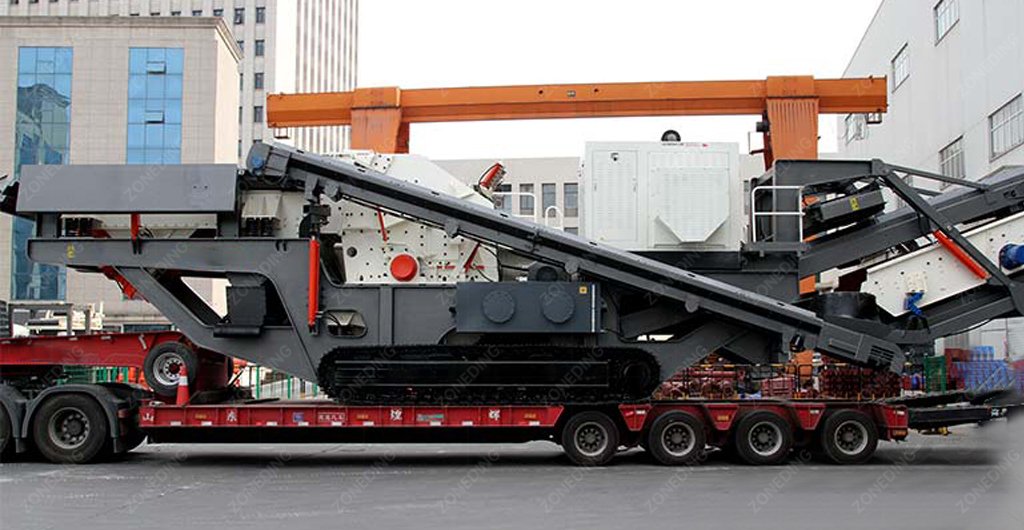
Shipment and transport of mobile crusher
Transport length
Transport width
Transport height
Total machine weight
Axle configuration
Ground clearance
Turning radius
Lifting points
Removable components
Local road and bridge restrictions
A tracked crusher often requires a low-bed trailer for intercity or international inland transport. The buyer may also need loading ramps, a crane, or other support equipment.
Its total logistics cost can include:
Low-bed trailer rental
Loading and unloading
Oversized-load permits
Escort vehicles
Road surveys
Port handling
Reassembly of removed components
A wheeled crusher is easier to tow between accessible sites, but that does not mean it can always travel directly on public roads. Its dimensions, weight, brakes, lighting, axle loads, and local registration requirements must still be checked.
Setup requirements
A tracked unit can usually position itself quickly. Nevertheless, the operating area should still be stable enough to support the machine and prevent excessive frame movement.
A wheeled unit normally requires:
A level and compacted surface
Space for the towing vehicle
Support-leg deployment
Chassis leveling
Conveyor unfolding
Electrical or diesel power connections
Safe stockpile areas
Poor leveling can cause uneven material flow, conveyor misalignment, screen inefficiency, and additional chassis stress.
The fastest machine to relocate is not always the fastest machine to restart. Buyers should compare the complete sequence:
Stop production → fold conveyors → prepare transport → relocate → unload → level → reconnect → restart production
This total downtime is more useful than comparing travel speed alone.
Which Option Has the Lower Lifetime Cost?
A wheeled mobile crusher usually has a lower initial chassis cost. However, purchase price alone cannot determine the better investment.
The correct comparison is total cost of ownership.
Cost category
Tracked crusher
Wheeled crusher
Initial chassis cost
Generally higher
Generally lower
Internal site movement
Lower support requirement
Requires towing
Long-distance transport
Low-bed trailer normally required
Usually easier
Undercarriage maintenance
Higher
Lower
Site preparation
Usually lower
Usually higher
Hydraulic maintenance
More complex
Simpler
Relocation flexibility
Strong inside the site
Strong between sites
Long-term cost advantage
Moving mines and quarries
Prepared or semi-fixed sites
A tracked crusher may justify its higher initial price when it reduces internal truck movement. If the mining face changes regularly, positioning the crusher closer to the material may reduce fuel use and haulage time.
A wheeled unit can be more economical when the crusher stays in one prepared area. In that situation, paying for crawler mobility provides little operating benefit.
Calculate relocation cost instead of guessing
Use this basic formula:
Annual relocation cost = Number of relocations × Cost per relocation
Cost per relocation may include:
Tractor or low-bed trailer
Crane or loading ramps
Permits
Labor
Setup and dismantling
Production downtime
Road preparation
Then calculate:
Relocation cost per ton = Annual relocation cost ÷ Annual saleable output
This method may reveal that a cheaper machine creates higher transport costs. It may also show that an expensive tracked chassis provides little value when the plant rarely moves.
Maintenance differences
Tracked undercarriages require inspection of:
Track chains
Rollers
Idlers
Sprockets
Track tension
Hydraulic travel motors
Hoses and seals
Wheeled chassis require attention to:
Tires
Axles
Brakes
Suspension
Support legs
Towing connections
Trailer lighting
Both systems also require normal crusher, feeder, conveyor, hydraulic, lubrication, and electrical maintenance.
The chassis affects mobility, setup, and maintenance. It does not directly decide whether the plant should use a jaw, cone, or impact crusher.
Material properties determine the crushing circuit.
Material
Recommended primary crusher
Recommended secondary crusher
Granite
Jaw crusher
Cone crusher
Basalt
Jaw crusher
Cone crusher
River stone
Jaw crusher
Cone crusher or VSI for shaping
Limestone
Jaw crusher
Impact crusher
Recycled concrete
Jaw or impact crusher
Impact crusher
Copper ore
Jaw crusher
Cone crusher
For example, both tracked and wheeled machines can process granite. The important question is whether the plant uses a suitable jaw-and-cone crushing circuit.
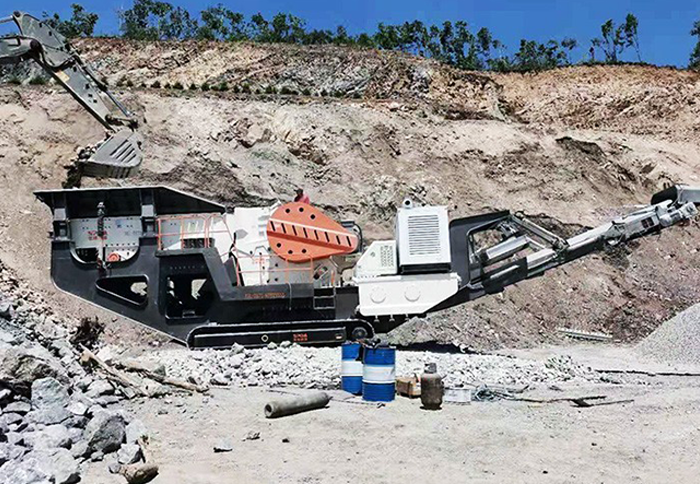
Tracked jaw crusher for a moving mine face
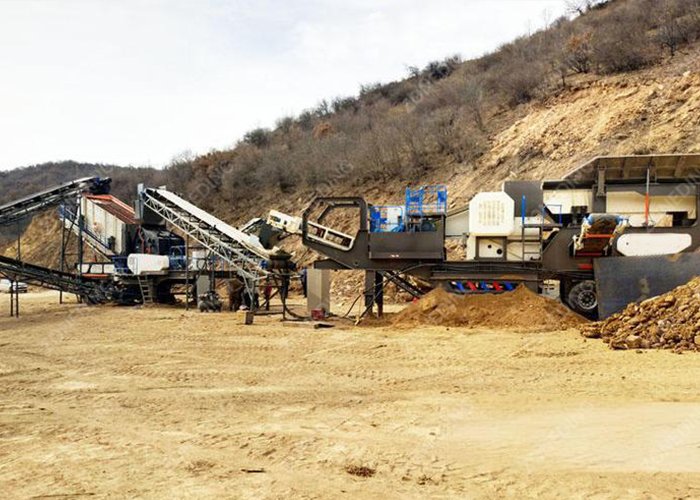
Wheeled jaw and impact plant for a limestone quarry
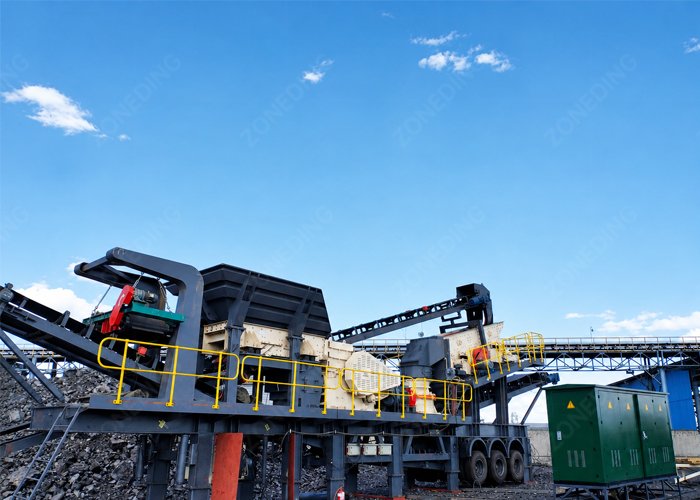
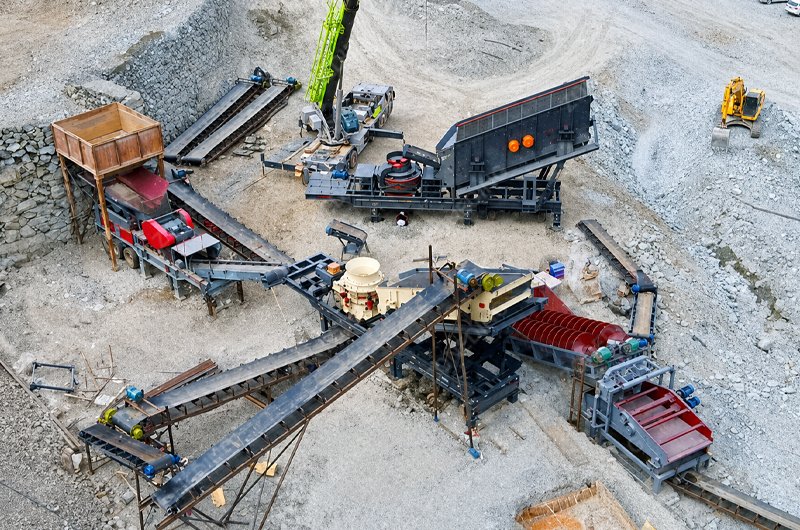
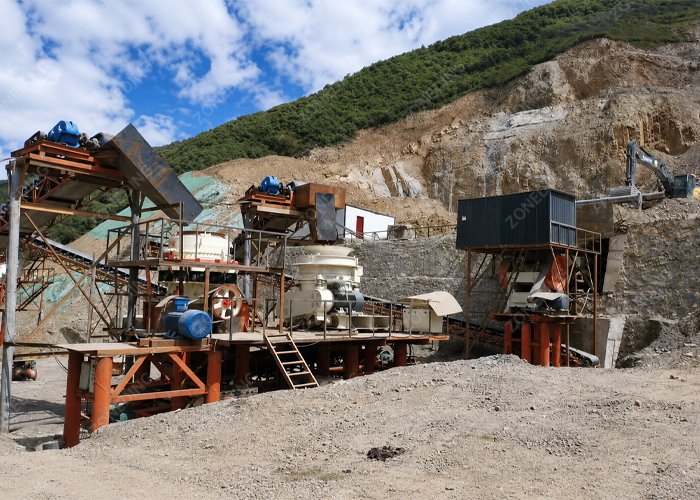
Wheeled jaw, cone, and screen for a prepared granite quarry
Similarly, installing an impact crusher on a tracked chassis does not make it economical for highly abrasive granite. The impact crusher may still consume blow bars quickly.
Buyers should make two separate decisions:
Select the crushing process according to the material and finished product.
Select the chassis according to terrain and relocation requirements.
Combining these decisions produces configurations such as:
Tracked jaw crusher for a moving mine face
Tracked jaw and cone plant for mountainous hard-rock mining
Wheeled jaw and impact plant for a limestone quarry
Wheeled impact plant for road aggregate and recycling
Wheeled jaw, cone, and screen for a prepared granite quarry
A tracked cone crusher can be reviewed through ZONEDING’s tracked cone crusher page. For limestone or recycling projects, the mobile impact crusher provides a different crushing approach.
The chassis and crusher type must be selected together, but they solve different problems.
How Can You Make the Final Tracked vs Wheeled Decision?
Use the following decision matrix before requesting a quotation.
Tracked vs Wheeled: Recommended Starting Direction by Project Condition
Project condition
Recommended starting direction
Crusher moves inside the site every day
Tracked
Working face changes several times per month
Tracked
Uneven mountain quarry
Tracked
Remote mine without reliable towing support
Tracked
Plant remains fixed for several months
Wheeled
Frequent transport between prepared sites
Wheeled
Long-distance road relocation
Wheeled
Permanent commercial quarry
Wheeled or stationary
Construction waste at changing urban sites
Depends on transport and site access
Uncertain future project locations
Compare both using lifetime cost
This table provides a starting point, not a final equipment recommendation.
Before making the decision, answer these questions:
How often will the crusher move inside the operating area?
How often will it move between different projects?
What is the average relocation distance?
Are the access roads suitable for towing?
Is the operating ground level and compacted?
Is a tractor or low-bed trailer available locally?
What are the transport width and weight limits?
How much production time is lost during each relocation?
Are crawler undercarriage parts available?
Is future expansion likely?
Information required for an accurate recommendation
Send ZONEDING:
Material type
Maximum feed size
Required capacity
Finished product sizes
Project location
Terrain photographs
Distance between working areas
Annual relocation frequency
Available towing equipment
Available power
Required operating hours
ZONEDING can then compare tracked and wheeled configurations based on the actual project rather than recommending the more expensive option automatically.
Is a tracked mobile crusher always more expensive?
A tracked crusher generally has a higher purchase price because the crawler undercarriage and hydraulic travel system are more complex. However, it may lower internal haulage and relocation costs when the working face moves frequently.
Can a wheeled mobile crusher operate in a mine?
Yes. A wheeled plant can operate effectively in a mine with prepared roads, a stable operating surface, and a relatively fixed crushing location. A tracked plant becomes more attractive when the machine must follow the mining face.
Which chassis is better for long-distance transport?
A wheeled crusher is normally easier to relocate between accessible projects. A tracked crusher usually requires a low-bed trailer for long-distance transport. Actual dimensions and local regulations must still be checked for both types.
Does a tracked crusher produce more tons per hour?
Not automatically. Capacity depends mainly on the crusher model, feed condition, crusher setting, screen efficiency, and circuit balance. The tracked chassis improves mobility, not the crushing chamber’s rated capacity.
What information should I provide before requesting a quote?
Provide the raw material, feed size, capacity, finished sizes, terrain, project location, relocation frequency, transport distance, power supply, and operating schedule. These details allow the supplier to compare both chassis types accurately.
Fifty years of experience across global mining sites reveals that plant managers frequently struggle with high costs and machine failures. Profitability depends on the selection of the correct mining crushing equipment. Understanding hidden wear p...
As the global transition to renewable energy and electric vehicles accelerates, lithium has emerged as the 'white gold' of the 21st century. However, bridging the gap between raw mineral extraction and high-purity battery-grade chemicals is a comp...
Choosing mobile crushing equipment determines project setup speed and long-term operating costs. Many buyers only look at the transport method. They ignore the hidden costs of site preparation and energy consumption. This guide shows the real diff...
We use cookies to ensure that we give you the best experience on our website. If you continue to use this site we will assume that you are happy with it.
Privacy Policy
Send us a message
We would love to hear from you
Submit your question and our team will respond to the email provided as soon as possible.
 Zoneding Machine