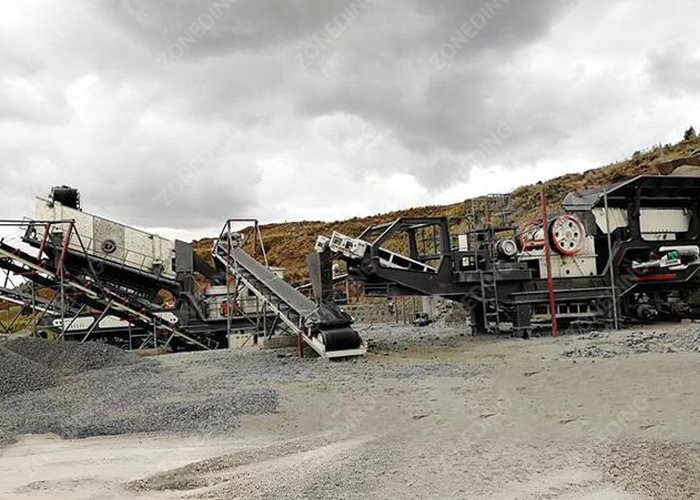
A mobile crusher plant in Colombia must do more than move between job sites. It must match the raw material, produce the required aggregate sizes, fit local transport conditions, and maintain stable output in demanding quarry or road projects.
River stone, limestone, granite, recycled concrete, and mixed quarry rock require different crushing methods. As a result, selecting a mobile crusher only by its advertised capacity can lead to excessive wear, poor aggregate shape, or an unbalanced production line.
This guide explains how to configure a 50–200 TPH mobile crushing plant for Colombian road construction, quarrying, aggregate production, and recycling projects.
Why Does Mobile Crushing Fit Colombia’s Project Conditions?
A fixed crushing plant remains suitable for a long-term quarry with stable reserves and continuous production. However, many road contractors, temporary quarry operators, and aggregate suppliers need greater flexibility.
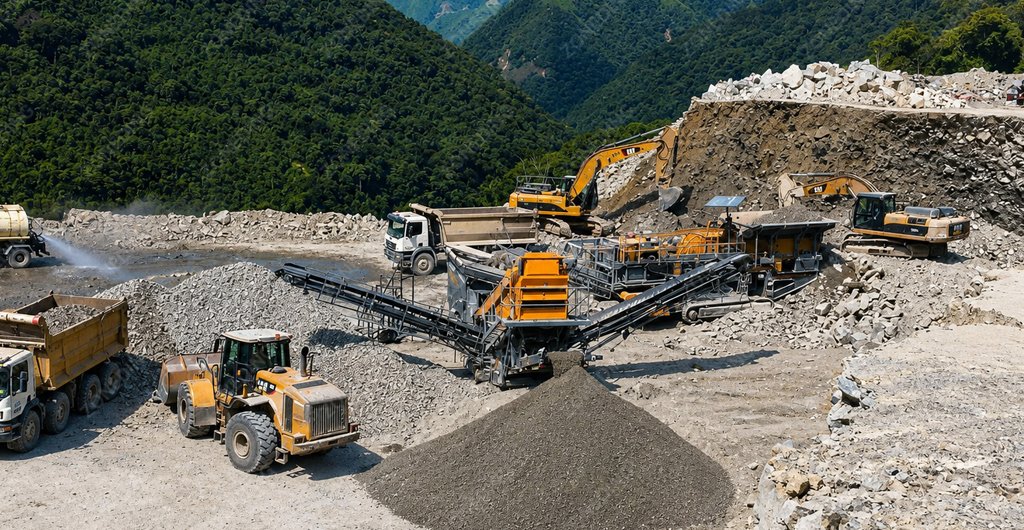
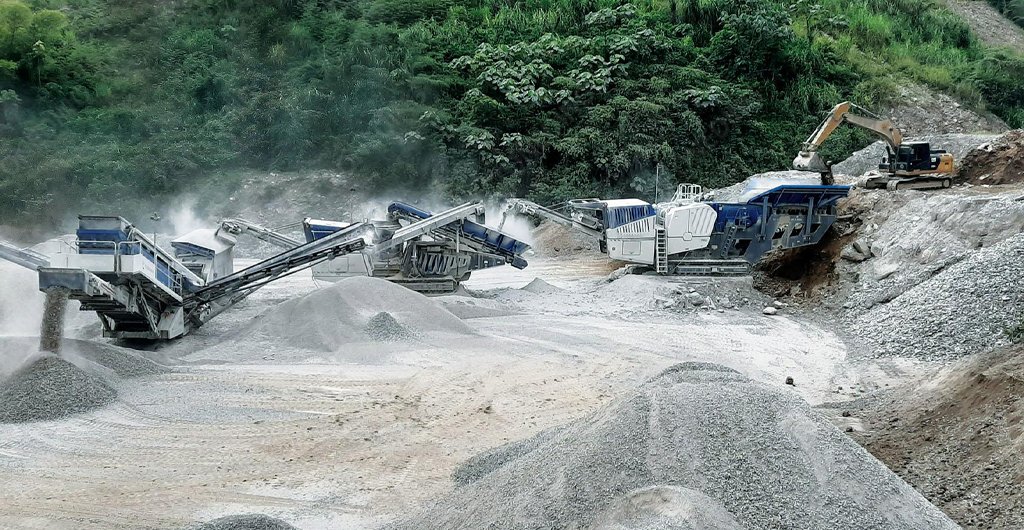
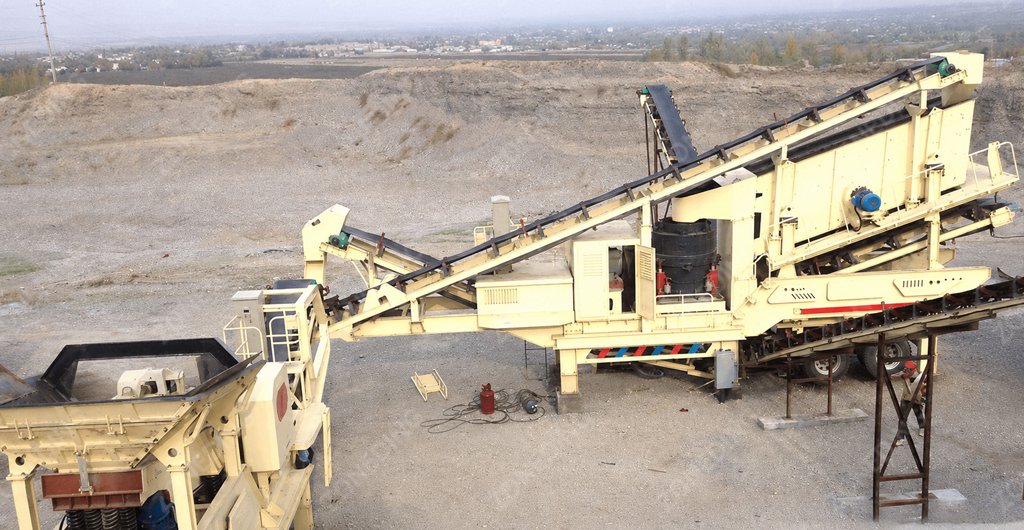
A mobile crusher plant places feeding, crushing, conveying, and sometimes screening equipment on a movable chassis. It can be installed closer to the quarry face or raw material stockpile.
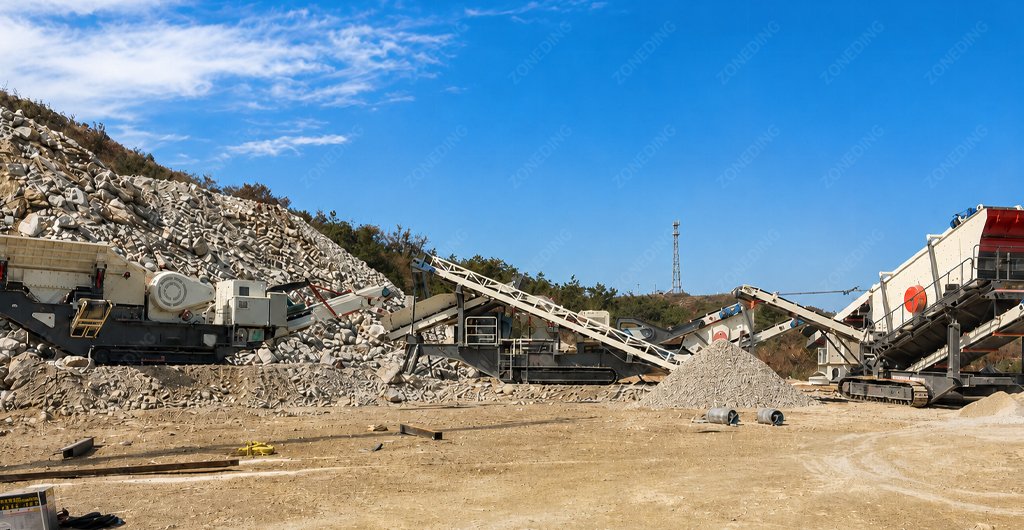
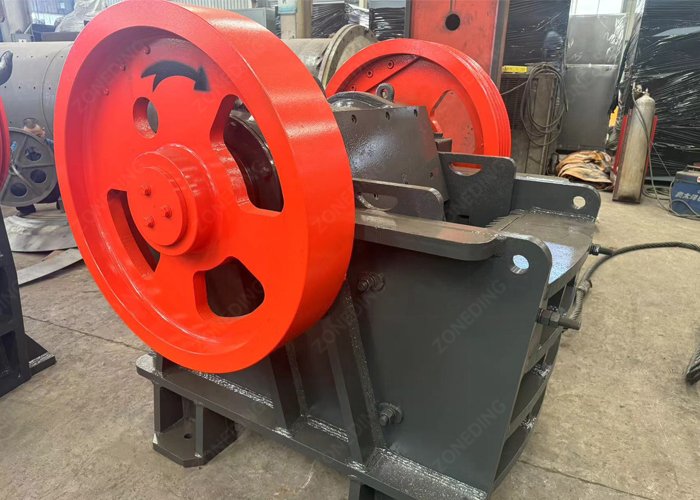
Wheeled mobile crusher plant for road and quarry aggregate production
This arrangement can reduce the distance that dump trucks carry unprocessed rock. It also avoids some of the foundations and permanent structures required by a conventional stationary plant.
Mobile equipment is particularly useful when:
A contractor operates at several locations.
The road project advances along a long route.
Quarry reserves are divided across separate working areas.
Production must begin before permanent civil works are completed.
Construction waste needs to be processed near a demolition site.
The plant may be relocated after one project is completed.
Mobility does not automatically mean lower cost. A poorly selected mobile crusher may consume more fuel, require frequent wear-part replacement, or create a bottleneck at the screen.
Therefore, the decision should begin with material testing, feed size, finished aggregate specifications, annual operating hours, and expected relocation frequency.
What Materials Are Commonly Crushed in Colombia?
Crusher selection depends more on the material than on the country. Two quarries in Colombia may require completely different plants because their rock hardness, abrasiveness, moisture, and clay content are different.
The following materials represent common project conditions that mobile crushing equipment may encounter.
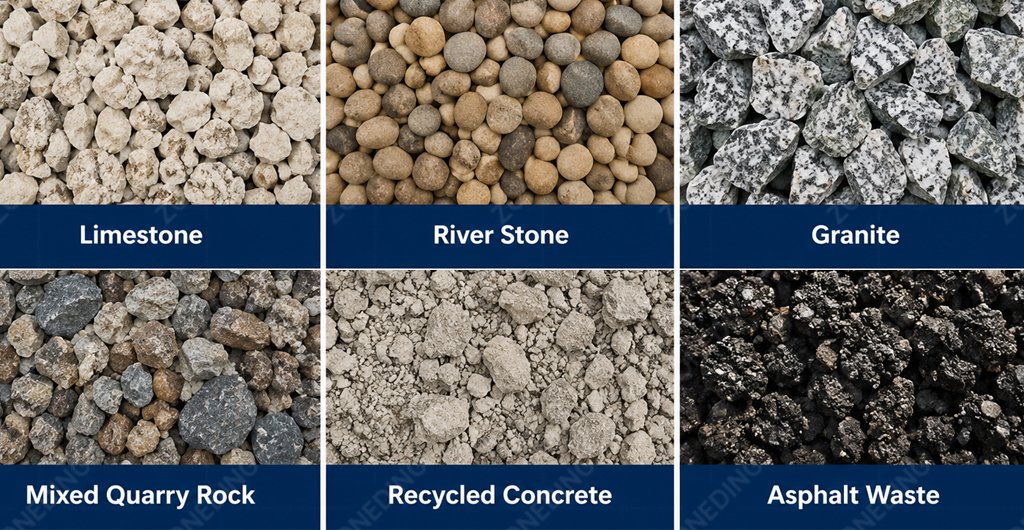
Limestone river stone granite and recycled concrete for mobile crushing
Material
Main concern
Preferred secondary crusher
Typical application
Limestone
Fines and moisture
Impact crusher
Road base, concrete aggregate and cement
River stone
Hardness and abrasiveness
Cone crusher
Concrete and asphalt aggregate
Granite
High compressive strength
Cone crusher
High-strength construction aggregate
Mixed quarry rock
Variable hardness
Test before selection
Road and building aggregate
Recycled concrete
Steel and mixed debris
Impact crusher
Road sub-base and backfill
Asphalt waste
Sticky material and variable feed
Impact crusher
Pavement recycling
Limestone is generally easier to crush and can produce well-shaped aggregate through impact crushing. However, wet limestone with clay may block the feeder or screen. A pre-screening section can remove fine soil before the material enters the main crusher.
River stone presents a different challenge. Its rounded surface may reduce gripping efficiency in the primary crusher, while its high abrasiveness can increase wear. Although an impact crusher can break river stone, a cone crusher normally provides a more economical long-term solution.
Granite also requires compression crushing. Using an impact crusher as the main secondary crusher for granite may produce acceptable shape, but blow-bar consumption can become too expensive.
Recycled concrete requires additional preparation. Long steel bars should be removed or cut before crushing, while a magnetic separator can recover smaller metal pieces after the material leaves the crusher.
Which Crusher Configuration Fits Each Material?
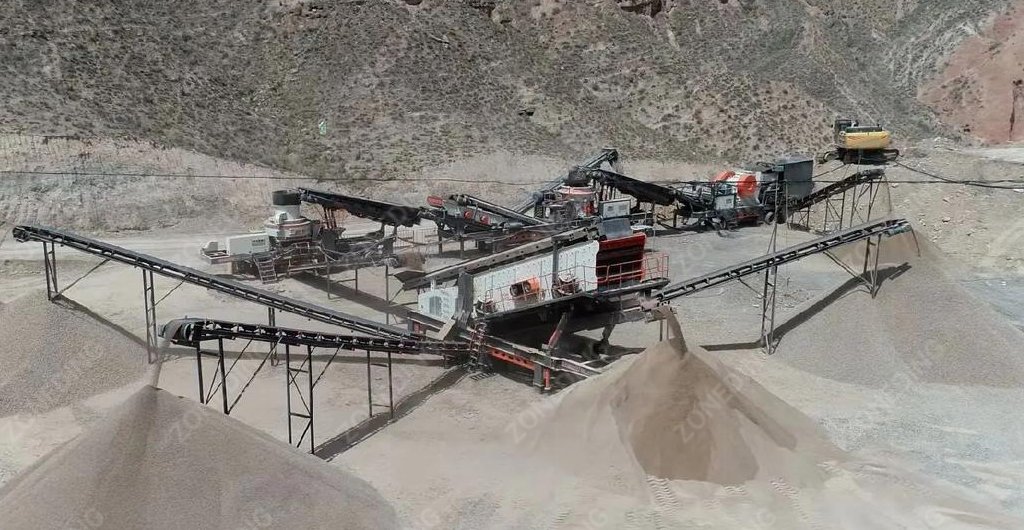
A complete mobile crushing line normally includes primary crushing, secondary crushing, and final screening. The correct secondary crusher is the most important difference between limestone, river stone, and granite projects.
A mobile jaw crusher is normally used for primary crushing. It accepts large blasted rock and reduces it to a size that the secondary crusher can process safely.
For medium-soft material such as limestone or recycled concrete, a mobile impact crusher can provide a high reduction ratio and better particle shape. It may also reduce the number of crushing stages required.
For abrasive river stone, granite, and similar hard rock, a mobile cone crusher is generally the safer secondary crushing choice. Compression crushing reduces the direct impact on wear parts and provides more stable operating costs.
The basic selection logic is:
Project condition
Recommended process
Limestone road base
Mobile jaw → mobile impact → screen
River stone aggregate
Mobile jaw → mobile cone → screen
Granite quarry
Mobile jaw → mobile cone → screen
Recycled concrete
Pre-sorting → mobile impact → magnetic separation → screen
Mixed quarry material
Mobile jaw → material-dependent secondary crusher → screen
The crusher must also match the required finished product. If the project needs only coarse road base, a jaw crusher and screen may be sufficient. If it requires cubical concrete aggregate, secondary crushing becomes more important.
When manufactured sand is required, a VSI sand making machine may be added after cone crushing. However, adding a VSI increases power consumption, circulating load, and total investment. It should only be included when the market value of shaped aggregate or manufactured sand justifies the additional cost.
What 50–200 TPH Mobile Crusher Setups Are Recommended?
Capacity should describe the output of the entire production line, not the maximum rating of one crusher. Feed grading, moisture, clay, crusher setting, screen efficiency, and recirculating load can all reduce actual throughput.
The following configurations are preliminary engineering directions rather than fixed equipment offers.
Required output
Example configuration
Suitable material
Typical use
50–80 TPH
Mobile jaw crusher + mobile screen
Limestone and mixed quarry rock
Small quarry and local road base
80–120 TPH
Mobile jaw + mobile impact + screen
Limestone and recycled concrete
Road aggregate and urban recycling
80–120 TPH
Mobile jaw + mobile cone + screen
River stone and granite
Concrete aggregate
120–150 TPH
Mobile jaw + cone/impact + mobile screen
Material-dependent
Commercial aggregate production
150–200 TPH
Mobile jaw + mobile cone + multi-deck screen
Hard and abrasive rock
Larger quarry and infrastructure projects
Example: 80 TPH Limestone Road-Base Plant
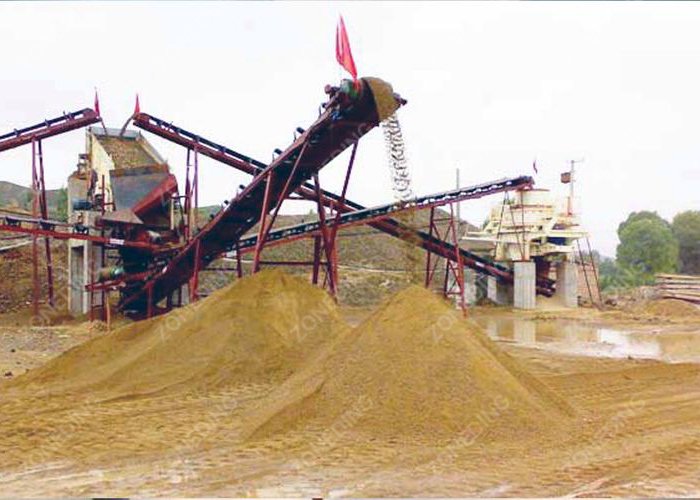
80 tph limestone road base mobile crushing plant
A practical process could include:
Vibrating feeder with grizzly section
Mobile jaw crusher
Mobile impact crusher
Two- or three-deck vibrating screen
Return conveyor for oversized material
This configuration can produce several road-base and aggregate sizes. The exact screen openings should be selected according to the construction specification.
Example: 120 TPH River-Stone Aggregate Plant
120 tph river stone mobile jaw cone crushing plant
A preliminary process could include:
Feeding and pre-screening
Mobile jaw crusher
Mobile cone crusher
Multi-deck mobile screening plant
Oversize return conveyor
River stone is abrasive, so cone crushing normally delivers lower long-term wear cost than impact crushing. Jaw-plate tooth profiles should also be selected to grip rounded feed effectively.
Example: 150–200 TPH Hard-Rock Plant
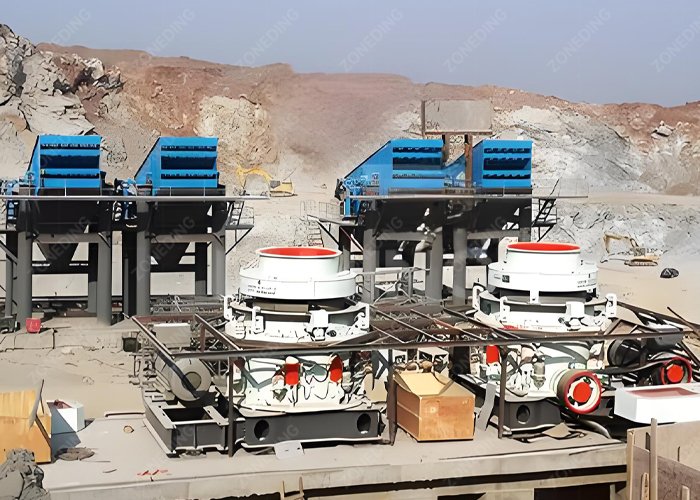
A higher-output hard-rock project requires balanced capacity between the jaw crusher, cone crusher, conveyors, and screen.
150–200 TPH Hard-Rock Plant
The primary crusher should not continuously discharge more material than the secondary crusher can accept. Otherwise, the surge bin or transfer point will overflow, even if the jaw crusher itself meets its rated capacity.
Before selecting equipment, ZONEDING engineers normally need:
Material type
Maximum feed size
Feed-size distribution
Clay and moisture content
Required capacity
Finished product sizes
Expected operating hours
Available power supply
Site elevation and temperature
Project location
How Can the Plant Produce Road and Concrete Aggregate Sizes?
Crushing reduces rock size, but screening determines whether the finished products meet commercial specifications.
Mobile screening plant aggregate sizes
A quarry may need to produce:
0–5 mm manufactured fines
5–10 mm fine aggregate
10–20 mm concrete aggregate
20–40 mm coarse aggregate
Mixed graded road base
These sizes are only examples. The final screen openings must follow the buyer’s actual road, asphalt, concrete, or local aggregate specification.
A mobile crushing and screening plant should be designed around both crusher capacity and screen capacity. A screen that is too small creates excessive recirculation and restricts the entire line.
Moisture also affects screening. Dry, clean stone normally passes through the screen efficiently. Wet material containing clay may blind the mesh and reduce usable output.
Where the feed contains significant natural fines, pre-screening before primary crushing can provide several benefits:
Reduces unnecessary crusher load
Removes soil from saleable aggregate
Lowers wear on jaw plates
Improves final product cleanliness
Increases effective plant capacity
For multiple finished products, a multi-deck mobile screening plant can separate several aggregate sizes in one stage. Conveyor layout should prevent different products from mixing at the stockpiles.
Tracked or Wheeled: Which Fits Colombian Contractors?
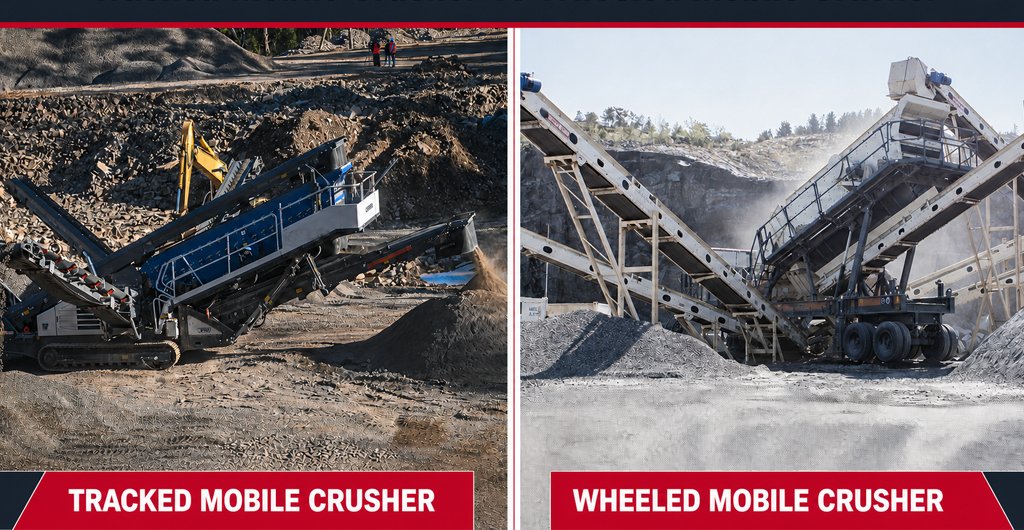
Tracked and wheeled plants solve different mobility problems.
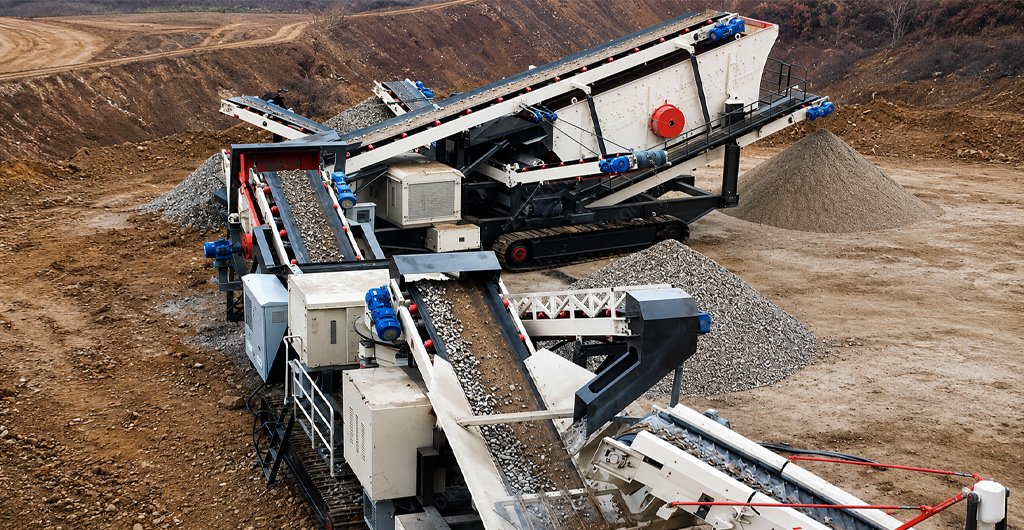
A tracked crusher can move around a quarry or construction site without a tractor. It is suitable for uneven ground, short-distance movement, and projects where the crusher must follow the working face.
However, a tracked crusher usually requires a low-bed trailer for long-distance transport. Its transport width, height, and weight must be checked before shipment and inland delivery.
A wheeled crusher is normally more convenient for contractors relocating between separate road or quarry projects. It requires a tractor for transport and a prepared operating surface at the destination.
Tracked Mobile Crusher vs Wheeled Mobile Crusher
Selection factor
Tracked mobile crusher
Wheeled mobile crusher
Movement inside the site
Excellent
Limited
Uneven terrain
Better adaptability
Requires firmer ground
Long-distance relocation
Requires low-bed trailer
Generally easier
Initial investment
Usually higher
Usually lower
Setup
Fast positioning
Requires leveling and support legs
Best fit
Quarry face and difficult terrain
Multiple regional projects
The correct decision depends on how often the plant moves and how far it travels. “Mobile” does not mean every machine is economical for frequent highway transport.
What Should Buyers Check When Shipping Through Cartagena or Buenaventura?
Cartagena and Buenaventura provide access to different parts of Colombia. Port selection should not be based only on ocean freight.
The complete logistics plan should consider:
Shipping origin and route
Final project location
Inland transport distance
Mountain-road conditions
Bridge and road load limits
Equipment transport dimensions
Crane availability
Unloading area
Oversized cargo permits
Local installation schedule
A lower ocean freight quotation may create a higher total cost if the selected port is far from the quarry or requires more difficult inland transportation.
Before manufacturing is completed, the supplier should provide transport drawings showing:
Overall length
Overall width
Overall height
Total transport weight
Main removable components
Lifting points
Center of gravity
Suggested unloading method
Large conveyors, hoppers, and handrails may need to be folded or removed for transport. These components should be designed for fast reassembly at the site.
Containerized or modular components can simplify logistics, but not every mobile crushing plant fits inside standard containers. Larger mobile units may require flat-rack, breakbulk, or roll-on/roll-off arrangements.
How Should Wear Parts, Power and Site Preparation Be Planned?
Wear cost depends on the material, crusher type, feed grading, operating setting, and metal quality.
River stone and granite normally create higher wear than limestone. For abrasive feed, the buyer should not only ask for the crusher price. The quotation should also identify recommended wear parts and the quantity supplied with the machine.
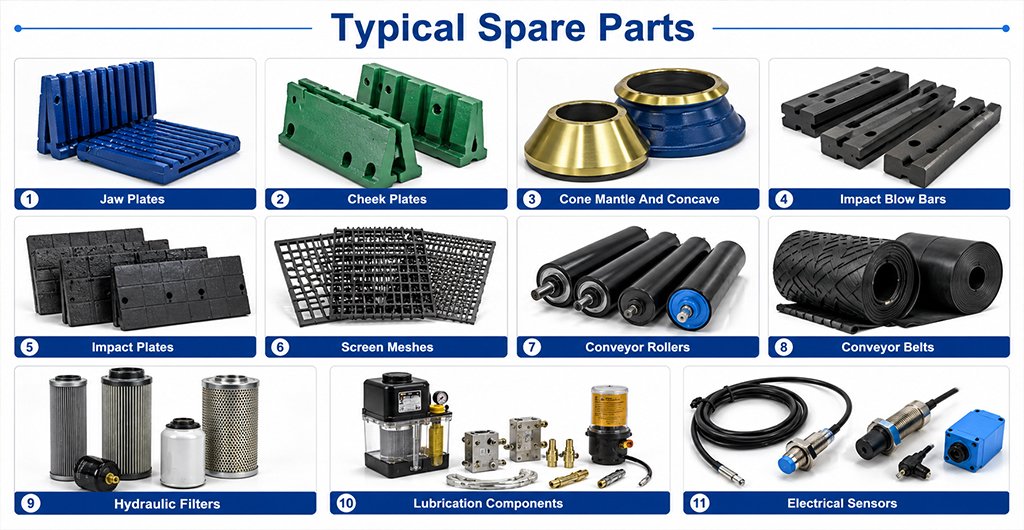
Typical spare parts include:
Typical Spare Parts for Crushers
Jaw plates
Cheek plates
Cone mantle and concave
Impact blow bars
Impact plates
Screen meshes
Conveyor rollers
Conveyor belts
Hydraulic filters
Lubrication components
Electrical sensors
A starter spare-parts package should reflect the actual material. Supplying only impact-crusher parts for a highly abrasive river-stone application does not solve the underlying selection problem.
Power supply also affects the configuration. Electric operation may reduce energy and maintenance costs where stable grid power is available. Diesel or diesel-electric systems provide more flexibility for remote or temporary projects.
Before installation, the site should provide:
A level and compacted operating surface
Safe access for trucks and lifting equipment
Drainage around the plant
Space for finished-product stockpiles
Dust-control water where required
Safe electrical connections
Maintenance access around each machine
Lighting for evening maintenance
A protected wear-parts storage area
Site preparation is simpler than for a permanent stationary plant, but it should not be ignored. Poor leveling can affect material flow, screen efficiency, chassis stress, and conveyor alignment.
What Information Is Needed for an Accurate Quote?
An equipment supplier cannot prepare a reliable proposal from capacity alone.
Before requesting a mobile crusher quotation, provide the following information:
Required information
Why it matters
Raw material
Determines crusher type and wear parts
Maximum feed size
Determines feeder and jaw crusher size
Feed-size distribution
Affects actual plant capacity
Moisture and clay
Influences feeding and screening
Required output
Determines equipment size
Final product sizes
Determines crusher stages and screen decks
Operating hours
Supports operating-cost calculations
Project location
Affects shipping and inland transport
Power supply
Determines electric, diesel, or dual-power design
Relocation frequency
Helps select tracked or wheeled chassis
Buyers should also compare what each quotation includes. One proposal may cover only the crusher, while another includes the feeder, conveyors, screen, generator, magnetic separator, dust suppression, spare parts, and installation support.
For factors that directly affect a mobile plant quotation, review our mobile crusher plant price guide for South America, including capacity, chassis type, crusher configuration, freight, and optional equipment.
Our engineering team can then prepare a preliminary process, equipment configuration, transport plan, and quotation based on the actual project conditions.
Colombia Mobile Crusher FAQ
Which mobile crusher is best for river stone?
A mobile jaw crusher followed by a mobile cone crusher is normally recommended. River stone is hard and abrasive, so cone crushing generally offers lower long-term wear cost than impact crushing.
Can one mobile crusher produce four aggregate sizes?
A crusher reduces material size, but a mobile screening plant separates the products. A multi-deck screen can produce several aggregate sizes when its deck area and mesh openings match the required output.
Is an impact crusher suitable for limestone road aggregate?
Yes. A mobile impact crusher is well suited to limestone because it provides a high reduction ratio and good particle shape. Feed moisture, clay content, and required capacity should still be checked.
Should a Colombian contractor choose a tracked or wheeled plant?
Tracked equipment is better for difficult terrain and movement inside a quarry. Wheeled equipment is generally more economical for contractors relocating between separate projects by road.
How can I obtain an accurate mobile crusher quotation?
Provide the raw material, maximum feed size, required capacity, finished product sizes, operating hours, project location, power supply, and expected relocation frequency. Without these details, a quotation can only be approximate.
Aggregate plants face challenges with hard rock processing daily. Cone crushers in the aggregates industry solve this exact problem efficiently. High-grade construction projects require perfectly shaped stones constantly. These machines handle ext...
Jaw crusher prices can vary from a few thousand dollars to more than one million dollars depending on capacity, feed size, mobility, automation, and material hardness. In real quarry and mining projects, the cheapest machine is often not the most ...
The construction industry relies on seven distinct types of sand to ensure structural integrity and finish quality. However, natural river sand is becoming scarce and expensive due to environmental regulations. For aggregate producers, the real op...
Mobile crushing technology offers the most direct path to reducing operational costs and increasing profit margins in the mining industry. This article explains how a mobile unit eliminates the need for expensive civil works and reduces truck haul...
We use cookies to ensure that we give you the best experience on our website. If you continue to use this site we will assume that you are happy with it.
Privacy Policy
Send us a message
We would love to hear from you
Submit your question and our team will respond to the email provided as soon as possible.
 Zoneding Machine