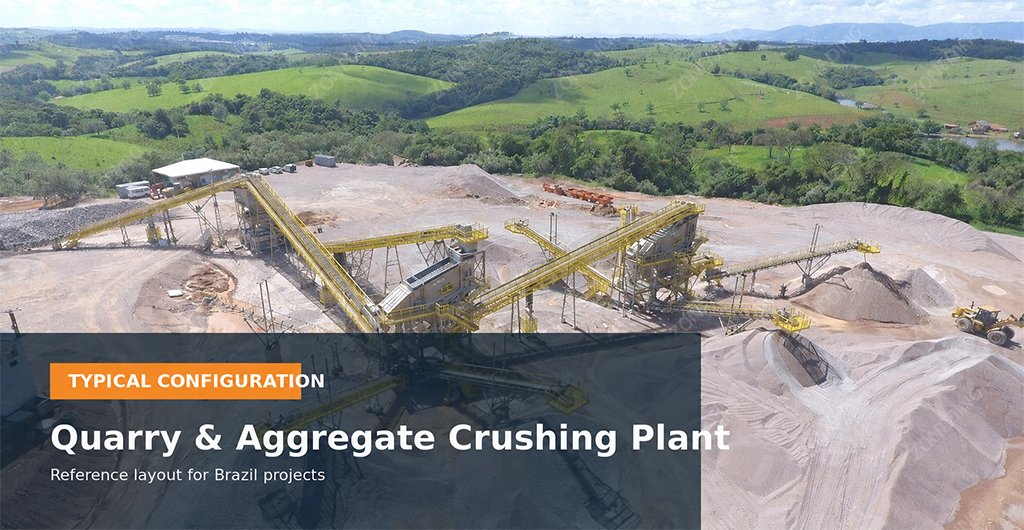
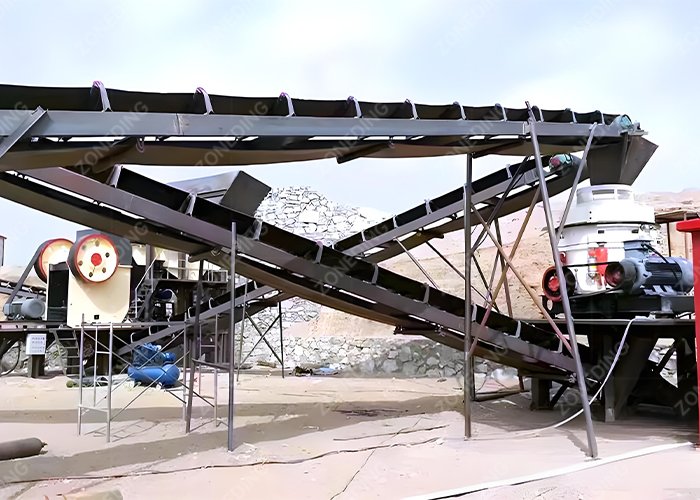
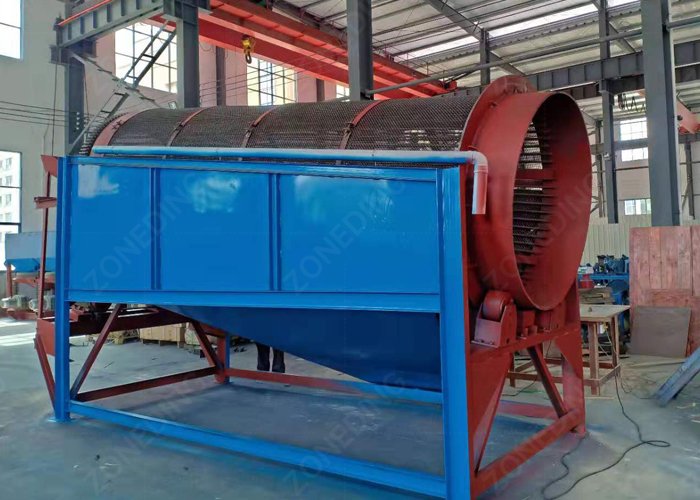
A Brazil stone crusher plant must do more than crush rock at a stated hourly rate. It must produce saleable aggregate sizes from the actual feed material, remain stable through changing site conditions, and fit the quarry’s power, transport, maintenance, and expansion plans.
Granite, basalt, limestone, river stone, and quartzite do not require the same circuit. A road contractor moving between sites should not automatically use the same layout as a permanent commercial quarry. The right design begins with the material and finished products, not with a crusher model.
ZONEDING designs complete stone crushing plants for quarry, aggregate, road, concrete, and manufactured-sand projects. This guide explains how Brazil buyers can compare circuits from 50 to 500 TPH without treating catalogue capacity as guaranteed finished-product output.
What Must a Brazil Quarry Confirm Before Plant Design?
The first design question is not “Which crusher is cheapest?” It is “What must the plant receive and what must it sell?” A supplier cannot balance the crusher, screen, conveyors, and return load from a target such as “200 TPH granite plant” alone.
Before equipment selection, confirm:
Design Input
Why It Changes the Plant
Material and geological variation
Determines the crushing principle, wear risk, and whether one setting can handle all feed
Maximum feed size
Sets the feeder opening, primary crusher size, and oversize-control requirements
Feed grading
Affects choke feeding, crusher utilization, fines handling, and real throughput
Moisture and clay content
May require a grizzly, scalping screen, bypass, washing, or anti-blocking measures
Required continuous capacity
Must be separated from short-term peak or catalogue capacity
Finished sizes
Determines screen decks, screen area, conveyors, stockpiles, and recirculating load
Product quality
Controls whether secondary crushing alone is sufficient or shaping is required
Daily operating hours
Affects storage, maintenance windows, wear-parts planning, and annual output
Site power
Determines motor voltage, starting method, transformer, generator, and installed-power limits
Project life and relocation frequency
Helps decide between stationary, modular, wheeled, and tracked equipment
Abrasiveness should be confirmed by test data whenever possible. Two rocks described as “granite” can produce different liner life and power demand. Moisture also needs a realistic wet-season figure. A plant making one broad road-base product is much simpler than one producing several separated sizes plus fines, even when both receive 150 TPH.
Which Crushing Circuit Fits Granite, Basalt, Limestone, or River Stone?
Crusher selection should follow hardness, abrasiveness, feed shape, and product target. The secondary crusher often has the greatest effect on wear cost and final aggregate shape.
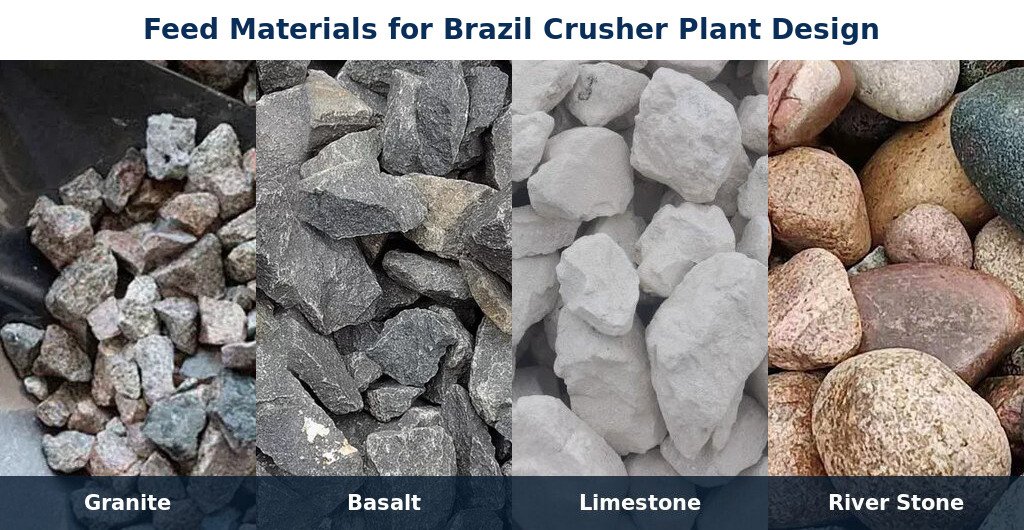
Comparison of granite, basalt, limestone, and river stone commonly considered when designing quarry and aggregate crushing plants for different material conditions.
Jaw or impact crusher → screen; magnet and manual sorting when required
Steel removal, mixed feed, contaminants, and variable strength
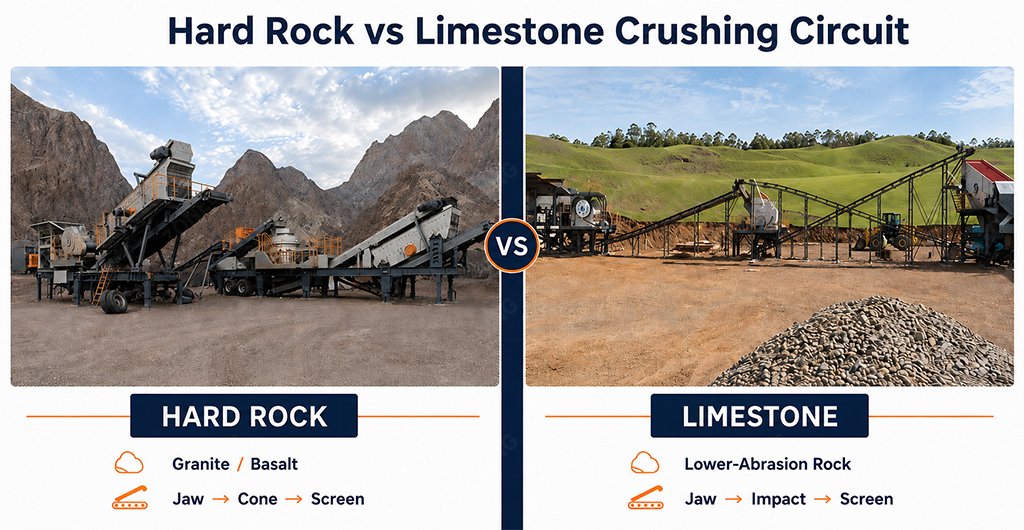
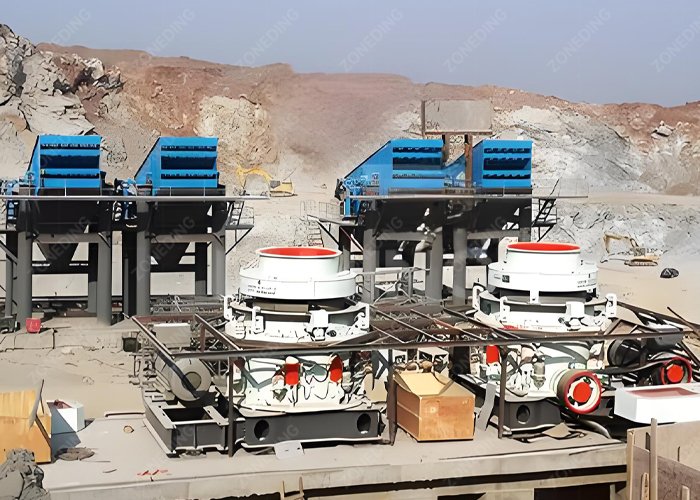
For hard rock, a jaw crusher normally handles primary reduction. A cone crusher then provides secondary or tertiary compression crushing. The screen separates saleable products and returns oversize material to the cone. Stable feeding prevents surging and inconsistent product.
For softer limestone, an impact crusher may achieve a higher reduction ratio and a more cubical product in fewer stages. However, this advantage can disappear on abrasive feed because blow-bar consumption may increase sharply. Buyers considering limestone, road material, or recycling can review the separate mobile impact crusher application guide.
Comparison of a jaw crusher and cone crusher circuit for abrasive hard rock with a jaw crusher and impact crusher circuit for limestone aggregate production.
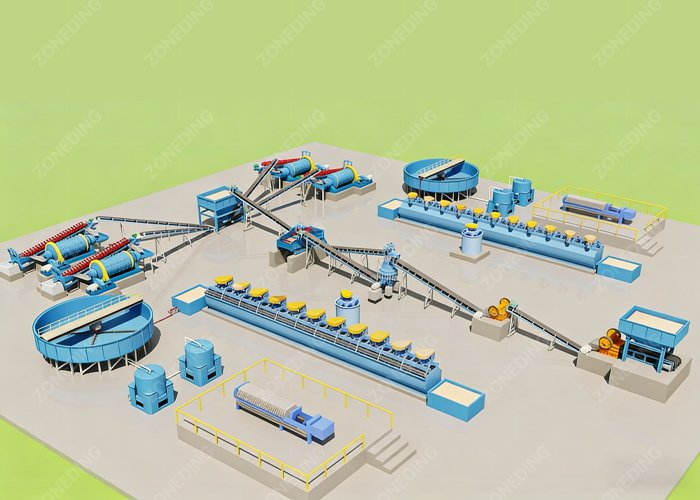
Iron ore or gold ore preparation should not be treated as an ordinary commercial aggregate duty. If the crushed product feeds grinding or beneficiation, the target size, fines generation, ore variability, metal recovery, and downstream mill capacity become part of the design basis. This Brazil page therefore focuses mainly on quarry and aggregate production.
Pre-screening → primary and secondary crushing → high-capacity screening
Long-term quarry with hig
50–500 TPH Crusher Plant Configurations for Brazil
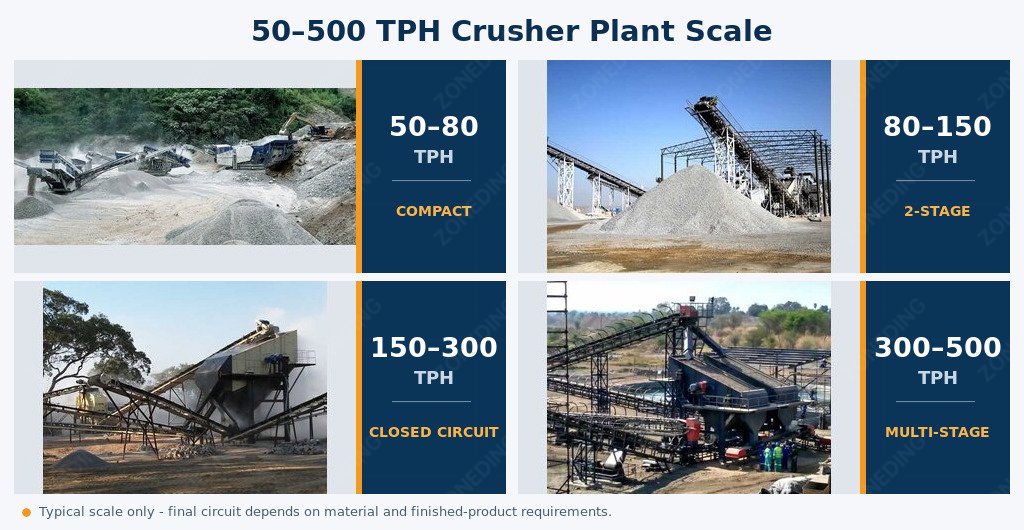
At 50–80 TPH, a jaw crusher followed only by a screen fits primary-crushed material or a broad base product, not every multi-size aggregate duty. From 80–150 TPH, the secondary crusher, screen, conveyors, and return circuit must be balanced together.
At 150–300 TPH, a third stage is added only when the feed and products require it. The 100–200 TPH aggregate plant guide shows why limestone, granite, and aggregate-plus-sand layouts need different equipment boundaries. At 300–500 TPH, pre-screening and surge capacity can help keep downstream equipment stable.
Advertised crusher capacity is not the same as continuous saleable output. Real production is influenced by:
Feed-size distribution and oversize frequency;
Moisture, clay, and natural fines;
Crusher setting and chamber condition;
Screen efficiency and available screen area;
Recirculating load;
Conveyor and stockpile capacity;
Wear condition and maintenance time;
Operator practices and daily utilization.
For preliminary investment planning across the full capacity range, use the 50–500 TPH South America crusher plant price guide. A final quotation still requires the project data listed in this article.
How Can the Plant Produce Commercial Aggregate and Manufactured Sand?
A commercial quarry earns from saleable products, not from material passing through the primary crusher. The screen and product-handling system must therefore be designed around the local market.
Brazil buyers may use terms such as brita, pó de pedra, and areia industrial. These terms help communication, but they do not replace a written product specification. Every request should state the required size ranges, tolerances, particle-shape target, fines limit, and intended use.
A plant producing several aggregate sizes needs:
A multi-deck vibrating screen sized for the total feed and cut points;
Separate conveyors for each saleable fraction;
A controlled oversize-return circuit;
Enough stockpile area to prevent product mixing;
Sampling and quality checks for grading and shape;
Space for future washing, shaping, or additional screening if the market changes.
Manufactured sand adds another set of decisions. A VSI sand making machine can improve particle shape and increase fine aggregate production, but the complete system may also require fine screening, air classification, washing, water recovery, or dust collection. The right choice depends on moisture, clay, stone-powder limits, water availability, and the concrete or mortar specification.
Do not send all crusher fines directly into a sand stockpile without testing. Excess ultrafines, variable moisture, or clay can make the material difficult to sell.
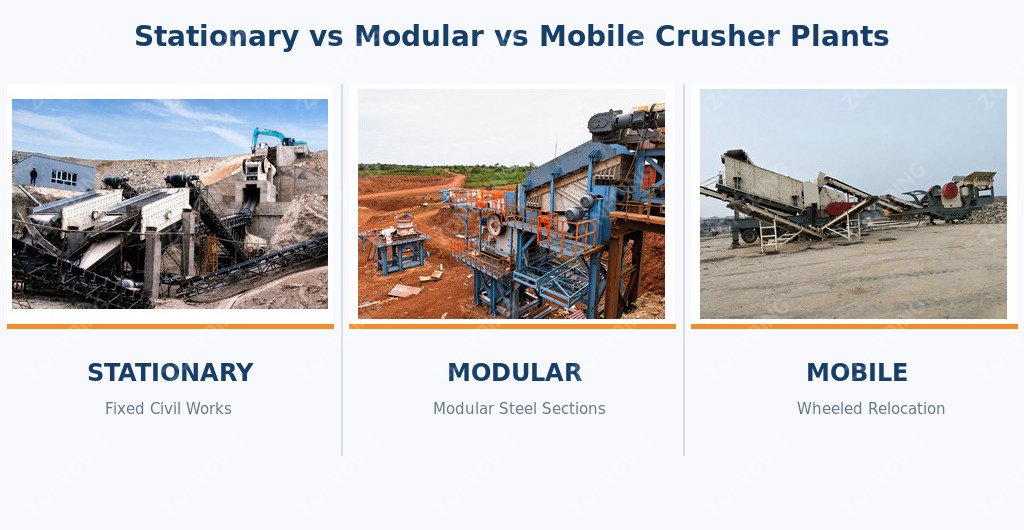
Stationary, Modular, or Mobile Plant: Which Is Better?
Plant format should match reserve life, relocation frequency, site preparation, and annual production. No format is automatically best for every Brazil project.
Stationary vs Modular vs Mobile Crusher Plant
Factor
Stationary Plant
Modular Plant
Mobile Plant
Best fit
Long-term quarry with stable reserves
Faster installation with some future flexibility
Road contracts, temporary quarries, changing working faces
Civil work
Usually highest
Reduced compared with traditional stationary construction
Usually lowest, but a prepared operating pad may still be needed
Relocation
Difficult
Possible by dismantling modules
Designed for relocation
Expansion
Strong when space is reserved
Good when interfaces are planned
Possible by adding units, but line balance must be checked
Continuous high-volume operation
Often the strongest option
Suitable when modules are correctly sized
Depends on unit size, feed, and working conditions
Internal site movement
Limited
Limited after installation
Strongest with tracked equipment
Long-distance transfer
Requires dismantling
Easier than conventional stationary structures
Still requires route planning and, for tracked units, low-bed transport
A permanent quarry with confirmed reserves may justify a stationary plant with larger hoppers and expansion space. A modular layout can reduce installation work while retaining many benefits of a fixed process.
A mobile stone crusher plant is useful when the crushing point changes, civil work must be limited, or equipment will serve several contracts. However, “mobile” does not mean the complete line can travel on public roads without planning. Machine width, height, axle or trailer limits, permits, bridge capacity, and unloading conditions still matter.
Tracked units are useful for repositioning inside rough sites. Wheeled plants may offer a lower initial cost on prepared ground and can suit projects with less frequent movement. The detailed tracked vs wheeled mobile crusher comparison explains the transport and operating trade-offs.
How Do Brazil Site Conditions Affect Crusher Plant Design?
Brazil is too large for one standard site assumption. A quarry design should use conditions measured at the actual location.
Rain, moisture, and clay
Seasonal rain can turn fine material into sticky feed. Clay may bridge in hoppers, blind screen openings, build up in transfer chutes, and reduce saleable output. Depending on the feed, the plant may need a grizzly feeder, scalping screen, soil bypass, steeper chute angles, anti-blocking liners, drainage, or washing.
Drainage and stockpile management
Water should be directed away from foundations, electrical rooms, conveyor loading zones, and finished-product stockpiles. Mixing saturated fines into clean aggregate can affect screening and product consistency. Stockpile access should also remain usable during wet weather.
Dust and environmental controls
Dry crushing generates dust at the hopper, crusher discharge, screens, and transfer points. Water sprays, enclosed transfer points, covers, extraction, and regular housekeeping may be required. The final arrangement must follow the project’s local environmental and occupational requirements.
Power and controls
Do not order motors from a country-level voltage assumption. Confirm the site voltage, frequency, transformer capacity, permissible starting current, cable distance, and generator plan. Large motors may need a suitable starting method. Controls should also include interlocks so downstream equipment starts before upstream feeding.
Access and maintenance space
The layout must leave room to remove jaw plates, cone liners, screen media, motors, and conveyor components. Crane access, maintenance platforms, safe walkways, and lifting points should be planned before installation. A compact layout that blocks liner replacement can create expensive downtime.
For comparison, the Colombia mobile crusher guide focuses on road and mobile aggregate work, while the Chile hard-rock guide addresses copper, altitude, and difficult access. This page stays centered on Brazil quarry output, commercial aggregates, wet-feed control, and plant format.
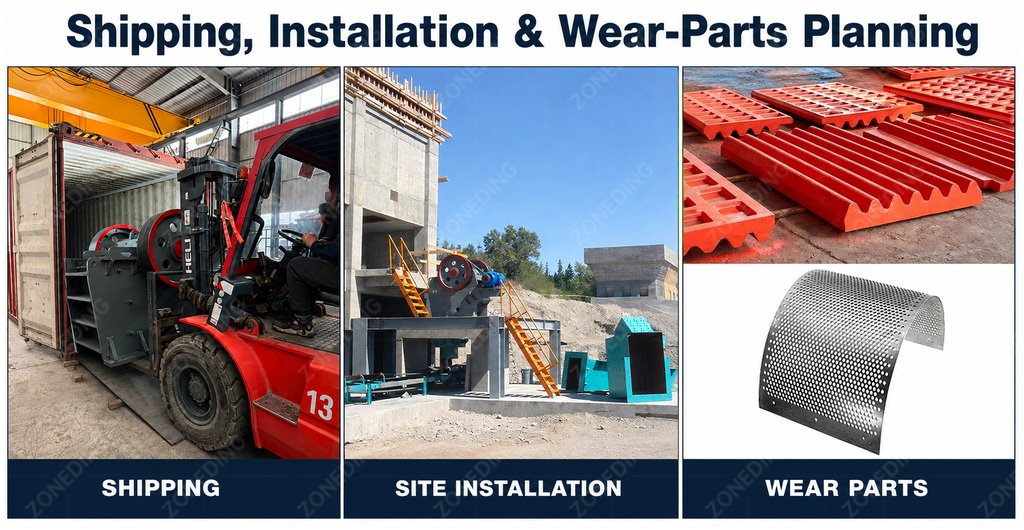
How Should Buyers Plan Shipping, Installation, Wear Parts, and the Quote?
A crusher quotation is only one part of the installed project. The buyer and supplier should define the supply boundary before comparing prices.
Crusher Shipping, Installation and Wear Parts
Confirm the Supply Boundary
The proposal should state whether it includes:
Feed hopper, feeder, and grizzly;
Primary, secondary, and tertiary crushers;
Screens, return conveyors, and finished-product conveyors;
Steel structures, platforms, chutes, guards, and access stairs;
Motors, control cabinets, cables, transformer, or generator;
Dust suppression or washing equipment;
Initial lubricants, tools, spare parts, and wear parts;
Foundation drawings and electrical drawings;
Supervision, installation, commissioning, and training;
Packing, ocean freight, insurance, unloading, and inland transport.
Two proposals with the same capacity can differ greatly because one covers a crusher unit and the other covers a complete closed-circuit line. The mobile crusher plant price guide explains how equipment scope, chassis, power, crushing stages, and logistics change the quotation.
Shipping must be planned from the equipment dimensions and the final project location. Confirm whether units fit containers, flat racks, or break-bulk shipment. Then check the destination port, inland route, low-bed trailer requirements, bridge and road limits, crane capacity, unloading area, and access to the quarry.
Wear-parts planning should begin before commissioning. The initial package may include jaw plates, mantle and concave sets, blow bars where applicable, screen meshes, conveyor rollers, belts, filters, lubrication items, and electrical sensors. The correct quantity depends on abrasiveness, operating hours, expected delivery time, and the consequence of downtime.
Send Complete Project Data for an Accurate Proposal
For a technical selection and quotation, provide:
Material name and available test report;
Maximum feed size and typical feed grading;
Moisture and clay content in dry and wet conditions;
Required continuous feed rate and daily operating hours;
Every finished-product size and expected percentage;
Product-shape, fines, or quality requirements;
Stationary, modular, wheeled, or tracked preference;
Site voltage, frequency, and available power;
Destination city, port preference, and road-access information;
Site layout, elevation difference, and available installation area;
Planned commissioning date;
Required installation, training, and spare-parts scope.
When this information is incomplete, the first layout should be labelled preliminary. Final models and guarantees should follow material confirmation and engineering review.
Brazil Stone Crusher Plant FAQ
What is the best crusher for granite or basalt in Brazil?
A jaw crusher followed by a cone crusher is the normal starting point for hard, abrasive rock. The final circuit still depends on feed size, abrasiveness, required products, and whether tertiary crushing or shaping is needed.
Can a 50–80 TPH plant use only a jaw crusher and screen?
It can when the required product is primary-crushed material or a broad road-base size. For several controlled aggregate sizes or improved particle shape, secondary crushing is usually required.
Should a quarry choose a stationary or mobile crusher plant?
Choose from project life and movement needs. Stationary plants often fit long-term quarries with stable reserves and high utilization. Mobile plants are more suitable when the working face changes, civil work must be reduced, or equipment will move between projects.
Can one plant produce both crushed aggregate and manufactured sand?
Yes, but the circuit may need a shaping or fine-crushing stage, suitable screening, and a fines-control system. Washing or air classification may also be needed depending on moisture, clay, water availability, and the required sand specification.
How much does a stone crusher plant in Brazil cost?
There is no reliable price from capacity alone. The total depends on rock type, crushing stages, plant format, screen and conveyor scope, power system, steel structures, freight, installation, and wear parts. Compare complete supply boundaries, not only the main crusher price.
Key Takeaways
Match the circuit to the actual rock and saleable products.
Separate continuous finished-product output from catalogue capacity.
Use compression crushing for abrasive hard rock unless testing supports another option.
Add a VSI only when shape or manufactured-sand requirements justify it.
Size screens, conveyors, return circuits, and stockpiles as part of the plant—not as accessories.
Design for wet feed, drainage, maintenance access, power, logistics, and future expansion.
Request a complete supply boundary before comparing quotations.
About ZONEDING
ZONEDING manufactures crushing, screening, grinding, and mineral-processing equipment for international B2B projects. For a Brazil quarry or aggregate proposal, send the material, feed size, continuous capacity, finished sizes, moisture and clay content, site power, project location, and preferred plant format. The engineering team can then prepare a preliminary circuit, equipment list, layout direction, and supply boundary for review.
Aggregate plants face challenges with hard rock processing daily. Cone crushers in the aggregates industry solve this exact problem efficiently. High-grade construction projects require perfectly shaped stones constantly. These machines handle ext...
Building a high-recovery gold ore processing plant development project requires a very clear plan. The process starts with the rock and ends with pure gold. Most projects fail because the machinery does not match the mineral type. High recovery ra...
I have worked in the mining and recycling industry for over 50 years. Choosing the best concrete crushing setups is the most important step for your profit. Many owners lose money because they pick the wrong bones for their machine. I will show yo...
Many gold miners focus on recovery equipment such as concentrators, sluices, jigs, and shaking tables. However, experienced operators know that recovery begins long before gold reaches those machines. It starts with proper washing, screening, and ...
We use cookies to ensure that we give you the best experience on our website. If you continue to use this site we will assume that you are happy with it.
Privacy Policy
Send us a message
We would love to hear from you
Submit your question and our team will respond to the email provided as soon as possible.
 Zoneding Machine