 Zoneding Machine












Lithium Processing Plant Cost and Equipment Breakdown
563Learn what affects lithium processing plant cost, what equipment you need, and how ore type, capacity, and flowsheet change total investment.
View detailsSearch the whole station Crushing Equipment
For decades, natural river sand was considered the standard material for concrete, mortar, and infrastructure projects.
Today, that situation is changing rapidly.
Many contractors, concrete producers, and aggregate companies are asking:
Is machine-made sand really as good as natural sand?
In many regions, the industry has already answered that question.
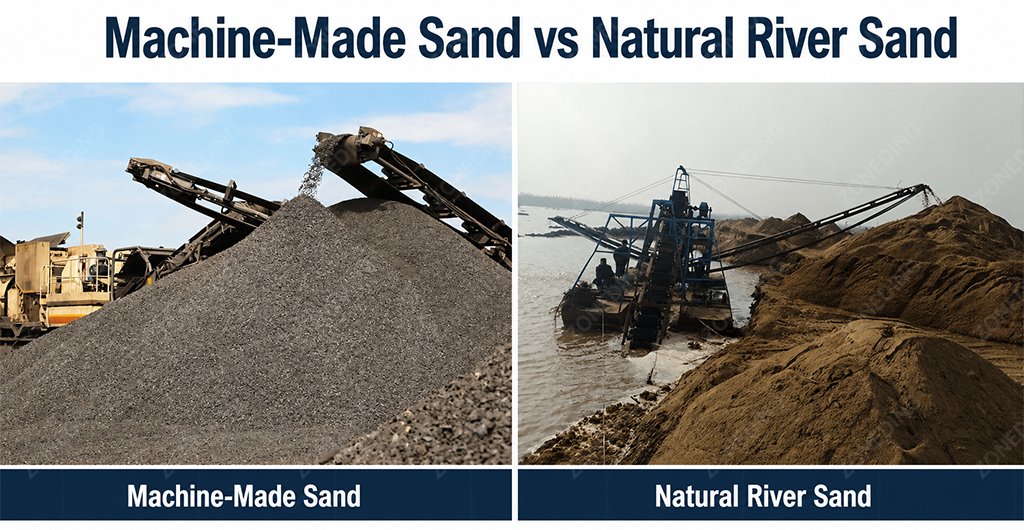
The real discussion is no longer whether manufactured sand can replace natural sand. The discussion is how to produce high-quality machine-made sand consistently and profitably.
As environmental regulations become stricter and natural sand resources become scarcer, manufactured sand is becoming the primary source of construction sand worldwide.
Natural sand is formed through thousands of years of weathering and erosion.
It is typically obtained from:
Machine-made sand, also called manufactured sand or M sand, is produced by crushing rocks and aggregates in a controlled production process.
Common raw materials include:
The fundamental difference lies in how the material is produced.
| Factor | Machine-Made Sand | Natural Sand |
|---|---|---|
| Source | Crushed Rock | River Deposits |
| Supply Stability | High | Limited |
| Quality Control | Excellent | Variable |
| Environmental Restrictions | Lower | Higher |
| Particle Shape | Angular | Rounded |
| Availability | Stable | Declining |
The future of construction increasingly depends on manufactured sand because natural resources alone can no longer meet global demand.
Many contractors still see manufactured sand as an alternative.
In reality, it is becoming the industry standard.
Several factors are driving this transition.
Many countries now restrict river sand mining due to:
Natural sand often travels hundreds of kilometers before reaching construction sites.
Meanwhile, manufactured sand can be produced locally using a nearby quarry.
Natural sand production depends on environmental permits and seasonal conditions.
Machine-made sand can be produced year-round.
As a result, many concrete producers now prioritize supply reliability over tradition.
Particle shape directly affects concrete performance.
Natural sand particles are generally:
These characteristics improve workability and reduce water demand.
Machine-made sand particles are typically:
These characteristics improve bonding with cement paste.
However, particle shape alone does not determine quality.
Gradation is equally important.
One major advantage of manufactured sand is that producers can control:
This level of control is difficult to achieve with natural deposits.
Many people assume natural sand automatically produces better concrete.
That is not always true.
Concrete quality depends on:
High-quality machine-made sand often delivers:
| Performance Factor | Machine-Made Sand | Natural Sand |
|---|---|---|
| Compressive Strength | Higher Potential | Moderate |
| Consistency | Excellent | Variable |
| Durability | Excellent | Good |
| Workability | Good | Excellent |
| Quality Stability | High | Moderate |
Many high-strength concrete projects intentionally specify manufactured sand because angular particles improve cement bonding.
A properly designed sand production system can produce sand that exceeds the quality of many natural deposits.
Twenty years ago, natural sand was often the cheaper option.
Today, transportation costs have changed the economics.
| Cost Factor | Machine-Made Sand | Natural Sand |
|---|---|---|
| Raw Material Cost | Moderate | Low |
| Transportation Cost | Low | High |
| Supply Risk | Low | High |
| Quality Control Cost | Low | Higher |
| Long-Term Stability | High | Low |
Many projects discover that the delivered cost of machine-made sand is actually lower than river sand.
This is especially true when sand can be produced near the construction site.
A ready-mix concrete producer previously transported river sand from over 150 km away.
After investing in a local sand production line, transportation costs dropped by more than 40%, while supply stability improved significantly.
The investment paid for itself in less than two years.
Many complaints about manufactured sand are not caused by the sand itself.
They are caused by poor production processes.
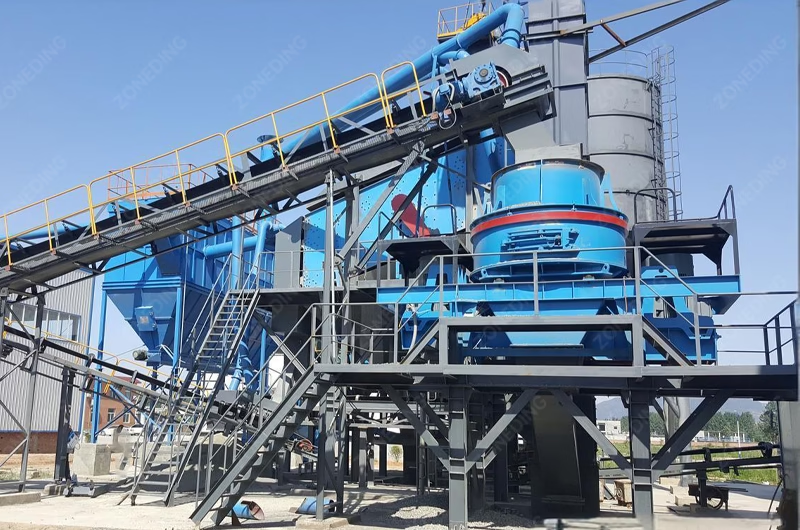
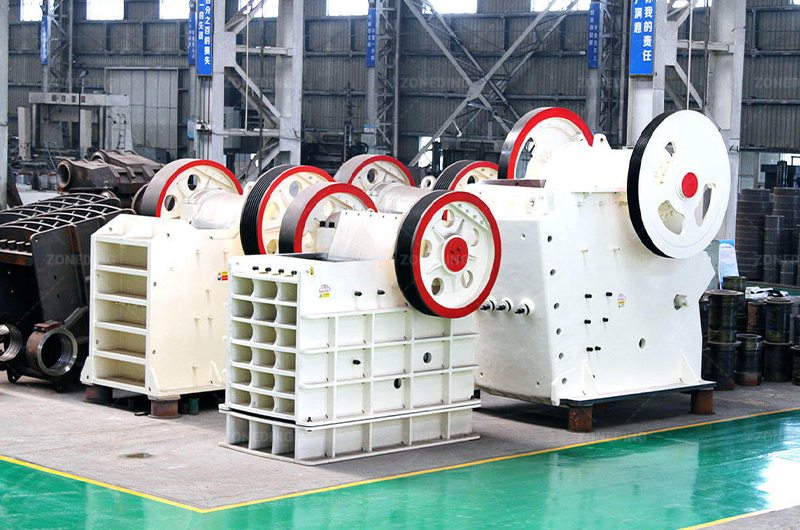
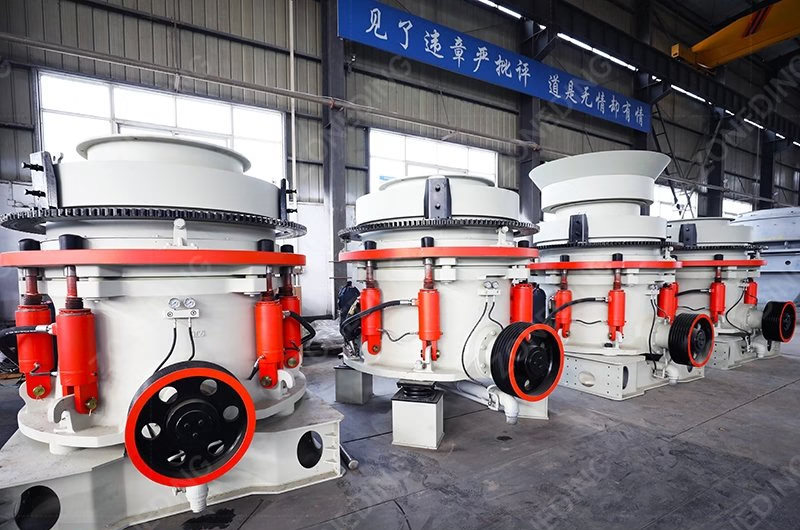
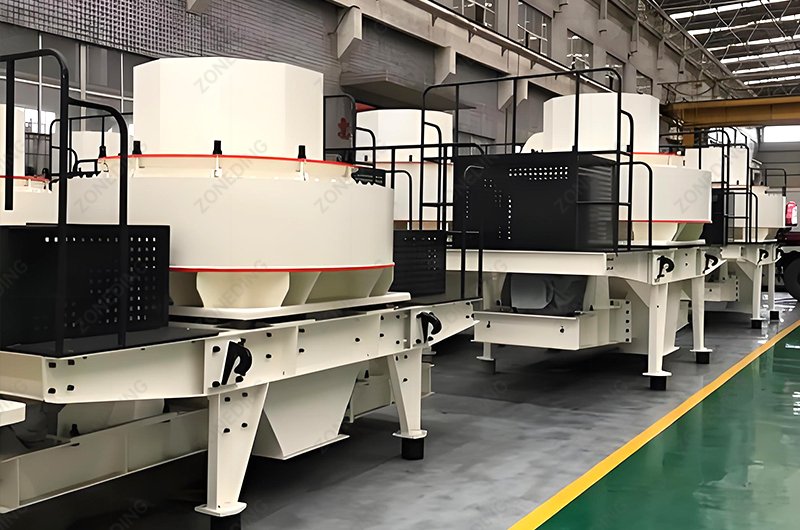
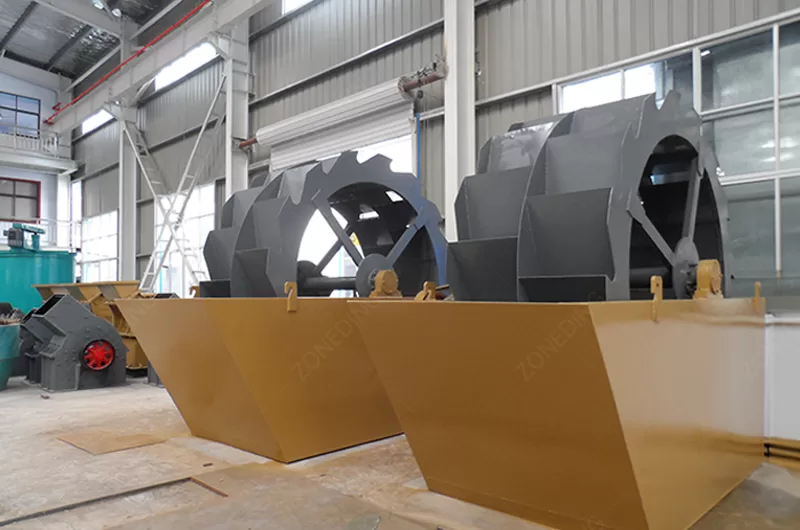
A typical manufactured sand plant includes:
| Process Stage | Equipment |
|---|---|
| Primary Crushing | Jaw Crusher |
| Secondary Crushing | Cone Crusher |
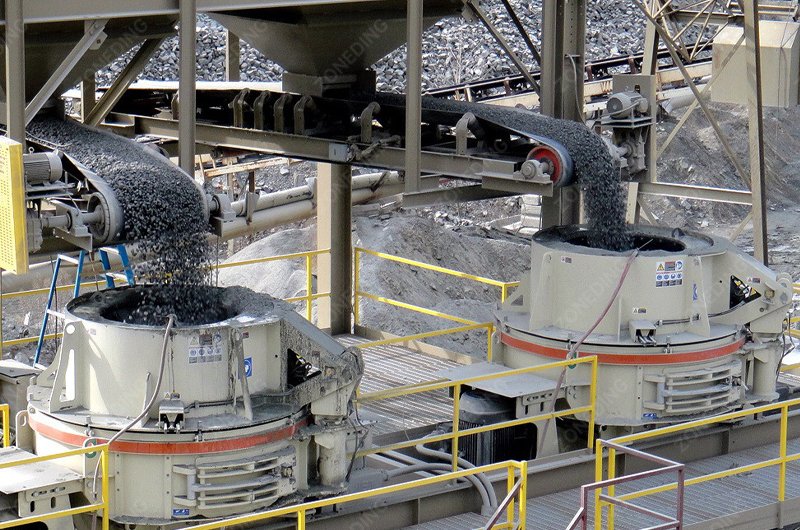
| Sand Making | VSI Sand Making Machine |
| Screening | Vibrating Screen |
| Washing | Sand Washer |
| Dust Control | Dust Collection System |
Among all equipment, the VSI Sand Making Machine has the greatest impact on particle shape and final sand quality.
Many low-quality sand operations skip the shaping stage to save money.
Unfortunately, this often reduces market acceptance and selling price.
Environmental regulations are one of the biggest reasons for the growth of manufactured sand.
Compared with river sand extraction, machine-made sand helps reduce:
In addition, many sand plants utilize quarry waste rock that would otherwise become waste material.
This creates a more sustainable production model.
Governments worldwide continue to tighten restrictions on natural sand extraction, making manufactured sand increasingly important for future construction.
In many applications, the answer is yes.
Machine-made sand is already widely used in:
However, replacement depends on:
The key factor is not whether the sand is natural or manufactured.
The key factor is whether it consistently meets project requirements.
Many producers focus on output.
Experienced operators focus on value.
Consider the following example:
| Plant | Output | Product Quality |
|---|---|---|
| Plant A | 250 TPH | Low |
| Plant B | 120 TPH | Premium |
Plant B often generates higher profits because premium-quality sand commands higher selling prices.
Successful producers focus on:
rather than simply maximizing tons per hour.
The most profitable sand plants usually sell quality, not volume.
The answer depends on your objectives.
For most modern construction projects, machine-made sand offers better long-term economics and supply security.
Send us:
✓ Raw Material Type
✓ Capacity Requirement
✓ Final Sand Specification
✓ Project Location
Our engineers can recommend the most suitable sand production solution for your project.
Is machine-made sand as good as natural sand?
Yes. When properly produced and controlled, machine-made sand can meet or exceed the quality requirements of many construction applications.
Why is manufactured sand becoming more popular?
Natural sand shortages, environmental regulations, and rising transportation costs are driving the shift toward manufactured sand.
Does machine-made sand improve concrete strength?
In many cases, yes. Angular particles often create stronger bonding with cement paste, improving compressive strength.
What is the most important machine in a sand production line?
The VSI sand making machine is usually the most important equipment because it controls particle shape and final sand quality.
Can manufactured sand replace river sand completely?
For many applications, yes. However, local standards and project requirements should always be considered.
Which option is more profitable for aggregate producers?
High-quality machine-made sand often provides greater profitability because producers can control quality, supply, and production costs more effectively.
The future debate is no longer:
Machine-made sand or natural sand?
The real question is:
Can your sand consistently meet construction requirements while remaining cost-effective and sustainable?
For modern construction, high-quality manufactured sand offers several advantages:
That is why machine-made sand is rapidly becoming the preferred choice for concrete producers, contractors, and infrastructure developers worldwide.
ZONEDING provides complete manufactured sand production solutions, including crushing, screening, shaping, and washing equipment for aggregate producers worldwide.
Whether you are upgrading an existing quarry or building a new sand production line, our engineering team can help you produce premium-quality machine-made sand efficiently and profitably.
Learn what affects lithium processing plant cost, what equipment you need, and how ore type, capacity, and flowsheet change total investment.
View details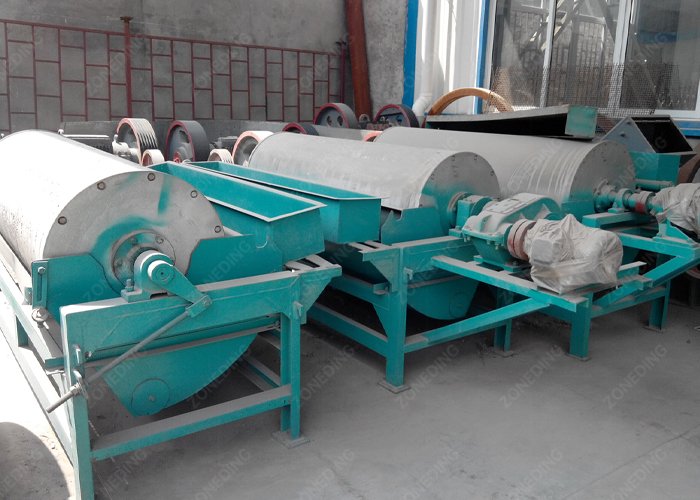
The magnetic separation method is a crucial technique to improve mineral purity and recover valuable metals. This process uses the physical property of magnetism to divide iron-bearing minerals from waste rocks. A high-efficiency ensures that a mi...
View details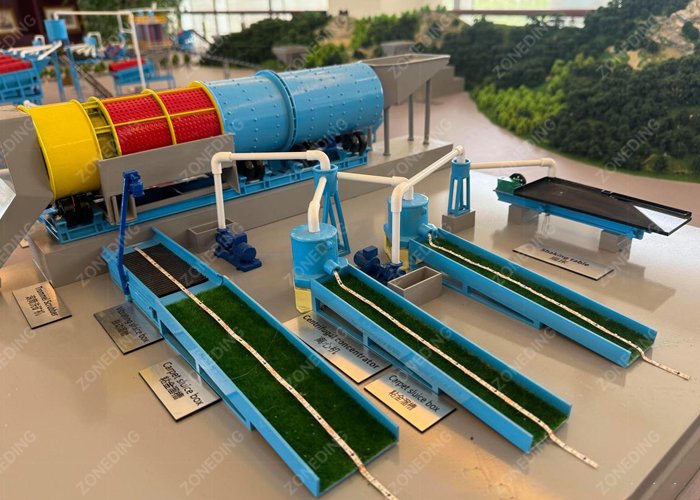
ZONEDING helps gold plants improve output by controlling the full process, not just one reagent or one machine. A stable gold recovery rate comes from liberation control, classification stability, efficient separation, and strict loss ac...
View details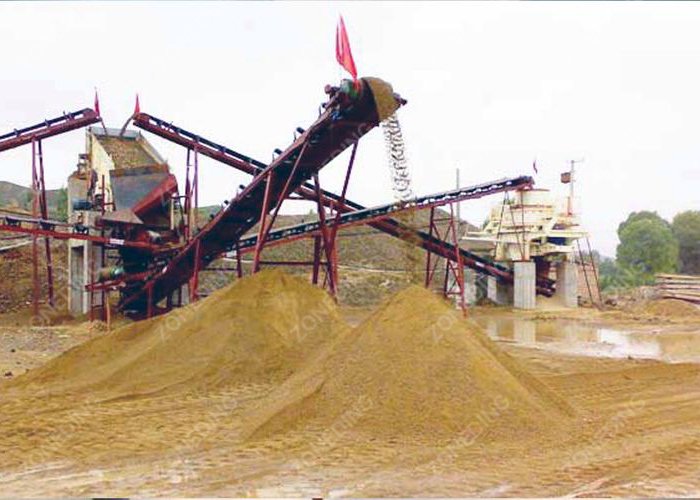
The construction industry relies on seven distinct types of sand to ensure structural integrity and finish quality. However, natural river sand is becoming scarce and expensive due to environmental regulations. For aggregate producers, the real op...
View details