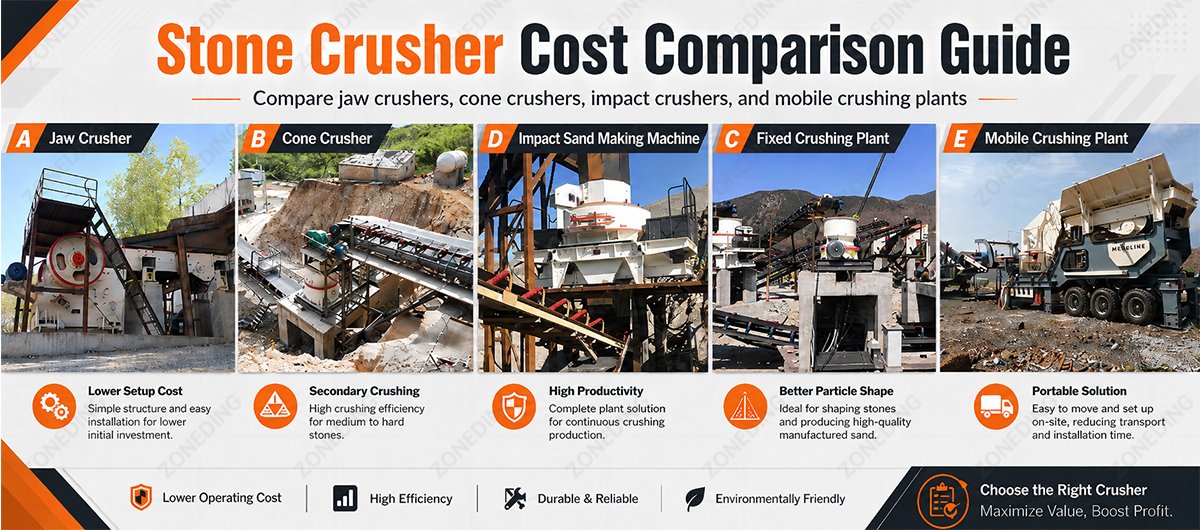
Stone crusher costs can vary dramatically even when two plants have the same production capacity. In real quarry operations, the final investment depends on rock hardness, equipment quality, automation level, mobility, and long-term operating cost. Many experienced quarry owners care far more about cost per ton than initial machine price.
Why Is Stone Crusher Cost Comparison So Important?
The real cost of a crusher plant is much more than the equipment quotation itself.
Many first-time buyers compare crushing plants only by:
TPH capacity
Machine size
Purchase price
But experienced quarry operators evaluate a much larger picture.
They focus on:
Wear cost
Electricity usage
Fuel efficiency
Downtime risk
Spare parts availability
Operational stability
A properly designed Stone Crushing Plant may require higher initial investment, but stable long-term production usually creates much stronger profitability.
Low-price crushing plants often become expensive later because of unstable operation and excessive maintenance.
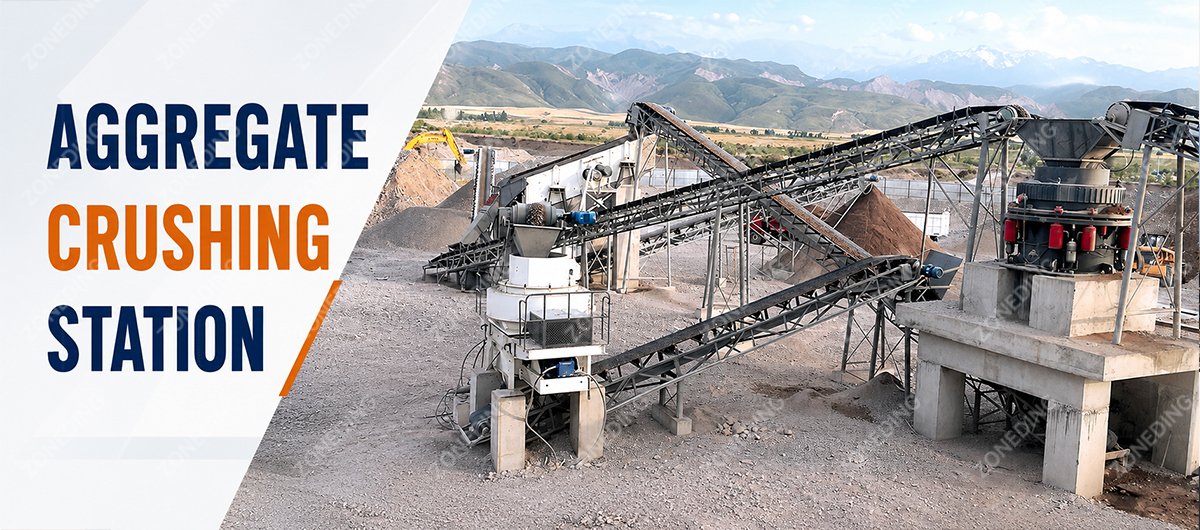
Aggregate Crushing Plant Investment
Why Similar Capacity Plants Have Different Prices
Two 300 TPH crushing plants can differ in price by hundreds of thousands of dollars.
The main reasons include:
Rock type
Automation systems
Structural quality
Environmental protection
Mobility requirements
Granite and basalt crushing lines usually require stronger equipment than limestone plants because abrasive stone rapidly increases wear.
Cost Factor
Lower-Cost Plant
Higher-Cost Plant
Long-Term Impact
Rock Type
Limestone
Granite/Basalt
Wear cost difference
Automation
Manual controls
PLC systems
Labor savings
Mobility
Fixed plant
Mobile system
Flexibility
Dust Control
Basic
Full suppression
Permit stability
Practical Investment Suggestions
A buyer planning long-term aggregate production should focus on lowering operating cost instead of only reducing purchase price.
Hard rock projects usually require stronger liners and more durable crushing chambers because abrasive material destroys weak components quickly.
Many profitable quarry owners also avoid oversized equipment because low utilization quietly reduces fuel efficiency and increases maintenance expenses.
What Factors Affect Stone Crusher Prices Most?
Rock hardness, mobility, automation, and screening requirements create the largest price differences in crusher plants.
Soft limestone plants are usually much cheaper because the crushing process creates lower wear and consumes less power.
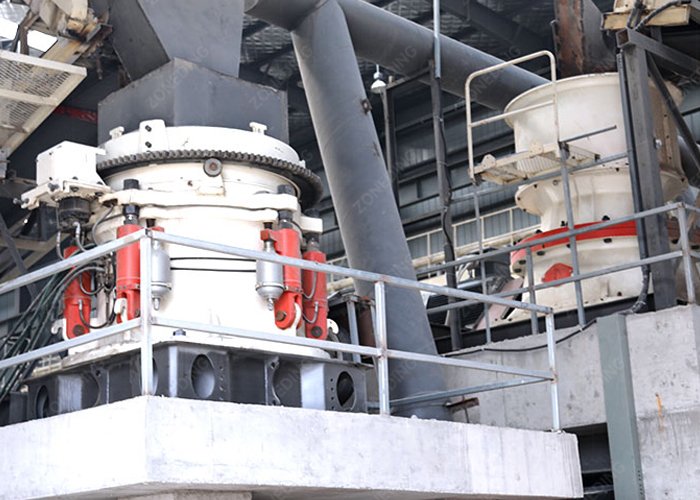
Granite and basalt operations often require a heavy-duty Cone Crusher because cone crushers provide stronger wear resistance and stable product gradation under abrasive conditions.
However, cone crushing systems increase:
Hydraulic complexity
Lubrication requirements
Spare parts cost
Initial investment
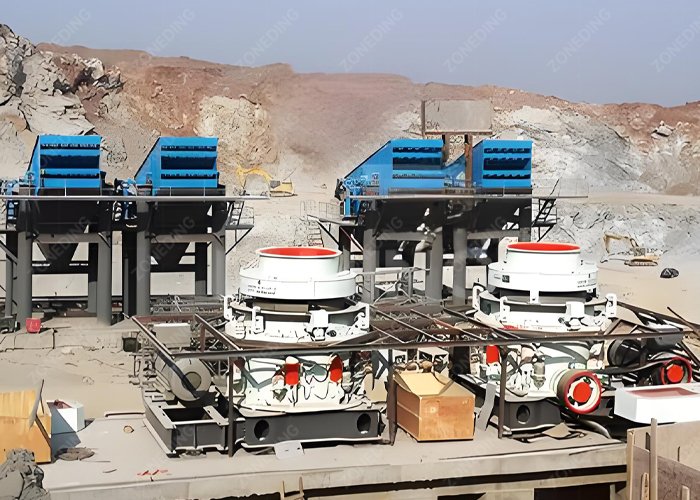
Cone Crusher Quarry Production
Cone Crushers in Aggregates
Why Hard Rock Crushing Costs More
Hard stone creates much higher stress on:
Liners
Bearings
Screens
Conveyors
Motors
This is why two plants with identical capacity can have completely different prices.
Limestone operations often use impact crushing because softer stone produces lower wear rates and lower energy demand.
Material Type
Recommended Setup
Wear Level
Investment Level
Limestone
Jaw + Impact
Lower
Lower
Granite
Jaw + Cone
High
Higher
Basalt
Jaw + Cone + VSI
Very high
Premium
Practical Cost Comparison Tips
Projects involving softer material usually benefit from simpler crushing circuits and lower operating cost.
Operations processing granite or basalt should prioritize liner durability and stable production rather than choosing the lowest quotation.
Structural quality also matters heavily because weak support frames often develop cracks after months of vibration.
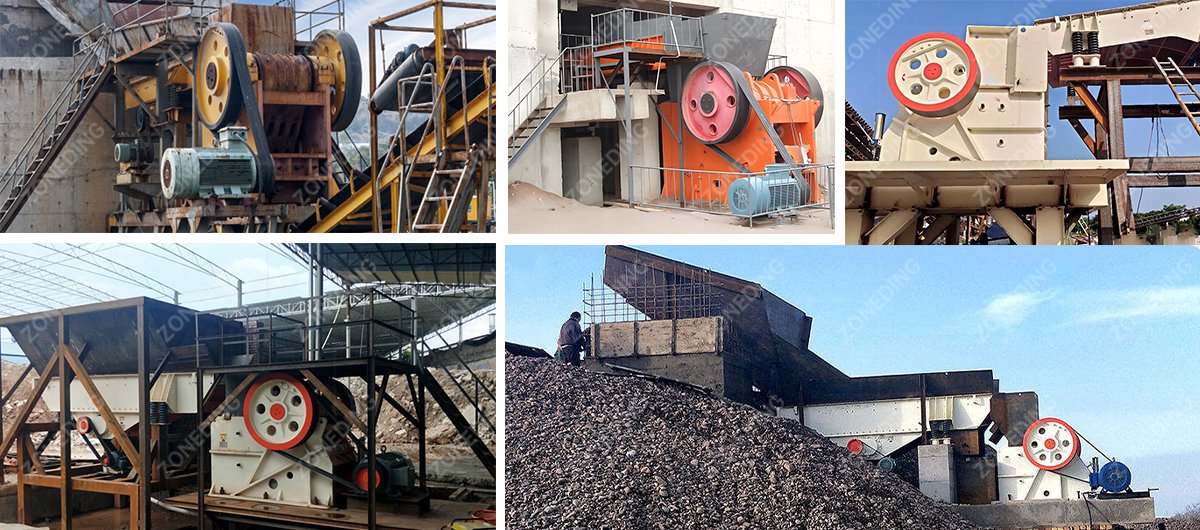
How Much Does a Jaw Crusher Cost?
Jaw crushers are usually the most cost-effective primary crushing solution for aggregate production.
A Jaw Crusher remains highly popular because it offers:
Simple operation
Lower maintenance
Easy liner replacement
Stable feeding performance
Lower power consumption
This makes jaw crushers especially attractive in developing regions where spare parts and technical support may be limited.
Jaw Crusher Operating Costs
Why Jaw Crushers Remain Popular Worldwide
Jaw crushers are not ideal for producing final high-shape aggregate. Their main role is primary size reduction.
But many quarry owners continue using them because:
Downtime remains low
Repair is straightforward
Wear parts stay affordable
Well-maintained jaw crushers can operate reliably for many years with relatively low operating cost.
Jaw Crusher Feature
Operational Benefit
Long-Term Result
Simple Design
Easier maintenance
Lower downtime
Stable Feeding
Better chamber efficiency
Consistent output
Affordable Liners
Lower wear expense
Better profitability
Practical Jaw Crusher Recommendations
Smaller aggregate producers often prefer jaw crushing because operational management stays simple.
Remote quarry operations also benefit from equipment that can be repaired quickly without specialized technicians.
Stable feeding conditions are extremely important because uneven feeding increases wear and power consumption rapidly.
Is a Cone Crusher More Expensive Than an Impact Crusher?
Cone crushers usually require higher investment, but they often create lower long-term crushing cost in hard rock applications.
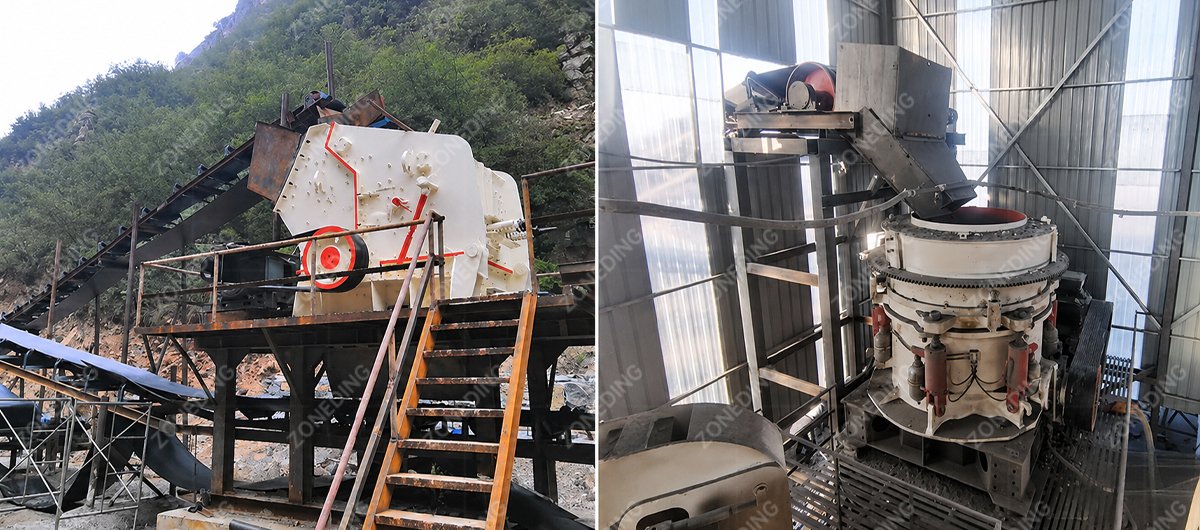
An Impact Crusher is highly effective for limestone because it produces excellent aggregate shape and lower flaky content.
But abrasive stone like granite and basalt can destroy blow bars quickly.
Cone crushers provide:
Better wear resistance
More stable production
Longer liner life
Consistent aggregate grading
Impact Crusher vs. Cone Crusher
Why Initial Price Can Be Misleading
Some buyers choose impact crushers only because purchase price is lower.
This often creates larger expenses later because:
Blow bars wear rapidly
Shutdown frequency increases
Aggregate quality becomes unstable
Many experienced quarry owners compare:
Wear cost per ton
Downtime frequency
Maintenance accessibility
Spare parts support
instead of focusing only on machine price.
Crusher Type
Initial Investment
Wear Cost
Best Material
Impact Crusher
Lower
High in hard rock
Limestone
Cone Crusher
Higher
Lower long term
Granite/Basalt
Practical Crusher Selection Suggestions
Limestone producers usually benefit from impact crushing because aggregate shaping quality remains excellent.
Granite operations often achieve better long-term profitability with cone crushers due to improved wear resistance.
Reliable after-sales support matters heavily because spare parts delays can stop production completely.
Mobile Crusher vs Stationary Crusher: Which Saves More Money?
Mobile crushing plants require higher investment, but they reduce transportation and installation expenses in many projects.
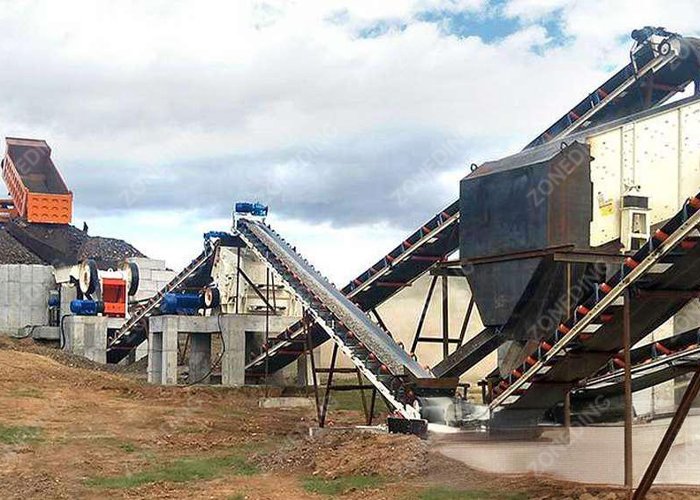
Cost Comparison Between Mobile and Stationary Crushers
Mobile crushing systems work especially well when:
Material locations frequently change
Recycling contracts dominate
Temporary projects are common
Permanent quarry operations usually prefer stationary layouts because fuel consumption and maintenance remain lower over time.
Plant Type
Main Advantage
Main Limitation
Best Use
Mobile Plant
Flexibility
Higher fuel cost
Temporary projects
Stationary Plant
Lower operating cost
Less mobility
Permanent quarry
Practical Mobility Recommendations
Demolition and recycling projects usually benefit from mobile crushing because material transport distance becomes much shorter.
Long-term aggregate operations often achieve better stability with stationary systems.
Projects with uncertain long-term location conditions may reduce risk by starting with mobile equipment.
Which Crusher Has the Lowest Operating Cost?
Jaw crushers usually provide the lowest operating cost for primary crushing operations.
Operating cost depends heavily on:
Feeding stability
Rock hardness
Chamber design
Wear life
Power efficiency
Many operators improve efficiency further by combining crushing systems with a properly configured Vibrating Feeder, because unstable feeding quietly increases fuel use and liner wear.
Why Feeding Stability Matters
Poor feeding creates:
Chamber blockage
Motor overload
Excessive liner wear
Lower crushing efficiency
Experienced quarry managers optimize:
Feed distribution
Chamber utilization
CSS settings
Conveyor layout
because even small improvements create major yearly savings.
Cost Area
Main Cause
Long-Term Impact
Electricity
Poor chamber efficiency
Higher energy cost
Wear Parts
Abrasive material
Frequent downtime
Fuel
Workflow inefficiency
Lower margins
Maintenance
Weak structural quality
More repairs
Practical Operating Cost Suggestions
Consistent feeding usually improves crusher efficiency more effectively than simply increasing machine size.
Hard rock applications require stronger wear protection because liner replacement becomes one of the largest ongoing expenses.
Efficient conveyor layout also reduces fuel consumption and recirculation load significantly.
How Much Do Crusher Wear Parts Cost Each Year?
Wear parts quietly control long-term crusher profitability more than most buyers expect.
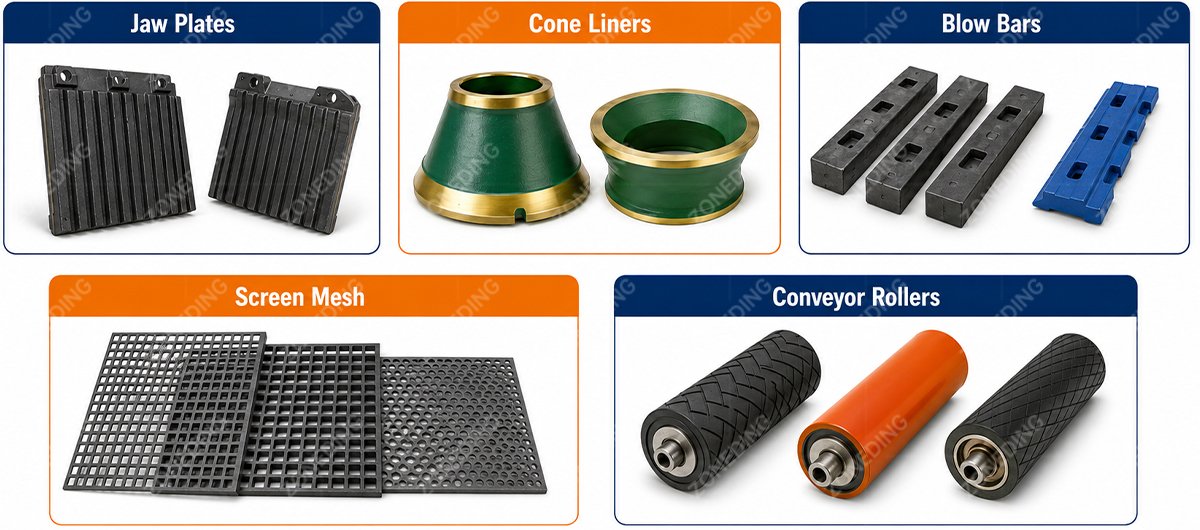
Wear components include:
Jaw plates
Cone liners
Blow bars
Screen mesh
Conveyor rollers
Many crushing plants also depend heavily on efficient Vibrating Screens because poor screening accuracy increases unnecessary recirculation and accelerates wear.
Crusher Wear Parts
Why Wear Cost Per Ton Matters More Than Purchase Price
A liner lasting 800 hours is often far more profitable than one lasting only 300 hours, even if the purchase price is higher.
Experienced operators evaluate:
Replacement frequency
Downtime impact
Wear life consistency
Spare part availability
instead of only comparing liner quotations.
Wear Part
Typical Life
Main Cost Driver
Profit Impact
Jaw Plates
Medium
Material hardness
Stable
Cone Liners
Variable
Abrasive rock
Major
Blow Bars
Shorter in hard rock
Impact wear
High
Practical Wear Management Suggestions
Premium liner materials usually reduce long-term operating cost in abrasive applications.
Local spare parts inventory becomes extremely important because unexpected downtime quickly destroys profitability.
Balanced chamber loading also helps extend liner life significantly.
How Can Automation Reduce Long-Term Crusher Costs?
Automation increases initial investment but reduces operational risk and labor dependency.
Modern crushing plants increasingly use:
PLC systems
Remote monitoring
Automated lubrication
Sensor controls
Overload protection
Many large aggregate operations integrate automated Crushing Equipment systems because production stability improves significantly.
Why Automation Improves Stability
Automation helps reduce:
Human error
Shutdown risk
Product inconsistency
Maintenance delays
Smaller quarry operations sometimes prefer simpler systems because repairs remain easier and electrical complexity stays lower.
Automation Level
Initial Cost
Long-Term Benefit
Best Application
Manual Plant
Lower
Easier repair
Small operations
Semi-Automatic
Medium
Better stability
Mid-size plants
PLC System
Higher
Lower labor cost
Large quarry
Practical Automation Recommendations
Large crushing operations usually benefit greatly from automated lubrication and monitoring systems.
Smaller quarries often achieve better reliability with simpler manual controls.
Remote monitoring becomes increasingly valuable because operators can detect problems before major shutdowns occur.
What Is the Average Payback Period for a Crusher Plant?
Most profitable crusher plants recover investment within 2 to 5 years depending on utilization and aggregate demand.
ROI depends heavily on:
Uptime
Fuel efficiency
Aggregate quality
Transportation distance
Maintenance control
The most successful crushing plants are usually:
Well balanced
Properly sized
Easy to maintain
Operationally stable
The Biggest Industry Truth
Stone crusher cost comparison is not really about:
Horsepower
Quotation price
Theoretical capacity
Long-term profitability depends on:
Cost per ton
Wear life
Fuel efficiency
Maintenance simplicity
Operational stability
Experienced quarry owners understand that the cheapest crusher to buy often becomes the most expensive crusher to own.
Frequently Asked Questions
Which crusher has the lowest operating cost?
Jaw crushers usually provide the lowest operating cost for primary crushing applications.
Are cone crushers worth the higher price?
Yes. Cone crushers often reduce long-term wear cost significantly in granite and basalt operations.
Why are mobile crushers more expensive?
Mobile systems include hydraulic components, chassis engineering, and compact integrated structures that increase manufacturing cost.
What is the biggest hidden crusher expense?
Wear parts, downtime, and electricity consumption are often underestimated during project planning.
How long does crusher plant ROI usually take?
Most aggregate crushing operations recover investment within 2 to 5 years if utilization remains stable.
Final Thoughts
The best crusher investment is rarely the cheapest quotation. Long-term profitability depends on equipment stability, wear control, maintenance simplicity, and efficient production management.
Successful quarry operations usually focus on:
Lower cost per ton
Stable uptime
Efficient feeding
Balanced equipment sizing
Reliable aggregate quality
A properly designed crushing plant will usually outperform oversized low-cost systems over the long term.
About ZONEDING
We are ZONEDING, a Chinese manufacturer specializing in crushing, screening, grinding, and mineral processing equipment for global B2B customers. We provide jaw crushers, cone crushers, impact crushers, mobile crushers, and complete aggregate crushing solutions.
Our equipment has been exported to more than 120 countries. We help quarry operators improve production stability, reduce operating costs, and achieve long-term profitability.
Contact us today for customized crusher plant recommendations and professional investment guidance.
Buying a stone crusher is a major investment for any quarry, mining, or aggregate production business. The wrong equipment can increase downtime, wear cost, and energy consumption for years. Meanwhile, the right crushing system can improve product...
Magnesite mining and processing is a major sector for industrial investment in 2026. High-purity magnesium oxide (MgO) is now a critical material for steel, chemicals, and farming. Success in this industry depends on raising ore purity while cutti...
High-yield tin ore recovery depends on a design that respects the brittle nature of cassiterite. Traditional plants often lose over 40% of metal because they grind the ore into useless dust. A scientific tin processing flow design i...
Choosing between a rod mill and a ball mill is the most vital step in any mineral processing journey. This decision affects the recovery rate and the monthly electricity bill of a mining project. A uses long steel bars to crush material. A Ba...
We use cookies to ensure that we give you the best experience on our website. If you continue to use this site we will assume that you are happy with it.
Privacy Policy
Send us a message
We would love to hear from you
Submit your question and our team will respond to the email provided as soon as possible.
 Zoneding Machine