How to reprocess gold tailings profitably depends on one key question: can the remaining gold be recovered at a reasonable cost?
Many old tailings deposits still contain recoverable gold. In the past, some mining operations were limited by older grinding, gravity separation, flotation, or leaching technology.
As a result, fine gold, locked gold minerals, or sulfide-associated gold may have remained in the tailings.
However, not every tailings pond is worth reprocessing. A successful project starts with sampling, laboratory testing, process evaluation, and realistic cost control.
A complete Gold Processing Plant should be designed according to tailings characteristics, not copied from a standard ore processing flow.
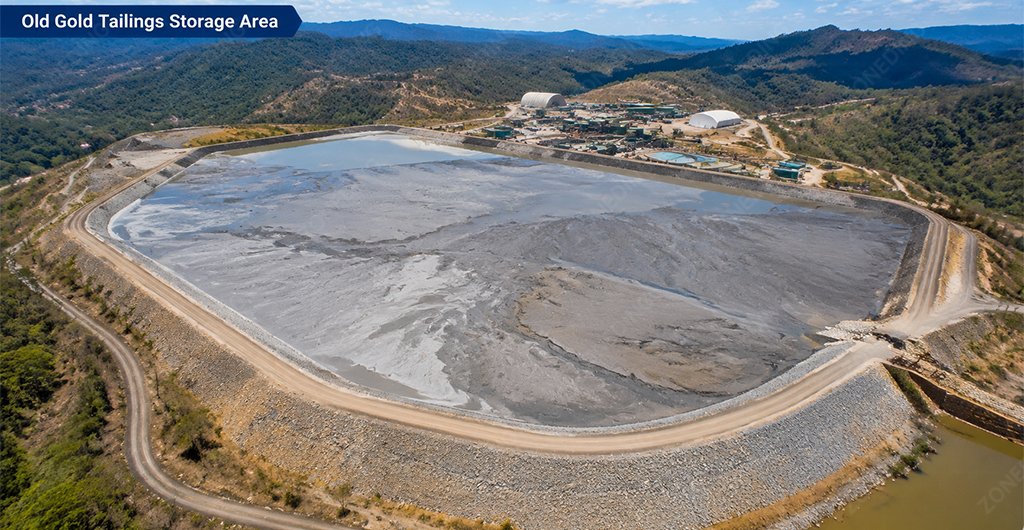
In many cases, they are materials left behind by an incomplete recovery process. Older plants may have failed to recover gold because of poor liberation, low grinding efficiency, or limited recovery technology.
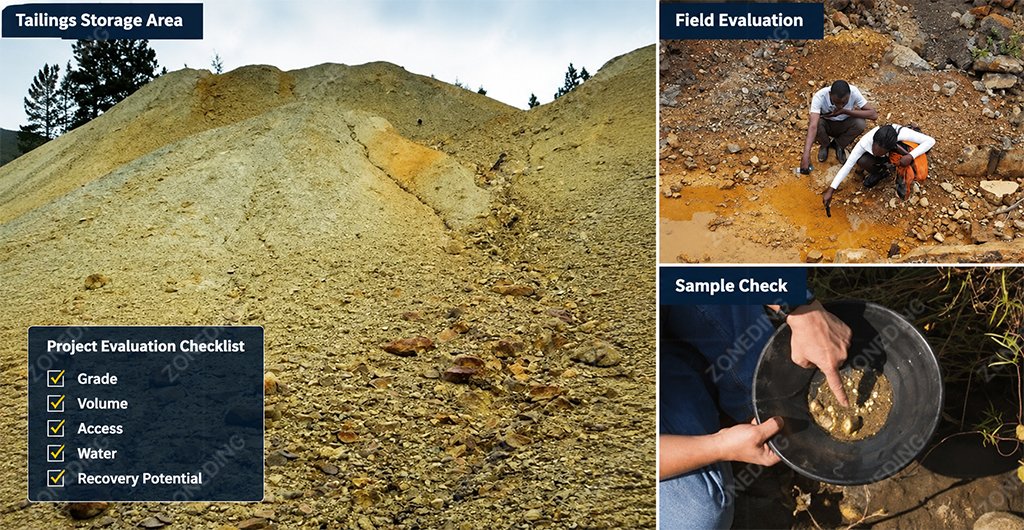
Old gold mine tailings storage area for recovery evaluation
Common reasons gold remains in old tailings include:
Insufficient grinding
Poor mineral liberation
Inefficient gravity recovery
Weak flotation performance
Incomplete leaching
Poor classification control
Lack of modern testing methods
For example, coarse free gold may have been missed by poorly adjusted gravity equipment. Fine gold may also remain unrecovered if flotation or cyanidation conditions were not suitable.
Still, remaining gold content alone does not decide project value.
A lower-grade tailings deposit may be attractive if the volume is large and processing costs are low. In contrast, higher-grade tailings may be difficult to process if the gold is locked inside other minerals.
Engineer Tip: Do not rely only on historical recovery records. Old records show what previous technology recovered, not what modern testing and processing may recover today.
What Determines Gold Tailings Recovery Profitability?
Profitability is the first question before building a tailings reprocessing plant.
A process may be technically possible, but that does not mean it is commercially attractive. The project must balance recoverable gold value against equipment investment, operating cost, and site conditions.
The main profitability factors include:
Factor
Why It Matters
Gold grade
Determines potential metal value
Tailings volume
Affects project scale and operating life
Gold particle size
Influences gravity, flotation, or leaching choice
Mineral association
Determines processing difficulty
Recovery rate
Shows how much gold can be realistically recovered
Processing cost
Decides whether recovery is economical
Infrastructure
Can reduce or increase total investment
Gold grade is important, but it should not be judged alone.
A project also needs enough tailings volume, stable feed conditions, suitable water supply, reasonable power cost, and manageable environmental requirements.
In addition, recovery rate should be based on test results, not assumptions.
Recovering slightly less gold with a simpler, lower-cost process may sometimes produce better profit than chasing maximum recovery with a complex plant.
How Should You Test Gold Tailings Before Processing?
Testing should come before equipment selection.
Many tailings projects fail because investors buy machines before understanding the actual material. This often leads to wrong capacity, unsuitable recovery methods, and poor operating results.
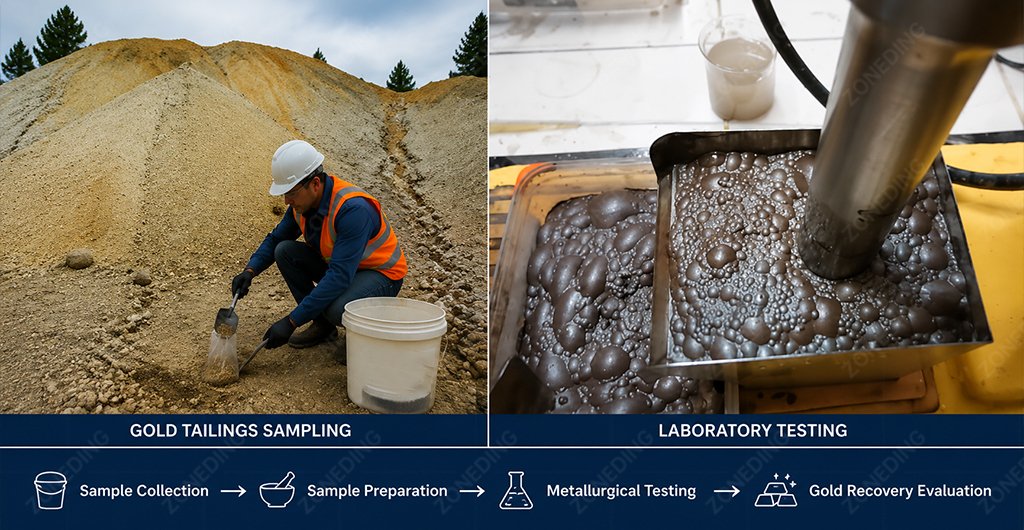
Sampling and laboratory testing for gold tailings recovery project
A proper test program should include:
Representative sampling
Gold grade analysis
Particle size analysis
Mineral composition testing
Gold distribution analysis
Liberation testing
Metallurgical recovery tests
Reagent consumption tests when needed
Sampling is especially important.
Tailings deposits are often uneven because materials were discharged over time from different ores, different plant settings, or different production periods.
Therefore, one sample cannot represent the whole deposit.
The key question is not only “How much gold is inside?” The more important question is “Can this gold be economically recovered?”
Particle size testing helps identify whether the gold is coarse, fine, or locked.
Mineralogical analysis then shows whether the gold is free, associated with sulfides, or trapped inside other minerals.
Only after these tests can engineers choose a suitable process flow.
Which Methods Can Recover Gold From Tailings?
There is no single process suitable for every gold tailings project.
The correct method depends on gold particle size, liberation degree, mineral association, tailings composition, and project economics.
Common recovery methods include gravity separation, flotation, cyanidation, and combined processing.
Tailings Condition
Possible Recovery Method
Main Consideration
Coarse free gold
Gravity separation
Simple process and low chemical use
Sulfide-associated gold
Flotation
Concentrates gold-bearing sulfide minerals
Fine liberated gold
Cyanidation
Suitable when gold can be leached effectively
Locked gold minerals
Regrinding + flotation or leaching
Improves liberation before recovery
Mixed tailings
Combined process
Matches different gold occurrence types
Gravity separation
Gravity separation is often used when tailings contain free gold particles.
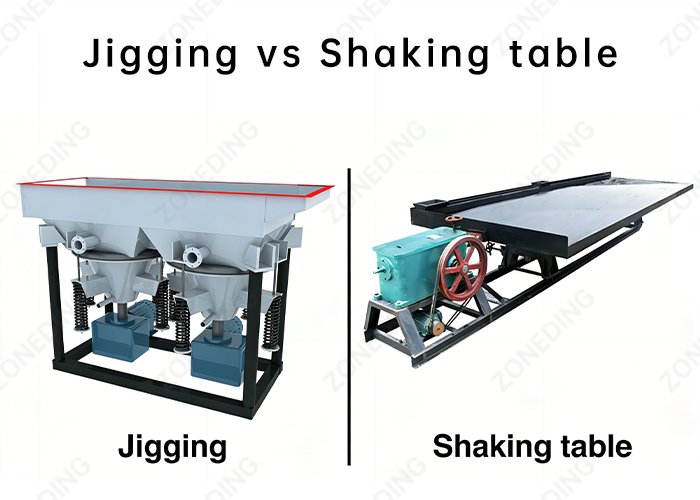
This method is usually simple to operate and does not rely heavily on chemical reagents. Equipment such as a Shaking Table may be used when free gold recovery is possible.
However, gravity separation becomes less effective when gold is very fine or locked inside other minerals.
Flotation
Flotation is commonly applied when gold is associated with sulfide minerals.
Gold may occur with pyrite, arsenopyrite, or other sulfides. In this case, flotation can concentrate gold-bearing minerals before further treatment.
A properly selected Flotation Machine can help recover sulfide-associated gold when test results support this route.
Cyanidation
Cyanidation is often used for fine gold that cannot be recovered effectively by gravity methods.
However, it requires careful testing of gold liberation, reagent consumption, mineral interference, and environmental requirements.
Some tailings need regrinding before leaching because gold remains locked inside mineral particles.
What Equipment Is Needed for Gold Tailings Reprocessing?
The equipment list depends on the selected recovery process.
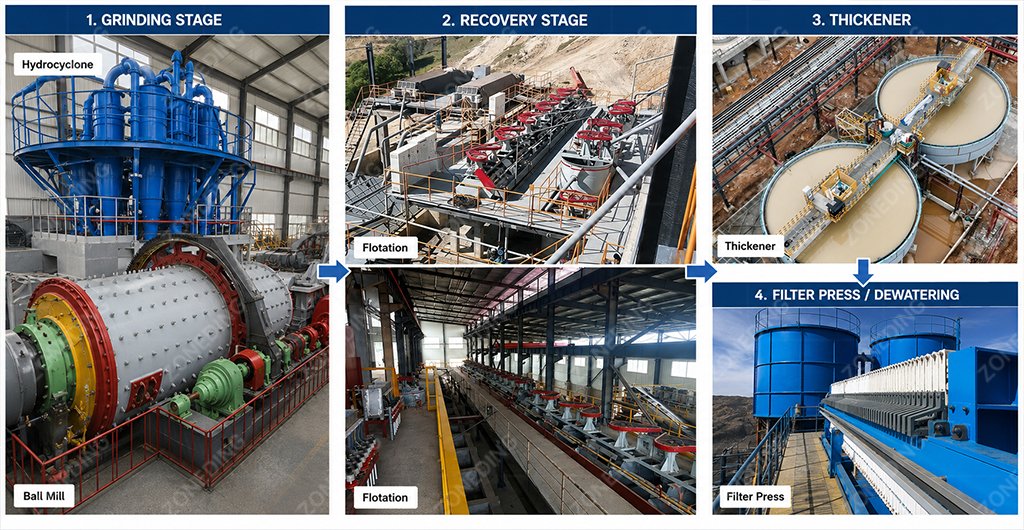
A complete tailings reprocessing system may include feeding, screening, grinding, classification, gravity concentration, flotation, leaching, thickening, and dewatering equipment.
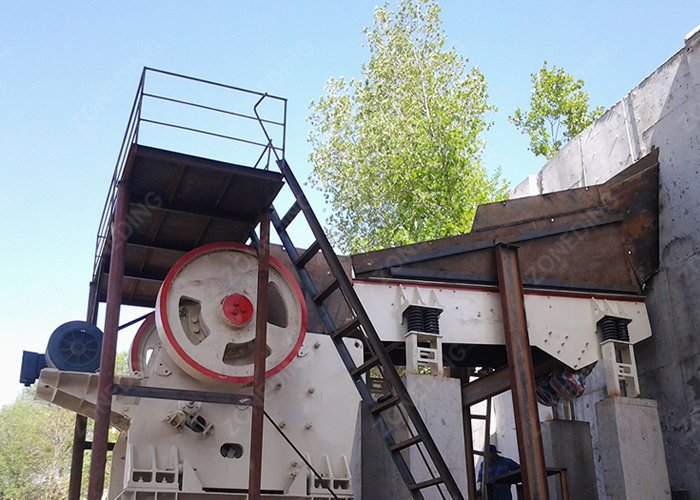
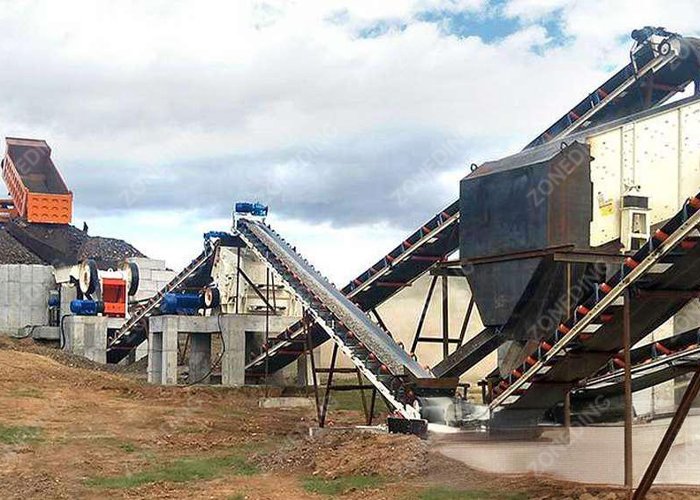
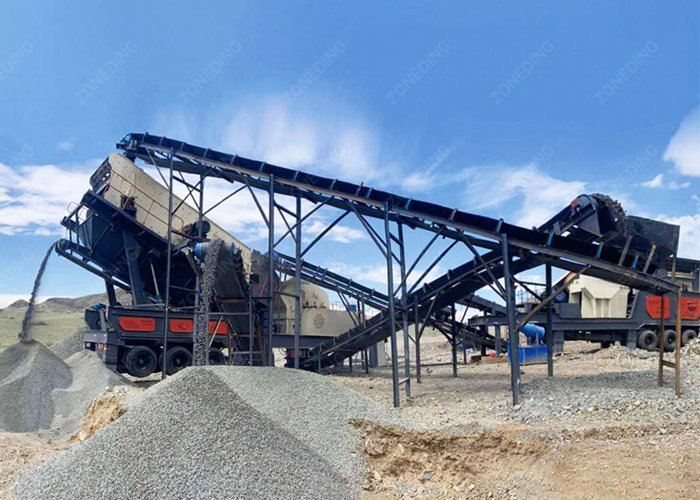
Gold tailings reprocessing equipment with grinding and recovery stages
Common equipment includes:
Slurry pump or feeding system
Trommel screen or vibrating screen
Ball mill
Spiral classifier or hydrocyclone
Gravity concentration equipment
Flotation machine
Leaching tank
Thickener
Filter or dewatering system
Conveyor or slurry pipeline system
If the tailings require additional liberation, grinding becomes important.
A Ball Mill can reduce particle size and help release gold from surrounding minerals. However, excessive grinding increases energy cost.
Classification also affects recovery stability.
A Spiral Classifier or hydrocyclone can help separate coarse and fine particles. Poor classification may cause overgrinding, lower recovery, and higher power consumption.
The final equipment configuration should always follow laboratory testing and process design.
How Can You Reduce Costs and Improve Profit?
A profitable tailings recovery project needs both recovery control and cost control.
Higher recovery does not always mean higher profit. If the additional recovery requires too much grinding energy, reagent cost, or equipment investment, the project may become less attractive.
Optimize testing before investment
Good testing reduces the risk of wrong process selection.
It can prevent over-designed circuits, unrealistic recovery expectations, and unsuitable equipment purchases.
Reuse existing infrastructure
Some projects can reduce investment by using existing roads, power supply, water systems, workshops, or processing facilities.
Even so, old infrastructure should be inspected carefully before reuse.
Choose the right recovery target
The highest possible recovery is not always the best business target.
A simpler process with stable operation and lower cost may produce better long-term returns.
Improve grinding and classification efficiency
Grinding is often one of the largest energy consumers in mineral processing.
Better mill selection, grinding media control, classification efficiency, and operating parameters can reduce power consumption while maintaining recovery performance.
Common Mistakes in Gold Tailings Reprocessing Projects
Many tailings recovery projects fail because of incorrect assumptions.
The first mistake is treating tailings like fresh ore. Tailings have already passed through a processing plant, so their mineral distribution may be very different from original ore.
Another problem is designing the plant based only on average gold grade.
Gold distribution inside old tailings deposits can be uneven. Without representative sampling, investors may overestimate both grade and recovery potential.
Equipment selection before testing is also risky.
Without laboratory results, buyers may choose the wrong grinding capacity, unsuitable flotation equipment, or an unnecessarily complex leaching system.
Cost estimation should not be ignored either.
A good evaluation must include electricity, water, reagents, labor, maintenance, tailings handling, and final concentrate treatment.
Common mistakes include:
Testing only one sample
Ignoring gold particle size
Selecting equipment before metallurgical tests
Chasing maximum recovery without cost control
Underestimating grinding energy
Ignoring water and reagent supply
Reusing old facilities without inspection
Applying a standard flowsheet to all tailings
How to Evaluate a Gold Tailings Reprocessing Project
Before investing in a tailings recovery plant, evaluate the project from both technical and economic perspectives.
A strong project usually has valuable remaining gold, suitable recovery technology, reasonable investment, stable operating conditions, and clear environmental planning.
Buyer Checklist
Before developing a gold tailings recovery project, confirm:
Representative tailings samples have been collected.
Gold grade and distribution have been tested.
Particle size and mineral composition are understood.
Metallurgical recovery tests have been completed.
Processing costs have been estimated.
Equipment selection matches the recovery method.
Water, power, and site conditions have been reviewed.
Environmental requirements have been considered.
Frequently Asked Questions
Can old gold tailings still be profitable?
Yes. Some old tailings may contain recoverable gold because previous processing technology was less efficient. Profitability depends on remaining gold content, recovery potential, processing cost, and project scale.
What tests are needed before processing gold tailings?
Important tests include gold grade analysis, particle size analysis, mineralogical testing, liberation testing, and metallurgical recovery tests. These results guide process design and equipment selection.
Which method is best for gold tailings recovery?
The best method depends on gold occurrence. Coarse free gold may suit gravity separation, sulfide-associated gold may need flotation, and fine liberated gold may require cyanidation.
Is regrinding always necessary for tailings recovery?
No. Regrinding is only needed when test results show that gold is locked inside other minerals or when further liberation can improve recovery enough to justify the extra cost.
What equipment is used in a tailings reprocessing plant?
Common equipment may include feeding systems, screens, ball mills, classifiers, gravity concentrators, flotation machines, leaching tanks, thickeners, and dewatering equipment. The final list depends on test results.
Key Takeaways
Gold tailings can become valuable secondary resources when properly evaluated.
Testing should always come before equipment selection.
Gold particle size and mineral association determine the most suitable recovery method.
A profitable project is not always the one with the highest recovery rate.
Grinding, classification, and recovery equipment should be designed as one integrated system.
Cost control is just as important as metal recovery.
About ZONEDING
ZONEDING provides complete gold processing solutions, including crushing, grinding, classification, flotation, gravity concentration, leaching support, dewatering, and customized plant design.
Our engineers evaluate tailings characteristics, gold occurrence, recovery potential, production requirements, investment conditions, and site limitations before recommending equipment.
Whether you are evaluating an old tailings deposit or upgrading an existing gold recovery operation, ZONEDING can provide process design, equipment selection, and technical support.
For a customized evaluation, please provide tailings test reports, gold grade information, available tailings volume, required processing capacity, existing facilities, and target recovery requirements.
A jaw crusher is the heavy-duty gatekeeper of most mining and aggregate production lines. This primary rock crusher uses high pressure to break large boulders into smaller, manageable pieces. It is the first machine in a crushing plant. Most opera...
Buying a stone crusher is a major investment for any quarry, mining, or aggregate production business. The wrong equipment can increase downtime, wear cost, and energy consumption for years. Meanwhile, the right crushing system can improve product...
A represents the peak of integrated mineral processing technology. This machine functions as a complete factory on wheels or tracks. It performs feeding, crushing, and screening in one continuous flow. This setup eliminates the need for expensive ...
Choosing the right gravity separation method is the most important step for a profitable mine. Both the shaking table and the jigging machine use the weight of minerals to separate them from waste rock. But choosing the wrong one leads to massive ...
We use cookies to ensure that we give you the best experience on our website. If you continue to use this site we will assume that you are happy with it.
Privacy Policy
Send us a message
We would love to hear from you
Submit your question and our team will respond to the email provided as soon as possible.
 Zoneding Machine