 Zoneding Machine



What Testwork Is Needed Before Buying a Gold Processing Plant?
747Learn what gold processing plant testwork should cover before purchase, from representative sampling and mineralogy to recovery tests and equipment sizing.
View detailsSearch the whole station Crushing Equipment
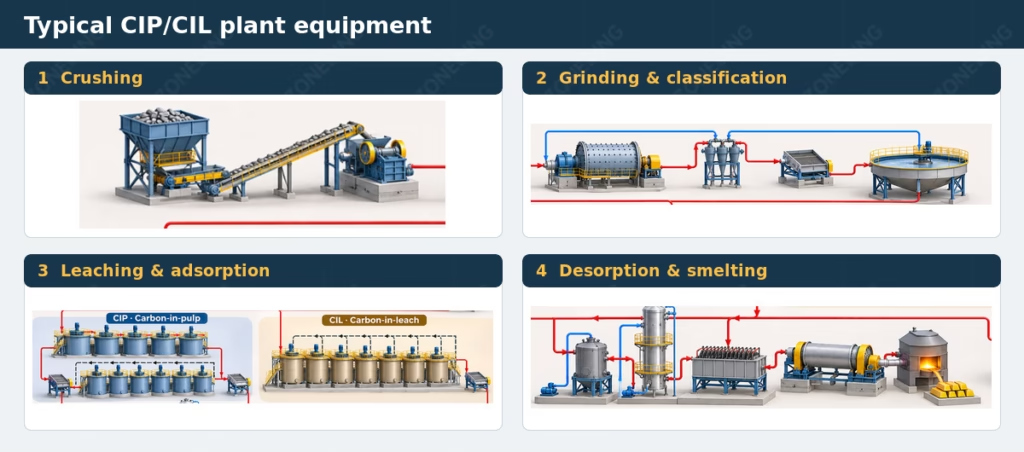
Choosing between a Carbon-in-Pulp (CIP) and a Carbon-in-Leach (CIL) circuit is one of the most critical engineering decisions when designing a modern rock gold processing plant.
While both cyanidation methods achieve overall gold recovery rates between 90% and 96%, they differ fundamentally in tank configuration, capital expenditure (CAPEX), and how they handle problematic “preg-robbing” ores.
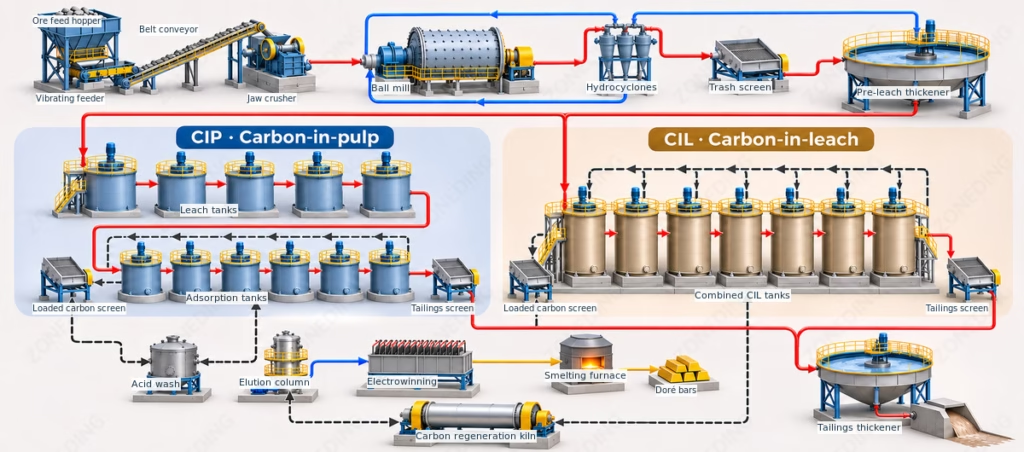
This guide compares CIP and CIL gold extraction circuits across ore mineralogy, grinding requirements, tank sizing, and startup budgets.
For plant owners and mineral processing engineers evaluating flowsheet options, the optimal choice depends directly on ore chemistry and plant scale:
| Evaluation Parameter | Carbon-in-Pulp (CIP) | Carbon-in-Leach (CIL) |
|---|---|---|
| Process Sequence | Sequential: Leaching occurs first in dedicated tanks, followed by carbon adsorption in separate tanks. | Simultaneous: Cyanide leaching and activated carbon adsorption happen together in the same tanks. |
| Total Tank Count | More tanks required (typically 3–5 leach tanks + 5–6 adsorption tanks). | Fewer tanks required (typically 6–8 combined leach/adsorption tanks). |
| Initial CAPEX | Higher (due to extra agitation tanks, piping, and larger plant footprint). | 15%–25% Lower (compact layout saves steel, concrete, and installation time). |
| Preg-Robbing Ore Handling | Poor. Native carbon in the ore steals dissolved gold before it reaches the CIP tanks. | Excellent. Activated carbon competes immediately with native carbon to capture dissolved gold. |
| Carbon Attrition & Loss | Lower. Carbon spends less time in high-shear slurry, reducing fine carbon loss. | Slightly Higher. Longer residence time in abrasive slurry requires higher-hardness coconut shell carbon. |
| Best Ore Types | Clean quartz-vein gold ore, high-grade concentrates, slow-leaching ores. | Carbonaceous gold ore, clay-rich oxide ore, high-silver-to-gold ratio ores. |
In a Carbon-in-Pulp (CIP) plant, gold dissolution and gold recovery are separated into two distinct stages after crushing and grinding:
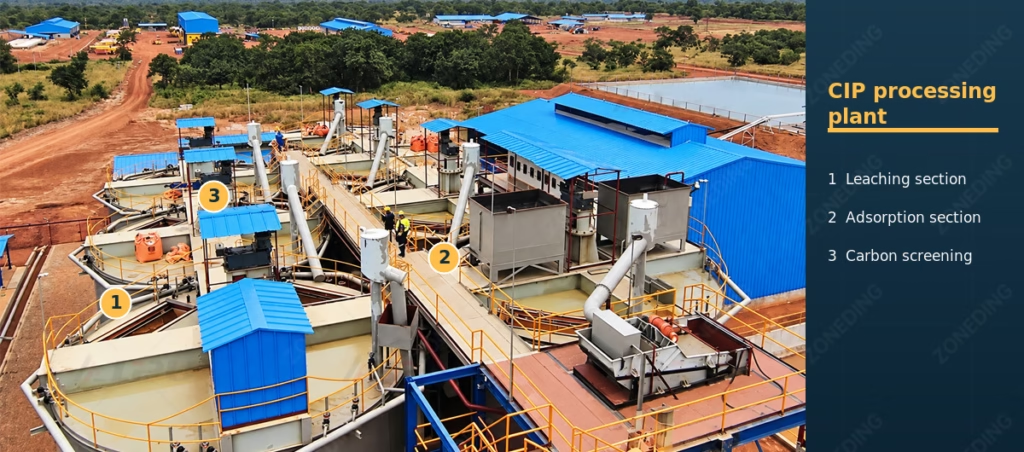
Because leaching is completed before carbon is introduced, carbon inventory is smaller and stays in the circuit for a shorter period. This minimizes mechanical abrasion of the carbon granules, preventing fine gold-loaded carbon from escaping into the tailings.
The Carbon-in-Leach (CIL) method was developed specifically to overcome the limitations of CIP when treating complex ores.
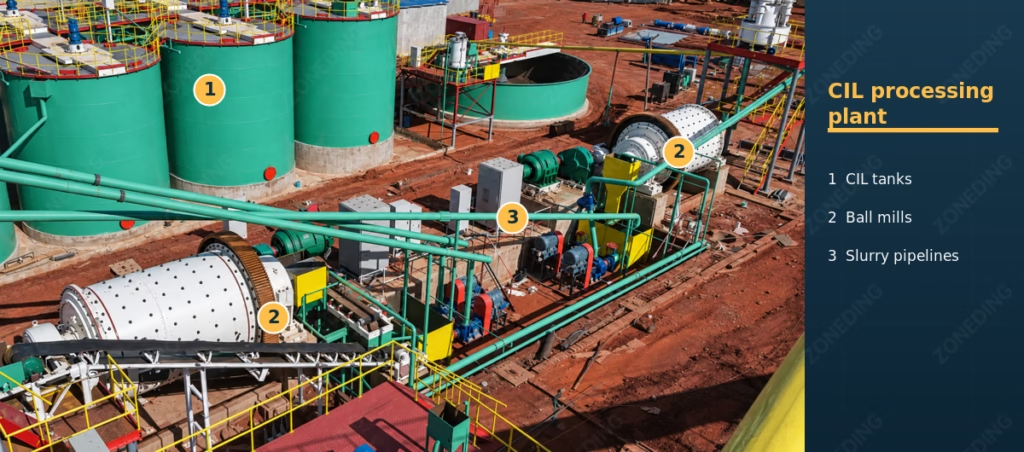
In a CIL circuit, activated carbon is added directly into the leaching tanks alongside sodium cyanide. As soon as a gold particle dissolves into the solution, the nearby activated carbon immediately adsorbs it.
Many gold deposits—especially carbonaceous shale or clay-bearing ores—contain naturally occurring organic carbon. In a traditional CIP plant, this native carbon acts like activated carbon, absorbing the dissolved gold and carrying it straight to the tailings dam.
By keeping fresh activated carbon present at the exact moment of dissolution, CIL outcompetes the ore’s native carbon, recovering gold that would otherwise be permanently lost.
Before finalizing a Gold Processing Plant flowsheet or requesting equipment sizing, evaluate your project against four engineering criteria:
Proper tank sizing directly governs residence time and gold dissolution efficiency. Undersized tanks cause short-circuiting of slurry and unrecovered gold in tailings, while oversized tanks waste capital and agitator power.
Engineers calculate required tank volume based on three core parameters:
As a rule of thumb, for a 100 TPD gold plant operating at 42% solids with a 24-hour residence time, total effective tank volume is approximately 180–200 m³, typically arranged as 6 tanks of Ø4.0 m × 4.5 m (or 7 tanks of Ø3.8 m × 4.2 m).
Whether your ore requires CIP or CIL, a reliable turnkey gold extraction line depends on properly matched upstream comminution and downstream recovery equipment:
Which process has a higher gold recovery rate, CIP or CIL?
Neither process has a universally higher recovery rate. For clean, free-milling ores with little preg-robbing behavior, a properly designed CIP or CIL circuit may achieve similar results. CIL is often more suitable for carbonaceous or preg-robbing ores because activated carbon is present while gold dissolves, reducing the opportunity for native carbonaceous material to adsorb the dissolved gold. The final choice should be based on comparative metallurgical tests rather than a general recovery-rate assumption.
Is CIL cheaper to build than CIP?
CIL can require fewer tanks because leaching and carbon adsorption occur within the same tank train. This may reduce the plant footprint, piping, agitators and some civil works. However, the actual capital cost depends on ore residence time, throughput, tank dimensions, carbon-screening requirements, oxygen supply, site conditions and local construction costs. A project-specific equipment list and layout are required before comparing CIP and CIL investment.
Can a gold plant combine gravity separation with CIP or CIL?
Yes. A centrifugal concentrator, jig or shaking table may be installed ahead of the CIP or CIL circuit when the ore contains recoverable coarse or liberated gold. Recovering part of the gold by gravity can reduce the gold load entering cyanidation and may improve overall process control. However, the expected benefit depends on gravity-recoverable gold testing, particle-size distribution and gold liberation. Gravity equipment should not be added solely on the assumption that all hard-rock gold ores contain recoverable coarse gold.
What metallurgical tests are required before choosing CIP or CIL?
The selection should consider cyanide bottle-roll tests, leaching kinetics, activated-carbon adsorption tests, preg-robbing assessment, ore mineralogy and gravity-recoverable gold testing. The test program should also measure cyanide and lime consumption, target grinding size, slurry settling behavior and the influence of copper or other cyanide-consuming minerals. Plant capacity alone cannot determine whether CIP or CIL is the better circuit.
Can an existing CIP gold plant be converted to CIL?
Conversion may be technically possible by introducing activated carbon into the leaching tanks and upgrading interstage carbon screens, carbon-transfer equipment, agitators, piping and process controls. Before conversion, engineers must verify that the existing tanks provide adequate residence time, carbon suspension, oxygen transfer and screening capacity. The study should also assess ore preg-robbing behavior, tank geometry, structural condition, carbon inventory, shutdown requirements and the expected economic benefit of the modification.
Every gold deposit has unique mineralogical characteristics. Selecting the wrong tank residence time or undersizing your grinding circuit can cost millions in lost gold recovery over the life of a mine.
Zoneding Machine engineers and manufactures complete Gold Processing Plant equipment—from heavy-duty jaw and cone crushers to energy-saving overflow ball mills and high-efficiency CIP/CIL leaching agitation tanks.
Send your ore test report, target capacity (TPD), and feed size data to our mineral processing engineers today for a customized flowsheet design and itemized equipment quotation.
Learn what gold processing plant testwork should cover before purchase, from representative sampling and mineralogy to recovery tests and equipment sizing.
View details
Compare mobile crusher plant prices, supply scope, capacity, shipping and installed costs for mining, quarry and road projects in South America.
View details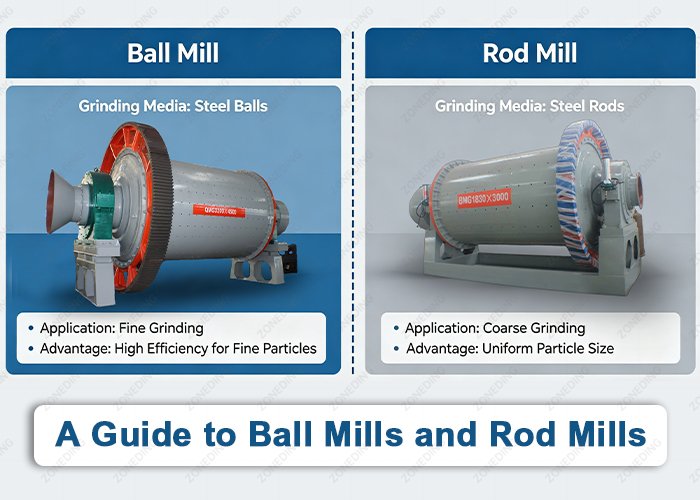
Choosing the right grinding equipment is the most critical decision for any mineral processing plant. Ball mills and rod mills serve different roles in size reduction. This guide provides a deep comparison of their advantages and applications. In ...
View details
Investing in a mobile crushing station for mining requires careful equipment selection. Showroom specifications often fail in actual quarry environments. Remote mines lack reliable power grids, clean air, and fast internet. Standard equipment conf...
View details