To reduce fines in aggregate crushing, identify where unwanted fine material enters or forms, remove suitable material before further crushing, and match crusher operation to the required product grading.
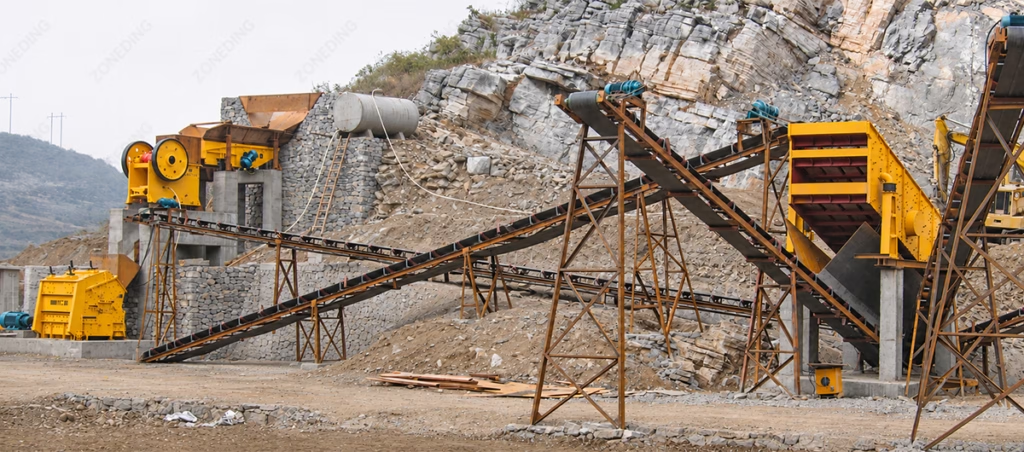
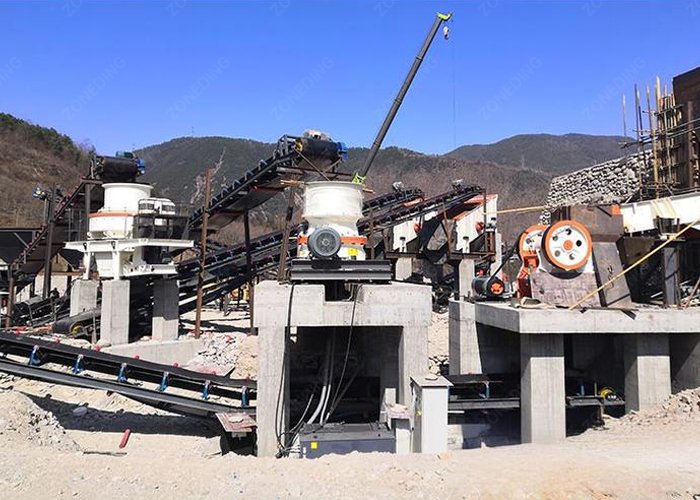
Crushing and screening equipment at an aggregate production site
The first equipment adjustment should follow the diagnosis. A plant receiving fine-rich feed needs a different response from one returning correctly sized particles to the crusher. Tightening the discharge setting in both situations can create additional breakage without addressing the cause.
For quarry operators, the objective is to preserve saleable aggregate while meeting grading and shape requirements. That means reviewing the feeder, crusher, screen, and return conveyor as one production system.
Why Is Your Aggregate Plant Producing Too Many Fines?
First define the unwanted fraction using the product specification. Fine material may be required in one product and restricted in another, so there is no universal fines limit for every aggregate plant.
Then distinguish material already present in the feed from material generated during processing.
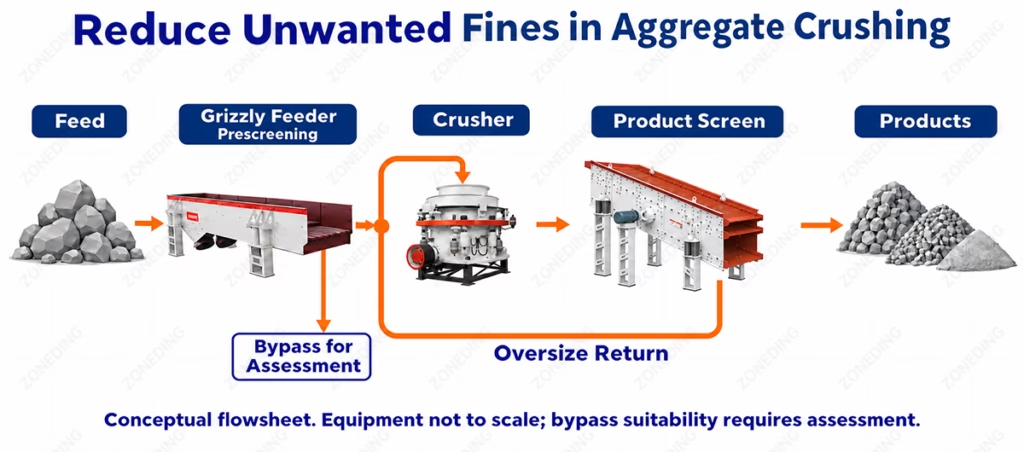
Prescreening and product screening help limit unnecessary recrushing
Possible cause
Evidence to look for
First action
Fine material already enters with the feed
Fresh-feed samples contain the unwanted fraction
Assess separation before the next crushing stage
Crusher duty produces more reduction than required
Discharge becomes finer while the desired coarse fraction decreases
Review the setting, chamber, and required stage duty
Feed does not suit the installed chamber
Feed grading falls outside the intended application
Check chamber selection with the equipment supplier
Particles return for unnecessary crushing
Particles that should pass the relevant screen deck remain in its oversize stream
Inspect screen performance and routing
Feed material or operating conditions have changed
Fines increase without an intentional process change
Compare feed condition and operating records
Visible dust alone cannot establish the fines content of the product. Use representative samples and particle size analysis to locate the problem.
Remove Suitable Material Before Further Crushing
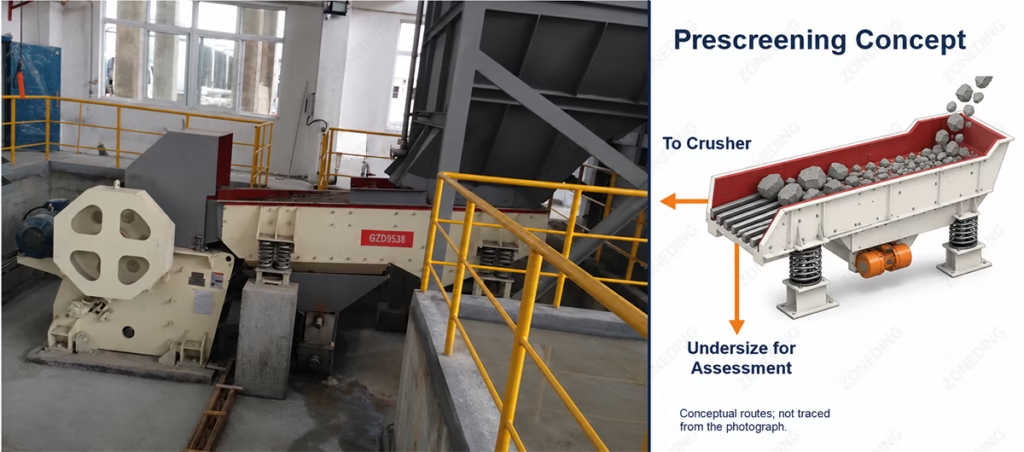
Pre-screening is worth assessing when the feed contains material that does not require additional size reduction.
Sending those particles through another crusher exposes them to further breakage. A suitable separation and bypass route can remove that unnecessary crushing duty.
However, bypass material must have a defined destination. Check whether it:
Meets a finished-product specification.
Needs further classification or cleaning.
Can enter another approved product stream.
Still requires crushing because of shape or other quality requirements.
Screen aperture alone does not establish product suitability. Fine material containing clay or other contamination may require different treatment from clean crushed aggregate.
For an existing plant, review the available space, transfer arrangements, and capacity of the proposed bypass route. Also confirm that the remaining crusher feed retains a suitable size distribution.
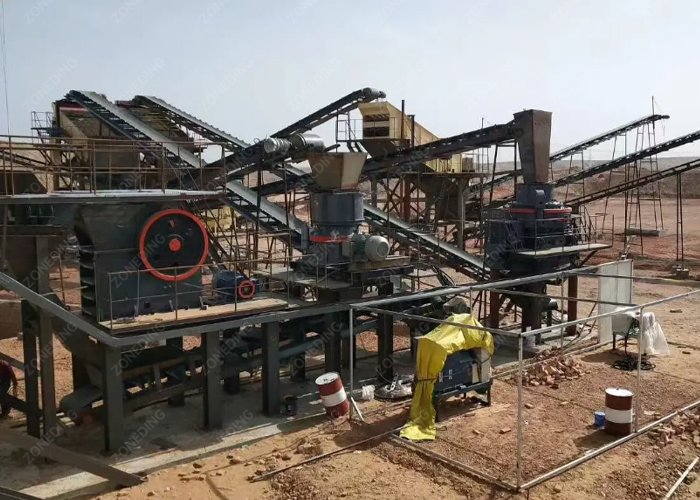
Prescreening separates undersize for assessment before further crushing
Match the Crusher Setting and Chamber to the Product
A cone crusher should receive feed suited to its chamber and perform the reduction required at that stage. The discharge setting, liner profile, and feed distribution need to be reviewed together.
Check the actual closed-side setting.
Do not rely only on the recorded target setting. Confirm the actual condition using the manufacturer’s prescribed procedure, and compare it with the required product grading.
A tighter setting can shift the discharge toward finer sizes. Opening the setting may reduce some fine production, but it can also increase oversize return. Assess the complete circuit response before accepting either change.
Confirm that the chamber suits the feed.
Check the feed size distribution against the installed chamber’s intended application. A chamber selected for a different duty may use its crushing surfaces poorly or restrict performance.
Changing the setting cannot always compensate for unsuitable chamber selection. Provide the supplier with feed and discharge samples, the installed liner profile, and operating records before selecting a replacement profile.
Inspect liner condition.
Review uneven wear and changes in the chamber profile. Confirm that the machine can maintain its intended operating condition.
Replace wear parts according to their condition and the manufacturer’s criteria. Do not select new liners solely on an unsupported promise of lower fines.
Stabilize Feed Before Changing Operating Speed
Surges and uneven distribution make the crusher’s duty inconsistent. Correcting the feed arrangement should therefore form part of the diagnosis.
Inspect the hopper, feeder, and transfer point for:
Intermittent delivery or large surges.
Segregation of coarse and fine material.
Uneven distribution into the crushing chamber.
Feed sizes unsuitable for the installed machine.
For cone crushers, follow the specified chamber loading and distribution requirements. Deliberately starving the machine is not a reliable general method for controlling fines.
For an impact crusher, review rotor speed, working clearances, blow bars, and impact surfaces against the actual duty. Changes can affect both product grading and shape.
Adjust speed or other operating parameters only within the approved range. Verify the resulting product rather than assuming that a lower speed or wider clearance will improve the overall result.
Stop Suitable Particles from Returning to the Crusher
Product screening is a direct control point for unnecessary recrushing.
If particles that should pass a particular screen deck remain in its oversize stream, they may return to the crusher for another pass. Before increasing crushing intensity, check whether the screen is failing to separate those particles as intended.
Compare samples from the screen feed, products, and return stream.
If the return contains particles that should pass the relevant screen deck: investigate separation performance and routing first.
If the return consists mainly of genuine oversize: review the crusher discharge, required reduction, and balance between crushing and screening capacity.
The guide to reducing recirculating load in a crushing plant explains the return-stream diagnosis in more detail. For fines control, the priority is to avoid sending suitable particles through unnecessary additional breakage.
When Is a Circuit Change Justified?
Consider equipment or routing changes when operating adjustments cannot resolve a problem demonstrated by sampling.
Evidence from the plant
Change worth assessing
What must be checked
Suitable material enters a crusher unnecessarily
Add or improve prescreening and bypass
Material quality, remaining crusher-feed grading, and bypass capacity
Particles that should pass the relevant screen deck remain in the return stream
Improve screening media, distribution, or justified screening area
Separation performance and total screen loading
One stage performs an unsuitable reduction duty
Review chamber selection or distribution of reduction between stages
Feed acceptance, product grading, shape, and connected capacity
A finishing stage repeatedly breaks an already suitable fraction
Assess selective routing around that stage
Whether the bypassed material meets every relevant product requirement
Required product shape is not achieved without excessive breakage
Review crusher type and finishing duty
Material testing, grading, shape, wear, and production requirements
Adding or removing a crushing stage does not guarantee fewer unwanted fines. The proposed arrangement must still handle the feed and produce the specified aggregate.
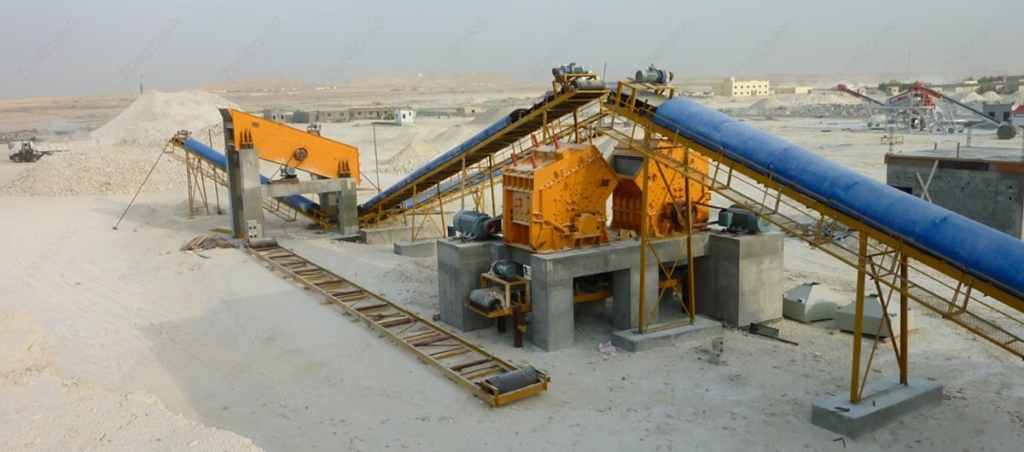
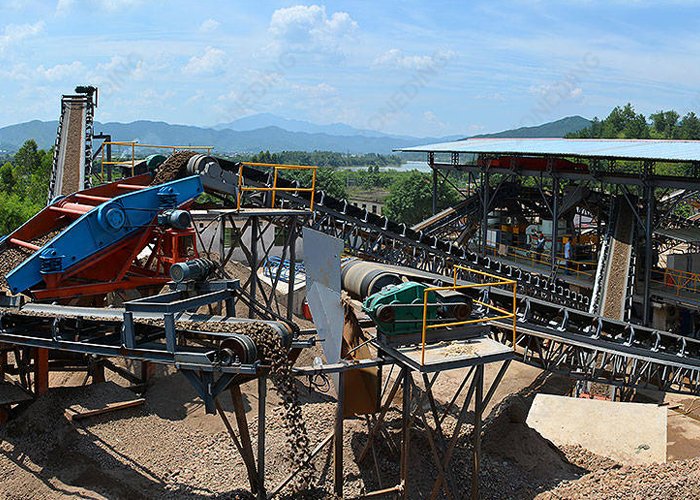
Crushing and screening equipment arranged as one production system
Verify the Change Against Saleable Production
Compare the plant before and after a change under reasonably comparable feed conditions. Record the settings, material characteristics, and sampling locations so the result can be interpreted.
Compare stream tonnages and particle size distributions on a consistent dry-mass basis, accounting for moisture changes.
Check:
The unwanted fine fraction.
Saleable output in each required product.
Product grading and particle shape.
Oversize return and operating stability.
Power, wear, and handling effects where reliable records exist.
A lower fines percentage is not sufficient if the plant produces less acceptable aggregate or shifts the problem into the return circuit. Use stream tonnages and particle size distributions together where material separates into different routes.
For a ZONEDING stone crushing plant review, provide the existing flowsheet, equipment models, feed analysis, required products, installed wear profiles, and available operating records. This information helps determine whether the next step is an operating adjustment, a screening improvement, or an equipment change.
FAQ
Can aggregate crushing eliminate fines completely?
Crushing produces a range of particle sizes. The objective is to control unwanted fines while meeting product grading, shape, and production requirements.
What should I check first when fines suddenly increase?
Check for changes in the feed, crusher settings, wear condition, and screen performance. Compare samples from the relevant streams to locate where the change occurs.
Will opening the crusher setting reduce fines?
It may produce a coarser discharge, but it can also increase oversize return. Confirm the result across the crushing and screening circuit.
Can a better screen reduce fines?
Improved separation can reduce unnecessary recrushing when particles that should pass the relevant screen deck are returning to the crusher. It cannot reverse breakage or remove the cause of fines already generated upstream.
Should I replace an impact crusher with a cone crusher?
Compare the actual material, reduction duty, product shape, grading, and wear requirements first. Crusher type alone does not determine the amount of unwanted fines.
Decades of experience in the mining sector reveal a common financial drain. Many crushing facilities struggle with high electricity bills and frequent machine failures. Facility owners often attempt to save money by purchasing cheap replacement pa...
Concrete recycling is a fast-growing industry. It turns old building waste into high-value products. Choosing the right machine is the most important part of the business. Different machines handle different materials and budgets. This guide compa...
A rock quarry can be very profitable if you control production costs, transportation distance, and equipment efficiency. In many regions, aggregate demand keeps growing because of roads, housing, and infrastructure projects. But quarry profit does...
We use cookies to ensure that we give you the best experience on our website. If you continue to use this site we will assume that you are happy with it.
Privacy Policy
Send us a message
We would love to hear from you
Submit your question and our team will respond to the email provided as soon as possible.
 Zoneding Machine