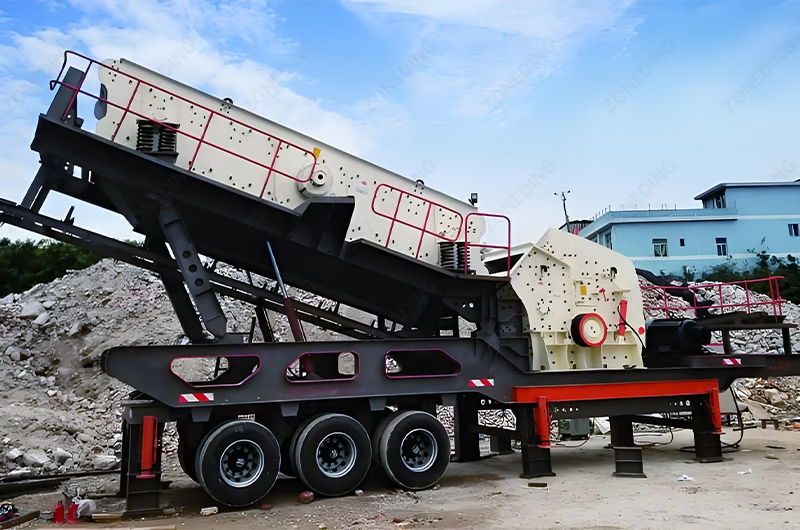
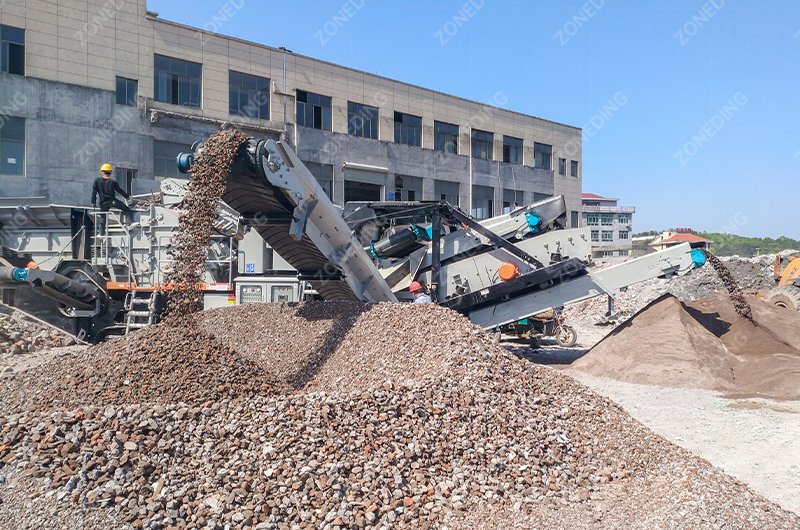
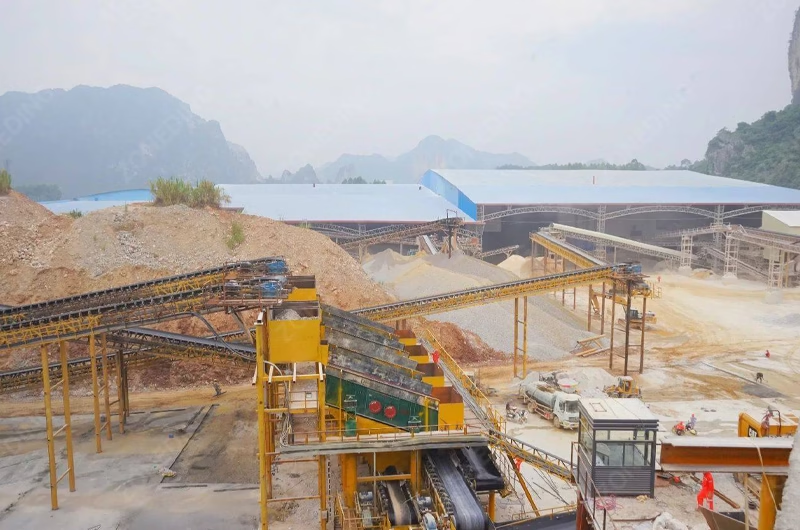
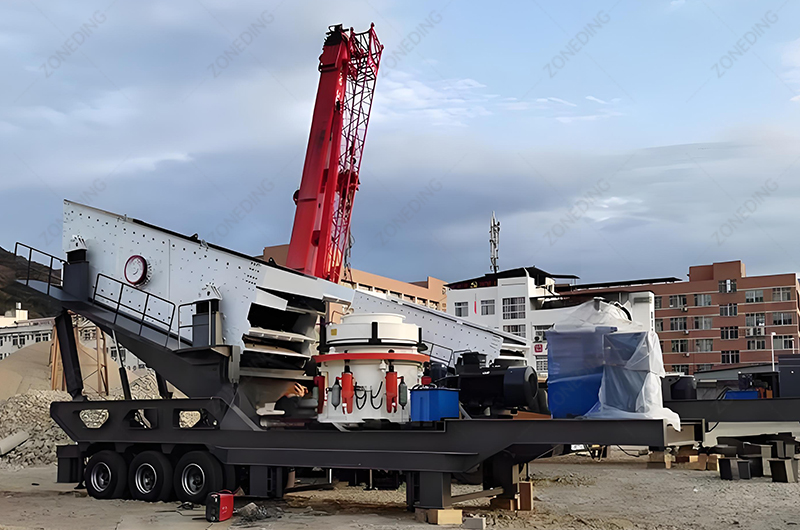
I have spent 50 years in the mining and recycling industry. I have seen people turn piles of trash into mountains of cash. But I have also seen many people lose everything because they bought the wrong machine. In 2026, urban recycling is a gold mine. But you must know how to pick the right tools. This guide explains how to select a Mobile construction waste recycling plant that actually makes you money. I will show you how to avoid common mistakes and find the best construction debris crushing solutions for your specific job.
Why is the ROI of a mobile plant higher than a fixed line for waste?
A mobile plant saves you a massive amount of money on logistics and site setup costs. In the recycling business, the biggest cost is moving the heavy waste. If you use a fixed plant, you must pay trucks to haul debris from the city to your factory. This can cost more than the crushing itself. A goes directly to the demolition site. You crush the material right where it falls. This removes the need for a fleet of trucks. It also means you can sell the recycled stones back to the same project immediately. In 2026, project timelines are very tight. Setting up a fixed factory takes months for permits and foundations. A mobile unit starts working in 48 hours. This fast start means you begin earning money much sooner. Also, when one city project ends, you drive the machine to the next one. You do not leave an expensive building behind. This flexibility is the secret to a high ROI. I always tell my clients that a machine on wheels or tracks is a moving bank. It follows the profit wherever the city grows.
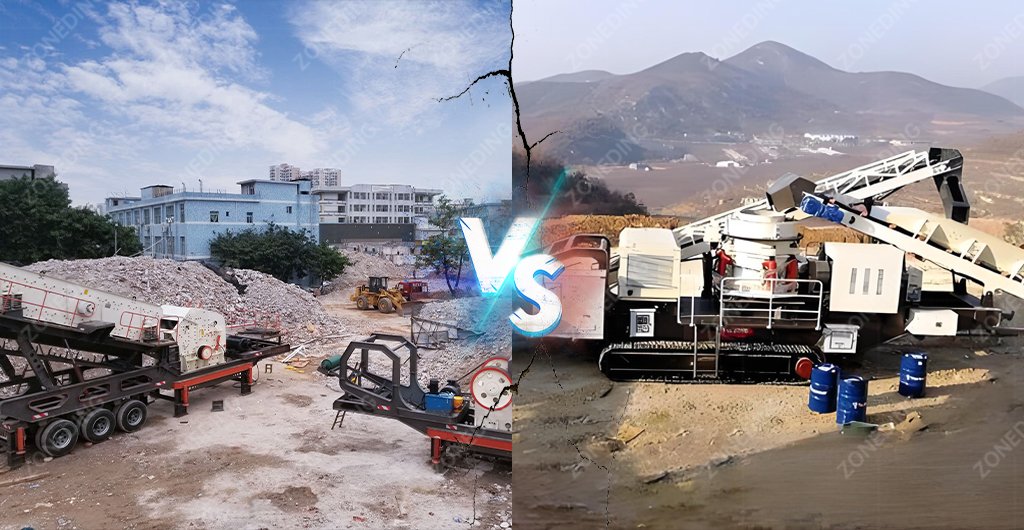
Fixed Production Lines
Mobile Crushing Station
ROI Factors for 2026 Recycling Projects
Cost Factor
Fixed Production Line
Mobile Crushing Station
Your Actual Benefit
Transport Cost
High ($10-15/ton)
Low ($1-2/ton)
Saves 80% on logistics
Permit Time
6-12 Months
1-2 Weeks
Start earning faster
Foundation Cost
Expensive Concrete
Zero
Saves $50,000+ per site
Resale Value
Low (Hard to move)
High (Easy to sell)
Protects your investment
How does machine strength handle rebar and wood in complex waste?
A recycling crusher must have a heavy-duty rotor and reinforced belts to survive steel rebar. Most building waste is full of metal bars and wood pieces. If you use a standard stone crusher, the steel will cut the belt or jam the machine. I have seen many cheap machines “choke” on a piece of rebar in the first week. You need a machine designed with “impact resistance.” The internal plates must be thicker than normal. The gap between the rotor and the wall must be wide enough to let metal pass through without breaking the shaft. Wood and plastic are also big problems. They do not break like stone. They can wrap around moving parts and cause fires or jams. A high-quality Mobile construction waste recycling plant uses a special “dual-path” design. It separates the light trash from the heavy rocks early in the process. This keeps the crushing chamber clean. Strength is not just about power. It is about how the machine handles things that are not stone. In 2026, the best machines use sensors to detect large metal pieces before they enter the chamber. This prevents the “heart” of your machine from getting hurt.
Key Features for Material Complexity
Reinforced Belts: Use belts with steel mesh inside to prevent rebar from cutting them.
Hydraulic Release: If a big piece of steel gets stuck, the machine must open automatically to let it out.
Heavy Rotor: A high-inertia rotor smashes concrete away from the steel easily. “Check our Impact Crusher page to see how we build rotors for heavy recycling.”
Why are magnetic and light separation systems vital for stone price?
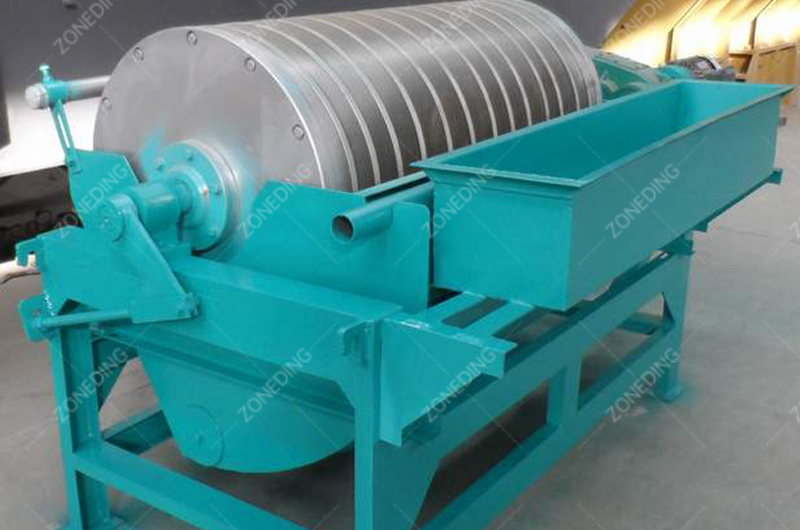
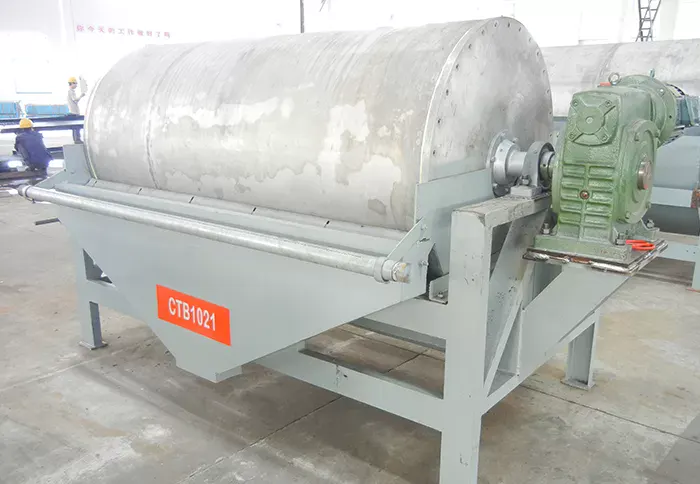
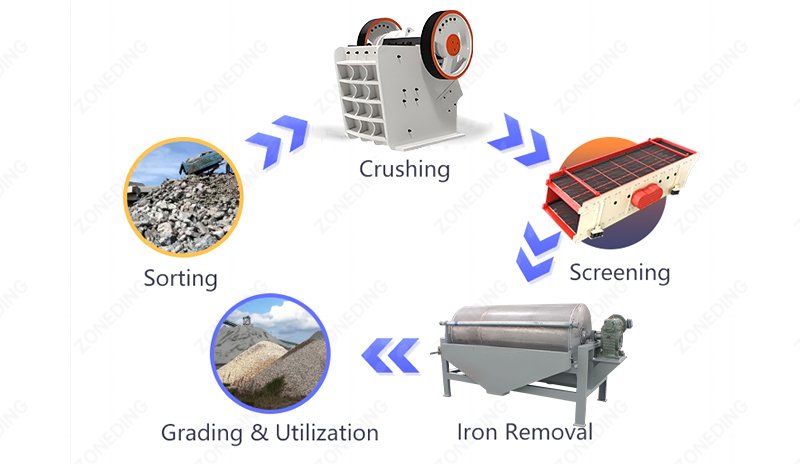
Clean stones sell for double the price of dirty stones containing wood or plastic. If your recycled aggregate has 2% wood in it, no one will use it for concrete. It becomes “low-grade fill” which has a very low price. To make real money, you need a powerful Magnetic Separator. This magnet hangs over the belt. It pulls out every piece of steel. You can sell this scrap steel to a recycler. This often pays for the fuel of the machine. It is a “double profit” strategy. Light materials like paper and foam are harder to remove. You need an “Air Classifier” or wind sifter. This system blows a strong wall of air through the falling stones. The heavy stones fall down. The light trash blows away into a bin. In 2026, construction debris crushing solutions must include these cleaning steps. If you produce “pure” aggregate, you can sell it to high-end road projects. It looks and performs just like new stone from a quarry. Cleaning the material is the difference between a waste business and a material supply business.
Magnetic Separator
Magnetic Separator
Separation Technology Comparison
Magnetic Cross-Belt: Best for removing rebar and nails.
Wind Sifter: Best for removing plastic, wood, and paper.
Water Floatation: Best for very dirty waste, but it is messy and expensive.
What noise and dust standards are required for city center work?
In 2026, urban projects require “Zero-Dust” and “Low-Noise” certificates to operate. If your machine creates a big cloud of dust, the neighbors will complain. The government will shut you down in hours. You cannot just use a water hose. You need a built-in “high-pressure mist” system. These systems use very little water but create a fog that kills the dust at the source. The machine must also have covers over all the vibrating parts. This keeps the dust inside the machine. Noise is the next big challenge. City centers often have a 75-decibel limit. Traditional engines are too loud. Modern Recycled aggregate production equipment uses “Acoustic Hoods” around the engine. Some machines are now “Dual-Power.” They run on electricity from the city grid when working in the city. This makes them very quiet. It also saves you money on diesel. I tell my customers to check the local laws before buying. In 2026, a quiet machine is the only machine that can work near schools or hospitals.
Mandatory 2026 Urban Specs
Dust Encapsulation: All belts and screens must have physical covers.
Spray Bars: Automated sensors that spray water only when there is material on the belt.
Silent Engines: Engines must meet Tier 5 or Electric standards for low noise.
How to match the right crusher to concrete, brick, and asphalt?
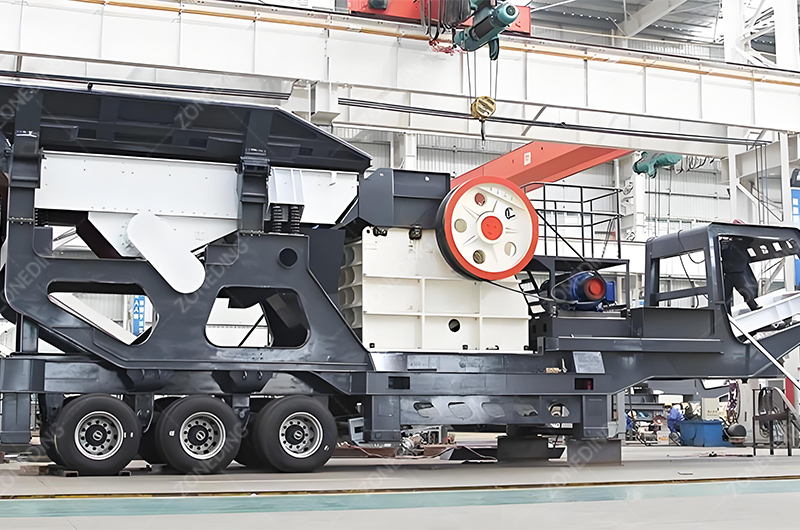
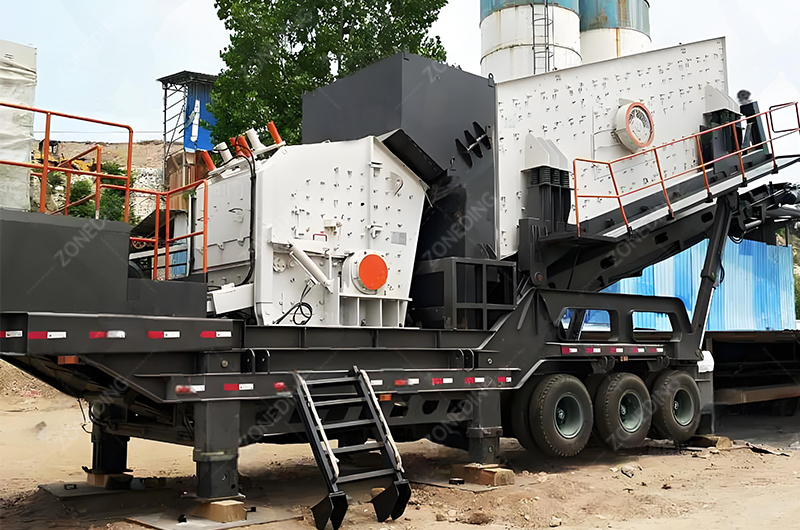
The type of waste you have decides if you need a Jaw crusher or an Impact crusher. If you have huge blocks of hard concrete with lots of steel, start with a Mobile Jaw Crusher. It has a massive “bite” that crushes the hardest concrete. But jaw crushers produce stones that are a bit flaky. If you want a perfect shape for road base, you must follow the jaw with an impact crusher. The impact crusher is the king of shape. It also separates the concrete from the rebar better than any other machine. For bricks and asphalt, a Mobile Impact Crusher is usually enough by itself. Bricks are soft. An impactor smashes them into beautiful sand and gravel quickly. Asphalt is sticky, especially in summer. You need a machine with a “non-stick” liner and a wide discharge. If the asphalt gets too hot, it will turn into a big ball of glue inside the machine. Knowing your material is the first step in how to choose construction waste crusher models. Do not use a machine made for hard granite to crush soft bricks. You will waste energy and time.
Mobile jaw crusher
Mobile impact crusher
Material Matching Table
Waste Type
Primary Challenge
Recommended Machine
Why?
Hard Concrete
High strength/Steel
Mobile Jaw Crusher
High crushing force
Mixed Bricks
High dust/Abrasive
Mobile Impact Crusher
Better shape/separation
Old Asphalt
Sticky/Heat sensitive
Impact with Wide Opening
Prevents clogging
Demolition Mix
Wood/Plastic/Metal
Full Recycling Station
Multi-stage cleaning
“For finer road base material, look at our Sand Making Machine for secondary processing.”
How to choose between tracked and wheeled mobile plants?
Tracked units are best for rough demolition sites, while wheeled units are better for fast highway moves. If you are working on a site with mud, broken bricks, and soft ground, you need tracks. A Tracked Jaw Crusher can climb over piles of debris. It does not need a truck to move it around the site. You use a remote control to drive it like a tank. This is perfect for big city demolition where the work area changes every day. Wheeled units, or “tire-type” stations, are built for speed. You hook them to a truck and drive them at 60 km/h on the highway. They are great if you have five small projects in different parts of the city. You can finish one, move in an hour, and start the next. They usually cost a bit less than tracked units. But they need flat, hard ground to work safely. In 2026, most big contractors choose tracks for “heavy” waste and wheels for “light” or “fast” projects.
Comparison of tracked crushers and tire-mounted crushers
Chassis Selection Guide
Tracked (Crawler): Best for muddy sites, steep hills, and constant moving.
Wheeled (Tire): Best for paved roads, frequent highway travel, and lower budgets.
Modular: Best for sites that stay in one place for more than six months.
Can recycled aggregate reach road and brick standards?
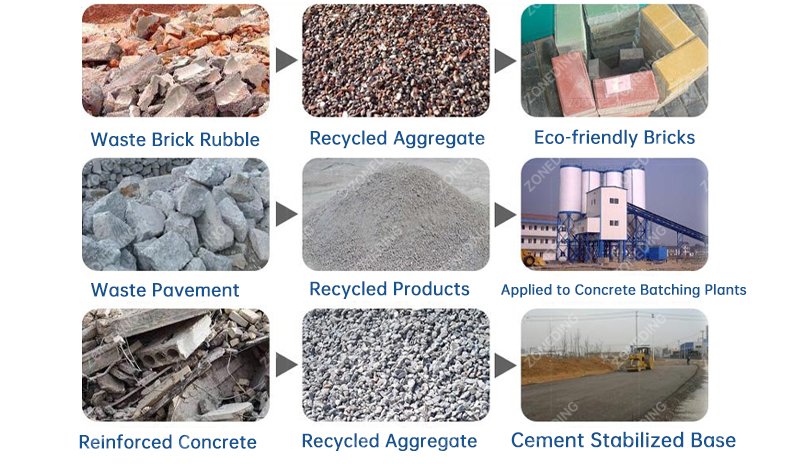
Yes, recycled stones can meet Grade A standards if you use a high-quality screening plant. Many people think recycled stone is weak. This is not true. Recycled concrete aggregate (RCA) is often stronger than some natural stones. The secret is the “Grading.” You need a Tracked Mobile Screening Plant to separate the stones into exact sizes. For a road base, you need a mix of 0-5mm, 5-20mm, and 20-40mm. In 2026, governments allow recycled aggregate for highways, parking lots, and even new “Eco-Bricks.” To hit these rules, you must remove the “Fine Dust” and “Organic Waste.” If your stones are clean and the sizes are correct, they will pass any lab test. I have helped many clients set up “Zero-Waste” cities where every old building becomes part of a new road. This is the ultimate goal of high-quality Construction debris crushing solutions.
High-quality recycled concrete aggregate
Recycled aggregates
Quality Standards for Recycled Stone
Application
Required Cleanliness
Key Machine Step
Road Sub-base
Moderate
Crushing + Basic Screening
Concrete Mix
High
VSI Shaping + Wind Sifting
Eco-Bricks
Very High
Fine Grinding + Washing
Drainage
Moderate
20-40mm Uniform Screening
2026 Trends in Recycled Aggregate Production Equipment
The industry is moving toward “Smart Recycling.” This means the machines talk to your phone and adjust themselves.
Latest Progress Overview
AI Sorting: Cameras that identify wood and plastic and tell a robot arm to pick them out.
Hybrid Power: Machines that use solar panels to run the control systems and lights.
Cloud Monitoring: Track your diesel use and production tons from your office in another city. The market in 2026 is also focusing on “Carbon Credits.” If you recycle building waste, the government may pay you for saving CO2. This is an extra income stream that did not exist ten years ago. Using green equipment makes you a preferred partner for big government jobs.
FAQ: Construction Waste Crushing
Question 1: Is it better to crush concrete wet or dry? Dry crushing is easier to screen and manage. But you must use mist sprays for dust. Wet crushing (washing) is only needed if you want to make very high-grade sand for new concrete. Question 2: How long do the wear parts last in a waste crusher? In building waste, parts wear out faster because of the bricks and dust. Expect to change your blow bars every 300 to 500 hours. Always keep a spare set on-site to avoid stopping the project. Question 3: Can I crush asphalt with a jaw crusher? It is not recommended. Asphalt is too soft and sticky for a jaw. It will “pancake” and jam the machine. An impact crusher is a much better choice for asphalt recycling. Question 4: What is the most common reason for machine failure? Neglect. People forget to grease the bearings or they let a huge piece of iron stay in the chamber. Simple daily checks save 90% of all repair costs.
About ZONEDING
ZONEDING is a professional manufacturer of high-end Recycled aggregate production equipment. Since 2004, we have provided construction debris crushing solutions to customers in over 120 countries. We offer factory-direct prices on Mobile Stone Crushers and full recycling lines. Our 15 expert engineers can help you design a site layout that maximizes your profit and meets 2026 environmental standards. We focus on durability, smart technology, and full-service support for every project. Contact ZONEDING today for a free recycling project consultation and machine quote.
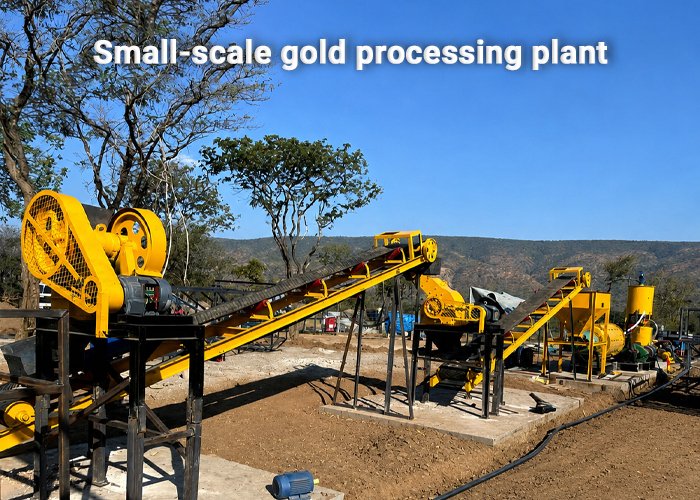
Starting a small-scale gold processing plant is one of the most practical ways to enter the gold mining industry. Compared with large mining projects, a small plant requires less investment, shorter construction time, and lower operating costs. Ho...
The performance of a crusher plant acts as the heart of every modern infrastructure project. High-quality aggregate production for construction determines if a bridge stands for a century or fails in a decade. Choosing the right machinery helps co...
Stone crushing is the first step in producing aggregates for roads, buildings, bridges, railways, and concrete plants. Every successful quarry or aggregate operation depends on choosing the right crushing method and equipment. However, many invest...
For many mining companies, iron ore tailings are considered a waste problem. However, rising environmental regulations and increasing demand for construction materials have changed the situation. Today, many mines are discovering that: Iron ore ta...
We use cookies to ensure that we give you the best experience on our website. If you continue to use this site we will assume that you are happy with it.
Privacy Policy
Send us a message
We would love to hear from you
Submit your question and our team will respond to the email provided as soon as possible.
 Zoneding Machine