 Zoneding Machine












Two-Stage vs Three-Stage Crushing: Which Is Better?
536Compare two-stage and three-stage crushing plants by cost, capacity, product quality, and applications to choose the right quarry solution.
View detailsSearch the whole station Crushing Equipment
Designing a profitable high-purity quartz sand production line requires strict adherence to physical and chemical principles. Quartz ore processing follows a strict sequence. Operators must crush, grind, classify, and purify the raw rock in order. A chaotic layout introduces iron contamination and destroys final product value. Real engineering data helps explain how to control impurities and particle size distribution. This guide details the process of building a highly efficient silica sand purification process from raw rock to premium glass sand.
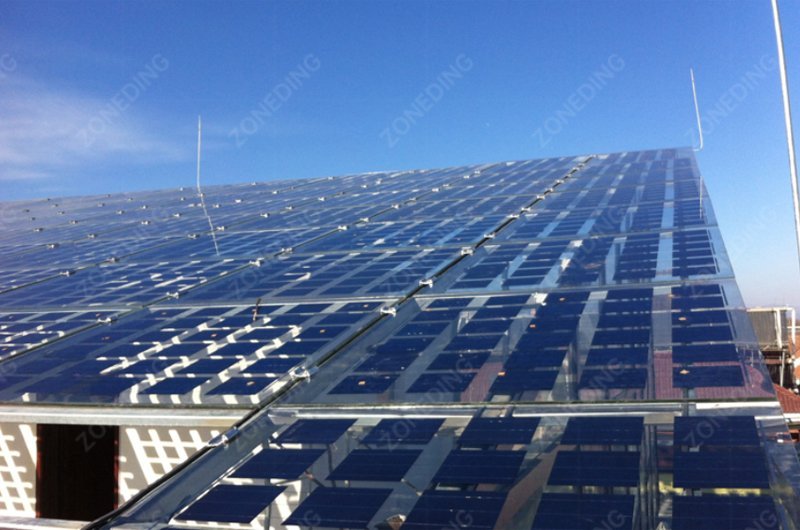
Market standards demand extreme purity for advanced applications. Iron oxide (Fe2O3) levels must stay below 20ppm for photovoltaic solar panels. Different industries pay completely different prices based on these exact chemical limits. Standard glass requires silica levels above 99.3%. Solar panel manufacturing demands photovoltaic grade quartz. Reaching these numbers requires precise engineering. The processing flowsheet must physically and chemically remove every trace of unwanted minerals.
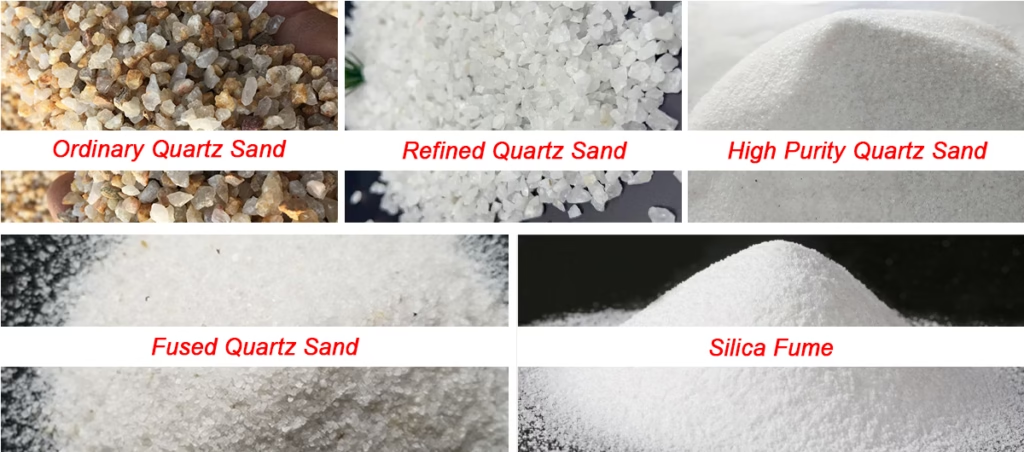
Quartz deposits rarely exist in a pure state. Natural quartz ore contains various impurities that dictate the processing complexity. Iron and aluminum are the most common problematic elements. Aluminum usually exists within feldspar or mica minerals mixed with the quartz. Iron appears in several forms. It exists as free heavy minerals like hematite or magnetite. Iron also forms a thin, sticky oxide film covering the quartz crystals. Sometimes, tiny iron particles are trapped completely inside the solid quartz structure as fluid inclusions. The purification plant must address each specific impurity type using different mechanical and chemical methods. Removing loose dirt takes simple washing. Stripping iron films requires aggressive scrubbing. Separating feldspar demands complex chemical flotation.
Removing massive waste rocks before the main processing starts is highly beneficial. Raw ore often contains dark gangue, pyrite, or black tourmaline. Sending these rocks into the fine grinding circuit wastes massive amounts of electricity and wears down equipment unnecessarily. Installing an optical color sorter right after the initial raw ore washing stage offers a practical solution. This machine uses X-ray transmission or high-resolution color sensors to identify dark stones. Air jets then eject these waste rocks instantly. Plants can throw away up to 20% of the waste rock early. This simple step drastically lowers energy consumption and chemical costs in downstream processes.
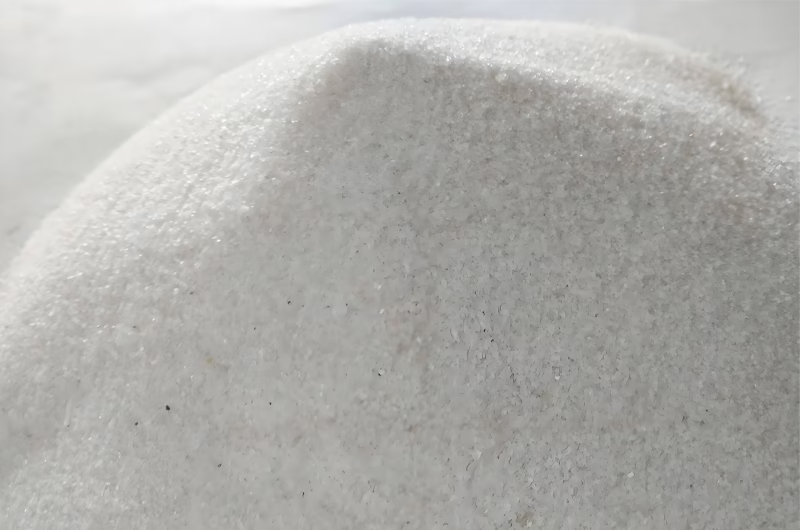

| Quartz Grade | Required SiO2 | Max Fe2O3 | Practical Application |
|---|---|---|---|
| Foundry Sand | > 98% | < 0.2% | Metal casting molds |
| Standard Glass | > 99.3% | < 300ppm | Building windows and bottles |
| Photovoltaic | > 99.9% | < 20ppm | Solar panel manufacturing |
Implementing a strict “iron-free” design starting from the crushing circuit prevents mechanical iron contamination. Standard steel equipment easily adds microscopic iron shavings to the clean quartz during rock breakage.

Silica sand iron contamination prevention presents the biggest mechanical challenge in plant design. Quartz has a high Mohs hardness of 7. It easily scratches and cuts standard carbon steel machinery. Breaking the raw rock requires a specific sequence. First, a Jaw Crusher handles the massive boulders from the mine. The rock then moves to a cone crusher for secondary size reduction. Finally, an impact crusher shatters the ore into fine, uniform particles. Standard steel plates inside these machines will ruin the ore purity instantly. Replacing all standard steel contact points with high-alumina ceramic plates or thick polyurethane (PU) linings is mandatory.
Every single pipe, valve, and slurry pump in the plant needs internal protection. A bare metal pipe will shed microscopic iron particles into the quartz slurry constantly due to abrasion. Lining all internal surfaces with wear-resistant rubber prevents this issue completely. The final impact crushing stage should utilize ceramic blow bars instead of steel ones. This strict material control guarantees the ore stays pure before it even enters the fine grinding building.
A ceramic lined rod mill protects qualified quartz particles from destructive over-grinding. Ball mills use steel spheres that crush the rock too finely and create useless silica dust.

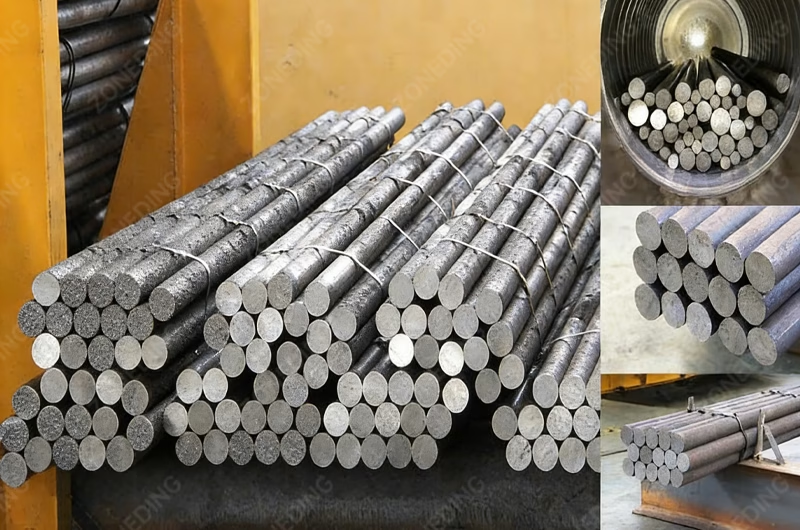
Most standard mining operations buy a conventional ball mill for grinding. This choice proves highly detrimental for quartz processing. Ball mills use a “point contact” crushing action. The heavy balls smash the quartz into extreme microscopic dust smaller than 120 mesh. This fine dust clogs later processing stages, interferes with flotation chemicals, and reduces the final valuable product yield. A Rod Mill works completely differently. The long internal steel rods create a “line contact” grinding action. They crack the biggest rocks first. Once a rock reaches the correct size, it slips between the rods safely. This precise mechanical action generates a highly concentrated, uniform particle size distribution.
Standard carbon steel rods cannot be used inside this machine for high-purity applications. The steel will rust rapidly and cover the quartz in fresh iron. The process requires high-purity silica stones or specialized high-alumina ceramic cylinders as grinding media. The inside of the mill barrel must feature a thick silica or PU rubber lining. This non-metallic combination ensures perfect sizing without adding a single drop of iron to the mineral mix.
A quartz sand attrition scrubber operates at high solid concentrations to physically rub impurities off the quartz surface. Low-water environments force the sand grains to grind against each other aggressively.
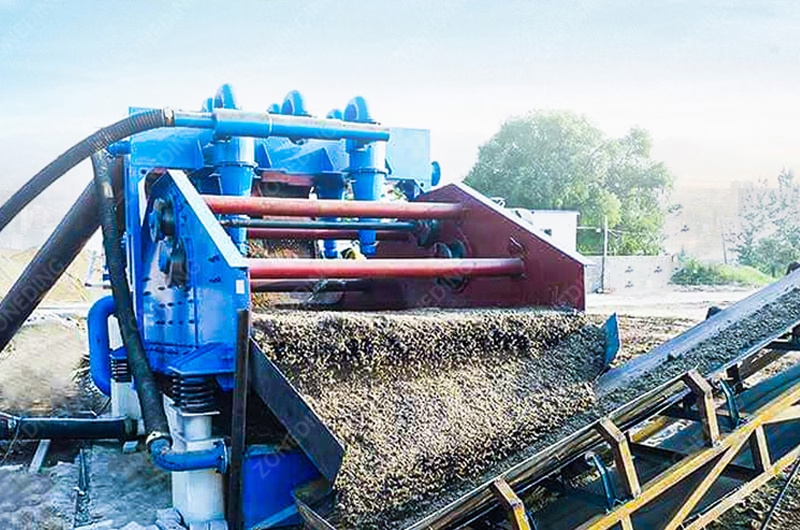
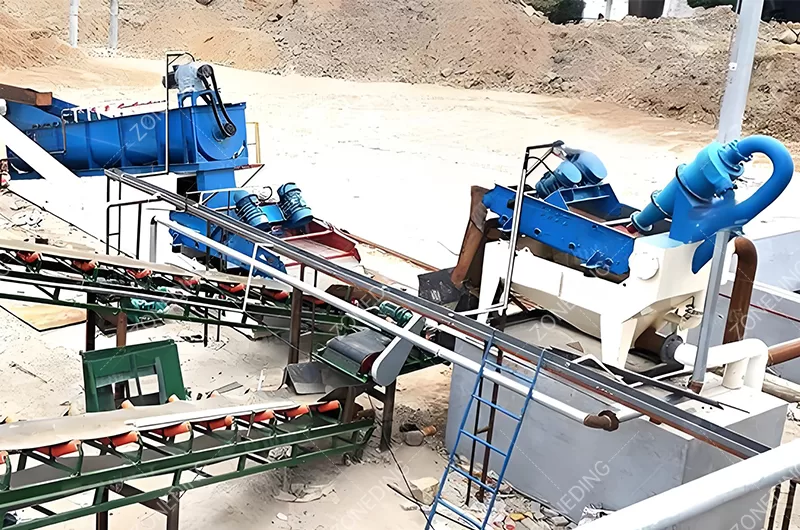
The slurry leaving the rod mill contains a mix of good sand and ultra-fine mud. A hydrocyclone manages the initial hydraulic classification and desliming step. The strong centrifugal force pushes the heavy quartz sand down. The lightweight clay slimes float up and exit the top. The clean underflow sand then moves to the scrubbing stage. Many operations try to wash quartz in standard pools with lots of water. This method fails completely. Iron impurities stick to the quartz like a tight chemical skin. Gentle water currents cannot break this skin. The slurry must maintain a very dense 65% to 70% solid concentration. Pumps send this thick mud into a specialized attrition scrubber machine.
At 70% density, the slurry acts like a thick paste. The fast-spinning impellers inside the scrubber do not just stir the water. They force the sharp quartz grains to violently scrape against one another. This extreme physical friction strips away the yellow iron oxide film and sticky clay layers. The clean sand then goes through a final mechanical spiral classifier or clean water rinse to wash away the loosened dirt particles.
High gradient magnetic separation removes weak magnetic iron particles before expensive chemical treatments begin. Physical separation remains significantly cheaper and safer than acid washing.
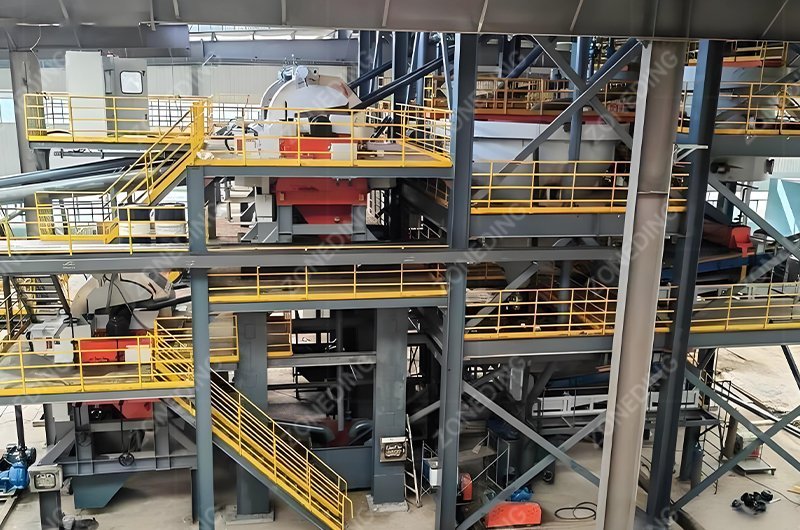
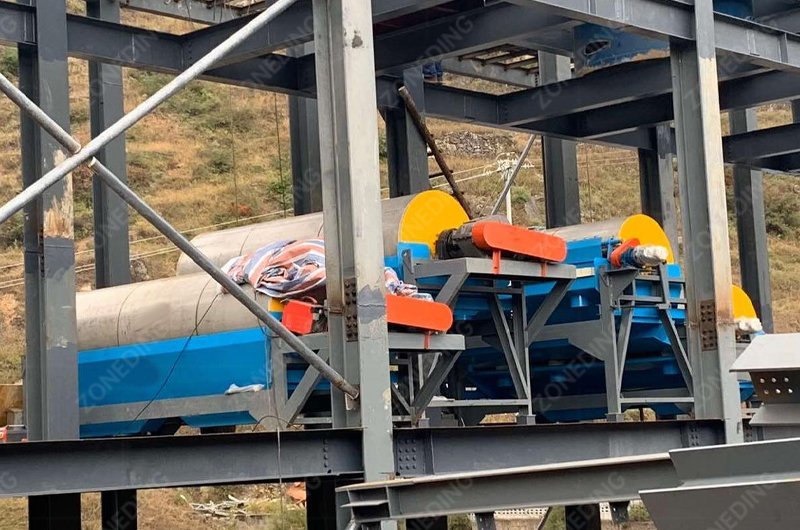
The main objective is physical purification maximization. Plant designs should aim to remove 95% of the total iron using magnetic fields first. Quartz ore usually requires a two-step magnetic separation process. First, a medium-intensity magnetic separator removes strong magnetic minerals like magnetite and mechanical iron scraps from the crushing equipment. The washed sand slurry then passes through a high gradient Magnetic Separator. This advanced machine applies a massive 1.0 to 1.5 Tesla magnetic field. This extreme power pulls out tiny specks of weak magnetic iron, hematite, limonite, and black mica (biotite). Removing this iron physically saves thousands of dollars in acid consumption later in the plant.
Photovoltaic grade quartz flotation removes the final traces of feldspar and mica. Flotation chemicals separate minerals that look physically identical and have the same density.
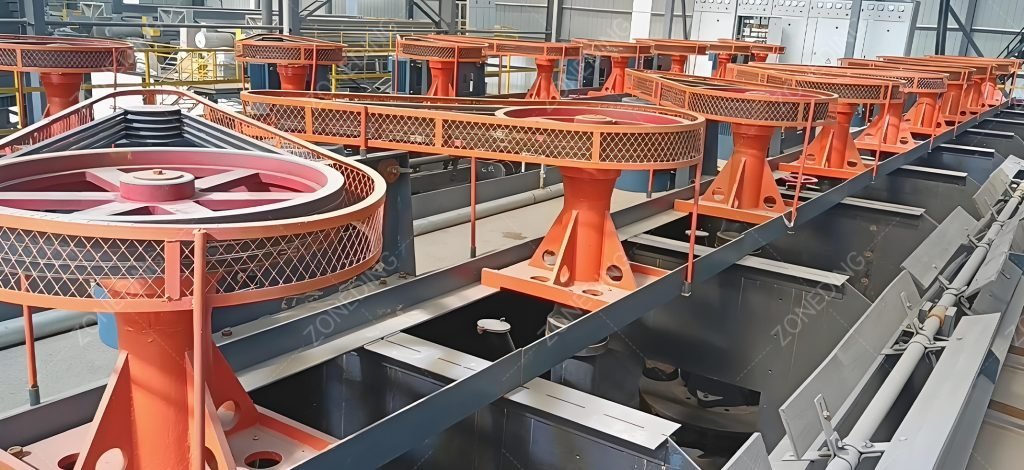
Quartz and feldspar have exact same weight and lack magnetic properties. Magnets or gravity machines cannot separate them. The slurry enters a Flotation Machine to solve this problem. Flotation uses specific chemical reagents that bind only to the feldspar particles, making them hydrophobic (water-repellent). Air bubbles injected into the machine attach to the feldspar and lift it to the surface as a froth. The quartz remains at the bottom. Historically, plants used dangerous hydrofluoric acid (HF) for this process. Modern processing now utilizes environmentally friendly fluorine-free flotation methods. These new reagents work in a neutral or slightly acidic pH environment to successfully separate the feldspar without creating toxic wastewater.
After flotation, the pure quartz undergoes a final acid wash. Weak physical forces cannot remove iron inclusions hidden deep inside natural cracks of the quartz crystal. Acid leaching uses a mixture of hydrochloric acid, sulfuric acid, or sometimes trace amounts of hydrofluoric acid. The quartz sand soaks in heated acid tanks for several hours. Heating the acid dramatically improves the reaction speed and leaching efficiency. The acid dissolves the remaining microscopic metal impurities into liquid form. A final, thorough water wash removes all residual acid, leaving ultra-pure quartz sand ready for drying.
Question 1: How much water does a standard quartz sand production line consume?
Processing one ton of quartz requires three to five tons of water. Plants install large thickeners and filter presses to recycle 85% of this wastewater. Proper water management prevents environmental fines and lowers operating costs.
Question 2: Can a standard steel ball mill work for high-purity quartz?
A standard ball mill introduces severe iron contamination and creates too much fine dust. A ceramic-lined rod mill remains the only correct choice for controlling particle size accurately. The rod mill protects the final product yield.
Question 3: What is the ideal solid concentration for a quartz sand attrition scrubber?
The scrubber must operate at a 65% to 70% solid concentration. This high density creates enough physical friction between sand grains to remove clay and iron oxide films. Adding too much water stops the cleaning action entirely.
Question 4: Why is high gradient magnetic separation necessary before acid leaching?
Magnetic separation physically removes 95% of iron impurities cheaply. This mechanical step drastically reduces the consumption of expensive and hazardous acids later in the process. It is the most cost-effective way to improve base purity.
Question 5: What equipment effectively removes feldspar from quartz sand?
A flotation machine removes feldspar. Since quartz and feldspar share identical physical properties and densities, chemical flotation is the only way to separate them effectively. Special reagents make the feldspar float to the surface.
ZONEDING manufactures complete mineral processing equipment for complex mining projects. The factory builds specialized crushers, ceramic rod mills, and high-gradient magnetic separators specifically designed for quartz ore processing. Direct factory sales provide highly competitive prices for global aggregate and mining companies. Strict quality control ensures every machine withstands harsh continuous mining environments. Contact the engineering team to get a detailed equipment list and layout plan today.
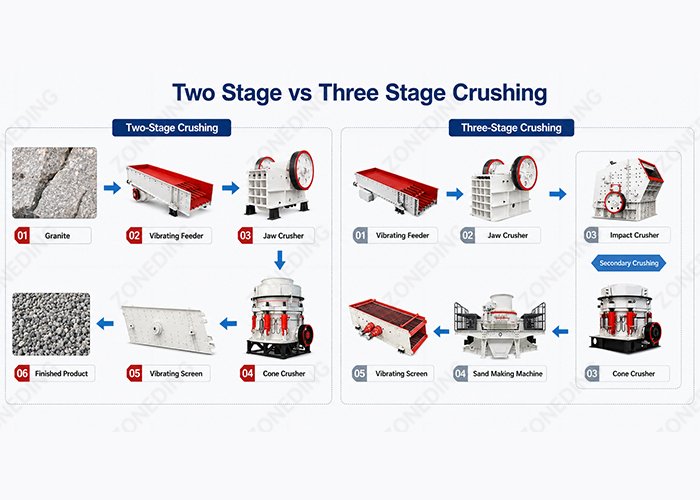
Compare two-stage and three-stage crushing plants by cost, capacity, product quality, and applications to choose the right quarry solution.
View details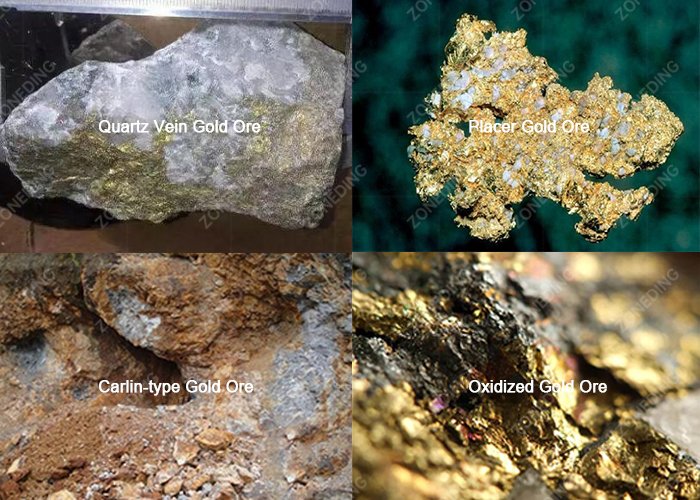
Identifying gold ore accurately determines the absolute survival of any mineral processing plant. A geological report showing 10 grams per ton means nothing if the metallurgical nature prevents extraction. A low-grade oxide gold ore often generate...
View details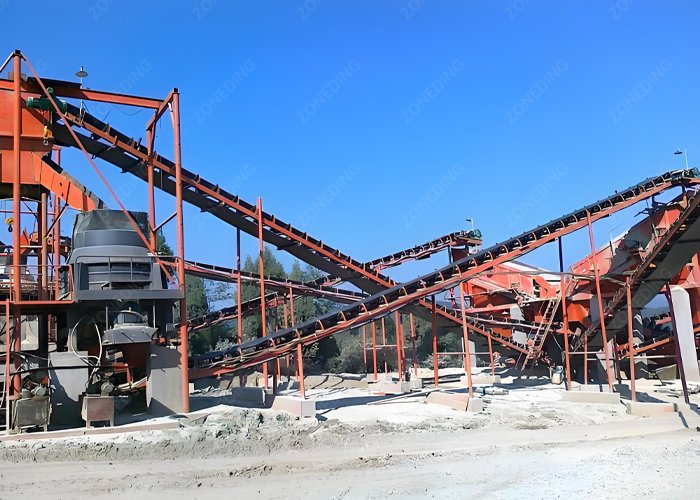
Small aggregate plants are growing rapidly in 2026 because many investors want lower startup risk, faster ROI, and simpler operations. A well-designed small crushing plant can generate stable profits with relatively low investment if the equipment...
View details
The construction industry relies on seven distinct types of sand to ensure structural integrity and finish quality. However, natural river sand is becoming scarce and expensive due to environmental regulations. For aggregate producers, the real op...
View details