 Zoneding Machine












How to Select Ball Mill Liners by Ore Hardness
578Learn how ore hardness, abrasiveness, feed size, impact, and mill conditions affect ball mill liner selection and service life.
View detailsSearch the whole station Crushing Equipment
Choosing the right stone crusher is one of the most important decisions in aggregate production and quarry operations. The wrong machine can increase wear cost, reduce production efficiency, and create long-term maintenance problems. Meanwhile, the right crusher can improve aggregate quality, lower operating cost, and increase profitability for many years.
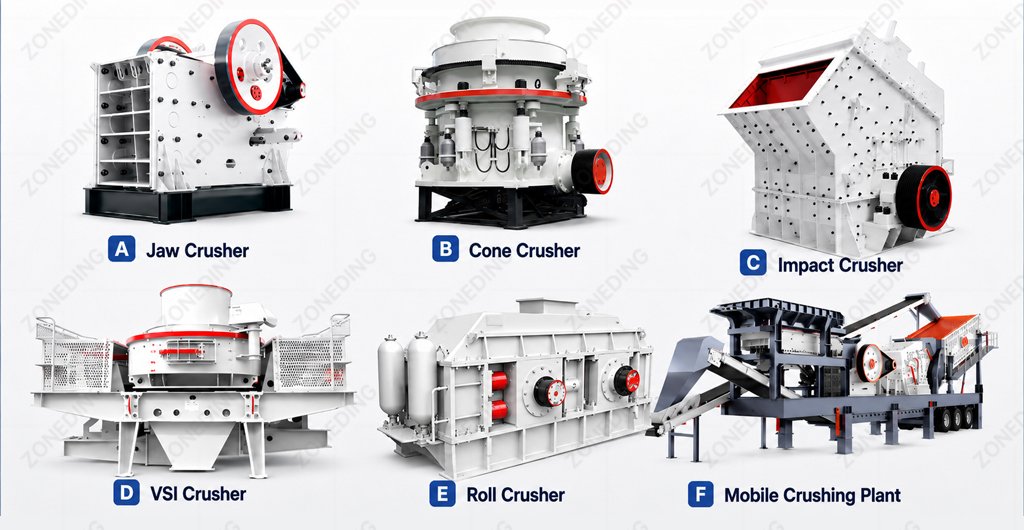
A crusher should match your material, production target, and operating conditions — not just your budget.
Many first-time buyers compare only:
However, experienced quarry operators focus on much more than that.
They carefully evaluate:
A properly designed Stone Crushing Plant can operate efficiently for many years. On the other hand, poor crusher selection often creates expensive operational problems later.
A poorly matched crusher may cause:
In many cases, operational problems appear only after several months. That is why experienced quarry owners usually start with material analysis instead of machine catalogs.
The crusher should always match the rock type first because material hardness affects almost every operating cost.
Production targets also need realistic planning. Oversized equipment often reduces profitability when utilization stays low.
Stable long-term operation is usually more valuable than simply buying the biggest machine available.
Rock type is the most important factor in crusher selection.
Different materials require different crushing methods.
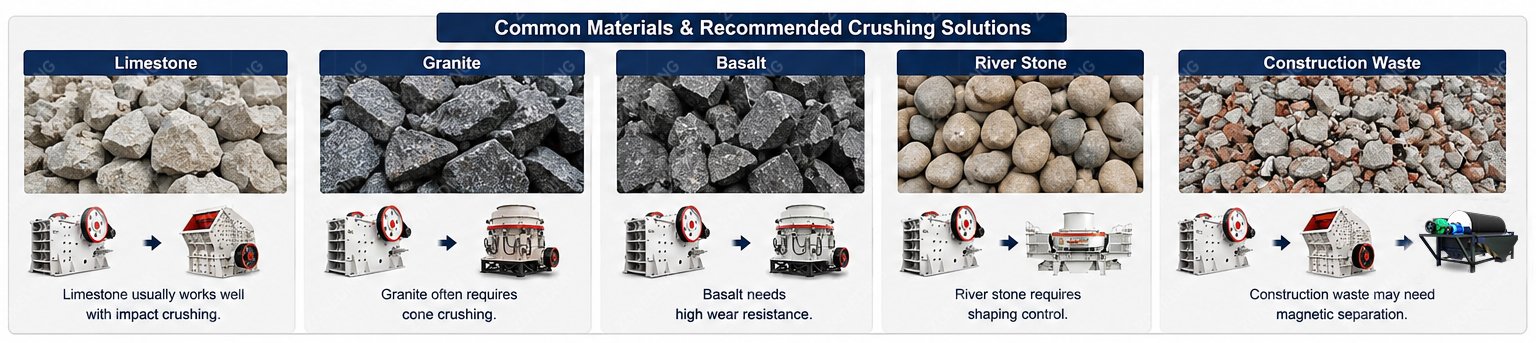
For example:
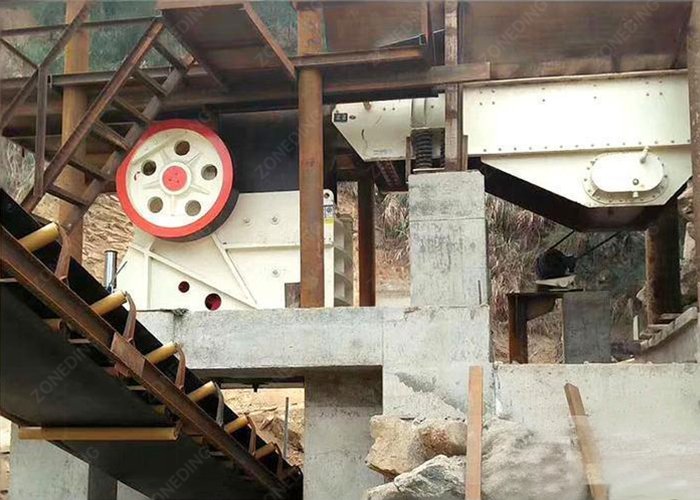
Many aggregate plants use a combination of a Jaw Crusher and secondary crushers because primary size reduction must stay stable under varying feed conditions.
Soft stone creates lower wear and lower energy consumption.
Hard abrasive rock increases:
As a result, granite and basalt crushing plants usually cost more than limestone operations.
| Material Type | Recommended Crusher Setup | Wear Level | Operating Cost |
|---|---|---|---|
| Limestone | Jaw + Impact | Lower | Lower |
| Granite | Jaw + Cone | High | Higher |
| Basalt | Jaw + Cone + VSI | Very high | Premium |
| River Stone | Jaw + Cone | Medium to high | Stable |
Soft material projects often benefit from simpler crushing circuits and lower investment.
Hard rock operations should prioritize liner durability and stable chamber design because wear cost quickly becomes a major expense.
Feed consistency also matters because uneven material increases vibration and reduces crushing efficiency.
The best crusher is not always the largest one.
Many investors purchase oversized equipment expecting future growth. However, low utilization often increases:
A properly loaded crusher usually performs more efficiently than a larger machine running half empty.
Many operators combine crushing systems with a balanced Vibrating Feeder because stable feeding improves chamber efficiency and lowers wear.
Before selecting capacity, operators should evaluate:
A stable 150 TPH operation can often generate better profit than a poorly utilized 400 TPH crushing plant.
| Capacity Range | Best Application | Investment Level |
|---|---|---|
| 30–80 TPH | Small quarry | Lower |
| 80–200 TPH | Medium aggregate plant | Medium |
| 200–500 TPH | Commercial quarry | Higher |
| 500+ TPH | Mining operation | Premium |
Small aggregate operations should focus on stable utilization rather than maximum theoretical output.
Medium quarry projects often achieve better ROI with balanced multi-stage crushing systems.
Large plants require careful screening and conveyor matching because bottlenecks quietly reduce efficiency.
Feed size directly affects crusher cost, chamber design, and operating stability.
Large feed openings require:
As a result, larger feed opening crushers become much more expensive.
Many producers use a properly configured Stone Crushing Plant layout to balance blasting size, feeder width, and crusher opening together.
Some buyers oversize feed openings unnecessarily.
This often increases:
without improving actual profitability.
The smarter approach is to match:
Proper feed preparation usually improves crushing efficiency more effectively than simply increasing machine size.
Large unstable feed material often creates chamber blockage and excessive jaw plate wear.
Balanced feeding also helps improve aggregate consistency.
Crusher selection should start from the final product, not the machine itself.
Before choosing equipment, you should know whether the project needs:
Different crushers produce different particle shapes and gradation.
Many aggregate producers add a Sand Making Machine because fine manufactured sand requires additional shaping control.
Good aggregate shape improves:
Impact crushers often create better shape in limestone. Meanwhile, cone crushers provide more stable production in hard rock applications.
Concrete aggregate projects usually require tighter grading control and better particle shape.
Road base production often allows simpler crushing systems with lower investment.
Manufactured sand projects need careful screening and shaping optimization.
Each crusher type performs differently depending on the material and production target.
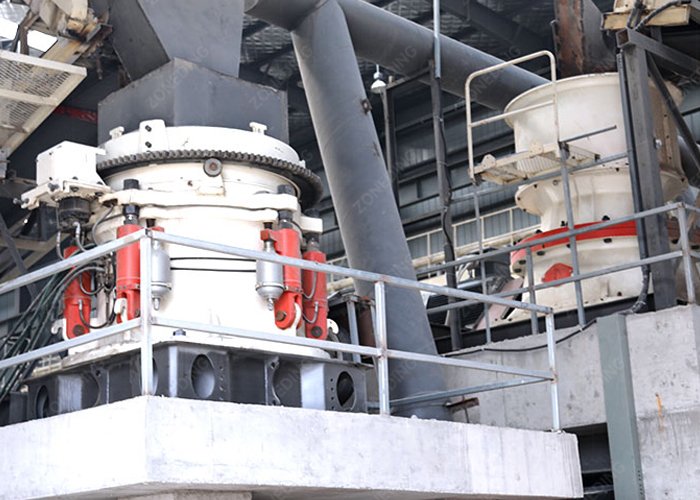
A Cone Crusher works especially well for granite and basalt because cone crushing provides stable wear resistance and consistent product gradation.
Meanwhile, impact crushers usually perform better in limestone because they produce excellent particle shape at lower wear cost.
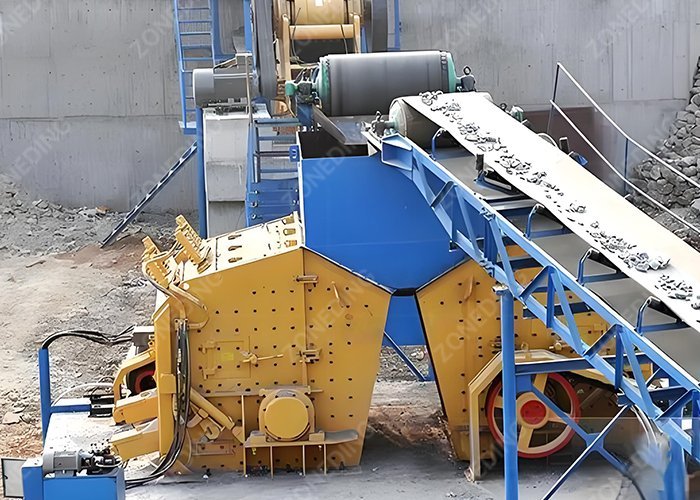
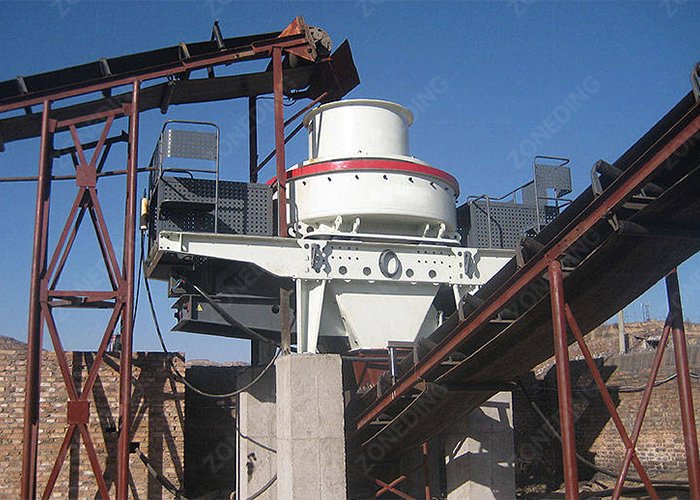
Wrong process design usually becomes more expensive than wrong machine selection alone.
| Crusher Type | Best Material | Main Advantage | Main Limitation |
|---|---|---|---|
| Jaw Crusher | Primary crushing | Stable operation | Limited shaping |
| Cone Crusher | Hard rock | Lower wear cost | Higher investment |
| Impact Crusher | Limestone | Better aggregate shape | Faster wear in hard rock |
| Sand Maker | Fine sand | Excellent shaping | Extra stage required |
Hard rock projects usually benefit from cone crushing because wear resistance becomes critical.
Limestone operations often achieve better aggregate shape with impact crushing.
Simple crushing flows are usually easier to maintain in remote quarry locations.
The right choice depends on how the project operates.
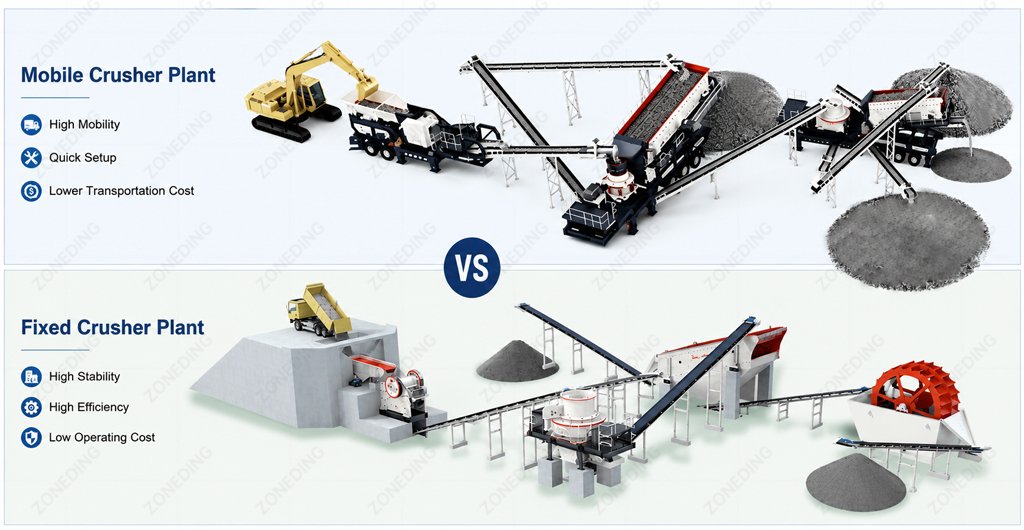
A Mobile Crusher works well for:
Mobile systems reduce:
However, they also increase:
Permanent quarry operations usually prefer stationary plants because:
Mobile systems become more profitable when material locations change frequently.
| Plant Type | Main Advantage | Main Limitation | Best Application |
|---|---|---|---|
| Mobile Crusher | Flexibility | Higher operating cost | Temporary projects |
| Stationary Crusher | Lower long-term cost | Less mobility | Permanent quarry |
Recycling and demolition contractors often benefit greatly from mobile crushing.
Long-term aggregate producers usually achieve better operational stability with stationary systems.
Remote projects should also evaluate fuel supply and transport logistics before selecting mobile equipment.
Wear parts often become one of the largest hidden costs in aggregate production.
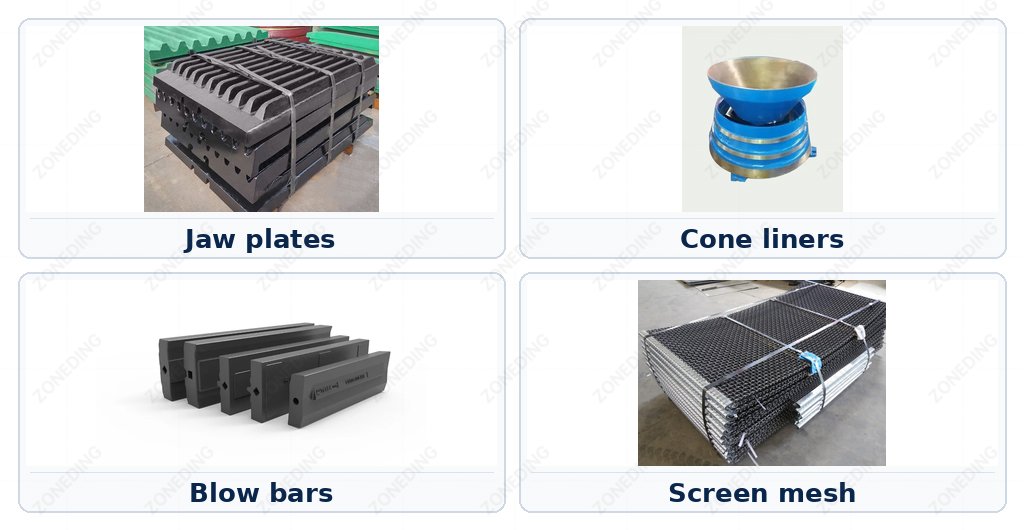
Wear components include:
Many crushing systems also rely heavily on efficient Vibrating Screens because poor screening increases unnecessary recirculation and wear.
A cheaper crusher may consume liners rapidly.
That increases:
Experienced quarry owners usually calculate wear cost per ton instead of simply comparing liner prices.
Consistent feeding helps extend liner life significantly.
Premium wear materials usually reduce long-term cost in hard rock applications.
Easy maintenance access also becomes very important because liner replacement downtime directly affects profitability.
A reliable supplier should provide more than just equipment.
Good suppliers also help with:
Many aggregate producers prefer suppliers offering complete Crushing Equipment solutions because plant balance matters more than individual machines.
Before purchasing, buyers should confirm:
A stable long-term partnership usually creates better profitability than chasing the lowest quotation.
The best stone crusher is not necessarily the cheapest or the largest machine.
Successful crusher selection depends on:
Experienced quarry operators focus on cost per ton and reliable production instead of only machine price.
That is the real rule of stone crusher selection.
Which crusher is best for granite?
Cone crushers usually work best for granite because they provide strong wear resistance and stable production.
What crusher is good for limestone?
Impact crushers are often ideal for limestone because they create excellent aggregate shape.
Should I choose a mobile or stationary crusher?
Mobile crushers are better for temporary or changing projects. Stationary plants usually provide lower long-term operating cost.
Why is wear cost important in crusher selection?
Wear parts directly affect downtime, maintenance expense, and long-term profitability.
How do I choose the right crusher capacity?
Capacity should match real market demand, feeding conditions, and downstream plant balance.
We are ZONEDING, a Chinese manufacturer specializing in crushing, screening, grinding, and mineral processing equipment for global B2B customers. We provide jaw crushers, cone crushers, mobile crushers, vibrating screens, and complete aggregate crushing solutions.
Our equipment has been exported to more than 120 countries. We help quarry operators improve efficiency, reduce operating costs, and build stable long-term aggregate production systems.
Contact us today for customized stone crusher recommendations and complete plant solutions.
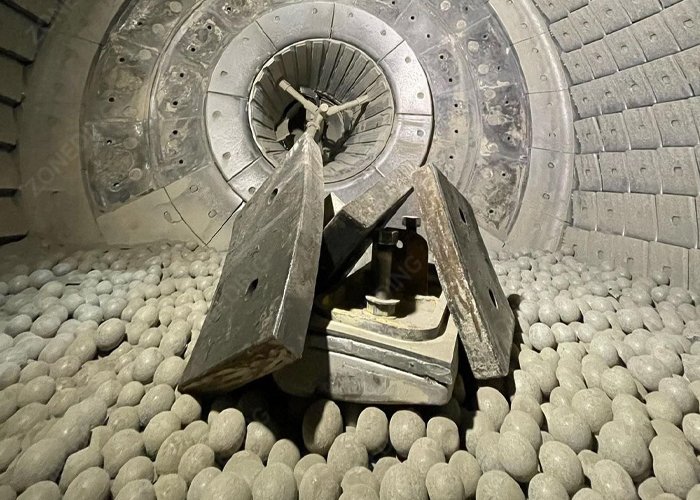
Learn how ore hardness, abrasiveness, feed size, impact, and mill conditions affect ball mill liner selection and service life.
View details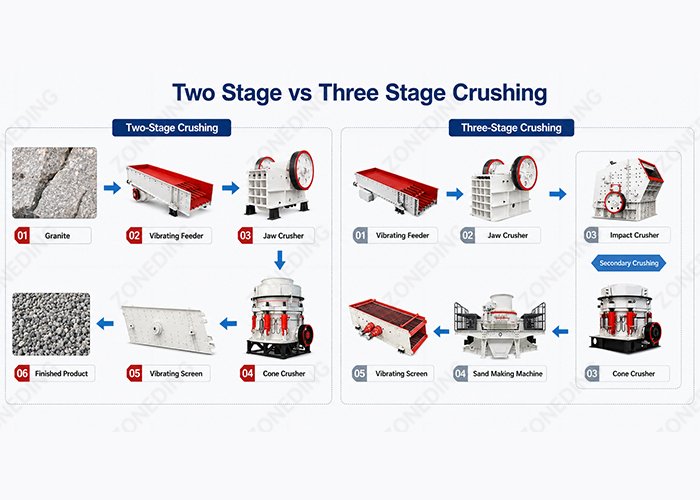
Compare two-stage and three-stage crushing plants by cost, capacity, product quality, and applications to choose the right quarry solution.
View details
In a professional mineral processing plant, meeting catalog specifications does not always guarantee on-site success. Many buyers focus only on motor power or feed size, but these are surface numbers. Real profitability depends on how equipment ha...
View details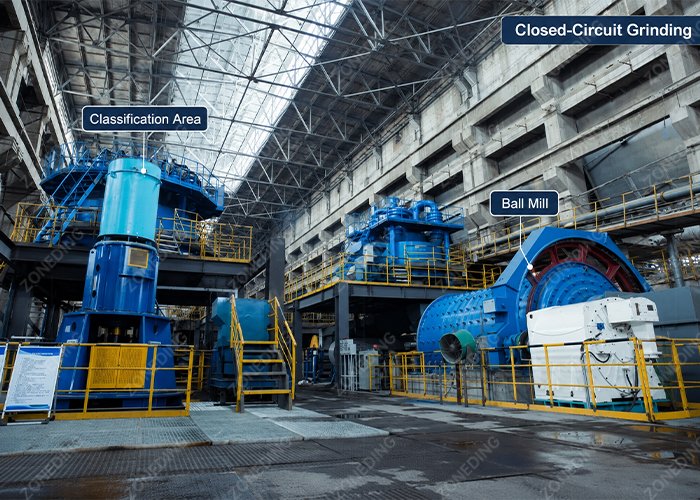
Learn how grinding size affects lead and zinc recovery, mineral liberation, flotation performance, and operating costs. Discover practical methods to optimize your grinding circuit and maximize flotation efficiency.
View details