 Zoneding Machine












Mobile Cone Crusher Price in Chile for Hard Rock Projects
536Compare mobile cone crusher prices, 100–200 TPH setups, feed limits and liner costs for copper ore and hard rock projects in Chile.
View detailsSearch the whole station Crushing Equipment
Magnetic separation uses the differences in magnetic properties between minerals to achieve separation. Higher precision in this technical process leads to higher mineral sales profits. Success depends on selecting the correct magnetic field strength and equipment type. Proper reduces waste and increases concentrate purity. This technology is vital for iron ore, rare earth metals, and the purification of non-metallic minerals. Achieving a balance between grade and recovery is the primary goal of any modern processing plant.
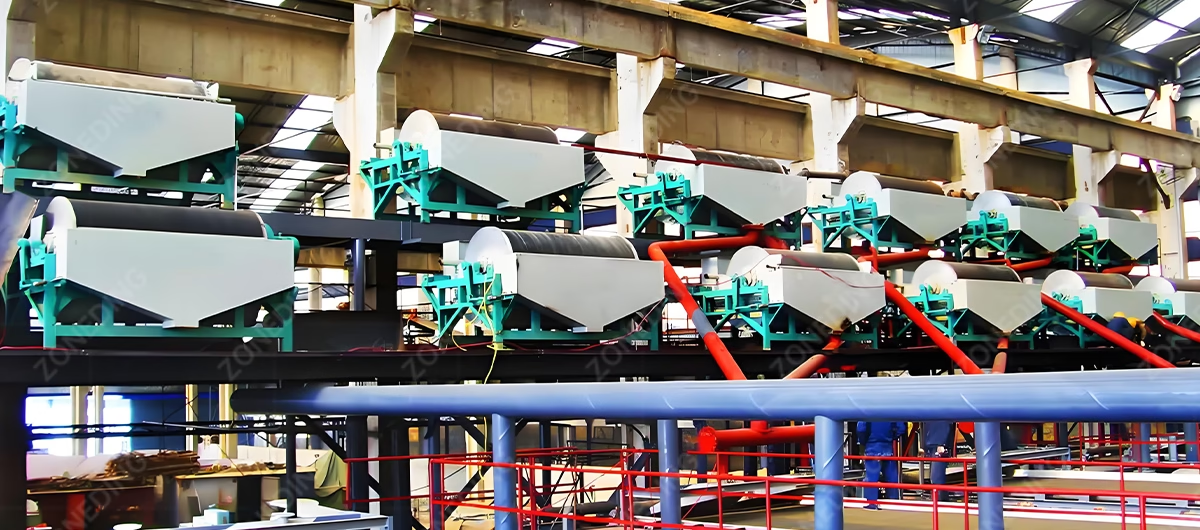
The choice between LIMS and WHIMS determines the initial capital cost and the final product value. Low Intensity Magnetic Separators (LIMS) handle strong magnetic minerals like magnetite. Wet High Intensity Magnetic Separators (WHIMS) capture weak magnetic minerals like hematite or manganese. Many operations fall into the “High Gauss Trap” by buying the strongest magnet possible. However, a magnetic field that is too strong attracts waste rock and lowers the concentrate grade. Efficient Magnetic separator selection logic must match the specific attraction force of the target mineral precisely.
Operating costs also vary significantly between these two systems. LIMS equipment usually uses permanent magnets. These magnets require no electricity to maintain the magnetic field. WHIMS systems often use electromagnets that consume large amounts of power. Profit margins depend on finding the perfect zone of magnetic force. The force must be strong enough to pull the mineral out of the slurry. But the force must not be so strong that it traps non-magnetic silica or waste. Proper selection ensures the highest purity for the lowest energy cost. Testing the ore before purchase is a standard industry requirement.
Minerals have different levels of magnetic susceptibility or magnetization coefficients. This coefficient measures how easily a mineral becomes magnetized in a field. Ferromagnetic minerals like magnetite have a high coefficient. These minerals only need 0.1 to 0.3 Tesla of force for separation. Paramagnetic minerals like hematite have a low coefficient. These weak minerals require 1.0 to 2.0 Tesla of force. Matching the machine to these physical properties prevents equipment failure and mineral loss.
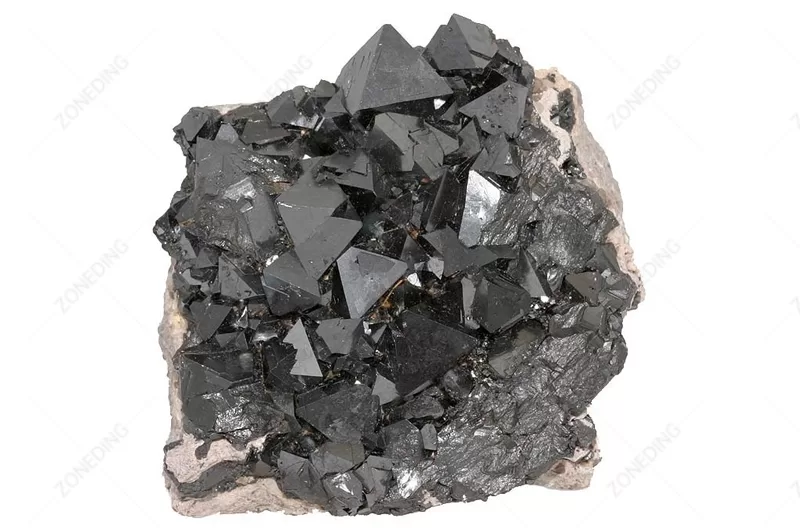
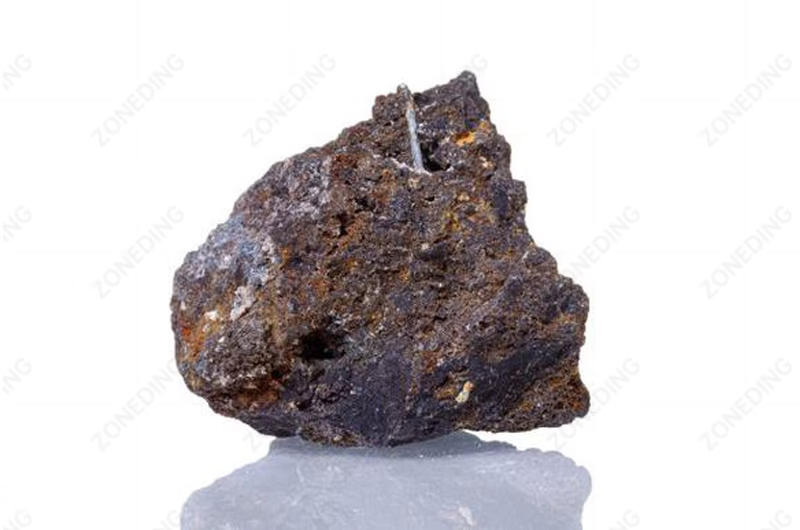
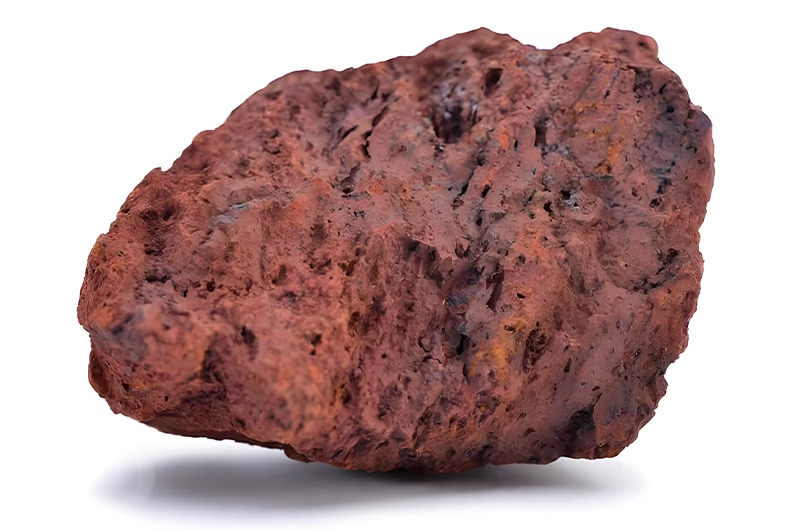
| Mineral Type | Example Mineral | Required Field (Tesla) | Equipment Choice |
|---|---|---|---|
| Strong Magnetic | Magnetite | 0.1 – 0.3 | Magnetite Beneficiation |
| Medium Magnetic | Ilmenite | 0.5 – 0.8 | Medium Intensity Separator |
| Weak Magnetic | Hematite | 1.0 – 2.0 | High gradient magnetic separator application |
Fine particles under 74 microns behave differently in a magnetic field than coarse grains. Small grains are easily pushed away by the flow of water or slurry. To capture these particles, the magnetic declination or “magnetic angle” must be adjusted. This angle determines where the magnetic force is strongest on the drum surface. Moving the internal magnetic yoke helps the machine catch fine grains before they wash away into the waste pile. This adjustment is a key part of Maximizing mineral recovery.
The tank design of the machine also plays a critical role. Many buyers only look at the drum diameter. However, the tank determines the flow pattern of the slurry. For fine particles, a counter-current tank is the best choice. It moves the slurry against the rotation of the drum. This creates more opportunities for the magnet to grab the small grains. Using a concurrent tank for fine dust results in significant financial loss. Changing the tank shape is a simple fix for a major recovery problem.
Magnetic minerals often stick together like clusters of grapes after leaving the magnetic field. This is called magnetic flocculation. It happens because particles keep some of their magnetism. If these clusters enter a Spiral Classifier, the machine identifies them as large rocks. The machine then sends them back to the ball mill. This wastes power and leads to over-grinding. Installing a demagnetizing coil breaks these clusters. It is a low-cost tool that saves a massive amount of energy.
Wet separation uses water to create a fluid environment for better mineral release. Complex ores often contain “locked” particles. This is where magnetic and non-magnetic minerals are stuck together physically. In dry separation, these particles clump together because of static electricity. Water acts as a lubricant and a transport medium. It helps the magnetic force pull the clean mineral away from the waste rock more effectively. This results in a much higher concentrate grade for difficult ores.
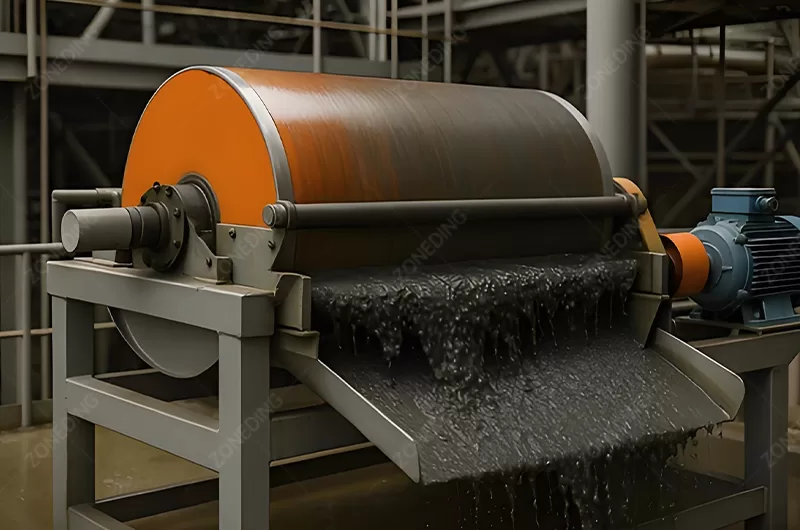
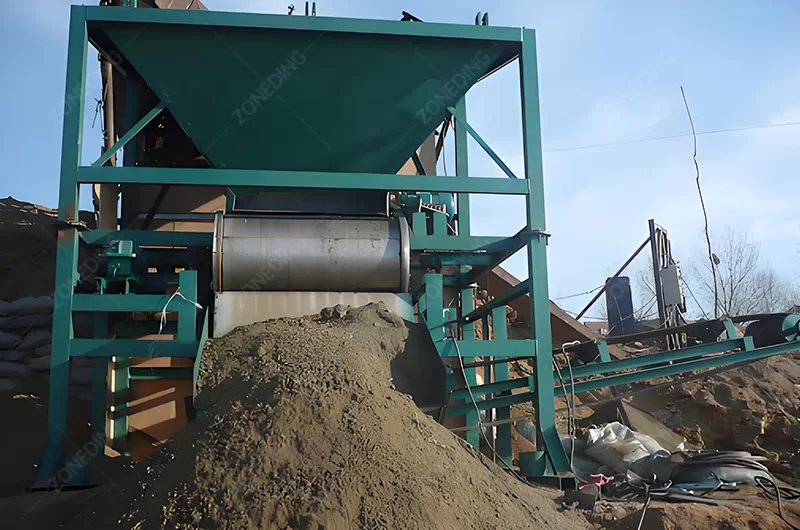
Hematite separation technology must rely on wet systems for efficiency. Dry separation is only suitable for coarse material or very high-grade deposits. Wet systems also allow for much finer grinding of the ore. Fine grinding is necessary to liberate minerals from the rock matrix. Water keeps the fine dust from flying into the air and polluting the work site. This makes wet separation safer for workers and the environment. High-quality Beneficiation Equipment also includes water recycling to keep operational costs low.
The number and arrangement of magnetic poles determine the “tumbling” effect on the drum. As ore travels over the poles, the magnetic particles flip and rotate. This is called magnetic tumbling. More poles create more flips during the process. Each flip helps release trapped sand or mud from the magnetic cluster. A multi-pole design is essential for making high-purity iron concentrate. A wide-pole design is better for catching large pieces of iron in metal recycling. The pole count must be chosen based on the final purity goal.
High gradient technology uses a matrix to concentrate magnetic force at specific points. Standard magnets have a relatively smooth and uniform field. High gradient magnetic separator application uses steel wool or metal rods to create sharp magnetic “peaks.” These peaks have a very high magnetic gradient. This allows the machine to catch even the weakest minerals like hematite or limonite. This technology is now the industry standard for cleaning red iron ore.
However, trash and debris are a danger to these machines. High gradient machines have very small gaps between the metal rods or matrix. If wood chips or plastic fibers get inside, the machine will clog quickly. Entire plants can stop because of a few pieces of wood in the feed. A fine screen must be installed before the magnetic separator. This screen catches the trash so the magnet can function correctly. This is a critical step for long-term performance in any weak-magnetic plant.
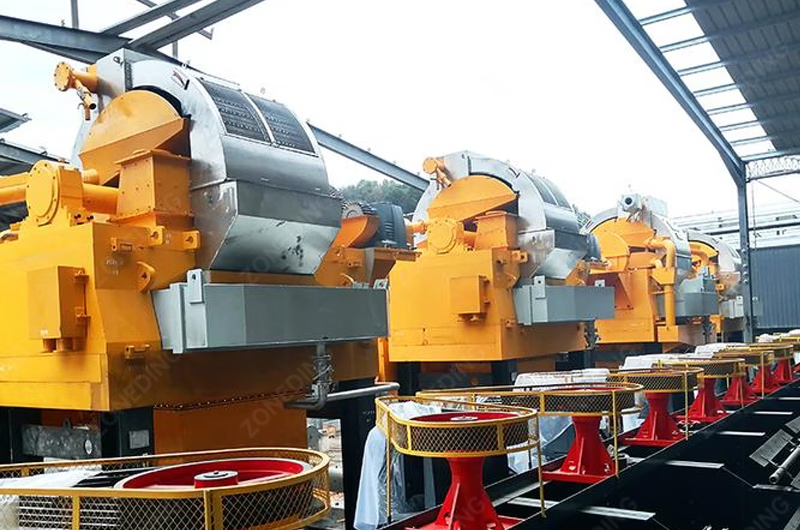
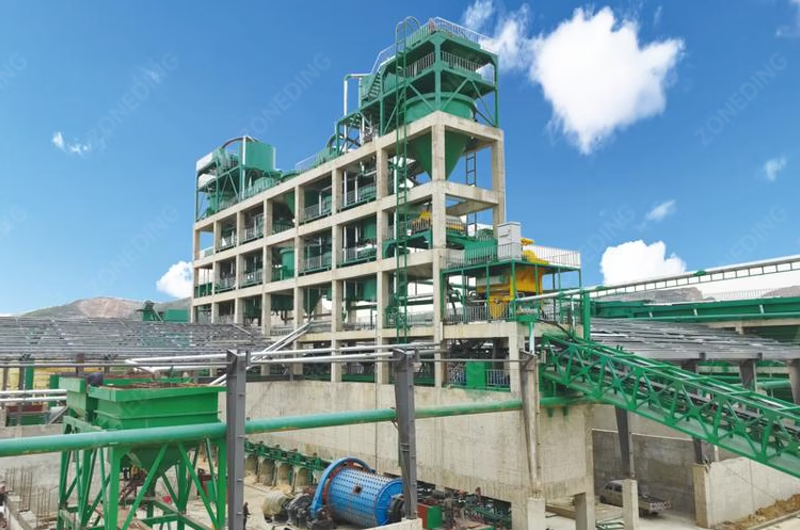
Non-metallic minerals like quartz sand must have almost zero iron content for industrial use. Even 0.1% iron can ruin the quality of glass or ceramics. Powerful magnetic separators are used to remove these trace impurities. These machines use rare earth magnets with very high surface strength. The material passes through an intense magnetic field that captures tiny iron specks. This process turns cheap sand into high-value industrial material. It is a highly profitable step for sand and feldspar producers.
The drum skin of a magnetic separator faces constant abrasion from rocks and water. Using standard steel leads to frequent holes and leaks. This causes water to enter the internal magnet assembly. Then the magnets corrode and lose their strength. Using drum skins made of stainless steel with a ceramic coating is highly recommended. These materials last much longer than bare metal skins. Reducing the wear rate directly lowers the annual maintenance budget for the plant.
| Material Type | Wear Life | Cost Factor | Application |
|---|---|---|---|
| Stainless Steel | 6 Months | Low | Soft mineral processing |
| Rubber Coating | 18 Months | Medium | General mining use |
| Ceramic Tiles | 36 Months | High | Quartz Iron Removal |
The speed of the slurry flow must match the strength of the magnetic field exactly. If the slurry moves too fast, the momentum of the water will rip minerals away from the magnet. This causes high losses in the tailings pile. If the slurry is too thick, the magnetic particles get buried under layers of waste rock. This leads to a dirty and low-quality concentrate. The ideal concentration for most wet systems is between 15% and 25% solids.
Monitoring the feed box ensures that the slurry flow remains smooth and consistent. Sudden surges in flow can overwhelm the magnetic system and cause failures. An even feed allows the magnetic force to work at a steady rate. Methods to improve concentrate grade include installing flow control valves. These valves keep the feed steady even if the pump speed changes. Constant monitoring is the secret to stable production and a high return on investment.
High-quality permanent magnets can maintain their force for a very long period. Neodymium Iron Boron (NdFeB) magnets are the best choice for modern machines. These magnets are much stronger than the old ferrite types used in the past. They also resist losing their power over time. This ensures that the machine performs the same on day one and year ten. This stability is critical for the long-term profit of the mine. It removes the need for expensive magnetic recharging services in the future.
Electromagnetic systems offer adjustable strength but come with higher operating costs. Permanent magnets have a fixed strength but use zero electricity to maintain the field. For most iron ore mines, permanent magnets are the superior choice. They are reliable and much cheaper to run every day. Electromagnets are only used when the magnetic field must be turned off frequently. For example, some specialized non-metallic cleaning requires specific field changes. Most modern projects favor permanent magnets today for efficiency.
Automated control systems are becoming more common in large processing plants. These systems monitor the iron content in the tailings automatically. If they detect iron escaping, they change the drum speed or water pressure instantly. This keeps the recovery rate at its maximum level without a worker watching the machine. It is a great way to improve the ROI for mining machinery. Automation reduces human error and increases the daily output of the facility.
A single pass through a magnetic separator is rarely enough for low-grade ore deposits. Most modern plants are designed with a “Roughing-Cleaning-Scavenging” circuit. The rougher stage removes the majority of the waste rock. The cleaner stage focuses on reaching the final concentrate grade required for sale. The scavenger stage catches any remaining magnetic minerals from the final tailings. This multi-stage design can turn a low-grade mine into a very profitable business venture.
“Cobbing” or pre-selection is another highly profitable magnetic step. A Magnetic Separator should be used right after the primary crusher. This pulls out waste rocks before they enter the expensive ball mill. If 20% of the waste is thrown away early, the ball mill can process 20% more real ore. This saves electricity and reduces wear on the grinding media. It is the fastest way to increase plant capacity without buying a new mill.
The year 2026 brings new intelligent control systems to the global mining industry. Magnetic separators now include real-time sensors for better monitoring. These sensors communicate with the control room to adjust water flow automatically. This keeps the recovery rate at a maximum level 24 hours a day. The rise of superconducting magnets is also seen in very large processing plants. These magnets create extreme fields with almost zero power loss during operation.
Question 1: Why is the concentrate grade suddenly dropping in the plant?
This often happens because the feed concentration is too high for the machine. If the slurry is too thick, waste rock gets trapped in the magnetic clusters. Adding more water to the feed box to dilute the slurry is the standard solution.
Question 2: How often should the magnets be checked for strength?
The internal magnets are protected, but the surface strength should be checked every three months. Use a standard Gauss meter for this task. A drop in strength might mean the drum skin has a leak and water is corroding the magnets.
Question 3: Can magnetic separation be used for gold mining?
Gold itself is not magnetic. However, gold is often found with magnetic minerals like magnetite. Magnetic separators are used to remove these minerals first. This makes the final recovery much easier in the Gold Processing Plant.
Question 4: What is the difference between a magnetic drum and a pulley?
A magnetic drum is a stand-alone machine with its own tank and motor. A magnetic pulley replaces the head pulley of a conveyor belt. Pulleys are used for dry, coarse cobbing to throw away waste rock before the grinding stage.
ZONEDING MACHINE is a specialized manufacturer of Beneficiation Equipment and magnetic separators. The company operates a large 8000-square-meter factory with 15 professional engineers on staff. Full-service support is provided, including process design, equipment manufacturing, and installation. Since 2004, ZONEDING has exported high-efficiency mining machinery to over 120 countries globally. The business focuses on factory-direct sales to offer competitive prices and high-quality standards. The product range includes LIMS, WHIMS, and advanced high-gradient magnetic systems for all mining and purification needs.
Contact ZONEDING today for a free mineral test and a custom processing plant design.
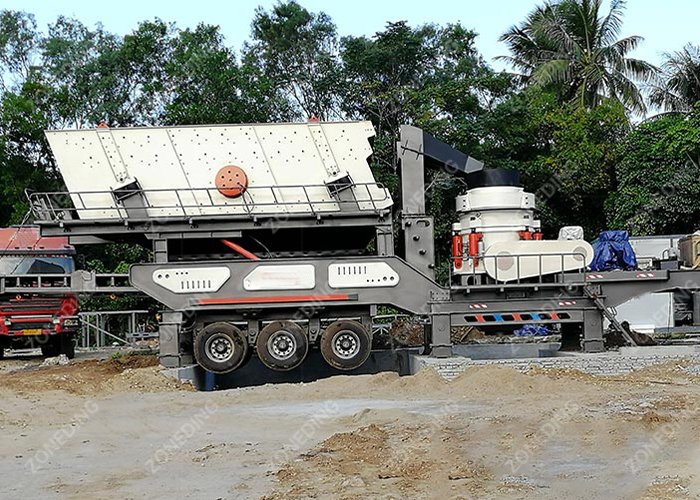
Compare mobile cone crusher prices, 100–200 TPH setups, feed limits and liner costs for copper ore and hard rock projects in Chile.
View details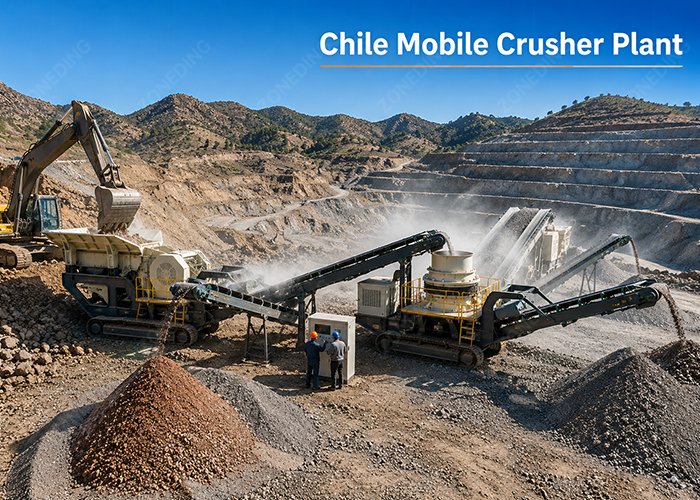
Compare mobile crusher circuits, capacity, altitude setup, logistics and wear planning for Chile copper and hard-rock projects.
View details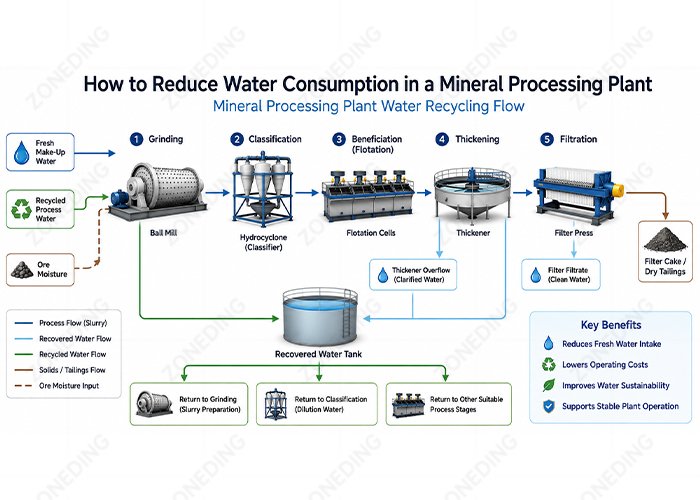
Learn how to reduce mineral processing water use with water balance, thickening, filtration, recycling, and process control.
View details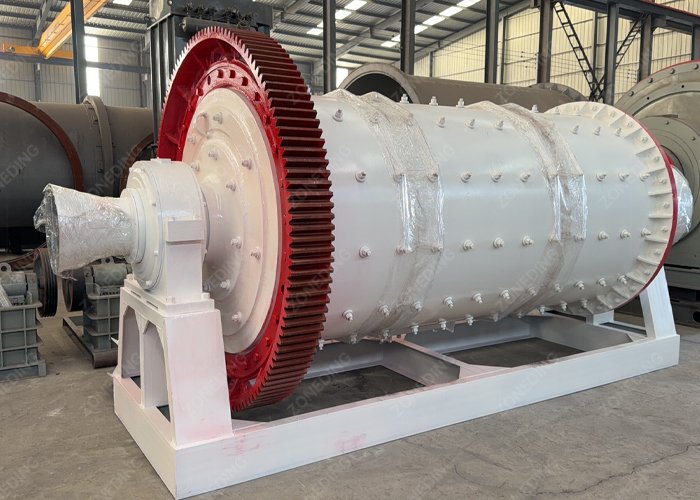
The stands as the most important machine in a modern gold mine. This heavy equipment grinds raw ore into fine particles to release precious metals. Achieving a high recovery rate depends on the efficiency of this grinding process. If the machine f...
View details