The journey from a raw kaolin deposit to the ultra-white powder used in countless products is a sophisticated industrial process. High-purity kaolin is not simply “washed clay”; it is an engineered mineral, meticulously refined through advanced kaolin processing and kaolin purification techniques. For investors and producers, understanding the complete path—from kaolin mining to kaolin deep processing—is essential. This guide provides a definitive overview of the technology, challenges, and opportunities in producing this valuable industrial mineral.
Why is high-purity kaolin the “white gold” for many industries, and what is its value?
You see high demand for kaolin in top industries. You wonder what makes it so valuable. What are its true strengths?
High-purity kaolin is “white gold” because of its unique physical properties. These include exceptional brightness, controlled particle size, and platy structure. These properties make it indispensable for high-end applications like paper coatings, ceramics, and paints.
We must understand kaolin is not just clay. It is an engineered industrial mineral. Its value comes from its physical characteristics. These characteristics are not chemical purity alone. Customers pay for specific physical properties.
The Core Properties of High-Purity Kaolin
Property
Description
Importance
Brightness / Whiteness
This is the absence of color. Iron and titanium oxides cause color. High brightness means less yellow or red tint.
Critical for paper, paint, and ceramics. Directly impacts product aesthetic.
Particle Size Distribution (PSD)
This measures the range of particle sizes. It is often measured in single-digit microns. Too coarse causes abrasion. Too fine negatively affects viscosity.
Essential for coating performance, flow properties, and surface finish.
Platy-ness (Aspect Ratio)
High-purity kaolin particles are hexagonal platelets. This unique shape provides gloss. It also improves opacity and strength.
Provides gloss in paper. Improves mechanical properties in ceramics and plastics.
Viscosity
This describes how the kaolin-water slurry flows.
Crucial for handling during processing. Important for end-product application. For example, paint needs a specific flow.
From open-pit to underground: Which mining method is best for my kaolin deposit?
You need to extract kaolin efficiently. You also need to keep costs low. Which mining method will work best for your deposit?
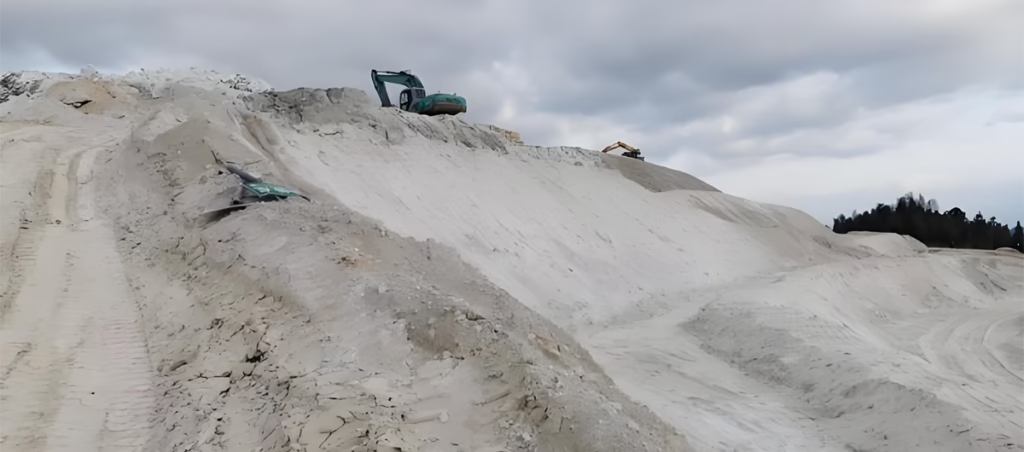
High-purity kaolin deposits are typically mined using open-pit methods. This is because kaolin deposits are usually shallow. This method allows for selective extraction. It also helps avoid contamination from overburden.
Mining kaolin for high purity is a surgical operation. It is not bulk earthmoving. The key challenge is preventing contamination. The reddish-brown clay and soil above the pure white kaolin seam contains iron and organic matter. These are major impurities. Allowing overburden to mix with your ore is a critical mistake. Just one bucket of red clay can ruin hundreds of tons of premium kaolin. This makes it useless for high-end uses.
Selective Mining Practices
Mining is done in clean, sequential steps. Overburden is stripped far back from the mining face. Sometimes, powerful water cannons are used. These cannons blast the kaolin seam into a slurry directly in the pit. This method does three things. It excavates the kaolin. It transports it as a slurry. It starts the essential dispersion process. Bulldozers and excavators are used. They are used with extreme care. This care prevents contamination. This selective mining protects the kaolin’s inherent quality.
Dry method or wet method: Which initial processing path maximizes purification potential for my raw ore?
You have raw kaolin ore. You need to choose the best initial processing method. This choice impacts final purity and cost. Which path should you take?
The wet processing method is essential for producing high-purity kaolin. It allows for effective dispersion and removal of fine impurities. The dry method is simpler but generally yields lower purity grades for less demanding applications.
The slurry from the pit is a thick, clumpy mass. We are not just adding water. We are chemically forcing every tiny kaolin platelet to separate. This is critical. We use chemical dispersants. Sodium polyacrylate or sodium hexametaphosphate are common. These chemicals change the surface charge of the clay particles. This makes them repel each other. This process is called “peptization.” It is critical for all downstream separation.
The Importance of Proper Dispersion
If an operator tries to save money on dispersants, problems arise. If the wrong dispersant is used, the clay remains in clumps. These clumps trap impurities. Fine quartz and iron staining get trapped. These clumps are too large for proper processing downstream. The plant’s efficiency drops significantly. This happens because primary separation is incomplete. Proper dispersion is the key. It unlocks all other purification steps. It makes them effective.
Pushing purity limits: What are the main advanced purification technologies for kaolin?
You have removed coarse impurities. Now you need to achieve ultra-high purity. What advanced techniques are available for this?
Advanced kaolin purification involves several key technologies. These include multi-stage degritting with hydrocyclones and clarifiers. It also includes magnetic separation for iron and titanium. Additionally, chemical leaching or flotation may be used for specific impurities.
After dispersion, we remove non-kaolin minerals. These are mainly quartz sand and mica. This is not a single step. It is a cascade of separation stages. Think of it as a series of filters. Each filter is finer than the last.
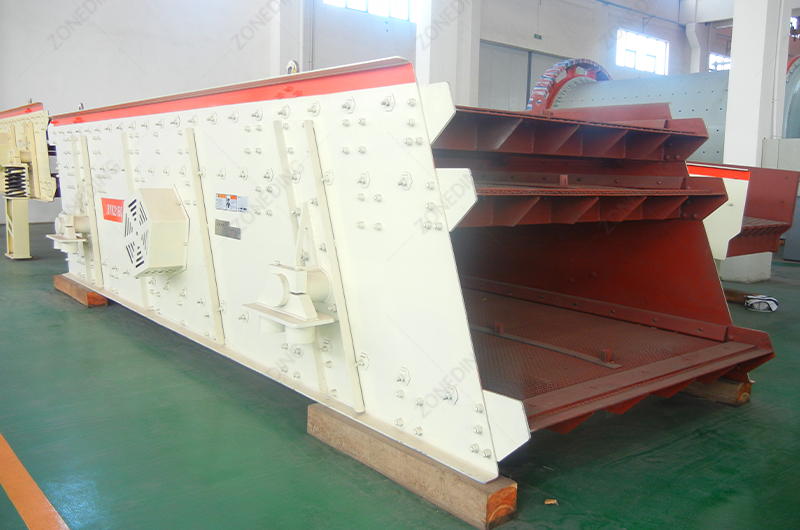
Vibrating screen
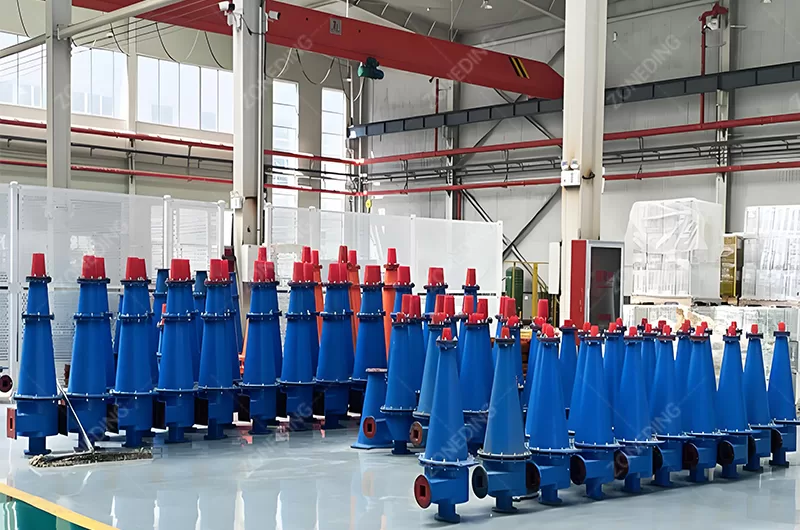
Hydrocyclones
Centrifugal concentrator
The Multi-Stage Degritting Process
The Scalp: The slurry first goes through screens or “sand drags.” This removes pebbles and coarse sand. This is a brute-force removal.
The Cyclone Run: The slurry then enters a series of hydrocyclones. These separate finer sand from kaolin. Separation is based on density differences. Lighter kaolin particles exit through the overflow. Heavier quartz leaves through the underflow.
The Final Polish: For the highest purity, the kaolin slurry may go to a Lamella Clarifier or a Centrifuge. These sophisticated machines use low-force separation. They remove even the finest, near-density quartz and mica. Hydrocyclones might miss these. Each stage is essential. Trying to make one stage do too much work is inefficient. It leads to high kaolin losses in the grit waste stream.
How do you determine the best impurity removal plan for iron, titanium, and organics, and when should calcination be used?
You have specific impurities like iron, titanium, and organics. You need a targeted removal strategy. When is calcination the right choice for your kaolin?
The best impurity removal plan uses a combination of techniques. For iron and titanium, magnetic separation and reductive bleaching are common. Organic matter is typically removed through froth flotation or chemical oxidation. Calcination improves brightness, hardness, and alters particle structure, used when these properties are desired.
After degritting, the kaolin is quite pure. But it is not brilliantly white. It still has trace amounts of iron (Fe) and titanium (Ti) oxides. These cause a yellow or reddish tint.
Brightness Enhancement and Calcination
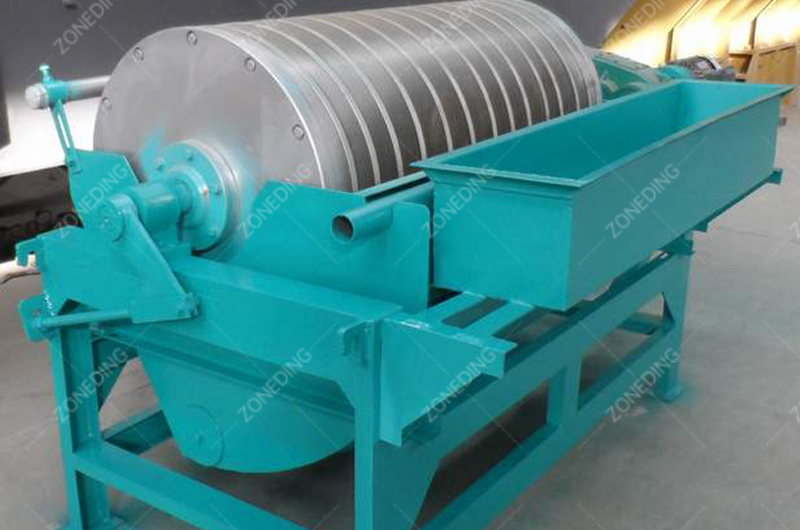
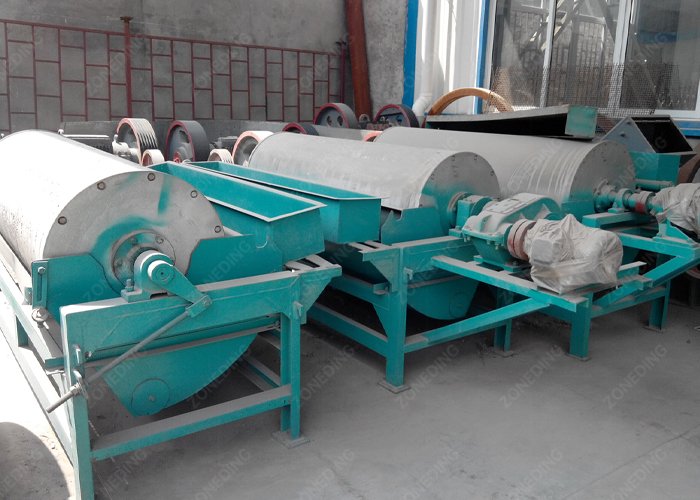
Magnetic-Separator
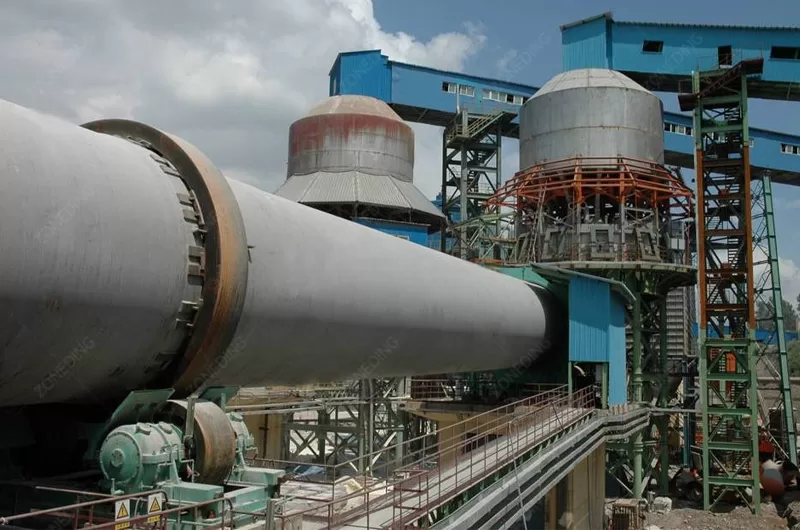
Rotary Kiln
Magnetic Separation: We use a specific tool. It is a Wet High-Gradient Magnetic Separator. These are massive electromagnets. They are filled with stainless-steel wool. Slightly magnetic Fe/Ti impurities get caught by the magnetized wool. This happens as the slurry passes through. This is a slow, energy-intensive process. But it is vital for high-brightness grades.
Reductive Bleaching: After magnetic separation, chemical bleaching removes final color staining. This is not like bleaching laundry. It is a reductive bleach. We add a chemical, typically sodium dithionite (“hydrosulfite”). It converts insoluble, colored ferric iron (Fe³⁺) into soluble, colorless ferrous iron (Fe²⁺). The iron dissolves in the water. It no longer attaches to the clay. This is a delicate chemical reaction. Wrong pH or dosage can cause problems. It can precipitate other compounds. This makes the problem worse.
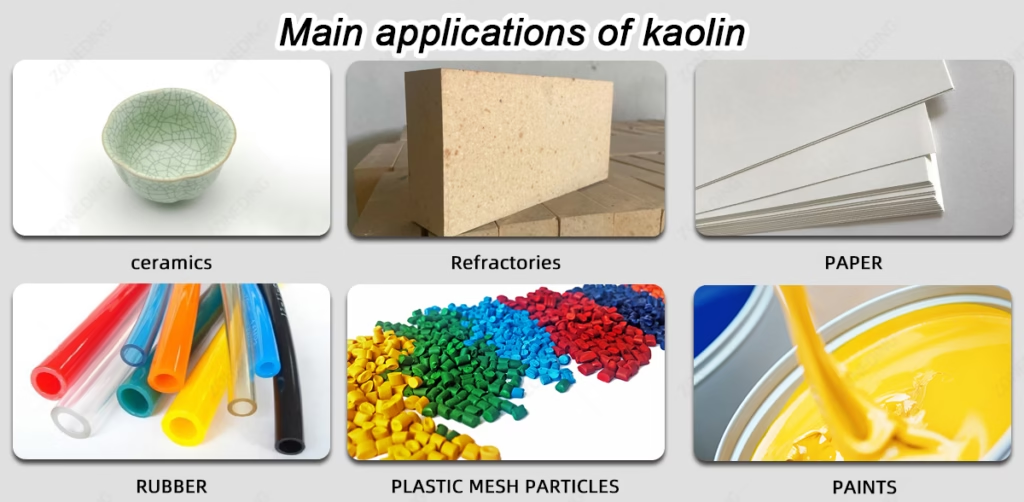
Calcination:Rotary kilns are used for calcination. This heating process changes the kaolin. It removes structural water. It increases hardness and whiteness. It also modifies the particle structure. This creates meta-kaolin or fully calcined kaolin. These products are used in paints, plastics, and rubber. They offer improved opacity and chemical inertness.
From slurry to dry powder: How do dewatering, drying, and pulverizing ensure high-purity kaolin’s final quality?
Your purified kaolin is a slurry. It needs to become a precise dry powder. What steps ensure its final quality and market readiness?
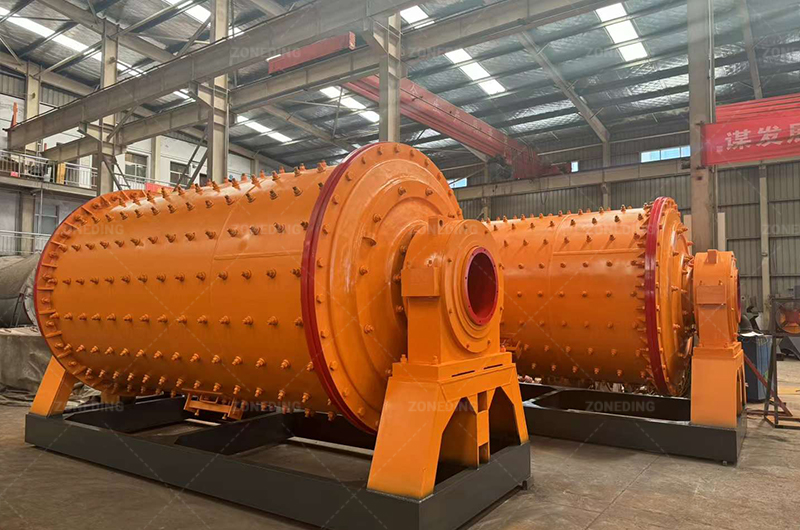
Dewatering, drying, and pulverizing are critical finishing steps. Filter presses or centrifuges dewater the slurry. Specialized dryers, like rotary dryers or spray dryers, remove moisture. Finally, pulverizers and ball mills achieve the desired particle size and texture for the market.
We now have an ultra-pure slurry. It is 70-80% water. Getting the water out is an art. We must do this without re-agglomerating the particles. The method defines your product. It defines your market.
Shaping the Final Product
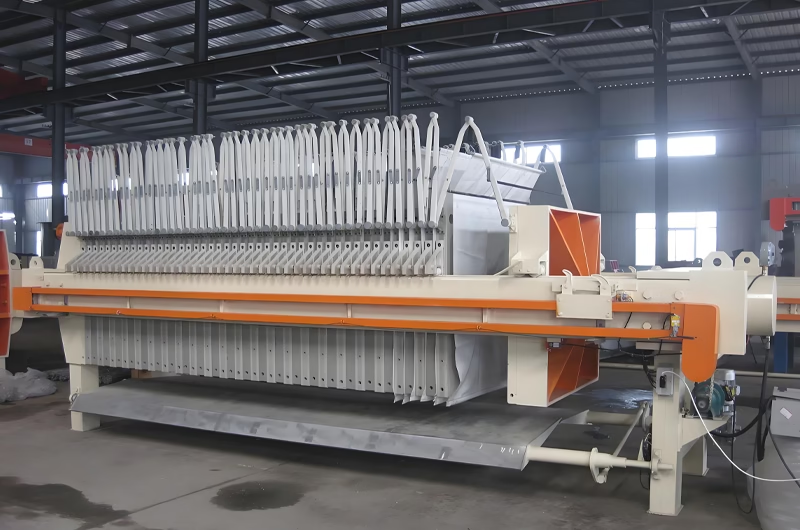
Filter Press
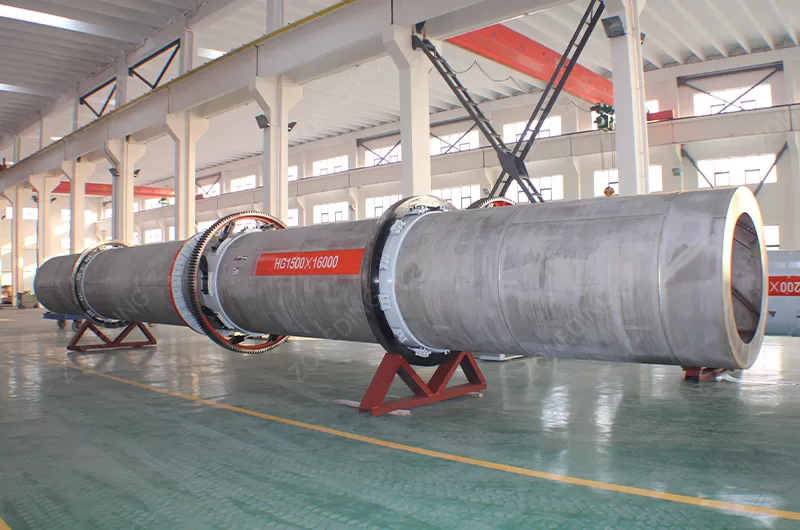
Rotary Dryer
Ball Mill
Dewatering:
Filter Press: Slurry goes into massive filter presses. These squeeze water out. They form a “cake” with about 35% moisture. This cake is extruded into “noodles” and dried. This is cost-effective. It produces filler-grade and ceramics-grade kaolin.
Centrifuge: Another option for dewatering. Centrifuges use high-speed rotation. They separate solids from liquids. This is faster for some applications.
Drying:
Rotary Dryer: For bulk products, rotary dryers are common. These rotate as hot air passes through. They efficiently dry the kaolin cakes or noodles.
Spray Dryer: This is a high-tech, high-cost method. Pure slurry is sprayed into a massive heated silo. Fine droplets fall through hot air. They dry instantly. They form tiny, uniform microspheres. This is the only way to make premium “coating grade” kaolin. This kaolin gives high-end paper its gloss. A three-cylinder rotary dryer is also a highly efficient option for various kaolin types.
Pulverizing/Grinding: After drying, kaolin often needs further processing. Ball mills or rod mills grind the kaolin. This achieves the final particle size distribution. This is critical for specific applications. It ensures optimal performance in coatings and plastics.
How do you ensure high-purity kaolin products perfectly match the strict standards of high-end industries like paper, ceramics, and paints?
High-end industries have extremely demanding specifications. How can your kaolin consistently meet these stringent requirements?
Ensuring kaolin matches strict industry standards requires rigorous quality control. This includes continuous monitoring of brightness, particle size distribution, viscosity, and chemical purity. Tailored processing ensures each batch meets specific customer needs.
Matching strict industry standards is about precision. It is also about consistency. High-end paper, ceramic, and paint manufacturers have exact specifications. They do not tolerate variations. We must ensure every batch of kaolin performs exactly as expected.
Meeting Industry Demands
Paper Industry (Coating Grade): Paper coating requires kaolin with extremely high brightness (typically >90 ISO). It needs a very fine particle size (e.g., 90% < 2 microns). It also needs a platy particle shape. Low viscosity is also critical for smooth application. This kaolin improves print gloss, opacity, and paper smoothness.
Ceramics Industry: Kaolin for ceramics needs high whiteness after firing. It also needs controlled plasticity. It must have consistent shrinkage properties. This ensures product integrity. It prevents defects. Chemical purity is important. It prevents unwanted reactions during firing.
Paint and Coatings Industry: Kaolin acts as an extender and pigment. It needs high brightness. It also needs good opacity. Controlled particle size influences film integrity. It also affects rheology (flow properties). High purity prevents discoloration. It also avoids unwanted chemical interactions.
What is my key equipment list and expected ROI when investing in a high-purity kaolin production line?
You are planning a major investment. You need to know the essential equipment. You also need a realistic view of your potential returns. What should you expect?
A high-purity kaolin production line requires specialized equipment. This includes jaw crushers, ball mills, hydrocyclones, magnetic separators, filter presses, and rotary dryers. ROI depends on raw material quality, market demand, and effective cost management, with advanced technology offering higher returns.
Investing in a high-purity kaolin line means significant capital. It is not a small venture. The return on investment (ROI) depends on many factors. These include your raw material quality. They also include your market demand. Your operational efficiency is critical.
Fine Processing: Fine ball mills or pulverizers for final particle size.
Water Management: This is critical. A kaolin plant uses vast amounts of water. You must treat and recycle this water. Your water treatment plant is as important as your magnetic separator. Ignoring this leads to environmental fines and operational shutdowns.
ROI Factors: High purity and consistent quality command premium prices. Maximizing yield and minimizing energy consumption reduces operational costs. A well-designed plant with efficient ZONEDING equipment ensures long-term profitability.
How can you get a customized, integrated solution for high-purity kaolin mining and deep processing?
You need a solution that fits your specific kaolin deposit. Generic plans will not work. How can you get a tailored, comprehensive approach?
Getting a customized solution starts with detailed ore analysis. We offer full EPC services. These include process design, equipment manufacturing, and plant construction. We ensure your high-purity kaolin project is optimized from excavation to the final product.
Every kaolin deposit is unique. Generic solutions will lead to costly mistakes. You need an integrated approach. This approach should consider every step. It must be tailored to your specific ore. It must also meet your market’s demands.
ZONEDING’s Integrated Approach
We start with a comprehensive analysis of your kaolin ore. This includes its mineralogy and impurity profile. We test its physical properties. Then, our engineers design a custom process flowsheet. This flowsheet maximizes purity and recovery. We manufacture the necessary equipment. This equipment includes jaw crushers, ball mills, magnetic separators, and rotary dryers. We oversee the installation and commissioning of your entire plant. This ensures seamless operation. We offer training for your staff. We provide ongoing technical support. Our goal is to deliver a complete, optimized solution. This solution makes your high-purity kaolin project profitable and sustainable.
Conclusion
Producing high-purity kaolin is a complex journey. It requires deep understanding and advanced technology. With the right strategy and ZONEDING’s expertise, your project can unlock the true value of this “white gold.”
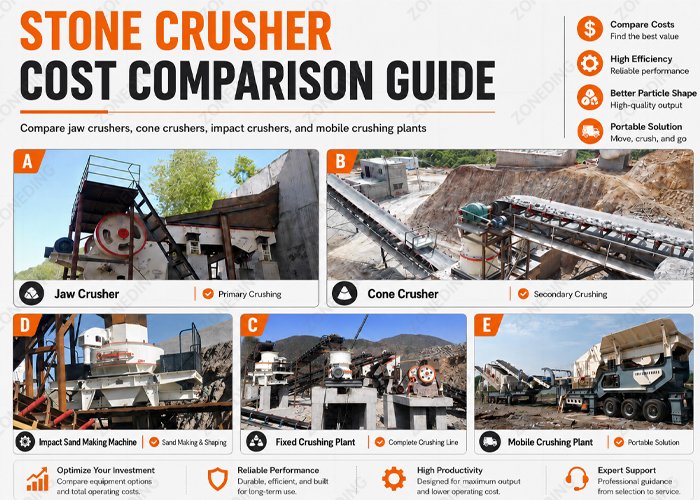
Stone crusher costs can vary dramatically even when two plants have the same production capacity. In real quarry operations, the final investment depends on rock hardness, equipment quality, automation level, mobility, and long-term operating cost...
The magnetic separation method is a crucial technique to improve mineral purity and recover valuable metals. This process uses the physical property of magnetism to divide iron-bearing minerals from waste rocks. A high-efficiency ensures that a mi...
Understanding the mechanical logic of crushing equipment is vital for project profitability. Selecting a machine based solely on capacity ignores the reality of wear and energy costs. Different stones require different mechanical principles—either...
We use cookies to ensure that we give you the best experience on our website. If you continue to use this site we will assume that you are happy with it.
Privacy Policy
Send us a message
We would love to hear from you
Submit your question and our team will respond to the email provided as soon as possible.
 Zoneding Machine