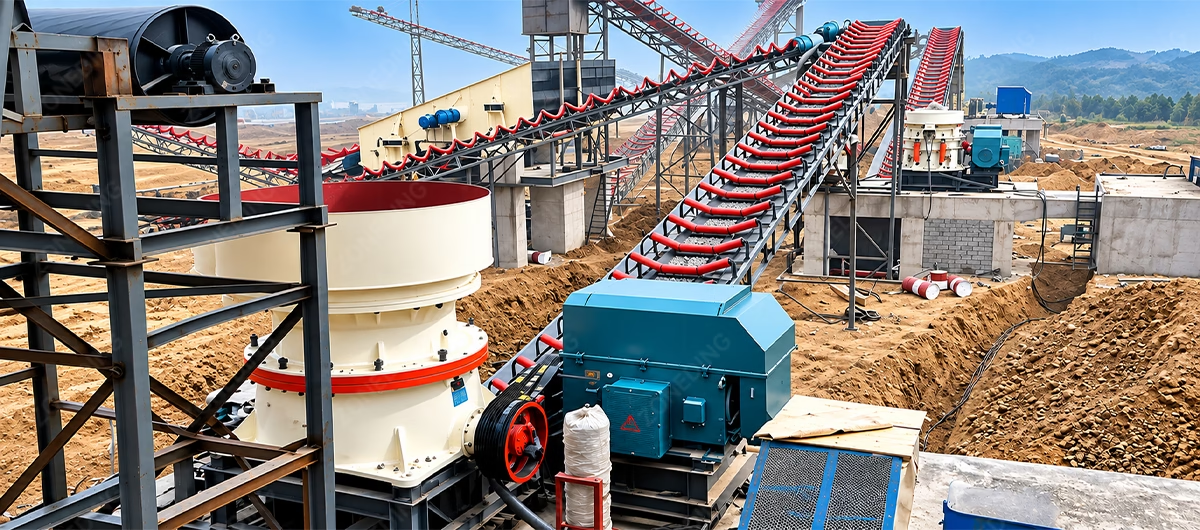
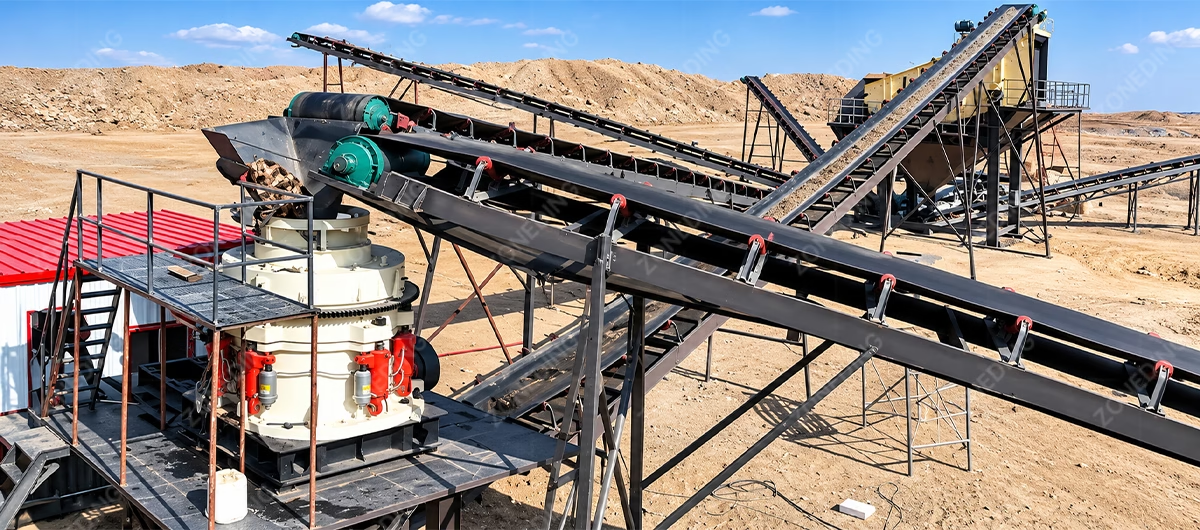
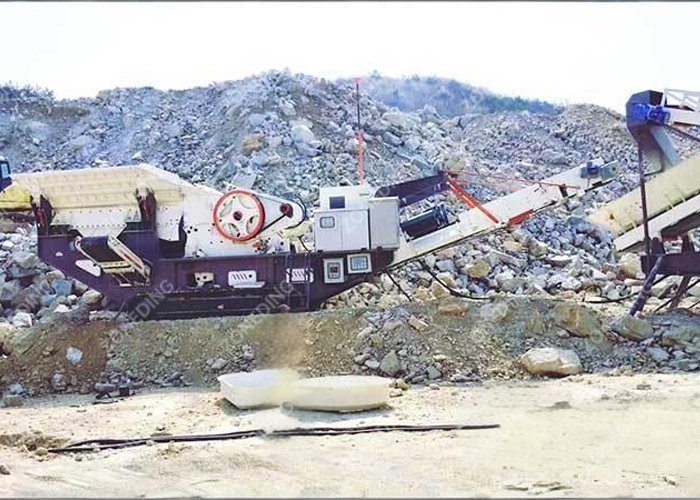
A cone crusher may run continuously while a quarry produces less finished aggregate than expected. Operators often respond by increasing feeder speed, changing the closed side setting (CSS), or considering a larger crusher.
However, the real restriction may be elsewhere in the circuit.
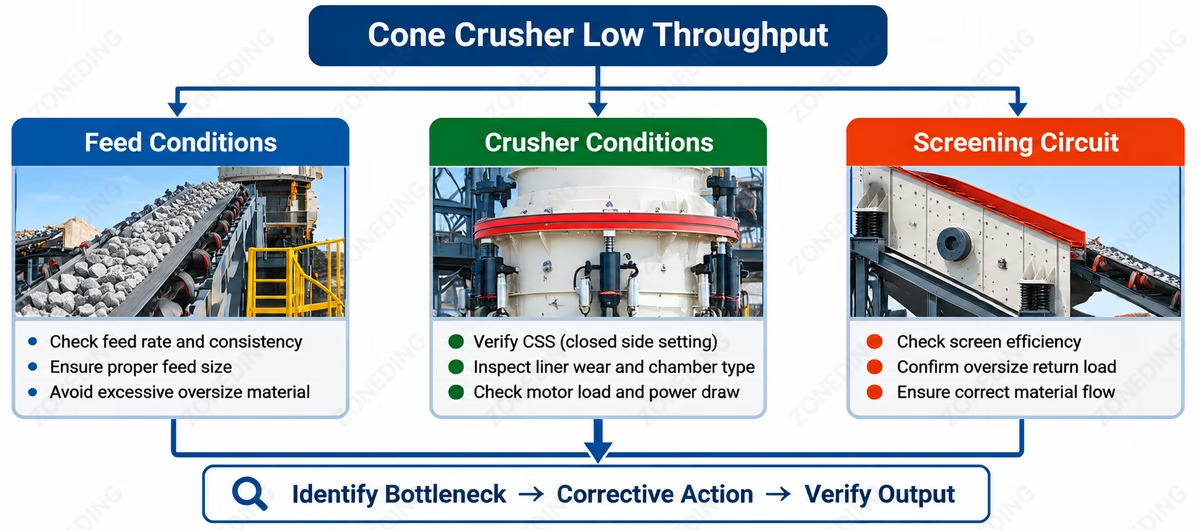
Cone crusher low throughput can result from unstable feeding, unsuitable chamber conditions, worn liners, inefficient screening, or excessive circulating load. A crusher may process considerable material without delivering the expected amount of saleable aggregate.
This guide explains how to identify the bottleneck, interpret operating symptoms, and decide whether adjustments, maintenance, or equipment changes are necessary.
What Counts as Low Throughput in a Cone Crusher Circuit?
Before troubleshooting, distinguish crusher capacity from finished product output.
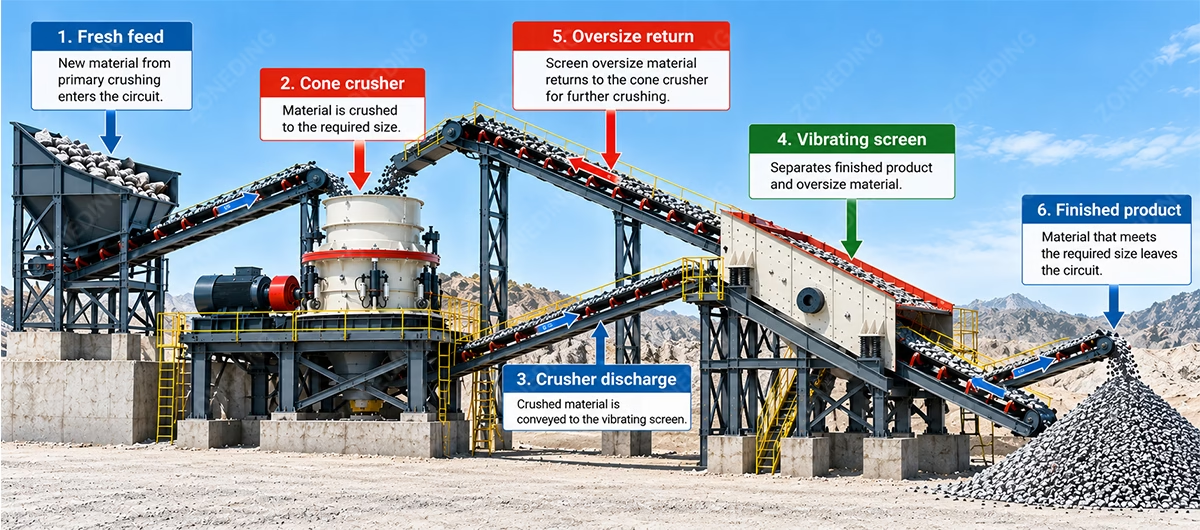
Fresh feed rate is the new material entering the circuit. Crusher throughput includes material passing through the crusher, including returned oversize. Finished product output measures material leaving the circuit in the required size fractions.
These figures can differ substantially in a closed circuit.
Returned material increases the workload on the crusher but does not create additional production. Under steady operating conditions, total material entering and leaving the circuit must balance, allowing for moisture changes, dust losses, and other material streams.
For example, repeatedly crushing the same oversize particles may increase internal throughput without increasing saleable output.
Measurement
What it reveals
Fresh feed rate
Available upstream supply
Crusher throughput
Total crusher loading
Finished product output
Useful plant production
Oversize return
Internal recirculation demand
Motor load
Relative crushing demand
Operating availability
Losses from interruptions
Collect measurements over a representative operating period. Compare results with previous production under similar rock characteristics, product requirements, and equipment settings.
A change in material hardness or feed gradation may explain part of the difference.
Is the Feed Limiting Crusher Capacity?
Feeding problems can prevent a mechanically sound cone crusher from reaching its expected throughput.
The first checks should cover feed size, particle distribution, and delivery stability.
Cone crushers normally receive material that has already undergone primary crushing.
Oversized particles can disrupt movement through the chamber or exceed the recommended feed conditions. Excessive fines may also affect chamber behavior, depending on the machine and material.
Review the complete feed size distribution rather than checking maximum particle size alone.
Compare the material with the manufacturer’s recommended limits for the installed chamber.
If the upstream crusher has changed its discharge gradation, the cone crusher may no longer be receiving the feed for which the circuit was configured.
Check feed continuity and distribution
An irregular feeder can alternate between insufficient supply and temporary overload.
Uneven material distribution may also produce unstable chamber loading and localized liner wear.
Inspect the surge bin, feeder, conveyor discharge position, and material distribution arrangement.
Where the crusher is designed for choke feeding, maintain the operating conditions specified by its manufacturer.
Do not increase feeder speed until the downstream screen and return conveyor have been checked. Additional feed can worsen an existing circuit bottleneck.
How Do CSS and Chamber Conditions Affect Throughput?
The closed side setting (CSS) is the minimum discharge gap between the crushing surfaces during the crushing cycle.
It influences product gradation, material passage, and crushing demand.
A smaller CSS generally produces finer material but may restrict throughput or increase power demand. Opening the setting may allow more material to pass through the crusher while generating additional oversize.
The important measurement is the effect on finished product output, not crusher discharge alone.
Why a larger CSS may not improve plant production
When CSS is increased, the crusher may discharge more material per hour. However, the vibrating screen may return a larger proportion for additional crushing.
As a result, circulating load rises while saleable output remains unchanged.
Before adjusting CSS, record the existing setting, motor load, discharge gradation, and screen return conditions.
Changes must remain within the manufacturer’s permitted range.
Chamber configuration matters as well. A coarse crushing chamber may not suit a finer duty without changes to the liner profile or circuit arrangement.
For equipment configurations, see ZONEDING’s Cone Crusher product page.
Can Worn Liners Reduce Effective Crushing Capacity?
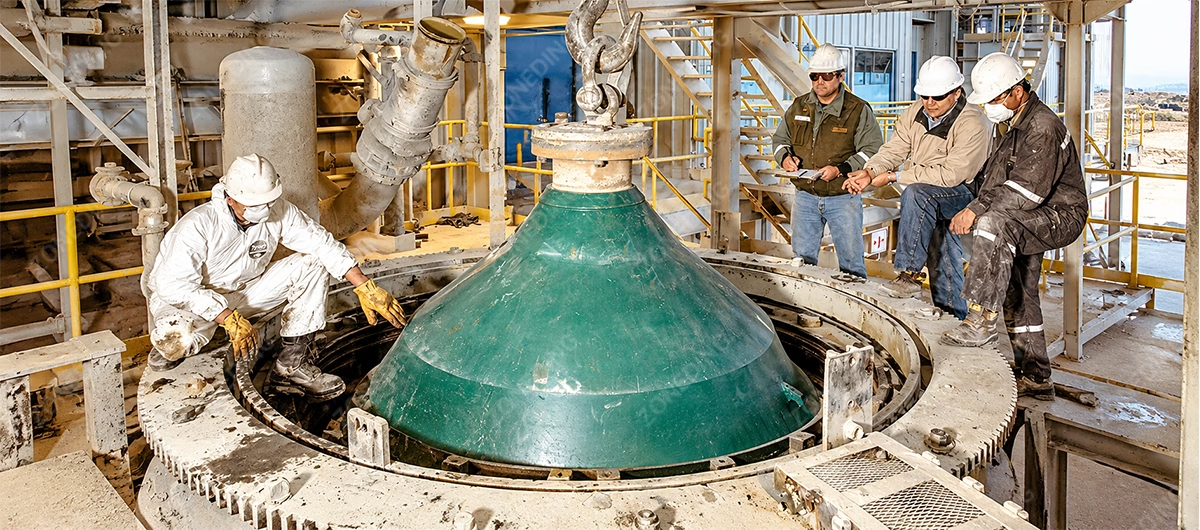
The mantle and concave gradually wear as rock passes through the crushing chamber.
As their profiles change, material movement, product gradation, and effective crushing performance may also change.
However, lower throughput alone does not prove that liner replacement is necessary.
Compare current operation with previous records, paying attention to discharge gradation, CSS adjustment frequency, uneven wear, and unusual operating behavior.
Physical inspection must follow the manufacturer’s maintenance procedures and the site’s lockout requirements.
Wear patterns may reveal underlying problems.
Liner wear and chamber condition should be reviewed during throughput troubleshooting
For example, uneven feed distribution can accelerate wear in one area. Replacing the liners without correcting the feed arrangement may allow the problem to return.
Likewise, an unsuitable liner profile can limit performance even when the components are new.
Liner selection should reflect feed size, rock characteristics, required reduction, and crushing stage.
Is the Vibrating Screen Creating a Circuit Bottleneck?
In a closed circuit, the vibrating screen separates finished aggregate from material requiring additional crushing.
If screening efficiency declines, correctly sized particles may remain in the oversize stream and return to the crusher unnecessarily.
This increases internal loading and reduces the capacity available for fresh feed.
Inefficient screening can increase circulating load and restrict finished aggregate production
Common screening restrictions
Several conditions can reduce screening performance:
Blocked or blinded screen openings.
Excessive material bed depth.
Uneven distribution across the deck.
Damaged or unsuitable screen media.
Insufficient screening area for the required duty.
Moisture and particles close to the aperture size can also affect separation.
Inspect the screen feed, finished product, and oversize return streams. Where possible, use belt-scale readings and particle size samples to understand the material balance.
A high crusher discharge rate combined with low finished product output is a reason to investigate screening performance.
The Vibrating Screen product page provides information about equipment used for aggregate classification.
How Do Power Draw and Hydraulic Conditions Help Diagnose Problems?
Motor load and hydraulic readings provide useful clues, but they cannot identify a fault independently.
Interpret them alongside feed rate, CSS, material characteristics, and maintenance history.
Low throughput with low motor load
Relatively low motor load may indicate insufficient feeding.
Check the surge bin, feeder, conveyor supply, and actual feed rate before changing crusher settings.
Low throughput with high motor load
High load with limited throughput may indicate restrictive crushing conditions, unsuitable feed, or chamber problems.
Compare operating readings with the manufacturer’s recommendations. A heavily loaded crusher is not necessarily producing efficiently.
Hydraulic alarms and interruptions
Hydraulic systems may control adjustment, overload protection, or other functions, depending on the crusher design.
Unexpected pressure behavior or repeated alarms should be investigated using the equipment manual.
Never bypass protective systems or exceed operating limits to force higher production.
A Step-by-Step Troubleshooting Checklist
A consistent inspection sequence helps operators identify the limiting equipment without making unnecessary changes.
A structured inspection sequence helps locate the real circuit bottleneck
Step
Inspection
Recommended action
1
Production measurements
Record fresh feed, crusher throughput, and finished output
2
Feed conditions
Check particle size, continuity, and distribution
3
Crusher settings
Verify CSS and chamber configuration
4
Operating readings
Review motor load, hydraulic readings, and alarms
5
Liner condition
Compare wear records and arrange safe inspection
6
Screening performance
Check screen media, bed depth, and product gradation
7
Circulating load
Examine oversize return and material balance
8
Corrective action
Adjust one factor and measure the result
Match symptoms with likely bottlenecks
Operating symptom
First checks
Possible cause
Low output, relatively low motor load
Feeder, surge bin, conveyor
Insufficient supply
Low output, relatively high motor load
CSS, chamber, feed characteristics
Restrictive crushing conditions
High crusher throughput, low finished output
Screen, return conveyor, gradation
Screening or recirculation bottleneck
These are diagnostic starting points, not definitive conclusions.
Record conditions before and after each adjustment. Compare results under similar material and product requirements.
Changing several settings simultaneously makes it difficult to identify which action improved performance.
When Should You Adjust, Repair or Upgrade the Equipment?
The appropriate response depends on whether the existing crusher is underperforming or the circuit has reached a genuine capacity limit.
Operating adjustments may solve problems caused by unsuitable feeding, CSS, or screening conditions.
Maintenance may be necessary when worn liners or damaged components restrict operation.
Circuit modifications may be appropriate when the screen, conveyors, or upstream equipment limit production.
Equipment upgrades should be considered only after confirming that the required output exceeds the practical capacity of the existing arrangement.
Before selecting a larger crusher, verify that downstream equipment can handle the additional material.
Information needed for a technical review
Prepare the following details where available:
Existing crusher model and chamber configuration.
Rock type and feed size distribution.
Current CSS and required product sizes.
Fresh feed rate and finished product output.
Motor load and relevant operating records.
Vibrating screen specifications and aperture sizes.
Return conveyor arrangement and maintenance history.
A process flow diagram and equipment photographs can provide useful context.
ZONEDING offers crushing equipment for quarrying, mining, and aggregate applications.
Frequently Asked Questions
Why is my cone crusher producing less material than expected?
Possible causes include unstable feeding, unsuitable CSS, worn liners, chamber restrictions, or inefficient screening. Compare crusher throughput with finished product output before diagnosing the problem.
Does reducing CSS always improve cone crusher performance?
No. A smaller CSS can produce finer material but may also affect throughput, power demand, and circulating load.
Can a vibrating screen reduce cone crusher circuit capacity?
Yes. Poor screening efficiency can return correctly sized material to the crusher, increasing internal load and restricting fresh feed capacity.
How do I know when cone crusher liners need replacement?
Review wear measurements, chamber condition, product gradation, and maintenance records. Follow the manufacturer’s wear limits and inspection procedures.
Should I replace my cone crusher if plant output is too low?
Not immediately. Check feeding, crusher operation, screening, and recirculation before considering equipment replacement.
Need Help Diagnosing Your Cone Crusher Circuit?
Share your crusher model, rock type, feed size, current output, target capacity, and screening configuration with ZONEDING.
The available information can be reviewed to discuss potential operating adjustments, maintenance needs, or equipment changes.
For decades, natural river sand was considered the standard material for concrete, mortar, and infrastructure projects. Today, that situation is changing rapidly. Many contractors, concrete producers, and aggregate companies are asking: Is machine...
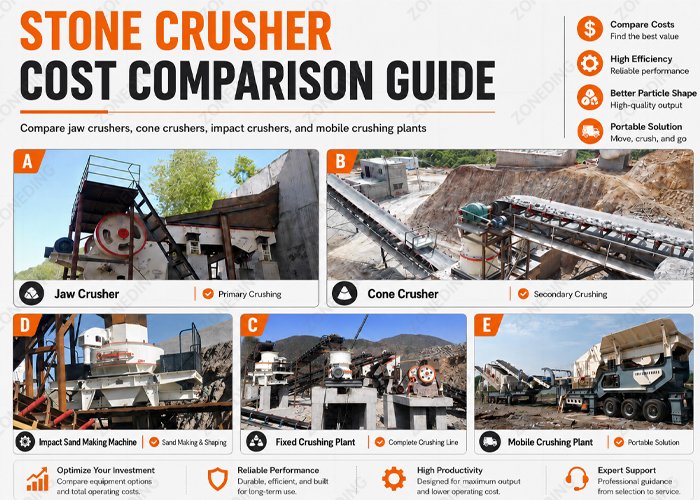
Stone crusher costs can vary dramatically even when two plants have the same production capacity. In real quarry operations, the final investment depends on rock hardness, equipment quality, automation level, mobility, and long-term operating cost...
Field experience in extreme environments reveals the truth about aggregate production in remote areas. Showroom data fails when the site sits 500 kilometers from civilization. Extreme locations lack power grids, clean fuel, and heavy cranes. ...
We use cookies to ensure that we give you the best experience on our website. If you continue to use this site we will assume that you are happy with it.
Privacy Policy
Send us a message
We would love to hear from you
Submit your question and our team will respond to the email provided as soon as possible.
 Zoneding Machine