Misidentifying your gold ore is the fastest way to lose millions. A geologist sees rock, but a process engineer must see an economic puzzle to be solved.
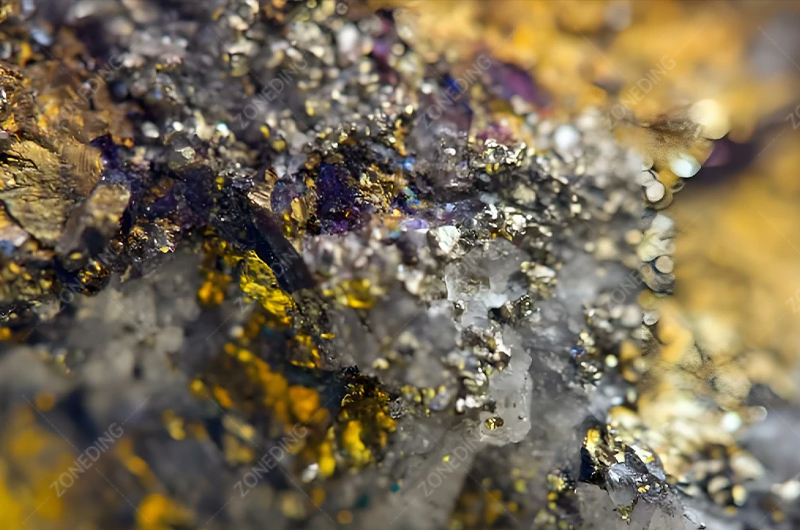
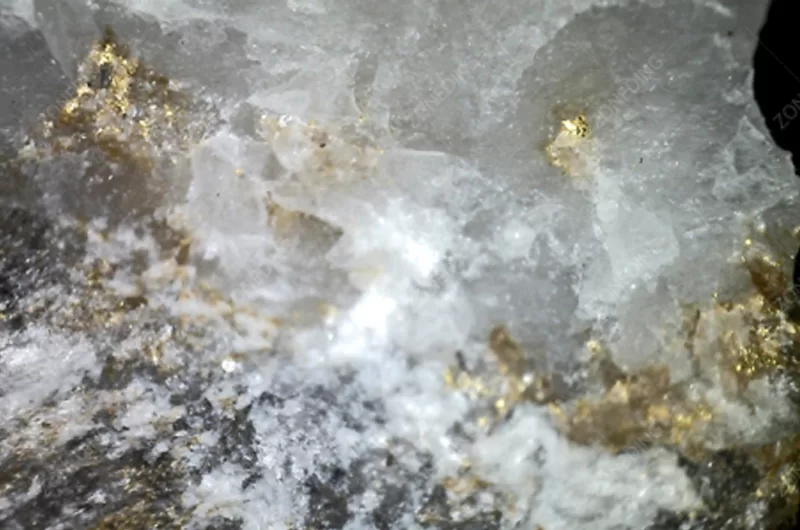
Gold ore is classified by its processing behavior into 7 types: Placer, Free-Milling (Oxidized), Sulfide-Associated, Carbonaceous (Preg-Robbing), Telluride, Electrum, and Refractory Siliceous. Each type requires a specific extraction method to be profitable.
As manufacturers of mineral processing equipment, we at ZONEDING have seen how critical this is. Failures often come from applying the wrong solution to the right ore. We don’t classify ore by its geological name; we classify it by its behavior in a processing plant. Let’s break down the 7 types a plant manager needs to understand.
Your geological report lists minerals, but what does that mean for your plant and your wallet? The names can be misleading if you don’t understand their processing implications.
The main gold ore types are defined by how the gold must be extracted. They are Placer, Free-Milling, Sulfide-Associated, Carbonaceous, Telluride, Electrum, and Refractory Siliceous ores. This classification dictates the entire processing flowsheet.
We approach this from a practical standpoint. The geology is the “what,” but the processing behavior is the “how.” How must we treat this rock to make money? This determines the selection of every piece of Beneficiation Equipment.
Ore Type
Key Characteristic
Primary Processing Challenge
1. Placer Gold
Free gold particles in sand/gravel.
Liberating fine gold from clays.
2. Free-Milling
Oxidized; gold is exposed.
Permeability loss due to clays in heaps.
3. Sulfide-Associated
Gold is locked inside sulfide minerals.
Requires breaking the sulfide matrix.
4. Carbonaceous
Contains natural carbon (“preg-robbing”).
Ore re-adsorbs dissolved gold.
5. Gold Telluride
Gold is chemically bonded to tellurium.
Resists standard cyanide leaching.
6. Electrum
A natural gold-silver alloy.
Lower density and complex refinery costs.
7. Refractory Siliceous
Microscopic gold locked in quartz.
Extremely high grinding energy cost.
What are the extraction processes for gold ore?
A list of processes is useless without context. Choosing the right one is the difference between profit and a yard full of expensive, gold-plated scrap metal.
The main gold extraction methods are gravity separation, cyanide leaching (Heap Leaching, CIL/CIP), and froth flotation. Refractory ores require pre-treatment steps like roasting or pressure oxidation (POX).
The process is dictated entirely by the ore type.
Gravity Separation
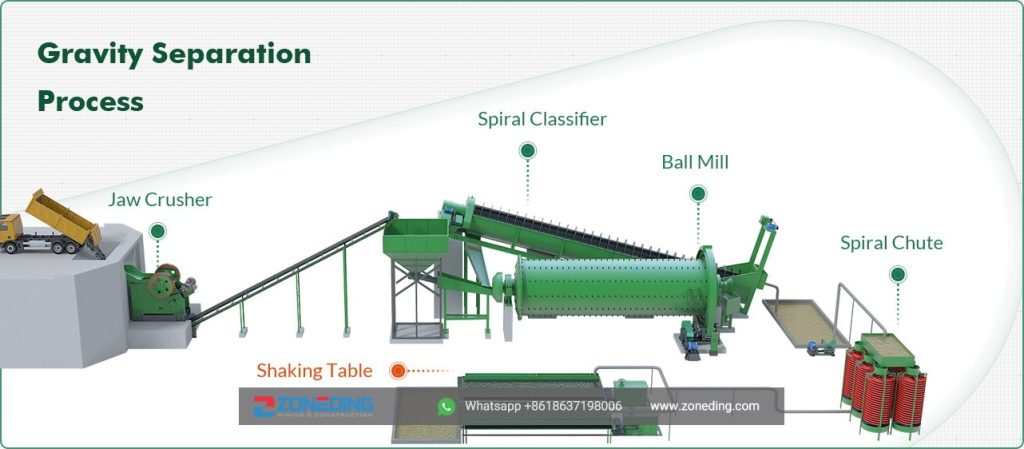
Used for Placer Gold Mining and as a pre-concentration step for free-milling ores. It uses the high density of gold to separate it from lighter gangue using equipment like jigs, shaking tables, or a Centrifugal Concentrator.
Cyanide Leaching
This is the workhorse for free-milling ores.
Heap Leaching: A low-cost method for low-grade oxidized ores.
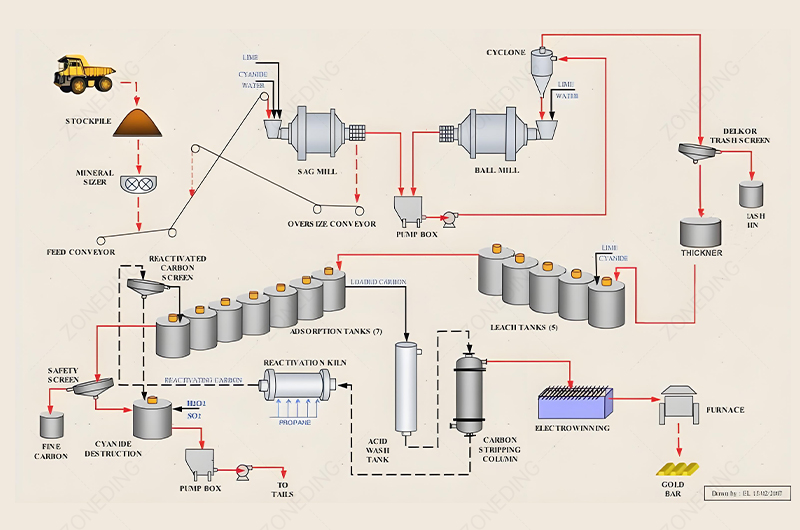
Carbon-in-Leach (CIL) / Carbon-in-Pulp (CIP): An agitated tank leaching process for higher-grade or more complex ores, like carbonaceous ores. A Gold CIL Plant is a common solution.
CIL
CIP
Flotation and Pre-treatment
This is for refractory sulfide ores.
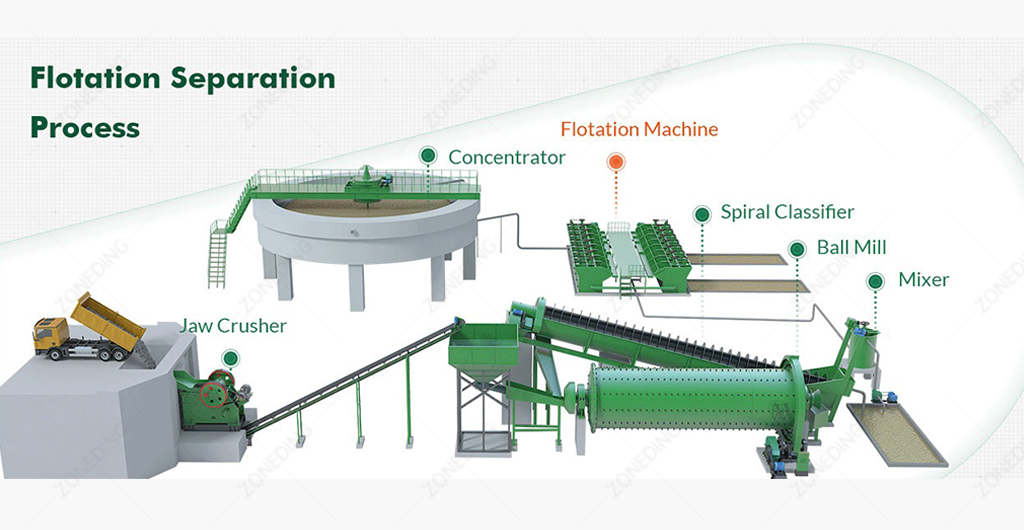
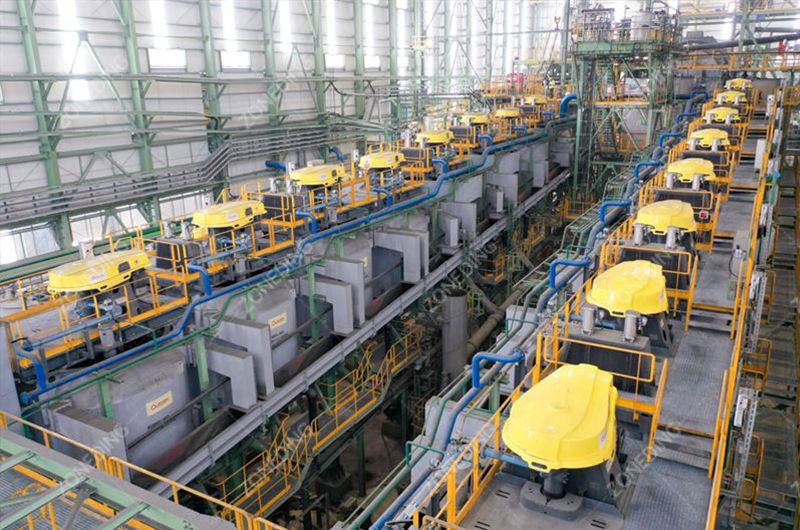
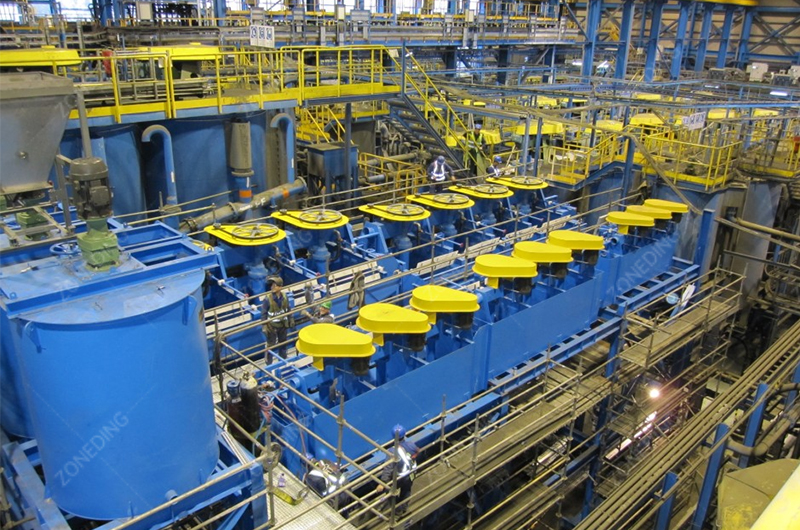
Froth Flotation: Uses a Flotation Machine to create a concentrate of gold-bearing sulfide minerals.
Oxidation: The concentrate is then treated with methods like roasting or Pressure Oxidation (POX) to destroy the sulfides and liberate the gold for cyanidation.
Flotation
Why is some gold ore “free-milling” and treatable with cheap cyanidation?
You hear “free-milling” and think it is a guaranteed win. This simple term, however, hides a crucial flaw that can kill your recovery rate if ignored.
“Free-milling” or oxidized ore is simple because natural weathering has already exposed the gold particles. They are chemically “free” and can be dissolved directly by cyanide without expensive pre-treatment.
This geological “pre-treatment” makes the chemistry easy. But the physical properties create a hidden trap. Oxidized ores often contain high amounts of silts and clays. In a heap leach, these fine particles can turn to sludge, migrate downwards, and clog the heap. This blocks the flow of the cyanide solution. Your gold recovery rate can plummet from a projected 85% to a disastrous 30%. The problem isn’t the chemistry; it’s the plumbing. The professional solution is agglomeration. The crushed ore must be tumbled in a drum with a cement binder. This rolls the fines into durable, porous pellets that maintain permeability throughout the entire leach cycle, ensuring success.
What is “Refractory Gold Ore”?
The lab report says you have gold, but your leach tests recover almost nothing. The gold is there, but it is locked in a mineral prison that standard cyanide cannot open.
Refractory gold ore is any ore that gives poor recovery with standard cyanide leaching. The gold is typically encapsulated in sulfide minerals or is sub-microscopic and physically locked within the rock matrix.
sulfide gold ore
silicate gold ore
The term “refractory” means the ore resists simple treatment. This creates two main problems that dramatically increase the gold processing plant cost.
Sulfide-Locked Gold
Here, microscopic gold is trapped inside sulfide minerals like pyrite. The cyanide cannot reach the gold. You must first destroy the sulfide prison. This is usually done by producing a concentrate with a Flotation Machine, then oxidizing that concentrate with roasting or pressure oxidation (POX).
Silicate-Locked Gold
In this case, sub-microscopic gold is trapped inside a hard silicate matrix like quartz. The only way to liberate it is through intense, very fine grinding. This becomes a pure energy cost problem. The project’s viability depends on the cost of electricity and the efficiency of the grinding circuit, which often requires large Ball Mills.
If my report mentions “pyrite” or “sulfides,” do I need a flotation plant?
Seeing “pyrite” in a report can trigger panic about high costs. Does it automatically mean you need to build a complex and expensive flotation circuit?
Not always, but it is highly likely. If the gold is physically locked within the pyrite, then froth flotation is the most common and effective first step to economically treat the ore.
Flotation is a strategic tool. It addresses the Sulfide Ore Processing challenge by turning a large-tonnage problem into a small-tonnage problem. Instead of treating 100 tons of low-grade ore, you use Flotation Machines to create 5-10 tons of high-grade concentrate. Now you have three more economical options:
Oxidize it: Build an on-site oxidation circuit (like roasting or POX) to treat only the small volume of concentrate before leaching.
Ultra-Fine Grind it: Invest in an intensive grinding circuit to grind only the concentrate to liberate the gold.
Sell it: The most common option for smaller operations is to sell the concentrate directly to a specialized smelter. This turns a complex metallurgical problem into a simpler logistics and sales problem, which is often a smart mining project investment decision.
What is “carbonaceous gold ore”?
You are dissolving gold successfully, but it is vanishing from the solution before you can recover it. Your own ore is stealing the precious metal back from you.
Carbonaceous ore contains natural, active carbon. This carbon competes with the activated carbon in your plant, adsorbing the dissolved gold back out of the solution. This is called “preg-robbing.”
This is the most insidious ore type. Standard heap leaching or a Carbon-in-Pulp (CIP) circuit will fail because the ore’s natural carbon will “rob” the gold before your plant’s carbon can. The only reliable method is Carbon-in-Leach (CIL). In a Gold CIL Plant, a high concentration of very active, commercial-grade carbon is added into the mixer tanks at the same time as the cyanide. This starts a race. Your “good” carbon must be faster and more aggressive, capturing the dissolved gold before the ore’s “bad” carbon can. You are essentially out-competing your own ore for its gold.
If my deposit has both oxidized and sulfide ores, how should I plan my plant?
Your orebody is not uniform. You have easy ore on top and difficult ore below. Building a plant for only one type is a recipe for future failure and stranded assets.
You should plan a staged development. Start with a simpler circuit to process the oxide ore, but design the plant layout to allow for the future addition of a flotation circuit for the sulfide ore.
This phased approach is critical for managing mining project investment and maximizing the life-of-mine value.
Phase 1: Oxide Ore Processing
Begin by building a standard Gold CIL Plant or heap leach operation to process the oxide cap. This generates cash flow quickly from the easier, lower-cost material.
Phase 2: Sulfide Ore Expansion
The key is to plan ahead. The initial plant layout must leave physical space and include connection points for the future sulfide circuit. Once the oxide ore is depleted, you use the cash flow from Phase 1 to fund the addition of a flotation circuit. The flotation concentrate can then be sold or treated in a new, dedicated oxidation circuit. This foresight turns a major future expense into a manageable expansion.
How can mineral processing tests determine the most economical process?
Guessing your process flowsheet is like gambling with millions of dollars. You must replace guesswork with hard data to guarantee the best economic outcome for your project.
Comprehensive metallurgical testing is the only way to definitively select the most economical process. These tests simulate process options to provide hard data on recovery rates, reagent costs, and potential risks.
A structured mineral processing test program is the foundation of any successful mining project investment. It is not an optional expense; it is the most critical step in de-risking the project. The program should include:
Detailed mineralogical analysis to identify the ore type.
Gravity Recoverable Gold (GRG) tests.
Bottle roll tests to determine cyanide leach kinetics and ultimate recovery.
Flotation tests to determine concentrate grade and recovery.
Column leach tests to simulate heap leach performance. The results from this test work provide the engineering data needed to design the correct Gold Ore Processing Plant and select the right equipment, forming the basis of a reliable financial model.
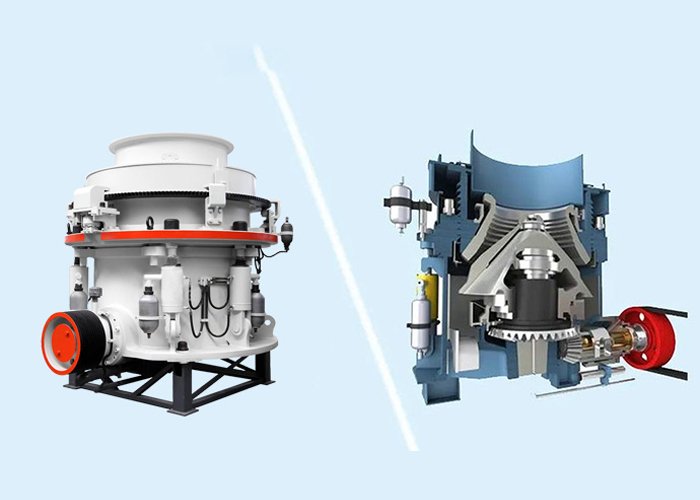
A cone crusher working principle differs significantly from simple impact crushers. It is a high-precision machine designed for hard rock processing. Success in mining or aggregate production depends on the balance between eccentric spee...
Decades of experience in the mining sector reveal a common financial drain. Many crushing facilities struggle with high electricity bills and frequent machine failures. Facility owners often attempt to save money by purchasing cheap replacement pa...
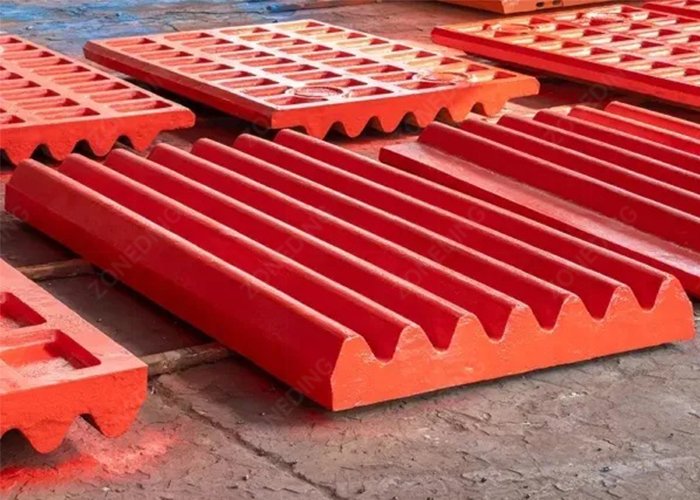
Many quarry operators spend months comparing crusher models, motor power, and production capacity. However, very few spend the same amount of time evaluating the jaw plates that actually perform the crushing. That oversight can become surprisingly...
We use cookies to ensure that we give you the best experience on our website. If you continue to use this site we will assume that you are happy with it.
Privacy Policy
Send us a message
We would love to hear from you
Submit your question and our team will respond to the email provided as soon as possible.
 Zoneding Machine