 Zoneding Machine












Why Is My Ball Mill Producing Too Many Fines?
537Learn why a ball mill produces too many fines and how to reduce overgrinding, improve classification, and stabilize product size.
View detailsSearch the whole station Crushing Equipment
Processing high-hardness and high-abrasiveness materials such as granite, basalt, diabase, and quartz presents distinct engineering challenges compared to soft rock applications. The physical properties of these ores dictate that standard processing methods used for limestone or dolomite will result in unsustainable maintenance costs and reduced equipment uptime. This technical guide outlines the engineering criteria for establishing an efficient Hard Rock Crushing Plant. It analyzes how raw material chemical composition influences crusher selection, how circuit configuration affects spare part consumption, and the economic balance between capital expenditure (CapEx) and operating expenses (OpEx) in abrasive environments.
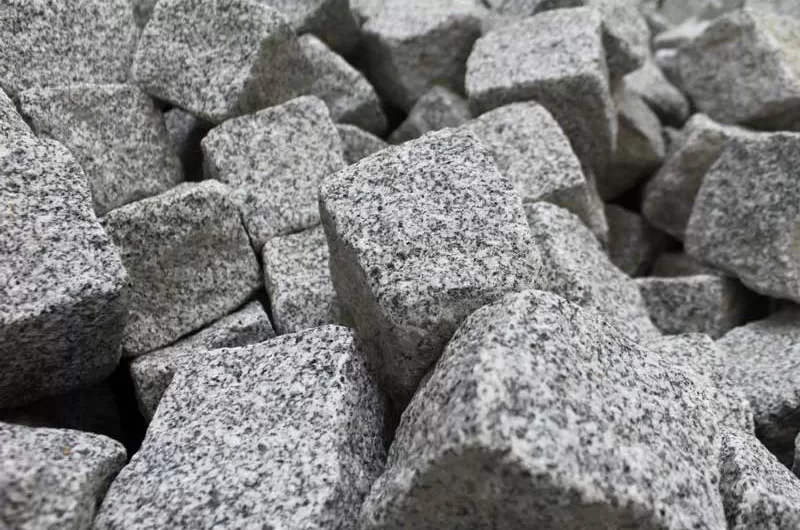
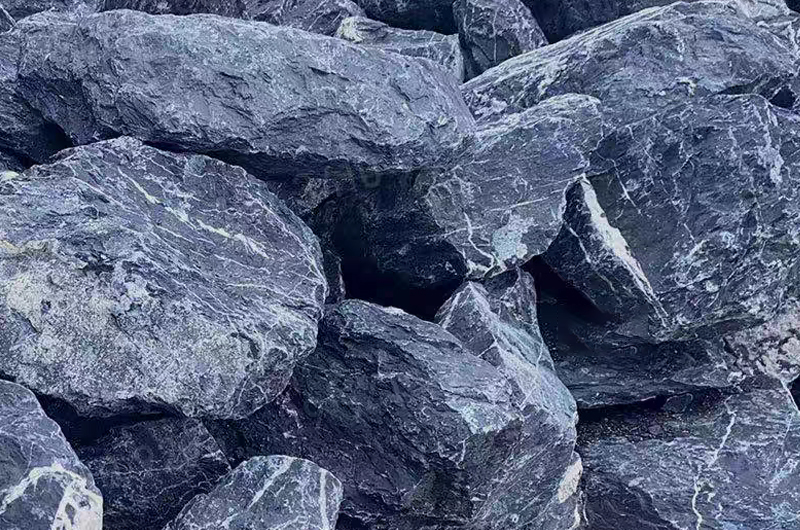
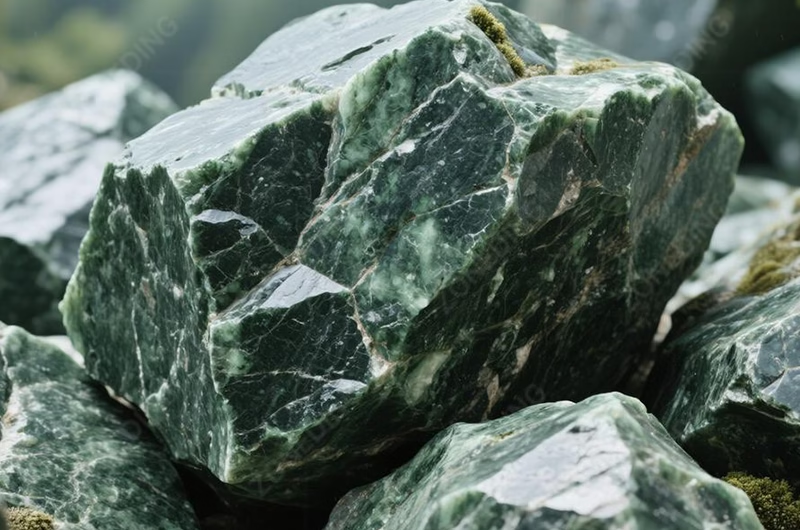

In the context of equipment selection, a clear distinction must be made between rock hardness and abrasiveness. Compressive Strength (measured in MPa) indicates the mechanical force required to fracture the rock matrix, whereas the Abrasiveness Index (Ai) quantifies the rate at which the rock wears down metal surfaces during contact. For a Hard Rock Crushing Plant, the Silica Content (SiO2) serves as the primary chemical indicator for decision-making. While materials like limestone may exhibit high compressive strength, they typically possess low abrasiveness. Conversely, river pebbles, granite, and basalt often contain significant levels of silica (quartz), a mineral with a Mohs hardness of 7, which is harder than standard steel. If the Silica Content exceeds 10%, or the Bond Abrasiveness Index (Ai) exceeds 0.15, compression-based crushing principles must be prioritized over impact-based methods. Compression crushing fractures stone by applying force between two surfaces, resulting in minimal sliding friction on liners. Impact crushing involves high-velocity collisions that cause rapid abrasive wear on blow bars and impact plates when processing high-silica materials. Therefore, quantitative analysis of the material’s chemical composition is the foundational step in process design.
| Rock Type | Silica Content (SiO2) | Abrasiveness Index (Ai) | Recommended Crushing Mechanism |
|---|---|---|---|
| Limestone | < 5% | < 0.05 | Impact or Compression |
| Granite | 65% – 75% | 0.40 – 0.55 | Compression Only |
| Basalt | 45% – 55% | 0.20 – 0.40 | Compression Only |
| Quartzite | > 90% | > 0.70 | Compression Only |

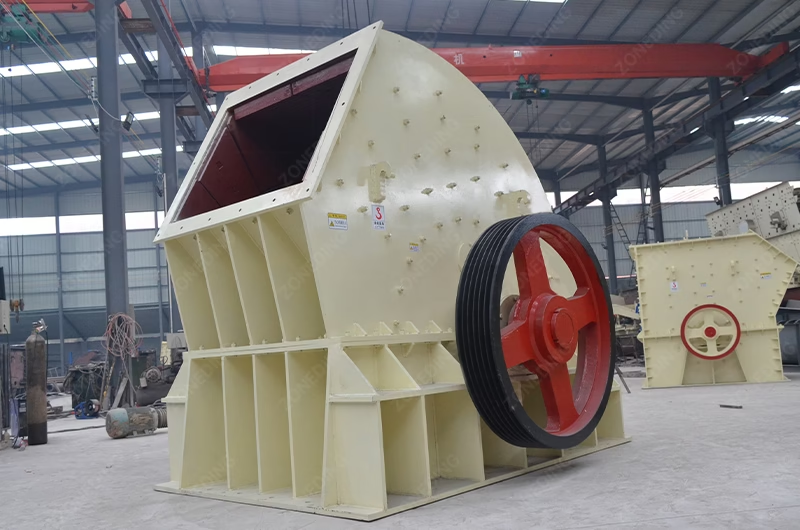
For applications involving abrasive hard rock, the Jaw Crusher is mechanically superior to the Hammer Crusher due to its reliance on compression rather than impact and grinding forces. A Hammer Crusher reduces material size by striking it with high-speed hammers against a breaker plate or grate. When processing abrasive materials such as granite, this mechanism leads to rapid material loss on the hammerheads and screen plates, necessitating frequent replacement. The Jaw Crusher utilizes a toggle mechanism to apply compressive force, fracturing the stone between a fixed and a moving jaw plate. This action results in significantly lower metal loss per ton of processed material. While hammer mills offer higher reduction ratios, the downtime associated with hammer maintenance in hard rock applications negatively impacts overall plant availability. Furthermore, the “Nip Angle” of the jaw crusher is a critical specification. Standard jaw crushers feature a nip angle of 20-22 degrees. When processing extremely hard, rounded materials like river stones, a steep angle can cause material slippage. In such scenarios, specifying a deep cavity design or curved jaw plates ensures material retention and effective crushing. Selecting a larger primary jaw crusher can also reduce upstream blasting costs by accommodating a larger Feed Size, minimizing the need for fine blasting in the quarry.
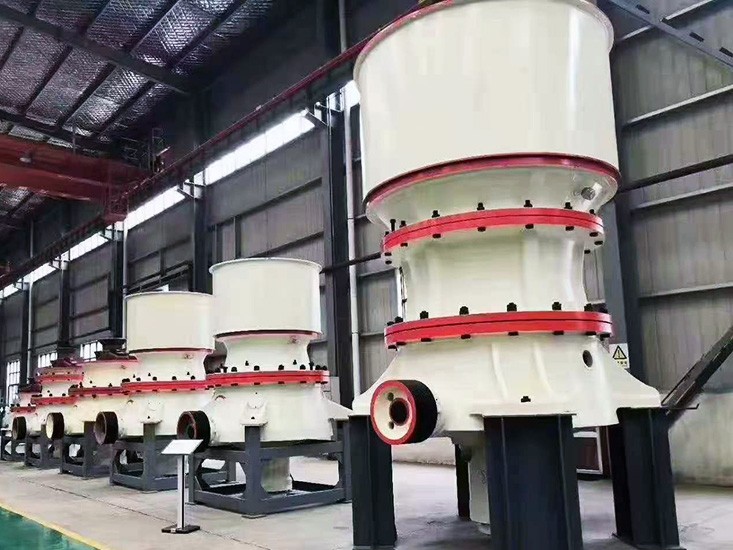
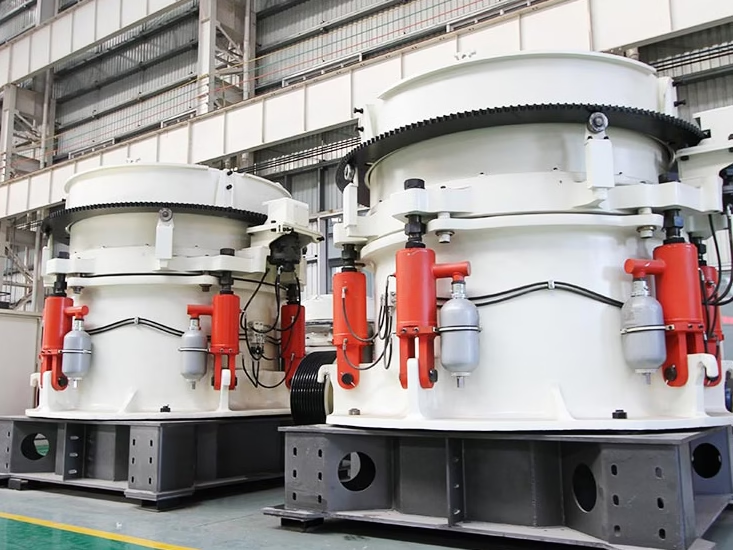
A high-efficiency hard rock processing circuit typically integrates both Single Cylinder and Multi-Cylinder cone crushers to optimize throughput and aggregate quality. The Single Cylinder Hydraulic Cone Crusher functions effectively as the secondary crusher. Its design features a steep mantle and a large feed opening, enabling it to accept the coarse output directly from the primary Jaw Crusher. This stage focuses on significant size reduction. The Cone Crusher (specifically the Multi-Cylinder Hydraulic type) is then deployed as the tertiary crusher. These machines operate at higher rotational speeds (RPM) and generate greater crushing force. They utilize the principle of “lamination crushing” or inter-particle crushing, where rocks are crushed against each other rather than just the liner. This produces a finer output with improved cubic shape. This staged configuration assigns bulk reduction duties to the Single Cylinder unit and shaping/finishing duties to the Multi-Cylinder unit, thereby optimizing the wear life of liners in both machines. Consistent “Choke Feeding” is essential for these crushers. Maintaining a full crushing chamber ensures that the inter-particle crushing effect occurs, distributing wear evenly across the mantle and concave. Operating a cone crusher with a low fill level (starvation feeding) results in uneven wear patterns and increased mechanical stress on the bushings and hydraulic system.
| Feature | Single Cylinder Cone | Multi-Cylinder Cone | Operational Benefit |
|---|---|---|---|
| Primary Function | Secondary Reduction | Tertiary Shaping | Specialized roles reduce overall wear. |
| Feed Opening | Large | Medium/Small | Allows acceptance of coarser jaw discharge. |
| Crushing Frequency | Moderate | High | High frequency improves fine material production. |
| Passage Capacity | High | High | Both handle high throughput efficiently. |
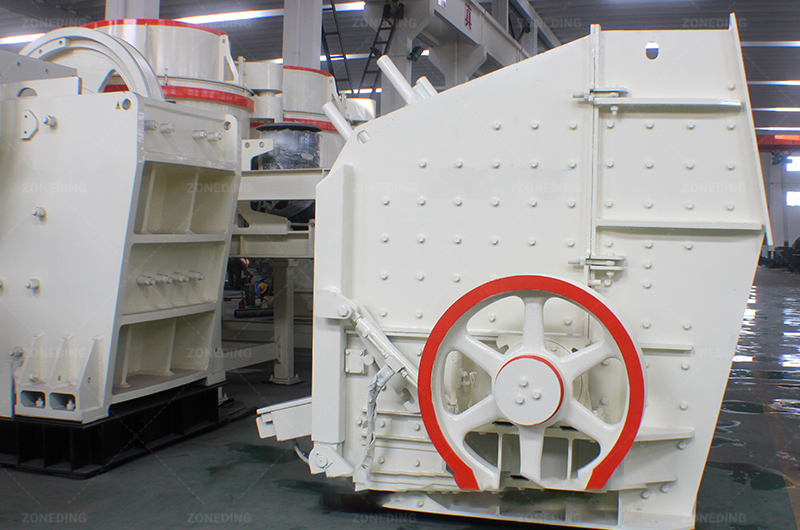
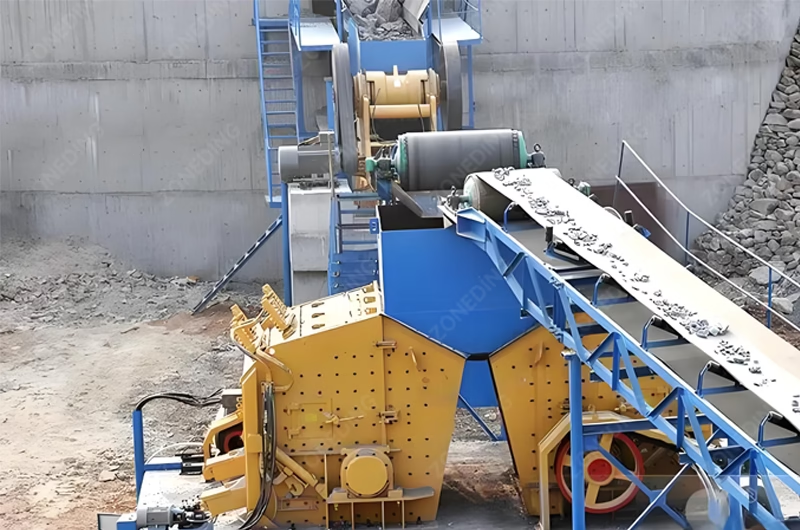
The utilization of an Impact Crusher for the secondary reduction of high-silica rock is generally considered economically inefficient due to excessive wear rates. Impact crushers function by accelerating rock via a rotor and throwing it against stationary steel curtains or impact plates. When the feed material contains silica levels above 10%, this high-velocity impact causes rapid abrasion and fracturing of the blow bars (hammers). Although impact crushers are known for producing aggregates with excellent cubic shape, the service life of blow bars in hard rock applications (such as basalt or diabase) can drop to as low as 40 to 50 operational hours. The recurring cost of replacement parts, combined with the production revenue lost during maintenance downtime, typically outweighs the lower initial acquisition cost of the impactor. If the specific shaping capabilities of an impactor are required for a project, the machine is most economically viable at the quaternary stage. At this stage, the feed size is small (typically less than 40mm), meaning the kinetic energy required for reduction is lower, which results in significantly reduced wear rates compared to secondary crushing applications.
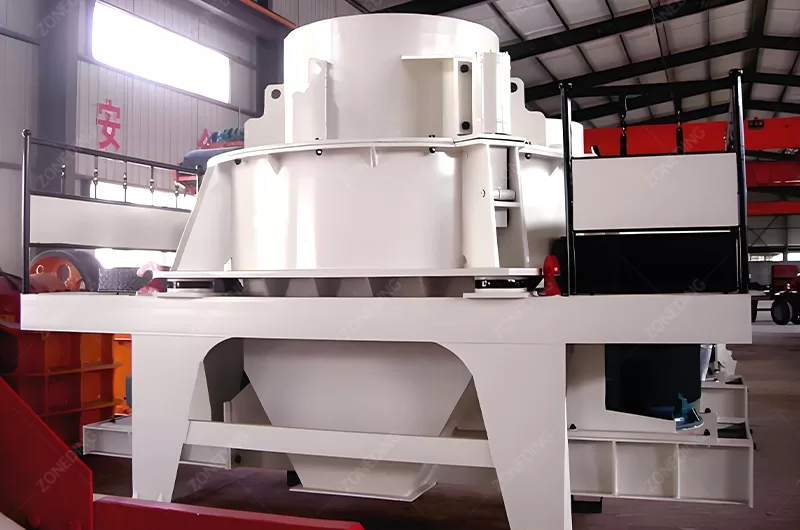
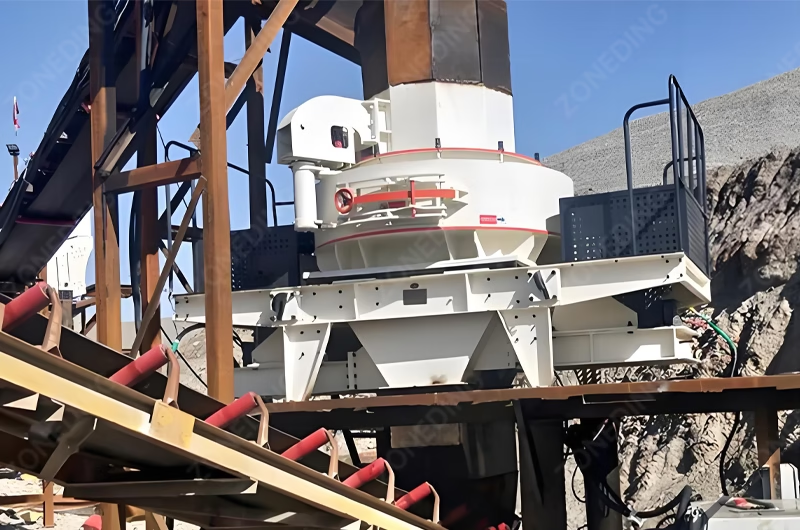
Compression crushing methods, such as those employed by Jaw and Cone crushers, can inherently produce flaky or elongated particles due to the natural cleavage planes and crystalline structure of certain rock types. To correct the shape index without sacrificing the efficiency of cone crushers, a Sand Making Machine (Vertical Shaft Impactor or VSI) is often integrated as the final stage of the circuit. In this configuration, the VSI functions primarily as a shaping tool rather than a reduction tool. It utilizes a “rock-on-rock” crushing principle, where high-speed stones collide with a self-lined material bed within the crushing chamber. This collision breaks off sharp edges and improves the cubicity of the aggregate. Recirculating material through a VSI can significantly reduce the Flakiness Index, ensuring the final product meets strict ASTM or EN standards for infrastructure projects. The VSI is particularly suitable for hard rock applications because the “stone-lining” technique prevents direct contact between the abrasive rock and the rotor body, protecting the machine’s core structure from wear.
The implementation of a three-stage crushing circuit often yields lower Total Cost of Ownership (TCO) compared to a two-stage circuit for hard rock applications. A two-stage process necessitates high reduction ratios at each step, often exceeding 8:1, to reduce run-of-mine (ROM) rock to the final product size. This high reduction requirement places excessive mechanical load on the secondary cone crusher, leading to accelerated liner wear, thermal stress, and potential component fatigue. In a dedicated Stone Crushing Plant, a three-stage configuration (Primary Jaw -> Secondary Cone -> Tertiary Cone) distributes the crushing workload. This allows each machine to operate at a conservative reduction ratio (typically 3:1 or 4:1). This load distribution ensures that manganese liners wear evenly and that the crushers operate within their optimal efficiency curves. Furthermore, crushing rock in gradual, incremental steps consumes less energy per ton (kWh/t) than attempting large reductions in fewer steps. Although the initial capital expenditure (CapEx) involves purchasing three machines, the long-term savings in maintenance, energy consumption, and spare parts inventory (OpEx) provide a superior Return on Investment (ROI) for hard rock quarries.
Accurate estimation of wear costs requires aligning the liner metallurgy with the specific crushing conditions of each stage. High Manganese steel (Mn18Cr2) relies on significant impact force to “work harden” its surface. If ultra-high manganese steel (Mn22) is utilized in a secondary or tertiary cone crusher where the feed size is small, the material may not receive sufficient impact energy to trigger the hardening process. In this unhardened state, the premium-priced liner will wear at a rate comparable to standard steel. Metallurgy must be selected based on the impact load vs. abrasion load. For secondary stages characterized by high impact, Mn18Cr2 is the standard specification. For tertiary stages where abrasion is the dominant force but impact is lower, liners with inserted alloy columns or ceramic composites provide superior durability. Correctly matching the liner composition to the crushing stage physics extends maintenance intervals and reduces the cost per ton.
Industry trends for 2026 emphasize automated load control and advanced material science to mitigate the high operating costs associated with hard rock processing. Modern Mobile Crushing Station units increasingly incorporate load sensing technology that monitors the engine load and hydraulic pressure in real-time. These systems automatically adjust the feeder speed or the crusher’s Closed Side Setting (CSS) to prevent mechanical overloads from uncrushable materials while maintaining maximum throughput. Furthermore, electric motor specifications for hard rock applications are shifting towards higher Service Factors (1.25). These motors are engineered to withstand the significant torque spikes and thermal loads associated with crushing inconsistent geological formations. In terms of wear parts, Metal Matrix Composites (MMC), which embed ceramic inserts into a manganese steel matrix, are becoming the standard for high-abrasion applications, offering extended service life compared to traditional mono-metallic liners.
Q1: What causes smooth river stones to slip in the Jaw Crusher chamber?
Slippage is primarily caused by an excessive Nip Angle relative to the friction coefficient of the rock. A standard 20-22° angle may be too steep for smooth, rounded stones. Reducing the Closed Side Setting (CSS) or installing “Curved Jaw Plates” reduces the effective angle, improving material engagement.
Q2: Is Mn22 (Ultra-High Manganese) suitable for all crushing stages in hard rock plants?
No. Manganese steel requires high-energy impact to undergo work hardening. In tertiary cone crushers with small feed sizes, the impact energy is often insufficient to harden Mn22. Consequently, the liner wears rapidly despite the higher material cost.
Q3: How does Choke Feeding influence liner longevity?
Choke feeding maintains a packed crushing chamber, facilitating “inter-particle crushing” where rocks fracture against other rocks. This reduces direct contact between the rock and the manganese liner. Starvation feeding results in rocks crushing directly against the metal, accelerating abrasive wear.
Q4: Can a Mobile Crusher effectively process hard granite?
Yes, provided the correct circuit configuration is employed. A Mobile Jaw Crusher followed by a Mobile Cone Crusher is the standard solution. Mobile impactors are generally not recommended for primary or secondary stages in granite processing due to wear costs.
Q5: What is the recommended Service Factor for electric motors in hard rock applications?
A Service Factor of 1.15 to 1.25 is recommended. The crushing of hard rock generates significant torque spikes and load fluctuations that can cause standard motors (Service Factor 1.0) to overheat or trip thermal protection relays.
ZONEDING manufactures heavy-duty mineral processing equipment engineered for demanding geological environments. The company produces machinery capable of handling materials with high abrasiveness indices, ranging from Tracked Cone Crushers to Magnetic Separators. Manufacturing processes ensure that all structural components are designed to withstand the mechanical stresses inherent in hard rock processing.
Contact ZONEDING for technical consultation regarding production line configurations suited to specific mineral properties.
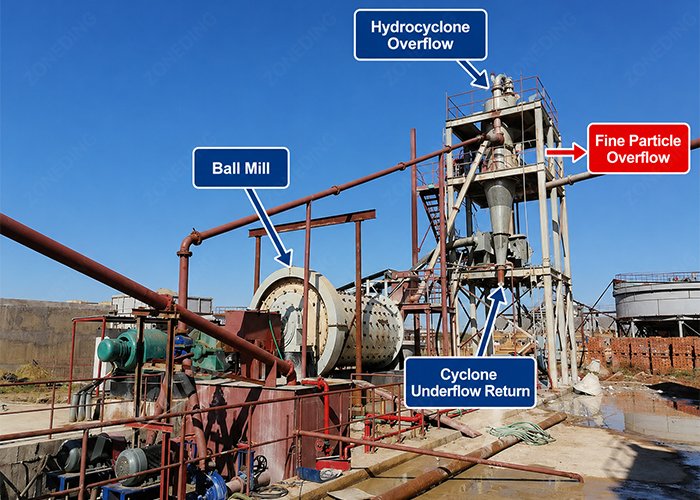
Learn why a ball mill produces too many fines and how to reduce overgrinding, improve classification, and stabilize product size.
View details
The success of a graphite processing plant depends on the ability to protect large flakes. Natural flake graphite value relates directly to flake size. Large flakes (+32 or +50 mesh) command prices several times higher than fine powder. An efficie...
View details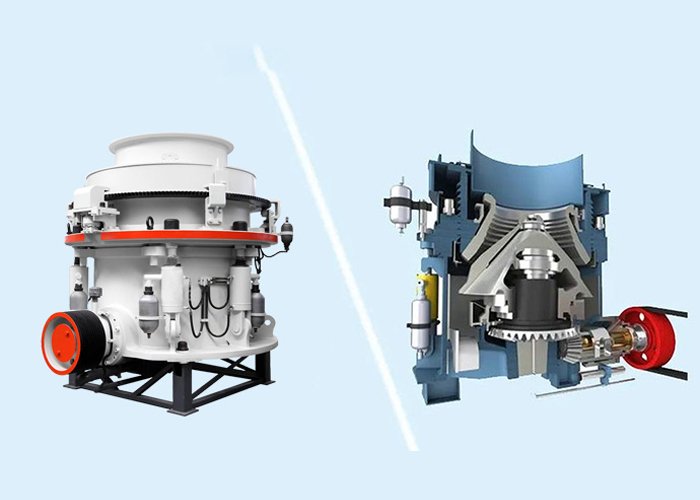
A cone crusher working principle differs significantly from simple impact crushers. It is a high-precision machine designed for hard rock processing. Success in mining or aggregate production depends on the balance between eccentric spee...
View details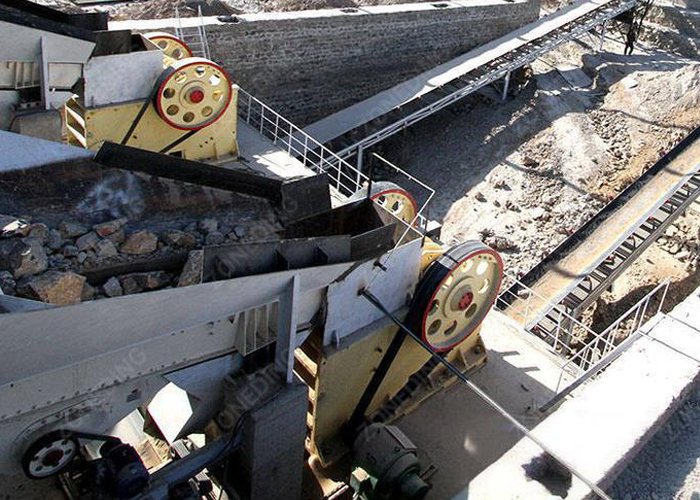
Fifty years of experience across global mining sites reveals that plant managers frequently struggle with high costs and machine failures. Profitability depends on the selection of the correct mining crushing equipment. Understanding hidden wear p...
View details