 Zoneding Machine












Two-Stage vs Three-Stage Crushing: Which Is Better?
536Compare two-stage and three-stage crushing plants by cost, capacity, product quality, and applications to choose the right quarry solution.
View detailsSearch the whole station Crushing Equipment
Selecting a Tracked Mobile Crusher requires a strict evaluation of material properties, production goals, and logistical constraints. A configuration suitable for high-abrasion quarrying often fails in construction waste recycling due to blockage issues and lack of steel protection. Conversely, recycling equipment incurs excessive wear costs when processing hard rock. This article analyzes the technical distinctions between these applications, focusing on drive systems, rotor types, and auxiliary configurations to ensure operational efficiency and return on investment.
The fundamental divergence in mobile crusher selection begins with the raw material. The physical characteristics of the feed material dictate the necessary crushing chamber design and wear protection.
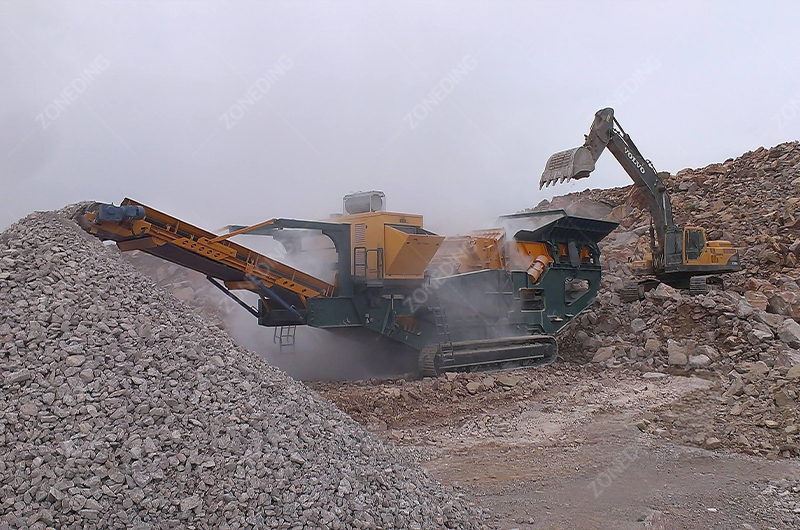
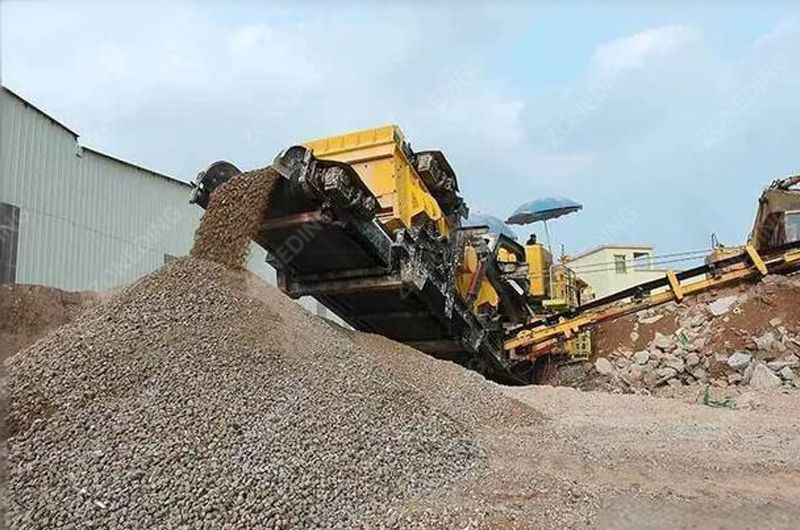
Construction Waste Recycling Characteristics:
Recycling applications involve processing demolition debris, asphalt, and concrete. The primary challenge is not the hardness of the rock, but the complexity of the feed. Material often contains steel reinforcement (rebar), wood, plastic, and uncrushable metal contaminants. Equipment for this sector prioritizes large clearances to prevent blockages and active protection systems to handle uncrushable objects. High reduction ratios are secondary to continuous material flow and the ability to separate ferrous metals.
Quarry Hard Rock Characteristics:
Quarrying applications focus on processing virgin stone such as granite, basalt, or river pebbles. These materials exhibit high compressive strength and high silica content. The primary challenge is abrasiveness. Equipment used here must prioritize wear resistance to minimize operating costs. A machine configured for recycling will suffer from rapid component degradation in a hard rock environment, leading to unsustainable maintenance expenses.
The Jaw Crusher serves as the standard primary stage for both quarrying and recycling due to its large feed opening and robust crushing mechanism. However, the internal protection systems differ significantly based on the application.
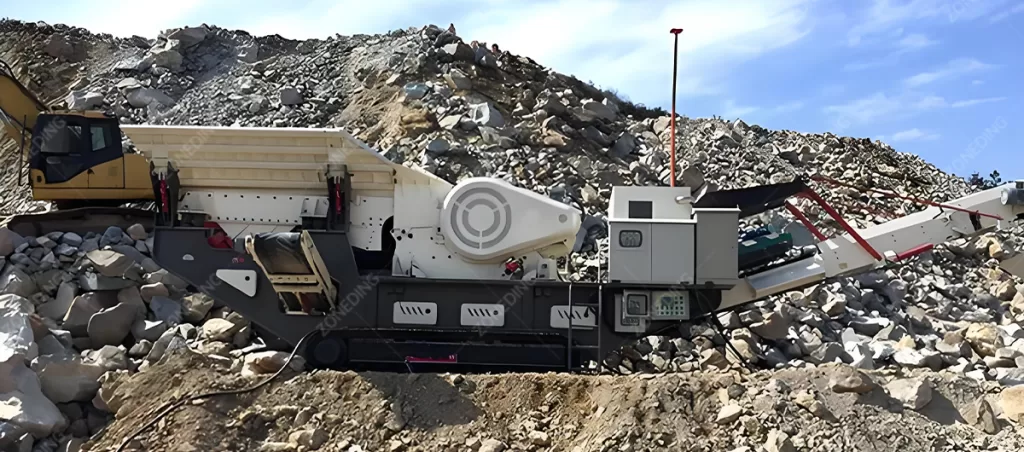
Mechanical Toggle Plate vs. Hydraulic Relief:
Traditional jaw crushers utilize a mechanical toggle plate as a safety fuse. When an uncrushable object enters the chamber, the plate breaks to protect the main frame, requiring a shutdown for replacement. This is acceptable in clean quarry operations but inefficient for recycling. Recycling-specific jaw crushers employ a hydraulic relief system. When pressure peaks due to a metal contaminant, the hydraulic cylinders retract to open the discharge setting, allowing the object to pass, and then automatically reset. This feature prevents downtime in mixed feed conditions.
Under-Crusher Clearance:
Processing reinforced concrete requires substantial clearance between the jaw discharge and the main conveyor. Standard quarry crushers often have tight clearances where long rebar can bridge the gap, causing blockages. Dedicated recycling units feature increased clearance or a hydraulic lowering conveyor. This allows operators to lower the belt remotely to clear obstructions or permit twisted steel to exit without damaging the belt.
The Tracked Impact Crusher (HSI) is preferred for soft to medium-hard rock and recycling due to its high reduction ratio and ability to produce cubic aggregates. The rotor configuration is the critical variable.
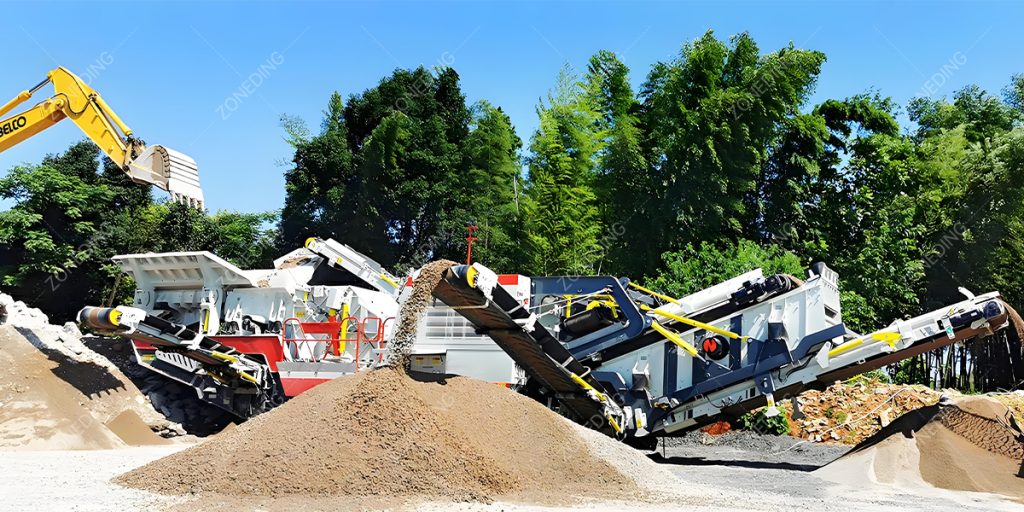
Semi-Open Rotors for Recycling:
In recycling applications, the rotor must accommodate steel contaminants. A semi-open rotor design provides space for rebar to fold around the blow bar and pass through the machine. Using a fully closed rotor for reinforced concrete increases the risk of steel becoming trapped between the rotor body and the blow bars, which can cause catastrophic damage to the rotor housing.
Heavy-Duty Closed Rotors for Quarries:
For natural rock applications like limestone, a heavy-duty closed rotor is superior. The additional mass provides higher inertia, improving the crushing force and stability when processing larger feed sizes. The closed design protects the rotor body from wear caused by the stone. Selecting the correct rotor type prevents structural failure and maximizes production output.
When processing rock with high silica content or extreme hardness (above 150 MPa), impact crushing becomes economically unviable due to wear costs.
Wear Cost Analysis:
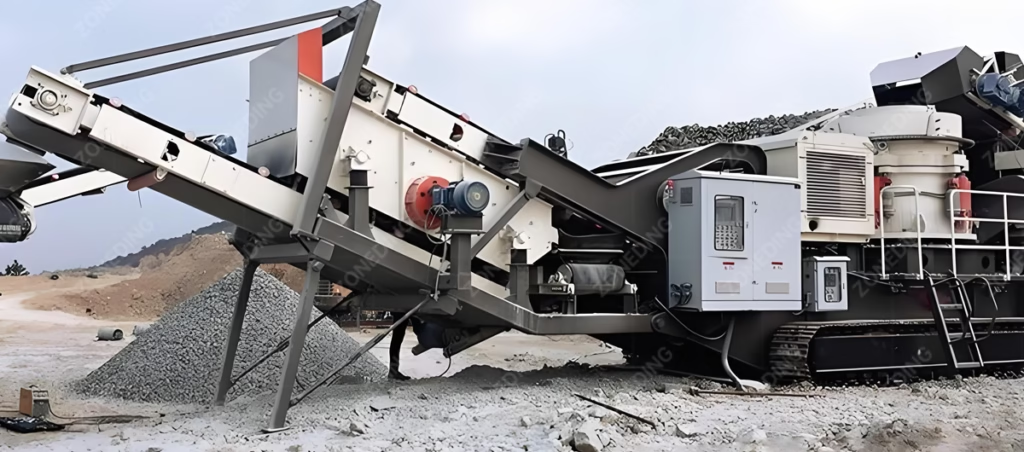
In high-abrasion scenarios, the blow bars and impact plates of an HSI degrade rapidly, necessitating frequent replacement. The Tracked Cone Crusher utilizes compression crushing principles. Manganese mantles and concaves work-harden under pressure, offering significantly longer service life. For granite or basalt quarries, the operating cost per ton of a cone crusher is substantially lower than that of an impactor.
Product Quality Control:
Modern mobile cone crushers integrated with hydraulic setting adjustments produce precise aggregate specifications. When combined with a Tracked Mobile Screening Plant, they form a closed-circuit system that ensures all final products meet strict road-base or asphalt standards. This precision is essential for commercial aggregate producers.
| Crusher Type | Best Material | Wear Mechanism | Operating Cost (Hard Rock) |
|---|---|---|---|
| Impact Crusher | Limestone, Concrete, Asphalt | Impact/Attrition | High |
| Cone Crusher | Granite, Basalt, River Stone | Compression | Low |
Successful Construction Waste Recycling Equipment must efficiently separate ferrous metals to produce clean aggregate and protect downstream equipment.
Overband Magnetic Separators:
A high-strength overband magnet suspended over the main conveyor is mandatory for recycling. It lifts liberated steel from the crushed material. The efficiency of this system depends on the discharge chute material. A standard steel chute becomes magnetized, causing rebar to clamp to the chute floor and block the flow. A stainless steel (non-magnetic) discharge section ensures the magnetic field acts only on the scrap metal, preventing blockages.
Deflector Plates and Belt Protection:
Reinforcement bars exit the crushing chamber at high velocity. Without protection, sharp steel can puncture the conveyor belt. Heavy-duty rubber or steel deflector plates divert the material flow to land flat on the belt. Additionally, impact beds beneath the loading zone absorb the energy of falling material, extending the lifespan of the conveyor belt in recycling applications.
The choice of power source affects fuel consumption, environmental compliance, and long-term operating costs.
Direct Drive Efficiency:
Direct drive systems connect the engine to the crusher via a clutch or fluid coupling. This mechanical transmission is 15% to 20% more fuel-efficient than fully hydraulic drive systems, which lose significant energy as heat. For remote quarry sites operating continuously for long shifts, direct drive offers the lowest fuel cost per ton.
Diesel-Electric Hybrid Advantages:
Diesel-electric systems use an onboard generator to power electric motors. These machines can operate via the onboard engine or connect to external mains power (grid).
For contracting businesses, the mobility of the equipment directly correlates with profitability. Logistics costs include permits, transport vehicles, and setup labor.
Weight and Dimension Limits:
Tracked mobile crushers that exceed local weight limits (often 30 or 40 tons) require special transport permits and pilot vehicles. These requirements increase mobilization costs and lead times. A compact machine that fits on a standard low-bed trailer without permits allows for rapid deployment to smaller jobs sites, increasing the annual utilization rate.
Setup Time:
The transition from transport mode to operating mode affects labor costs. Machines featuring hydraulic folding hopper walls and conveyors eliminate the need for cranes or tools during setup. Efficient designs allow the machine to begin production within 30 minutes of arrival. Conversely, units requiring the removal of side conveyors or screening modules for transport incur additional lifting costs and downtime.
Auxiliary Systems:
Q1: Is a pre-screen necessary for all mobile crushing applications?
A pre-screen is essential when feed material contains a high percentage of fines or soil. Removing fines before crushing reduces wear on liners and increases total throughput. For clean rock, a standard grizzly feeder is sufficient, but a pre-screen always enhances efficiency.
Q2: Can a mobile impact crusher process granite?
While physically possible, it is economically inefficient. High silica content causes rapid blow bar wear, increasing operating costs. A cone crusher is the recommended solution for abrasive hard rock to maintain profitability.
Q3: What is the benefit of a hydraulic relief system?
Hydraulic relief systems allow the crusher setting to open automatically when an uncrushable object enters and then reset without stopping. This prevents mechanical damage and eliminates downtime associated with toggle plate replacement in jaw crushers.
Q4: Does using grid power with hybrid crushers affect performance?
No, performance remains consistent. Electric motors provide high torque and stable power output. Using grid power significantly reduces energy costs and eliminates diesel engine maintenance intervals during operation.
Q5: Why is a closed-circuit mobile crusher advantageous for contractors?
A closed-circuit unit features an onboard screen and return conveyor. It allows the production of a finished, sized product with a single machine. This reduces transport costs by eliminating the need to haul a separate screening plant to the site.
Selecting a tracked mobile crusher requires matching machine specifications to the specific application environment.
ZONEDING manufactures a comprehensive range of stationary and mobile crushing equipment. From robust Mobile Cone Crusher units to versatile recycling stations, the company provides solutions tailored to aggregate producers and contractors. ZONEDING engineers focus on practical innovations that reduce downtime and enhance the operational profitability of mining and construction projects worldwide.
Contact ZONEDING today to analyze site requirements and receive a customized equipment configuration plan.
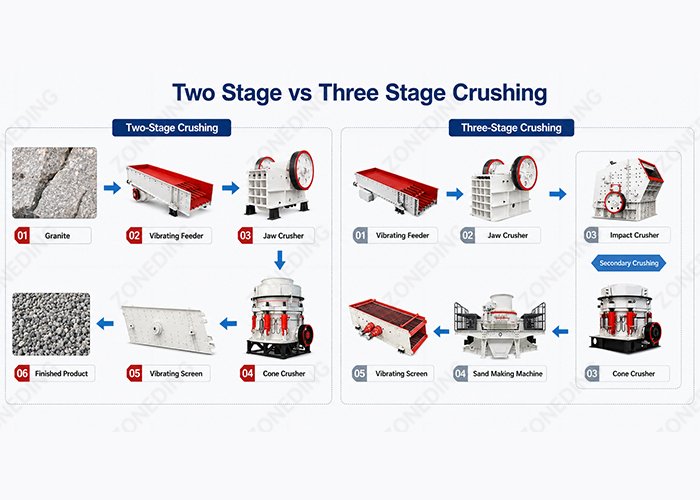
Compare two-stage and three-stage crushing plants by cost, capacity, product quality, and applications to choose the right quarry solution.
View details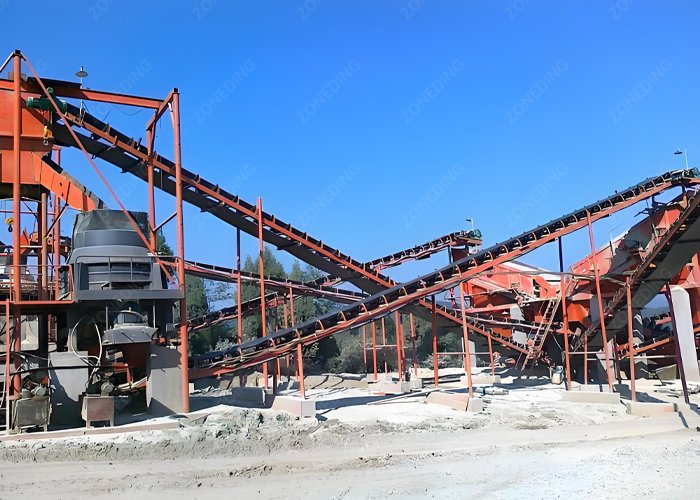
Small aggregate plants are growing rapidly in 2026 because many investors want lower startup risk, faster ROI, and simpler operations. A well-designed small crushing plant can generate stable profits with relatively low investment if the equipment...
View details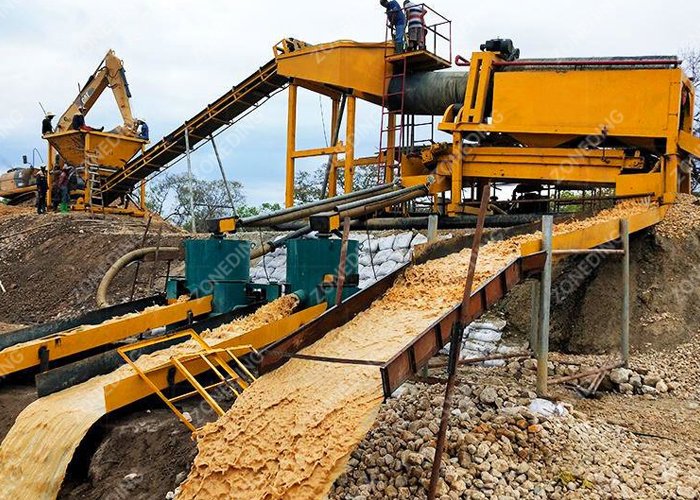
Starting a gold mine requires a clear budget. Total alluvial gold plant cost ranges from $30,000 for small setups to over $500,000 for industrial lines. Equipment price is only part of the investment. Shipping, power, and labor also impa...
View details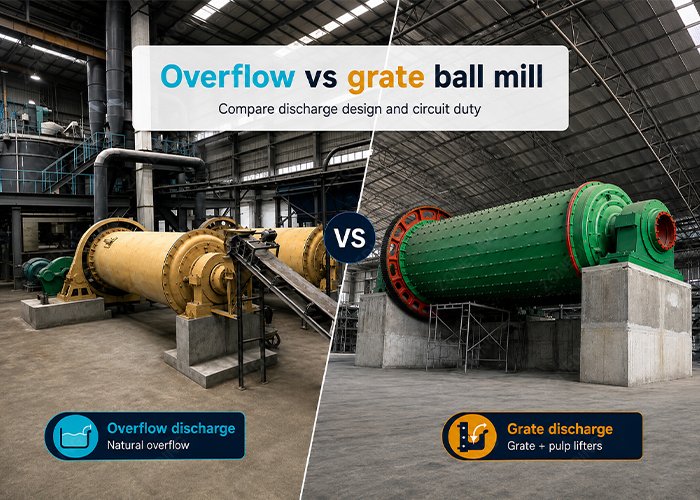
Compare overflow and grate ball mills by discharge design, throughput, product size, energy use, maintenance, and grinding applications.
View details