 Zoneding Machine












Mobile Crusher Plant Price in South America
536Compare mobile crusher plant prices, supply scope, capacity, shipping and installed costs for mining, quarry and road projects in South America.
View detailsSearch the whole station Crushing Equipment
Rock gold, also known as lode gold, exists embedded within quartz veins or sulfide rock formations. Unlike alluvial gold, which requires physical washing, rock gold necessitates a complex process of comminution and chemical or physical separation to liberate the precious metal from the host rock. Achieving high recovery rates depends entirely on the correct selection and configuration of mechanical equipment. This guide provides a detailed inventory of essential machinery for a hard rock gold processing plant, analyzing the function, selection criteria, and operational logic of each component in the beneficiation circuit.
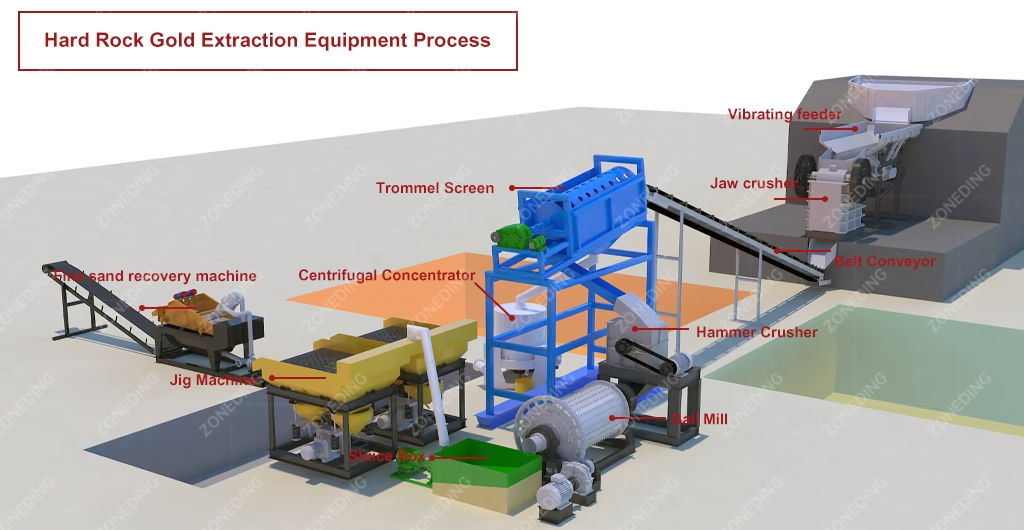
The primary stage of any rock gold plant is size reduction. Run-of-Mine (ROM) ore typically ranges from 300mm to 1000mm. Chemical leaching and flotation require particle sizes often below 75 microns (200 mesh). Therefore, mechanical crushing is the first essential step to prepare the material for grinding.
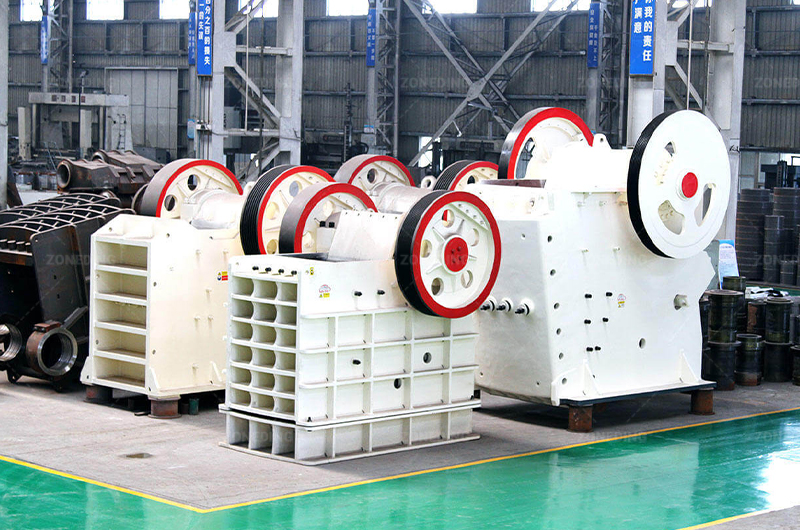
The Jaw Crusher serves as the primary breaking unit. It operates using compressive force applied between a fixed jaw plate and a moving jaw plate.
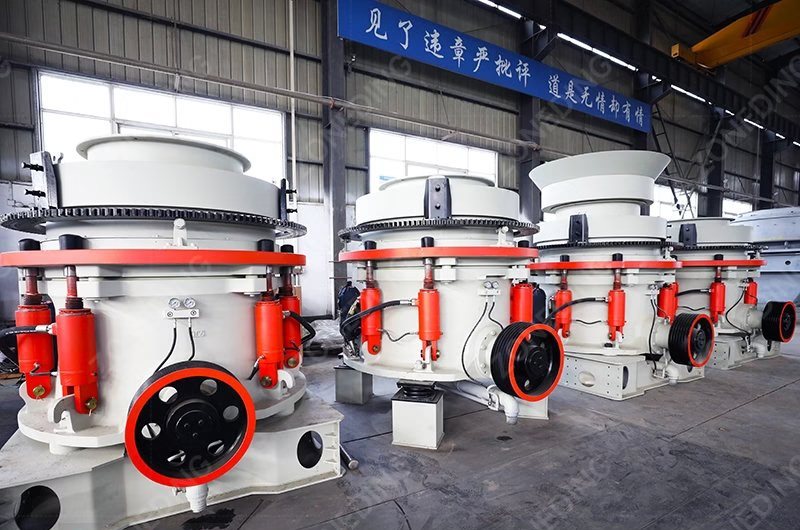
Following the primary stage, the Cone Crusher reduces the ore further. This machine uses a mantle rotating within a concave bowl to crush rock via compression and inter-particle attrition.
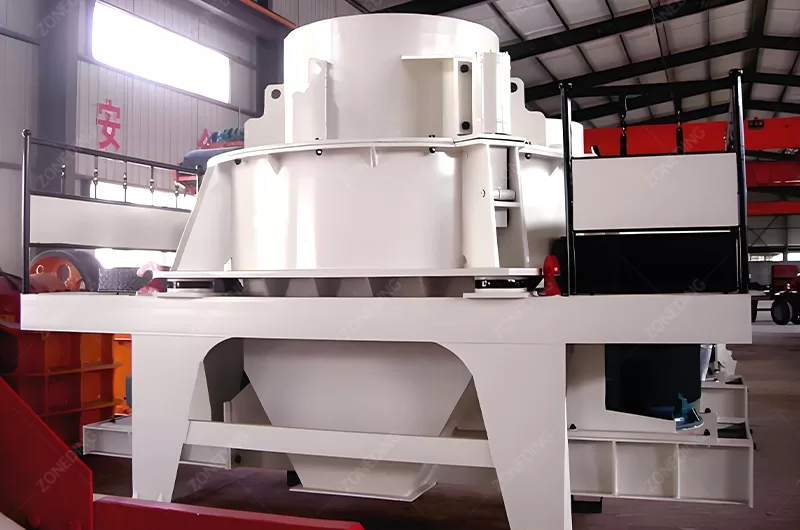
In operations utilizing heap leaching or requiring an extremely fine feed for the ball mill (e.g., <6mm), a Sand Making Machine (Vertical Shaft Impact Crusher) is employed.
The Vibrating Screen functions as the quality control checkpoint of the crushing circuit. It is typically positioned in a “closed circuit” with the secondary or tertiary crusher.

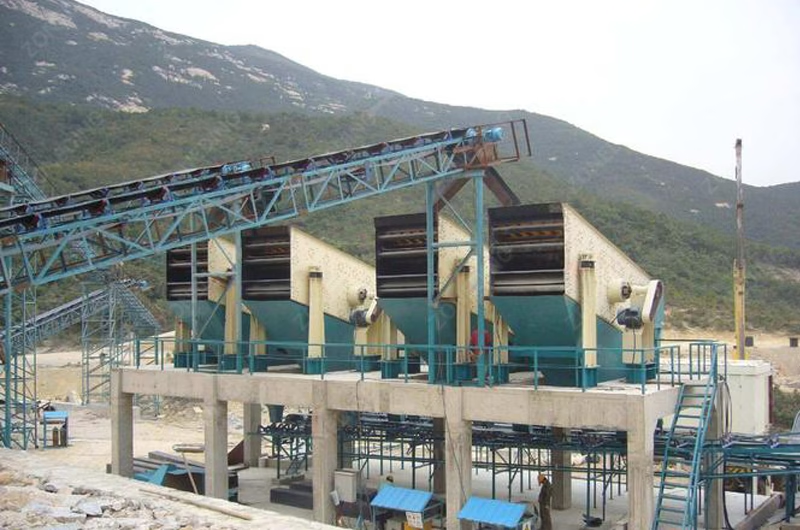
The Closed Circuit Principle:
Grinding is the process of reducing crushed ore to a powder, liberating the gold minerals from the gangue (waste rock). This stage accounts for the highest energy expenditure in the processing plant.
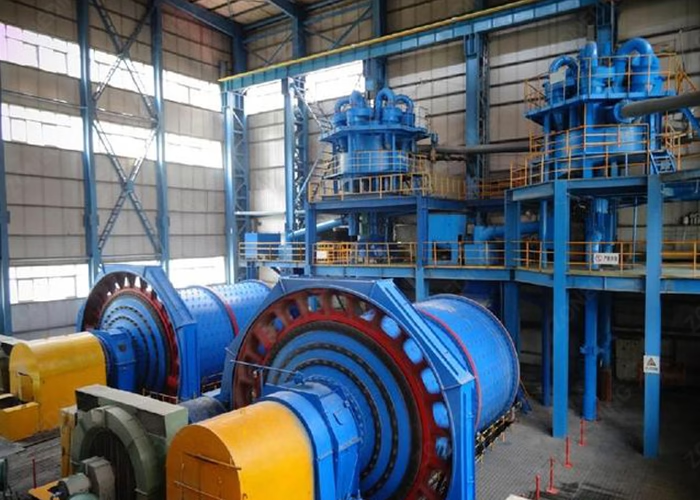
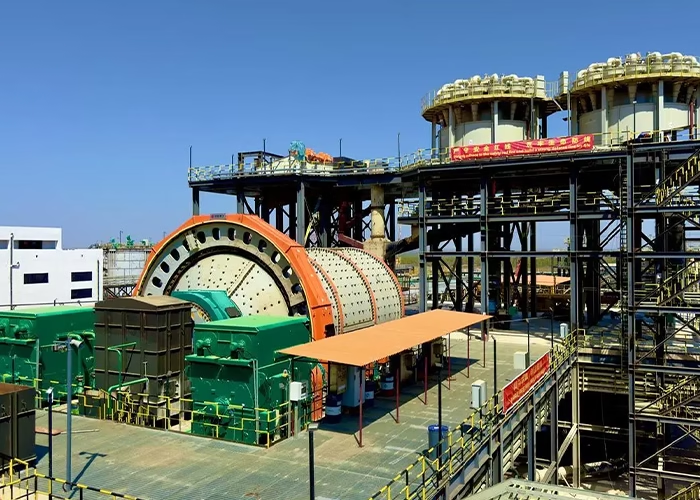
The Ball Mill is a rotating cylinder filled with steel grinding media. As the cylinder rotates, the balls tumble and cascade, impacting the ore.
While older plants utilized Spiral Classifiers, modern facilities predominantly use Hydrocyclones.
Once the ore is ground, the gold must be separated. The choice of equipment depends on the mineralogy of the ore.
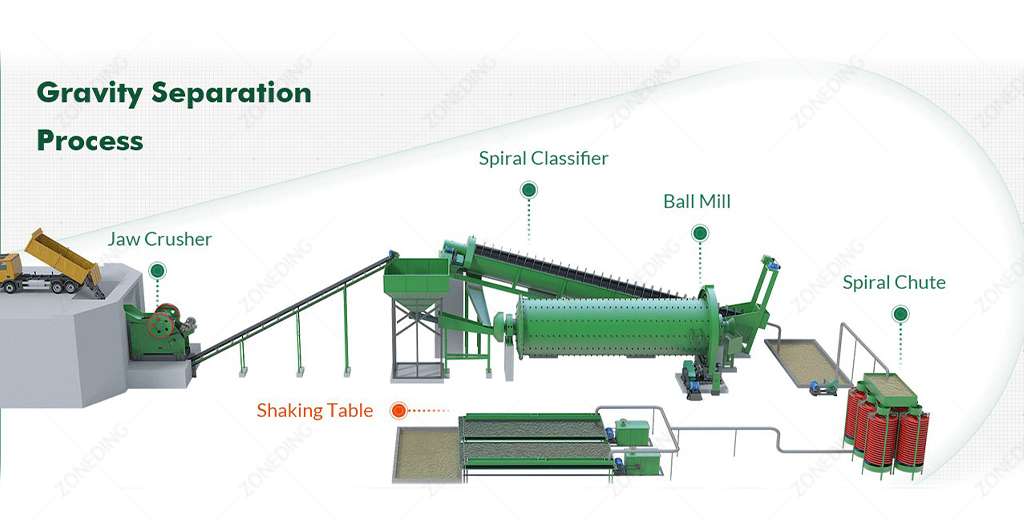
Gravity separation relies on the specific gravity difference between gold (SG ~19.3) and quartz/gangue (SG ~2.6).
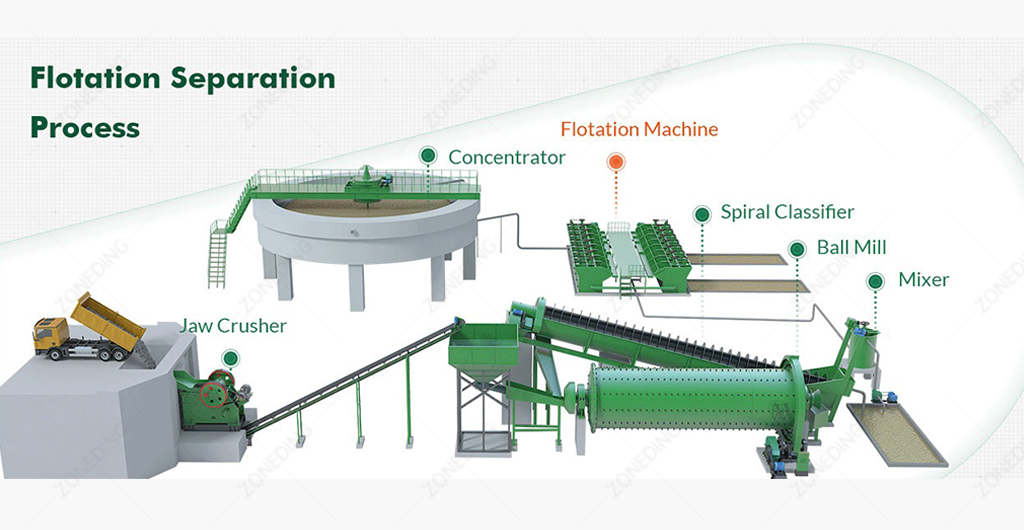
When gold is encapsulated within sulfide minerals (such as pyrite, arsenopyrite, or chalcopyrite), physical gravity separation is insufficient.
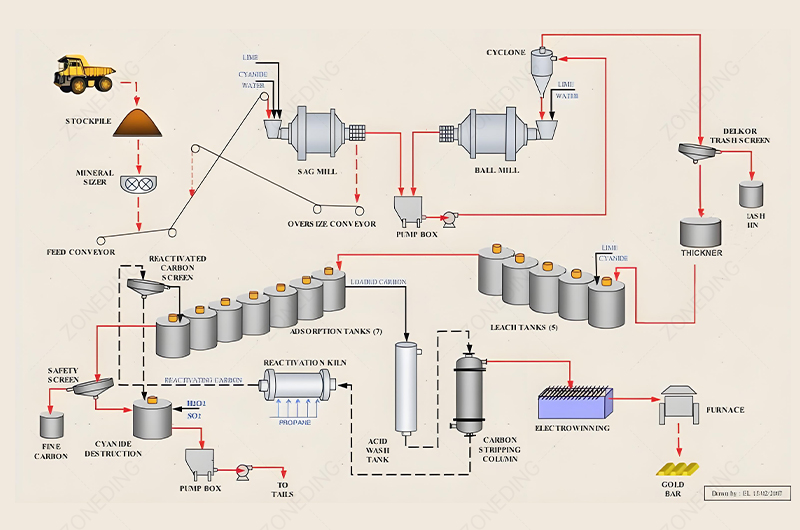

For oxidized ore or microscopic gold particles that cannot be recovered by gravity or flotation, chemical extraction is required.
| Feature | Gravity Separation | Flotation | Cyanidation (CIL) |
|---|---|---|---|
| Target Gold | Coarse, Free Gold | Sulfide-bound Gold | Microscopic/Oxide Gold |
| Recovery Rate | 40% – 70% (typical) | 80% – 90% | 90% – 98% |
| Operating Cost | Low | Medium | High |
| Environmental | Chemical-free | Chemical use | Cyanide management required |
The waste material (tailings) must be disposed of safely, and process water should be recycled to minimize environmental impact and costs.
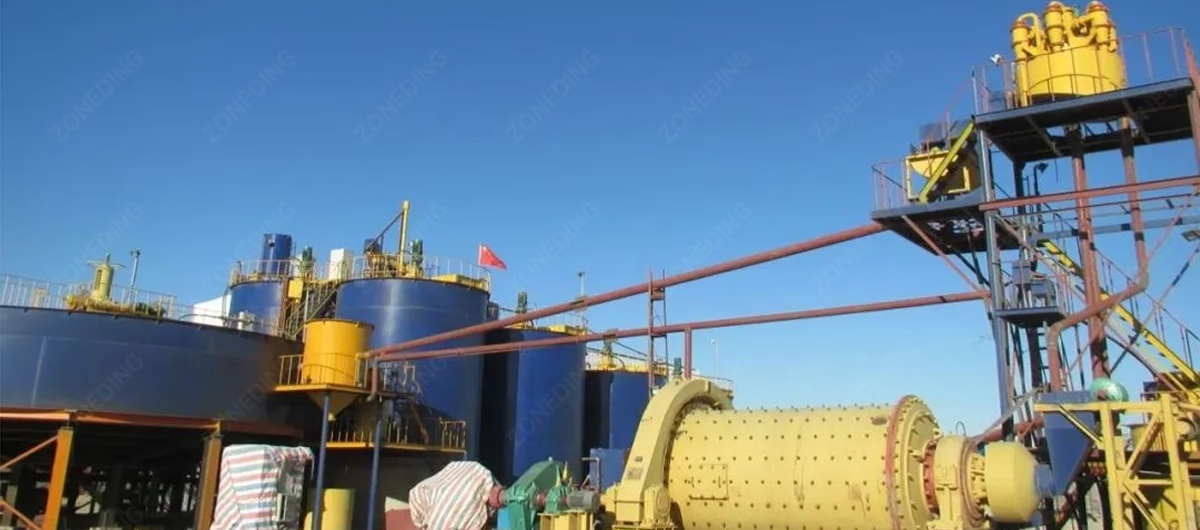
The gold mining sector is moving towards automated process control.
Q1: What is the primary difference between CIL and CIP processes?
In CIL (Carbon-in-Leach), the leaching of gold by cyanide and the adsorption onto carbon occur simultaneously in the same tanks. In CIP (Carbon-in-Pulp), leaching occurs in the first few tanks, followed by adsorption in subsequent tanks. CIL is generally preferred for ores containing “preg-robbing” carbonaceous material, as the activated carbon competes with the natural carbon for the gold.
Q2: How is the size of the Ball Mill determined?
Ball mill sizing is calculated based on the required throughput (tons per hour), the work index of the ore (Bond Work Index), the feed size (F80), and the target product size (P80). An undersized mill creates a bottleneck, while an oversized mill results in unnecessary capital and energy expenditure.
Q3: Can oxide and sulfide ores be processed in the same circuit?
Processing both simultaneously is challenging due to different chemical requirements. Sulfides often require flotation or pre-oxidation, while oxides are treated directly with cyanide. The plant design must include bypass options or parallel circuits to handle mixed ore bodies effectively.
Q4: How does clay content affect the crushing circuit?
High clay content causes blockages in the crushing chamber and blinds the screens. If the moisture content exceeds 5-10% with clay, a Sand Washing Machine or rotary scrubber must be installed prior to the crushing stage to wash away the sticky fines.
Q5: What is the water consumption for a standard CIL plant?
A conventional CIL plant typically requires a water-to-solid ratio of 3:1 or 4:1 by weight during processing. However, with the integration of high-efficiency thickeners and tailings filtration systems, over 80% of this water is recycled. The net make-up water consumption can be reduced to approximately 0.5-0.8 tons of water per ton of ore.
Establishing a productive rock gold processing plant requires a strict adherence to metallurgical principles.
ZONEDING serves as a manufacturer of complete Beneficiation Equipment. The company specializes in the design and fabrication of machinery for Hard Rock Gold Mining, aggregate production, and mineral processing. With a focus on durability and factory-direct distribution, ZONEDING provides comprehensive solutions ranging from initial laboratory testing to equipment installation and commissioning.
Contact ZONEDING for technical consultation regarding flow sheet design and equipment specifications.
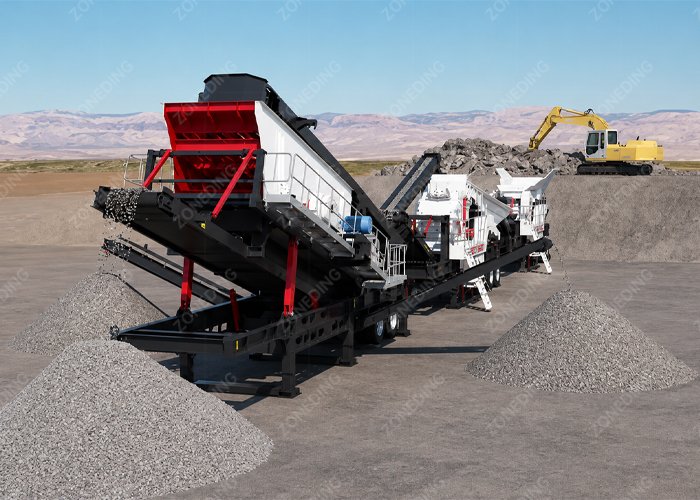
Compare mobile crusher plant prices, supply scope, capacity, shipping and installed costs for mining, quarry and road projects in South America.
View details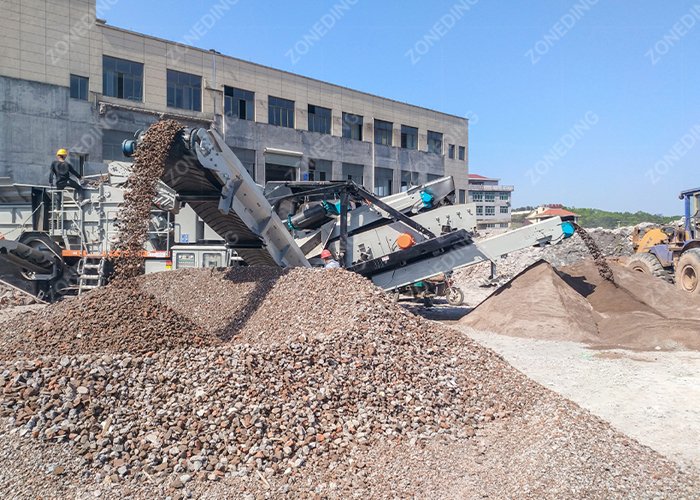
I have spent 50 years in the mining and recycling industry. I have seen people turn piles of trash into mountains of cash. But I have also seen many people lose everything because they bought the wrong machine. In 2026, urban recycling is a gold m...
View details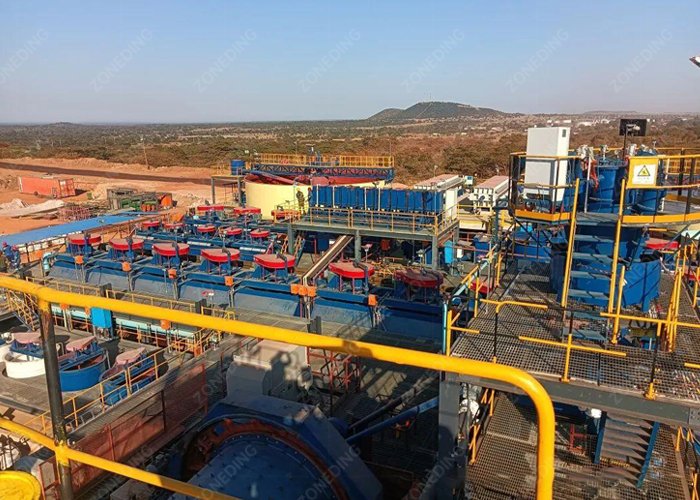
High-yield tin ore recovery depends on a design that respects the brittle nature of cassiterite. Traditional plants often lose over 40% of metal because they grind the ore into useless dust. A scientific tin processing flow design i...
View details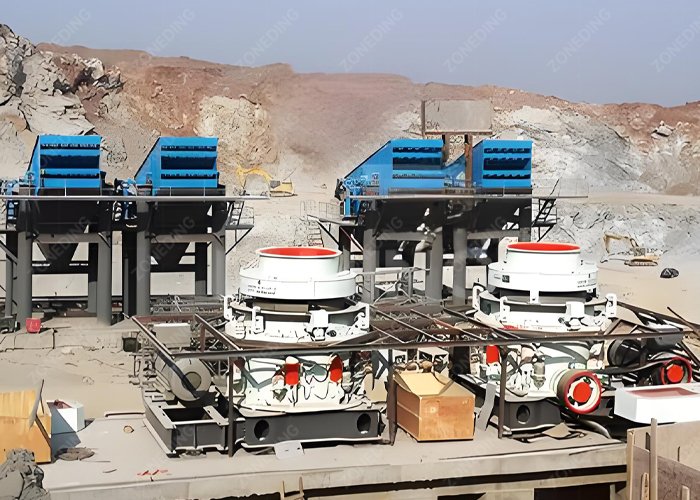
Aggregate plants face challenges with hard rock processing daily. Cone crushers in the aggregates industry solve this exact problem efficiently. High-grade construction projects require perfectly shaped stones constantly. These machines handle ext...
View details