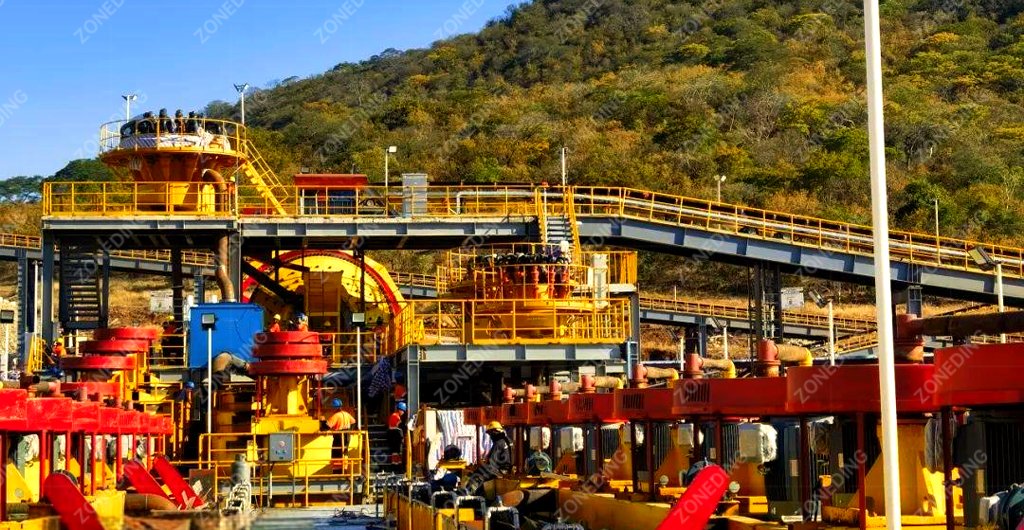
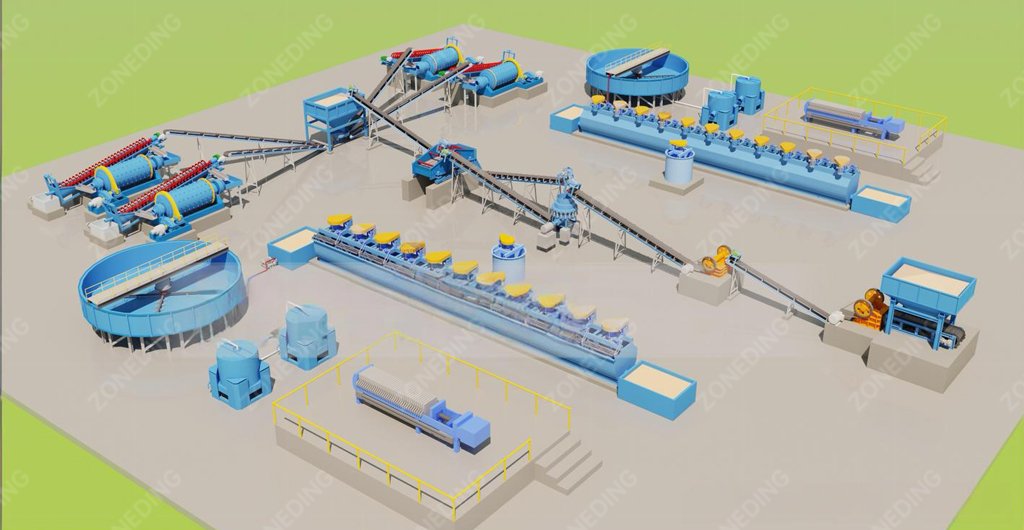
ZONEDING helps gold plants improve output by controlling the full process, not just one reagent or one machine. A stable gold recovery rate comes from liberation control, classification stability, efficient separation, and strict loss accounting. This page explains how to improve gold recovery and reduce gold losses from crushing to tailings with clear operating actions.
Why Gold Recovery Stays Low and Where Losses Really Happen
ZONEDING sees the same issue in many operations: plant teams report one total recovery number, but they do not track where the loss is created. Without stream-level visibility, major loss points remain hidden for months. Daily balance should cover crusher fines, cyclone overflow, flotation tails, CIL/CIP tails, and final residue. This is the fastest way to locate avoidable loss.
ZONEDING treats unexplained variance as an operating incident, not as acceptable noise. That rule changes behavior quickly. It forces better sampling discipline, tighter reconciliation, and faster root-cause closure. In real operations, this step often creates the first measurable improvement before any CAPEX change.
Practical Control Points
Define fixed sampling nodes and fixed shift timing.
Set reconciliation tolerance and escalation rules.
Assign one owner for each node-level loss action.
How Ore Type Sets the Real Recovery Ceiling
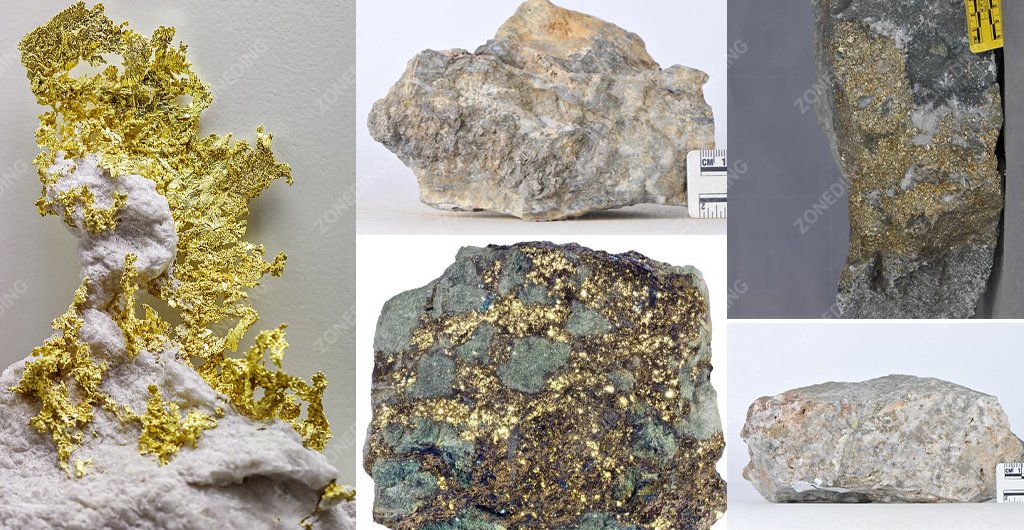
Ore properties set technical limits early. Oxide ore, sulfide ore, high-clay ore, and preg-robbing ore do not respond to one universal operating recipe. If one plant-wide dosing strategy is used for all ore domains, chronic over- and under-dosing is very likely. Recovery volatility then becomes structural.
Gold recovery strategies for different gold mines
ZONEDING uses ore-domain logic based on hardness, sulfide content, clay behavior, and preg-robbing risk. Domain rules are linked to grind window, reagent strategy, and retention control. This keeps operation stable during feed transitions and avoids delayed response when ore changes during the week.
For route planning reference, ZONEDING aligns this domain method with Gold Processing Plant configurations.
How Crushing and Grinding Size Control Reduces Overgrinding and Locked Gold
Liberation is a core control variable. If grind is too coarse, gold remains locked in gangue. If grind is too fine, slimes increase and downstream kinetics can fall. ZONEDING does not recommend a single fixed P80 point across all ore states. A practical liberation window is safer and more effective for daily control.
Grinding should be linked to recovery response, not only to mill tons per hour. Stable feed PSD from crushing is also required to keep mill load and cyclone cut point consistent. For this reason, ZONEDING reviews the grinding circuit as an integrated unit, with Ball Mill sizing tied to downstream recovery behavior.
Common Grinding Symptoms and Actions
Symptom
Likely Issue
First Check
First Action
High tails with stable feed
Locked gold
Size-by-assay on tails
Tighten liberation window
Rising reagent use
Slime increase
Overflow PSD trend
Reduce overgrinding
Mill overload cycles
Feed PSD swings
Crusher discharge trend
Stabilize upstream feed
Why Classification Efficiency Directly Affects Recovery and Tails Grade
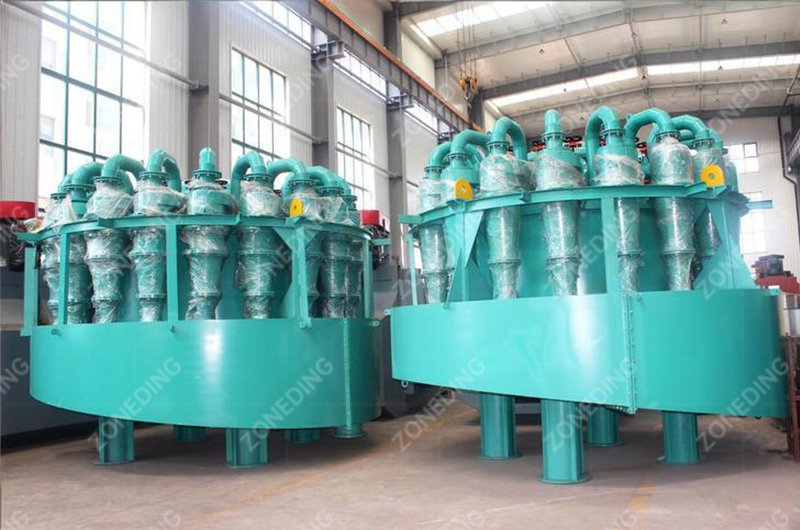
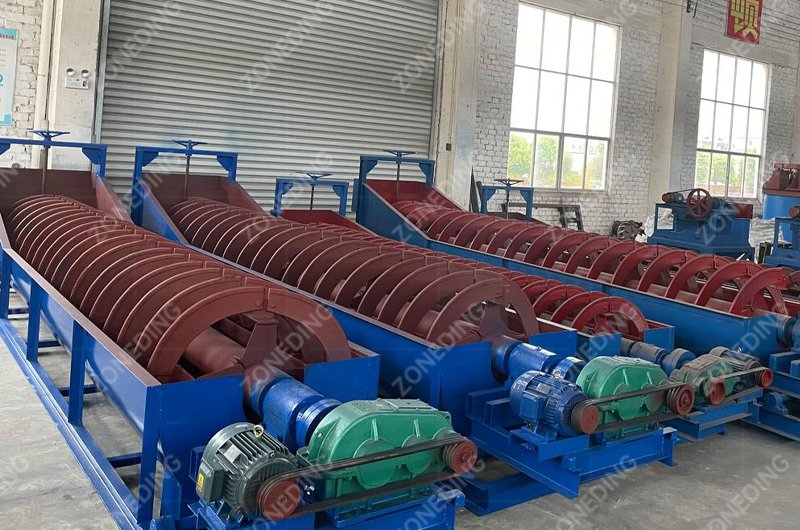
Classification quality determines whether particles receive correct residence in grinding and correct handoff to separation. Poor hydrocyclone classification efficiency creates two problems at once: coarse locked particles bypass forward, and excessive fines overload downstream stages. Both effects increase gold losses and operating cost.
Hydrocyclones
Spiral classifier
ZONEDING treats cyclone condition as metallurgy-critical, not only mechanical. Worn internals, unstable pressure, and slurry-density drift can reduce recovery even when upstream tonnage seems normal. Weekly checks should include pressure band, density stability, apex/vortex wear status, and overflow PSD stability.
How Gravity Recovery Improves Coarse Gold Capture
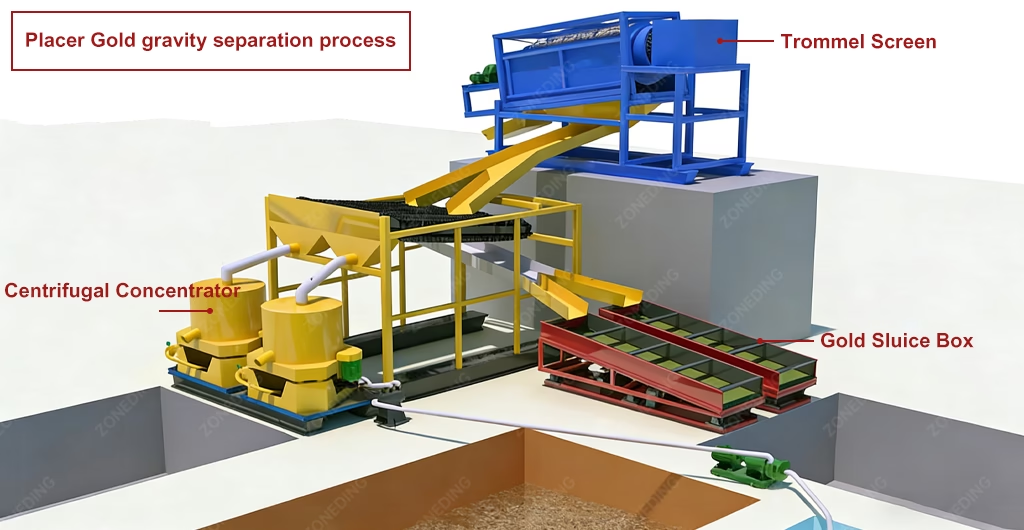
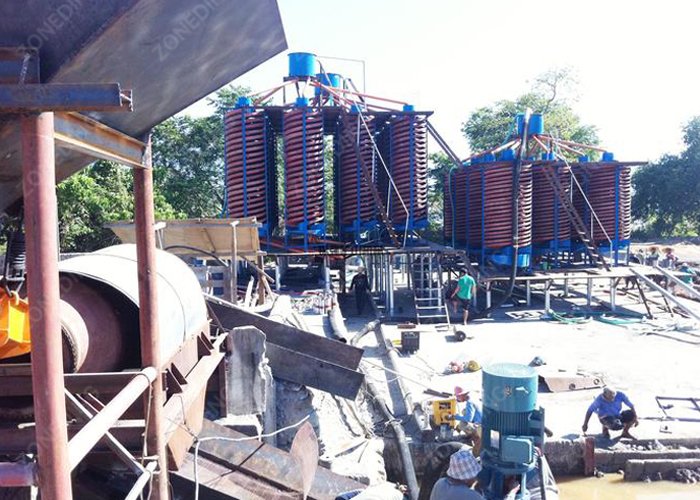
Gravity separation for gold is highly effective for coarse free gold, but many plants underperform because gravity circuits are not managed actively. “Set-and-forget” operation causes screen failure, unstable feed density, poor fluidization, and weak mass-pull control. Coarse gold then bypasses to tails.
ZONEDING recommends weekly gravity audits with hard operating checks: feed PSD, screen integrity, fluidization stability, mass pull versus design, and concentrate cleanup timing. This discipline reduces coarse gold loss and stabilizes downstream loading. For equipment pathways, ZONEDING maps gravity strategy with Placer Gold Mining and hard-rock flow logic when relevant.
How Flotation and Reagent Strategy Should Work Together
Flotation for gold ore depends on both chemistry and equipment condition. Reagent increase alone cannot solve poor air distribution, unstable froth, or weak residence behavior. ZONEDING uses a fixed troubleshooting order: dissolved oxygen, pH and alkalinity, residence profile, then dosage adjustment. This reduces trial-and-error losses.
Flotation for gold ore
Ore-domain reagent control is important in mixed-feed operations. One fixed recipe across domains usually reduces selectivity and raises cost. Domain-based trigger rules are more stable and easier to audit by shift teams. For equipment linkage, ZONEDING matches chemistry strategy with Flotation Machine selection and operating window.
Which CIL/CIP Parameters Most Affect Leach and Adsorption
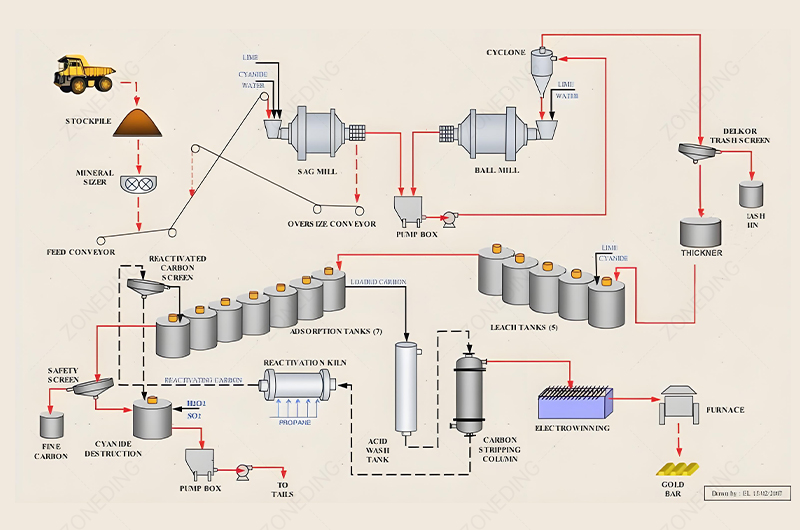
In CIL CIP gold processing, nominal tank volume is not enough to predict performance. Effective residence time distribution is the critical factor. Short-circuiting allows part of slurry to exit before sufficient contact, creating avoidable soluble-gold loss. Tracer testing is useful to validate real retention and identify correction points.
Gold-Beneficiation-CIP
Gold-Beneficiation-CIL-Caborn-in-Leaching
Carbon management is another major lever. Low activity, poor interstage screening, fouling, and attrition losses reduce adsorption stability and final recovery. ZONEDING tracks carbon activity index, hardness, loading profile by tank, attrition rate, and regeneration effectiveness as routine KPIs. This keeps adsorption predictable and reduces unexplained recovery drops.
How Thickening, Tailings, and Water Quality Reduce Hidden Gold Loss
Tailings assay alone cannot diagnose loss type. A single grade value does not show whether loss is coarse, fine, locked, or chemistry-related. ZONEDING recommends periodic size-by-assay and mineralogical diagnostics on tails, then classifies losses into actionable categories. Correct diagnosis prevents wrong fixes.
Water quality must be controlled with the same rigor as reagent dosing. Recirculated water with high ions, clays, organics, or redox-active components can destabilize flotation and leaching. ZONEDING links water-band changes to metallurgical KPI changes during shift handover review. This improves root-cause speed and limits repeated instability.
How Automation Stabilizes Recovery and Lowers Reagent/Energy Use
Automation should be used to reduce process variance first, then increase throughput. ZONEDING control philosophy prioritizes recovery stability bands: liberation window, cyclone pressure, pH, dissolved oxygen, slurry density, and reagent dosing by ore domain. This sequence gives stronger quarterly payable-ounce outcomes than unstable high-tonnage operation.
Stable control also supports lower unit consumption. When process drift is reduced, reagent over-correction decreases and unnecessary power use from recirculation often falls. ZONEDING recommends adding alarm logic that is tied to recovery risk, not only to equipment uptime.
Which Equipment Indicators Matter Most During Selection
When selecting gold ore beneficiation equipment, ZONEDING focuses on recovery-linked indicators:
Crusher: feed variability tolerance and discharge PSD consistency
Mill: controllable grind window and energy response under ore change
Classification: cut-size stability and wear resilience
Flotation: air dispersion quality and residence behavior
Thickening/tailings: underflow control and overflow clarity
Spares: lead time, interchangeability, and long-term parts visibility
For integrated flows, ZONEDING aligns this method with Hard Rock Gold Mining process requirements.
How to Evaluate Investment with Recovery, Throughput, and Unit Cost Together
A useful investment model should include three dimensions in one dashboard: recovery, throughput, and unit cost. Decisions based on one KPI alone often create false gains. ZONEDING recommends this monthly metric:
This model connects metallurgical choices to financial outcomes directly. It also helps compare optimization options such as regrind adjustment, reagent strategy change, or equipment upgrade based on incremental margin, not headline percentages.
Build stream-by-stream daily gold loss accounting.
Define liberation operating window and enforce shift controls.
Audit cyclone/classifier efficiency and wear weekly.
Run weekly gravity-circuit integrity and mass-pull checks.
Apply ore-domain reagent recipes with trigger logic.
Troubleshoot cyanide issues in sequence, not by immediate over-dosing.
Control carbon lifecycle KPIs across CIL/CIP tanks.
Run periodic size-by-assay and mineralogy on tails.
Control process-water quality bands and review by shift.
Maintain metallurgy-critical equipment by recovery risk priority.
Use recovery-throughput-unit-cost model for monthly decisions.
Approve changes by incremental payable-ounce margin.
FAQs
Q1: What is the fastest way to improve gold recovery rate? ZONEDING recommends stream-level loss accounting plus liberation-window control as the first two actions.
Q2: Is increasing cyanide dosage the best response to recovery drop? No. ZONEDING checks dissolved oxygen, pH/alkalinity, residence profile, and carbon activity first.
Q3: Is tailings grade enough to diagnose gold losses? No. ZONEDING uses size-by-assay and mineralogical diagnostics to identify true loss mechanism.
Q4: What KPI should management track each month? ZONEDING recommends cost per payable ounce recovered, not recovery % alone.
Conclusion
ZONEDING improves gold recovery rate by controlling liberation, classification, separation stability, adsorption quality, and stream-level loss visibility in one system. This approach helps plants reduce gold losses, stabilize output, and improve payable-ounce economics with clear, repeatable operating rules.
About ZONEDING
ZONEDING is a B2B manufacturer for mining and mineral processing equipment. Product coverage includes crushing, grinding, classification, gravity separation, flotation, leaching, and tailings handling systems. ZONEDING provides engineering design, manufacturing, commissioning support, training, and after-sales service for global gold projects.
Chrome gravity separation represents the most cost-effective method to produce high-grade chrome in 2026. Experience in South Africa and Turkey proves that mineral density remains the strongest profit driver. This process uses the natural weight o...
A rock quarry can be very profitable if you control production costs, transportation distance, and equipment efficiency. In many regions, aggregate demand keeps growing because of roads, housing, and infrastructure projects. But quarry profit does...
Mobile crushing technology offers the most direct path to reducing operational costs and increasing profit margins in the mining industry. This article explains how a mobile unit eliminates the need for expensive civil works and reduces truck haul...
Aggregate plants face challenges with hard rock processing daily. Cone crushers in the aggregates industry solve this exact problem efficiently. High-grade construction projects require perfectly shaped stones constantly. These machines handle ext...
We use cookies to ensure that we give you the best experience on our website. If you continue to use this site we will assume that you are happy with it.
Privacy Policy
Send us a message
We would love to hear from you
Submit your question and our team will respond to the email provided as soon as possible.
 Zoneding Machine