Search the whole station Crushing Equipment
A leaching tank is a large, industrial vessel used in mining and metallurgy to extract valuable metals (like gold, copper, or uranium) from crushed ore using a chemical solvent.
The main goal of a leaching tank is to facilitate a chemical process called hydrometallurgy. In this process, a specific chemical solution, known as a lixiviant, is used to selectively dissolve the target metal from the solid ore particles, creating a metal-rich liquid solution. This allows the separation of the valuable metal from the worthless rock (gangue) it is embedded in.
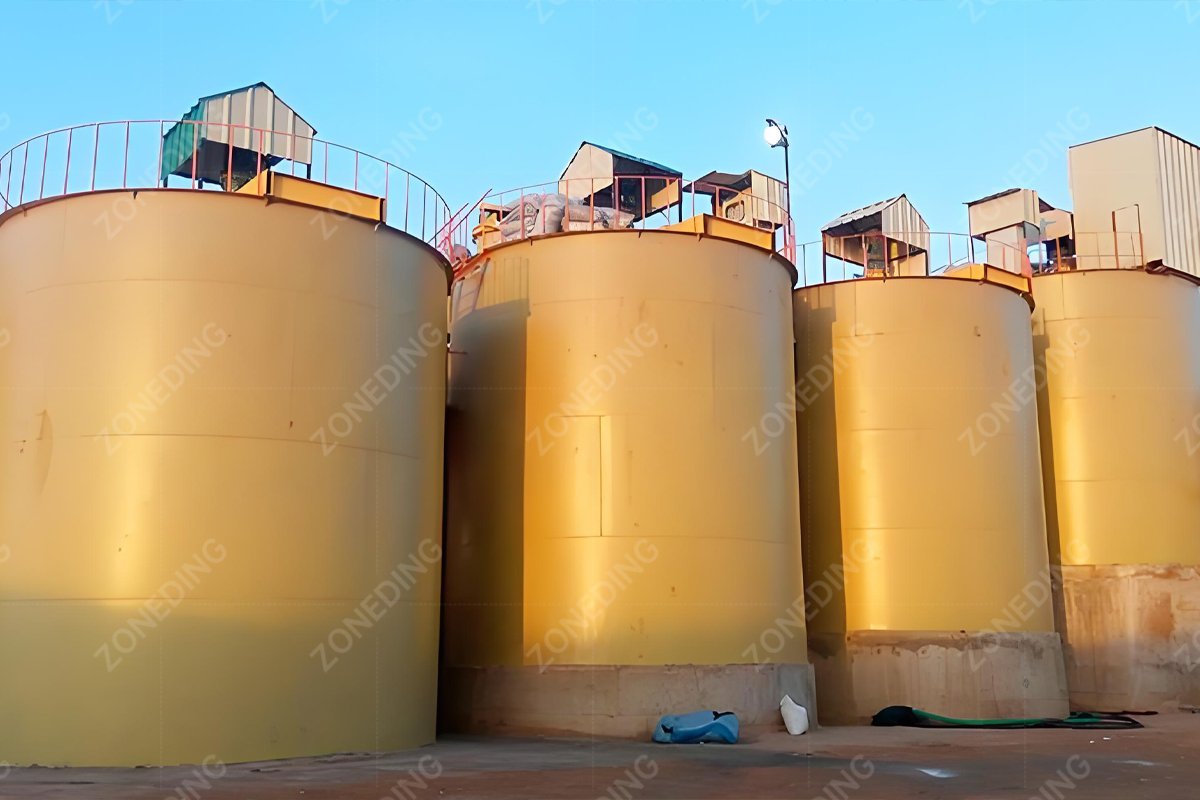
The primary function of a leaching tank is to maintain mineral particles in full suspension during a chemical reaction. It is not merely a mixing drum. It is a dynamic environment designed for cyanide and oxygen to effectively dissolve gold from ore. It acts as the heart of the plant, pumping slurry through a series of controlled reactions. Without proper agitation, valuable minerals remain trapped in the rock at the bottom of the tank.
The process is more complex than simple stirring. In a , the slurry must achieve a state of “complete suspension.” This ensures that solid particles never settle on the tank floor where chemical contact is impossible. The tank must also efficiently introduce oxygen into the liquid, as oxygen is a critical reagent in the gold cyanidation reaction. A lack of oxygen will halt the process. Therefore, the tank simultaneously suspends solids, disperses gas, and mixes chemical reagents.
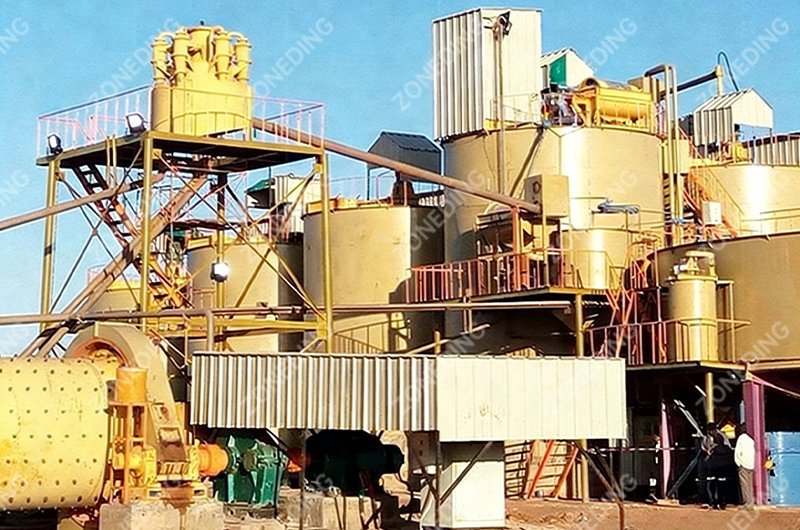
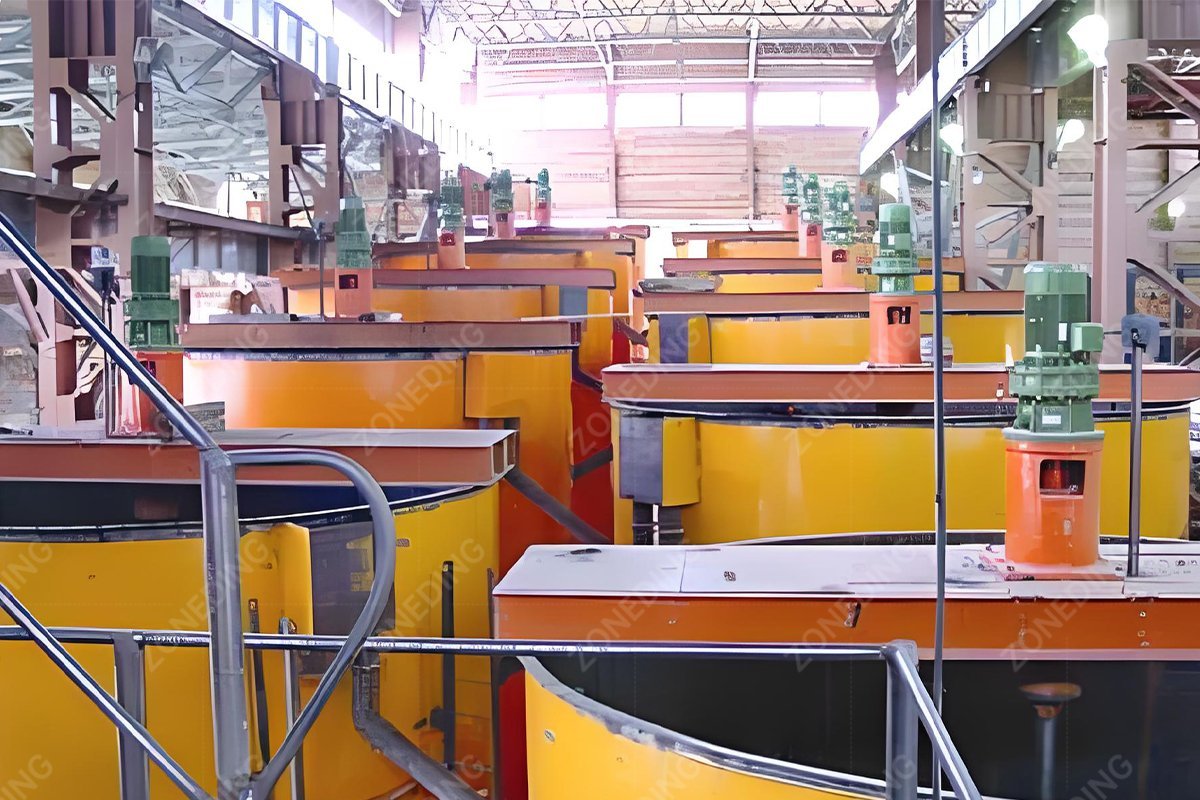
The agitator design is a critical component. A well-designed agitator creates an axial flow pattern, often described as a “donut,” moving slurry down the center and up the sides. This circulation path guarantees that every ore particle is exposed to both cyanide and oxygen. Insufficient agitation allows solids to settle, while excessive agitation wastes electricity and causes premature equipment wear.
| Agitation Goal | Technical Term | Operational Benefit |
|---|---|---|
| Keep rocks floating | Solid Suspension | Prevents gold-bearing ore from settling |
| Mix in air | Gas Dispersion | Accelerates the chemical reaction |
| Blend chemicals | Mass Transfer | Ensures cyanide contacts all gold surfaces |
Modern leaching tanks provide significantly higher recovery rates and better process control compared to older methods. They allow for precise control over retention time, temperature, and reagent concentration. Historically, heap leaching was common, but it is slow, inefficient, and leaves substantial amounts of gold unrecovered, especially with high-grade ores. Leaching tanks offer a fast and efficient alternative.
These systems also offer a smaller physical footprint. A series of eight tanks can process the same ore tonnage as a vast heap leach pad, which is a major benefit for mine sites with limited space. Furthermore, modern leaching tanks are easily automated. Sensors can monitor pH, cyanide concentration, and dissolved oxygen levels, triggering automated dosing systems. This reduces the potential for human error and enhances operational safety.
Automation is critical for minimizing human error. An automated system never forgets to dose chemicals, tracking all Technical parameters continuously. Modern tank designs also feature energy-efficient impellers that move more slurry with less power. This can result in annual energy savings of thousands of dollars for a medium-sized operation.
The structure of a typical leaching tank consists of a motor, a reducer, a shaft, and a dual-impeller system. This “double impeller” configuration creates a highly effective mixing pattern. The upper impeller generates downward flow, while the lower impeller pushes slurry upward. The tank body is a large steel cylinder equipped with internal “baffles.” These baffles are vertical strips that disrupt the formation of a vortex, forcing the slurry to mix vertically instead of just swirling.
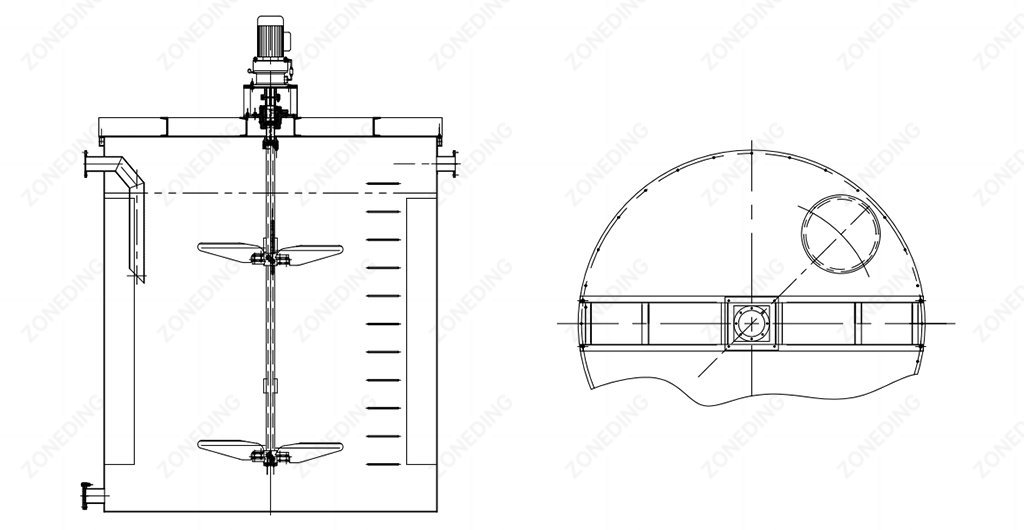
The drive assembly, comprising the motor and reducer, is mounted on a rigid steel bridge at the top of the tank. The reducer, or gearbox, converts the high-speed motor output into the slow, high-torque rotation needed to move dense slurry. The shaft extends from the reducer down to the bottom of the tank and is typically lined with rubber for protection against abrasion. The impellers are also coated in thick, wear-resistant rubber, as the abrasive nature of the slurry can quickly erode unprotected steel.
| Component | Function | Common Material |
|---|---|---|
| Motor | Provides motive power | High-efficiency electric motor |
| Reducer | Converts speed to torque | Heavy-duty planetary or bevel gear |
| Shaft | Rotates the impellers | Rubber-lined carbon steel |
| Baffles | Prevent vortex formation | Hardened steel or rubber-lined |
CIL and CIP processes require different tank designs due to their distinct methods of handling activated carbon. CIL (Carbon-In-Leach) is a process where gold leaching and adsorption onto carbon occur simultaneously in the same tanks. In a CIP (Carbon-In-Pulp) process, leaching occurs first in a series of tanks, and the resulting pulp is then fed to separate adsorption tanks containing carbon. A Gold CIL Plant must have tanks that can manage both functions effectively.
In a CIL tank, the agitator must be strong enough to suspend slurry but gentle enough to avoid breaking the carbon particles. Broken carbon fines are too small to be captured and will be lost, along with the gold they carry. Therefore, specialized impellers are used. CIL tanks also require inter-tank screens—large mesh panels that allow slurry to pass while retaining the larger carbon granules. In a Gold CIP Plant, the initial leaching tanks do not contain carbon and thus do not need these screens.
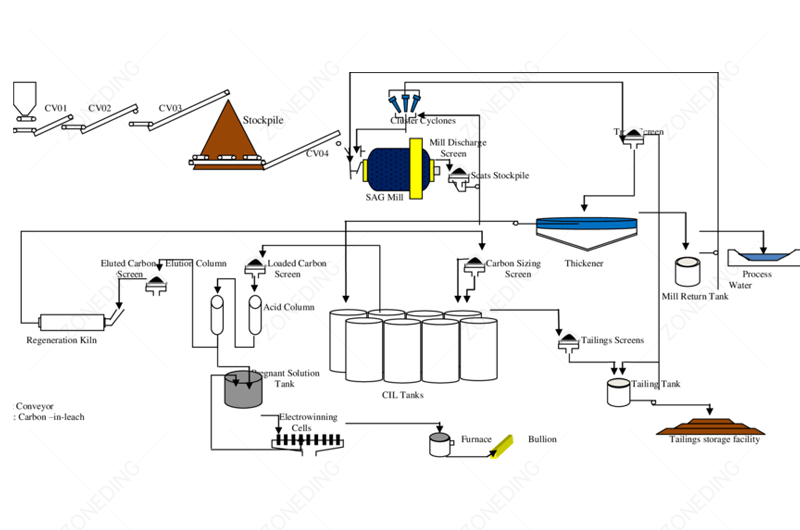
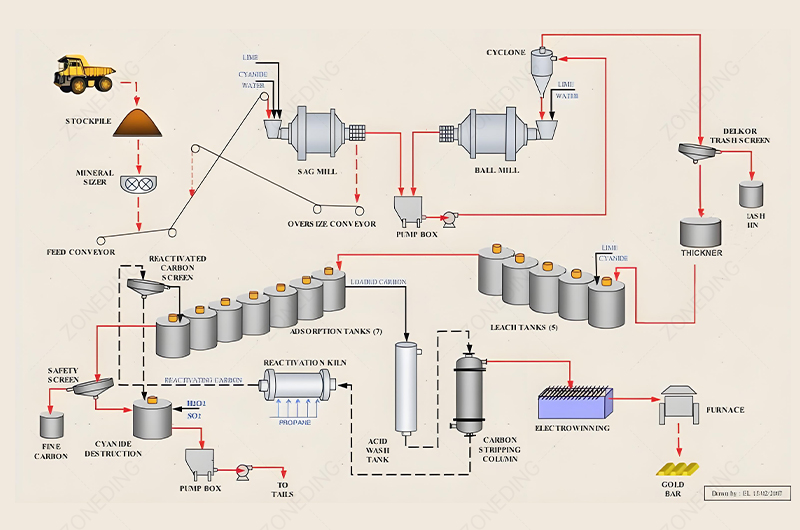
Tank volume is calculated based on the ore processing rate (tonnage) and the required retention time. Retention time is the duration the ore must spend in the tanks for the chemical reaction to complete, typically between 18 and 36 hours for gold ores. The required volume is determined by the slurry flow rate, which is a function of ore tonnage and slurry density.
First, the hourly slurry flow rate is determined. This rate is then multiplied by the required retention time to find the total effective volume. For instance, a flow rate of 100 cubic meters per hour with a 24-hour retention time requires a total volume of 2,400 cubic meters. It is not advisable to use a single large tank, as any maintenance would shut down the entire plant. Instead, a series of 6 to 10 smaller tanks is used. This configuration also prevents “short-circuiting,” a phenomenon where some slurry passes through the system too quickly. Using Thickeners before leaching can reduce the required tank volume by removing excess water.
| Factor | Description | Impact on Tank Selection |
|---|---|---|
| Tonnage | Tons of ore processed per day | Determines the total volume needed |
| Slurry Density | Percentage of solids in water | Affects agitator power requirements |
| Retention Time | Hours needed for reaction | Dictates the number and size of tanks |
The standard material for gold leaching tanks is carbon steel with a thick natural rubber lining. The high-pH environment of gold cyanidation is not highly corrosive to steel. However, the slurry is extremely abrasive due to sharp, hard ore particles. Rubber is the best defense against this abrasion, acting as a resilient shield that absorbs impacts.
For acid leaching processes, such as in copper extraction, standard rubber is insufficient. These applications may require stainless steel (e.g., 316L) or specialized linings like FRP (Fiber-Reinforced Plastic). It is crucial to specify the exact chemical environment to the equipment supplier. An incorrect lining will fail quickly, leading to tank leaks, environmental hazards, and costly downtime.
Question 1: What causes excessive vibration in a leaching tank?
Vibration is often a sign of an unbalanced rotating assembly. This can be caused by a bent shaft or uneven wear on the impellers. A buildup of solids on one side of an impeller can also create an imbalance. The tank should be stopped and inspected. Loose bolts on the drive bridge are another common cause.
Question 2: How often should the rubber lining be replaced?
A high-quality rubber lining in a typical gold mining application lasts between 3 and 5 years. The lifespan depends on the abrasiveness of the ore. Any visible steel through the rubber indicates that immediate repair or replacement is necessary to prevent tank failure.
Question 3: Is it better to use one large tank or several smaller ones?
Several smaller tanks in series are almost always better. This configuration minimizes slurry “short-circuiting,” ensuring a more uniform retention time for all particles. It also provides operational flexibility; if one tank requires maintenance, the others can often continue to operate.
Question 4: How does slurry density affect tank operation?
Higher slurry density increases the load on the agitator motor and reducer. It requires more power to keep the heavier solids suspended. The agitator must be specifically designed for the target density to prevent motor overload and ensure complete suspension.
Question 5: Can leaching tanks be used for metals other than gold?
Yes. Leaching tanks are used in Hydrometallurgy for many metals, including copper, nickel, zinc, and uranium. However, the process chemistry is different for each metal, which requires changes in tank materials, lining, and agitator design to handle corrosive acids and different temperatures.
Question 6: What is the most common cause of agitator failure?
The most common failures occur in the drive system (motor and reducer). Using an industrial-grade reducer instead of a heavy-duty, mining-specific model is a frequent mistake. Mining reducers are built to withstand the high shock loads and continuous operation characteristic of slurry agitation.
ZONEDING has been manufacturing mining machinery since 2004, specializing in heavy-duty equipment for harsh environments. The ZONEDING factory produces over 500 machines annually, supported by a team of 15 expert engineers who design custom leaching circuits tailored to specific ore characteristics. By selling directly from the factory, ZONEDING offers competitive pricing and direct technical support. The company has supplied equipment to mining operations in more than 120 countries, helping them improve recovery rates and operational efficiency.
For a professional plant layout or a price quotation on leaching tanks, contact ZONEDING today. Free technical consultations are available to help with selecting the correct Equipment specifications.
 Zoneding Machine