Selecting the correct manganese beneficiation method is the most critical decision in plant design. The choice between Gravity Separation and Magnetic Separation is determined strictly by the ore’s mineralogy, specifically density and magnetic properties. ZONEDING engineers analyze these factors to create efficient processing lines for Manganese Oxide and Manganese Carbonate. This guide explains which equipment creates the most profitable separation for specific ore types.
Which physical properties dictate equipment selection?
Specific gravity and magnetic susceptibility are the two factors determining the processing method.Manganese Oxide ores (such as Pyrolusite and Psilomelane) possess high density, making them ideal for gravity separation. In contrast, Manganese Carbonate ores (such as Rhodochrosite) have a lower density similar to waste rock. For these lighter ores, magnetic separation is the only effective solution.
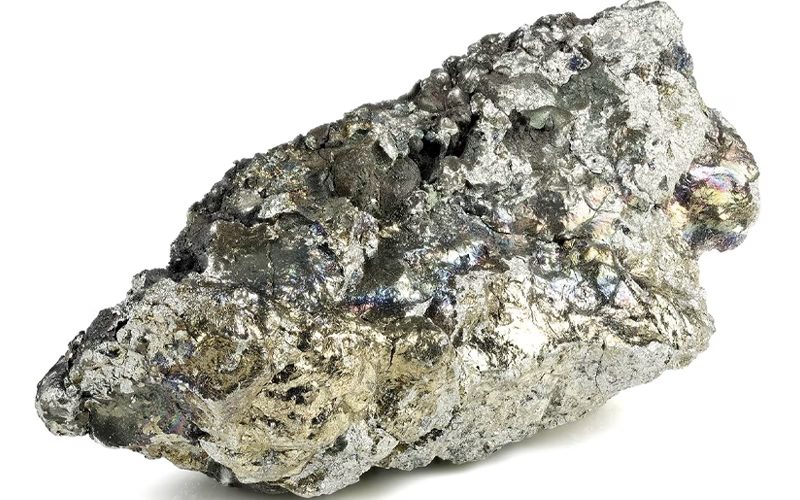
Pyrolusite
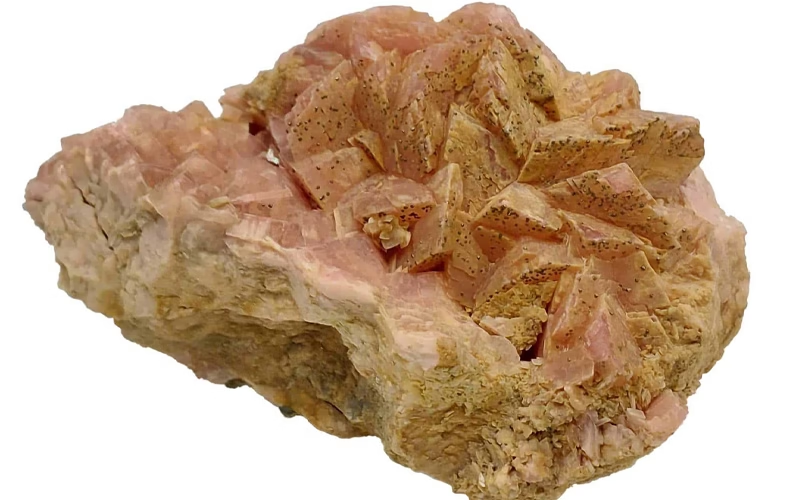
Rhodochrosite
Quartz
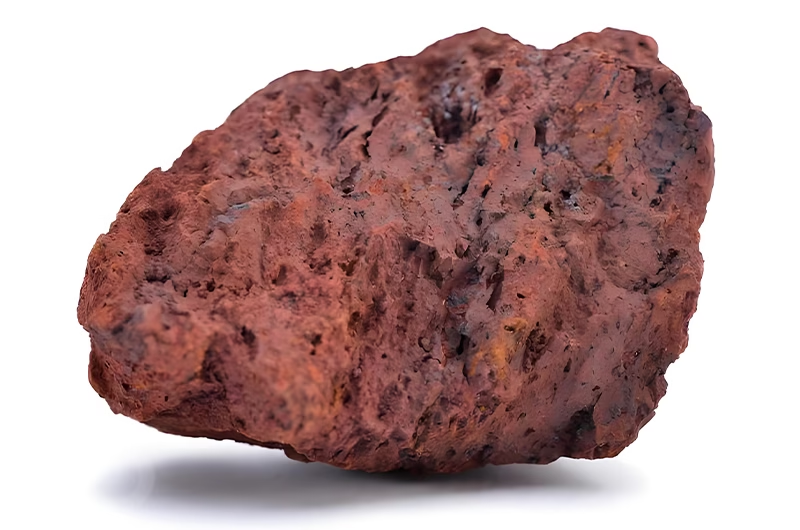
Hematite
The decision relies fundamentally on the density difference between the valuable mineral and the gangue. For effective gravity separation, the manganese mineral needs a significantly higher specific gravity than the silica waste. Manganese oxide typically has a density range of 4.0-5.0 g/cm³, while silica gangue is consistently around 2.6 g/cm³. This significant gap allows for easy physical separation using water as a medium. However, manganese carbonate presents a density of only 3.3-3.6 g/cm³, which is too similar to the surrounding gangue rock. In such cases, gravity equipment cannot distinguish between the ore and the waste efficiently. Therefore, Magnetic Separation is utilized, exploiting the fact that manganese minerals are weakly magnetic (paramagnetic) while silica and calcite are non-magnetic (diamagnetic).
Understanding Mineral Liberation
Impurity characteristics also play a vital role in process design. If silica is locked inside the manganese crystal structure, physical separation requires crushing the ore to a fine “liberation size.” If minerals separate at a coarse size (e.g., 10mm to 30mm), gravity separation is preferred for its low operational cost. If the ore must be ground to a fine powder (e.g., <1mm) to free the manganese from the rock, magnetic separation or flotation becomes necessary. Gravity equipment typically loses efficiency on fine powders because the settling velocity of particles becomes too slow, and surface tension interferes with separation. Therefore, determining the liberation size through laboratory analysis is the first step ZONEDING takes before recommending equipment.
Ore Type
Specific Gravity
Magnetic Property
Recommended Method
Manganese Oxide (Pyrolusite)
4.0 – 5.0 g/cm³
Weakly Magnetic
Gravity (Jig) / Magnetic
Manganese Carbonate (Rhodochrosite)
3.3 – 3.6 g/cm³
Weakly Magnetic
High-Intensity Magnetic
Silica Gangue (Quartz)
~2.6 g/cm³
Non-Magnetic
Tailings (Waste)
Iron Oxide (Hematite)
4.9 – 5.3 g/cm³
Weakly Magnetic
Roasting + Magnetic
Practical Ore Identification Indicators
Visual Inspection: Distinct black, metallic crystals usually indicate Oxide, while pinkish or grey rocks often suggest Carbonate varieties.
Physical Breakage: If black manganese breaks cleanly away from white quartz upon impact, gravity separation is likely viable and cost-effective.
Magnetic Response: If ore attracts strongly to a standard handheld magnet, high iron content (Magnetite) is present, requiring a specialized removal circuit.
Why is Washing Essential Before Separation?
Washing eliminates sticky clay that severely disrupts separation efficiency. Manganese deposits, particularly those near the surface, frequently contain laterite or kaolin clay. If this sticky material enters a crusher or Jig, it acts as a binder, gluing waste rock to manganese and preventing separation. Desliming ensures the processing equipment handles only clean, hard rock.
Jigger-Separator-Machine
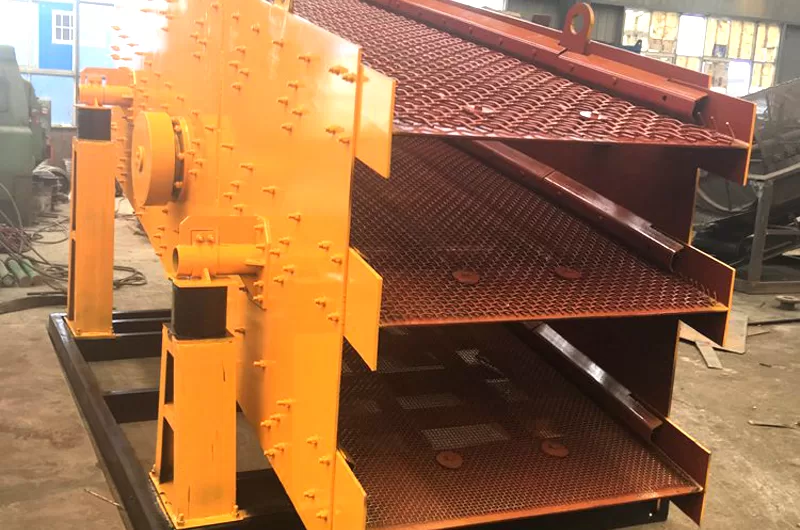
Vibrating-Screen
Ignoring mud leads to “blinding” in the separation equipment and contamination of the final product. In a Jigging Separator Machine, water must move freely to stratify particles based on weight. Thick, muddy water increases viscosity, preventing heavy particles from sinking and light particles from rising. Similarly, in magnetic separation, clay coats magnetic particles, creating a physical barrier that reduces magnetic attraction and recovery rates. A Vibrating Screen equipped with high-pressure water sprays or a rotary drum scrubber is a standard installation at the plant’s start. This equipment washes away these “slimes” (particles smaller than 0.15mm) before the main processing stage, ensuring downstream machines operate at peak efficiency.
The Impact on Crushing Equipment
Clay content poses a significant threat to crushing circuits. When wet, sticky ore enters a Jaw Crusher, it can pack into the crushing chamber, reducing throughput and increasing wear on the jaw plates. In severe cases, it causes blockages that require manual clearing, leading to costly downtime. By implementing a washing and screening stage immediately after the primary crush—or even before it if the material is loose—operators protect their expensive reduction machinery. Furthermore, the wash water often contains fine manganese particles that can be recovered later using settling ponds or spiral chutes, adding to the total plant revenue.
Practical Washing Tips
High Clay Content (>20%): Use a Log Washer or Cylinder Scrubber rather than just a spray screen. These machines use internal blades to aggressively break up clay balls.
Water Management: Design a settling pond system. Recycling wash water reduces operational costs and environmental impact.
Screen Sizing: Ensure the bottom deck of the washing screen is sized correctly (usually 1-2mm) to remove the mud without losing valuable coarse ore.
How Does a Jig Separate Coarse Manganese?
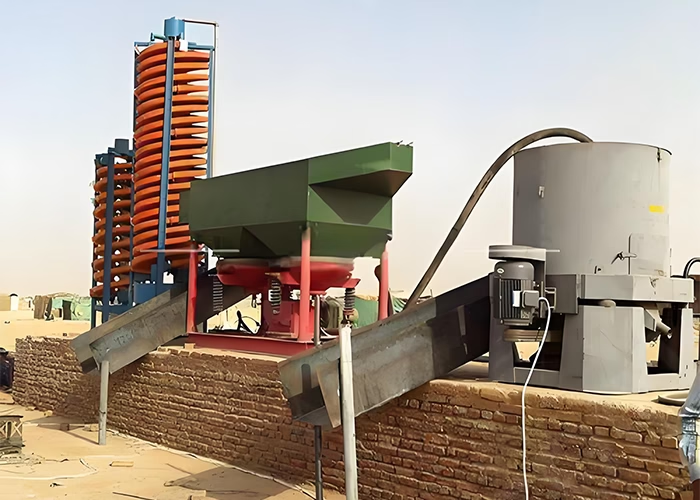
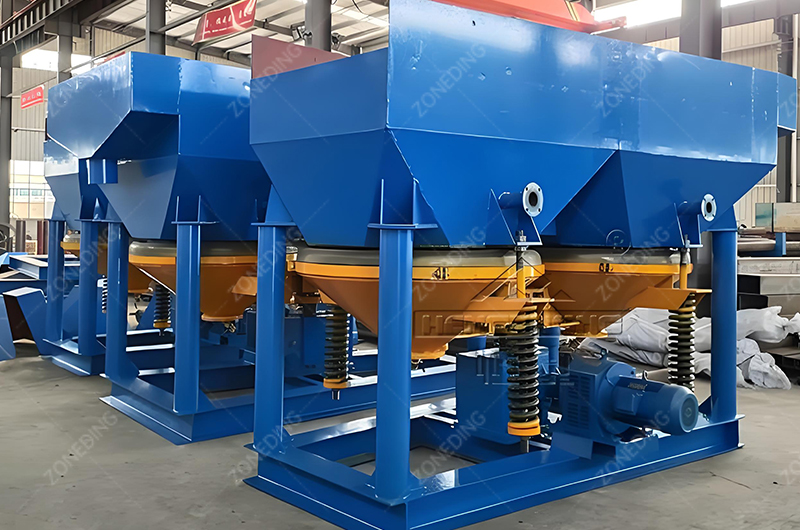
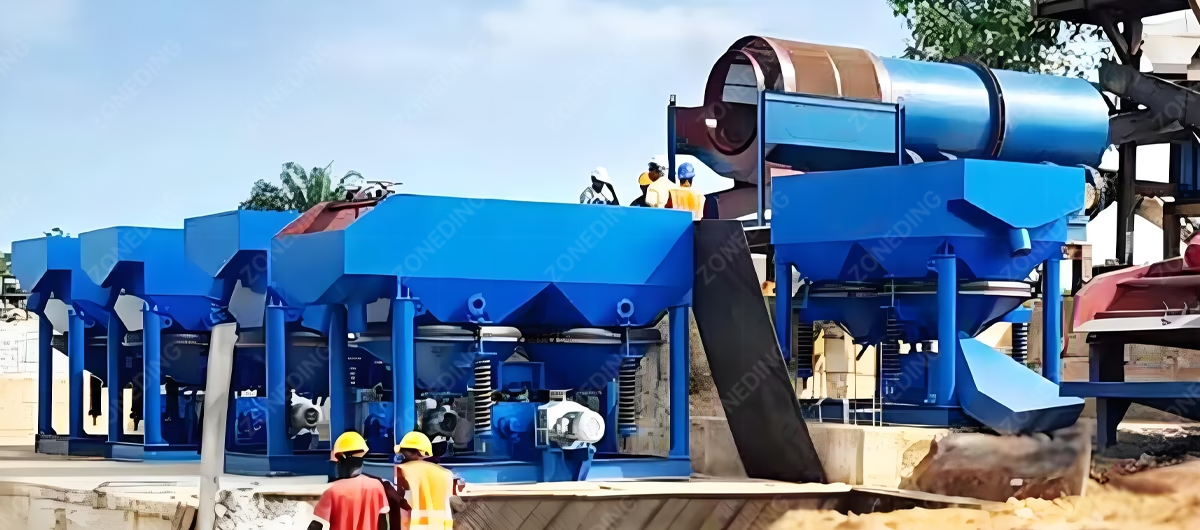
Jigs utilize pulsating water to separate heavy manganese from lighter rock based on density. This equipment is the most cost-effective solution for coarse Manganese Oxide (sized 6mm to 30mm). The machine creates a fluid bed where heavy manganese sinks to the bottom layer faster than light silica, allowing for continuous separation.
Mineral Gravity Jig Machine for Manganese Ore Beneficiation Plant
Jigs are favored for their low operating costs and minimal electricity consumption compared to high-intensity magnetic separators. The mechanism involves a tank filled with water that is pulsed up and down. On the upward stroke, the bed of ore is lifted and loosened. On the downward stroke, particles settle. High-density manganese settles faster, reaching the bottom screen, while lighter silica remains on top and is washed away by horizontal water flow. The key to high efficiency in jigging is “narrow size classification.” Feeding large rocks (30mm) mixed with sand (1mm) reduces performance. Standard practice involves using screens to split ore into fractions, such as 0-8mm and 8-30mm, feeding them into separate Jigs. This allows the water pulsation stroke and frequency to be tuned perfectly for specific particle sizes.
Using Shaking Tables for Fines
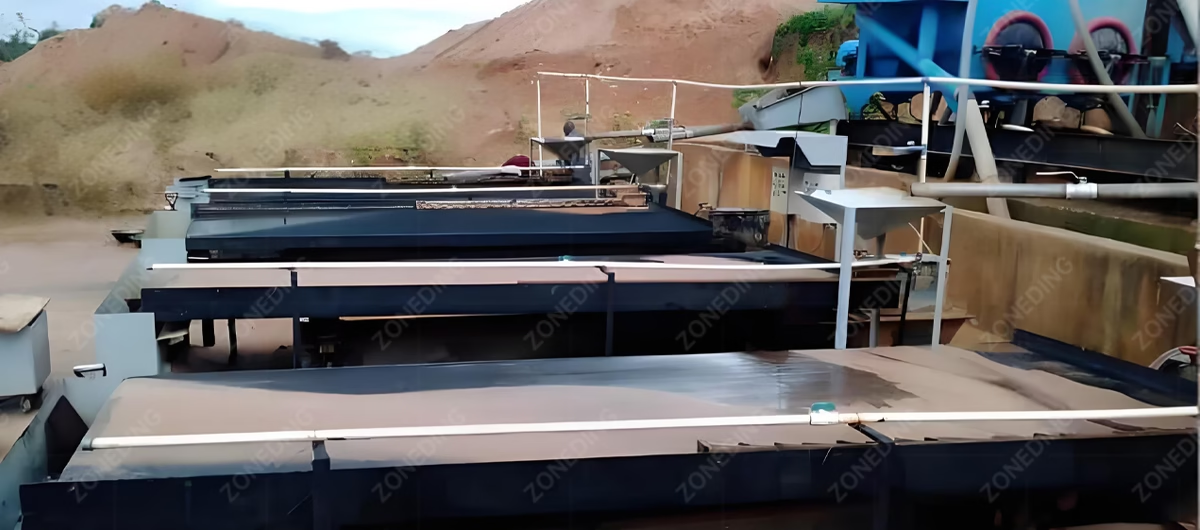
Mineral Gravity shaking table for Manganese Ore Beneficiation Plant
For ore smaller than 1mm, Jigs become less effective due to excessive water turbulence disturbing the fine settling process. A Shaking Table is the preferred gravity equipment for this fine material (often -2mm to +0.074mm). The table uses a rifled deck that vibrates back and forth. A thin film of water flows across the table. Heavy manganese particles are trapped behind the riffles and move longitudinally along the table, while light silica is washed over the riffles to the tailings side. Although tables have lower capacity than Jigs, they produce an exceptionally high-grade concentrate, often used as the final cleaning step for high-value fines.
Learn more about gravity equipment specifications in the Jig Separator Technical Guide.
When is Magnetic Separation Necessary?
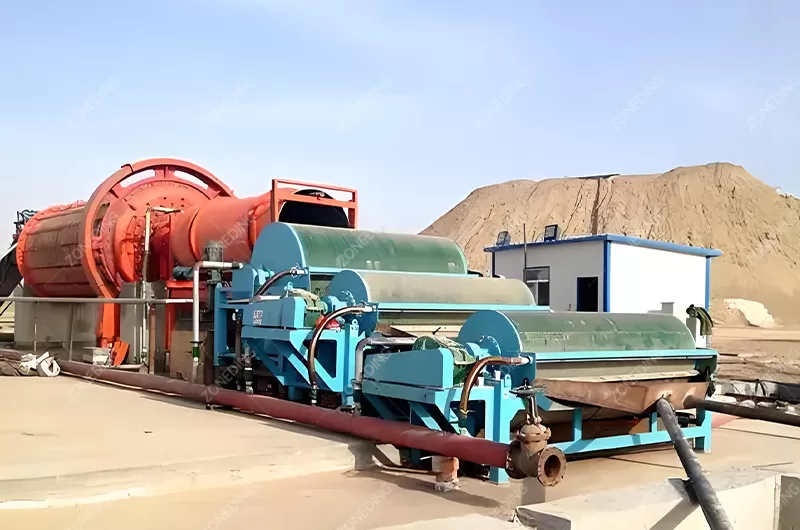
Magnetic separation is required when gravity methods fail due to low density differences or fine particle sizes. Manganese minerals are paramagnetic—they attract to strong magnetic fields but not weak ones. Standard magnets are insufficient; High-Intensity Magnetic Separators (HGMS) generating fields between 10,000 and 16,000 Gauss are necessary.
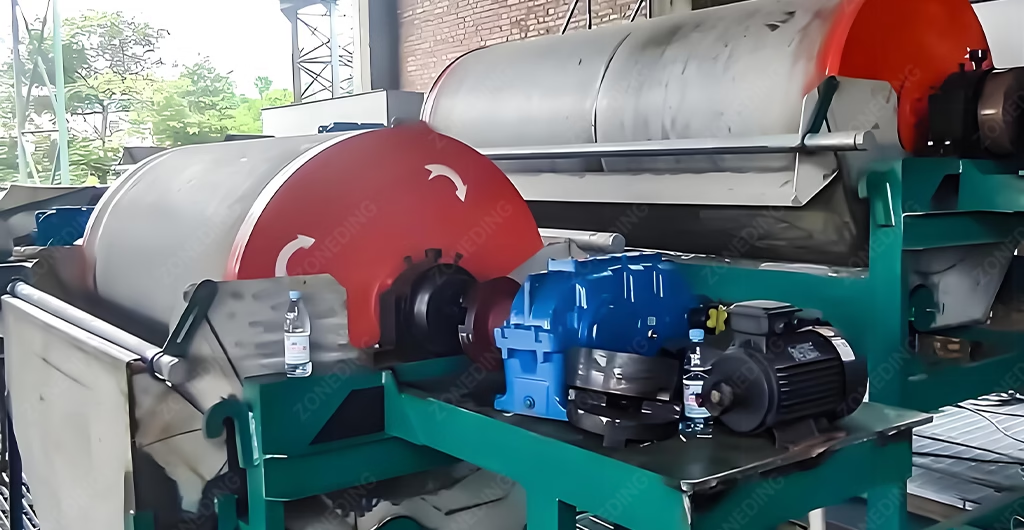
Manganese ore Magnetic separation
This technology is essential for Manganese Carbonate ores. Since the density gap between carbonate (3.6) and silica (2.6) is negligible, Jigs would send significant waste into the concentrate or lose ore to tailings. A high-intensity Magnetic Separator relies solely on magnetic susceptibility. As slurry passes through the magnetic matrix (usually stainless steel wool or grooved plates), manganese particles are captured by the intense field, while silica flows through. This is also the standard method for recovering manganese from fine tailings and waste piles where the particle size is too small for gravity separation.
Two-Stage Magnetic Process
Directly feeding ore into a high-intensity separator often leads to mechanical blockage. Ferromagnetic materials like magnetite or iron from crusher wear can clog the high-intensity matrix permanently. Therefore, ZONEDING designs a two-stage circuit.
Stage 1 (Low Intensity): A weak magnetic drum (~1500 Gauss) removes strongly magnetic iron (magnetite) and mechanical iron debris. Stage 2 (High Intensity): The cleaned slurry enters the strong separator (12,000+ Gauss) to capture the paramagnetic manganese. This protects the expensive high-gradient equipment and ensures the final manganese concentrate is low in iron impurities.
Can Roasting Solve High-Iron Ore Problems?
Yes, Magnetic Roasting is the specific chemical treatment for iron-rich manganese ores. When Hematite (Iron Oxide) and Manganese Oxide are mixed, they share similar densities and magnetic properties, making physical separation impossible. Roasting chemically alters the iron to facilitate separation.
Ore Powder Dryer drying manganese powder
The process employs a Rotary Kiln to heat the crushed ore to approximately 700-900°C in a reducing atmosphere (using coal or gas). This reaction converts weakly magnetic Hematite (Fe₂O₃) into strongly magnetic Magnetite (Fe₃O₄), while leaving the Manganese Oxide relatively unchanged. After the roasted ore is cooled and ground, a simple low-intensity magnetic separator pulls out the newly created Magnetite (the iron waste), leaving the non-magnetic Manganese behind as the concentrate. While this method is capital-intensive and requires fuel, it is often the only viable method for producing sellable concentrate from massive, high-iron manganese deposits.
The Economics of Roasting
Roasting is generally reserved for large-scale operations due to the cost of fuel and the complexity of the kiln system. However, it offers a massive advantage: it can turn “unusable” ore into high-grade feedstock. For mines with millions of tons of ferruginous manganese (Fe > 20%), a roasting plant can unlock value that gravity or standard magnetic separation never could. ZONEDING provides complete kiln systems including the pre-heaters, coolers, and dust collection systems necessary for environmentally compliant roasting operations.
Why Combine Gravity and Magnetic Methods?
Combined flowcharts minimize energy consumption while maximizing recovery rates. A “Gravity-Magnetic” circuit is the industry standard for large-scale plants. Gravity separation removes bulk waste rock early in the process at a low cost, significantly reducing the volume of material that requires expensive fine grinding and magnetic separation.
Processing 100% of the run-of-mine ore through a ball mill is incredibly expensive due to electricity and liner wear. By using Jigs on the coarse fraction, plants can often discard 50-60% of the rock as pure waste immediately after crushing. Only the “middlings” (mixed rock and ore) and the fines are then sent to the Ball Mill. This reduces the size of the grinding and magnetic section by half, slashing capital investment and daily operating costs. The combined approach leverages the strengths of both methods: the low cost of gravity for coarse rock and the high precision of magnetic separation for fines.
Raw Material Feeding: Manganese ore boulders are evenly conveyed by the vibrating feeder into the processing system.
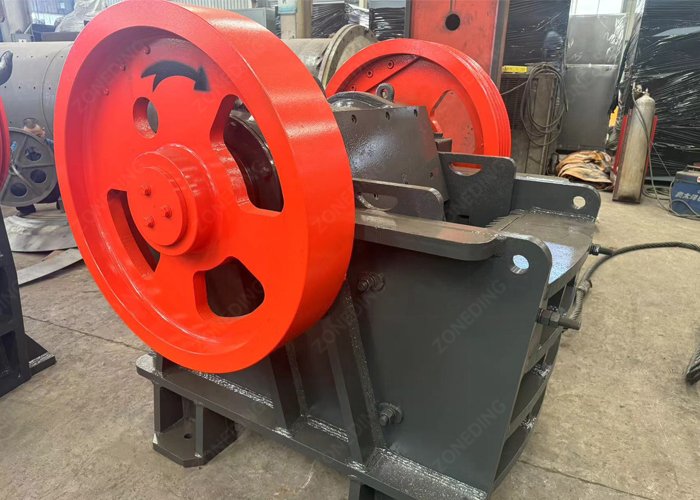
Crushing: The jaw crusher reduces large boulders to -30mm size.
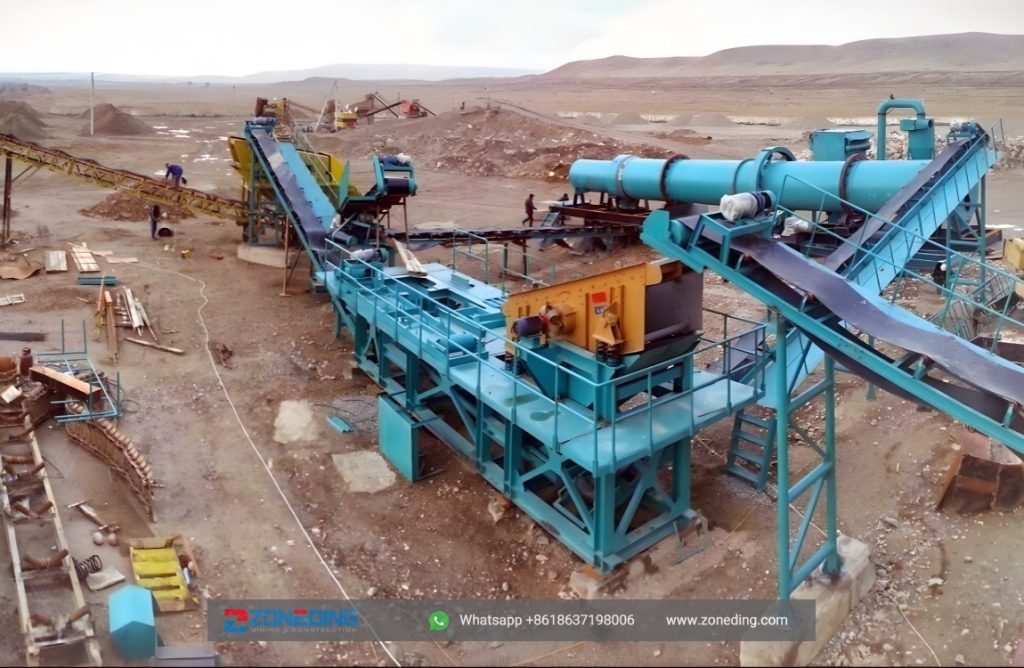
Screening & Washing: Crushed material enters the vibrating screen to wash away clay and separate ore into +6mm and -6mm fractions.
Coarse Circuit: The +6mm fraction enters the Jig to produce “Lumpy Concentrate” while discarding coarse waste.
Grinding: Middlings and -6mm fines are ground to approx. 1mm in the ball mill, potentially after secondary crushing.
Fine Circuit: Ground slurry is processed by the magnetic separator and flotation machine to recover fine manganese.
Drying & Finished Product: Purified material is dried by the dryer, preparing the final manganese concentrate for transport.
Manganese-Ore-Beneficiation-Flowchart
2026 Trends in Manganese Processing
The mineral processing industry is shifting towards smarter, water-efficient technologies in 2025. Sensor-Based Sorting (Ore Sorting) is gaining prominence. This technology uses X-ray transmission (XRT) sensors to detect atomic density variations on conveyor belts, using high-speed air jets to eject waste rock before it even enters the crushing circuit. This pre-concentration step reduces downstream energy usage by up to 30%.
Key Innovations
Dry Magnetic Separation: New high-strength dry magnetic separators are reducing water dependency. These machines use rare-earth permanent magnets to achieve 12,000 Gauss without electricity for the field generation, a critical factor for arid mining regions in Africa and Australia.
Fine Particle Recovery: Advanced matrix designs in wet magnetic separators now capture particles as small as 10 microns. Previously, this “slime” was discarded, but new vertical ring gradient separators allow for the recovery of this material, increasing overall plant yield by 3-5%.
Eco-Friendly Leaching: Bio-leaching is emerging as a viable alternative to chemical leaching for low-grade ores resistant to physical separation, utilizing bacteria to liberate manganese without harsh acids.
Demand for high-purity manganese is rising exponentially due to the electric vehicle (EV) battery market (NCM batteries). Consequently, mining companies are revisiting “low-grade” carbonate deposits. They are investing in advanced magnetic separation circuits to process ores previously categorized as waste, aiming to produce battery-grade manganese sulphate precursors.
FAQ: Common Beneficiation Questions
Question 1: Are spiral chutes effective for manganese? Yes, spiral chutes utilize gravity and are effective for removing light silica sand from manganese fines (usually 0.1-2mm). While they are less precise than shaking tables, they have a high throughput and no moving parts. They are excellent for “roughing” (first-stage separation) to reduce the volume of material before final cleaning on tables or magnetic separators. Question 2: What is the water consumption of a Jig? Jigs require substantial water flow to create the pulsating bed, typically 3 to 4 cubic meters of water per ton of ore processed. However, this does not mean water loss. By installing a thickener and a settling pond, ZONEDING plants recycle up to 90% of the process water, making the process sustainable even in areas with limited water access. Question 3: What is the typical upgrade ratio for these methods? Gravity separation on oxide ores typically yields a 10-15% grade increase (e.g., upgrading 25% Mn ore to a 35-40% concentrate). Magnetic separation on carbonates offers similar ratios but generally requires finer grinding. The exact ratio depends heavily on the “liberation degree” of the specific ore body. Question 4: Can I use a magnetic separator for all manganese ores? Technically, yes, because almost all manganese minerals are paramagnetic. However, economically, it is often unwise. Crushing hard rock to <1mm just to run it through a magnetic separator is expensive. If the ore can be separated at 20mm using a cheap Jig, that is always the preferred route for the coarse fraction.
Summary and Recommendations
Gravity Separation (Jigs) is the optimal choice for coarse Manganese Oxide due to cost-efficiency and simplicity. High-Intensity Magnetic Separation is required for Manganese Carbonate and fine particles where gravity fails. Desliming (Washing) is non-negotiable for clay-rich ores to prevent equipment failure, and Roasting serves as the only solution for high-iron content ores.
Equipment selection should rely on data, not assumptions. ZONEDING recommends conducting washability and magnetic susceptibility tests on a 50kg representative sample. Data-driven flowchart design ensures the balance between recovery rates and operating costs. Contact us to arrange ore testing and flowchart simulation.
About ZONEDING
ZONEDING is a leading manufacturer of mineral processing equipment in China, established in 2004. The company provides complete, turnkey solutions for manganese mining, ranging from Jaw Crushers to advanced Magnetic Separators. With an 8,000 square meter facility and an annual production capacity exceeding 500 sets of mining machinery, ZONEDING supports mining projects in over 120 countries, delivering customized engineering that maximizes ROI. For professional consultation, customized flowchart design, and factory-direct equipment pricing, contact the engineering team at ZONEDING today.
Jaw crusher prices can vary from a few thousand dollars to more than one million dollars depending on capacity, feed size, mobility, automation, and material hardness. In real quarry and mining projects, the cheapest machine is often not the most ...
A 100–200 TPH aggregate crushing plant cost can range from approximately USD 120,000 to USD 350,000 for a standard stationary line. However, a 200 TPH plant that includes tertiary crushing, manufactured sand production, washing, or sever...
Choosing mobile crushing equipment determines project setup speed and long-term operating costs. Many buyers only look at the transport method. They ignore the hidden costs of site preparation and energy consumption. This guide shows the real diff...
Decades of experience in the mining sector reveal a common financial drain. Many crushing facilities struggle with high electricity bills and frequent machine failures. Facility owners often attempt to save money by purchasing cheap replacement pa...
We use cookies to ensure that we give you the best experience on our website. If you continue to use this site we will assume that you are happy with it.
Privacy Policy
Send us a message
We would love to hear from you
Submit your question and our team will respond to the email provided as soon as possible.
 Zoneding Machine