Primary crusher selection starts with the material entering the plant and the duty required downstream. A crusher must accept the expected rock size, sustain the required throughput, and produce a discharge that the next stage can handle.
For hard rock mines, jaw and primary gyratory crushers are common options to evaluate. The appropriate choice depends on feed characteristics, production requirements, installation constraints, and maintenance arrangements.
A suitable primary crushing station balances the crusher with the receiving hopper, feeder, oversize management, discharge conveyor, and downstream process.
What Should You Define Before Selecting a Primary Crusher?
Begin with a written design basis. Without one, supplier quotations may describe different operating duties even when they show the same nominal capacity.
Selection factor
Information to provide
Why it matters
Maximum lump size
Largest expected rock and frequency of oversize
Establishes feed acceptance requirements
Feed size distribution
Proportions of coarse rock, intermediate material, and fines
Influences capacity and material flow
Rock characteristics
Strength, crushability, abrasiveness, and weathering
Affects crushing duty, power, and wear
Moisture and clay
Normal and seasonal conditions
Influences handling, scalping, and blockage risk
Required throughput
Running capacity and daily production target
Establishes the operating duty
Discharge requirements
Size distribution acceptable to the next stage
Determines reduction and setting requirements
Delivery method
Truck, loader, conveyor, or underground haulage
Shapes the receiving arrangement
Installation conditions
Space, headroom, foundations, and access
Limits feasible station layouts
Use representative information from the expected mining areas. A sample from one convenient location may not represent the material the crusher will process over its operating life.
Jaw Crusher or Primary Gyratory Crusher?
Both types use compression to reduce rock size, but their physical arrangements and operating characteristics differ.
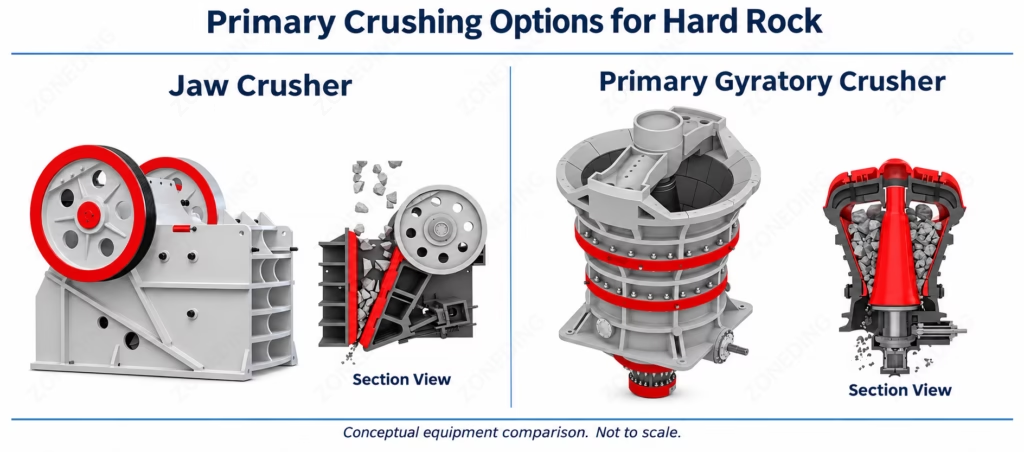
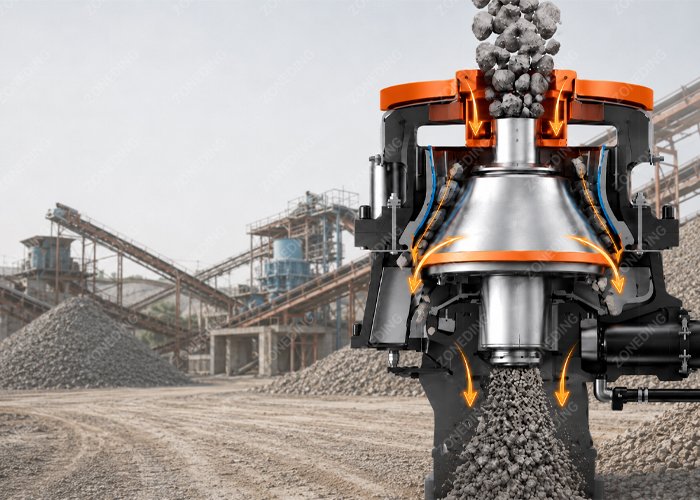
A jaw crusher reduces material between a fixed jaw and a moving jaw. A primary gyratory crusher uses a moving mantle within a surrounding crushing chamber.
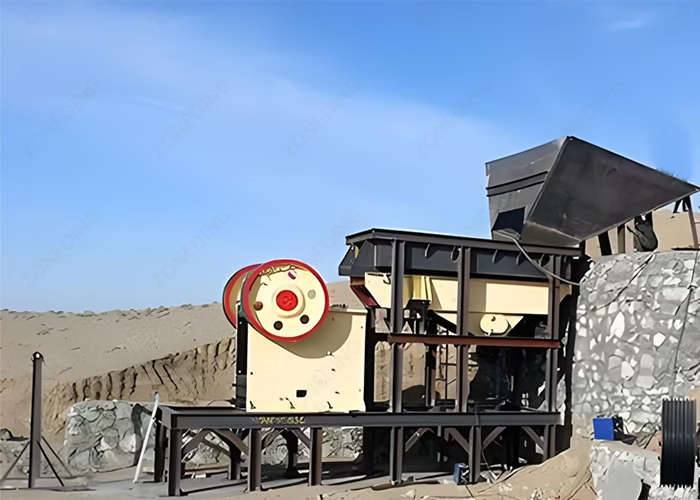
Primary crusher options and their crushing chamber arrangements
Evaluation factor
Jaw crusher
Primary gyratory crusher
Typical selection context
A broad range of hard rock duties
Often evaluated for large, sustained production duties
Feed acceptance
Must match opening dimensions and lump shape
Must match receiving opening and chamber geometry
Crushing action
Cyclic compression between jaws
Compression around the mantle as it moves
Installation planning
Check machine dimensions, structures, and access
Check height, excavation, foundations, and lifting requirements
Maintenance planning
Jaw plates, bearings, drive components, and lifting access
Mantle, concaves, major assemblies, and heavy lifting access
Selection basis
Feed, duty, discharge, and complete station requirements
Feed, duty, discharge, and complete station requirements
There is no single throughput figure that determines the correct choice for every mine. Compare technically suitable options against the same feed conditions and production basis.
For an underground installation, transport dimensions and assembly access can be as important as nominal crushing capacity. For a surface station, truck access, receiving height, and civil works may strongly influence the decision.
How Does Feed Size Affect Primary Crusher Selection?
Maximum lump size and feed grading describe different aspects of the duty.
Maximum lump size establishes whether the crusher can accept the largest expected rock. Feed grading describes how the rest of the material is distributed across particle sizes.
A feed containing occasional large slabs can behave differently from a well-fragmented feed with the same maximum dimension. Rock shape and orientation can affect entry into the crushing chamber.
Before confirming a machine, assess:
The largest expected lump in more than one dimension.
The frequency of oversize rocks.
The proportion of slabs or elongated pieces.
Variation between mining areas and blasting conditions.
How oversize will be detected and managed.
Do not treat feed opening dimensions as a guarantee that every rock of a similar nominal size will pass freely.
Oversize management should be designed into the station. This may include controlled rejection or an appropriately engineered rock-breaking arrangement, depending on the application.
Why Do Crushability and Abrasiveness Need Separate Assessment?
Crushability concerns how readily the rock breaks under the applied crushing action. Abrasiveness concerns its tendency to wear contact surfaces.
A rock can be difficult to break, highly abrasive, or both. Selecting equipment from compressive strength alone can overlook important operating differences.
For a demanding hard rock application, ask what material testing is needed to support:
Crusher and chamber selection.
Power assessment.
Wear-part material selection.
Expected operating settings.
Downstream size distribution estimates.
Avoid transferring a wear-life estimate from another mine without checking material and operating conditions.
Wear-part planning should include replacement procedures, lifting equipment, spare-part availability, and the effect of wear on discharge characteristics.
How Should Required Throughput Be Defined?
Separate the daily production target from the throughput required while the crusher is operating.
Determine the required running rate using the project’s confirmed production target and planned productive crushing hours. Scheduled shift hours should not automatically be treated as productive operating time.
Review the operating schedule against maintenance requirements, expected interruptions, feed availability, and storage arrangements between processes. Any capacity allowance should have a documented basis agreed upon during engineering.
Ask the supplier to state the conditions supporting the proposed capacity, including feed characteristics, crusher setting, and required discharge grading.
Also confirm whether the quoted throughput refers to fresh material passing through the primary station or total material circulating through a downstream closed circuit. These measurements describe different equipment duties and should not be used interchangeably.
What Discharge Size Should the Primary Crusher Produce?
The primary crusher should prepare material for the next stage rather than attempt to produce every finished product.
Define the discharge requirement using the receiving limits and process needs of downstream equipment.
Check:
Maximum acceptable size for the next crusher.
Expected discharge size distribution.
Conveyor and transfer-chute requirements.
Screening or stockpile arrangements.
The effect of wear and setting changes.
The crusher’s discharge setting is not the same as a guaranteed maximum product size. The resulting grading also depends on the feed, chamber, and operating conditions.
Trying to obtain too much reduction in the primary stage may create an unsuitable operating duty. Conversely, a discharge that is too coarse can overload or restrict the next stage.
When planning a complete crushing plant, evaluate the primary discharge together with secondary crushing, screening, and conveying.
How Important Are Feeding and Scalping?
A suitable crusher can still perform poorly if the receiving system delivers material inconsistently.
The hopper should accommodate the delivery method and support controlled withdrawal. The feeder should supply material at a rate appropriate to the crusher and downstream system.
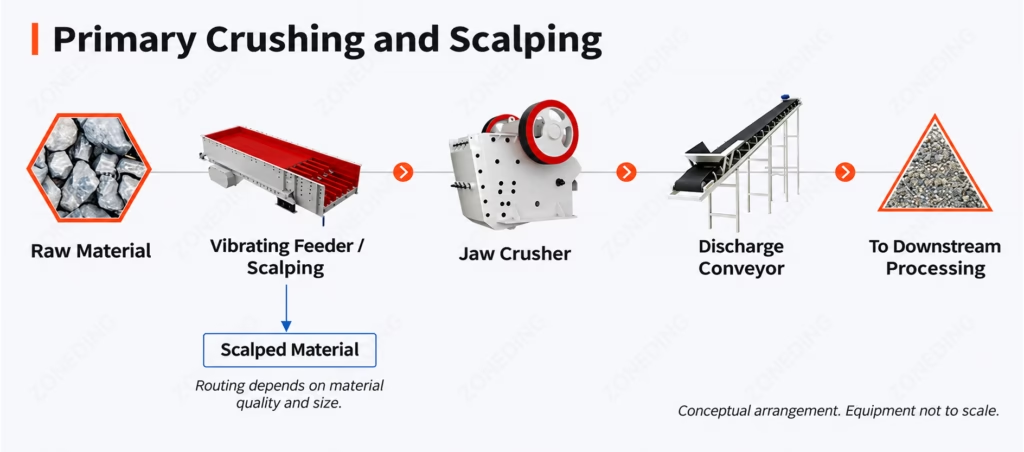
Where justified, scalping separates material that does not need primary crushing. However, the separated stream needs a defined destination.
Controlled feeding and scalping before primary crushing
Depending on its size and quality, scalped material may:
Rejoin the process downstream.
Require separate screening or treatment.
Be excluded from saleable production.
Do not automatically classify all scalped material as waste.
Moisture and clay also matter. Sticky feed may affect hopper discharge, feeder performance, and scalping effectiveness. Evaluate these conditions before relying on a dry, free-flowing material assessment.
Should You Choose a Stationary, Modular, or Mobile Arrangement?
The deployment arrangement should follow the mine plan and site constraints.
Stationary installation
Modular installation
Mobile installation
Stationary installation
A stationary station may suit a long-term location with established infrastructure. Evaluate foundations, receiving structures, access, and the material transport arrangement over the project life.
Modular installation
A modular arrangement can organize equipment and supporting structures into defined assemblies. Confirm transport limits, foundation requirements, assembly work, and interfaces between modules.
Mobile installation
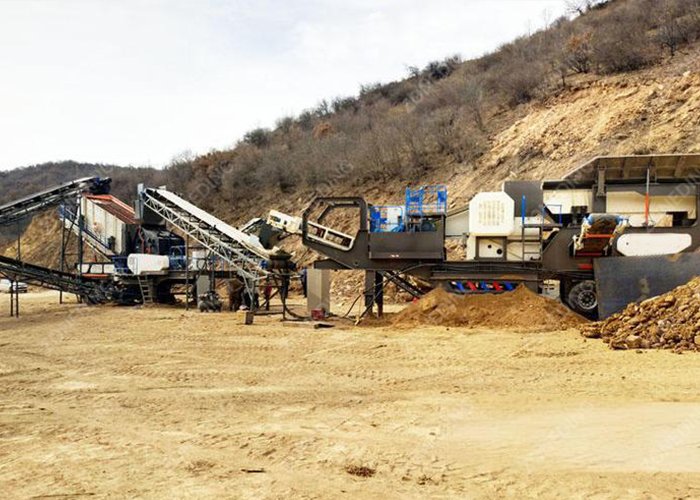
A mobile arrangement may be useful where the crushing location changes or the operation benefits from processing closer to the working area. Check feed acceptance, operating access, ground conditions, and the supporting conveying or loading system.
Mobility alone does not establish suitability. Compare the complete operating arrangement, including relocation work and connections to the rest of the plant.
What Maintenance Access Should Be Included?
Maintenance planning should begin before the layout is finalized.
Provide practical access for inspecting the crushing chamber, replacing wear parts, servicing the drive, and removing major components.
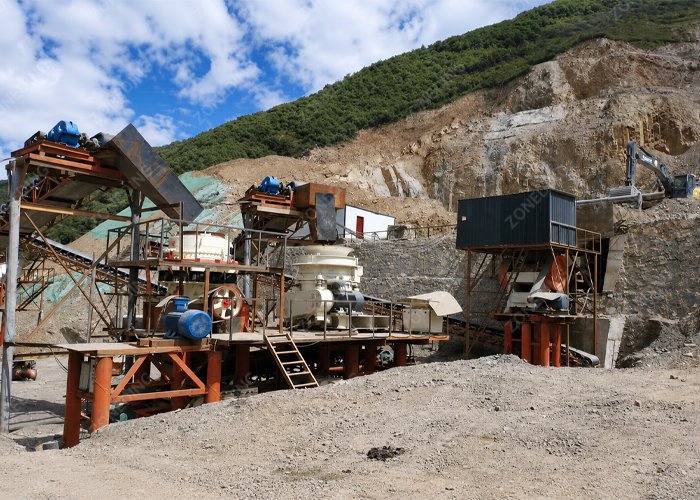
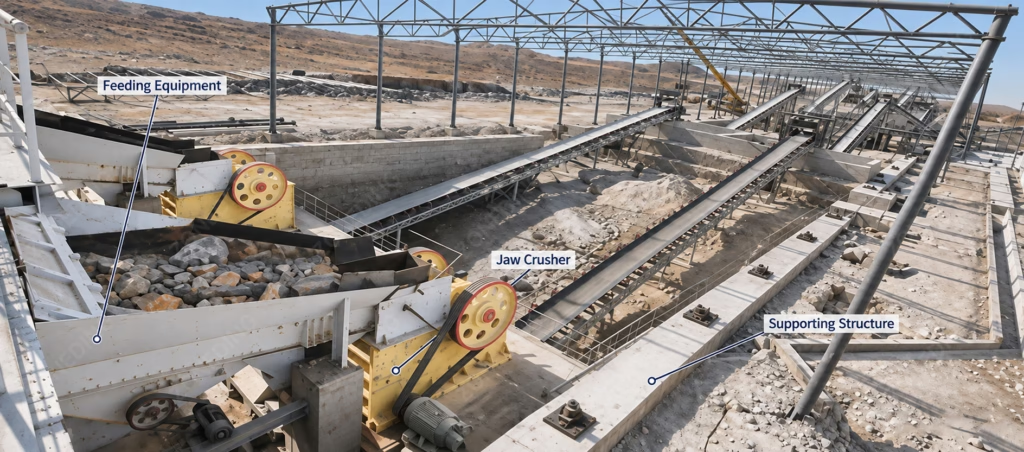
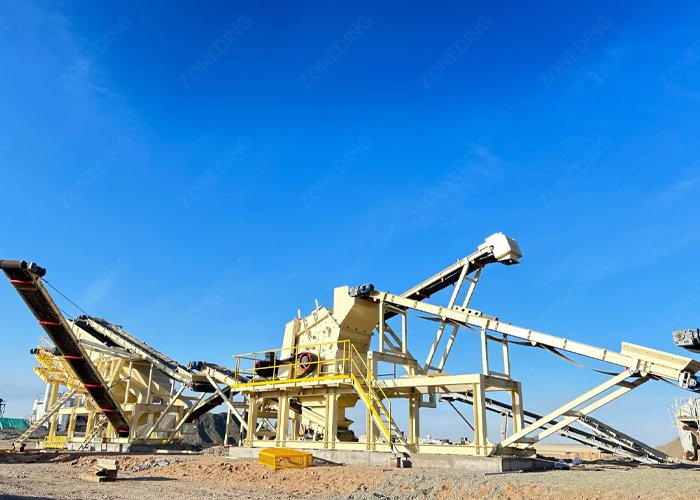
Primary crushing equipment connected to the conveying system
Maintenance requirement
What to confirm
Wear-part replacement
Component weights, lifting points, and replacement procedure
Major component removal
Crane access, lifting height, and removal route
Routine inspection
Platforms, access points, and isolation arrangements
Drive servicing
Space around motors, belts, couplings, and guards
Spare-part handling
Storage, transport, and delivery to the maintenance area
Blockage management
An engineered procedure and suitable equipment
Review these requirements against the actual site arrangement. A general equipment drawing does not by itself demonstrate that the installed station will be easy to maintain.
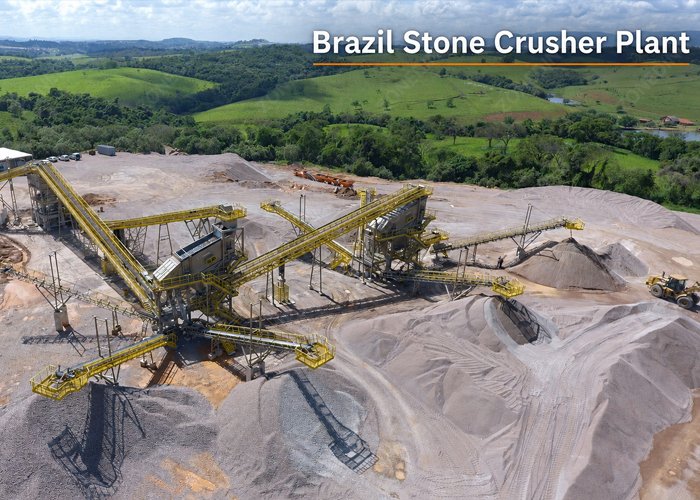
Use project references to identify useful questions rather than copy a configuration directly.
Compare the reference application with your own feed characteristics, receiving method, downstream requirements, and site conditions. Request the relevant design basis before treating another installation as evidence that a particular crusher will suit your mine.
A quarry aggregate installation and a mine feeding a grinding circuit may require different primary discharge characteristics even when both process hard rock.
How Should Supplier Quotations Be Compared?
Compare proposals against a common specification.
A lower equipment price may exclude receiving structures, feeders, electrical equipment, lifting provisions, or commissioning work included in another offer.
Ask each supplier to identify:
The feed and material assumptions used.
The proposed machine and operating setting.
Expected capacity under the stated conditions.
Expected discharge grading.
Installed power and utility requirements.
Scope of supply and exclusions.
Foundation and structural information.
Maintenance access and lifting requirements.
Wear parts and initial spare parts.
Commissioning and performance-test arrangements.
Define how performance will be assessed. The procedure should state feed conditions, measurement methods, discharge acceptance criteria, and the test period.
What Common Mistakes Lead to Poor Selection?
Selecting from maximum capacity alone
A published capacity range does not establish performance with your feed and required discharge.
Using maximum rock size without feed grading
The largest lump is important, but the full size distribution also affects the duty.
Ignoring downstream limits
A primary crusher can meet its own throughput target while delivering material that restricts the next stage.
Comparing incomplete quotations
Equipment price alone does not reveal the cost or completeness of the installed station.
Leaving maintenance planning until construction
Restricted access can complicate routine servicing and major component replacement.
Frequently Asked Questions
Is a jaw crusher suitable for hard rock mines?
A jaw crusher can be suitable for many hard rock applications. Selection still requires checking feed size, material characteristics, throughput, discharge requirements, and installation conditions.
When should a primary gyratory crusher be evaluated?
Evaluate it when the production duty, feed characteristics, and station requirements justify comparison with other primary crushing options. Installation height, civil works, and maintenance arrangements should be included in that assessment.
Can an impact crusher be used as a primary crusher for hard rock?
Suitability depends on the material and product requirements. For hard, abrasive feed, assess wear exposure and operating cost carefully before selecting an impact-based arrangement.
Does the discharge setting determine the maximum product size?
No. The setting influences the discharge, but the resulting size distribution also depends on feed characteristics, chamber geometry, and operating conditions.
What information should I send for a primary crusher quotation?
Provide feed grading, maximum lump dimensions, representative material information, required throughput, downstream size limits, delivery method, operating schedule, and site constraints.
Discuss Your Primary Crushing Requirements with ZONEDING
Effective primary crusher selection begins with a clear feed specification and a defined downstream duty.
Send your material information, maximum feed size, production target, required discharge characteristics, and site layout to ZONEDING’s team.
These inputs provide the basis for evaluating the crusher, receiving system, supporting equipment, and installation arrangement for your hard rock project.
Cone crushers are among the most widely used machines in the aggregate, mining, and quarry industries. They are especially popular for processing hard and abrasive materials such as granite, basalt, river stone, and iron ore. However, many buyers ...
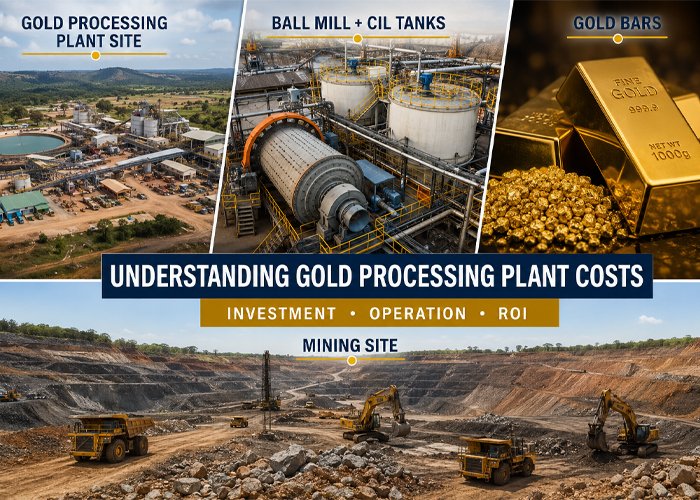
One of the first questions investors ask before starting a mining project is: How much does a gold processing plant cost? Unfortunately, there is no single answer. A small gravity gold plant may cost less than a luxury house in some countries, whi...
A 100–200 TPH aggregate crushing plant cost can range from approximately USD 120,000 to USD 350,000 for a standard stationary line. However, a 200 TPH plant that includes tertiary crushing, manufactured sand production, washing, or sever...
We use cookies to ensure that we give you the best experience on our website. If you continue to use this site we will assume that you are happy with it.
Privacy Policy
Send us a message
We would love to hear from you
Submit your question and our team will respond to the email provided as soon as possible.
 Zoneding Machine