As an engineer who has designed mineral processing plants for decades, I have seen hearts broken by pyrite. Prospectors arrive with hands trembling, holding a rock glittering with what they believe is their fortune. They call it “Fool’s Gold” for a reason. But here is a secret most people miss: sometimes, the fool is the one who throws the pyrite away. This mineral can be a costly enemy, a valuable friend, or both at the same time. The key is understanding what you have and knowing how to handle it.
This guide will walk you through the complex world of pyrite beneficiation. We will explore when pyrite is a problem and when it is an opportunity. And we will detail the mineral processing flowsheet and equipment required to manage it, turning a potential headache into a profitable outcome for your mining operation.
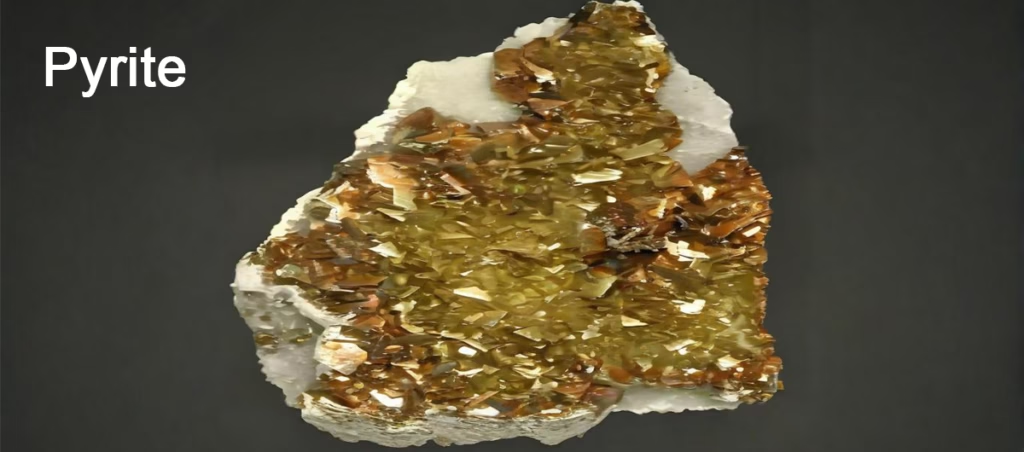
The Difference Between Gold and Pyrite (“Fool’s Gold”)
Gold (Au) and Pyrite (FeS₂), famously known as “Fool’s Gold,” are often mistaken for one another due to their similar yellowish, metallic luster. However, they are entirely different minerals with distinct chemical compositions and physical properties. Understanding these differences is key to telling them apart.
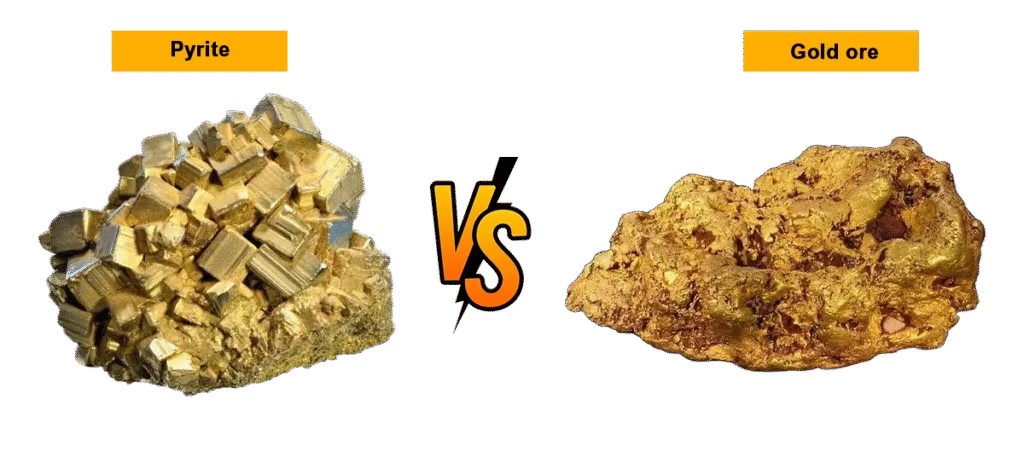
Fool’s gold VS real gold
Here is a side-by-side comparison:
Feature
Gold (Au)
Pyrite (FeS₂ – Iron Sulfide)
Chemical Formula
Au (An element)
FeS₂ (A compound of iron and sulfur)
Color
A rich, deep, metallic golden-yellow. The color is consistent.
A pale, brassy, or silvery-yellow. Can look “dirty” or have a grayish tint.
Hardness (Mohs Scale)
Soft (2.5 – 3). It can be scratched by a copper penny or a steel knife.
Hard (6 – 6.5). It cannot be scratched by a steel knife and can even scratch glass.
Streak (Color of its powder)
Golden-yellow streak. The powder is the same color as the mineral.
Greenish-black to brownish-black streak. This is a key identifier.
Malleability
Very Malleable & Ductile. It will bend, dent, or flatten when struck with a hammer.
Brittle. It will shatter or crumble into powder when struck with a hammer.
Density / Specific Gravity
Extremely Dense (19.3 g/cm³). It feels very heavy for its size.
Dense, but much lighter than gold (5.0 g/cm³). It is only about a quarter as dense as gold.
Crystal Shape
Usually found as irregular shapes: nuggets, flakes, grains, or wires. Edges are often rounded.
Often forms distinct, sharp-edged crystals, most commonly cubes or other polyhedral shapes (pyritohedrons).
Smell
Odorless.
Can produce a sulfurous (rotten egg) smell when struck by steel or heated.
Tarnish
Does not tarnish or rust. It remains bright.
Can tarnish to a dull brown or iridescent color over time when exposed to air and moisture.
How to Distinguish Gold from Pyrite: Simple Field Tests
You can use several simple, non-destructive (or minimally destructive) tests to tell the difference.
1. The Streak Test (Most Reliable)
This is the best and easiest test for beginners.
Method: Find a piece of unglazed ceramic (the bottom of a coffee mug or a ceramic tile works well). Rub the mineral firmly across the ceramic surface.
Result for Gold: It will leave a golden-yellow streak.
Result for Pyrite: It will leave a greenish-black or brownish-black streak.
2. The Hardness Test
Method: Try to scratch the mineral with a steel object, like a pocketknife blade (which has a hardness of about 5.5).
Result for Gold: The steel blade will easily scratch the gold.
Result for Pyrite: The steel blade will not scratch pyrite; in fact, the pyrite might scratch the steel.
3. The Malleability Test (The “Hammer” Test)
Method: If you have a small, expendable piece, place it on a hard surface (like another rock or a steel plate) and tap it with a hammer or another rock.
Result for Gold: Gold is malleable. It will flatten, dent, or bend without breaking.
Result for Pyrite: Pyrite is brittle. It will shatter, crumble, or break into smaller pieces.
4. The Shape and Form Test
Method: Examine the mineral’s shape closely, preferably with a magnifying glass.
Result for Gold: Natural gold is typically found as irregularly shaped flakes or nuggets with soft, rounded edges.
Result for Pyrite: Pyrite often grows in very structured, geometric shapes, most notably perfect-looking cubes with sharp edges and flat, shiny faces. If you see sharp, angular crystal forms, it’s very likely pyrite.
In summary: While a quick glance might fool you, the true nature of the mineral is revealed through simple physical tests. The greenish-black streak and superior hardness of pyrite are the most definitive signs that you have found “Fool’s Gold,” not the real thing.
What are pyrite’s effects on gold processing?
In gold ore processing, pyrite is a double-edged sword. It can be a thief that steals your profits, or it can be the treasure chest that holds the gold. Its role depends entirely on its relationship with the gold in your specific ore body. A complete metallurgical analysis is the only way to know for sure, but the two main roles are clear.
As an Enemy (The “Gold Robber”): When gold is free-milling (present as distinct particles), pyrite is a major problem. First, it is a “cyanicide,” meaning it consumes large amounts of sodium cyanide during the leaching process. This drives up chemical costs dramatically. Second, and more insidiously, the carbonaceous components often associated with pyrite can perform “preg-robbing.” This means they adsorb the dissolved gold from the pregnant leach solution, effectively stealing it back before it can be recovered. In this context, the goal of a gold processing plant is to remove the pyrite before it can cause this damage.
As a Friend (The “Gold Carrier”): In many deposits, especially refractory gold ores, gold particles are not free. Instead, they are sub-microscopic and physically locked inside the pyrite’s crystal structure. You cannot see this gold. You cannot pan it. It is invisible. In this case, the pyrite is not the fool’s gold; it is the carrier of the real gold. The entire pyrite beneficiation strategy shifts. You are no longer trying to get rid of the pyrite. Instead, you must first recover the gold-bearing pyrite as a concentrate, and then apply further, more intensive processing to break it down and liberate the gold locked inside.
How to separate gold and pyrite with flotation?
The flotation process is the most common and effective method for pyrite separation. The specific strategy depends on whether you view pyrite as a friend or a foe. This decision determines the entire flowsheet and the selection of flotation reagents.
Scenario 1: Pyrite is the Friend (Bulk Flotation). This is the strategy for refractory ores where gold is locked in the pyrite. The goal is to recover a combined concentrate of all sulfide minerals, including pyrite and any free gold. The process involves grinding the ore to a specific fineness, then adding a “collector” reagent (like a xanthate) that makes all sulfide minerals hydrophobic (water-repellent). In the Flotation Machine, air is bubbled through the slurry. The sulfide particles attach to the air bubbles and float to the surface, forming a froth that is collected as a concentrate. This gold-rich pyrite concentrate is then sent for further treatment, such as ultra-fine grinding followed by intensive cyanidation or roasting.
Scenario 2: Pyrite is the Foe (Differential Flotation). This is used when you have free gold and want to get rid of the pyrite. The process is more complex. First, you might use a specific collector that has a higher affinity for native gold. At the same time, you add a “depressant” reagent, such as lime, to raise the slurry’s pH. At a high pH (typically >11), the surface of the pyrite becomes hydrophilic (water-attracting) and it will not attach to air bubbles. This allows the free gold to float into the concentrate while the pyrite is suppressed and reports to the tailings. This protects the downstream leaching circuit from the harmful effects of pyrite.
What crushing and grinding equipment is needed?
Treating high-sulfur (high-pyrite) ore requires a robust and correctly designed comminution circuit. The goal of crushing and grinding is singular: mineral liberation. You must reduce the rock size to the point where the pyrite and other minerals break free from each other.
Crushing Circuit
The crushing stage is relatively standard and typically involves a multi-stage approach to reduce large run-of-mine ore down to a suitable size for grinding.
Primary Crushing: A Jaw Crusher is the workhorse for this stage. It is a robust machine designed to handle very large, hard rock and reduce it to a manageable size (e.g., <150mm).
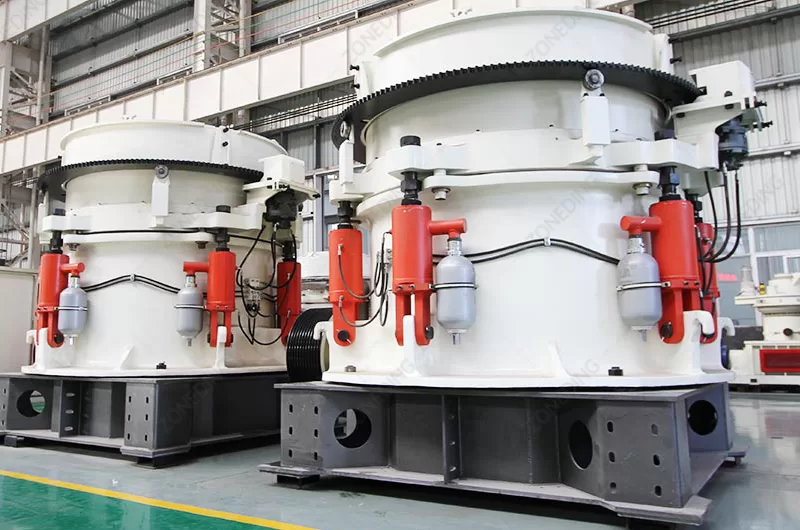
Secondary & Tertiary Crushing: A Cone Crusher is typically used for these stages. It efficiently reduces the material down to the final size required to feed the grinding circuit (e.g., <15mm).
Grinding Circuit
This is where the real work of liberation happens, and it is critical for high-pyrite ores.
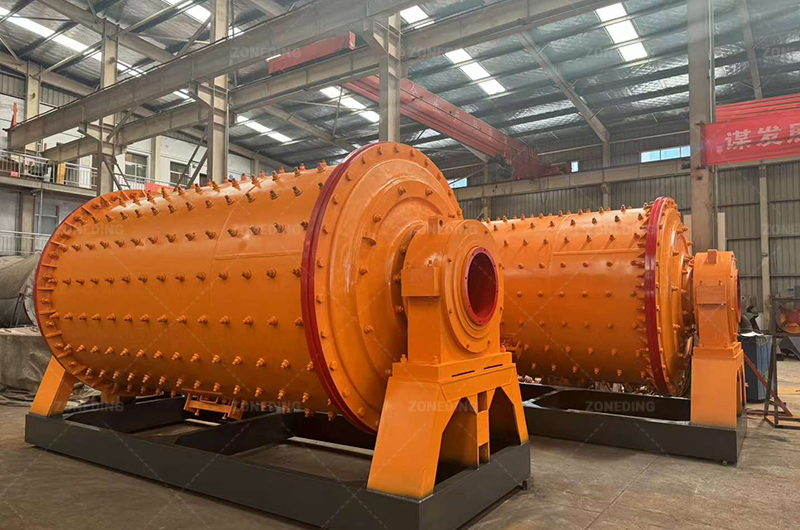
Primary Grinding: A Ball Mill is the most common choice. It is filled with steel balls and tumbles the ore in a water slurry, grinding it down to a powder. The target grind size is determined by detailed metallurgical testing. For many ores, this might be around 80% passing 75 microns (200 mesh).
Regrinding: For refractory gold ores where gold is locked in the pyrite, a simple primary grind is not enough. After producing a bulk concentrate via flotation, this concentrate is sent to a smaller, secondary ball mill for “regrinding.” This second grinding stage is much finer, aiming to liberate the microscopic gold from within the pyrite particles before the final, intensive leaching step. This regrind circuit is a key part of unlocking the value from refractory ores.
How to suppress pyrite in base metal flotation?
In the processing of polymetallic ores, such as copper-lead-zinc deposits, pyrite is almost always considered an enemy. Its presence dilutes the final concentrate quality of the valuable metals and can lead to penalties from smelters. Therefore, the primary goal is to efficiently suppress the pyrite so it does not float with the valuable minerals.
The most effective method for pyrite suppression is controlling the pulp chemistry, specifically the pH. By adding a depressant like lime (calcium hydroxide) in a Mixer or conditioning tank, the pH of the mineral slurry is raised to a range of 10.5 to 12. In this alkaline environment, a coating of iron hydroxides forms on the surface of the pyrite. This coating makes the pyrite hydrophilic (water-loving), preventing it from attaching to the air bubbles in the flotation cell. While the pyrite is “deadened,” specific collectors are used to selectively float the copper (e.g., chalcopyrite), lead (e.g., galena), or zinc (e.g., sphalerite) minerals one after another. This technique, known as sequential flotation, is the foundation of processing complex polymetallic sulfide ores and relies heavily on effective pyrite depression.
How to recover pyrite as a chemical raw material?
While often a problem in metal mining, pyrite (iron disulfide, FeS₂) can also be a valuable industrial mineral. Its high sulfur content (up to 53.4%) makes it a primary feedstock for the production of sulfuric acid, one of the most widely used industrial chemicals in the world.
The recovery process for industrial-grade pyrite is a straightforward flotation process. The objective is to produce a concentrate with the highest possible sulfur grade and minimal impurities. The ore is ground to liberation size, and then a simple bulk flotation circuit is used. A collector, like a xanthate, and a frother are added to float the pyrite. Since pyrite is often the only sulfide of value in this scenario, the process is less complex than polymetallic separation. The resulting pyrite concentrate is then dewatered. This is typically done in two stages: first, the slurry is thickened in a High Efficiency Concentrator to recover most of the process water. Then, the thickened underflow is sent to a filter press to produce a dry filter cake. This final, dry pyrite concentrate is then ready to be transported and sold to chemical plants.
How to manage pyrite tailings environmentally?
The biggest challenge with pyrite is not just in processing, but in tailings management. When pyrite is exposed to both air and water, it oxidizes to form sulfuric acid. This process is known as Acid Mine Drainage (AMD) or Acid Rock Drainage (ARD). AMD is a severe environmental problem, as it leaches heavy metals from the surrounding rock and can contaminate groundwater and surface water for centuries.
Responsible management of pyrite-rich tailings is non-negotiable in modern mining. The core principle is to prevent one of the key ingredients—air or water—from reacting with the pyrite.
Subaqueous Disposal: This involves depositing the tailings at the bottom of a pond or lake, permanently submerging them under water. The water column acts as an oxygen barrier, preventing the oxidation reaction from starting.
Dry Stack Tailings: This is an increasingly popular method. It involves using filter presses to dewater the tailings to a high degree, creating a semi-dry “cake.” This cake is then compacted in layers. This method minimizes the amount of water in the tailings pile and significantly reduces air infiltration, thereby inhibiting acid formation.
Co-disposal with Neutralizing Agents: In this approach, the tailings are mixed with an alkaline material, such as crushed limestone, before being deposited. The limestone acts as a long-term buffer, neutralizing any acid that forms within the tailings impoundment. This is a proactive chemical approach to long-term AMD prevention.
Conclusion and Recommendation
Pyrite’s role in your ore is the single most important question to answer. It can be a valueless nuisance, a costly processing challenge, or the very container of your wealth. Simple field tests can give you a quick indication, but a full metallurgical analysis is the only way to build a profitable business plan. The correct mineral processing flowsheet—whether it involves recovering, rejecting, or suppressing pyrite—is what separates a successful mine from a failed venture.
The right equipment, configured for your specific ore, is the key to executing that plan. From robust crushers and precision grinding mills to specialized flotation cells, each piece of the puzzle must be selected to achieve your goal.
About ZONEDING
At ZONEDING, we are a direct manufacturer of a complete range of beneficiation equipment. We understand the complex challenges presented by minerals like pyrite. We don’t just sell machines; we partner with our clients to engineer complete, customized solutions. Our team of experienced metallurgists and engineers will analyze your ore test data to design a plant that effectively manages pyrite, maximizes your recovery rate, and delivers long-term profitability.
Contact us with your project details. We will provide a professional technical proposal and a competitive quote for a system designed to turn your pyrite problem into an opportunity.
Starting a small-scale gold processing plant is one of the most practical ways to enter the gold mining industry. Compared with large mining projects, a small plant requires less investment, shorter construction time, and lower operating costs. Ho...
Choosing a high-performance portable crusher plant for metal ore is the fastest way to increase your mining profits in 2026. Many mine owners waste 30% of their budget on truck fuel and road construction. I believe a mobile station solves this by ...
Building a quarry plant is much more than selecting crushers and screens. The most successful quarry operations are designed around market demand, rock characteristics, logistics efficiency, and long-term operating costs. While many investors focu...
Mobile crushing technology offers the most direct path to reducing operational costs and increasing profit margins in the mining industry. This article explains how a mobile unit eliminates the need for expensive civil works and reduces truck haul...
We use cookies to ensure that we give you the best experience on our website. If you continue to use this site we will assume that you are happy with it.
Privacy Policy
Send us a message
We would love to hear from you
Submit your question and our team will respond to the email provided as soon as possible.
 Zoneding Machine