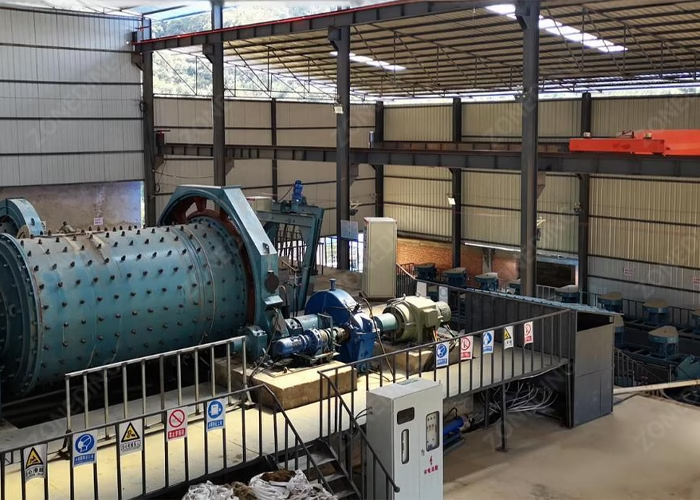
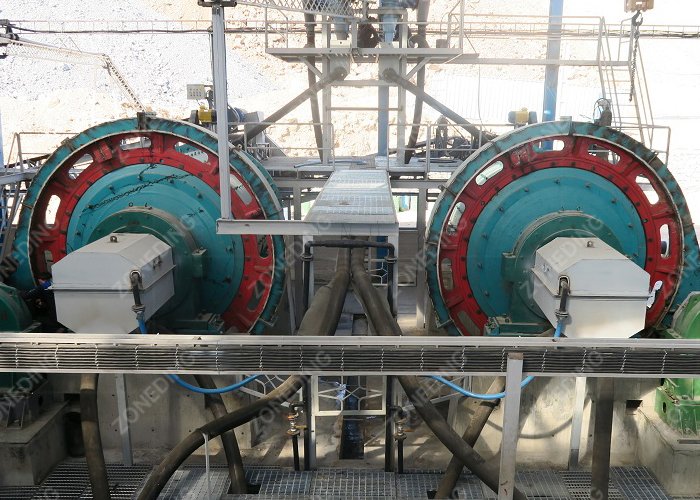
The ball mill is a core piece of industrial grinding equipment. It tirelessly reduces raw materials to fine powders. This guide explores the ball mill working principle. It also covers various ball mill types. I will provide insights into efficient ball mill selection. My goal is to help you meet all your mineral grinding and powdering needs.
What is a Ball Mill? Its Core Role in Industrial Grinding?
A Ball Mill is fundamental industrial grinding equipment. It primarily grinds materials, reducing particle size. Within mineral processing, its main function is fine comminution. It processes crushed material, typically 6-25 mm, reducing it to fine powder (75 microns or finer). This prepares material for subsequent processes like flotation, leaching, or magnetic separation.
Ball mill grinding particle size
The ball mill is crucial for mineral liberation. It frees valuable minerals from their host rock. Without effective grinding, valuable material remains locked. This makes downstream separation inefficient or impossible. The ball mill ensures minerals are exposed. This allows chemical reagents or physical methods to act effectively. This is essential for high recovery rates.
Positioned after crushing, the ball mill provides fine particle sizes. These are necessary for mineral liberation. Its output directly impacts the efficiency of downstream processes. For example, flotation and leaching require specific fineness and surface area. This ensures optimal reagent interaction and metal dissolution. The ball mill is a critical enabler. It dictates the overall efficiency and profitability of mineral processing operations. Consistent output is vital for fineness control and high grinding efficiency.
How Does a Ball Mill Work? Particle Size Reduction Explained?
A ball mill reduces particle size through a combination of impact and attrition. These are the main forces at play. The process begins with a large, hollow cylindrical shell. This shell is typically made from steel plates. It rotates horizontally. This rotation is powered by a robust drive system. The shell interior is lined with wear-resistant plates. These liners protect the shell. They also guide the movement of the grinding media.
Ball mill working principle
Inside the rotating shell, the mill contains grinding media. These are usually steel balls. The mill is partially filled with these balls. They can vary in size, from 25mm to 100mm. The selection of ball size depends on the feed particle size. It also depends on the desired product fineness. These balls are where the actual grinding takes place.
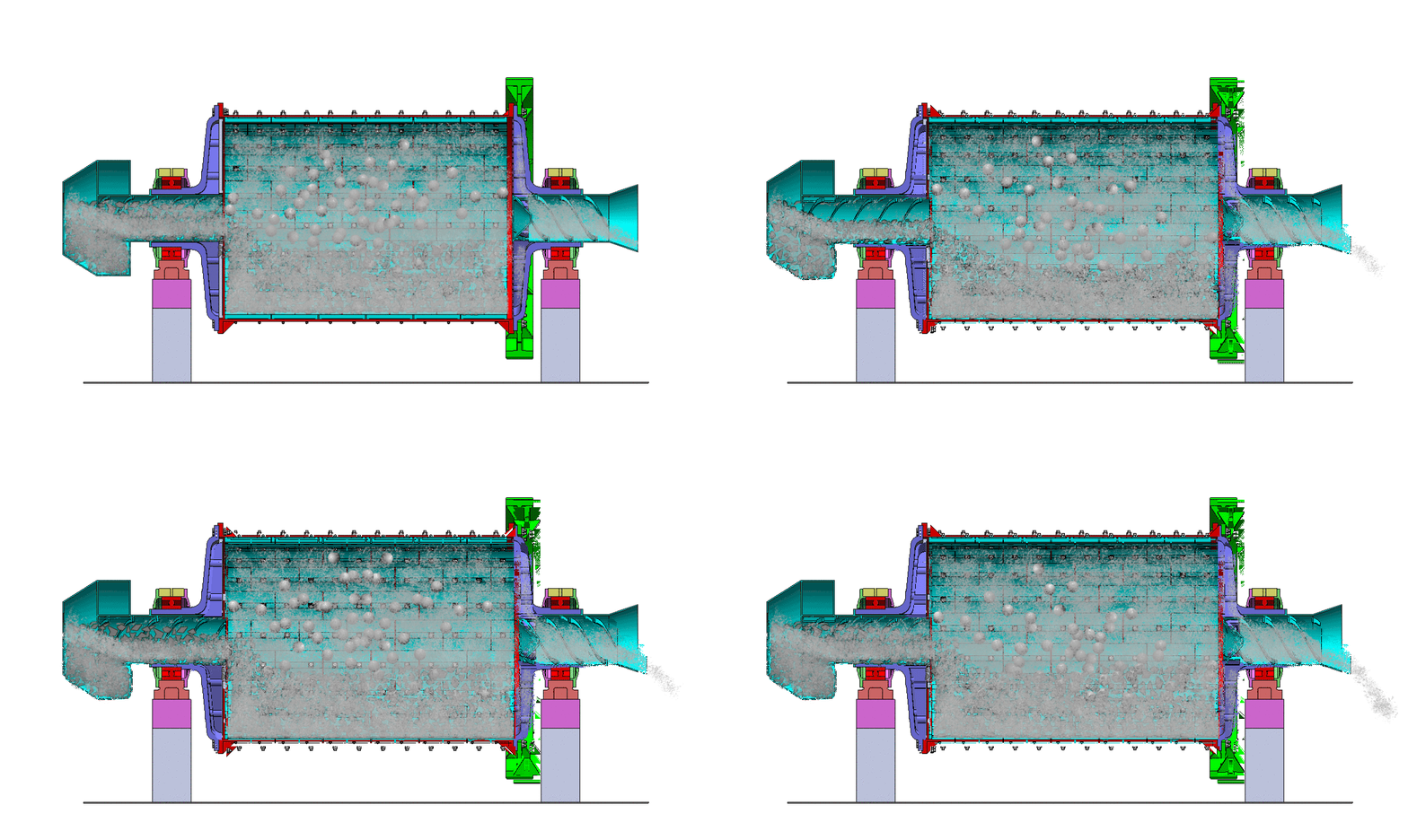
As the mill shell rotates, centrifugal force lifts the grinding media and ore. At lower speeds, balls cascade, rolling over each other to cause attrition and abrasion, ideal for polishing friable materials. As speed increases, a cataracting action occurs; balls are carried higher before free-falling to impact and break larger, tougher particles. Rotational speed is critical: too slow, impact is insufficient; too fast, no grinding occurs. The optimal speed balances both cascading and cataracting actions for maximum grinding efficiency and desired product fineness.
The ore, mixed with water as a slurry, continuously feeds into one end. The rotating mill subjects ore particles to impact, attrition, and compression. The finely ground slurry then exits the mill. This happens through the discharge end. This can be an overflow discharge or a grate discharge. Grate discharge mills typically offer higher capacities. They are preferred for coarser feeds. They also work well in closed-circuit operations.
What Are the Key Components of a Ball Mill? Their Functions?
Understanding a ball mill‘s key components is important. It helps ensure efficient operation. Each part plays a vital role.
Structure of a ball mill
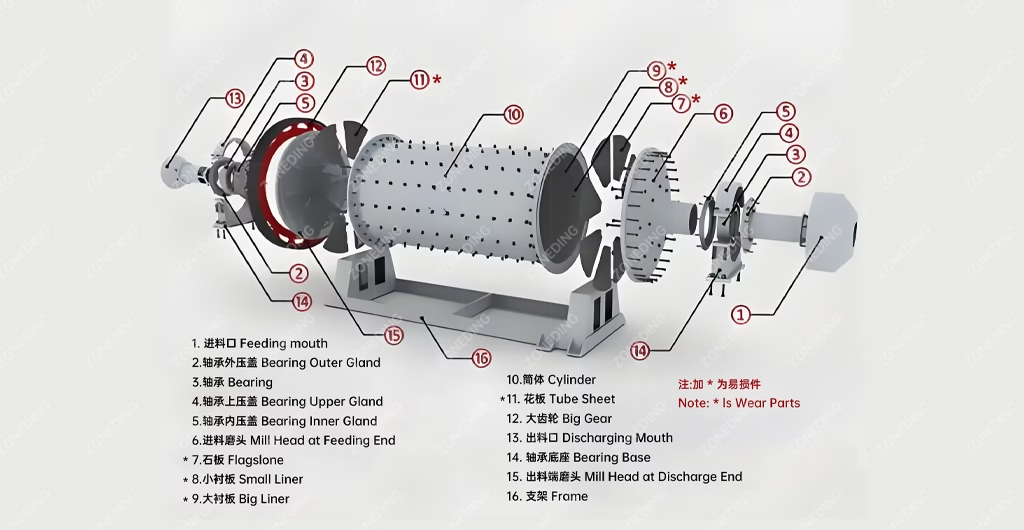
Shell: This is the primary cylindrical body. It contains the grinding media and the material. It withstands the forces of rotation and impact.
Liners (Mill Liners): These plates line the inside of the shell. They protect the shell from wear. They also influence how the grinding media moves. Some liners have lifter bars. These lift the balls higher. Other liners are smoother. This encourages more attrition.
Grinding Media: These are the balls inside the mill. They are typically steel. They are responsible for the actual mineral grinding. Their size and material impact grinding efficiency.
Trunnions: These are large, hollow shafts. They are at each end of the mill. They support the mill’s weight. Feed enters through one trunnion. The ground product exits through the other.
Main Bearings: These heavy-duty bearings support the entire rotating assembly. This includes the shell, grinding media, and ore slurry. They ensure smooth rotation.
Drive System: This powerful system rotates the mill. It includes an electric motor. It also has a speed reducer (gearbox). Often, a pinion and girth gear turn the mill. Very large mills may use gearless drives.
Feed Chute/System: This component introduces raw material and water into the mill. It must ensure a steady and consistent feed rate.
Discharge End: This is where the finely ground product exits. Its design, either overflow or grate, affects product size and mill capacity.
Each component is critical. They work together to make the ball mill function effectively. Proper maintenance of these parts extends the equipment maintenance life. It also ensures consistent grinding efficiency.
What Ball Mill Types Exist? Which Suit Your Materials Best?
Different ball mill types exist. They suit various materials and processing conditions. Understanding these types helps in smart ball mill selection.
The most common distinction is between wet and dry grinding.
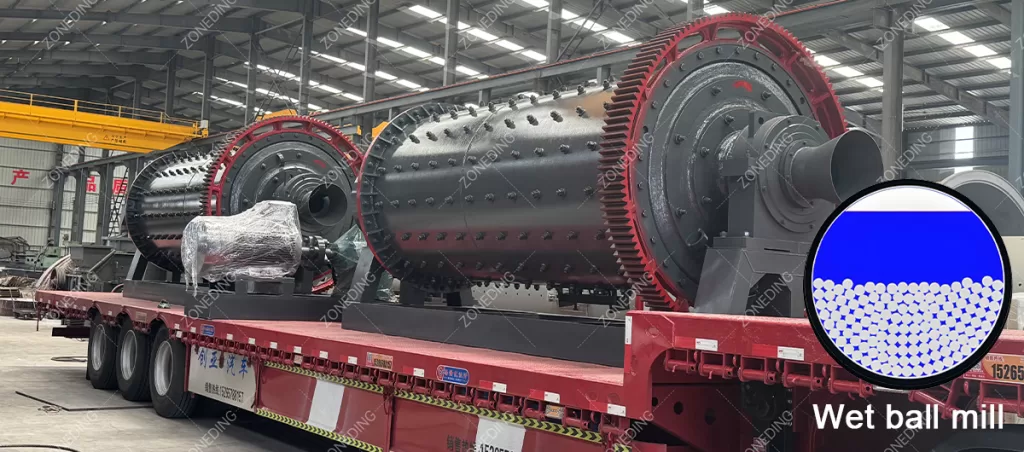
Wet ball mill
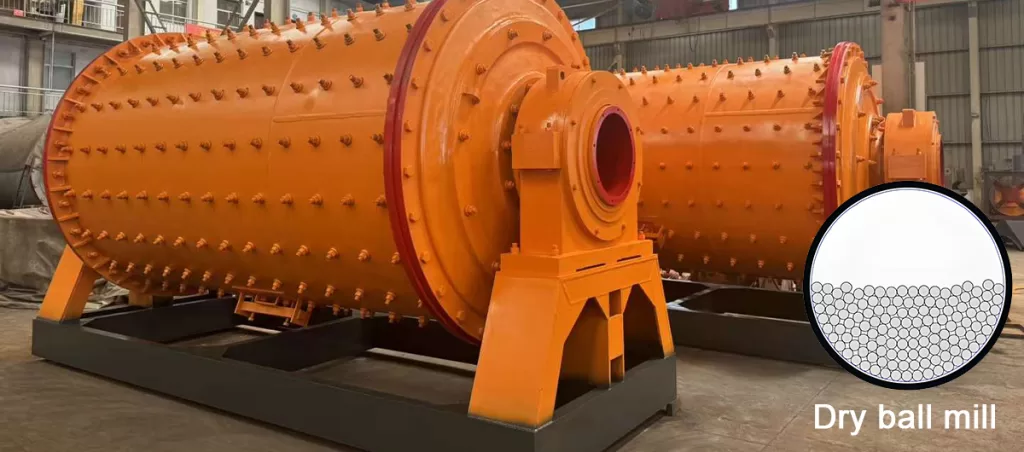
Dry ball mill
Wet Ball Mill: This type uses water. It mixes with the material to form a slurry. This enhances grinding efficiency. It also aids material transport. Wet grinding is very common in mineral grinding. It reduces dust. It also allows for easier slurry pumping to subsequent processes. Most large-scale Beneficiation Equipment circuits use wet grinding.
Dry Ball Mill: This type operates without water. It is used when water could harm the product. Examples include cement production or certain industrial minerals. Dry grinding is generally less efficient. It consumes more energy. It also generates significant dust. This requires robust dust collection systems.
Another important distinction relates to the discharge mechanism:
Overflow Ball Mill: This mill discharges product when the slurry level rises above the mill’s outlet. Its simpler construction and usually lower capital costs make it ideal for finer grinding. However, it can lead to over-grinding if not part of a closed circuit.
Grate Ball Mill: This mill uses grates at the discharge end. These grates retain larger grinding media and coarser particles. Only finely ground material passes through. This type offers higher capacity.Providing better control over product size, this system is preferred for coarser feeds and works well in closed-circuit operations, though it features a more complex discharge system.This leads to higher maintenance for the grates.
Specific materials may also dictate the type. For example, Ceramic Ball Mills use ceramic linings and media. These are ideal for grinding materials where iron contamination must be avoided. This is common in some chemical or pigment industries. Choosing the right ball mill type depends on your material properties. It also depends on your desired product characteristics.
Ball Mill Grinding: Core Advantages and Limitations?
Using a ball mill for grinding offers distinct advantages. However, it also comes with potential limitations. It is important to know both. This helps in making informed decisions.
Core Advantages:
High Reduction Ratio: Ball Mills can take relatively coarse feed. They reduce it to very fine powders. This is a wide range of particle size reduction.
Versatility: They can grind a vast array of materials. These include various ores, chemicals, ceramics, and cement clinker. This makes them adaptable across many industries.
Fine Product Fineness: They can achieve very fine product sizes. This is often necessary for downstream mineral processing. It prepares materials for flotation or leaching.
Continuous Operation: Many ball mill types allow for continuous feeding and discharge. This makes them suitable for large-scale industrial grinding equipment operations.
Simple Design (relative to other mills): The basic design of a ball mill is straightforward. This contributes to its reliability.
Potential Limitations:
High Energy Consumption: Ball Mills are known energy hogs. They require significant electrical power to operate. This leads to higher operating costs.
High Wear Rates: The internal liners and grinding media experience constant wear. They require regular replacement. This adds to maintenance expenses.
Noise: Ball mills generate considerable noise during operation. This requires noise reduction measures for worker safety.
Specific Feed Requirements: Optimal performance needs consistent feed rates and particle sizes. Fluctuations can reduce grinding efficiency.
Potential for Over-Grinding: If not properly controlled, especially in open circuits, ball mills can over-grind material. This wastes energy. It can also produce unwanted fines.
Understanding these points is crucial. It helps you decide if a ball mill is the right choice. It also helps you optimize its use. The benefits often outweigh the drawbacks for many applications. This is especially true when precision fine grinding is needed.
Ball Mill Applications: Mining, Building Materials, Chemical Industries?
The ball mill is a versatile piece of industrial grinding equipment. It finds extensive use across many sectors. Its ability to achieve fine particle sizes makes it indispensable.
Ball mills are used for grinding gold ore
Copper ore beneficiation
Iron ore beneficiation optimization
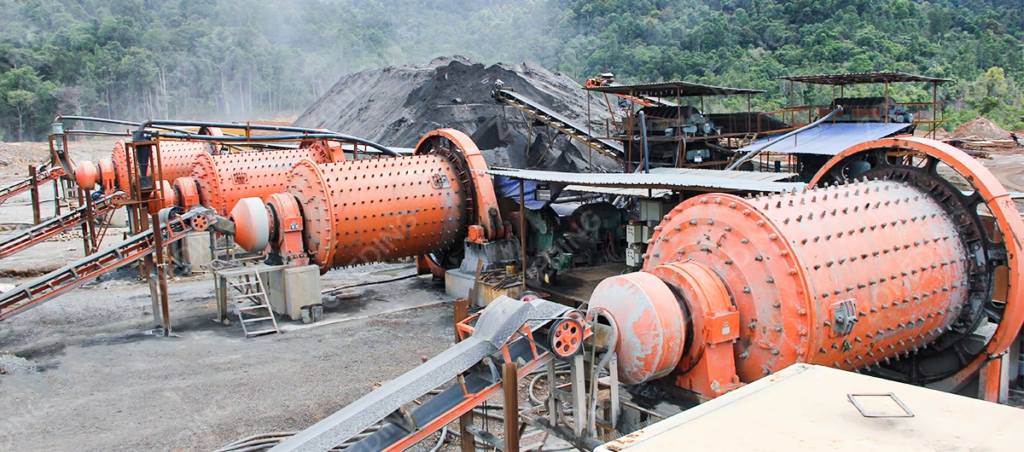
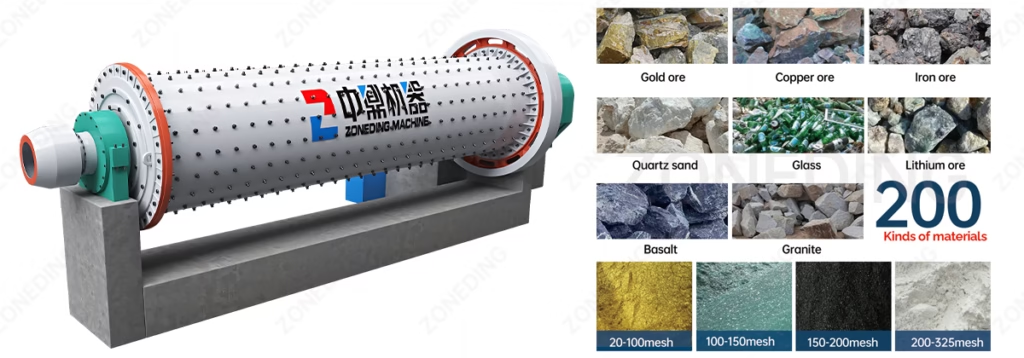
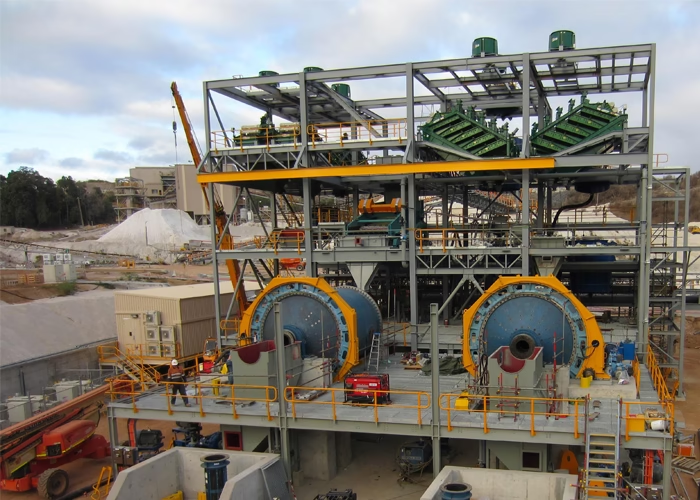
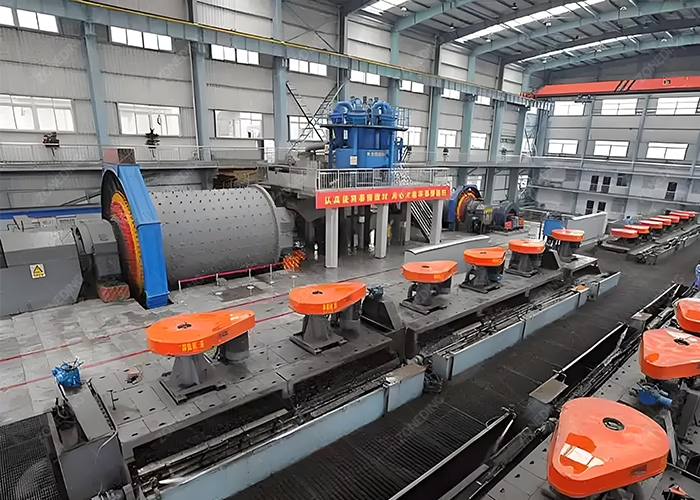
In the mining industry, ball mills are critical for mineral grinding. They are commonly used in various ore processing plants. For example, in Gold Processing Plants, they grind gold ore. This prepares it for subsequent gold recovery processes like flotation or cyanidation. Similarly, Iron Ore Beneficiation and Copper Processing Plants rely on ball mills. They achieve the necessary fineness for efficient mineral separation. They ensure that valuable minerals are liberated from the gangue.
The building materials sector also heavily utilizes ball mills. They are central to cement production. Here, they grind cement clinker into fine cement powder. This process determines the final strength and setting properties of the cement. They also grind lime, gypsum, and other raw materials. This prepares them for various construction applications.
In chemical industries, ball mills process a wide range of materials. They grind pigments to achieve desired color intensity and dispersion. They prepare ceramic raw materials, like clays and feldspar. This ensures uniform particle size for high-quality ceramic products. Furthermore, ball mills are used in power plants for coal pulverization. This increases the surface area of coal. This allows for more efficient combustion. They are also used in manufacturing refractory materials. Their consistent grinding efficiency makes them a preferred choice across these diverse applications.
Common Ball Mill Problems? Diagnosis and Solutions?
Operating a ball mill can present several technical challenges. Knowing how to diagnose and solve these problems is key. It ensures continuous grinding efficiency and minimal downtime.
One common issue is low grinding efficiency. This can happen for several reasons. The rotational speed might be incorrect. The grinding media charge could be too low or too high. The feed rate might be too high. Or the pulp density could be off.
Solution: Check and adjust the rotational speed. Optimize the grinding media load. Ensure a consistent feed rate. Adjust water addition to achieve the optimal pulp density.
Excessive energy consumption is another frequent problem. This often ties into inefficient grinding.
Solution: Optimize operating parameters. Ensure the mill is not overfilled. Check for worn liners. These can reduce lifting action. This causes balls to roll instead of impact. Consider implementing a closed-circuit grinding system. This prevents over-grinding.
Ball coating or slime coating occurs when fine particles adhere to the grinding media. This cushions impacts. It prevents effective breakage. It reduces grinding efficiency significantly.
Solution: Adjust pulp density. Make the slurry less viscous. Use dispersants if the ore has high clay content. Improve upstream desliming.
Liner wear is inevitable. However, excessive or uneven wear is a problem. It reduces the liners’ ability to lift the balls. This lowers grinding efficiency.
Solution: Regularly inspect liners. Replace them proactively before the shell is exposed. Select appropriate liner materials for your ore’s abrasiveness.
Noise and vibration can indicate mechanical issues. These include worn bearings or misalignment.
Solution: Conduct regular equipment maintenance checks. Lubricate bearings. Inspect the drive system. Address any imbalances.
Finally, issues with product fineness often arise. The product might be too coarse or too fine.
Solution: Adjust mill parameters. Use a classifier like a Spiral Classifier or Hydrocyclone in a closed circuit. This ensures precise fineness control. Regular monitoring and quick adjustments keep your ball mill running smoothly.
Optimizing Ball Mill Parameters for Efficiency and Energy Saving?
Optimizing ball mill operating parameters is crucial. It enhances grinding efficiency. It also reduces energy consumption. This directly impacts your operating costs.
Rotational Speed: Find the sweet spot between cascading and cataracting. This is typically 65-80% of the critical speed. A 1% change can significantly affect performance. Adjusting it correctly ensures maximum impact and attrition.
Grinding Media Load and Size Distribution: Fill the mill properly. This is usually 30-45% of its internal volume. Use a mix of ball sizes. Larger balls handle coarser feed. Smaller balls provide finer grinding. Regularly replenish balls to maintain optimal distribution. This boosts grinding efficiency.
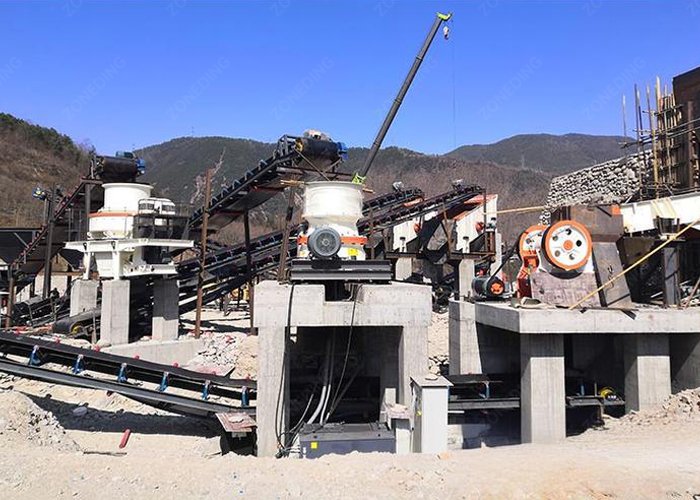
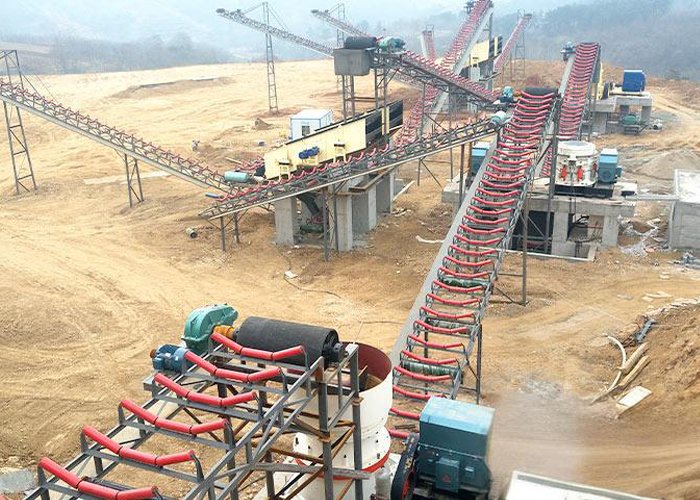
Feed Rate and Particle Size: Maintain a consistent feed rate. Fluctuations reduce efficiency. The maximum particle size of the feed dictates the largest ball size needed. Proper Crushing Equipment upstream helps prepare the feed.
Pulp Density (Solids % in Slurry): This is vital for wet grinding. Too thin, and energy is wasted. Too thick, and slurry becomes viscous. It cushions impacts. The optimal density allows balls to move freely. It also ensures good slurry flow. This maximizes particle-to-particle breakage.
Liner Design: Choose liners that match your grinding needs. Lifter bars promote impact for coarser grinding. Smooth liners encourage attrition for finer grinding. Monitoring liner wear and replacing them proactively is essential. Worn liners decrease grinding efficiency.
Closed-Circuit Grinding: Almost all modern plants use this. The mill discharges material. A classifier, like a Spiral Classifier or Hydrocyclone, separates fine material. Coarser material returns to the mill. This prevents over-grinding. It improves efficiency. It maintains tight fineness control. This system is your best friend for energy consumption optimization.
These adjustments ensure your ball mill operates at its peak. This leads to higher throughput. It also results in lower operating costs.
Ball Mill Maintenance: Extending Equipment Service Life?
Proper ball mill maintenance is crucial. It ensures continuous operation. It also significantly extends the equipment service life. Ignoring maintenance leads to costly downtime.
Regular Inspection of Liners: Liners wear out over time. Inspect them frequently. Look for excessive wear or damage. Replace them proactively before the shell is exposed. Choosing the right material for ball mill liners based on ore abrasiveness is also important.
Grinding Media Management: Monitor the grinding media level. Replenish it regularly. Ensure the ball size distribution remains optimal. Worn-out balls reduce grinding efficiency. They also increase wear on liners.
Bearing Lubrication and Inspection: The main bearings support immense weight. They require proper lubrication. Check them for wear or overheating. Regular lubrication prevents premature failure. This is critical for smooth operation.
Drive System Checks: Inspect the motor, gearbox, and gears regularly. Look for signs of wear, misalignment, or unusual noise. Ensure all components are securely fastened. This prevents unexpected breakdowns.
Monitoring Wear and Tear: Keep detailed records of wear for all components. This helps predict replacement needs. Proactive replacement schedules prevent catastrophic failures. It also reduces overall beneficiation cost.
Routine Checks: Regularly check for leaks, unusual vibrations, or sounds. An experienced operator can often “hear” if a mill is operating efficiently. A good grinding sound indicates active impact and attrition. A quiet mill might be underloaded or have severe ball coating.
Adhering to a strict equipment maintenance schedule is vital. This solution minimizes unplanned downtime, optimizes grinding efficiency, and protects your investment. This ensures your ball mill remains a reliable part of your operations for years.
Ball Mill Selection: Matching Model to Needs and Budget?
Choosing the right ball mill model is a strategic decision. It requires careful consideration. You must match the equipment to your specific material characteristics. You also need to align it with your output requirements and budget. This ensures efficient and profitable operation.
Material Characteristics: Material properties (hardness, abrasiveness, feed/product fineness) are paramount. Metallurgical testing (e.g., Bond Work Index) dictates mill size, power, and wear. Avoid guessing; it leads to bottlenecks.
Output Requirements: Define throughput and product fineness; this dictates mill dimensions and grinding media.
Wet vs. Dry Grinding: Wet or dry grinding choice depends on water’s effect. Wet is efficient for minerals; dry for cement.
Budget Considerations: Assess CAPEX and OPEX. Cheaper mills often mean higher OPEX (energy, wear); costlier mills offer lower OPEX. Prioritize total beneficiation cost.
Space Availability: Assess physical space. Ball mills are large; ensure room for the mill, feed/discharge, and maintenance.
Closed-Circuit Operation: A closed-circuit system with a classifier (e.g., Spiral Classifier) is crucial. It boosts efficiency, tightens fineness control, and is standard for optimal results.
Making an informed ball mill selection decision will ensure your grinding circuit is optimized. This will maximize grinding efficiency. It will also minimize operating costs.
Factor
Description
Your Impact
Material Hardness
Influences grinding media and liner wear.
Choose harder media for tough ores.
Desired Fineness
Determines grinding time and mill size.
Finer product needs more grinding time/energy.
Throughput (t/h)
Impacts mill diameter and length.
Higher throughput needs larger mill capacity.
Wet/Dry Process
Affects slurry density, energy, and dust.
Wet grinding is often more efficient for minerals.
Budget
Balances initial cost with long-term OPEX.
Consider total cost of ownership, not just purchase price.
Frequently Asked Questions
Question 1: What are the primary factors affecting ball mill grinding efficiency?
Several factors affect ball millgrinding efficiency. Key ones include rotational speed, grinding media load and size distribution, feed rate, and the material’s pulp density. Liner design also plays a crucial role. Optimizing these parameters reduces energy consumption. It ensures the mill operates at its peak for effective mineral grinding. Regular monitoring and adjustment are vital for sustained performance.
Question 2: How does closed-circuit grinding improve ball mill performance?
Closed-circuit grinding significantly improves ball mill performance. The mill discharges material. A classifier, like a Spiral Classifier or Hydrocyclone, then separates it. Fine material is the final product. Coarser material returns to the mill for more grinding. This prevents over-grinding of already fine particles. It increases grinding efficiency. It also maintains tight control over product fineness. This system is essential for modern industrial grinding equipment operations.
Question 3: What is the difference between wet and dry ball mills?
The main difference between wet and dry ball mills is the presence of water during grinding. Wet Ball Mills use water to create a slurry. This enhances grinding efficiency. It also aids material transport. Dry Ball Mills are common in mineral grinding, operating without water. Their use is particularly suited when water is detrimental to the product. However, these mills are less efficient, consume more energy, and also produce more dust. Ultimately, each ball mill type suits different applications based on material properties.
Summary and Recommendations
The ball mill is an essential piece of industrial grinding equipment. It is vital for achieving fine particle sizes. Understanding its ball mill working principle and various ball mill types is crucial. This knowledge allows for optimal ball mill selection. Key factors for success include careful material analysis and precise parameter optimization. This boosts grinding efficiency and reduces energy consumption. Regular equipment maintenance ensures extended service life. By focusing on these aspects, you can meet all your mineral grinding requirements effectively. This ultimately leads to more efficient and profitable operations.
About ZONEDING
Since 2004, ZONEDING has manufactured high-performance mineral processing equipment. As a factory-direct supplier, ZONEDING provides a complete range of machinery. This includes individual Ball Mills and entire customized Beneficiation Equipment solutions. A team of 15 professional engineers ensures every machine design focuses on maximum efficiency and extended service life. ZONEDING has successfully delivered solutions to over 120 countries globally.
Contact ZONEDING for professional consultation and a competitive quote.
The real ball mill cost is not the machine quote alone. In most plants, the 5-year total is around 2.5x to 4x of the purchase value after wear, power, downtime, and recovery impact are included. This guide shows how to calculate bal...
Decades of experience in the mining sector reveal a common financial drain. Many crushing facilities struggle with high electricity bills and frequent machine failures. Facility owners often attempt to save money by purchasing cheap replacement pa...
Building a quarry plant is much more than selecting crushers and screens. The most successful quarry operations are designed around market demand, rock characteristics, logistics efficiency, and long-term operating costs. While many investors focu...
Managing scattered construction sites requires highly adaptable equipment. The mobile crushing plant solves the massive challenge of tight schedules and frequent project relocations. Multi-project contractors deploy these machines to eli...
We use cookies to ensure that we give you the best experience on our website. If you continue to use this site we will assume that you are happy with it.
Privacy Policy
Send us a message
We would love to hear from you
Submit your question and our team will respond to the email provided as soon as possible.
 Zoneding Machine