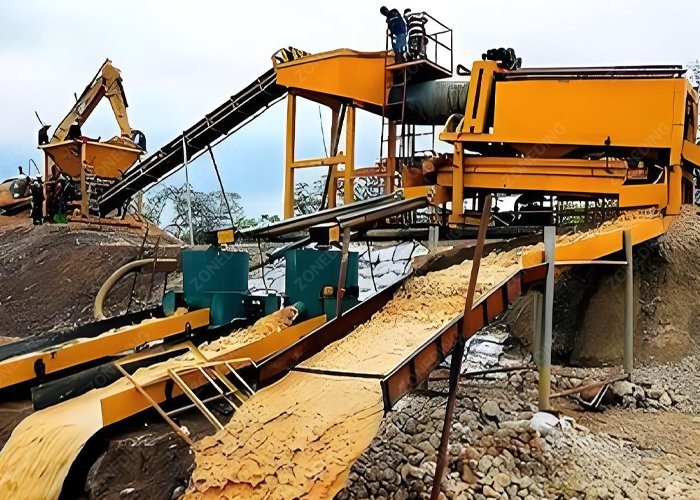
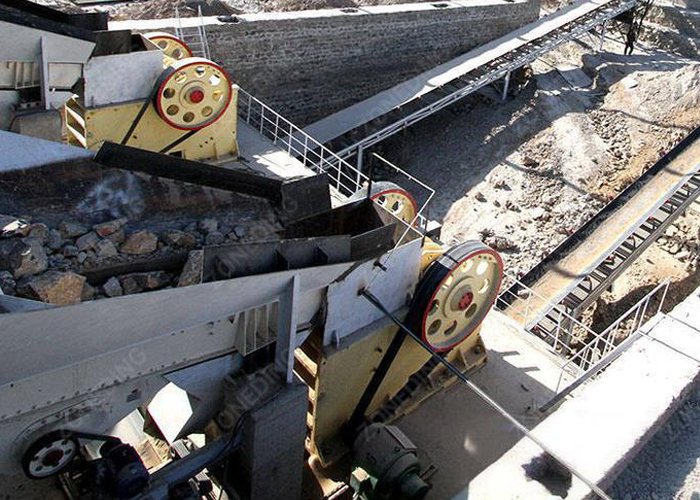
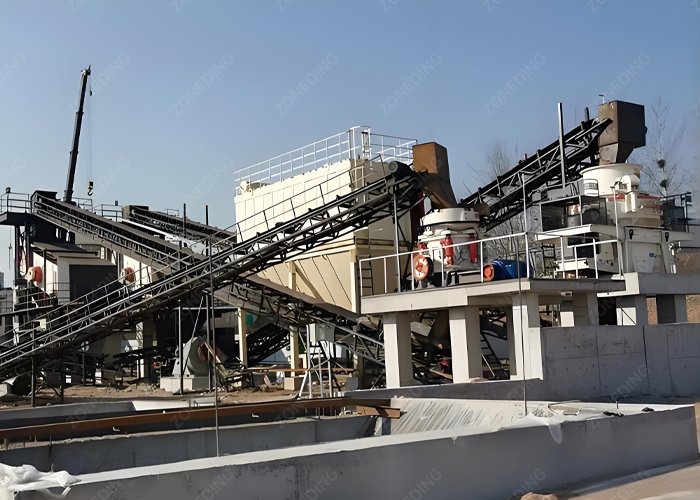
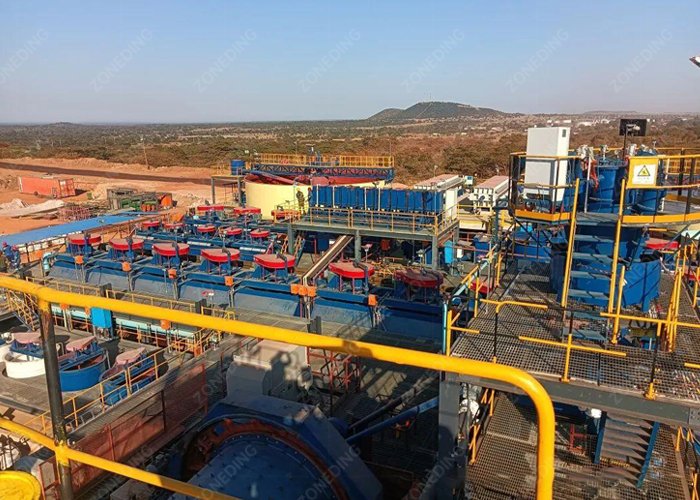
ZONEDING understands the evolving needs of mining and construction. Powerful equipment must adapt. Mobile crushing plant solutions offer flexibility and high efficiency. They meet diverse project demands. This guide explains how mobile crushing equipment can boost operational success. It explores types, applications, and key considerations.
What is a mobile crushing plant? Why is it modern mining and construction’s first choice?
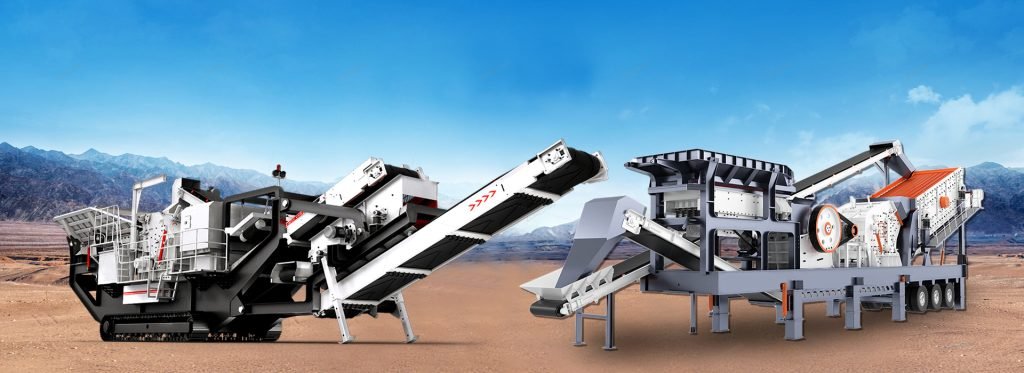
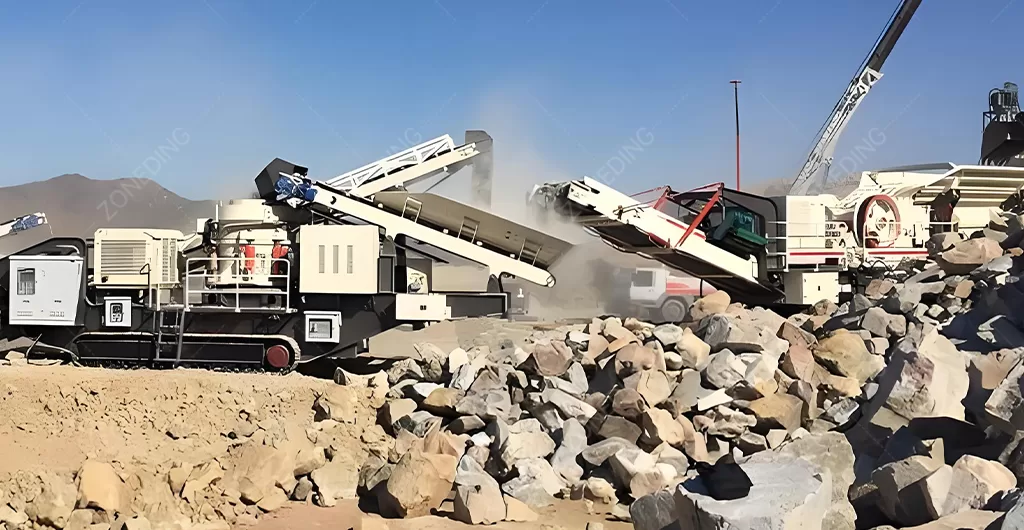
Mobile crushing plants integrate feeding, crushing, screening, and conveying on a movable (wheeled or tracked) chassis, allowing easy site relocation. They reduce materials like rock, ore, and construction waste; ZONEDING offers diverse solutions.
Widely adopted for flexibility, rapid deployment, and reduced transport costs, these plants are a significant budget factor. ZONEDING’s designs maximize in-pit efficiency by cutting material haulage—an underestimated cost saver. Placing equipment closer to the source shortens transport, saving fuel, labor, and vehicle wear, leading to millions in annual operational savings. Despite higher initial investment, reduced haulage yields a superior Total Cost of Ownership.
mobile crushing plant
Mobility Maximizes In-Pit Efficiency
True mobility means more than simply moving machines. It means positioning them for optimal benefit. Placing the crusher close to the blasting face dramatically shortens the path for raw material. This often replaces expensive haul trucks with shorter conveyor runs. Sometimes, direct feeding is even possible. This directly lowers fuel consumption. It also reduces the fleet size. Fewer operators are needed. This causes significantly less wear and tear on haul roads and trucks. Operations have saved millions annually just by cutting truck mileage.
Cost Considerations of Mobility
The upfront capital expense for a mobile crushing unit can be higher. This compares to a similar fixed primary crusher. However, operational expense savings from reduced haulage are substantial. This results in a much better Total Cost of Ownership. This applies especially to large quarries. It also holds true for mining operations with shifting work faces. This builds a strong case for choosing mobile crushing equipment.
Compared to traditional fixed crushing, what are the core advantages of mobile crushing plants?
Traditional fixed crushing plants, while powerful for long-term, high-volume, single-location operations, face limitations: large area needs, extensive civil works, high initial infrastructure, and rising material transport costs as quarry faces move.
Mobile-Crusher-VS-Stationary-Crusher
Mobile crushing plants overcome these by offering unmatched flexibility. They move quickly between sites, reducing downtime and making them ideal for short-term or dynamic projects. Rapid deployment saves significant time, boosting overall productivity. ZONEDING designs its Mobile Crushing and Screening Plant solutions for quick setup and relocation, minimizing operational pauses.
Furthermore, mobile crushing equipment is more environmentally friendly, reducing long-distance trucking, fuel emissions, and noise pollution. ZONEDING’s efficient, eco-conscious designs optimize energy use, reducing the carbon footprint for sustainable operations.
Key Advantages of Mobile Crushing
Quick Deployment: Set up and start operations in days, not months.
Reduced Transport Costs: Crushing material at the source minimizes hauling distance.
Operational Flexibility: Equipment adapts quickly to changing project requirements or site conditions.
Lower Infrastructure Needs: Minimal civil work is required.
Environmental Benefits: Less trucking means fewer emissions and less noise.
Cost-Effectiveness: Despite initial investment, long-term savings on fuel and logistics are substantial.
Redundancy and Flexibility in Product Specification
Mobile crushing offers unmatched flexibility. Unlike fixed plants where a single unit breakdown can halt production, multiple mobile units allow material re-routing, deploying standby units, or renting equipment to maintain output. Mobile setups also facilitate rapid, non-structural reconfiguration of crushing and screening stages to meet evolving aggregate market needs (e.g., more fines). This flexibility is a huge project benefit. Contractors utilize Mobile Stone Crusherfleets to relocate entire production lines, enabling bids on jobs fixed plants cannot economically service. Large quarries optimize resource use by employing separate mobile circuits for simultaneous specialized product production from different faces.
What are the key modules of a mobile crushing plant? How do they work together?
A typical Mobile Crusher is a highly integrated system of key modules that work seamlessly for efficient material processing.
The feeding module, typically a vibrating feeder, ensures continuous, even material flow, removing fines to protect the crusher and boost efficiency.
The crushing module, the plant’s heart, houses the primary crusher (e.g., a Mobile Jaw Crusheror Mobile Impact Crusher), selected based on material and desired output to reduce size.
Some plants then feature a screening module with a vibrating screen, separating material into specified sizes. Oversized particles return for re-crushing, creating a closed-loop system for optimal sizing.
Finally, the conveying system ties everything together with robust, efficient belts (like ZONEDING’s), moving high volumes of material from feeder to crusher, screen, and stockpiles.
The “Right” Mobile Unit: A Symphony, Not a Solo Instrument
Clients often over-focus on the mobile crusher type; the true secret is its integration into the entire production chain. Consider its role (primary, secondary, tertiary) and its feed destination (fixed screen, another mobile unit, or stockpiles). While a mobile jaw crusher is common for primary reduction, correctly pairing it with a Mobile Cone Crusher or impactor is critical. The right Tracked Mobile Screening Plant is also vital for optimal grading, capacity, and energy efficiency; a poorly matched screen can choke even the best mobile crusher. Monitor inter-unit conveying and material flow rates, as bottlenecks frequently arise at transfer points or from undersized screens.
What is the difference between tracked and wheeled mobile crushing plants? Which conditions suit each?
Choosing a mobile crushing plant involves a key decision: tracked or wheeled. Both offer distinct advantages depending on the work environment and project requirements.
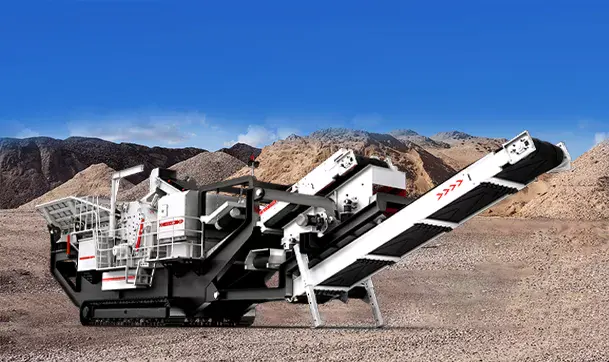
Crawler mobile crusher
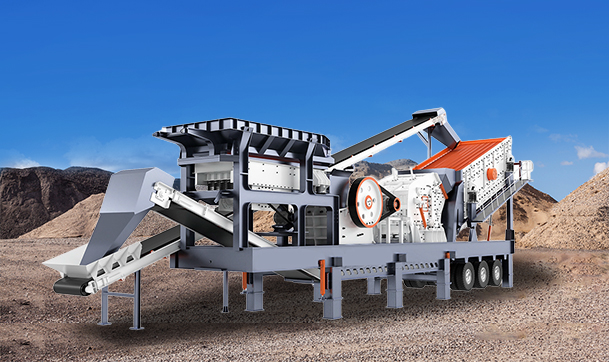
Wheeled Mobile Crusher
A Crawler Mobile Crusher, or tracked mobile crushing plant, operates on continuous tracks, like an excavator. Its robust track system provides excellent mobility over uneven, rough terrain, ideal for challenging sites like mines or remote construction zones. It climbs steep inclines, navigates difficult ground, and reduces site preparation, allowing crushing closer to the rock face and minimizing hauling. However, tracked units move slower on roads and may need specialized long-distance transport.
A Wheeled Mobile Crusher, mounted on a semi-trailer chassis for truck transport, is highly suitable for quick transfers between different job sites and efficient road transport. Common in aggregate production and construction waste recycling, it thrives on stable, relatively flat ground, offering faster setup on paved or prepared sites. Its mobility within a rough site, however, is limited, potentially requiring more site preparation.
Comparison of Tracked vs. Wheeled Mobile Plants
Feature
Tracked Mobile Crusher
Wheeled Mobile Crusher
For a Project
Terrain Adaptability
Excellent for rough, uneven, or steep terrain.
Best for flat, stable, or prepared ground.
Tracked units suit rugged sites, wheeled units suit easy road transport and prepared areas.
On-site Mobility
Self-propelled, moves easily within the work area.
Requires towing by a truck for site movement.
Tracked units offer more flexibility within the site; wheeled units suit between sites.
Transport Speed
Slower on roads, may need specialized transport.
Fast and efficient on public roads.
Overall project logistics and travel frequency must be considered.
Setup Time
Quick setup, less site preparation needed.
Quick setup on prepared ground, but ground must be prepared.
Both are fast, but wheeled units might need more ground work.
Cost
Generally higher initial investment.
Generally lower initial investment.
Balance initial cost with long-term operational flexibility.
ZONEDING offers both crawler mobile crusher and wheeled mobile crusher options. This allows provision of the best fit for specific operational needs.
Mobile jaw, cone, impact crushing plants: How is one chosen to match material properties?
Choosing the right type of mobile crushing plant is critical for project success, primarily determined by the material. Different crushers excel at specific tasks; ZONEDING offers types tailored for various material characteristics.
A Mobile Jaw Crusher is ideal for primary crushing hard, abrasive materials like granite, basalt, and ores. Using compressive force between fixed and movable jaw plates, these robust crushers handle large feed sizes, often forming the first stage of multi-stage processes. A Tracked Jaw Crusher, for instance, excels in hard rock mining and processing large quarry stones.
For secondary or tertiary crushing, a Mobile Cone Crusher is often best, producing fine to medium-sized aggregates using compression and grinding. Excellent for hard to medium-hard materials, they offer a high reduction ratio and consistent product shape, ideal for aggregate production and improving overall quality. A Tracked Cone Crusher provides this performance with added mobility.
An Mobile Impact Crusher uses impact force from fast-rotating hammers/blow bars to produce a cubical product. Best for medium-hard and softer materials like limestone, concrete, and asphalt, they are widely used in recycling due to their excellent product shape and ability to produce finished products in a single pass. A Tracked Impact Crusher is highly effective for construction waste recycling.
Selecting the Right Crusher for Material
Crusher Type
Best for Material Properties
Typical Applications
Benefit
Mobile Jaw Crusher
Hard, abrasive, large feed size (e.g., granite, basalt, ore).
Primary crushing, mining, large quarry operations.
High capacity for initial breakdown, robust for tough materials.
Mobile Cone Crusher
Hard to medium-hard, needs fine to medium aggregate output.
Superior product shape, often one-pass crushing, versatile for softer rocks.
ZONEDING designs its mobile crushing equipment with versatility in mind. It helps select the ideal combination. This ensures optimal performance for specific material and desired final product.
Mobile crushing plants in construction waste, mining, and aggregate production: What are the typical applications?
The versatility of mobile crushing plants makes them indispensable across various heavy industries, significantly impacting three primary areas: construction waste recycling, mining, and aggregate production.
For Construction Waste Processing, mobile plants are game-changers. They process concrete, bricks, and asphalt debris on-site, converting it into recycled aggregate for new construction or road bases. This saves landfill space, reduces raw material demand, and lowers transport costs. A tracked impact crusher is especially effective, turning waste into valuable resources.
In Mining Crushing, mobility offers profound benefits, particularly for vast, moving open-pit mines. Mobile plants move directly to blasting sites, processing ore immediately. This bypasses long haulage routes and fixed plant limitations, significantly reducing trucking, fuel consumption, and operational costs while boosting efficiency. ZONEDING provides specialized tracked jaw crusher and tracked cone crusher units for various ores like iron, copper, and gold.
For Aggregate Production, mobile units offer flexibility to meet shifting market demands for various aggregate sizes. A mobile crushing and screening plant quickly produces different grades of sand and gravel for concrete, asphalt, and road building. Their mobility allows faster opening of new quarry faces, optimizing resource extraction and efficiently meeting demand. Mobile cone crusher units yield high-quality cubical aggregates.
Site-Specific Geotechnical & Bench Planning
Just because a crusher is mobile does not mean placement occurs anywhere. Poor bench design, unstable ground, or insufficient working room are common problems. These lead to inefficient mobile crushing. Access for excavators and loader maneuverability must be planned. Rock stability for direct feeding is also key. Emergency routes must remain clear. Vibration and dust control are significant concerns. This is especially true if operations occur near property lines. This demands careful planning for mobile crushing plants. For in-pit crushing, the mobile crusher’s path and bench development need concurrent design. This requires geological expertise.
How to choose the most cost-effective mobile crushing plant model based on project needs, site conditions, and budget?
Choosing the right mobile crushing plant is a strategic decision, extending beyond just price. It requires considering project needs, site conditions, and overall budget. ZONEDING guides clients through this process for informed choices.
First, define project needs: What material (hardness, abrasiveness)? What output size and capacity are required? This determines the crusher type and size. For example, hard rock often suggests a Tracked Jaw Crusher followed by a Mobile Cone Crusher, while recycling might suit a Tracked Impact Crusher.
Next, evaluate site conditions: Is the terrain rough or stable? How often will the plant move? This dictates whether a crawler mobile crusher or a wheeled mobile crusher is more suitable. A tracked mobile screening plant offers flexibility on challenging ground. Also, consider site constraints like space or noise regulations.
Finally, consider the budget. This includes not just the purchase price but also operating costs (fuel, maintenance, wear parts). Focus on the Total Cost of Ownership (TCO). A higher initial investment in an energy-efficient machine can yield significant long-term savings. ZONEDING aims to provide solutions balancing performance and long-term cost-effectiveness, maximizing ROI.
Fuel Efficiency & Power Management
Mobile crushers use substantial amounts of diesel. Their fuel consumption represents a massive operational cost. Modern machines feature advanced hydraulics and engine systems. However, operator skill plays a role. Proper maintenance of filters and injectors is key. Even ambient temperature impacts fuel use. Beyond the crusher, consider the fuel of associated equipment. Regular engine calibration helps. Correct fuel and lubricants must be used. This prevents breakdowns. It also maintains peak fuel efficiency. Operators have cut fuel bills by 10-15% through diligent practices.
How to maximize the operating efficiency of mobile crushing plants and reduce energy consumption?
Maximizing operating efficiency and reducing energy consumption are top priorities, directly impacting production efficiency and operating costs. ZONEDING addresses this by implementing several strategies for its mobile crushing equipment.
First, proper setup and calibration are essential. Optimizing crusher settings (jaw gaps, cone settings, impact apron adjustments) for the material is crucial, as incorrect settings cause inefficient crushing and increased wear. ZONEDING engineers assist with initial setup and fine-tuning, ensuring peak mobile crushing plant performance.
Second, consistent feeding is key. Overfeeding chokes the crusher, reducing efficiency and increasing power consumption, while underfeeding wastes capacity. Effective use of vibrating feeders maintains a steady material flow, keeping the crusher at optimal load to balance throughput and energy use.
Third, regular maintenance is crucial. Worn parts (e.g., liners, blow bars) reduce efficiency and increase energy use. Following recommended maintenance schedules—with routine checks and timely replacements—ensures components remain in good working order, preventing costly breakdowns and ensuring smooth plant operation.
Fourth, operator training makes a big difference. Well-trained operators optimize machine settings, identify issues early, and operate the machine efficiently, directly impacting fuel consumption and overall productivity.
Embrace Telematics and Data
Modern mobile crushing plants come equipped with telematics systems. These are powerful tools, not just gadgets. Embrace the latest technologies, such as telematics. This allows for monitoring of fuel use, engine hours, GPS location, hydraulic pressures, crusher settings, and real-time screen amplitudes. This helps optimize performance and reduce downtime. This data must be utilized. Analyzing fuel trends shows inefficient practices. Monitoring wear parts predicts when to change liners. This allows proactive scheduling of maintenance. Critical failures are avoided. This data-driven approach moves operations to predictive maintenance. It greatly improves uptime. It also extends the lifespan of assets.
What are the key points for daily maintenance and troubleshooting of mobile crushing plants?
Effective maintenance is vital for the longevity and reliable performance of a mobile crushing plant. Neglecting daily checks can lead to unexpected breakdowns. These cause costly downtime. At ZONEDING, a proactive approach to maintenance is emphasized. This ensures mobile crushing equipment operates smoothly. Daily inspections represent the first line of defense. Before each shift, all major components require checking. Look for signs of wear, damage, or loose fastenings. This includes:
Visual check: Inspect conveyor belts, impact plates, and crusher liners. Look for cracks, excessive wear, or blockages.
Fluid levels: Check engine oil, hydraulic fluid, and coolant levels. Top them up if needed.
Lubrication: Ensure all greasing points are properly lubricated. Manufacturer’s guidelines must be followed.
Bolts and Fasteners: Verify that all bolts and fasteners are tight. Vibrations can loosen them over time.
Safety Systems: Test emergency stop buttons and other safety features. Regular lubrication is critical. Moving parts need proper lubrication to reduce friction and wear. The correct type and amount of lubricant must be used. This is specified in the machine’s manual. A systematic lubrication schedule extends the life of bearings and other components. Monitoring wear parts is also crucial. Crushing is an abrasive process. Liners, jaw plates, blow bars, and screens wear out. These parts must be inspected regularly. They must be replaced before complete failure. This prevents damage to other components. It maintains crushing efficiency. ZONEDING provides high-quality, durable wear parts. For troubleshooting, a systematic approach is adopted. If a problem occurs, the operator’s manual should be consulted first. It often contains diagnostic guides. Common issues include material blockages, power loss, or unusual noises. Blockages must be addressed safely and promptly. Fuel filters and hydraulic pressure must be checked if power drops. Strange noises require immediate investigation. They can indicate developing mechanical problems.
Operator Training and Maintenance Expertise are Essential
Mobile crushing plants are complex machines. They feature integrated engines, hydraulics, and electrical systems. A common mistake involves assuming a fixed-plant operator can immediately optimize a mobile unit. Proper training on fault codes, hydraulic readings, and engine parameters is vital. This also includes specific crusher adjustments. Investment in manufacturer-led training is recommended. Maintenance teams must be empowered with diagnostic tools and parts lists. Preventative maintenance schedules are non-negotiable. A breakdown of a mobile unit in a remote area can stop an entire production line. This costs far more than the repair itself.
2025 Latest Developments and Trends in Mobile Crushing Plants
The mobile crushing equipment industry consistently evolves. New technologies aim for greater efficiency, sustainability, and automation. ZONEDING stays ahead of these trends. It integrates the latest advancements into its designs. This ensures benefits from cutting-edge solutions.
Latest Progress at a Glance
Enhanced Automation: Modern mobile crushing plants feature advanced control systems. These allow for remote operation and monitoring. They automatically adjust settings. This optimizes crushing parameters in real-time. This increases throughput. It also reduces manual intervention.
Hybrid Power Solutions: To reduce reliance on fossil fuels, hybrid and electric drive systems gain traction. These systems combine diesel engines with electric motors or battery power. This lowers fuel consumption. It reduces emissions. It also allows for quieter operation. This proves especially useful in urban areas or sensitive environments.
Smart Telematics and IoT: Integration of Internet of Things (IoT) sensors expands. These provide real-time data on machine performance, wear rates, and fuel consumption. This data enables predictive maintenance. It helps optimize operational schedules. It also improves overall fleet management. ZONEDING systems help make data-driven decisions.
Improved Material Recirculation: Designs for mobile crushing and screening plant solutions now prioritize efficient material recirculation. This ensures that oversized material is re-crushed effectively. It minimizes waste. It maximizes product yield.
Compact and Modular Designs: Future designs will be even more compact. This allows for easier transport and quicker setup. Modular systems offer greater flexibility. Configurations can be customized for specific project requirements. This makes them highly adaptable.
Market Insight
The market for mobile crushing equipment grows. This is driven by demand for infrastructure development. It is also fueled by stricter environmental regulations. These require on-site recycling. Customers increasingly seek machines offering high flexibility. They want lower operating costs. They also want reduced environmental impact. The focus shifts towards integrated, intelligent solutions. These adapt to diverse materials and project scales. Investing in advanced mobile crushing plants is key for future success.
Frequently Asked Questions
Q1: What are the main benefits of using a mobile crushing plant on a construction site? Mobile crushing plants process construction waste on-site, reducing disposal/transport costs and creating reusable aggregates. This saves money and supports sustainability.
Q2: Can ZONEDING’s mobile crushing plants handle very hard materials like granite? Yes, ZONEDING’s mobile crushing equipment, including jaw and cone crushers, is designed to efficiently handle various hard and abrasive materials like granite.
Q3: How often do the wear parts in a mobile crushing plant need replacement? Wear part replacement depends on material abrasiveness and operating hours. Regular inspections and adherence to maintenance schedules are crucial for optimal performance and longevity.
Q4: What kind of fuel consumption can one expect from a typical mobile crushing plant? Fuel consumption varies by model, engine size, and load. Modern ZONEDING plants are designed for high fuel efficiency, with operator technique and proper maintenance also significantly impacting usage.
Summary and Recommendations
Mobile crushing plants are strategic assets, offering vital flexibility, efficiency, and cost savings for modern mining, aggregate, and construction waste recycling.
Careful evaluation of project-specific needs (material, site, budget) is essential to choose a plant balancing power, mobility, and efficiency. Focus on the Total Cost of Ownership (TCO), including operational savings from reduced haulage and fuel, as this provides a better measure than initial price alone. Finally, embrace technologies like telematics to optimize performance and reduce downtime.
About ZONEDING
ZONEDING MACHINE is a leading Chinese mineral processing equipment manufacturer. It specializes in B2B solutions. It has provided reliable equipment since 2004. Its factory covers 8,000 square meters. It produces over 500 units annually. Its product range is comprehensive. It covers crushing, grinding, beneficiation, screening, and drying. ZONEDING offers full-service support. This includes design, manufacturing, installation, training, and after-sales service. Its products export to over 120 countries. ZONEDING commits to delivering high-quality, customized, and efficient solutions. These help achieve operational goals. Contact ZONEDING today to discuss mobile crushing needs.
Many investors consider alluvial operations simple dirt-washing tasks. However, commercial-grade operations face severe technical challenges daily. A successful demands precise engineering to match the physical ore characteristics. This guide reve...
Fifty years of experience across global mining sites reveals that plant managers frequently struggle with high costs and machine failures. Profitability depends on the selection of the correct mining crushing equipment. Understanding hidden wear p...
Designing an is fundamentally different from designing an aggregate plant. Iron ore has a very high specific gravity, often between 4.5 and 5.2, and extreme abrasiveness. If you use standard design formulas for limestone, your structures might col...
High-yield tin ore recovery depends on a design that respects the brittle nature of cassiterite. Traditional plants often lose over 40% of metal because they grind the ore into useless dust. A scientific tin processing flow design i...
We use cookies to ensure that we give you the best experience on our website. If you continue to use this site we will assume that you are happy with it.
Privacy Policy
Send us a message
We would love to hear from you
Submit your question and our team will respond to the email provided as soon as possible.
 Zoneding Machine