Coal processing transforms raw coal into a marketable product. This journey starts at coal mining and ends with market delivery. Strategic equipment selection is vital throughout this process. It drives efficient and profitable operations. It also ensures consistent coal quality improvement. The entire system must be finely tuned. This article details the full spectrum of coal processing. It focuses on how to intelligently configure equipment. This maximizes both yield and product value.
Coal Processing Flow: Central to Project Success and Value?
A deep understanding of the coal processing flow is central to project success. It is also crucial for value enhancement. Raw run-of-mine (ROM) coal is a complex mixture. It contains carbon, ash, sulfur, and moisture. The primary objective of processing involves maximizing marketable carbon. This requires minimizing impurities. A consistent product must be delivered. This product must meet specific buyer specifications.
This comprehensive understanding is not just a process. It represents a finely tuned integration of geology, engineering, and market demands. Overlooking any stage creates inefficiencies. These inefficiencies increase operational costs significantly. Every tonne of waste rock processed costs resources. This includes energy, wear parts, water, and tailings management. This waste generates no revenue. Minimizing such dilution at the source and throughout the process is paramount. This systematic approach ensures each piece of coal processing equipment operates optimally. It contributes to an efficient and profitable operation. This knowledge base directly influences equipment selection. It streamlines the entire production process.
Coal Mining: Equipment Choices for Raw Coal Efficiency?
The coal mining method profoundly influences downstream processing. The initial stage of raw material extraction directly impacts the quality and volume of coal delivered to the preparation plant. Strategic equipment selection for mining operations is critical. It enhances raw coal efficiency significantly.
Selective mining is often the most cost-effective washing method. Training mining equipment operators to selectively extract coal seams proves vital. Avoiding excessive parting material, also known as interburden, drastically reduces the ash content of ROM coal. This occurs before it reaches the processing plant. Such upfront diligence consistently yields dividends.It lowers processing costs, reduces equipment wear, and increases plant yield. Undermining the importance of careful extraction at the source can lead to substantial economic penalties later in the processing chain.
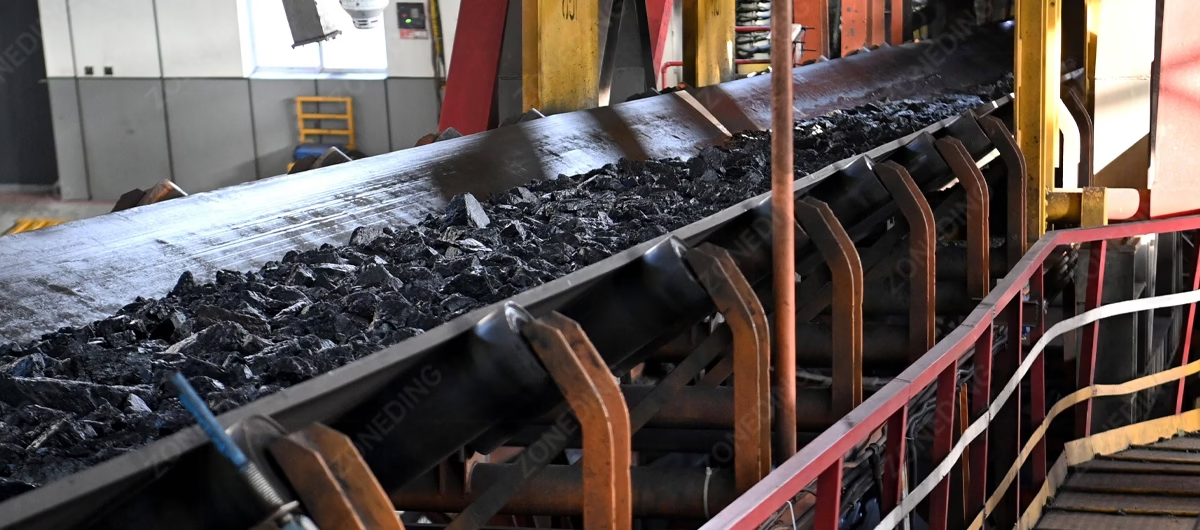
The mining method also dictates initial sizing requirements. Open-pit or strip mining operations frequently produce larger, more irregular lumps of coal and associated rock. This necessitates robust primary crushing. Roll Crushers or Hammer Crushers are effective for handling feed variability. Underground mining methods, such as continuous miners or longwall shears, can sometimes yield a more consistent, smaller feed size. However, even these operations often require primary crushing. This manages large blocks and ensures consistent feed to the coal washing plant.
Coal Pretreatment: Crushing and Screening for Washing?
Coal pretreatment involves crucial crushing and screening stages. These steps prepare the raw coal for subsequent coal washing (beneficiation). Proper equipment configuration here lays the foundation for efficient and effective downstream processes. This stage aims to standardize particle size. It also helps to remove extraneous material.
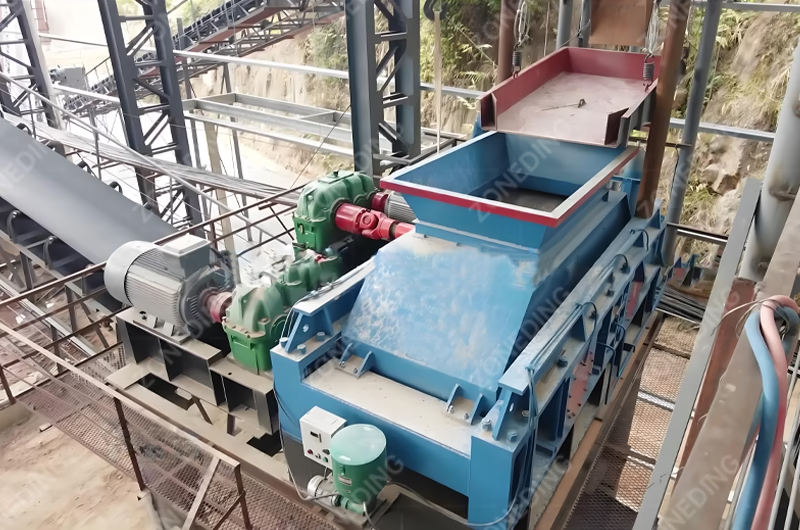
Roller crusher customer site
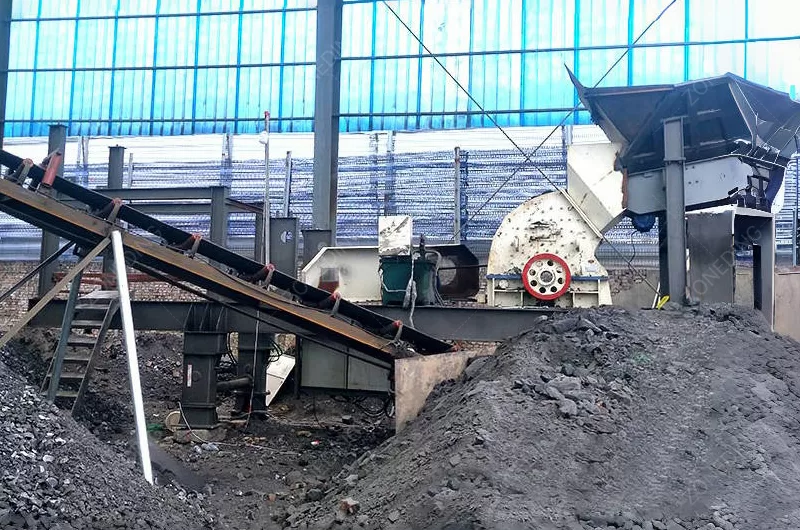
Hammer crusher for crushing coal
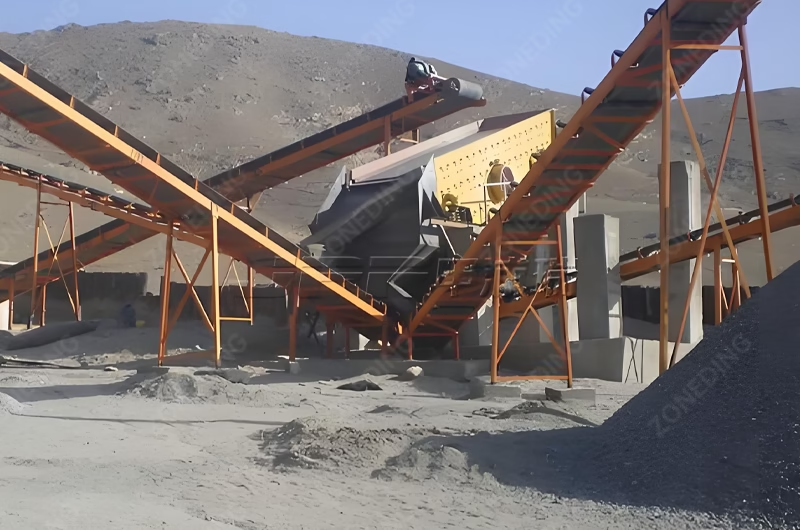
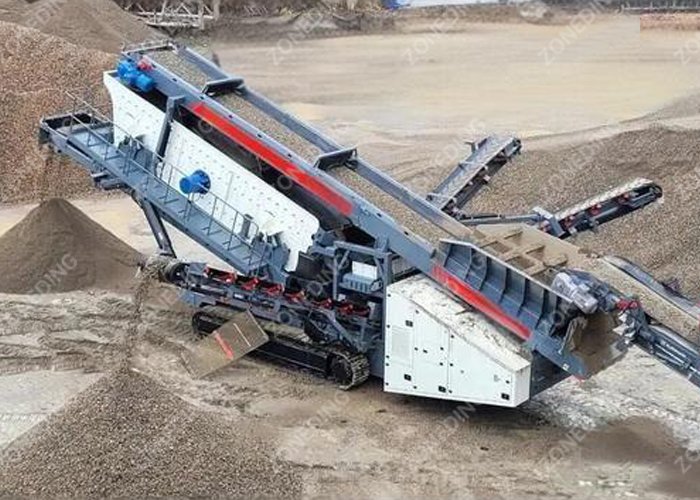
Vibrating screen for screening coal blocks
Primary crushing targets the reduction of large ROM coal. Roll Crushers are often preferred for coal applications. They produce a consistent, cubical product. This minimizes the generation of excessive fines. Such crushers are also less susceptible to damage from tramp iron compared to hammer mills. Hammer Crushers also prove effective. They are suitable for friable coal, offer high reduction ratios, and handle sticky material well. However, they can produce more fines. The selection of primary crushing coal processing equipment depends on coal friability and the presence of associated rock.
Following crushing, effective Vibrating Screens are essential. They remove undersize material. This material is already fine. Screening prevents over-crushing in subsequent stages. It also avoids unnecessary fines generation. This selective removal improves the efficiency of crushing equipment. It reduces wear parts consumption. It also ensures that the feed to the coal washing plant meets specific size parameters. This optimization is critical. It allows the washing plant to operate at peak efficiency. It directly contributes to overall efficient and profitablecoal processing.
Coal Processing: Beneficiation for Quality and Marketability?
Coal beneficiation removes impurities, improving coal quality and market competitiveness. The optimal process depends on the coal’s characteristics and desired product specifications.
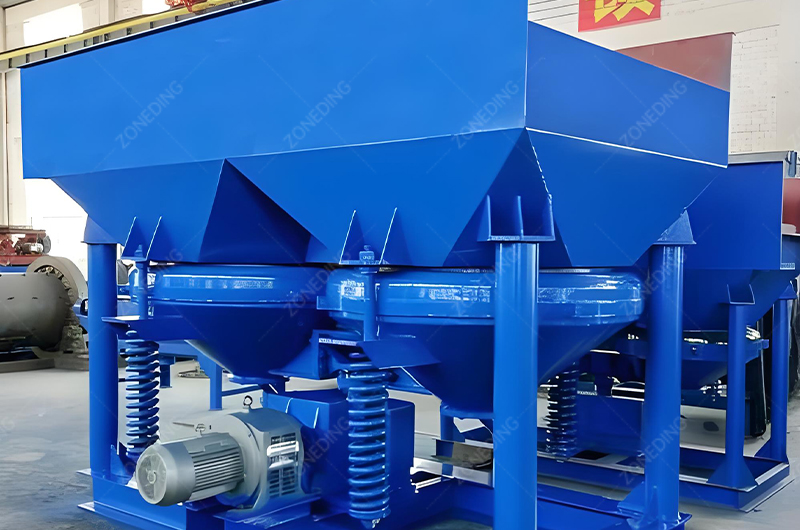
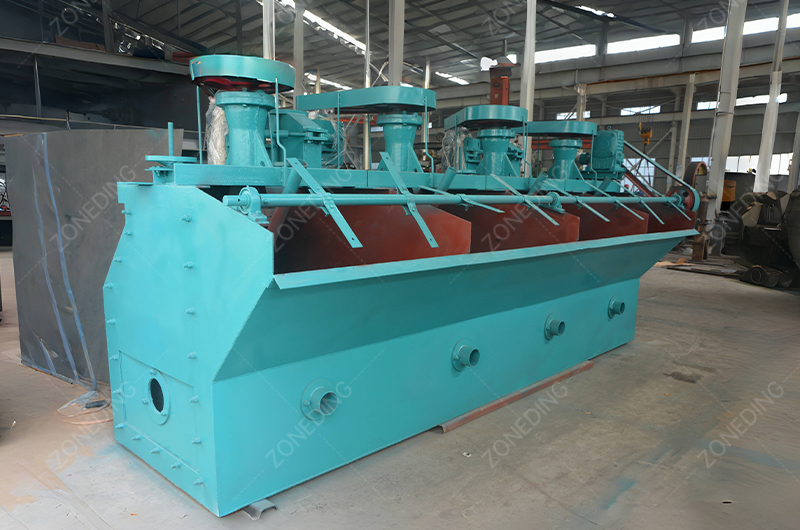
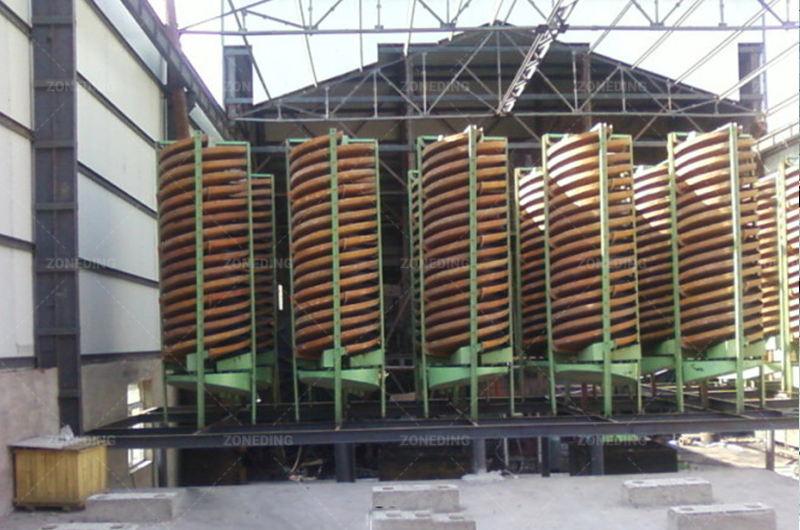
Foundational washability studies analyze coal’s density, size, and impurity distribution. They generate M-curves and yield-ash curves, crucial for selecting appropriate equipment like Jigging Separator Machines, Dense Medium Separation (DMS) cyclones, spirals, and Flotation Machines. These studies predict plant performance (yield, ash, efficiency), preventing costly guesswork in equipment selection.
Jigging-Separator-machine
Flotation-Machine
Spiral Concentrators
Jigging Separator Machines are robust, gravity-based separators that use pulsating water for density stratification. Ideal for coarser coal (10-100mm) due to low operating costs and simple maintenance, they are less efficient for very fine coal or challenging washability curves.
Dense Medium Separation (DMS) offers high-efficiency cleaning with precise density control. Vessels handle coarser coal (>25mm), while cyclones process finer material (0.5-50mm). DMS is a gold standard, highly effective for challenging coals and crucial for metallurgical and high-value thermal coal, despite higher capital and operating costs from magnetite recovery circuits.
Spiral Concentrators are cost-effective, gravity-based solutions for fine coal (0.15-2mm). Utilizing gravity and centrifugal force in a helical channel, they feature no moving parts, simple operation, and low capital/operating costs, making them suitable for fines when Flotation Machines are not justified.
Flotation Machines are crucial for ultrafine coal (<0.5mm). This physico-chemical process uses air bubbles to selectively float hydrophobic coal particles. While requiring careful control of pulp density, pH, and chemical reagents, flotation effectively recovers high-quality ultrafine coal, essential for maximizing yield despite higher capital and operating costs.
Coal Slurry and Dewatering: Environmental and Economic Gains?
Effective management of coal slurry and subsequent dewatering is critical. It ensures environmental compliance. It also delivers significant economic gains. Coal washing operations generate substantial volumes of water. This water contains fine coal particles and refuse. Managing this process water is as important as cleaning the coal itself.
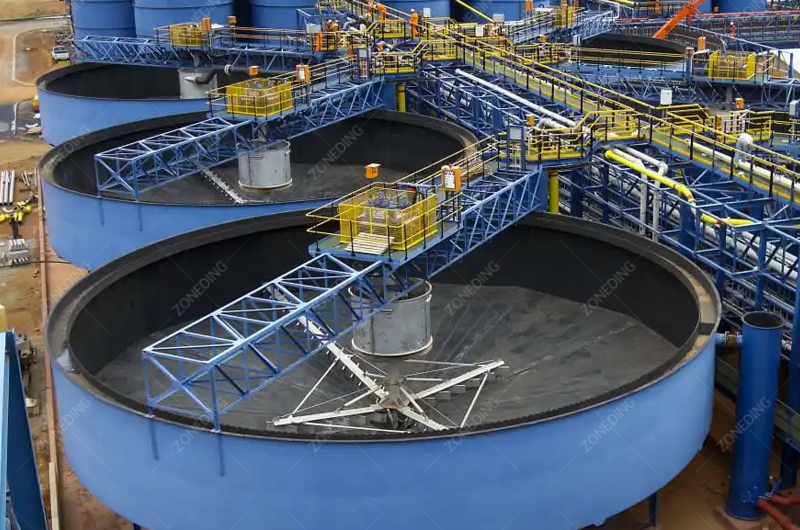
High Efficiency Concentrator
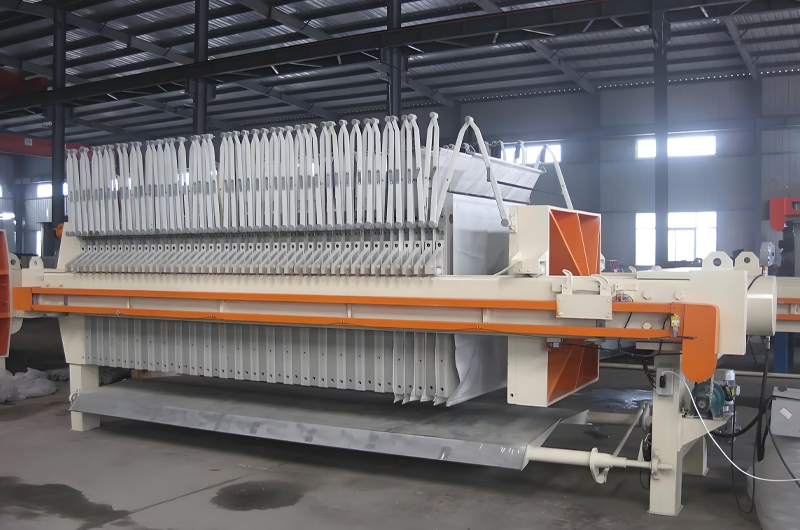
Filter Press
Water management within the coal preparation plant is a crucial factor. A dirty water circuit significantly reduces washing efficiency. It increases chemical consumption, such as flocculants. It also accelerates wear parts on pumps and other equipment. Investing in a robust water clarification circuit provides long-term benefits. This includes High Efficiency Concentrators and filter presses for tailings. A closed-loop system is often aimed for. This not only meets environmental compliance regulations. It also reduces freshwater consumption. It lowers operating costs. Cutting capital expenditure in this area often leads to substantial operational challenges. It can result in environmental fines.
Fines management represents the most challenging and costly fraction. Ultrafine coal, typically below 0.5mm, is difficult to clean, dewater, and handle. It often contains high ash and moisture content. Many plants struggle to recover valuable ultrafines efficiently. Disposing of fine tailings also presents challenges. High Efficiency Concentrators, or thickeners, use gravity and flocculants. They settle solids. They clarify process water. This ensures clean water returns to the plant. This reduces fresh water intake. It improves overall plant performance.
For dewatering fine tailings, filter presses (plate & frame or belt press) are essential. They produce a dry cake. This allows for “dry stacking” of tailings. This significantly reduces the environmental footprint. It provides a sustainable alternative to traditional slurry ponds. While filter presses represent a high capital expenditure, the long-term benefits include environmental compliance and reduced liability. These benefits often justify the initial investment.
Coal processing equipment selection requires careful consideration beyond initial costs. A comprehensive evaluation encompasses several critical factors. These influence the long-term efficient and profitable operation of a modern coal plant.
First, consider the specific coal characteristics. This includes washability, size distribution, and impurity types. The chosen equipment must effectively handle these properties. Incorrect selection leads to reduced efficiency. It also increases operating costs and diminishes coal quality improvement.
Second, assess the long-term operating costs. This extends to wear parts consumption, energy usage, and maintenance requirements. A piece of equipment with lower initial capital expenditure might incur higher operating costs. This can be due to frequent wear parts replacement or high power consumption. A robust machine, though more expensive upfront, often provides a lower total cost of ownership over its lifespan.
Third, evaluate the required product specifications. These specifications include final moisture content, ash percentage, and sulfur levels. The chosen coal processing equipment must consistently achieve these targets. The market often pays a premium for higher coal quality improvement.
Fourth, environmental compliance and sustainability are paramount. Regulations increasingly demand cleaner operations. Equipment that minimizes dust emissions, water usage, and simplifies tailings management is highly valuable. Proactive investment in such solutions, like closed-loop water systems and dry stacking technologies, prevents future liabilities.
Finally, consider the plant’s overall design and automation levels. A highly automated plant, integrated with PLC/SCADA systems, ensures consistent product quality. It optimizes reagent dosages, minimizes energy consumption, and provides crucial data for operational adjustments. Automation is a necessity for competitive operations. It should not be viewed as a luxury. Material handling, including conveyors and reclaimers, must also be efficient. This ensures smooth operations and allows for blending different coal types to meet specific customer specifications.
ROI & Sustainability: Building a Modern Coal Plant?
Building a modern coal plant requires focusing on investment return (ROI) and long-term sustainability. This approach ensures high efficiency and low energy consumption. It integrates advanced coal processing equipment and operational strategies. The goal is to achieve efficient and profitable operations while adhering to environmental compliance.
Automation and process control are fundamental to a modern coal plant. PLC/SCADA systems are essential. They maintain consistent coal quality improvement, optimize reagent dosages in coal washing, and minimize energy consumption across all stages. These systems also provide critical data for operational adjustments. Automation is not an option; It is a necessity for competitive operations, allowing for precise control, reducing human error, and enhancing overall plant performance.
Environmental compliance and responsible management are central to sustainability. Coal handling inherently generates dust. Effective dust suppression techniques are non-negotiable. These include water sprays, dust collectors, and enclosed transfer points. Worker safety and environmental protection are paramount. Tailings management strategies also directly impact sustainability. Moving towards dry stacking of tailings, as opposed to traditional slurry ponds, significantly reduces environmental footprint. It also mitigates long-term liabilities. While such investments can be substantial, they often yield significant returns in terms of environmental compliance and public perception.
Material handling systems also contribute to efficiency. Optimized conveyors, stackers, and reclaimers ensure smooth material flow. They enable effective blending of different coal types. This meets diverse customer specifications. Homogenization of raw coal feed improves the stability of the coal washing plant. This maximizes recovery and product consistency. The most effective coal processing plants are designed with an intimate understanding of the coal, the market, and the environment. This iterative process of testing, design, optimization, and continuous improvement builds a comprehensive solution, not merely a collection of machines. This holistic strategy drives efficient and profitable results.
Frequently Asked Questions
Question 1: Why is understanding coal processing flows crucial for project success?
Understanding coal processing flows is central to project success. This knowledge ensures optimal equipment selection. It leads to efficient and profitable operations. It also drives coal quality improvement. Each stage, from mining to market, impacts the final product value. Proper flow understanding minimizes waste. It maximizes the recovery of valuable coal. This systematic approach is key to achieving market specifications consistently.
Question 2: What are key factors for coal processing equipment selection beyond initial cost?
Key factors for coal processing equipment selection extend beyond initial cost. Consider the specific coal characteristics like washability, size distribution, and impurity types. Assess long-term operating costs, including wear parts and energy consumption. Evaluate the required product specifications and desired coal quality improvement. Additionally, factors like environmental compliance, site conditions, and future market demands influence optimal selection. A holistic view ensures sustainable and efficient and profitable operations.
Question 3: How does fines management contribute to a modern coal plant’s profitability?
Fines management significantly contributes to a modern coal plant’s profitability. Ultrafine coal often contains valuable carbon. Effective recovery methods like Flotation Machine or spirals reclaim this material. This boosts overall yield. Proper dewatering of fines and tailings reduces moisture content. This lowers transport costs. It also enhances environmental performance. Efficient water clarification in the fines circuit improves washing efficiency throughout the plant. This leads to substantial savings and environmental compliance.
Summary and Recommendations
Effective coal processing necessitates a strategic approach. It starts with coal mining and extends through coal washing to final market delivery. Success relies on intelligent equipment selection. This ensures efficient and profitable operations and continuous coal quality improvement.
A comprehensive understanding of coal characteristics, including washability and impurity distribution, is paramount. This informs the choice of coal processing equipment, such as Roll Crushers for primary reduction, Dense Medium Separation (DMS) for efficient beneficiation, and Flotation Machine for ultrafine recovery. Emphasis on closed-loop water systems and efficient dewatering, utilizing High Efficiency Concentrators and filter presses, ensures environmental compliance and resource recovery. A holistic perspective, integrating automation and focusing on total cost of ownership, drives the long-term investment return (ROI) and sustainability of any modern coal plant.
About ZONEDING
Since 2004, ZONEDING has manufactured high-performance mineral processing equipment. As a factory-direct supplier, ZONEDING provides a complete range of machinery. This includes individual coal processing equipment and entire customized Beneficiation Equipment solutions. A team of 15 professional engineers ensures every machine design focuses on maximum efficiency and extended service life. ZONEDING has successfully delivered solutions to over 120 countries globally.
Contact ZONEDING for professional consultation and a competitive quote.
Tailings are no longer just a waste product in modern mining. High metal prices and better technology make the tailings beneficiation process a major profit center. This guide explains how to extract hidden value from old waste dams. Re-processing...
Many mobile screening plants fail to reach their real production potential because of poor feeding, screen blockage, unstable material flow, and incorrect equipment setup. In most quarry and recycling operations, improving screening efficiency doe...
The success of a graphite processing plant depends on the ability to protect large flakes. Natural flake graphite value relates directly to flake size. Large flakes (+32 or +50 mesh) command prices several times higher than fine powder. An efficie...
We use cookies to ensure that we give you the best experience on our website. If you continue to use this site we will assume that you are happy with it.
Privacy Policy
Send us a message
We would love to hear from you
Submit your question and our team will respond to the email provided as soon as possible.
 Zoneding Machine