 Zoneding Machine












Mobile Impact Crusher for South America Aggregate Projects
536Choose a mobile impact crusher for limestone, road aggregate and concrete recycling in South America. Compare capacity, setups and costs.
View detailsSearch the whole station Crushing Equipment
Gold gravity separation is often the first and most critical step in gold recovery. Gold’s high specific gravity (19.3 g/cm³) makes it naturally amenable to this process. This method proves effective, cost-efficient, and environmentally sound. After 50 years in this industry, I know it is an indispensable component. It features in almost every gold processing flowsheet, from small operations to large industrial mines.
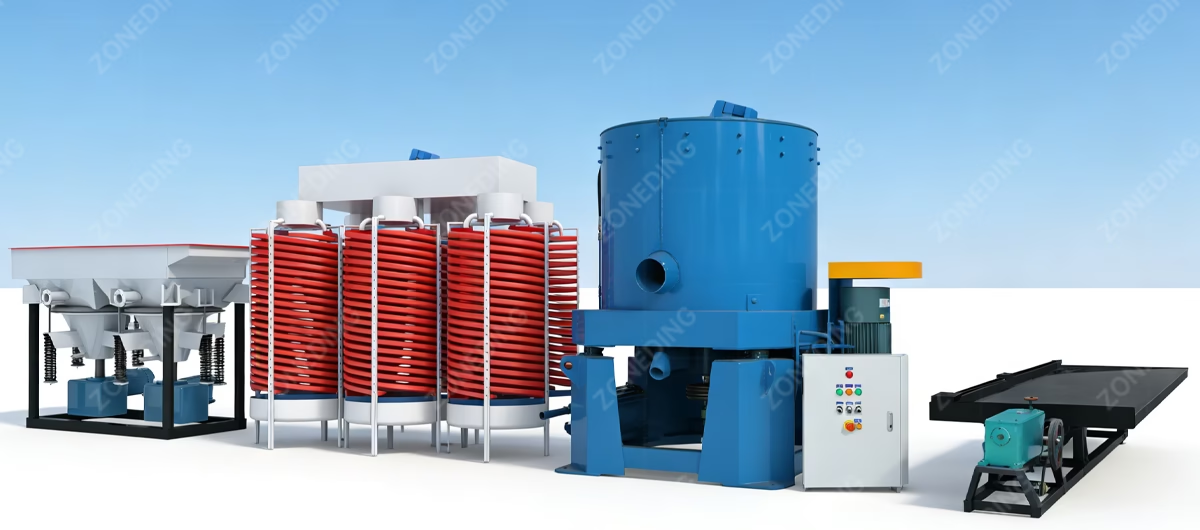
This guide explores the four core gold gravity separation methods. It details their principles and applications. It also provides insights for optimal equipment selection. This ensures maximum gold recovery and project profitability.
Gold gravity separation holds a critical position in gold mining. Gold’s high specific gravity is the reason. This property makes it uniquely suitable for separation from lighter gangue minerals. Gravity separation is often the most cost-effective method. It is also environmentally friendly. It represents the earliest opportunity to recover free gold. This prevents over-grinding of gold particles. This also reduces the load on subsequent, more expensive processes.
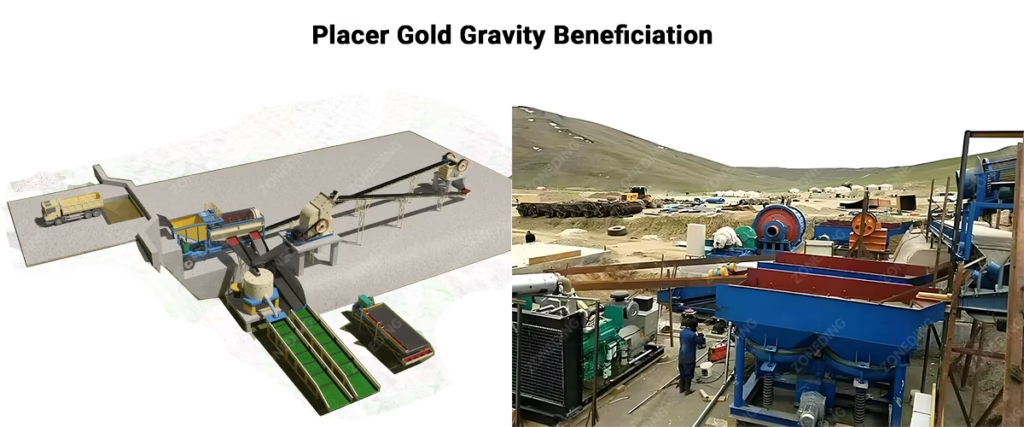
The principle is simple. Heavier gold particles separate from lighter waste materials. This occurs under the influence of gravity and fluid dynamics. This method applies across various scales. It ranges from artisanal mining to large industrial operations. Integrating gravity separation early in the gold processing flowsheet offers multiple advantages. This lowers the overall beneficiation cost, enhances security by concentrating value early, and aligns with increasing environmental standards. Understanding this foundational step is vital. It underpins efficient and profitable gold recovery.
The Jigging Separator Machine serves as a robust method for coarse gold recovery. It works by using a pulsating column of water. This water stratifies particles based on their specific gravity. As water pulses upwards, the particle bed expands. During the downward stroke, heavier gold particles settle faster. They penetrate the bed. Lighter gangue minerals are discharged from the top. Gold collects at the bottom, in the hutch.
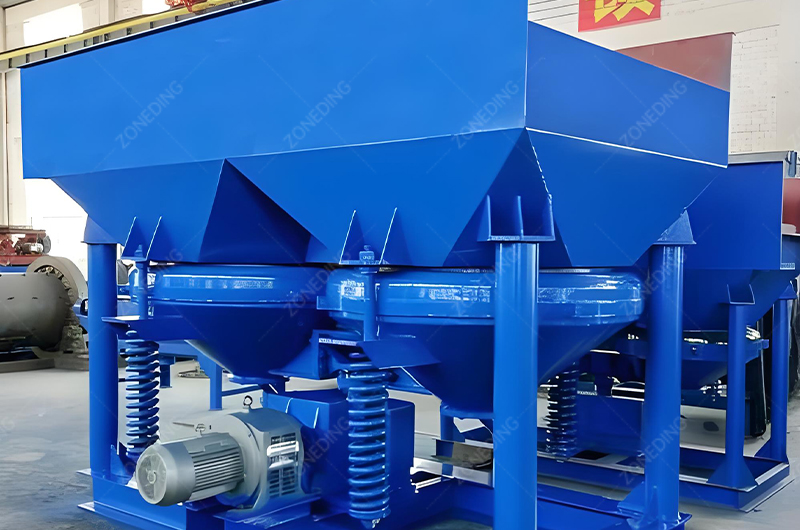
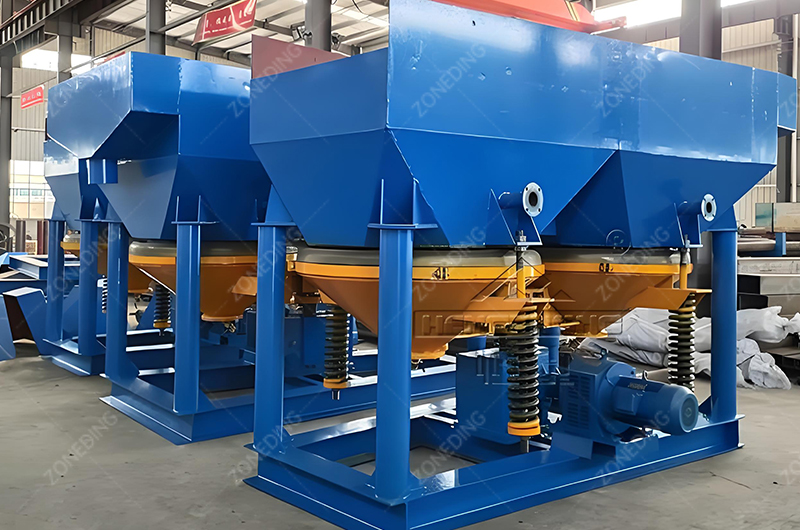
Jigs are excellent for recovering liberated gold particles. These can range from coarse nuggets down to around 50-100 microns. They find extensive use in placer deposits. They act as the first mechanical step in large-scale alluvial operations. In hard rock crushing circuits, jigs are placed early. They can be before or within the ball mill circuit. This removes coarse free gold as soon as it liberates. This prevents over-grinding. It also stops gold from accumulating in the grinding circuit.
Jigs offer good capacity. They operate continuously once set up. Their mechanics are relatively simple. They effectively handle a wide range of gold particle sizes. This includes coarse to medium fines. They can also manage higher solids percentages compared to some other methods. However, jigs lose efficiency for very fine gold. This is especially true for flaky gold particles. Consistent feed rate and particle size distribution are crucial for optimal performance. They also require significant water, though often in a recirculated system. The pulsation cycle and bed depth are key to a jig’s performance. Operators must regularly adjust ragging and pulsation for optimal gold recovery.
The Shaking Table is a highly effective method. It achieves fine gold recovery and produces high-grade concentrates. This machine consists of a slightly inclined deck. This deck features riffles. It oscillates with a differential motion. Water flows across the deck. The shaking action separates particles. Heavier gold particles settle into the riffles. The shaking drives them forward. They discharge as concentrate. Lighter gangue minerals wash over the riffles. They are discharged as tailings.
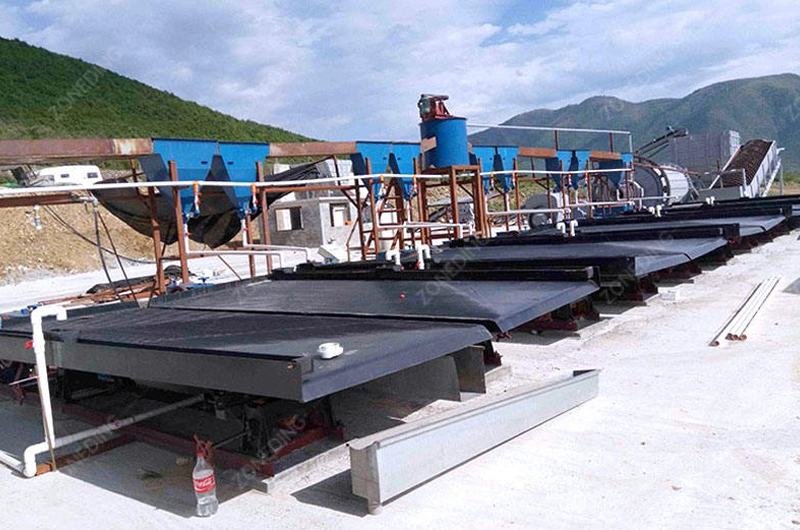
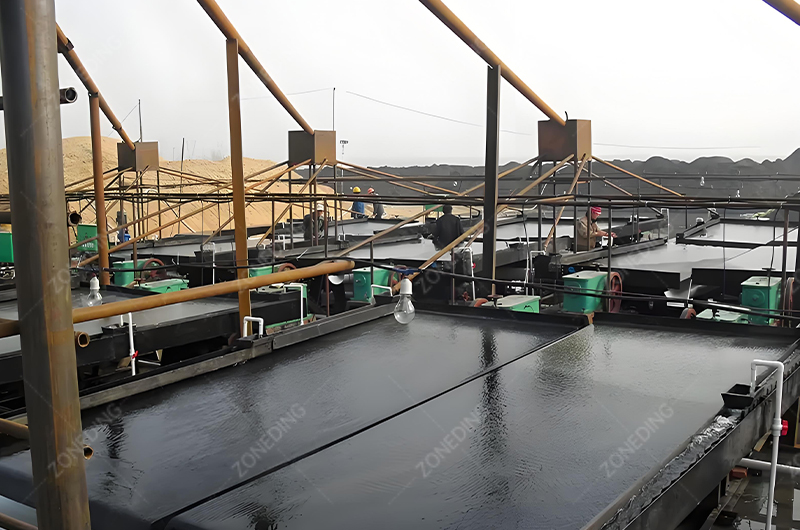
The Shaking tables are the finishing step. They clean gravity concentrates. These concentrates often come from jigs or Centrifugal Concentrators. They produce very high-grade gold products. Shaking tables are essential for gold room security. These units prepare the product for smelting or further refining. Their widespread use also extends to mineral processing laboratories, where testing and small-batch separations are performed.
Shaking tables produce exceptionally high-grade concentrates. They offer excellent separation efficiency. This applies to fine to medium gold. Operators can visually monitor the separation. This makes them a great educational tool. Shaking tables use relatively low water compared to sluices or jigs. However, their capacity is low, making them unsuitable for bulk primary recovery. Optimal performance requires a consistent, well-sized feed. The machine’s footprint can also be significant for multiple tables. The angle of inclination, stroke length, stroke frequency, and wash water addition are critical variables. Overloading the table or excessive wash water leads to gold losses. A skilled operator is essential for fine-tuning these parameters. This ensures maximum gold recovery.
The Spiral Chute, often referred to as a Spiral Concentrator, offers an economic choice for bulk pre-concentration. It targets coarse to medium gold. This device uses a helical trough. Gravity and fluid flow work together. They separate particles based on density and size. Slurry flows down the spiral. Heavier particles migrate to the inner part of the channel. Lighter particles remain on the outer edge.
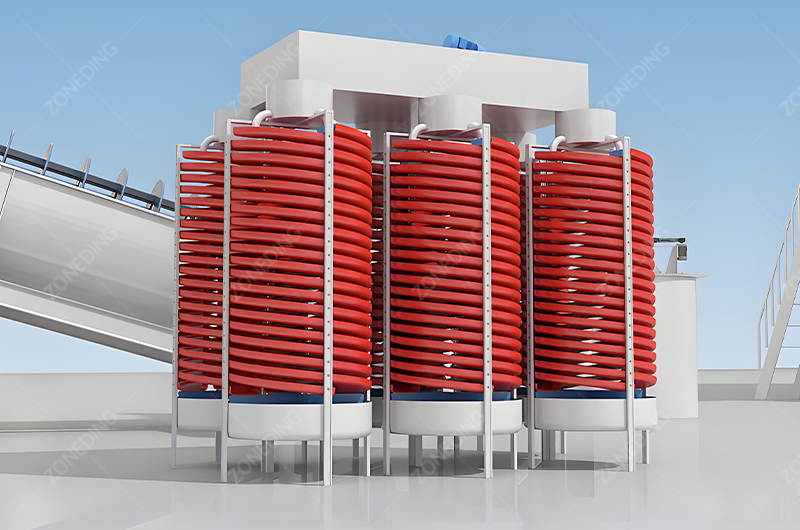
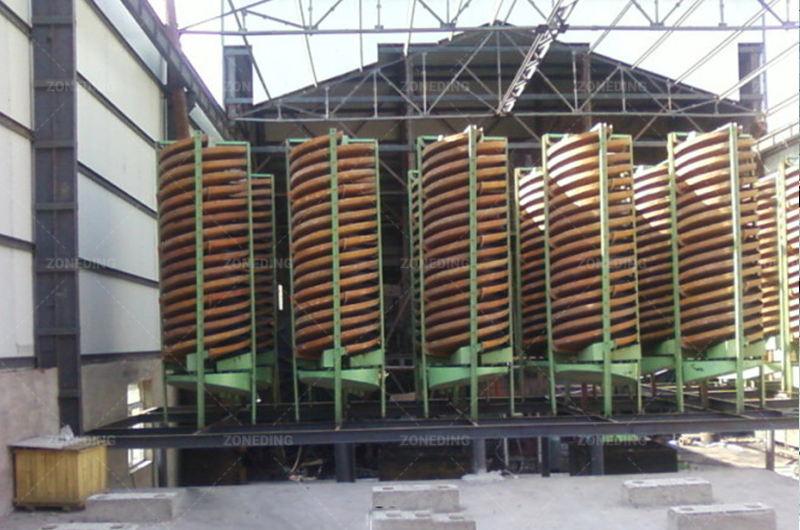
Spiral concentrators are common in placer deposits. These systems process large volumes of material and are also employed in some hard rock operations to pre-concentrate gold before more intensive methods. This reduction in material volume prepares it for subsequent processing by more sensitive equipment, including shaking tables or centrifugal concentrators.
Spiral concentrators provide high capacity. Characterized by low capital and operating costs and lacking moving parts, these devices are simple to operate and maintain. This makes them an excellent option for initial bulk separation.However, spiral concentrators are less efficient for very fine or ultra-fine gold. Their efficiency also depends on consistent feed distribution. It also depends on wash water rates and pulp density. While not achieving the highest grades, they are valuable. They effectively prepare material. They help improve overall gold recovery efficiency. Careful control of feed characteristics optimizes their performance.
Centrifugal Concentrators represent a significant innovation. They are a powerful tool for ultra-fine gold recovery. These devices utilize high centrifugal force. This force enhances gravitational separation. A rotating bowl creates a strong centrifugal field. This field can reach up to 200 G’s. Slurry is introduced into the bowl. Heavy particles, like gold, are forced against the bowl walls. They become trapped in specialized riffles or rings. Lighter particles are washed away.


Centrifugal concentrators have revolutionized fine gold recovery. They effectively recover particles as small as 5-10 microns. These are often difficult to recover with traditional gravity methods. Ubiquitous in modern hard rock Gold Processing Plants, these units are often positioned after the ball mill discharge or can be integrated into a dedicated gravity circuit. This recovers gold as soon as it liberates. This reduces the load on downstream cyanidation. It can even replace cyanidation for some coarse free-milling ores. They are also increasingly used in alluvial and placer operations. They act as a cleaning or scavenger step for fine gold.
These concentrators offer extremely high gold recovery rates for fine gold. They have a compact footprint. Their operating cost per tonne is relatively low once set up. They significantly reduce overall gold loss. However, many models are semi-batch. They require periodic shutdowns for concentrate removal. They are sensitive to particle size. Extremely coarse gold can overwhelm the system. They require a well-sized feed, typically post-grinding. They also need pressurized wash water. Poor feed preparation, such as excessive clay or very fine gangue, can blind the bed. This reduces gold recovery. Integrating them intelligently into the grinding circuit is often the most cost-effective solution. This captures gold before it over-grinds.
Maximizing gold recovery in gold mining rarely involves a single method. A “combination is key” approach guides the design of an effective gold processing flowsheet. Different gravity concentration techniques complement each other. They address various gold particle sizes and characteristics.
The first step in designing any gold plant is a Gravity Recoverable Gold (GRG) test. This test reveals how much free gold is available. It determines its amenability to gravity separation. A high GRG suggests that gravity separation should be a significant part of the flowsheet. If GRG is low, other methods, like flotation or leaching, become more prominent. Gravity may then serve as a pre-concentration step.
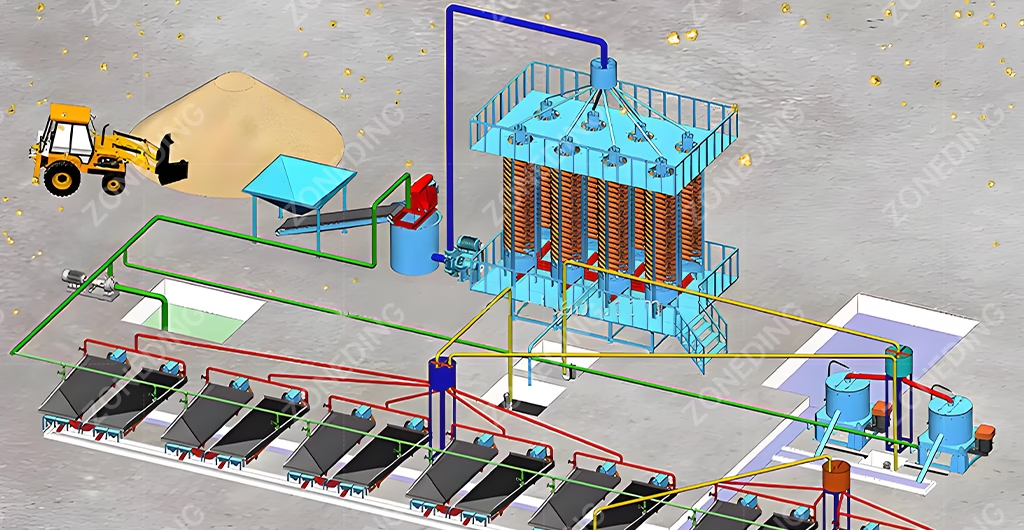
The principle “the sooner, the better” is critical. Recover free gold as soon as it liberates in the grinding circuit. This prevents over-grinding. Over-grinding can make gold flaky and harder to recover. It reduces the amount of gold entering subsequent, more expensive processes. It also improves security by concentrating the valuable material early.
A typical gold plant might employ a combination of gold gravity separation methods. This could include Jigging Separator Machines as roughers. These feed a Centrifugal Concentrator for scavenging and cleaning. The concentrate from the centrifugal unit is then cleaned further on a Shaking Table. This produces the final high-grade product. Fine gold recovery is also greatly impacted by water quality. Dirty or viscous water can hinder efficiency. Good water management and desliming are essential for optimal performance.
Making smart decisions in gold gravity separation equipment selection requires careful consideration. It goes beyond merely choosing individual machines. It involves matching the right technologies to your specific ore characteristics and budget.
First, analyze your ore in detail. Conduct comprehensive GRG tests. Understand the gold’s particle size distribution. Identify the types of gangue minerals present. Consider your gold’s particle size (coarse, fine, or ultra-fine), its association with heavy minerals, and the ore’s type (placer deposit or hard rock).These factors directly dictate the most suitable gold mining equipment. For example, placer deposits with coarse gold might favor jigs and spiral concentrators. Hard rock ores with fine liberated gold will benefit greatly from Centrifugal Concentrators.
Second, consider your capacity requirements. This includes the desired throughput. Balance this with your beneficiation cost. High-capacity bulk processing might use Spiral Concentrators. For lower capacity, high-grade finishing, Shaking Tables are ideal. Assess your budget for both capital expenditure (CAPEX) and operating costs (OPEX). Factor in wear parts consumption, water, power, and labor. A seemingly cheaper machine might have higher long-term operating costs. This can negate initial savings.
Third, factor in environmental and security considerations. Water management is critical. Gold Processing Plants consume significant amounts of water. Efficient water recycling reduces impact. Responsible tailings management is also essential. Gold room security for your high-grade concentrates is paramount. Proper design and access control are crucial. Consulting with experienced mineral processing equipment manufacturers is highly recommended. They can help design a tailored system. This system will maximize your gold recovery and profitability. It also ensures environmental compliance. This avoids costly errors. It builds a robust and efficient and profitable operation.
Question 1: Why is gravity separation a key first step in gold recovery?
Gold gravity separation is a key first step due to gold’s high specific gravity. It provides cost-effective gold recovery for free gold. This method often eliminates the need for more expensive processes. Early recovery prevents over-grinding of gold particles. It also enhances security. Gravity separation is environmentally sound. It is a fundamental part of almost every gold processing flowsheet.
Question 2: What is Gravity Recoverable Gold (GRG) and why is it important?
Gravity Recoverable Gold (GRG) refers to the percentage of gold in an ore that is free and amenable to gold gravity separation. This test is vital before designing a gold processing flowsheet. A high GRG indicates that gravity methods can achieve significant gold recovery. It guides equipment selection. It also impacts the overall beneficiation cost and project profitability.
Question 3: How do you choose between jigs, shaking tables, spirals, and centrifugal concentrators?
Choosing between Jigging Separator Machine, Shaking Table, Spiral Chute, and Centrifugal Concentrator depends on gold particle size and ore characteristics. Jigs are good for coarse gold. Shaking tables produce high-grade concentrates from fine to medium gold. Spirals handle bulk pre-concentration for coarse gold. Centrifugal concentrators excel at ultra-fine gold recovery. A detailed gold ore beneficiation study guides the optimal combination for maximum gold recovery.
Gold gravity separation stands as a cornerstone in gold recovery. Gold’s high specific gravity makes it a naturally effective method. This approach offers significant cost, environmental, and security benefits. A deep understanding of the four core methods is vital. These include Jigging Separator Machines for coarse gold, Shaking Tables for high-grade fine gold, Spiral Chutes for bulk pre-concentration, and Centrifugal Concentrators for ultra-fine gold.
Effective gold mining operations always utilize a combination of these technologies. This creates a tailored gold processing flowsheet. This flowsheet maximizes gold recovery. It accounts for diverse ore characteristics. Thorough ore testing, including GRG analysis, guides smart equipment selection. This ensures both efficient and profitable operations. It also supports long-term sustainability.
Since 2004, ZONEDING has manufactured high-performance mineral processing equipment. As a factory-direct supplier, ZONEDING provides a complete range of machinery. This includes individual Beneficiation Equipment and entire customized Gold Processing Plants. A team of 15 professional engineers ensures every machine design focuses on maximum efficiency and extended service life. ZONEDING has successfully delivered solutions to over 120 countries globally.
Contact ZONEDING for professional consultation and a competitive quote.
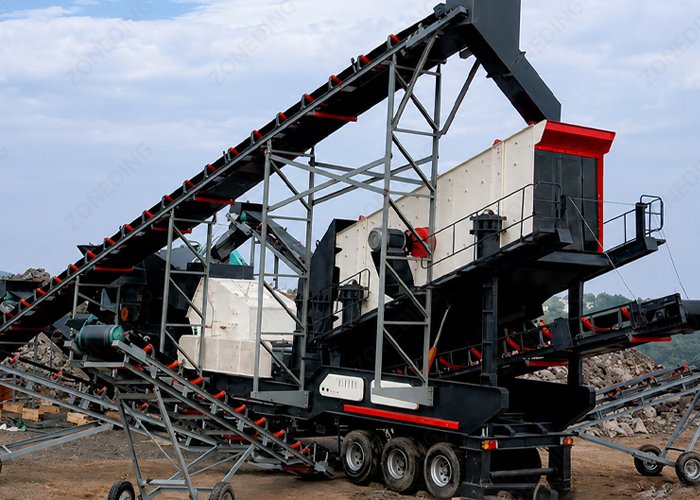
Choose a mobile impact crusher for limestone, road aggregate and concrete recycling in South America. Compare capacity, setups and costs.
View details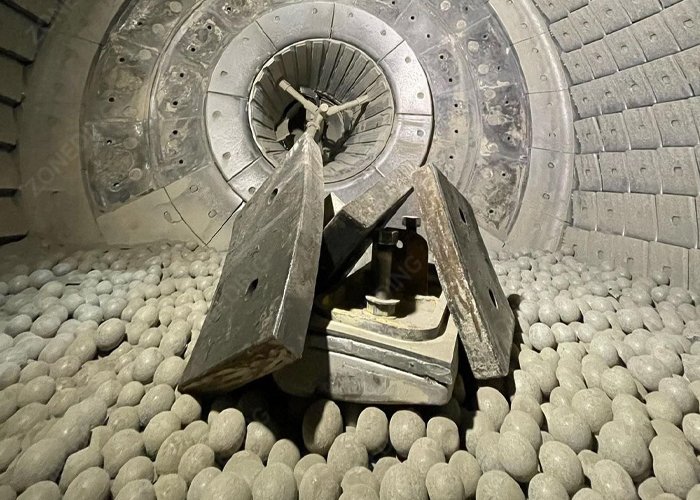
Learn how ore hardness, abrasiveness, feed size, impact, and mill conditions affect ball mill liner selection and service life.
View details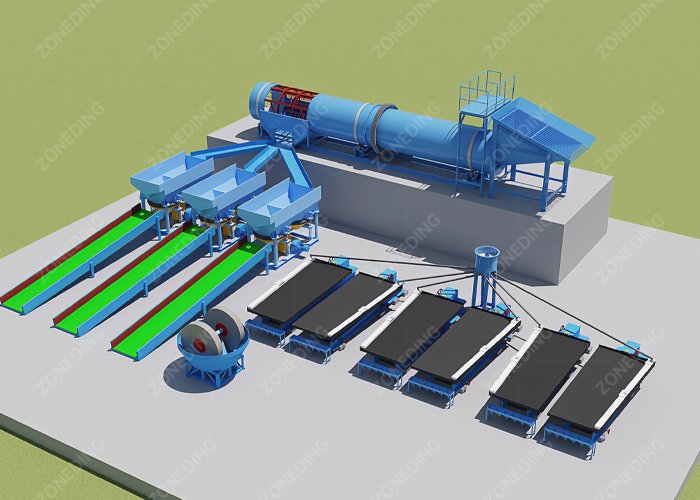
Stop fine gold loss by using a combination of high-energy washing and centrifugal separation. Most mines lose 30% of their gold because they only use simple sluice boxes. Successful alluvial gold processing technology requires a multi-st...
View details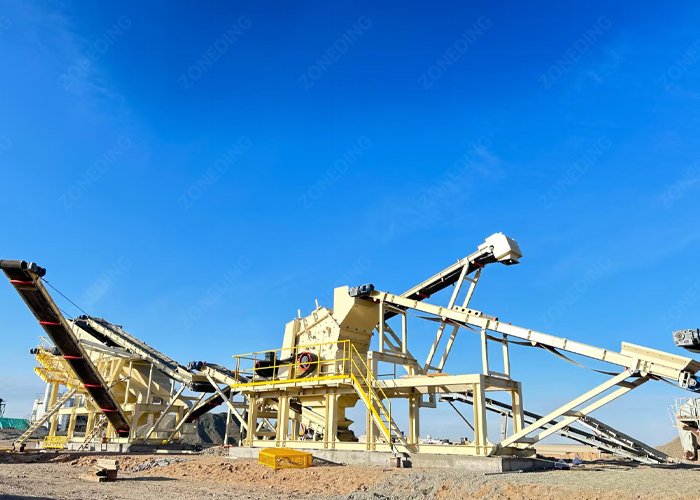
A 100–200 TPH aggregate crushing plant cost can range from approximately USD 120,000 to USD 350,000 for a standard stationary line. However, a 200 TPH plant that includes tertiary crushing, manufactured sand production, washing, or sever...
View details