In mineral processing, the single most important factor determining your project’s success is the ore itself. The specific mineral form of the copper dictates the entire flowsheet, the technology required, the project cost, and its ultimate profitability. For copper ore types, the first and most critical question is always: is it a sulfide ore or an oxide ore? The answer places your project into one of two completely different processing universes. This guide explains these differences and helps you understand which of the copper ore dressing methods is right for you.
The principle “ore dictates the process” is the foundation of profitable mineral processing. You cannot select a technology and force the ore to fit it. Instead, a detailed analysis of the ore’s mineralogy must define the technology. Different copper ore types have fundamentally different chemical properties. A copper sulfide ore beneficiation process like flotation is chemically incompatible with an oxide ore. An oxide copper ore beneficiation process like acid leaching will not work on a sulfide ore. Choosing the wrong method leads to extremely low copper recovery, high operational costs, and project failure. Therefore, understanding your ore is the first and most critical investment.
What are Sulfide Ores and Why is Flotation Used?
Sulfide ores are the most common source of copper globally, accounting for the vast majority of production. In these ores, copper is chemically bonded with sulfur. They are primary, unweathered ores found deep in the earth.
Common Copper Sulfide Minerals
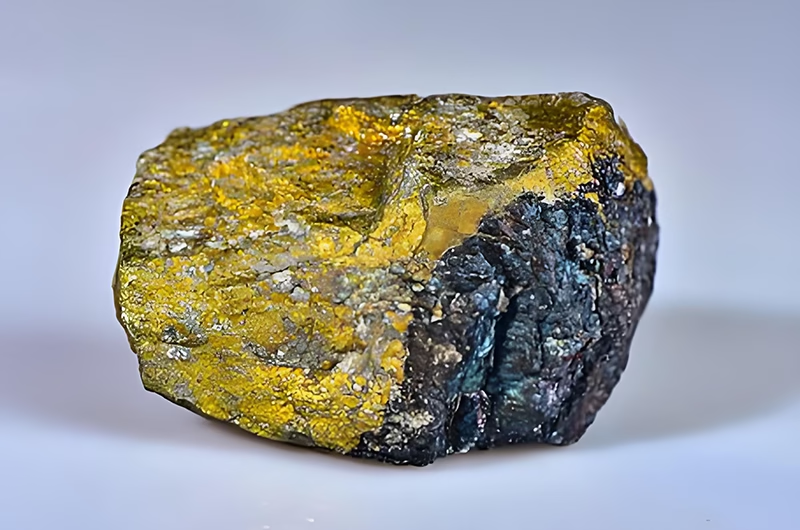
Chalcopyrite
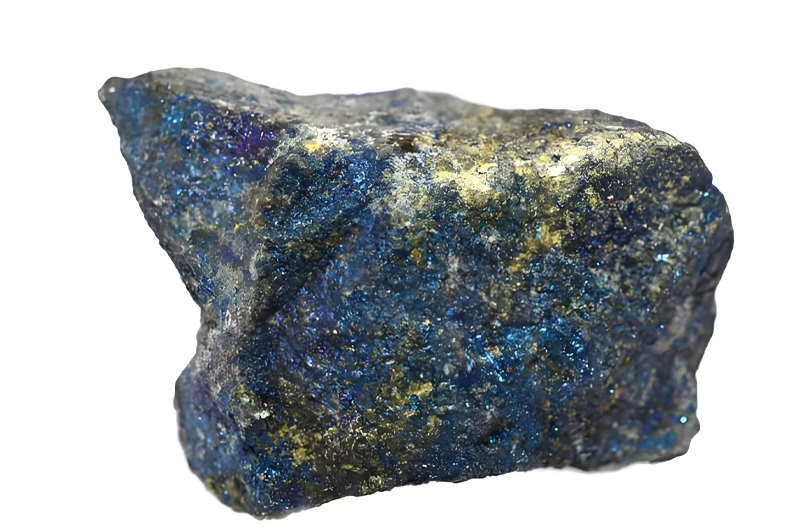
Bornite
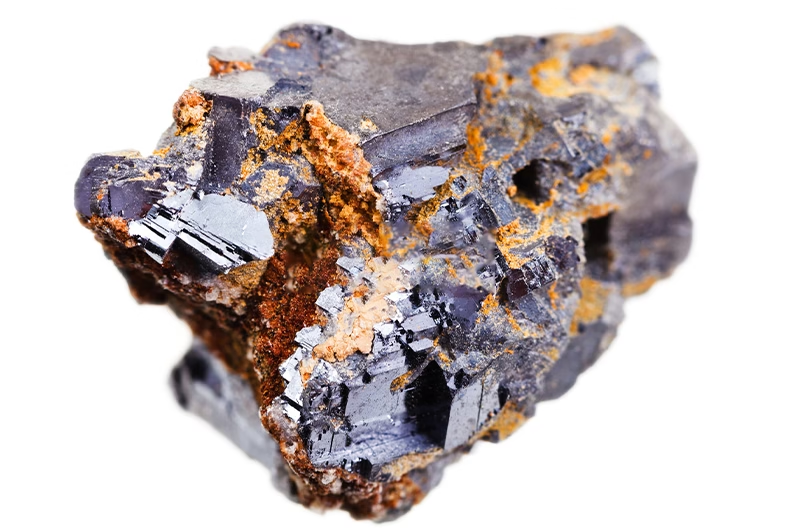
Chalcocite
Chalcopyrite (CuFeS₂): This is the most abundant copper ore mineral. By weight, it contains only about 34% copper. A significant challenge in chalcopyrite flotation is separating it from Pyrite (FeS₂), an iron sulfide mineral with similar properties.
Bornite (Cu₅FeS₄): This mineral is much richer in copper, containing about 63%. It generally responds very well to the flotation process, making it a desirable mineral in a deposit.
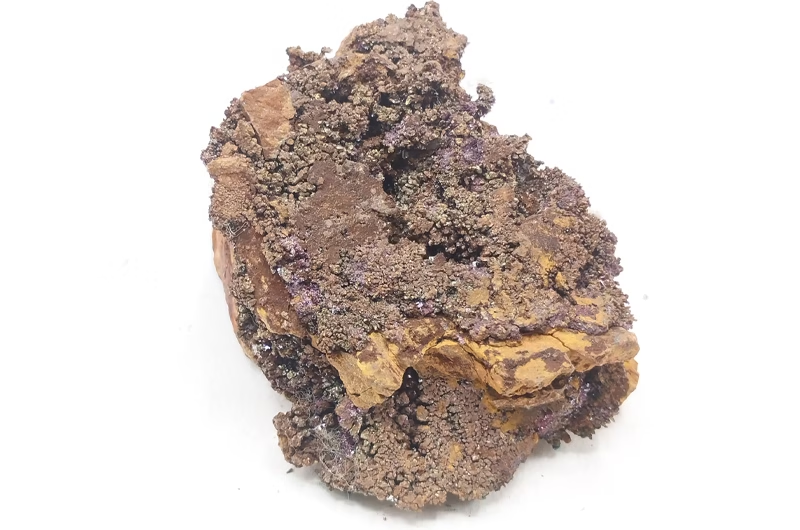
Chalcocite (Cu₂S): This is a secondary enrichment mineral. It has a very high copper content (nearly 80%) and is typically the easiest copper sulfide to recover with flotation.
The Froth Flotation Method
The strategy for sulfides is physical separation to create a saleable concentrate.
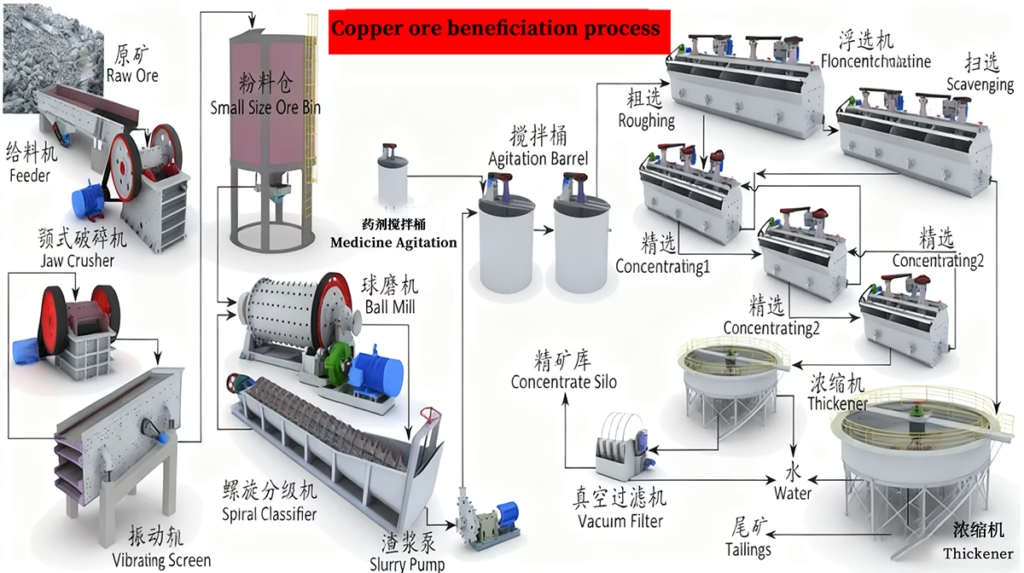
Comminution (Crushing & Grinding): Ore is first crushed with equipment like a Jaw Crusher. It is then ground with water in large Ball Mills to a fine powder. The objective is liberation—physically freeing the microscopic copper mineral crystals from the waste rock.
Froth Flotation: The ground ore slurry is pumped into Flotation Machines. We add chemical reagents that selectively attach to copper sulfide mineral surfaces, making them water-repellent. Air is bubbled through the tank, and the water-repellent particles attach to the bubbles and float to the surface. This mineral-rich froth is skimmed off as the copper concentrate.
Dewatering: The froth is thickened and filtered to remove water. The final product is a damp powder, typically containing 25-30% copper, which is sold to a smelter.
What are Oxide Ores and Why is Leaching Used?
Oxide ores form when sulfide deposits near the surface are weathered by air and water over geological time. The sulfur is replaced by oxygen, carbonate, or silicate.
Common Copper Oxide Minerals
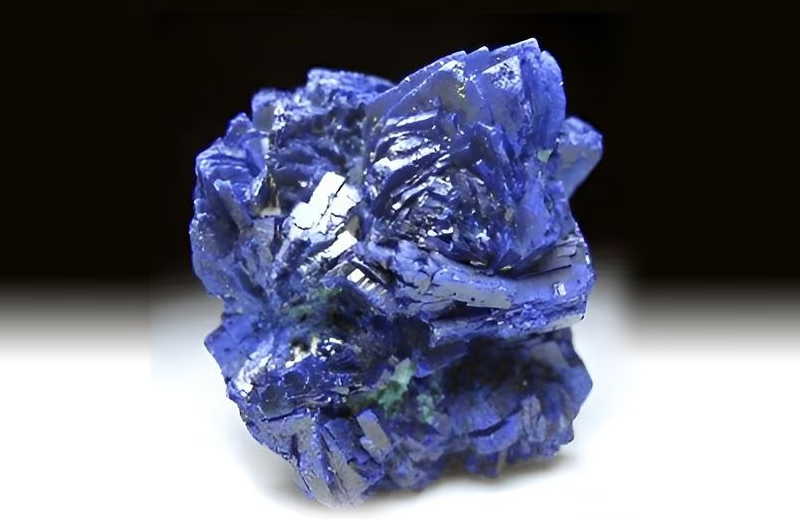
Azurite
Chrysocolla
Native Copper
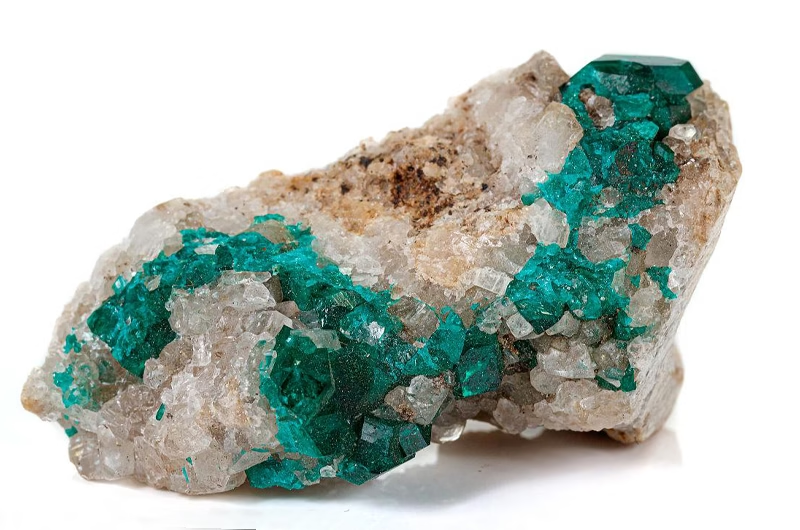
Malachite (Cu₂(CO₃)(OH)₂) and Azurite (Cu₃(CO₃)₂(OH)₂): These copper carbonates are known for their green and blue colors. Their key characteristic is that they dissolve easily in weak sulfuric acid.
Chrysocolla ((Cu,Al)₂H₂Si₂O₅(OH)₄·nH₂O): This copper silicate presents significant processing challenges. It leaches very slowly, consumes large amounts of acid, and often results in poor copper recovery.
Native Copper (Cu): In some deposits, pure metallic copper can be found. This is typically recovered using simple gravity separation methods.
The Hydrometallurgy (SX-EW) Method
The strategy for oxides is chemical dissolution to produce pure copper metal on-site. This is a type of hydrometallurgy.
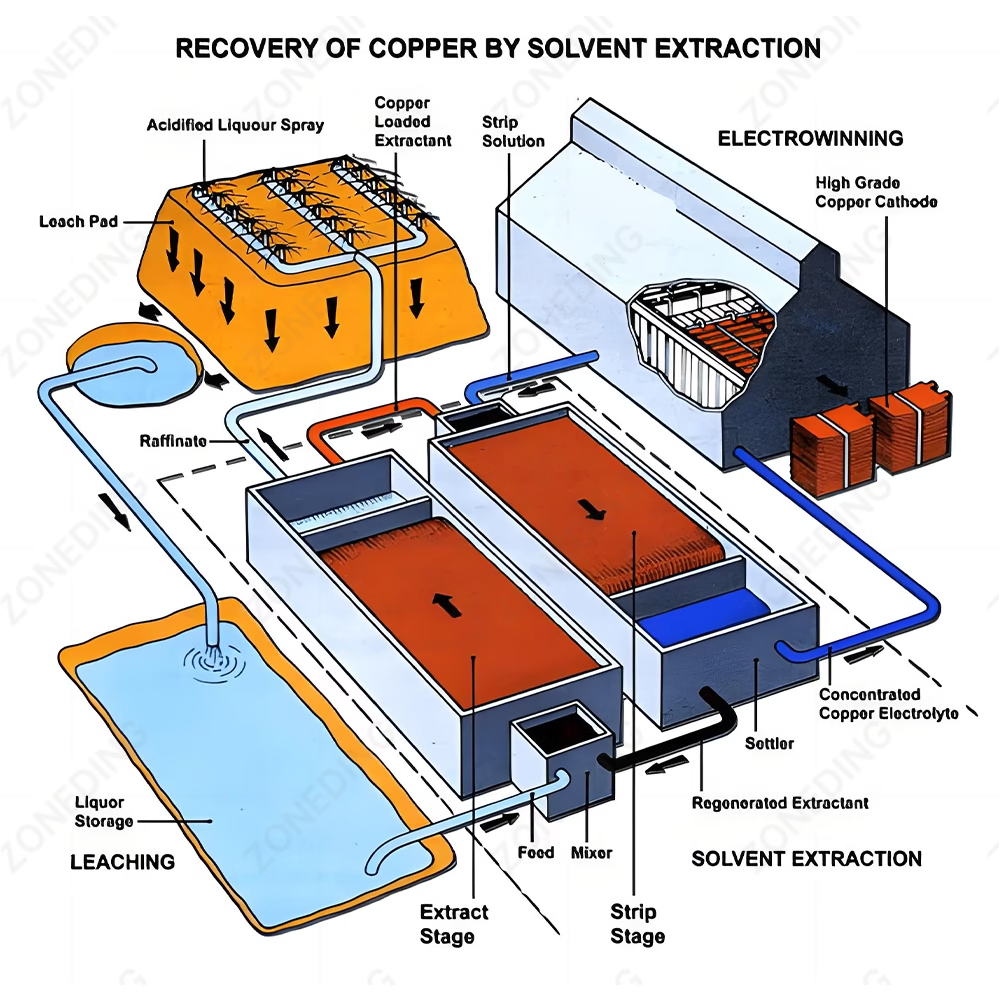
Heap Leaching: The ore is crushed to a gravel size and stacked on a lined pad. A weak sulfuric acid solution is dripped over the heap. The acid percolates through the ore, dissolving the copper and carrying it to a collection pond. This copper-rich solution is called Pregnant Leach Solution (PLS).
Solvent Extraction (SX): The PLS is mixed with a specific organic reagent that selectively absorbs only the copper ions, leaving impurities like iron behind. This purifies and concentrates the copper.
Electrowinning (EW): A strong, clean acid solution strips the copper from the organic reagent, creating a pure copper electrolyte. An electric current is passed through this electrolyte, causing 99.99% pure copper to plate onto cathode sheets.
How Do You Process Mixed Copper Ores?
The zone between the upper oxide ores and the deeper sulfide ores is called the transitional or mixed copper ore processing zone. These ores contain a combination of both mineral types. They are difficult to process because the flotation method is ineffective for the oxide portion, and the leaching method is ineffective for the sulfide portion. A common approach is a flotation-leaching combined process. In this flowsheet, the sulfide minerals are first recovered via flotation. Then, the tailings (waste) from the flotation circuit, which still contain the oxide copper, are sent to a leaching circuit to recover the remaining copper. These flowsheets are more complex and costly to build and operate.
How Do Tests Find the Highest ROI Process?
Theoretical knowledge is not enough to design a profitable plant. You must conduct metallurgical testing. An ore dressing test report is the essential foundation for a copper mine feasibility study.
Bench-Scale Testing: Small, representative ore samples (a few kilograms) are tested in a laboratory. These tests determine the ore’s mineralogy, the optimal grind size for liberation, the best chemical reagent scheme, and the potential copper recovery for different methods.
Pilot-Plant Testing: If bench tests are successful, a larger-scale pilot plant test (several tons) is run. This simulates the entire process on a continuous basis. It confirms the results from bench tests and provides critical data for equipment sizing, cost estimation, and process optimization.
This testing process minimizes risk. It allows you to find the process that delivers the highest return on investment by balancing capital costs, operating costs, and the final copper recovery rate.
How Do You Configure a Complete Copper Processing Plant?
Once the optimal process is confirmed through testing, you can configure the full copper processing plant. The equipment list varies significantly between the two main copper ore types.
Copper ore beneficiation process
Typical Sulfide Flotation Plant Configuration:
A sulfide plant is a sequence of physical separation stages.
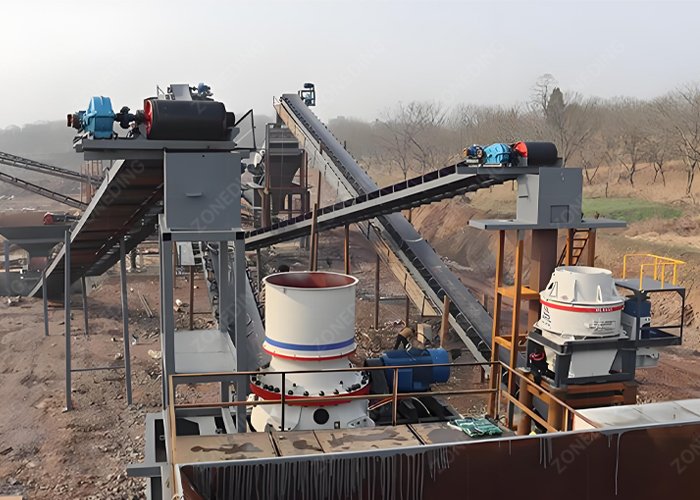
Crushing Circuit: A primary copper ore crusher (e.g., Jaw Crusher) followed by a secondary or tertiary crusher (e.g., Cone Crusher).
Grinding Circuit:Ball Mills or SAG mills operating with Spiral Classifiers or hydrocyclones to achieve the target grind size.
Flotation Circuit: A series of flotation cells for rougher, scavenger, and cleaner stages to maximize grade and recovery.
Dewatering Circuit: Thickeners and filter presses to remove water from the final concentrate.
An oxide plant is a sequence of chemical processing stages.
Crushing and Stacking: Crushers to produce the correct particle size for leaching, followed by a conveyor and stacking system to build the heap.
Leaching System: The lined heap pad, irrigation system (pipes and drippers), and collection ponds for the PLS.
SX-EW Plant: A series of mixer-settler tanks for the solvent extraction circuit, and an electrowinning tankhouse with rectifiers, cathodes, and anodes for the final copper plating. For some ores, agitated leaching tanks may be used instead of heaps for faster kinetics.
Common Questions about Copper Ore Processing
Question 1: Why can’t you use flotation for copper oxide ores?
Standard froth flotation relies on chemicals called collectors that attach to the surface of sulfide minerals, making them float. Copper oxide minerals lack this sulfur component and have a different surface chemistry. Therefore, these standard collectors cannot attach to them effectively, resulting in very poor recovery.
Question 2: What is a copper concentrate?
A copper concentrate is the final product of a copper flotation plant. It is not pure copper. It is a fine, heavy powder that contains a high concentration (typically 25-30%) of copper sulfide minerals. The mine sells this concentrate to a third-party smelter, which performs the final high-temperature processes to produce pure copper metal.
Question 3: Is the SX-EW process for oxide ore better than flotation?
Neither process is inherently ‘better’; they are designed for different copper ore types. The SX-EW process is highly effective for suitable copper oxide ores and produces pure copper metal on-site. Flotation is the standard, cost-effective method for copper sulfide ores. The correct choice is determined entirely by the ore’s mineralogy.
Question 4: What is the first step to developing my copper processing plant?
The absolute first step is a comprehensive ore dressing test. You must send a representative sample of your copper ore to a qualified laboratory. The test report will identify the exact mineral composition and the optimal processing method. This data is the foundation for a successful plant design.
Summary and Recommendations
The selection of the correct copper ore dressing method is the most important decision in a copper mining project. The choice is not based on preference but is dictated by the ore’s geology.
Identify Your Ore: First, determine if your ore is primarily sulfide, oxide, or mixed. This is non-negotiable.
Use Flotation for Sulfides: For sulfide ores like chalcopyrite, the goal is to produce a high-grade copper concentrate using a crush-grind-flotation circuit.
Use Leaching for Oxides: For oxide ores like malachite, the goal is to produce 99.99% pure copper cathodes on-site using the SX-EW process.
Test Extensively: Always base your final process design on thorough metallurgical testing. This data de-risks your investment and optimizes your profitability.
About ZONEDING
At ZONEDING, we have been a manufacturer of mineral processing equipment since 2004. We understand that every copper deposit is unique. We do not offer one-size-fits-all solutions. Our strength lies in designing and supplying complete, customized copper processing plant solutions based on the specific mineralogy of your ore. We provide a full range of equipment, from crushers and ball mills to flotation machines and thickeners, ensuring every component works together efficiently.
If you have a copper ore deposit, contact us today. Let our engineers help you navigate the process, from initial testing to a fully operational and profitable production line.
One of the first questions investors ask before starting a mining project is: How much does a gold processing plant cost? Unfortunately, there is no single answer. A small gravity gold plant may cost less than a luxury house in some countries, whi...
Stone crushing is the first step in producing aggregates for roads, buildings, bridges, railways, and concrete plants. Every successful quarry or aggregate operation depends on choosing the right crushing method and equipment. However, many invest...
Many investors consider alluvial operations simple dirt-washing tasks. However, commercial-grade operations face severe technical challenges daily. A successful demands precise engineering to match the physical ore characteristics. This guide reve...
Choosing the right gravity separation method is the most important step for a profitable mine. Both the shaking table and the jigging machine use the weight of minerals to separate them from waste rock. But choosing the wrong one leads to massive ...
We use cookies to ensure that we give you the best experience on our website. If you continue to use this site we will assume that you are happy with it.
Privacy Policy
Send us a message
We would love to hear from you
Submit your question and our team will respond to the email provided as soon as possible.
 Zoneding Machine